Assignment and Bill of Sale to Corporation
About this form
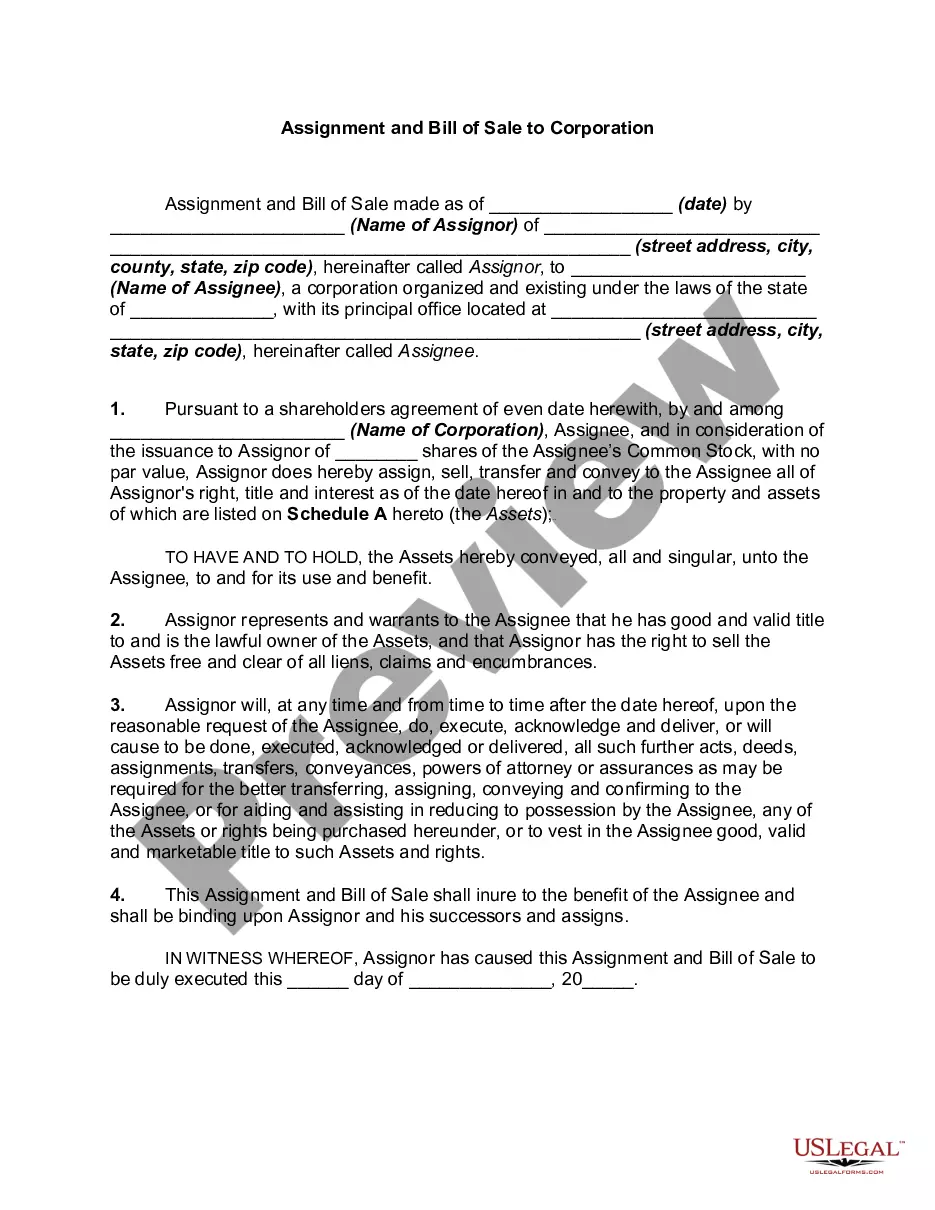
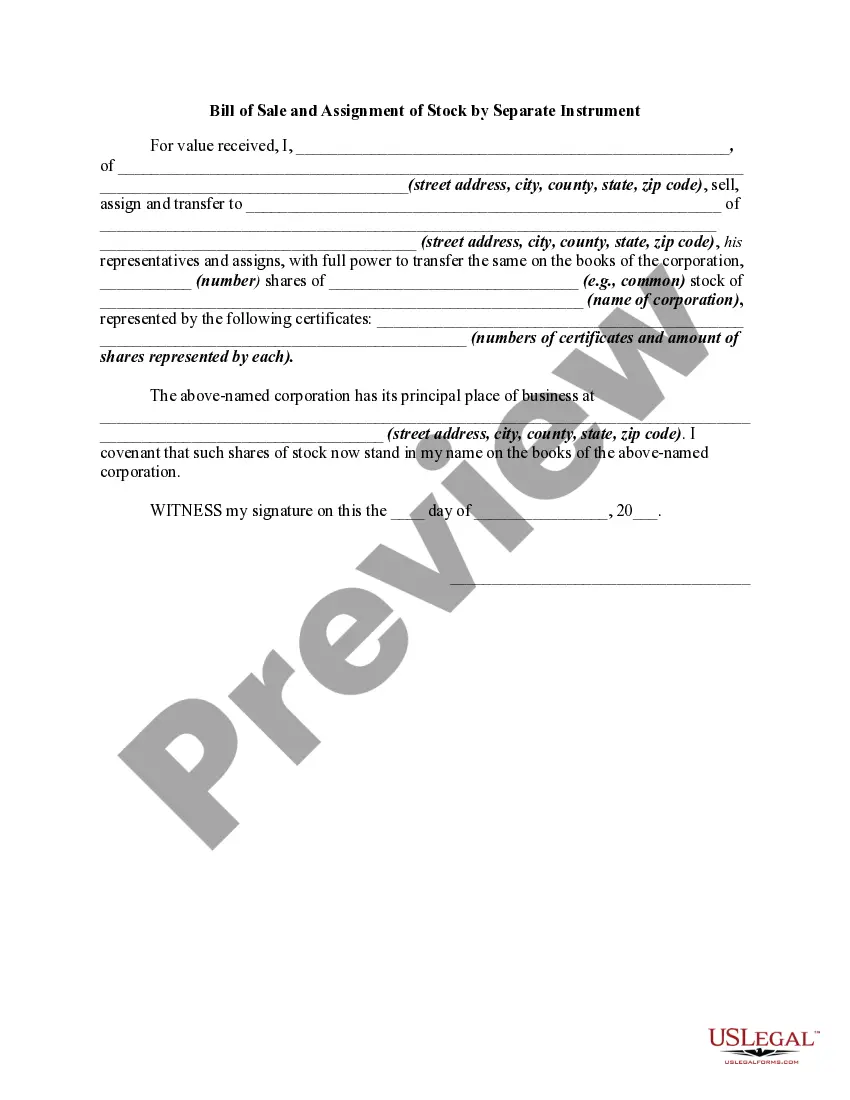
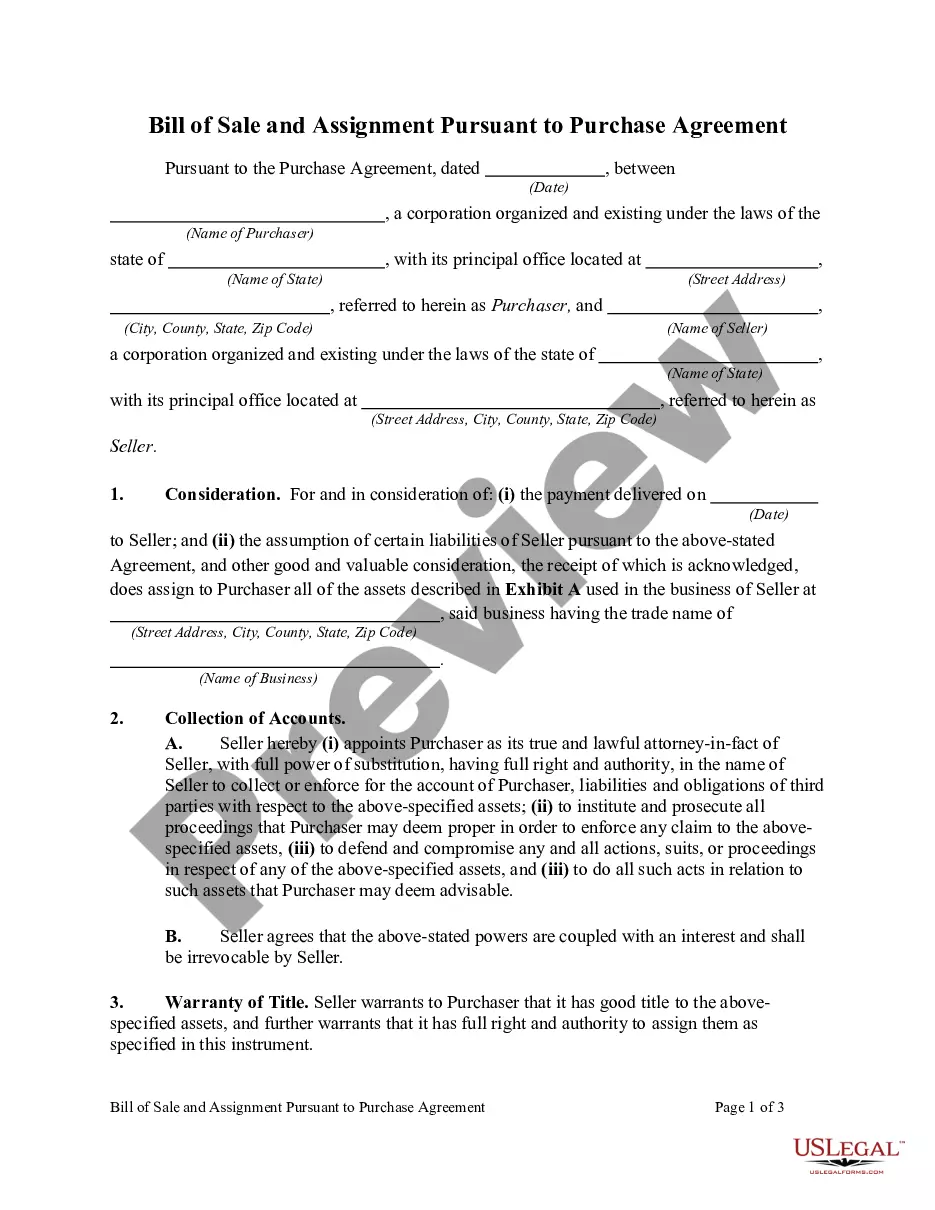
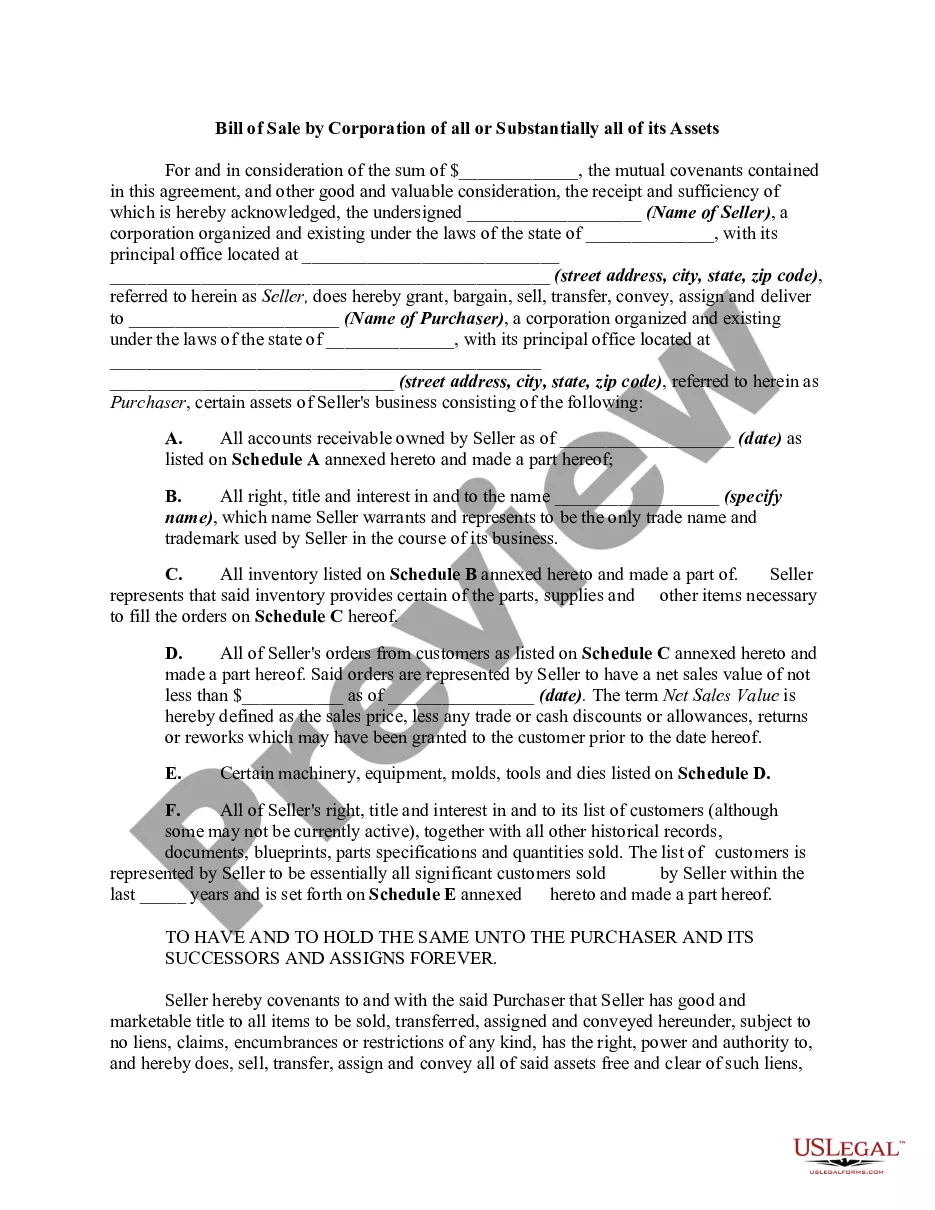
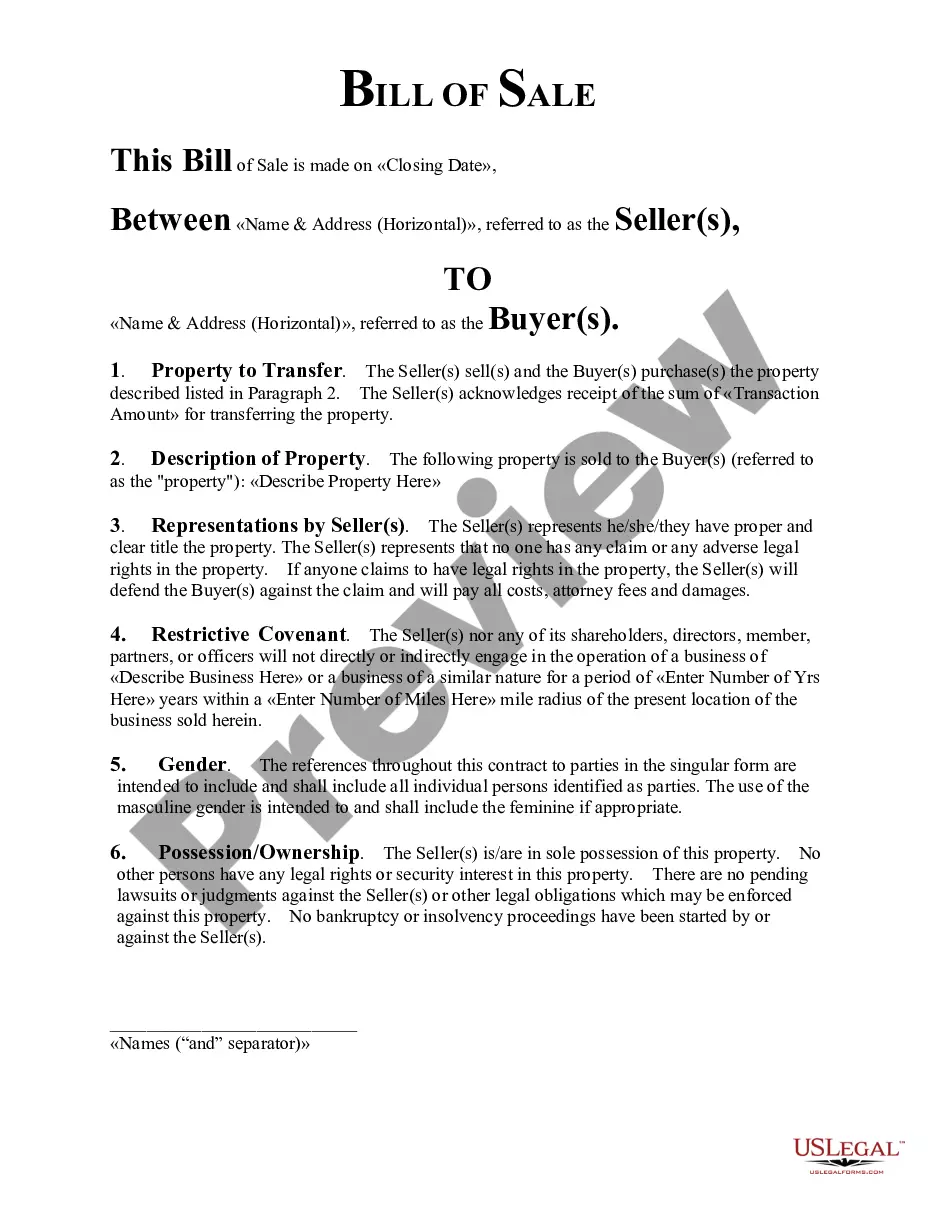
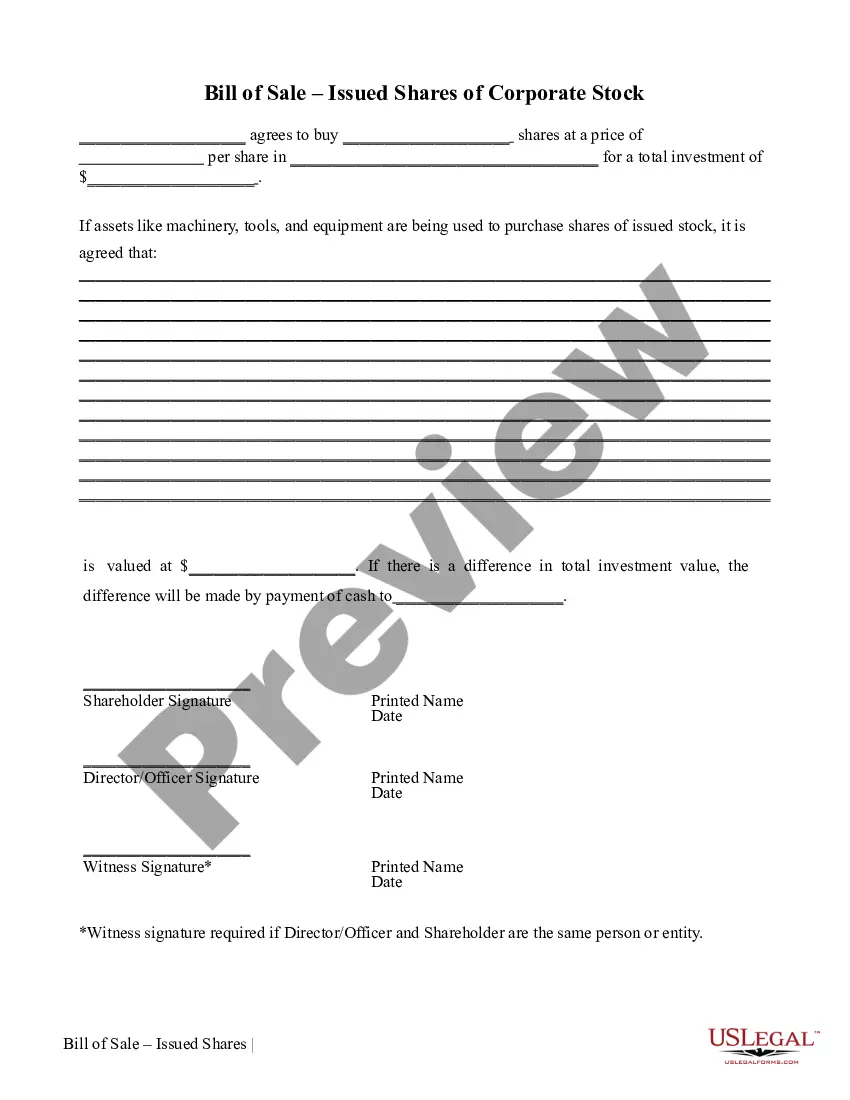
The Assignment and Bill of Sale to Corporation is a legal document used when an individual, known as the Assignor, sells assets to a corporation in exchange for shares of common stock. This form outlines the transfer of ownership and includes important assurances regarding the title of the assets. It differs from other sale agreements by specifying the nature of the transaction as it pertains to stock acquisition.
Key components of this form
- Date of the assignment and names of the parties involved.
- Description of the assets being sold, listed on Schedule A.
- Terms of the consideration, including the number of shares issued to the Assignor.
- Warranties made by the Assignor regarding the ownership and title of the assets.
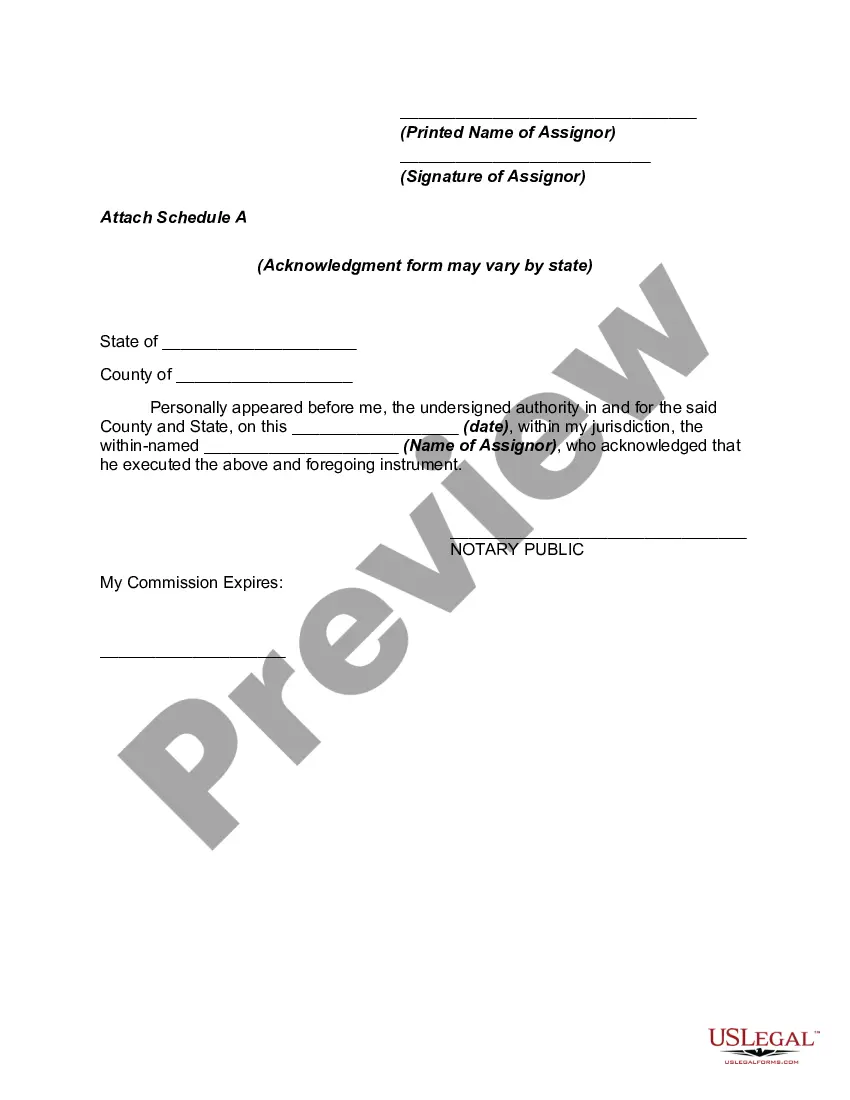
- Space for signatures and a notary acknowledgment if required.
When to use this document
This form should be used when an individual or entity wants to sell business assets to a corporation in exchange for shares. This could occur during the incorporation process, in the sale of a business, or when an investor wants ownership in exchange for contributing assets. Having this document ensures clarity and legal protection for both parties involved in the transaction.
Who needs this form
- Individuals or entities looking to sell their assets to a corporation.
- Corporations needing to formalize the acquisition of assets from an Assignor.
- Investors wishing to negotiate terms for equity in exchange for assets.
How to prepare this document
- Identify and fill in the date of the assignment and the names of the Assignor and Assignee.
- Describe the assets being sold, ensuring to reference Schedule A for details.
- Specify the number of shares issued as consideration for the assets.
- Include any warranties and representations made by the Assignor regarding the assets.
- Sign and date the form, and obtain notarization if required by your state law.
Is notarization required?
This form needs to be notarized to ensure legal validity. US Legal Forms provides secure online notarization powered by Notarize, allowing you to complete the process through a verified video call, available anytime.
Get your form ready online
Our built-in tools help you complete, sign, share, and store your documents in one place.
Make edits, fill in missing information, and update formatting in US Legal Forms—just like you would in MS Word.
Download a copy, print it, send it by email, or mail it via USPS—whatever works best for your next step.
Sign and collect signatures with our SignNow integration. Send to multiple recipients, set reminders, and more. Go Premium to unlock E-Sign.
If this form requires notarization, complete it online through a secure video call—no need to meet a notary in person or wait for an appointment.
We protect your documents and personal data by following strict security and privacy standards.

Make edits, fill in missing information, and update formatting in US Legal Forms—just like you would in MS Word.

Download a copy, print it, send it by email, or mail it via USPS—whatever works best for your next step.

Sign and collect signatures with our SignNow integration. Send to multiple recipients, set reminders, and more. Go Premium to unlock E-Sign.

If this form requires notarization, complete it online through a secure video call—no need to meet a notary in person or wait for an appointment.

We protect your documents and personal data by following strict security and privacy standards.
Mistakes to watch out for
- Failing to list all sold assets in Schedule A.
- Not providing correct and up-to-date information about the parties involved.
- Missing signatures or dates, particularly on the notary acknowledgment.
Why complete this form online
- Instant access to a legally drafted document created by licensed attorneys.
- Convenient download and customization to suit your specific needs.
- Reduced time and effort compared to drafting a document from scratch.
Key takeaways
- The Assignment and Bill of Sale to Corporation is essential for transferring assets in exchange for stock.
- Accurate completion of the form is crucial for legal validity.
- Consult local laws to ensure compliance with state-specific requirements.
Looking for another form?
Form popularity
FAQ
Date of vehicle sale. The seller's full name and address. The buyer's full name and address. Purchase amount. The vehicle's year, make and model. The vehicle identification number (VIN). The mileage on the vehicle's odometer. Vehicle warranty information, if applicable.
Write the title "Bill of Sale" at the top of the paper. Write the buyer's full name and address under the title of "Buyer." Write the seller's full name and address under the title of "Seller." Write down the year, make, model, color, current odometer reading, and Vehicle Identification Number from the vehicle.
One of the documents is the 'Bill of Sale,' also referred to as a 'Notice of Sale'. Although not legally needed in Florida since it doesn't actually replace the title transfer, it does provide extra protection both for the vehicle buyer and seller, and makes for an excellent personal record.
After a vehicle is sold from one private party to another, the buyer can ask for their money back, but the seller generally does not have to agree to cancel the sale, absent a warranty or fraud.
Use a company letterhead. Use electronic or paper letterhead. Write acknowledgment statement. Referring to the document by name, version number if applicable and state that the recipient has received the document. Sign and date. Explain the next step. Provide contact information.
The date of the sale. A description of the car, including its: Year, make and model. The selling price of the car. If the car is a gift or partial gift, you should still create a bill of sale. Warranty information. The full names, addresses and signatures of the buyer and seller.
A bill of sale for a car is a legal document that confirms the sale and transfer of possession of a motor vehicle. It usually contains the personal information of the buyer and seller, a description of the vehicle, and a statement of the price and terms of sale. Typically, the seller drafts the bill.
Generally, a bill of sale does not have to be recorded but may be required as proof of ownership. Who must sign a bill of sale? The owners of the property being sold must sign. If the property is owned jointly, both owners must generally sign.
Your company's details including name, address, phone number and/or email address. the date of transaction showing date, month and year.
The date of the sale. A description of the car, including its: Year, make and model. The selling price of the car. If the car is a gift or partial gift, you should still create a bill of sale. Warranty information. The full names, addresses and signatures of the buyer and seller.