Bill of Sale by Corporation of all or Substantially all of its Assets
Overview of this form
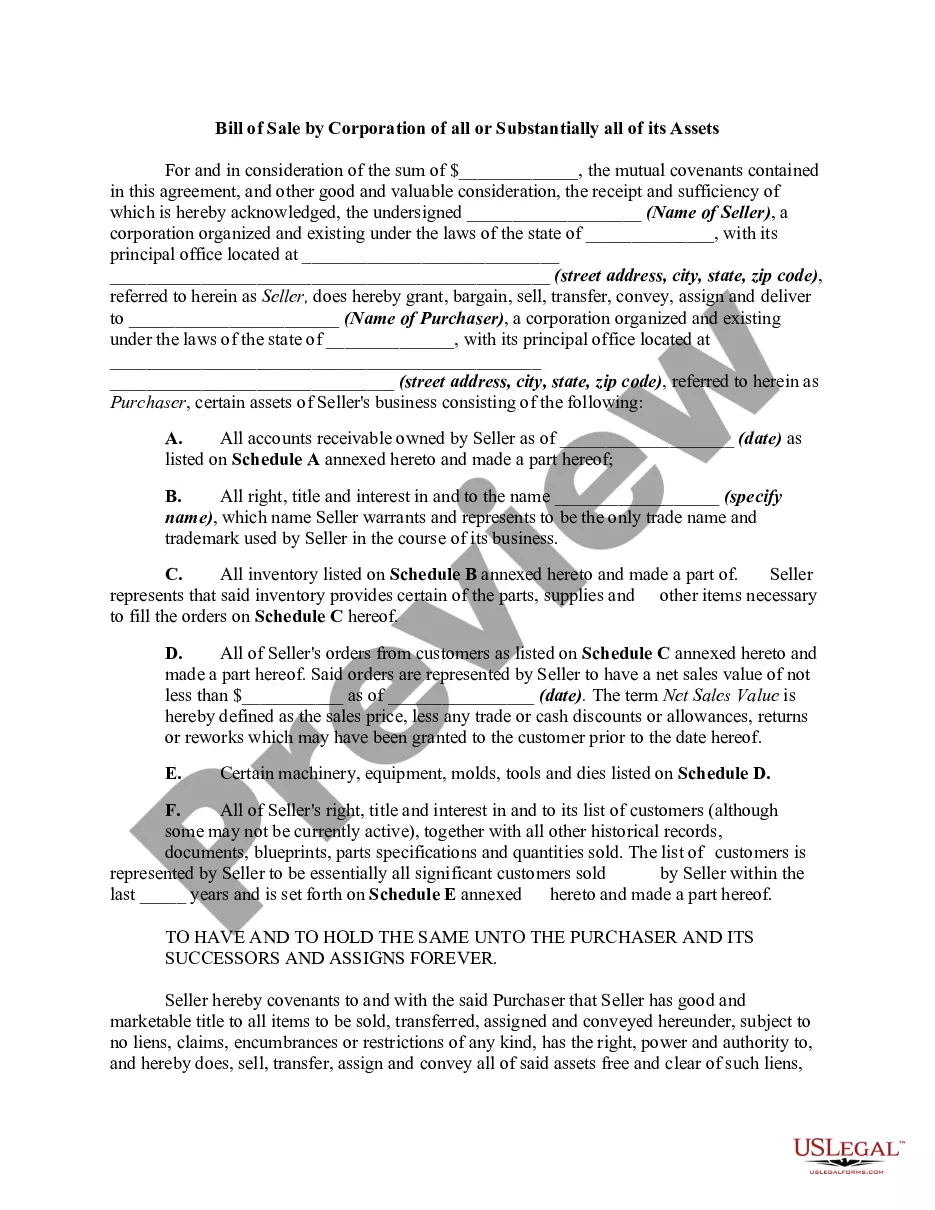
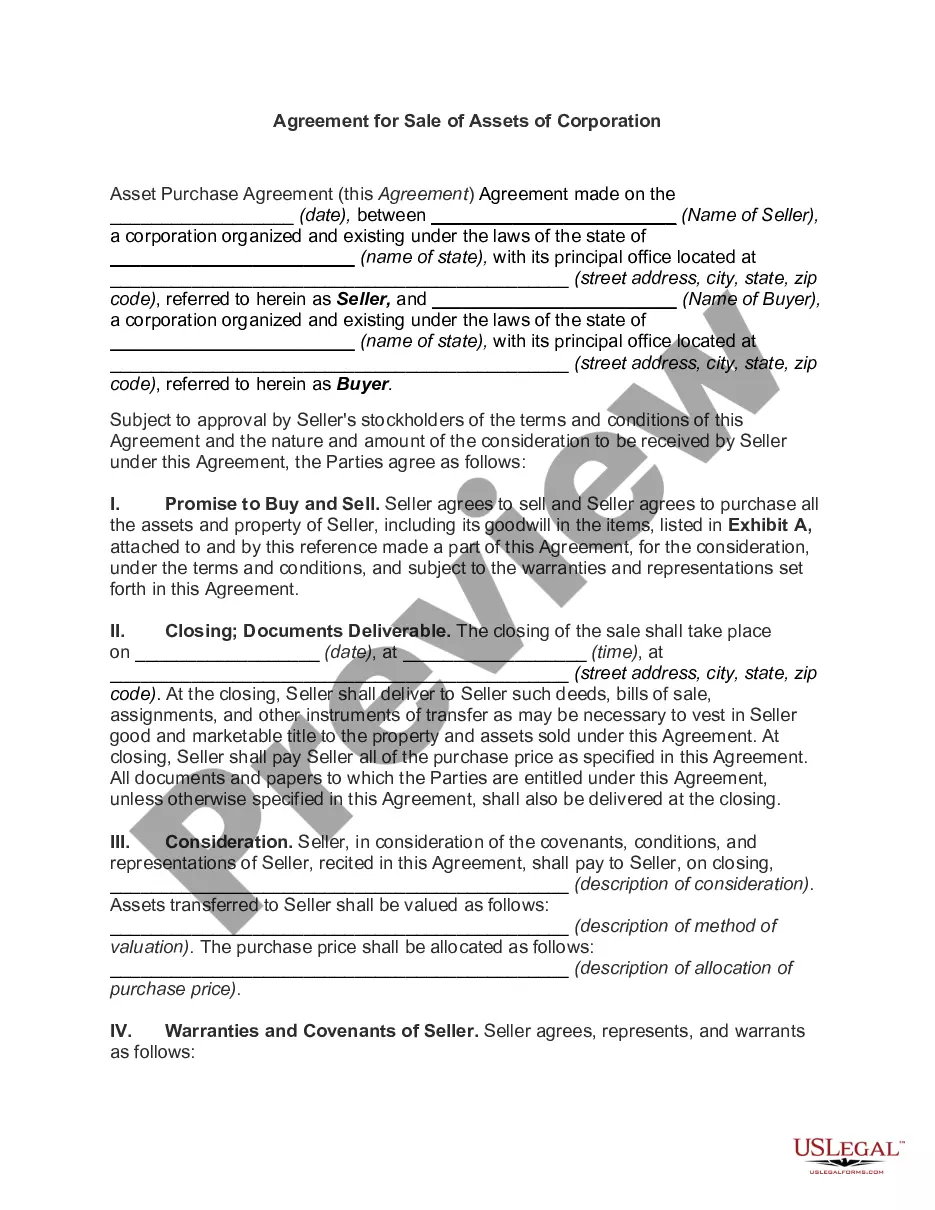
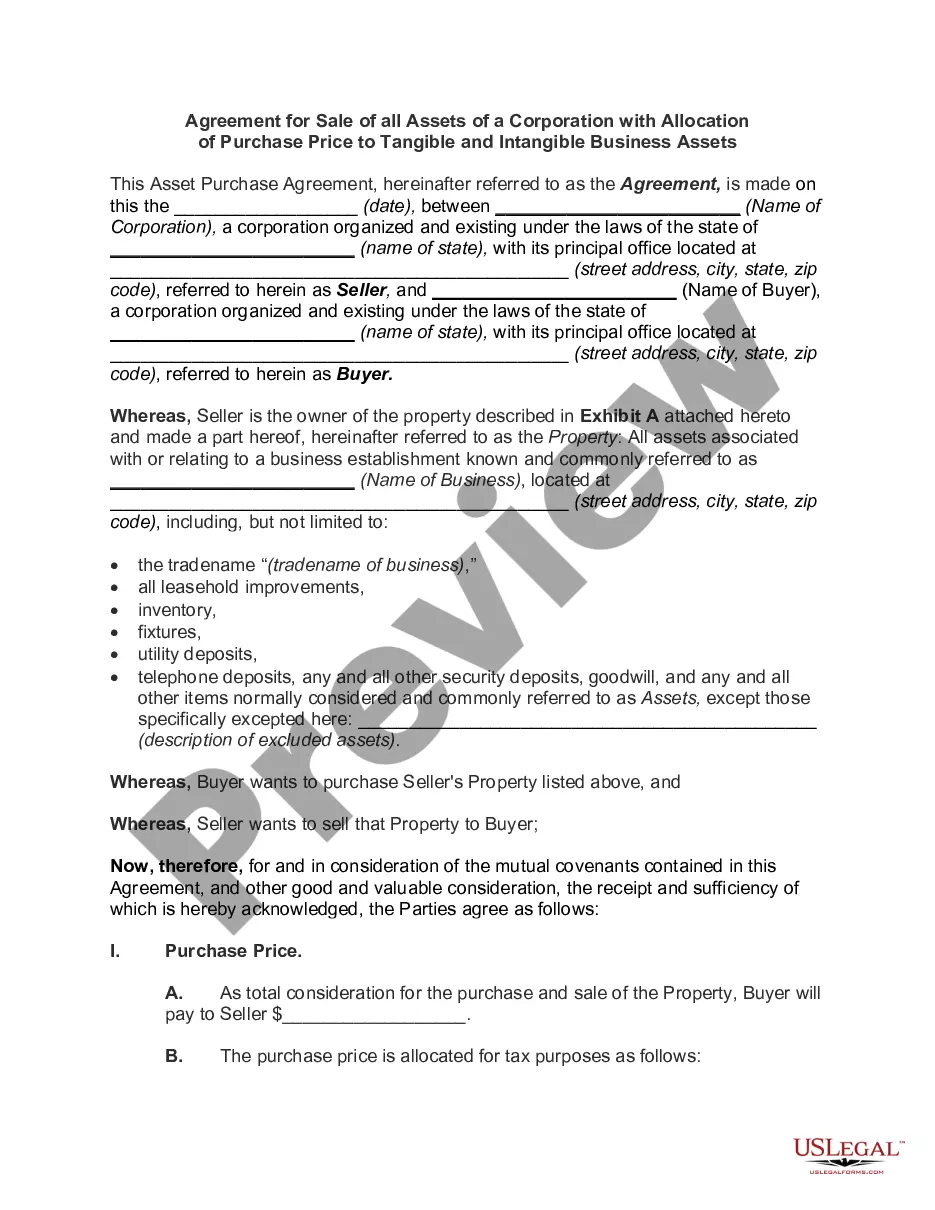
The Bill of Sale by Corporation of all or Substantially all of its Assets is a legal document used when a corporation sells a significant portion or all of its assets. This form ensures that the transaction is officially documented and includes specific details about the assets being sold, providing protection and clarity for both the seller and purchaser during the sale process. Unlike standard bills of sale, this form addresses the complexities of corporate transactions, involving the consent and authority of the corporationâs shareholders when necessary.
Form components explained
- Identification of the seller and purchaser, including their legal business names and addresses.
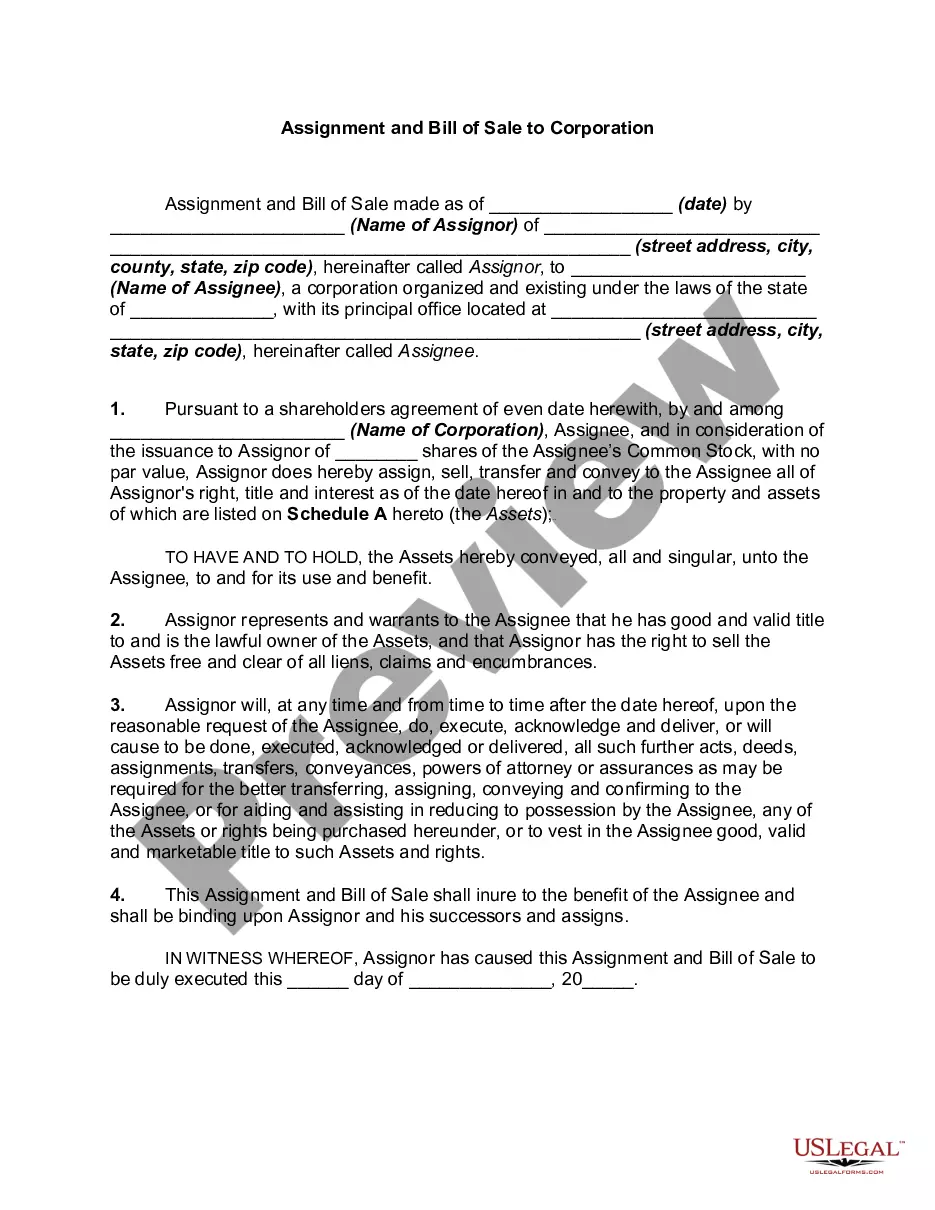
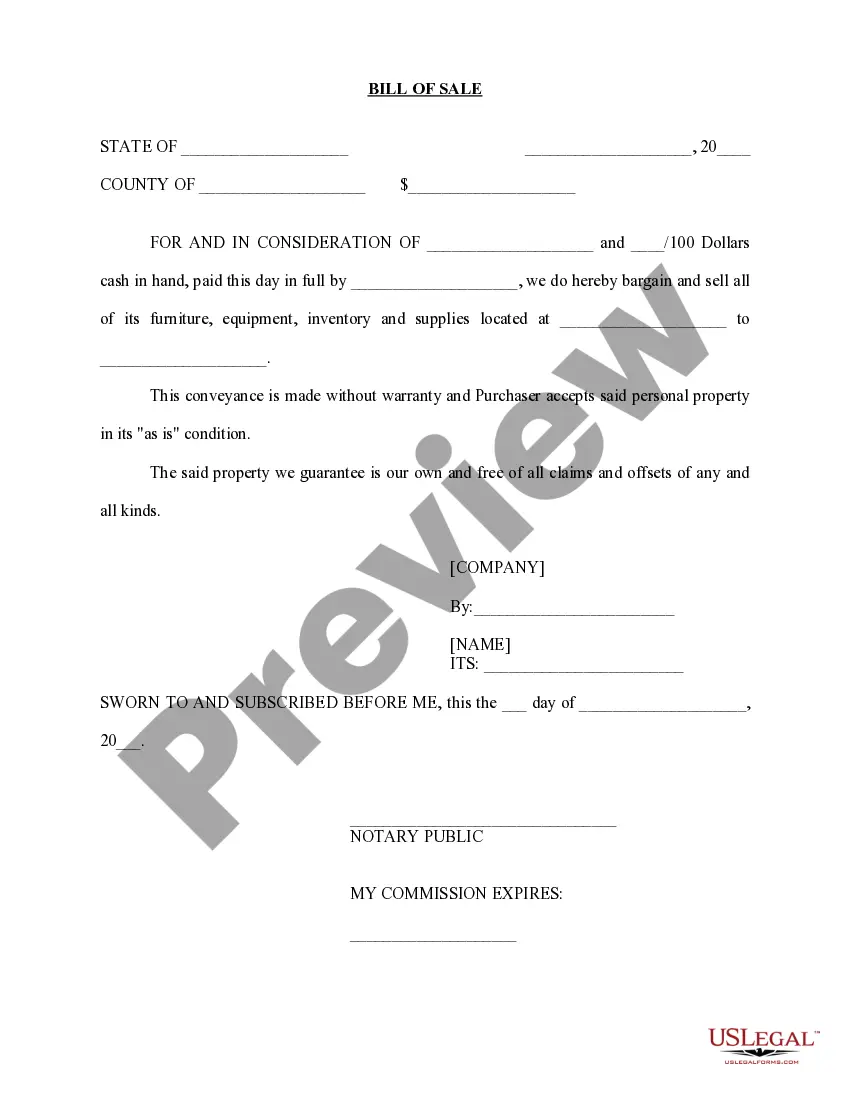
- A detailed description of the assets being sold, which may include inventory, accounts receivable, and trademarks.
- Agreements regarding the seller's title to the assets and any liabilities attached to them.
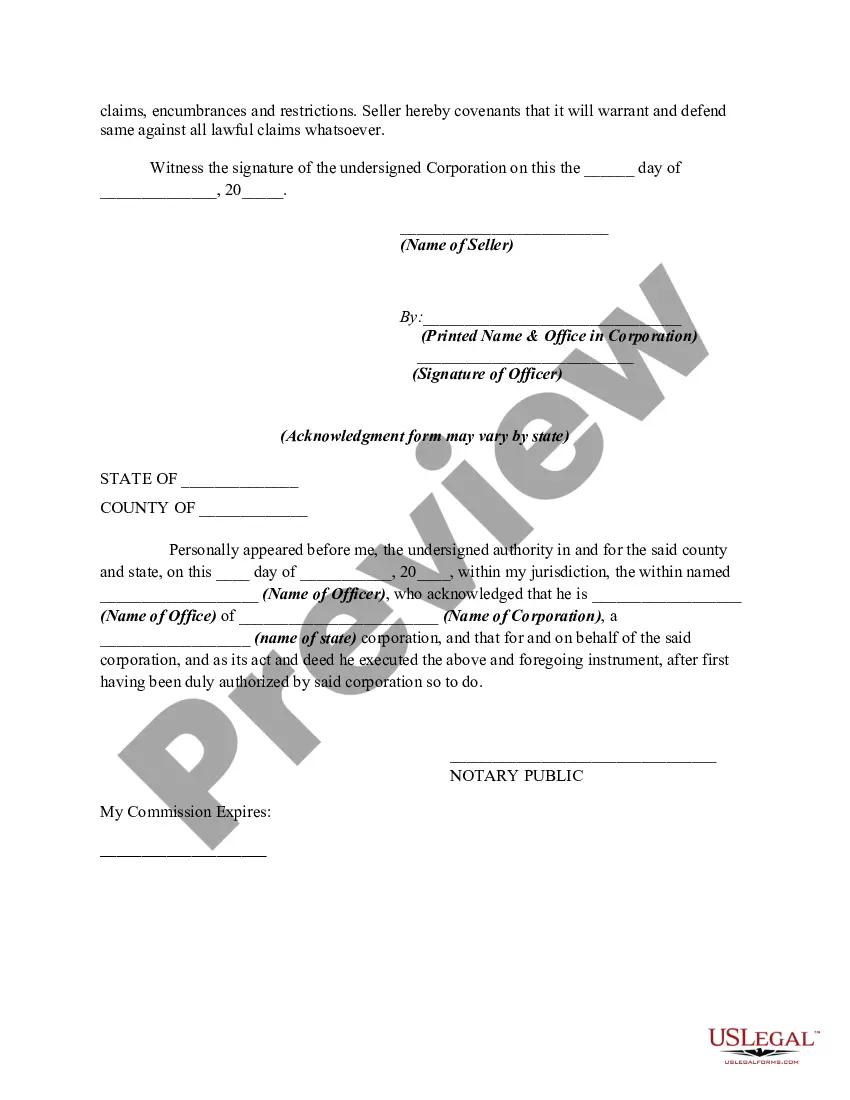
- Signature lines for corporate officers and acknowledgment by a notary public, if required.
- Schedules that provide detailed listings of the assets being transferred.
Common use cases
This form should be used when a corporation is selling a substantial portion or all of its assets. It is essential in scenarios such as business acquisitions, mergers, closures, or when restructuring operations. The form provides a clear record of the transaction, protecting both parties in the event of future claims or disputes. It is also useful when the sale impacts the corporation's ongoing business activities, thus requiring shareholder approval in many jurisdictions.
Who needs this form
This form is intended for:
- Corporations looking to sell significant assets or their entire business.
- Corporation shareholders who need to approve the sale of assets.
- Legal professionals assisting clients with corporate asset sales or transfers.
- Purchasers seeking to acquire a substantial amount of assets from a corporation.
How to complete this form
- Identify and enter the legal names and addresses of both the seller and purchaser corporations.
- Detail the assets being sold, including inventory, accounts receivable, and any trademarks, specifying each item listed in the attached schedules.
- Specify the purchase price and conditions of the sale in the designated sections.
- Have an authorized corporate officer sign the document and provide their printed name and title.
- Arrange for notarization if required, ensuring that all parties have complied with state-specific acknowledgment requirements.
Notarization guidance
Yes, this form must be notarized to be legally valid. The notarization ensures that the identities of the signing corporate officers are verified, adding a layer of authenticity to the transaction. US Legal Forms provides an integrated online notarization option that is secure and available 24/7, making it easy to complete this requirement from anywhere without travel.
Get your form ready online
Our built-in tools help you complete, sign, share, and store your documents in one place.
Make edits, fill in missing information, and update formatting in US Legal Forms—just like you would in MS Word.
Download a copy, print it, send it by email, or mail it via USPS—whatever works best for your next step.
Sign and collect signatures with our SignNow integration. Send to multiple recipients, set reminders, and more. Go Premium to unlock E-Sign.
If this form requires notarization, complete it online through a secure video call—no need to meet a notary in person or wait for an appointment.
We protect your documents and personal data by following strict security and privacy standards.

Make edits, fill in missing information, and update formatting in US Legal Forms—just like you would in MS Word.

Download a copy, print it, send it by email, or mail it via USPS—whatever works best for your next step.

Sign and collect signatures with our SignNow integration. Send to multiple recipients, set reminders, and more. Go Premium to unlock E-Sign.

If this form requires notarization, complete it online through a secure video call—no need to meet a notary in person or wait for an appointment.

We protect your documents and personal data by following strict security and privacy standards.
Common mistakes to avoid
- Failing to include all relevant assets in the schedules, leading to potential disputes later.
- Not obtaining necessary shareholder approval, which can invalidate the sale.
- Omitting important details, such as the purchase price or signatures of authorized parties.
Advantages of online completion
- Convenience of accessing and completing the form at any time.
- Editability allows for tailored modifications to fit specific transaction details.
- Reliability of having a form drafted by licensed attorneys, ensuring legal compliance.
Summary of main points
- The Bill of Sale by Corporation is essential for documenting significant asset sales by corporations.
- Proper completion and notarization of this form are crucial for legal enforceability.
- Understanding state-specific regulations is vital to ensure compliance.
Looking for another form?
Form popularity
FAQ
An asset sale occurs when a company sells some or all of its actual assets, either tangible or intangible. In an asset sale, the seller retains legal ownership of the company but has no further recourse to the sold assets. The buyer assumes no liabilities in an asset sale.
In an asset sale, the seller retains possession of the legal entity and the buyer purchases individual assets of the company, such as equipment, fixtures, leaseholds, licenses, goodwill, trade secrets, trade names, telephone numbers, and inventory.Normalized net working capital is also typically included in a sale.
In an asset purchase, the buyer agrees to purchase specific assets and liabilities.In a stock purchase, the buyer purchases the entire company, including all assets and liabilities.
An asset sale is the purchase of individual assets and liabilities, whereas a stock sale is the purchase of the owner's shares of an entity. The deal structure of any transaction can have a major impact on the future for both the buyer and seller.
The simple answer is yes, as a director, you can sell your company assets before going through liquidation. However, it's important to understand that there are strict regulations you'd need to follow if any assets are sold. And remember, the creditors interest will always take priority.
When a company sells its assets, the seller typically enters into an asset purchase and sales agreement with a buyer.The asset purchase agreement should also address how the seller and the buyer intend to pay the liabilities, debts, and obligations associated with the assets being transferred.
Your company will also still exist after an asset sale, and administratively you will still need to take steps to dissolve the company and deal with any remaining liabilities and assets. Unlike a stock sale, 100% of the interests of a company can usually be transferred without the consent of all of the stockholders.
Types of Assets Purchased An asset deal purchase can include either tangible or intangible assets. Tangibles include equipment, inventory, and fixtures. Intangibles, on the other hand, may include customer lists or patents.
An asset purchase involves the purchase of the selling company's assets -- including facilities, vehicles, equipment, and stock or inventory. A stock purchase involves the purchase of the selling company's stock only.