Certificate of Compliance Regarding Service of Interrogatories or Requests for Production of Documents - Discovery and Inspection
Overview of this form
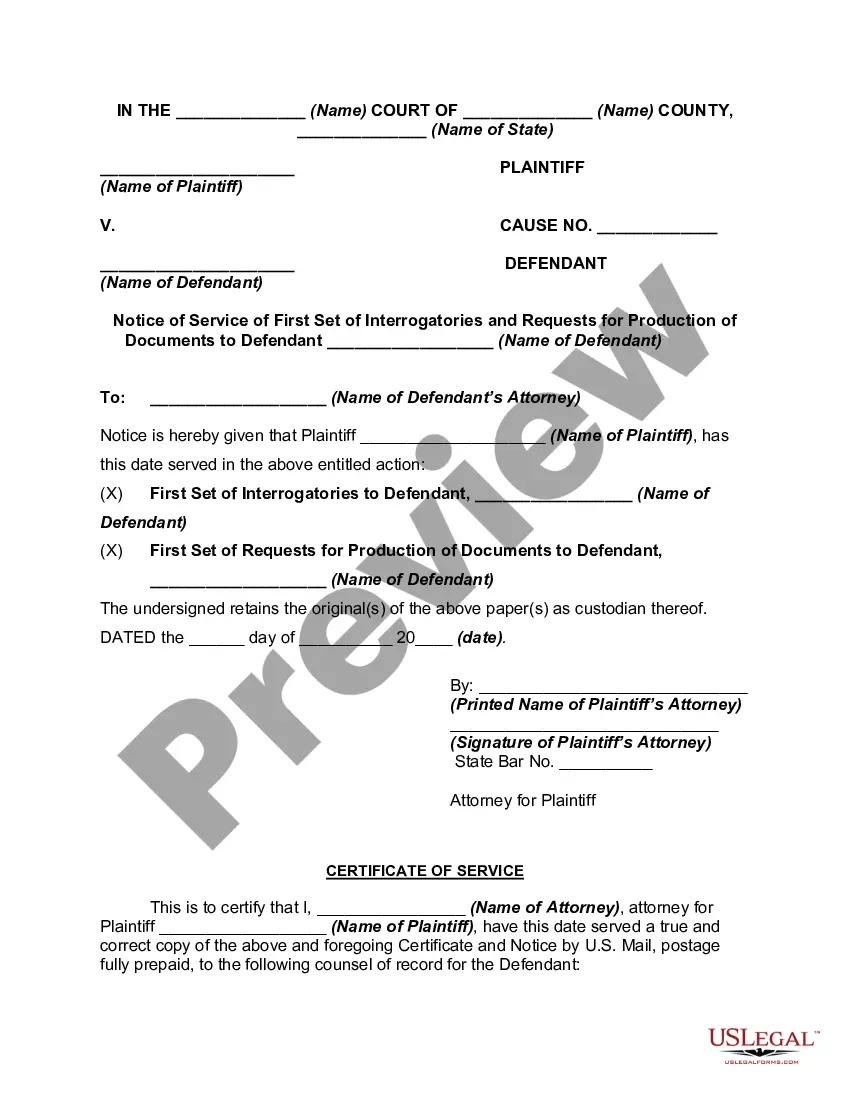
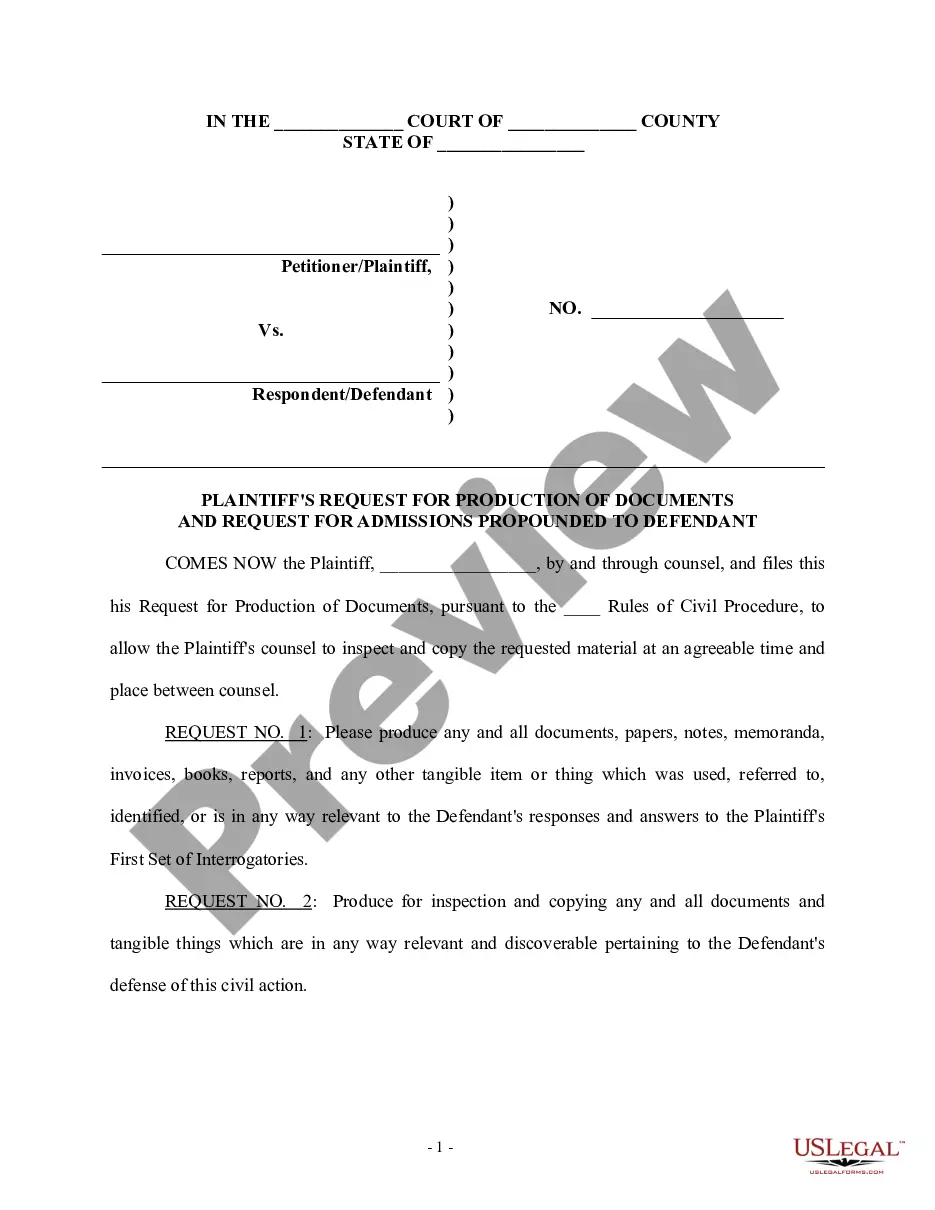
The Certificate of Compliance Regarding Service of Interrogatories or Requests for Production of Documents is essential for documenting the proper service of discovery materials in legal proceedings. This form ensures compliance with federal and state rules regarding the submission of interrogatories and requests for production, which are critical components of the discovery process. Unlike other forms, this certificate not only confirms the delivery of these documents but also maintains the integrity of the original materials retained by the serving party.
Key parts of this document
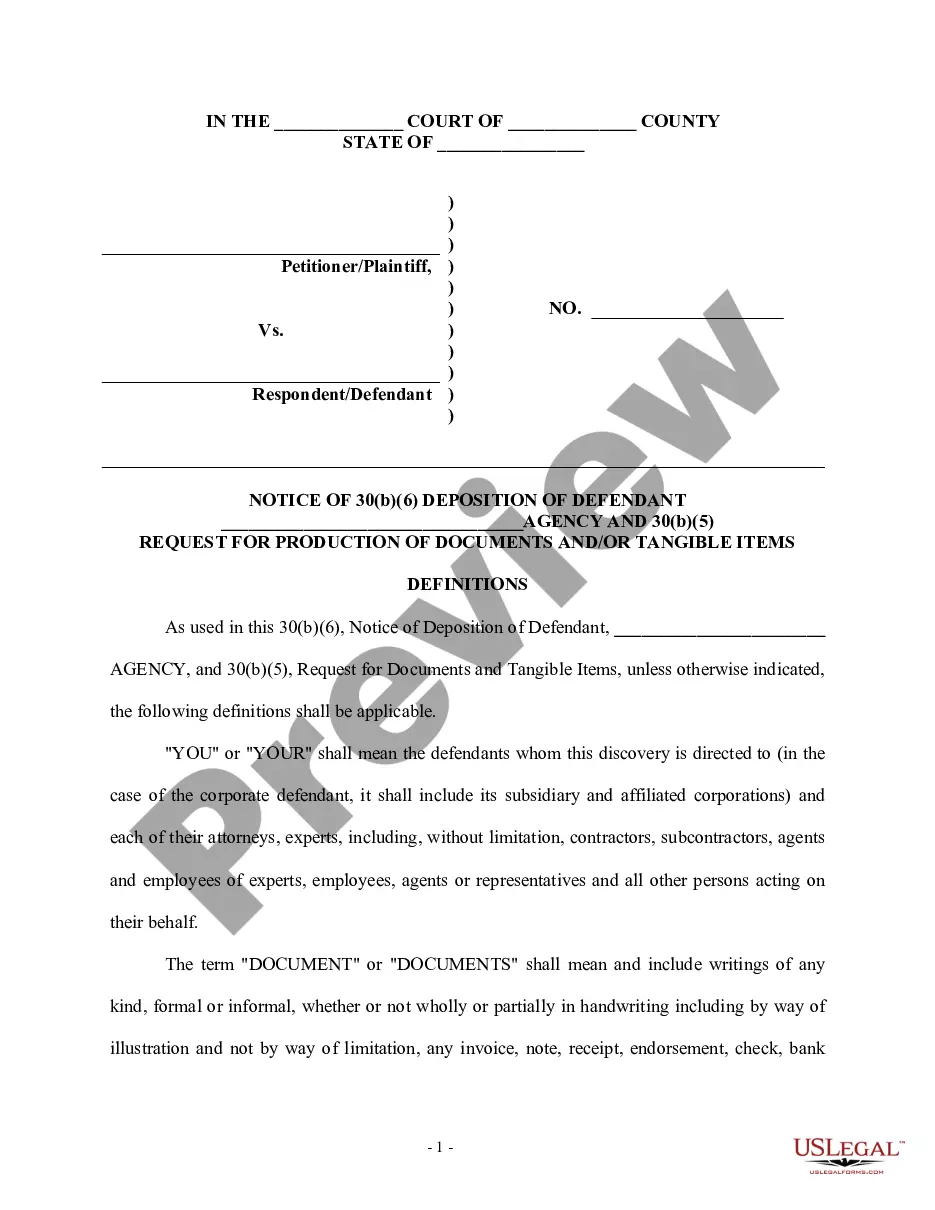
- Case identification, including names of the plaintiff and defendant.
- Details of served discovery materials, including interrogatories and requests for production.
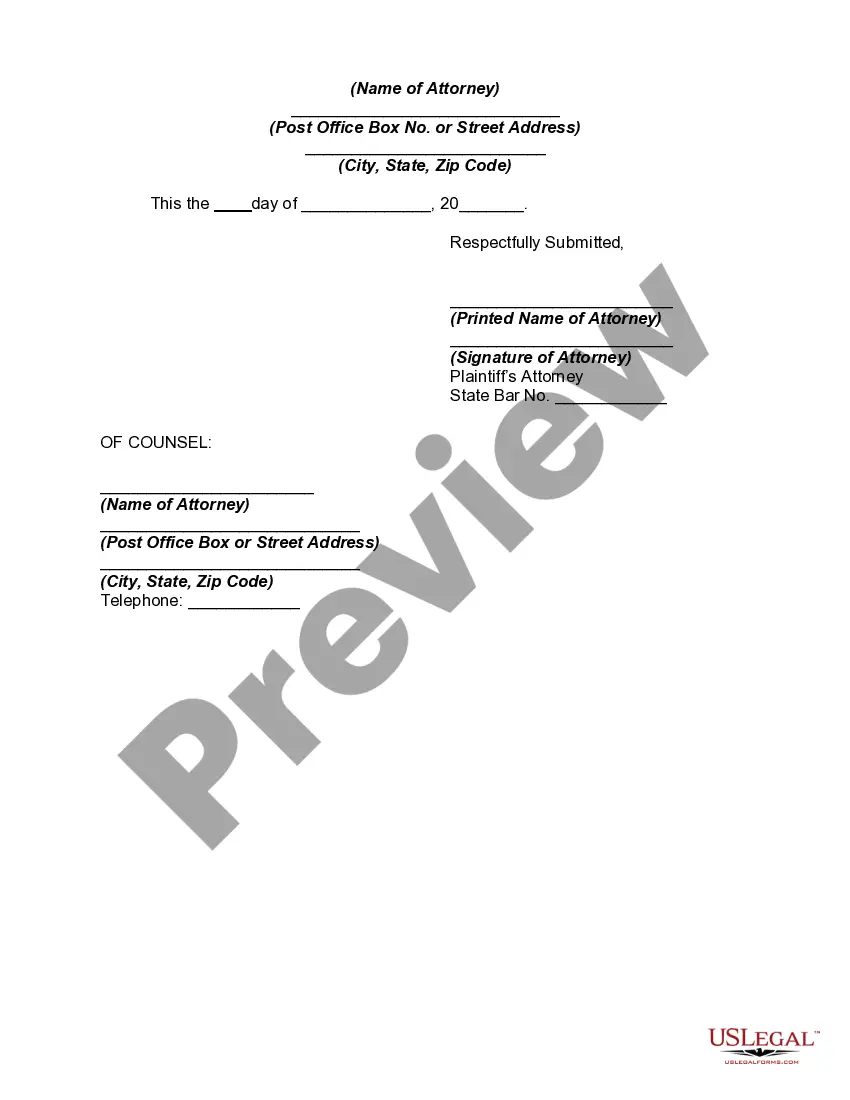
- Signature and printed name of the attorney representing the plaintiff.
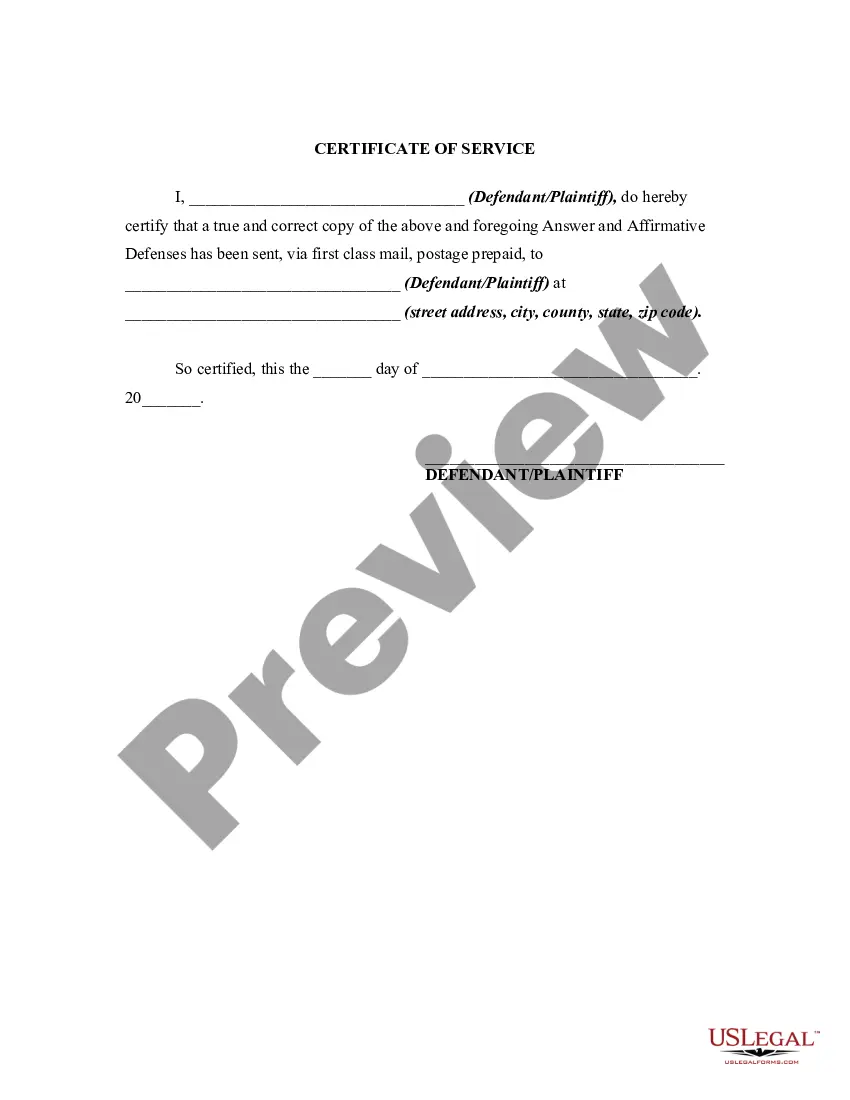
- Certificate of service acknowledging the delivery of documents to the defendantâs counsel.
- Information about the attorney for the plaintiff, including contact details.

When to use this form
This form should be used in situations where a party is serving interrogatories or requests for production of documents during the discovery phase of a court case. It is essential to provide proper notification of such service to the other party as required by court rules, thereby maintaining transparency and compliance with legal procedures.
Who needs this form
- Attorneys representing plaintiffs in civil litigation.
- Individuals involved in legal proceedings who need to disclose interrogatories and document requests.
- Law firms managing multiple cases involving discovery processes.
Completing this form step by step
- Identify the parties involved in the case by filling in the names of the plaintiff and defendant.
- List the specific discovery materials that have been served, marking the relevant options.
- Insert the date of service to document when the materials were delivered.
- Have the plaintiff's attorney sign the document and include their printed name and state bar number.
- Complete the Certificate of Service section by detailing how the documents were sent and the recipient's address.
Notarization guidance
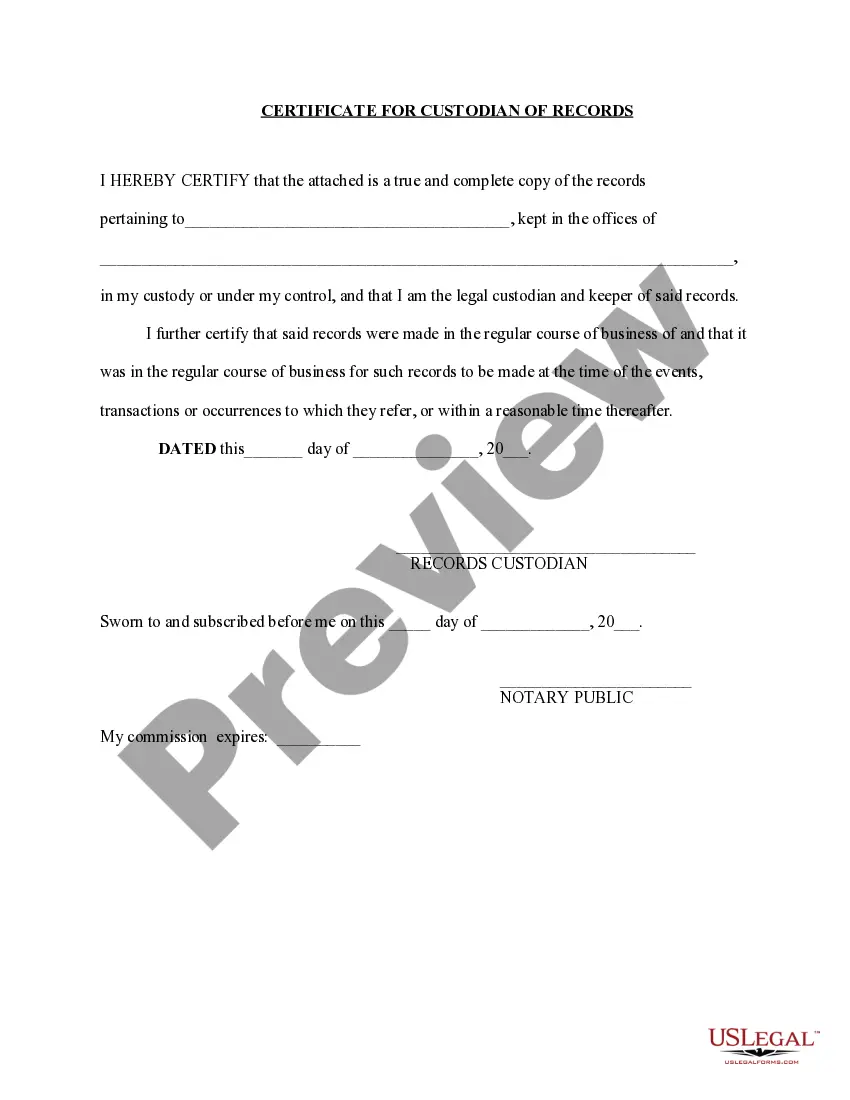
This form does not typically require notarization unless specified by local law. It is essential to check the court requirements for your specific jurisdiction before filing.
Get your form ready online
Our built-in tools help you complete, sign, share, and store your documents in one place.
Make edits, fill in missing information, and update formatting in US Legal Forms—just like you would in MS Word.
Download a copy, print it, send it by email, or mail it via USPS—whatever works best for your next step.
Sign and collect signatures with our SignNow integration. Send to multiple recipients, set reminders, and more. Go Premium to unlock E-Sign.
If this form requires notarization, complete it online through a secure video call—no need to meet a notary in person or wait for an appointment.
We protect your documents and personal data by following strict security and privacy standards.

Make edits, fill in missing information, and update formatting in US Legal Forms—just like you would in MS Word.

Download a copy, print it, send it by email, or mail it via USPS—whatever works best for your next step.

Sign and collect signatures with our SignNow integration. Send to multiple recipients, set reminders, and more. Go Premium to unlock E-Sign.

If this form requires notarization, complete it online through a secure video call—no need to meet a notary in person or wait for an appointment.

We protect your documents and personal data by following strict security and privacy standards.
Typical mistakes to avoid
- Failing to include the correct names of the parties involved in the case.
- Not properly identifying the discovery materials that were served.
- Omitting the attorney's signature or contact information.
- Filing the document with the court when it is meant to be retained by the serving party.
Benefits of completing this form online
- Convenience of accessing and completing the form anytime, anywhere.
- Editable templates allow for easy customization to fit your specific needs.
- Reliability of using professionally drafted forms created by licensed attorneys.
Legal use & context
- This form serves as proof of compliance with discovery rules in litigation.
- It may be used in court to demonstrate that all parties have been informed properly.
- Failure to adhere to these procedures can lead to penalties or delays in legal proceedings.
Main things to remember
- The Certificate of Compliance is crucial for ensuring proper service of interrogatories and document requests.
- Completing this form accurately helps maintain adherence to court rules.
- It is beneficial for both plaintiffs and defendants in the discovery phase.
Looking for another form?
Form popularity
FAQ
Requests for production may be used to inspect and copy documents or tangible items held by another party. Although these requests are most commonly used to obtain copies of documents, they can also be used to test, measure, photograph, etc., any type of physical evidence in the other party's possession or control.
Interrogatories, which are written questions about things that are relevant or important to the case. (NRCP 33; JCRCP 33) Requests for production of documents or things, which are written requests that demand the other side provide particular documents or items.
What Is a Request for Production of Documents? A request for production is a discovery device used to gain access to documents, electronic data, and physical items held by an opposing party in a legal matter. The aim is to gain insight into any relevant evidence that the opposing party holds.
When you respond to a discovery request, you should make sure to do it within the timeframe listed in the discovery request or in the scheduling order if the judge issued one. In some cases, the judge will hold a court conference to establish a timeframe for discovery, motions, and the trial.
The purpose of interrogatories is to learn a great deal of general information about a party in a lawsuit. For example, the defendant in a personal injury lawsuit about a car accident might send you interrogatories asking you to disclose things like: Where you live. Where you work.
A request for production is a discovery device used to gain access to documents, electronic data, and physical items held by an opposing party in a legal matter. The aim is to gain insight into any relevant evidence that the opposing party holds.
Interrogatories, which are written questions about things that are relevant or important to the case. (NRCP 33; JCRCP 33) Requests for production of documents or things, which are written requests that demand the other side provide particular documents or items.
The issues discussed above in connection with interrogatories are also the issues which you need to cover in your requests for production. However, because requests for production do not yield a written answer, you can ask both for specific documents and for general categories of documents.
Similar to responses to Requests for Production, responses to Requests for Admissions do not have to be verified.Cost of proof sanctions are available against a party who denies a Request for Admission and the matter is proven at trial.