Agreement to Service and Repair Heating, Ventilation, Air Conditioning Equipment and/or to do Kitchen Repair and Service
Understanding this form
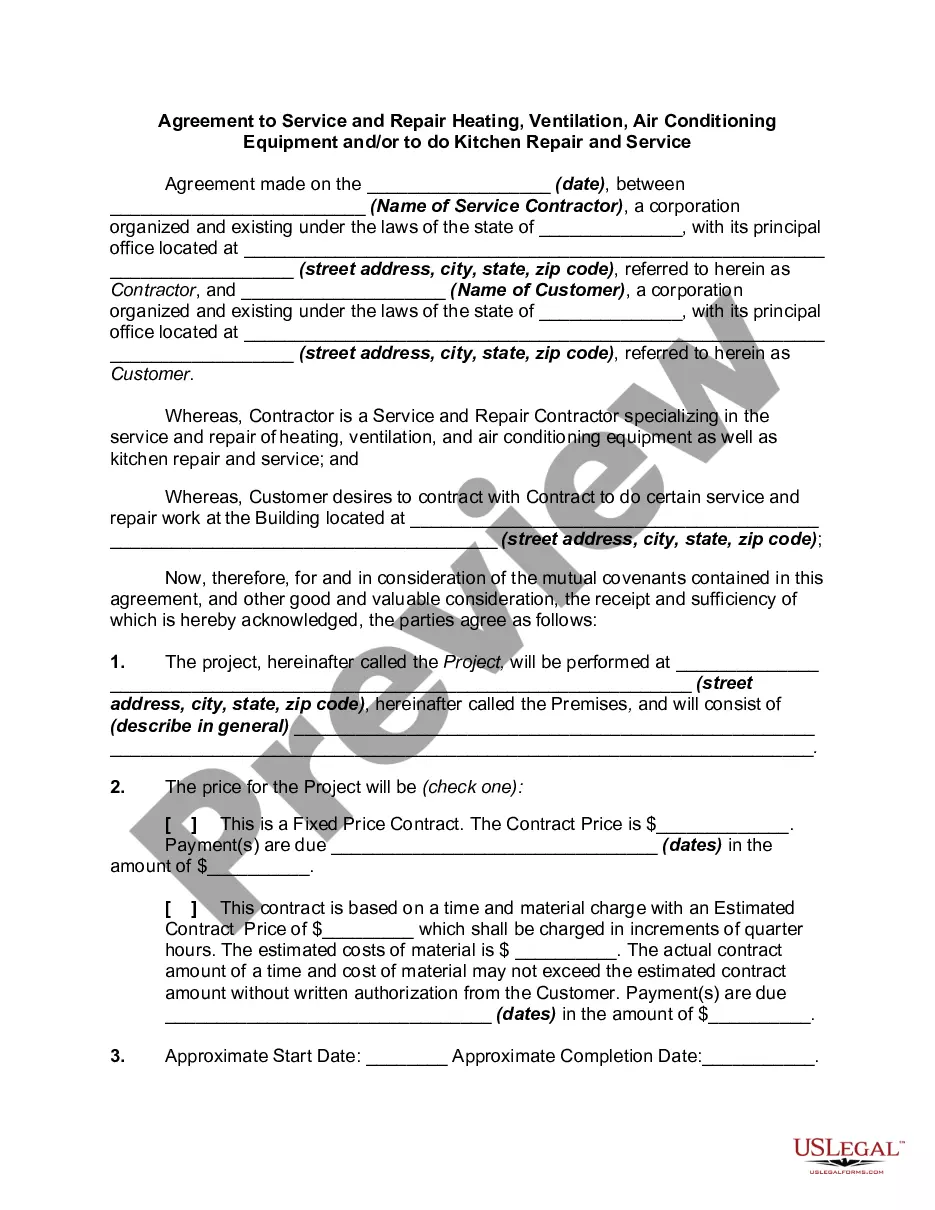
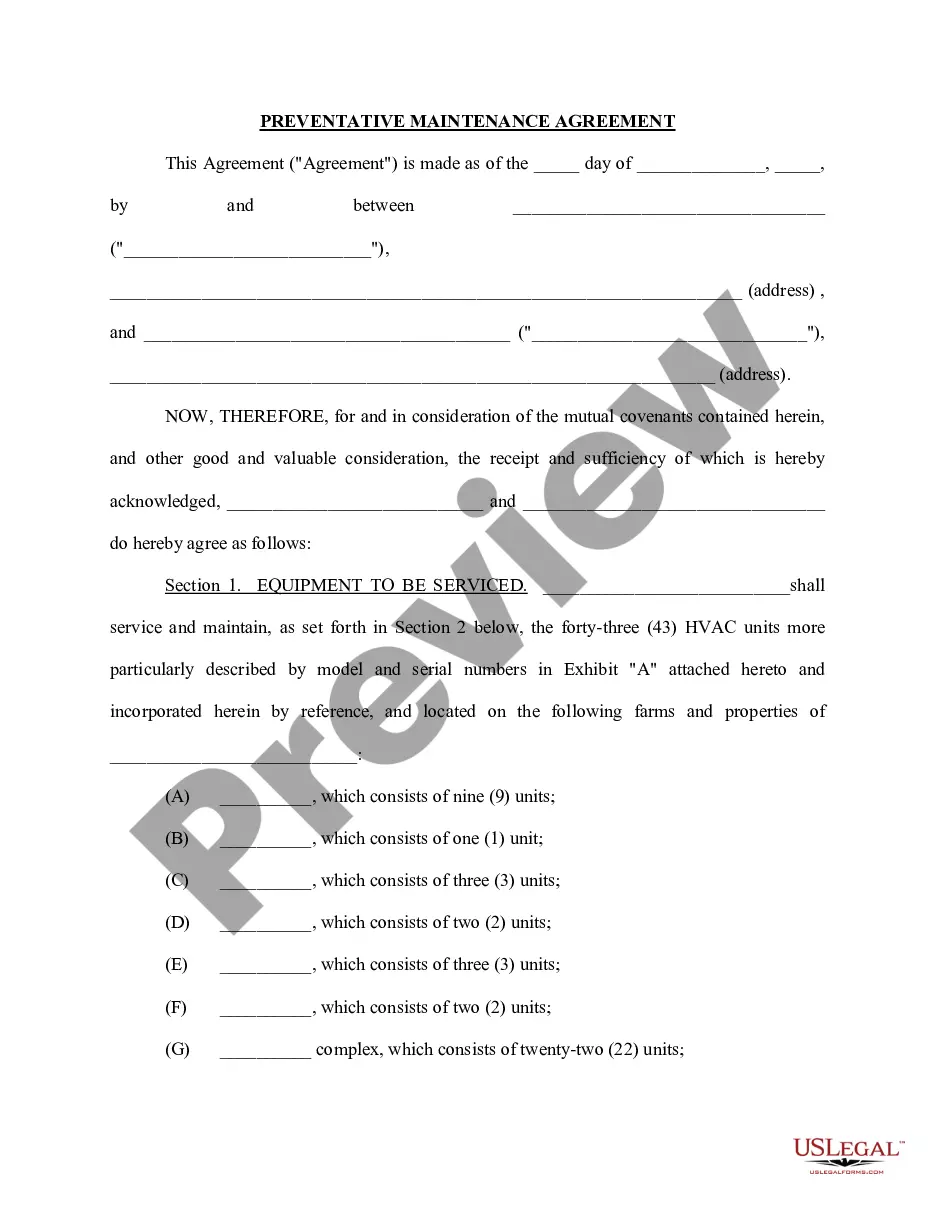
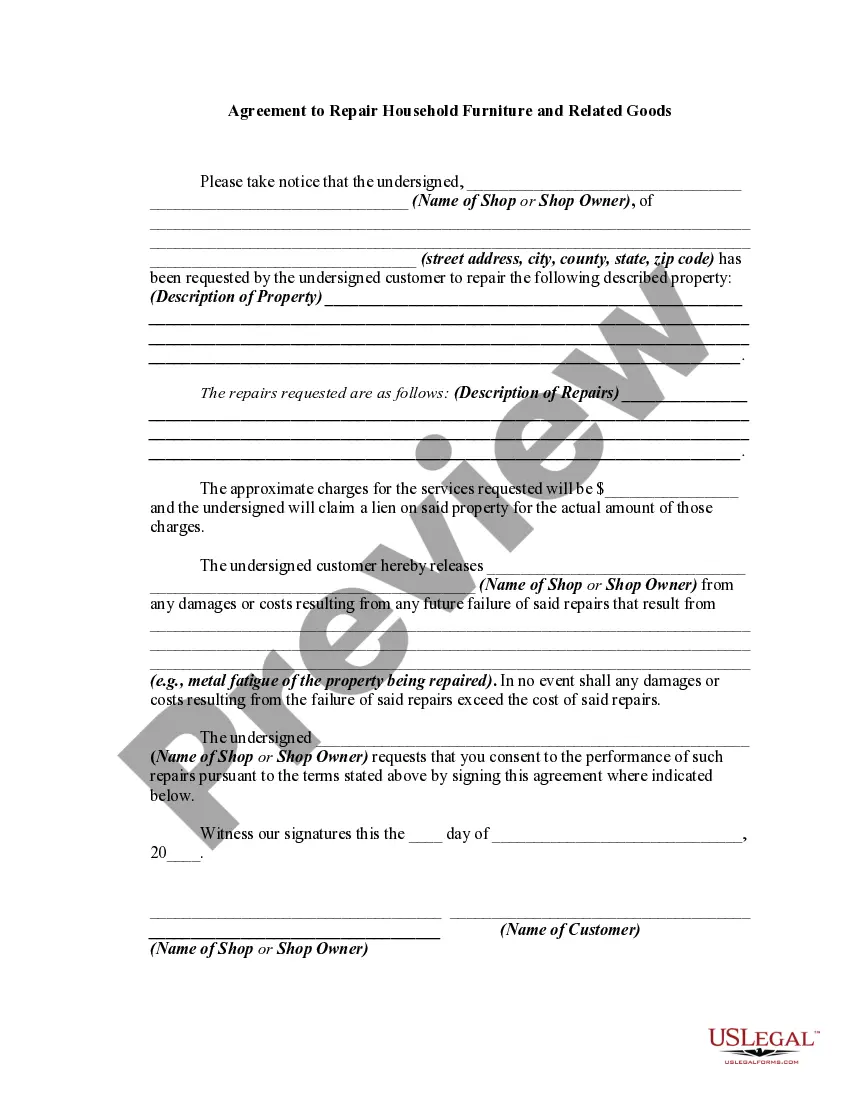
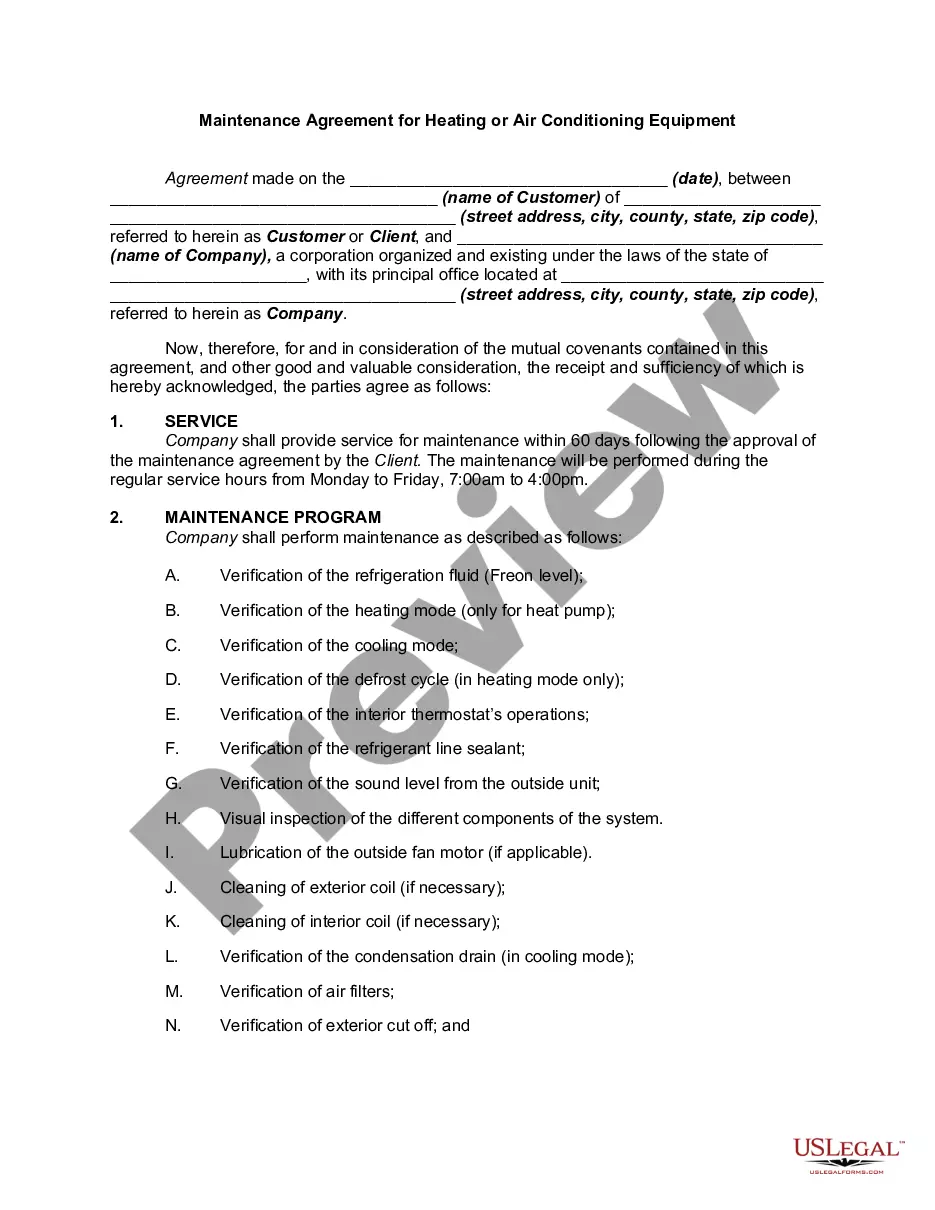
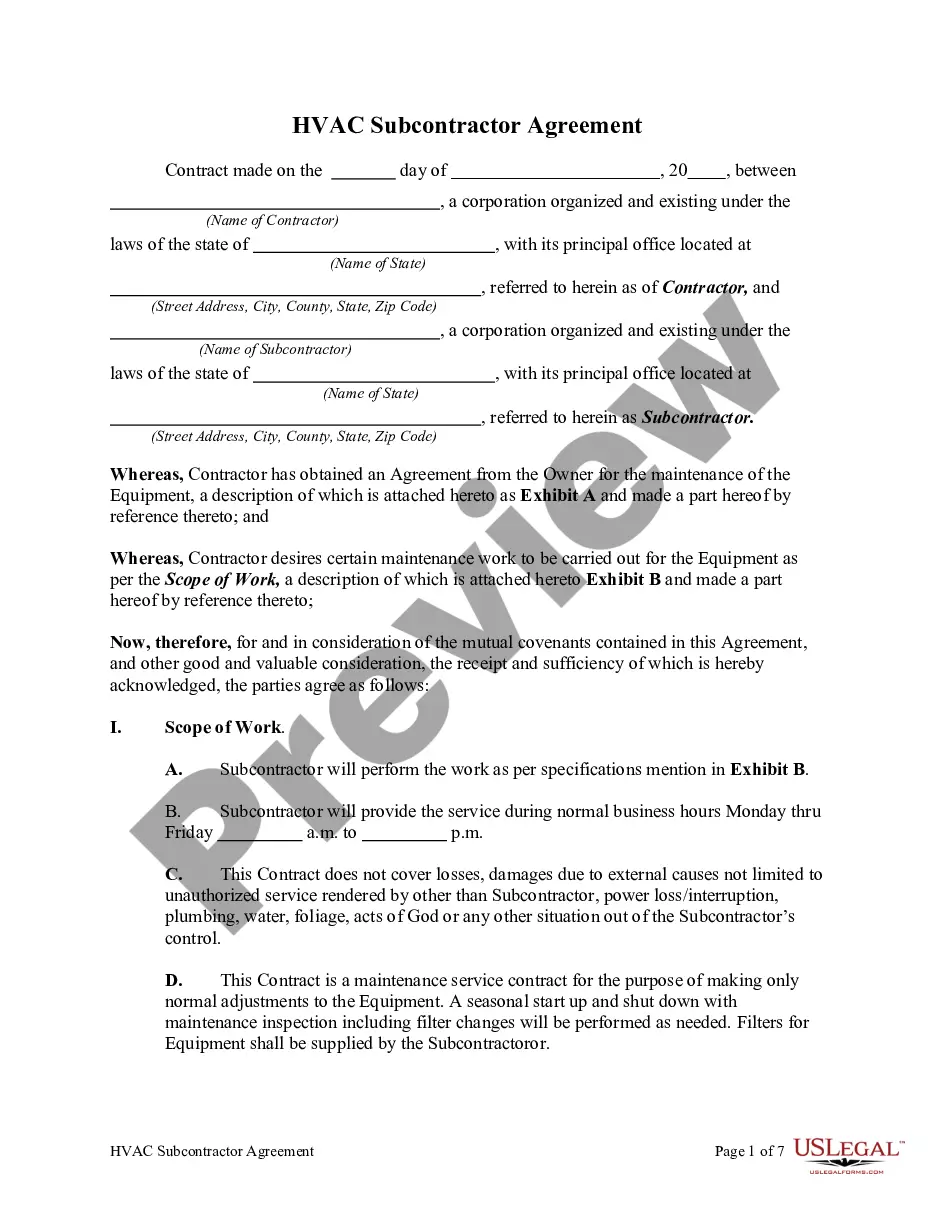
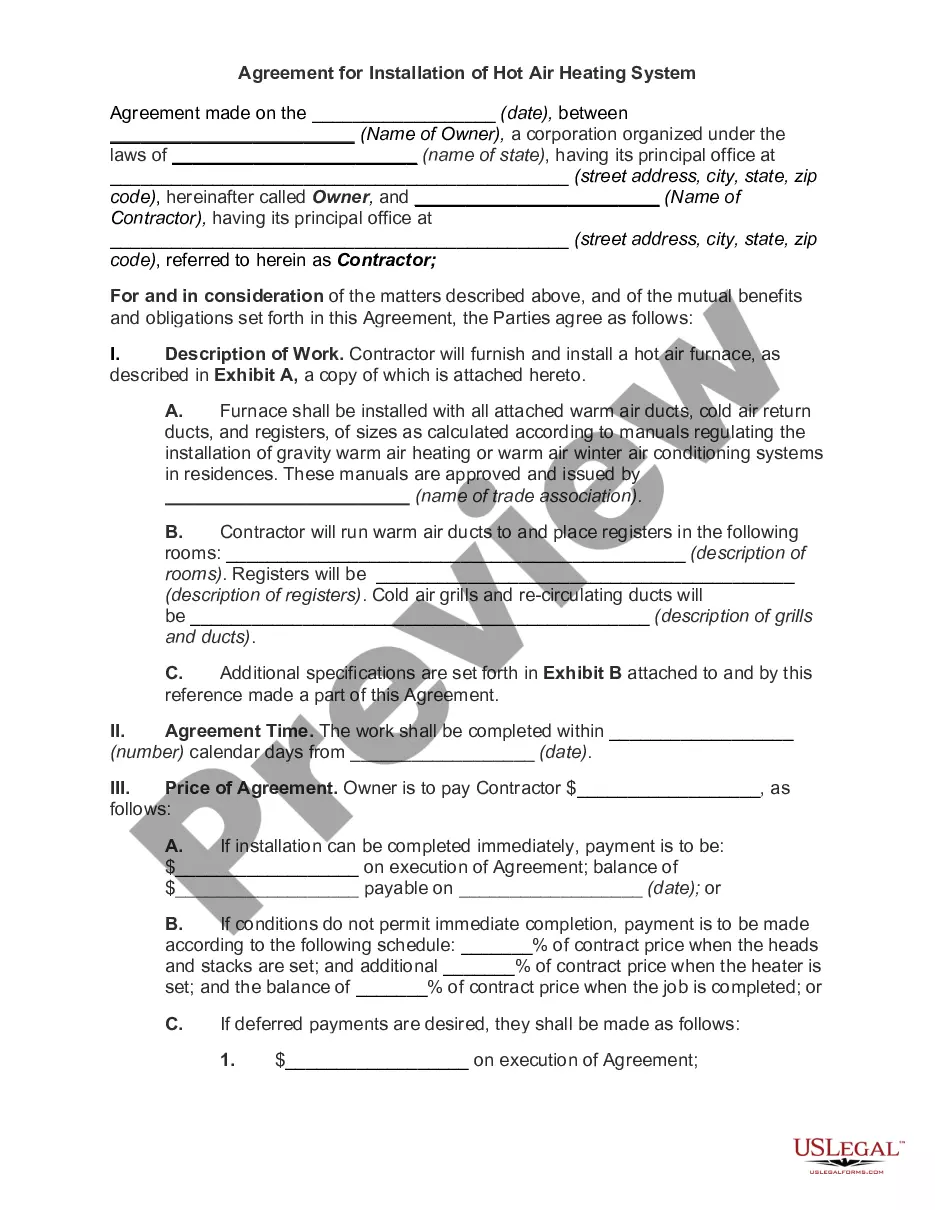
This Agreement to Service and Repair Heating, Ventilation, Air Conditioning Equipment and/or to do Kitchen Repair and Service is a legally binding document that outlines the terms and conditions between a service contractor and a customer. This form is essential for formalizing an agreement regarding repair services in these specific areas and differs from general service agreements by focusing on HVAC and kitchen repair specifics.
Key parts of this document
- Date of the agreement
- Identification of the contractor and customer
- Description of the project and services to be performed
- Payment terms, including fixed price or time and materials
- Duration and timeframe for project completion
- Responsibilities for permits, utilities, and cleanup
- Warranties and liability clauses
- Change order procedures
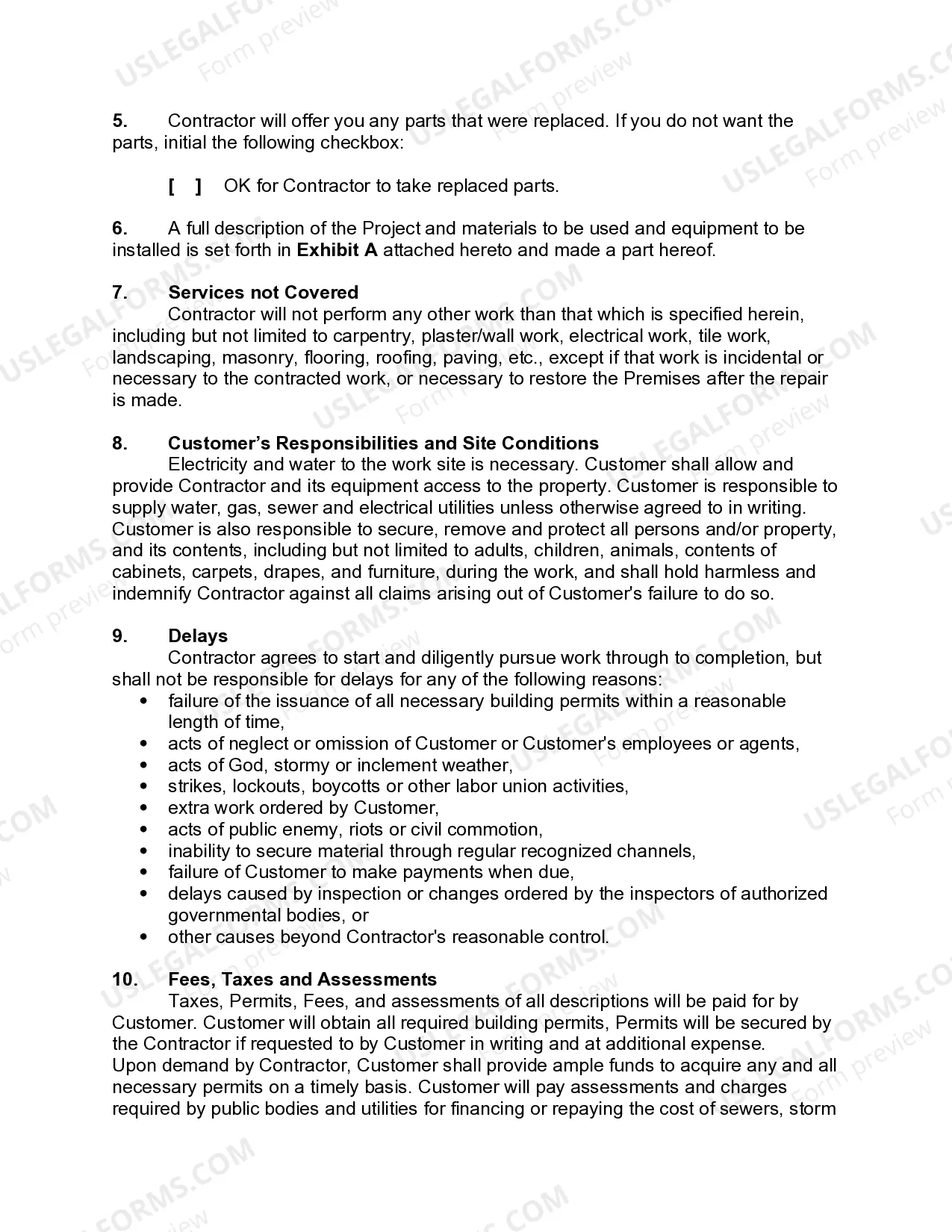
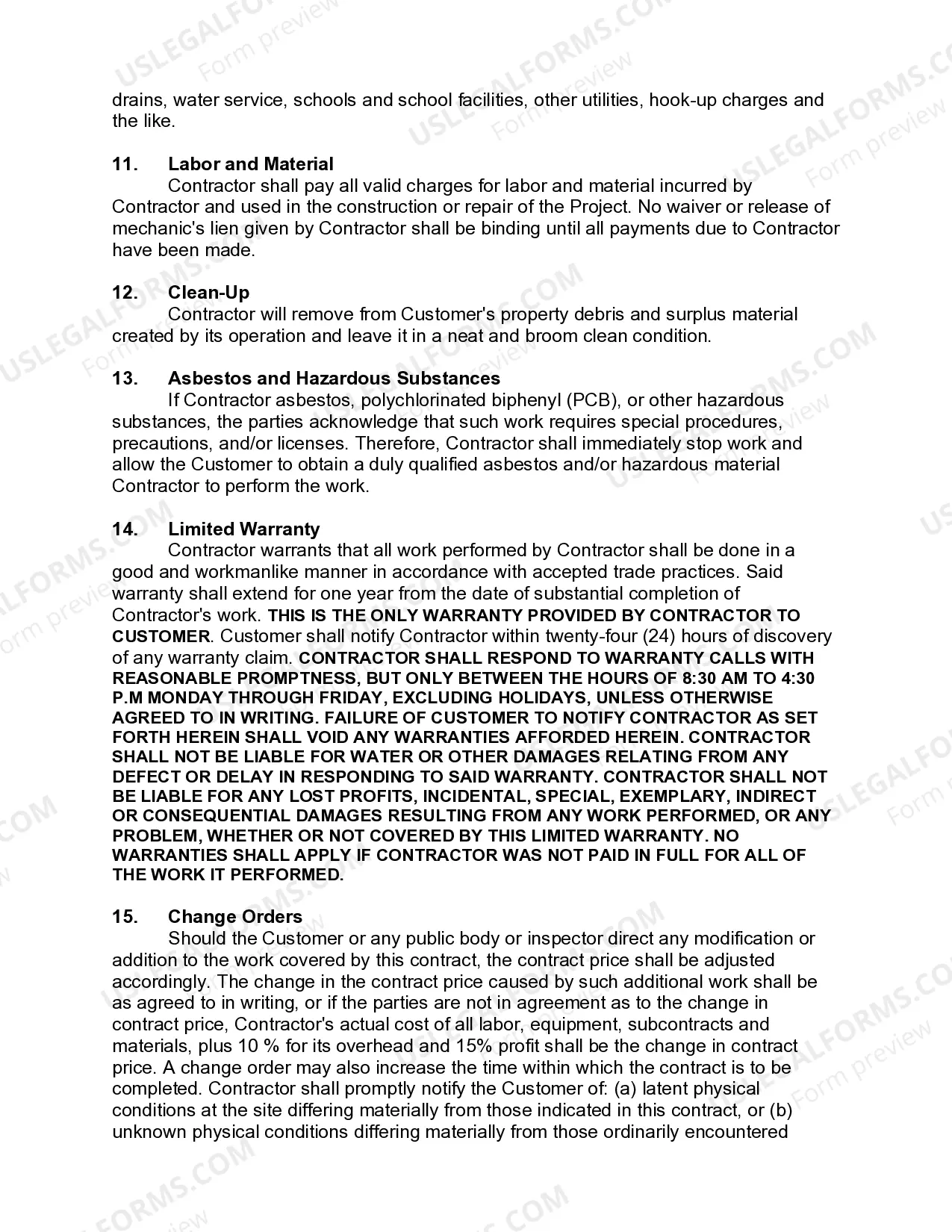
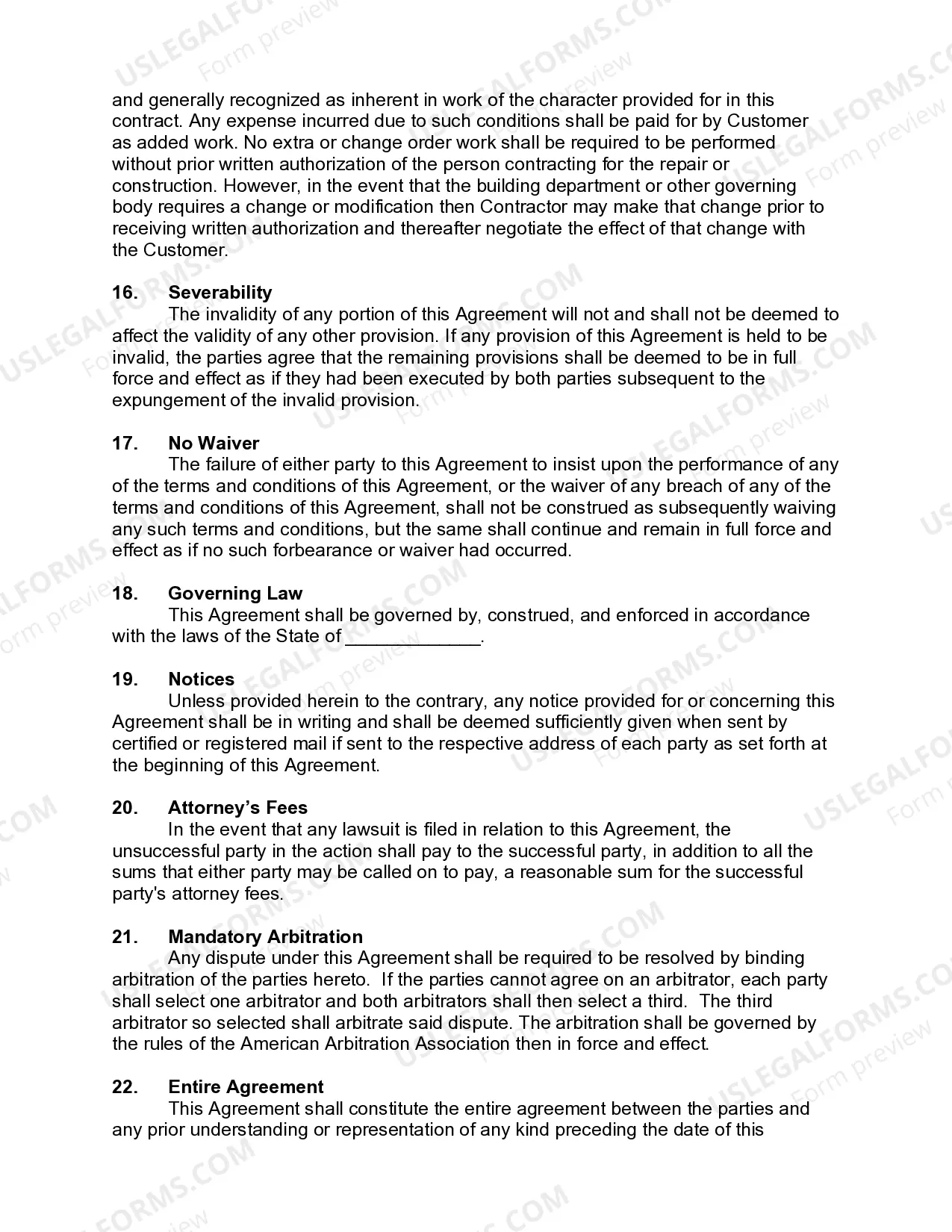
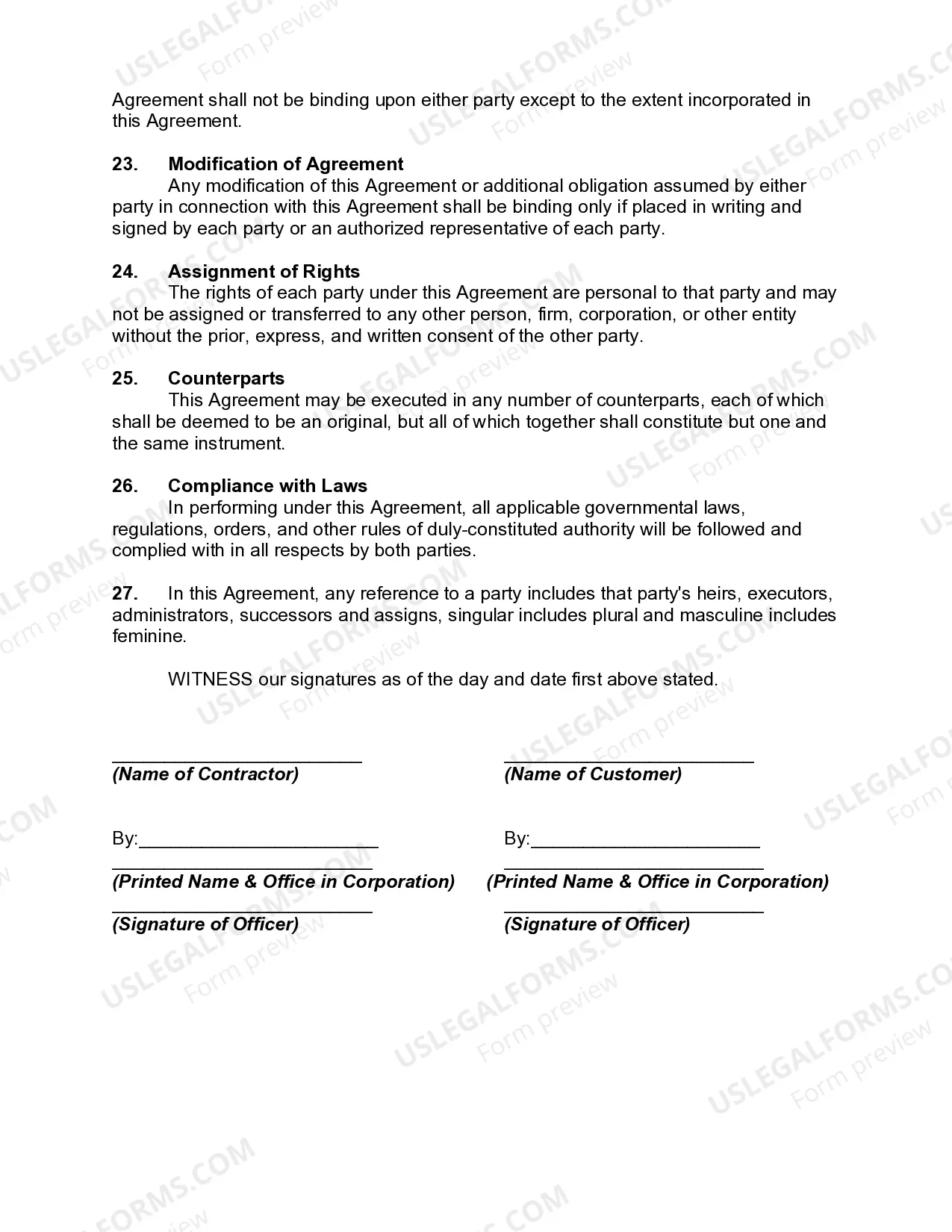
When to use this document
This form should be used when a customer wants to hire a contractor to perform maintenance or repairs on heating, ventilation, air conditioning, or kitchen equipment. It is appropriate for both residential and commercial projects, especially when significant repairs or installations are involved.
Who needs this form
- Property owners or managers seeking repairs
- Service contractors specializing in HVAC and kitchen repairs
- Businesses looking to formalize service agreements
- Individuals needing clarity on service terms and responsibilities
Steps to complete this form
- Identify and enter the details of both the contractor and the customer.
- Specify the project address and provide a detailed description of the work to be performed.
- Select the payment option and enter the contract price, payment schedule, and charges.
- Outline the approximate start and completion dates for the project.
- Ensure both parties sign and date the agreement to formalize it.
Notarization guidance
This form does not typically require notarization unless specified by local law. Always verify the requirements of your jurisdiction to ensure compliance.
Get your form ready online
Our built-in tools help you complete, sign, share, and store your documents in one place.
Make edits, fill in missing information, and update formatting in US Legal Forms—just like you would in MS Word.
Download a copy, print it, send it by email, or mail it via USPS—whatever works best for your next step.
Sign and collect signatures with our SignNow integration. Send to multiple recipients, set reminders, and more. Go Premium to unlock E-Sign.
If this form requires notarization, complete it online through a secure video call—no need to meet a notary in person or wait for an appointment.
We protect your documents and personal data by following strict security and privacy standards.

Make edits, fill in missing information, and update formatting in US Legal Forms—just like you would in MS Word.

Download a copy, print it, send it by email, or mail it via USPS—whatever works best for your next step.

Sign and collect signatures with our SignNow integration. Send to multiple recipients, set reminders, and more. Go Premium to unlock E-Sign.

If this form requires notarization, complete it online through a secure video call—no need to meet a notary in person or wait for an appointment.

We protect your documents and personal data by following strict security and privacy standards.
Common mistakes
- Failing to provide a clear description of the work to be done.
- Neglecting to specify payment terms and conditions.
- Not including approximate start and completion dates.
- Forgetting to obtain signatures from all parties involved.
- Overlooking the importance of local law compliance.
Why complete this form online
- Convenience of immediate access to legal documentation.
- Editability to customize the form for specific needs.
- Reliable templates drafted by licensed attorneys.
- Saves time compared to creating a form from scratch.
- The agreement is legally binding as long as both parties have signed it.
- Consulting local law regarding any additional clauses or requirements is advisable.
- Understanding each clause can help mitigate future disputes.
What to keep in mind
- The Agreement to Service and Repair HVAC and kitchen systems clarifies roles and responsibilities.
- Using this form helps protect both parties and establishes clear expectations.
- Ensure compliance with state-specific laws when using the form.
Looking for another form?
Form popularity
FAQ
Step 1 Power Off The Unit/Mains. Step 2 Clear debris and areas around the unit. Step 3 Clean And Straighten the Air Conditioner Fins. Step 4 Cleaning the Condenser Fan. Step 5 Cleaning Fins Inside Out. Step 1 Clean the Evaporator Coil.
An HVAC service call typically costs between $100 and $150. But, many factors impact how much an HVAC service will cost. The type, size, age, and complexity of your system and even time of year will have an effect on the overall cost. And of course, any necessary repairs will also have an impact.
Replace Filters (every 1-6 months) Inspect Fan, Bearings, and Belts (twice annually) Inspect Area Around Air Intake (twice annually) Fix Leaks in Cabinet and Supply Duct (annually) Clean and Adjust Dampers (annually)
The HVAC service plan includes a comprehensive check performed by a licensed service technician. He or she will inspect your system for signs of leaks, problems with electrical connections and wiring, and efficient thermostat operation.
The purpose of preventative maintenance is to keep your HVAC system up and running all season long with no surprise breakdowns, enabling you to begin the heating and cooling seasons with reliable and efficient service while operating at maximum efficiency.
HVAC stands for Heating, Ventilation and Air Conditioning. The trained HVAC technician who comes to your home to perform the preventive maintenance will check all the systems or just a specific one, depending on your requirements. Here is a look at a standard call for the furnace and for the air conditioner.
Clean or replace filters. Clean condenser and evaporator coils. Clean drain lines for proper flow and clear clogs. Clear drain pans of any standing water to avoid overflows. Replace worn pulleys and belts. Inspect ducts for mold, dust, and debris. Observe humidity levels.
Check refrigerant levels and inspect for leaks. Clean and straighten condenser coils to ensure proper air flow. Check gas connections for leaks. Tighten all electrical connections. Lubricate all moving parts. Test thermostat to make sure it's cycling the system on and off properly. Check air filter.
Your HVAC systems should be checked by a professional once a year. So if you have a standard central AC or a furnace, each of these units should be maintained, each year. If you have a heat pump system that you use year-round, then you'll want to schedule this service once every 6 months.