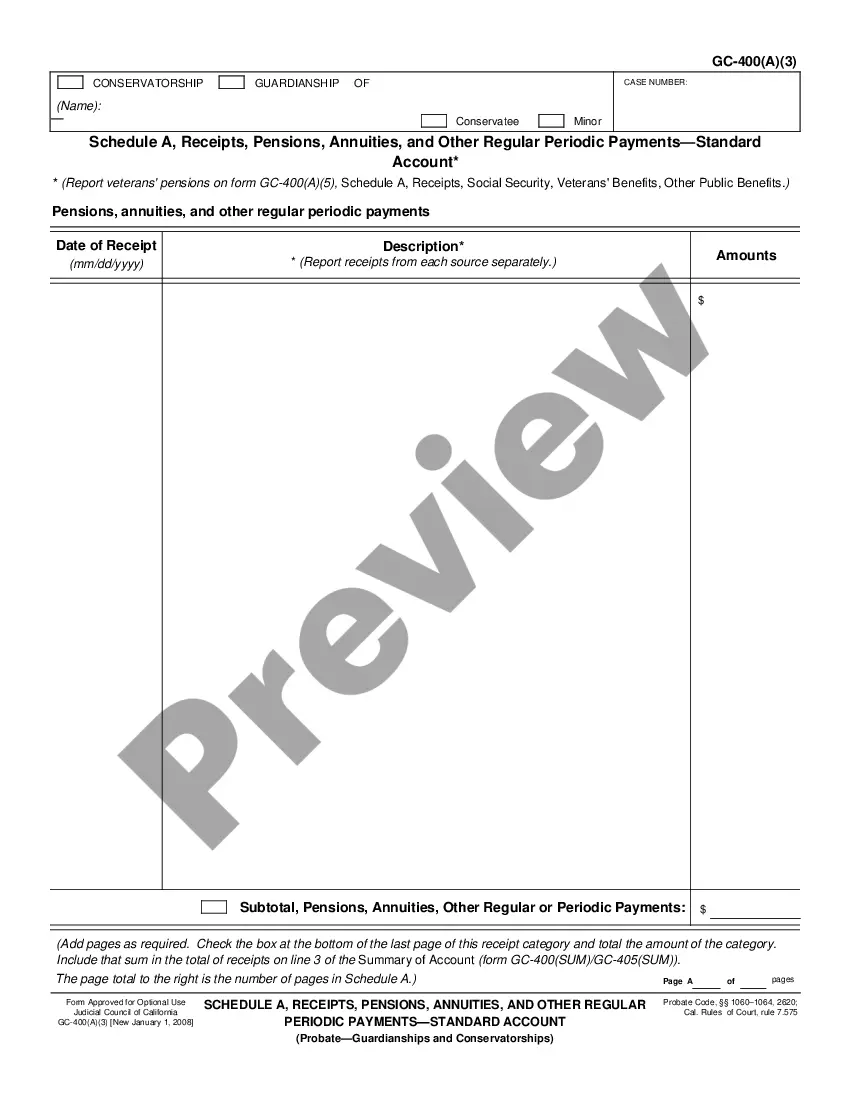
Stand Alone Confidentiality and Noncompetition Agreement with Employee
What is this form?
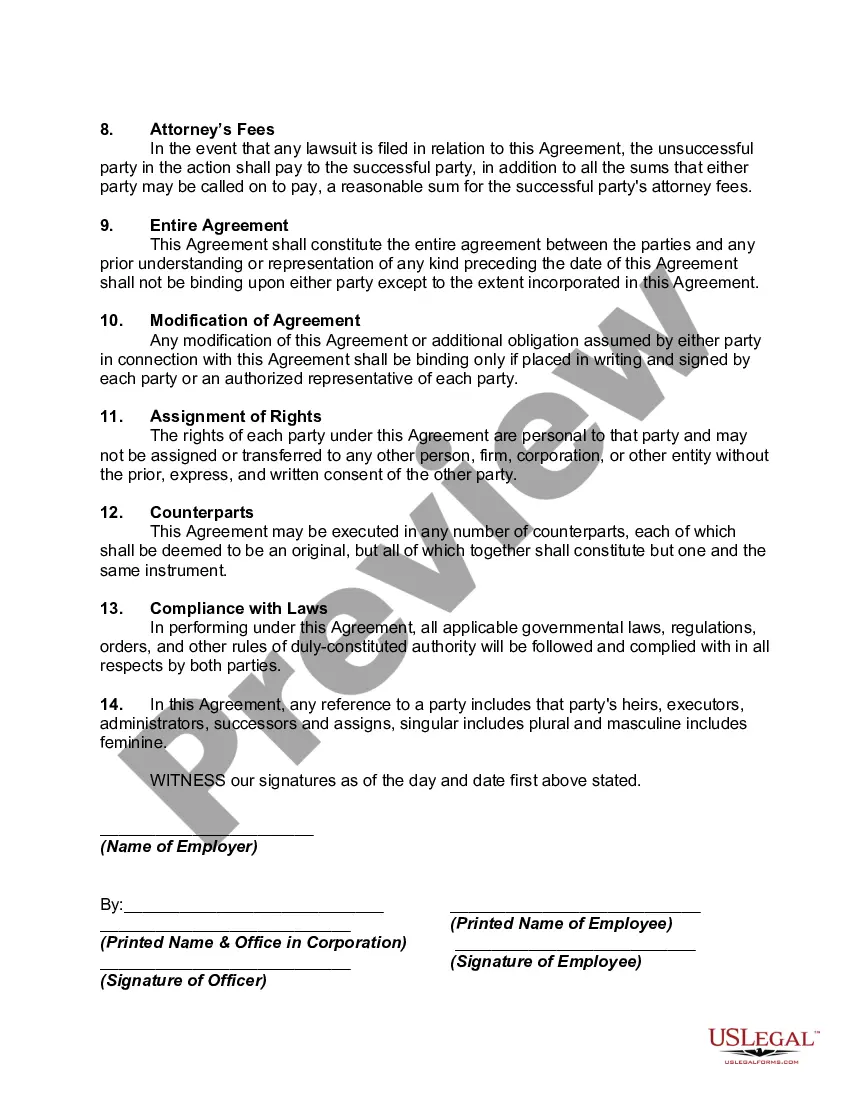
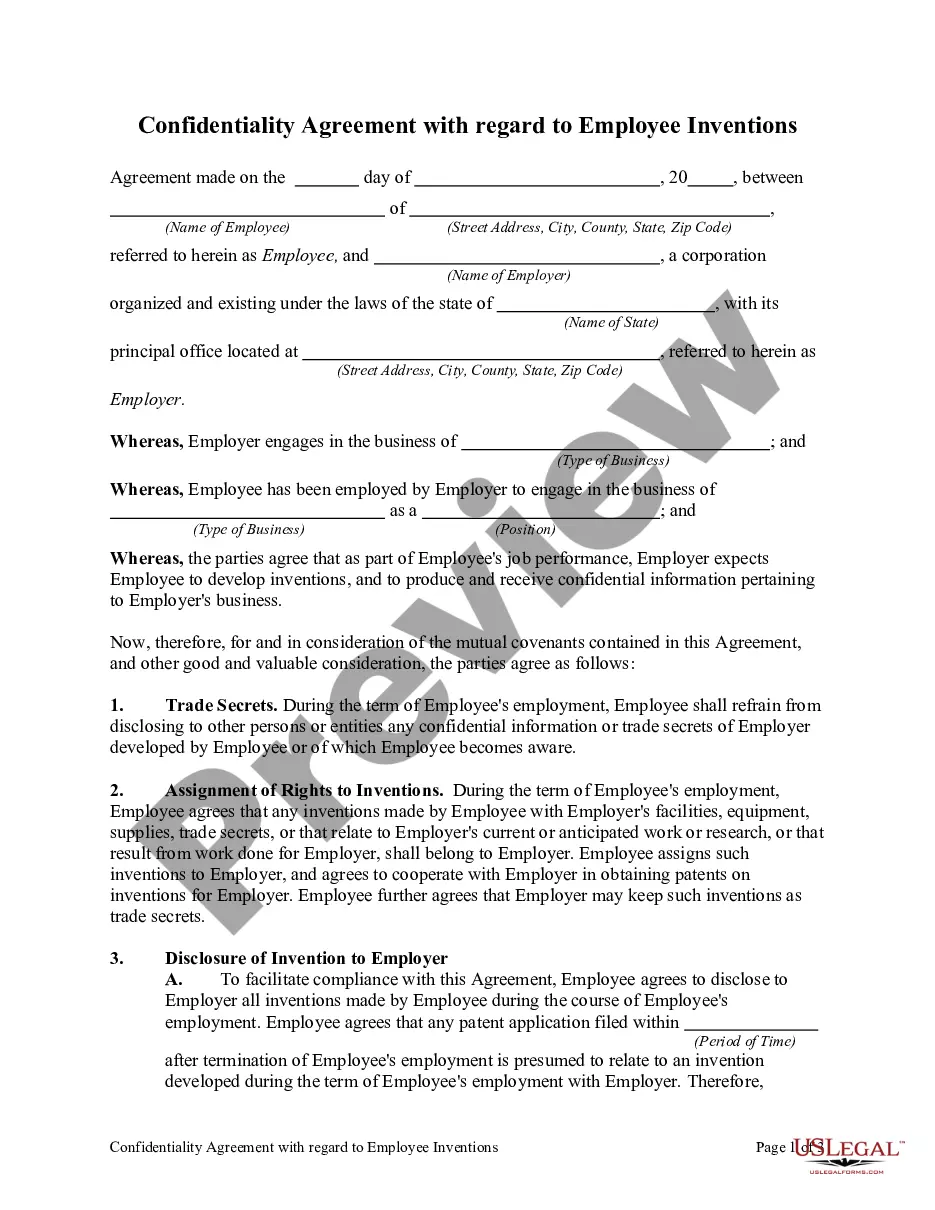
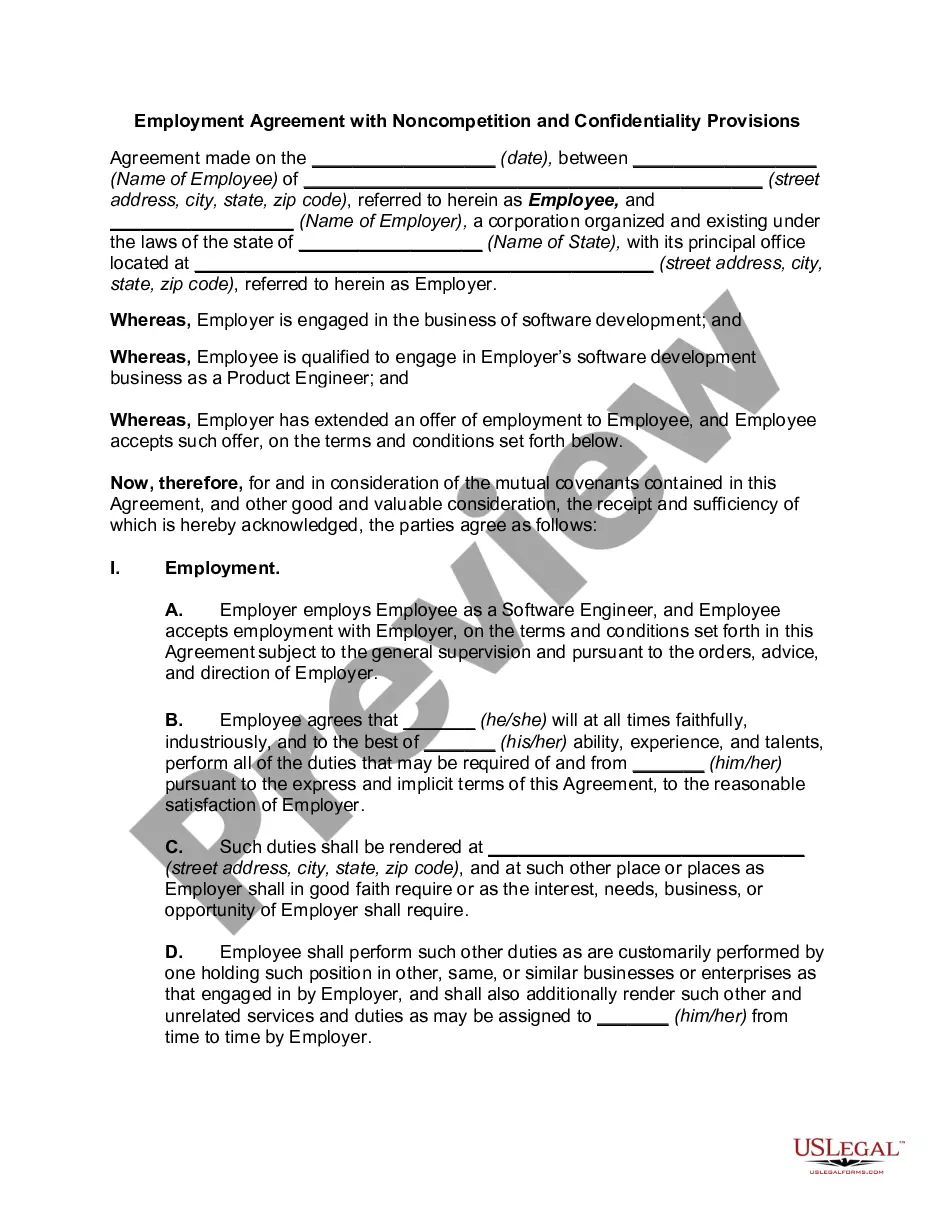
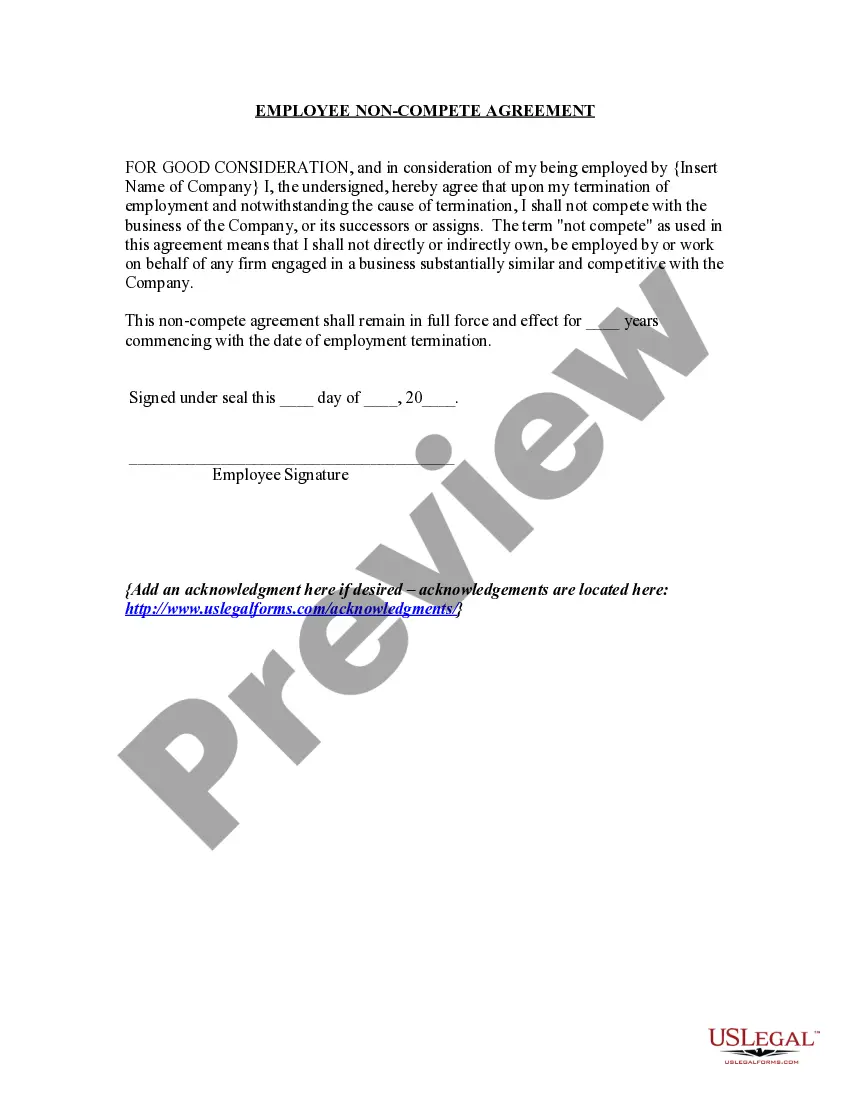
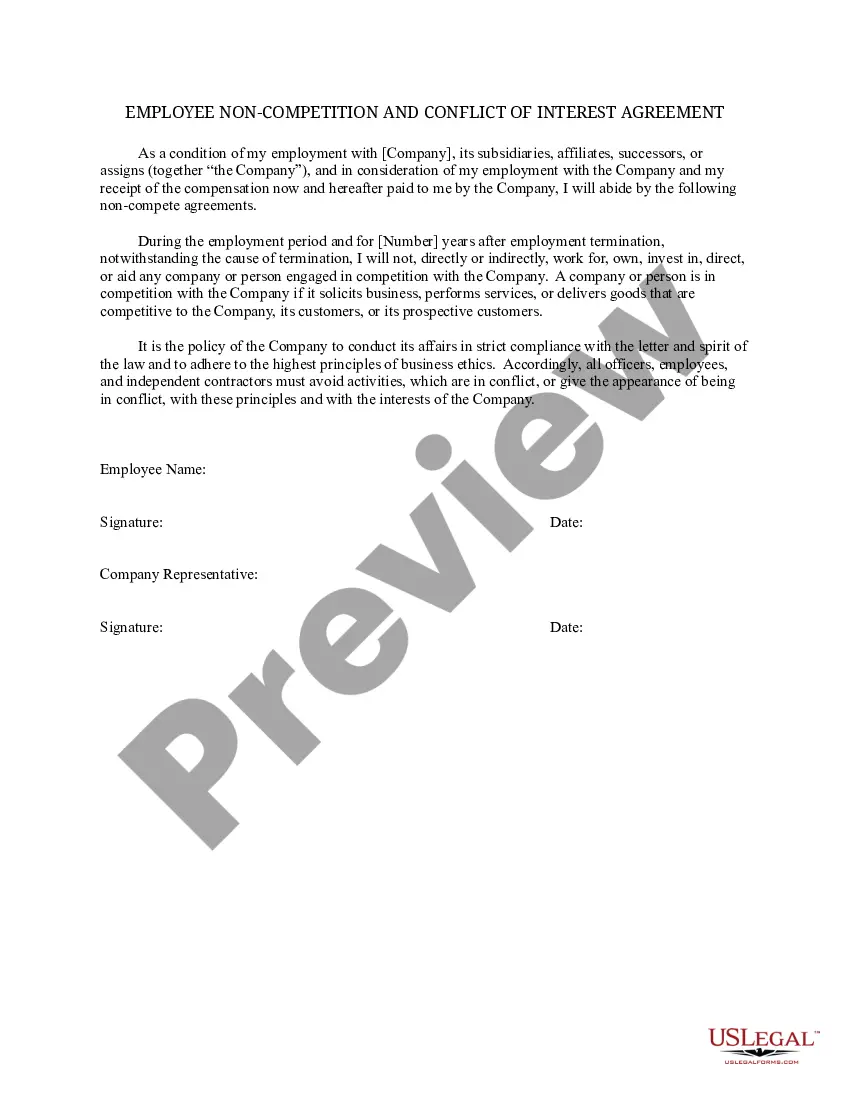
The Stand Alone Confidentiality and Noncompetition Agreement with Employee is a legal document that establishes terms for confidentiality and non-competition between an employer and an employee. This form is designed to protect sensitive business information that the employee may access during their employment. Unlike agreements tied to an employment contract, this stand-alone agreement focuses solely on confidentiality obligations and non-competition terms, ensuring that both parties are aligned on protecting business interests after employment ends.
Main sections of this form
- Confidentiality Clause: Details the employee's obligation not to disclose confidential information.
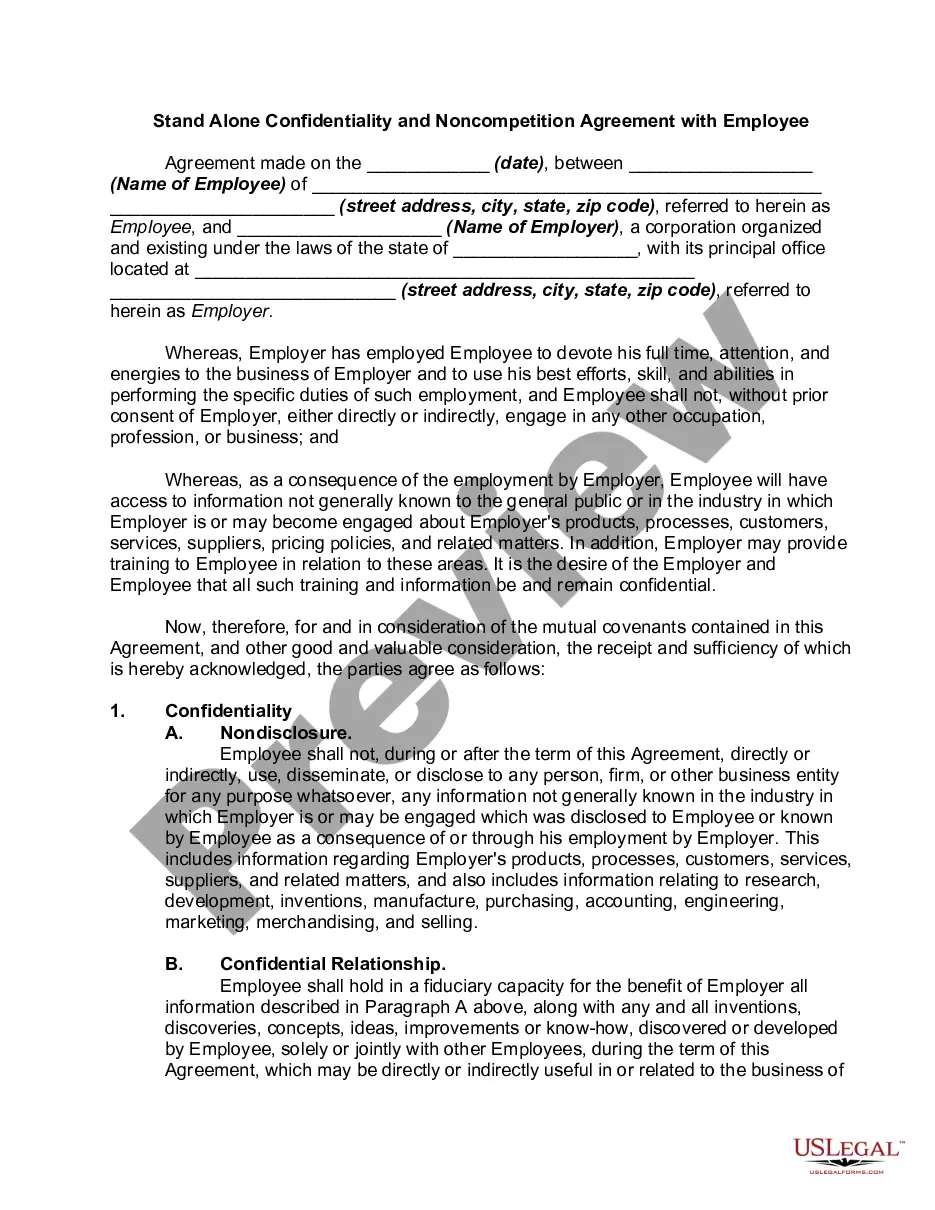
- Noncompetition Clause: Outlines the employee's restrictions on engaging with competitors for a specified period and within a specific geographic area.
- Return of Documents: Requires the employee to return all company property and documents upon termination.
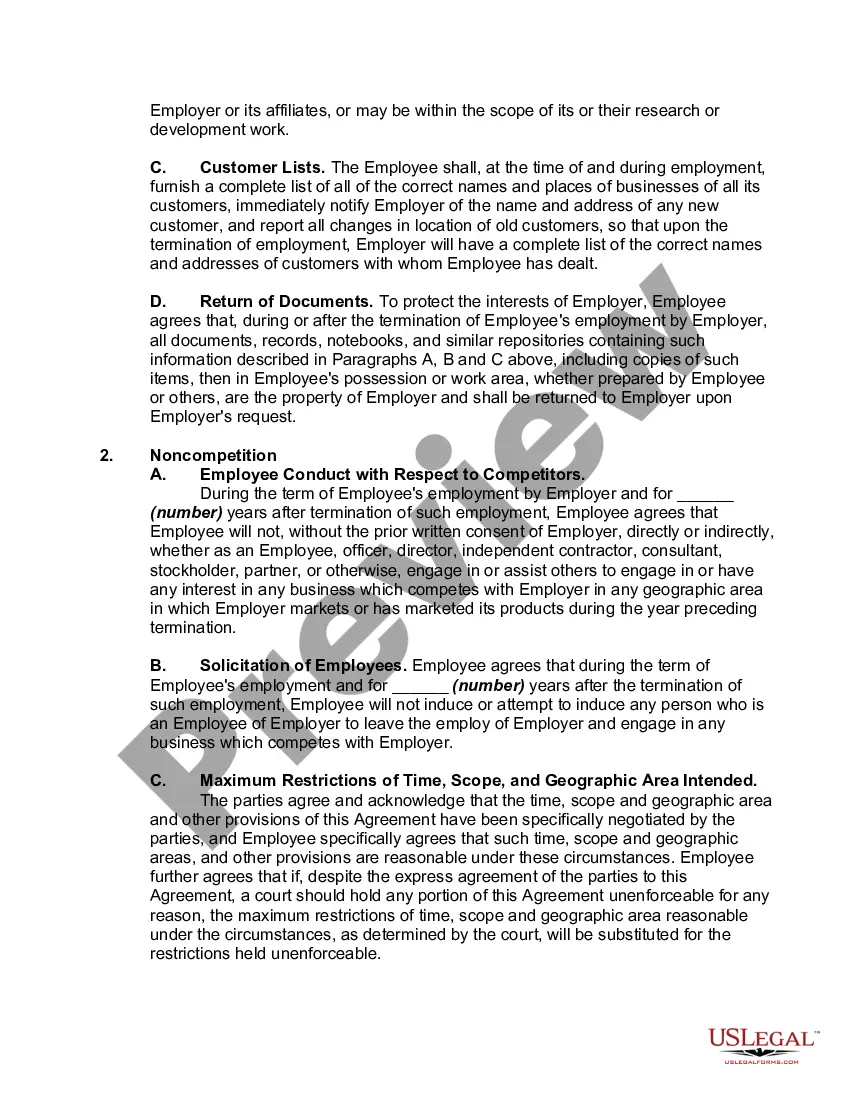
- Breach of Agreement: Specifies consequences for violations, including potential forfeiture of bonuses.
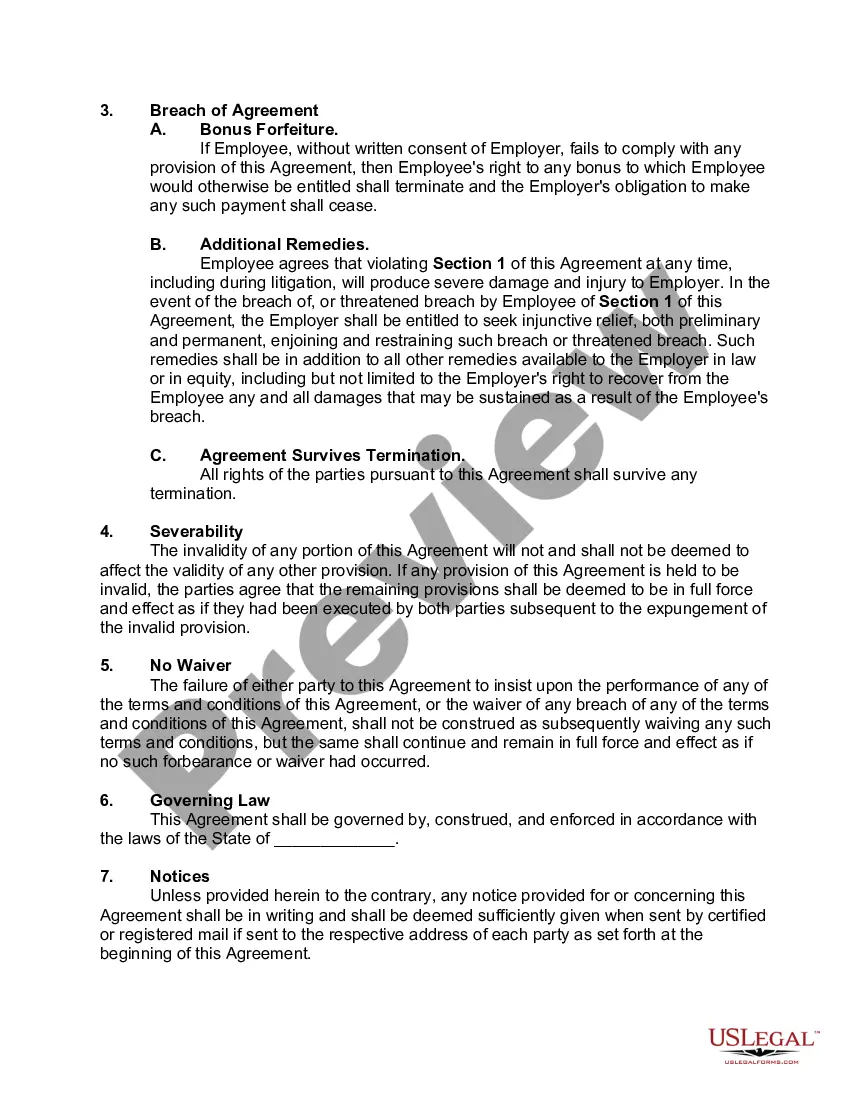
- Governing Law: Identifies the legal jurisdiction for resolving disputes related to the agreement.
When to use this document
This form should be used when an employer wants to ensure that an employee maintains confidentiality about sensitive business information and refrains from competing after their employment ends. Common scenarios include when hiring new employees with access to proprietary information, during mergers and acquisitions, or when establishing a framework for safeguarding business interests in a competitive market.
Who needs this form
- Employers seeking to protect their business information.
- Employees who are entering into a new job where they will handle sensitive information.
- Businesses planning to train employees on proprietary processes or systems.
- Companies in competitive industries where retaining confidentiality is crucial.
How to prepare this document
- Identify the parties by entering the name and address of the employee and the employer.
- Fill in the date the agreement is made.
- Specify the duration for the noncompetition clause.
- Detail any specific confidential information the employee must protect.
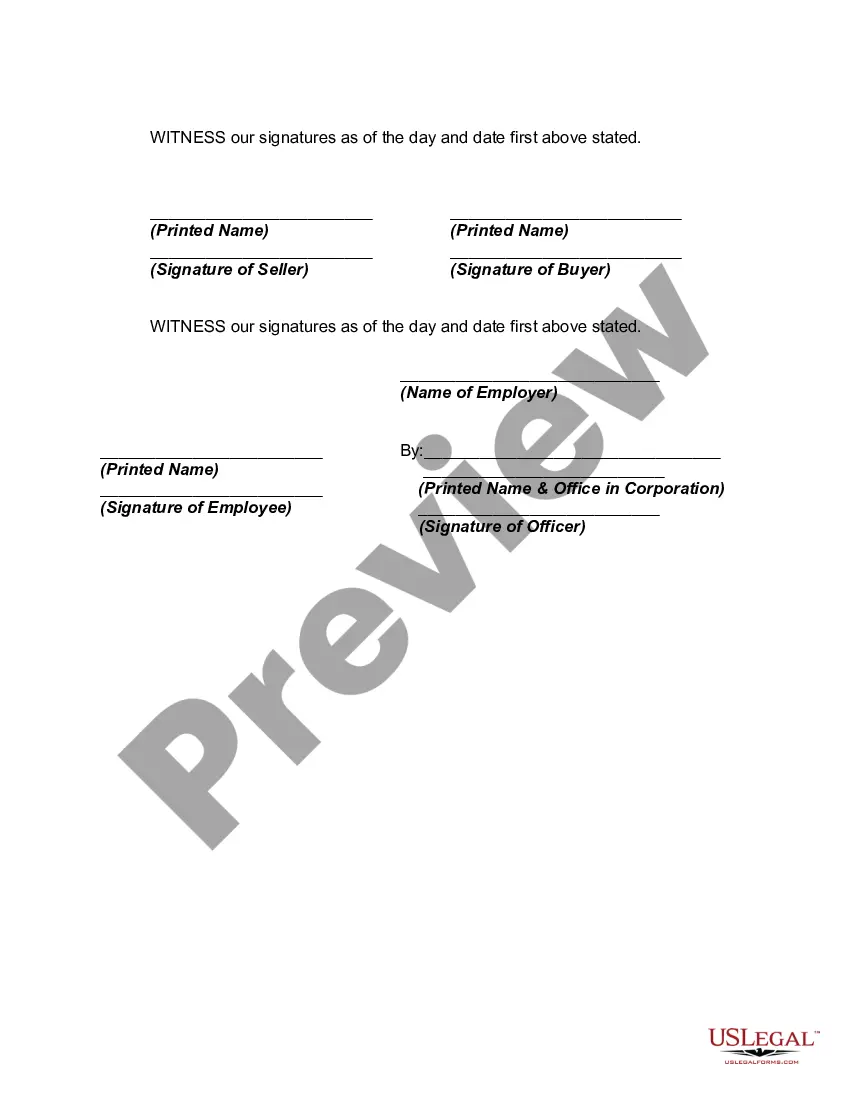
- Ensure both parties sign the form, including printed names and titles, where applicable.
Is notarization required?
Notarization is generally not required for this form. However, certain states or situations might demand it. You can complete notarization online through US Legal Forms, powered by Notarize, using a verified video call available anytime.
Get your form ready online
Our built-in tools help you complete, sign, share, and store your documents in one place.
Make edits, fill in missing information, and update formatting in US Legal Forms—just like you would in MS Word.
Download a copy, print it, send it by email, or mail it via USPS—whatever works best for your next step.
Sign and collect signatures with our SignNow integration. Send to multiple recipients, set reminders, and more. Go Premium to unlock E-Sign.
If this form requires notarization, complete it online through a secure video call—no need to meet a notary in person or wait for an appointment.
We protect your documents and personal data by following strict security and privacy standards.

Make edits, fill in missing information, and update formatting in US Legal Forms—just like you would in MS Word.

Download a copy, print it, send it by email, or mail it via USPS—whatever works best for your next step.

Sign and collect signatures with our SignNow integration. Send to multiple recipients, set reminders, and more. Go Premium to unlock E-Sign.

If this form requires notarization, complete it online through a secure video call—no need to meet a notary in person or wait for an appointment.

We protect your documents and personal data by following strict security and privacy standards.
Common mistakes
- Failing to specify the duration of non-competition.
- Overly broad geographic restrictions that may not be enforceable.
- Not clearly defining what constitutes confidential information.
- Neglecting to have both parties sign and date the agreement.
Why use this form online
- Convenience of downloading and completing the form at your own pace.
- Editability to tailor the agreement to specific needs before finalization.
- Access to professionally drafted templates prepared by licensed attorneys.
- Legal reliability, ensuring that the form meets necessary legal standards.
Looking for another form?









Form popularity
FAQ
A definition of confidential information. Who is involved. Why the recipient knows the information. Exclusions or limits on confidential information. Receiving party's obligations. Time frame or term. Discloser to the recipient.
While an employer has the right to demand its employees sign a NDA when those employees have access to valuable company data (e.g. product formulas, private customer lists, financial reports, etc.), the employer should not ask an employee to sign a confidentiality agreement if the purpose is to protect information that
An employee can be required to sign an NDA or NDA-like agreement with an employer, protecting trade secrets. In fact, some employment agreements include a clause restricting employees' use and dissemination of company-owned confidential information.
The most common way to deal with a breach of confidentiality is to tell your employee that you know they've breached confidentiality. You'll need to warn them of the consequences and ask them for an undertaking to stop misusing your confidential business information.
Generally, confidentiality agreements are enforceable when they meet the general requirements of a contract.
If an NDA lists extreme punishments for breaking the confidentiality agreement, you shouldn't sign it. A common consequence for breach of contract under an NDA is termination of employment. Be aware of what is considered a breach of contract.
Set the date of the agreement. Describe the two parties, sometimes called the Disclosing Party and the Receiving Party.7feff Include names and identification, so there can be no misunderstanding about who signed the agreement.
While an employer has the right to demand its employees sign a NDA when those employees have access to valuable company data (e.g. product formulas, private customer lists, financial reports, etc.), the employer should not ask an employee to sign a confidentiality agreement if the purpose is to protect information that