General Form of Pretrial Order
What is this form?
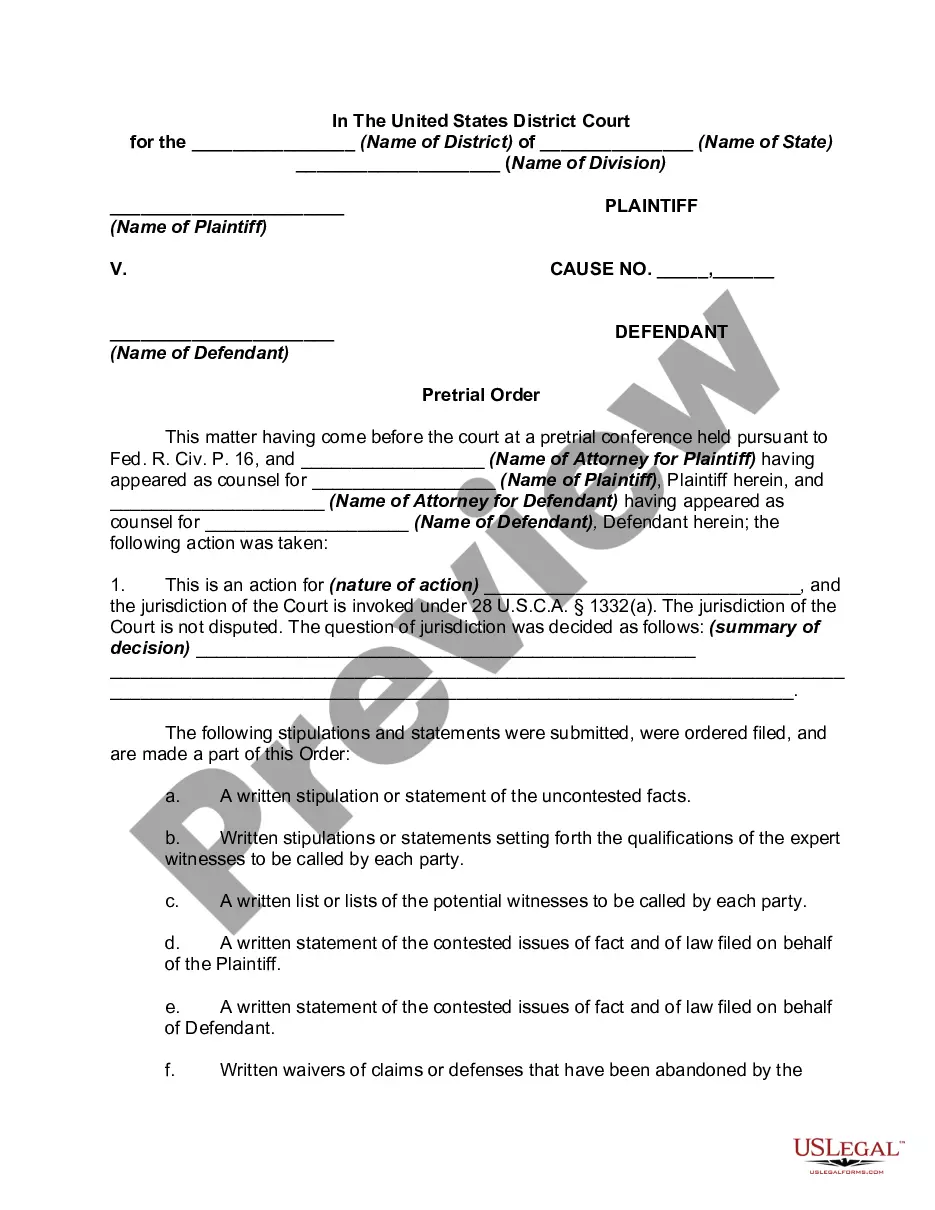
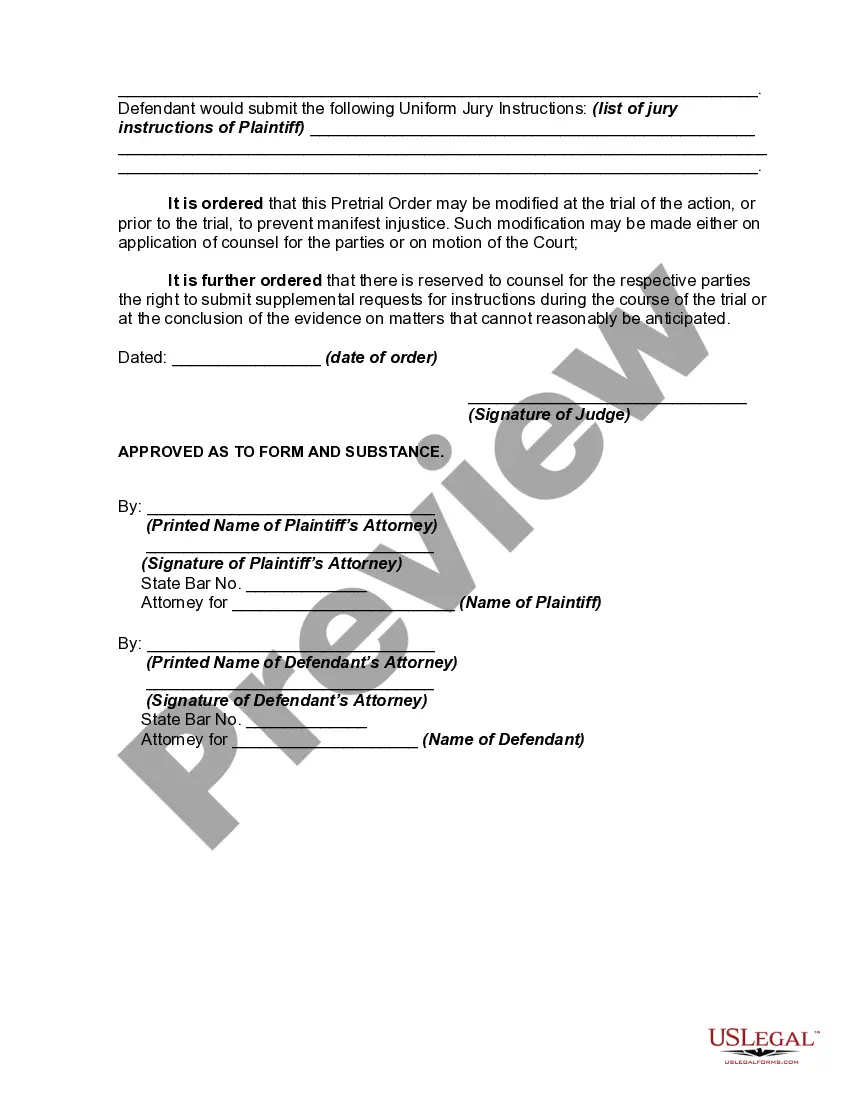
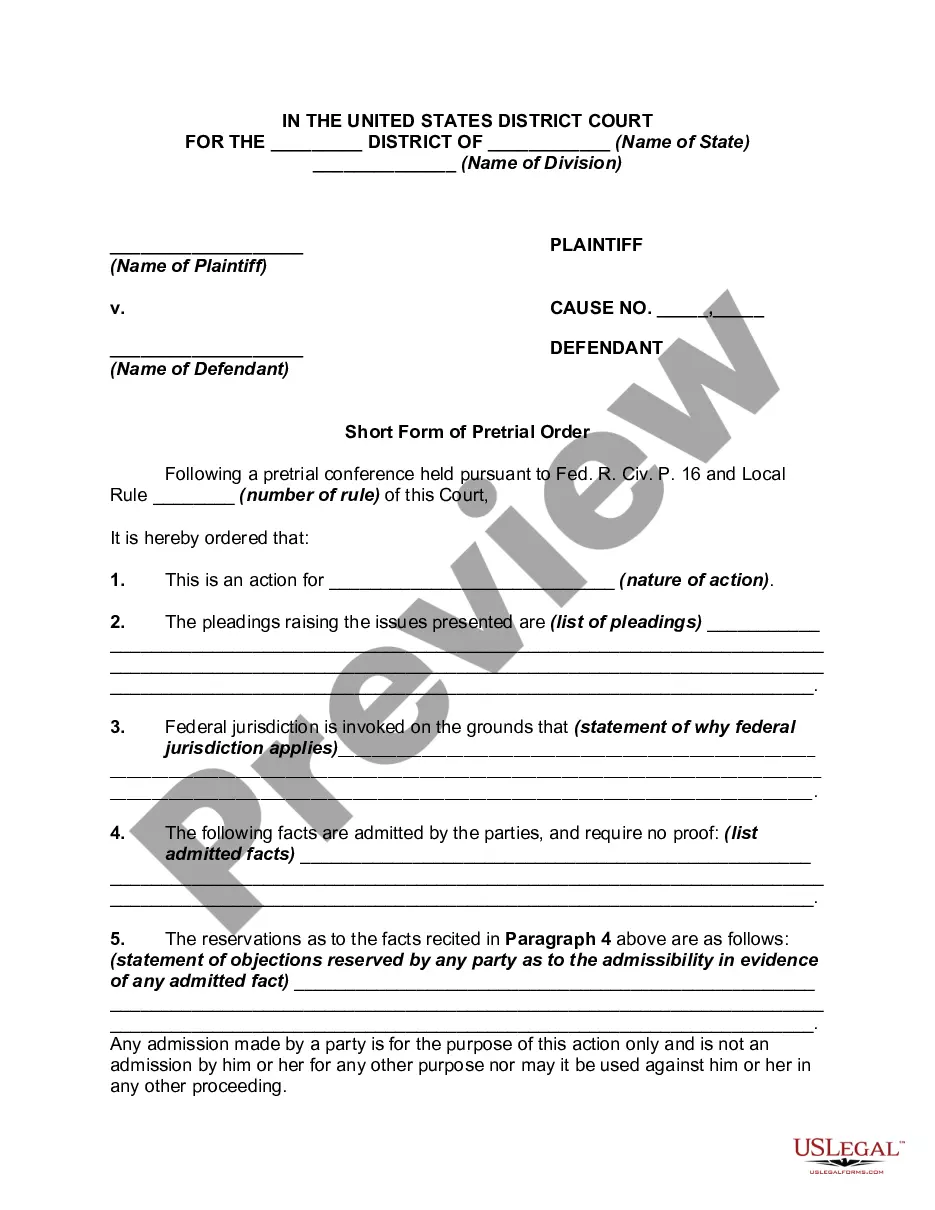
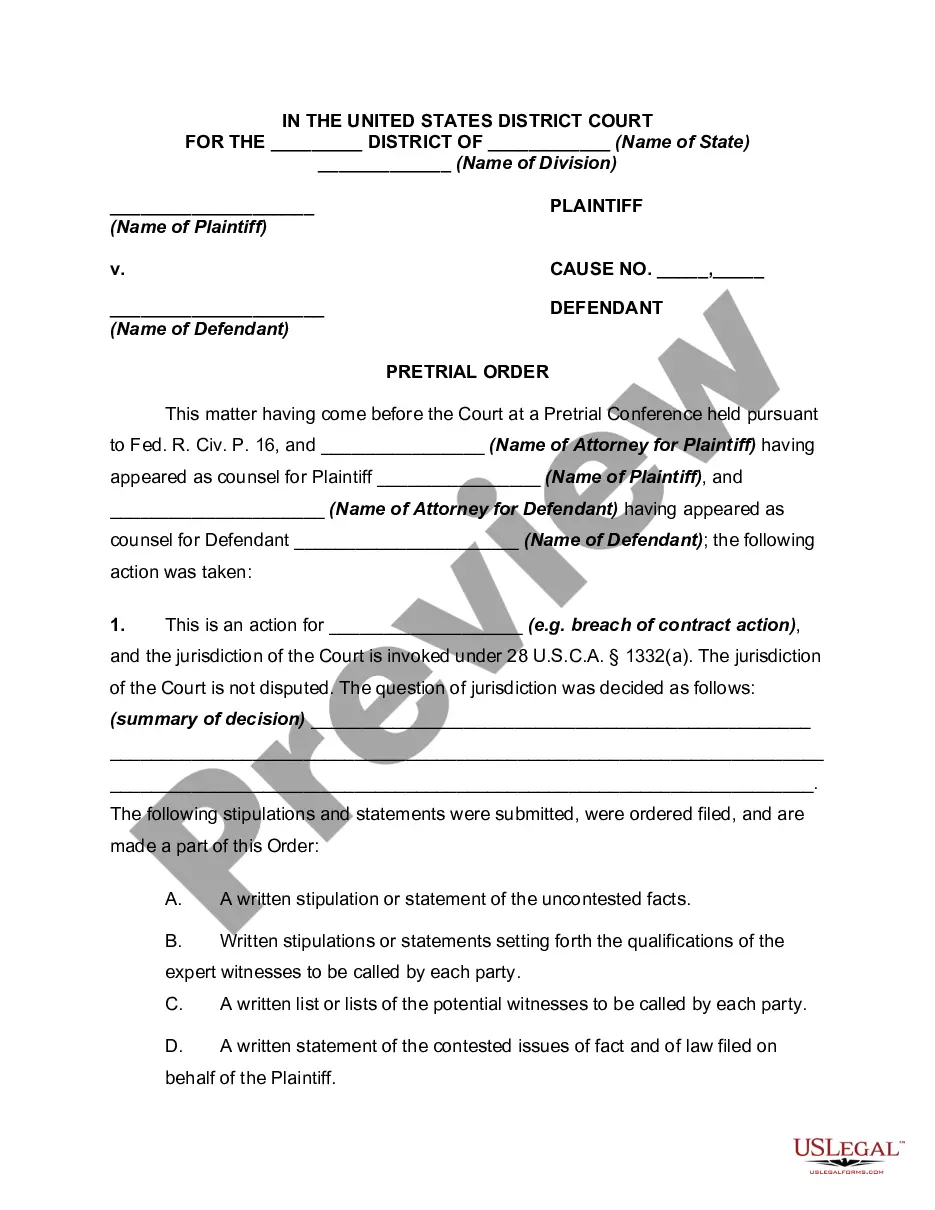
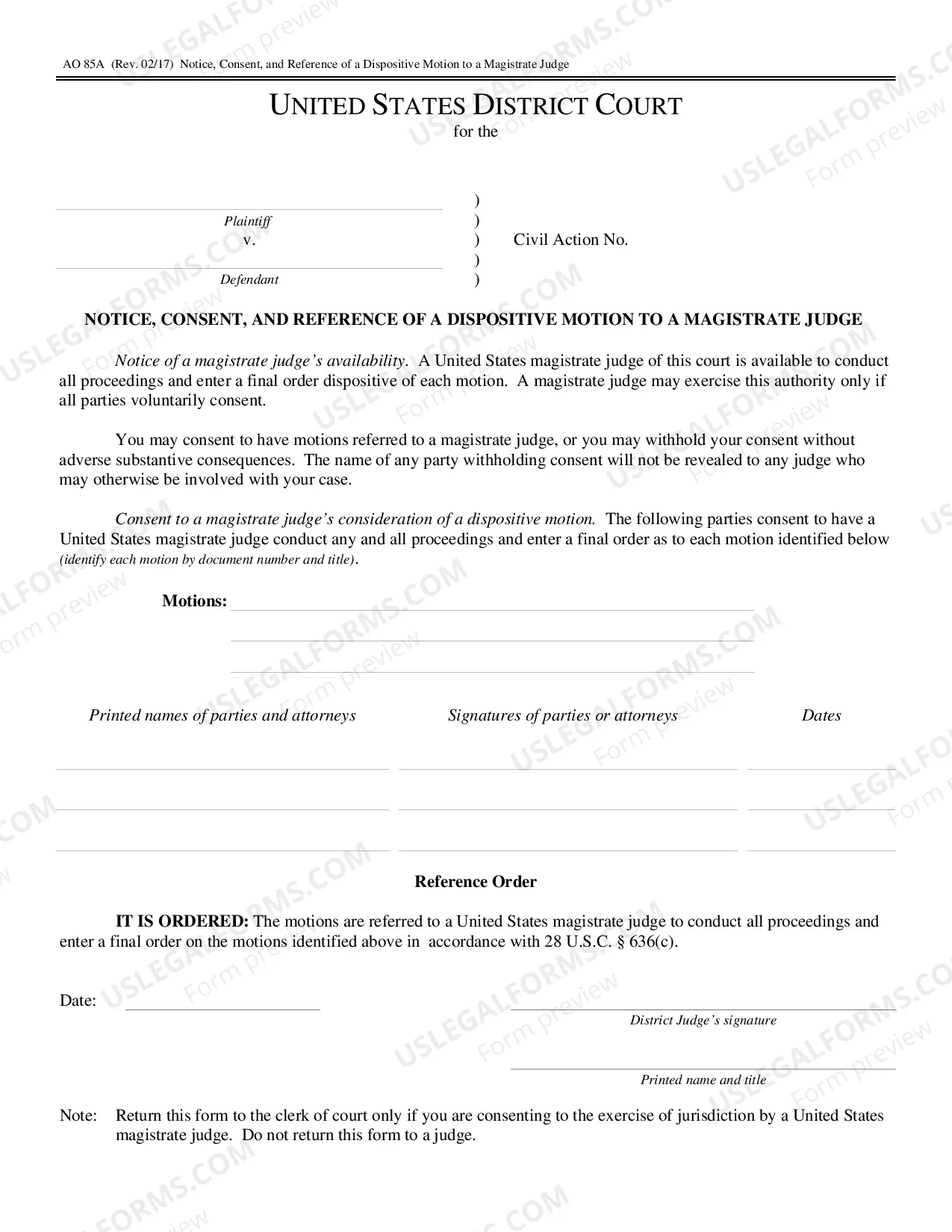
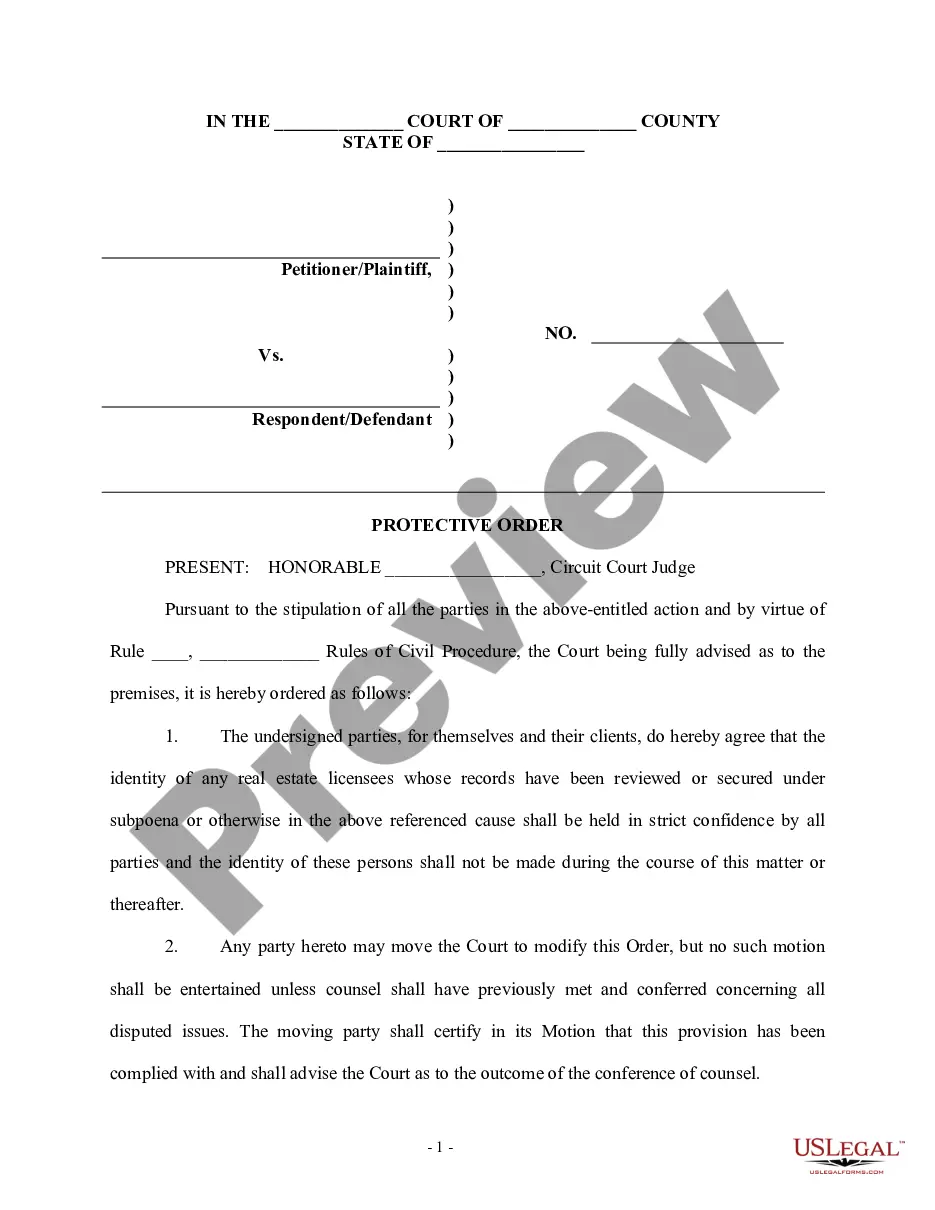
The General Form of Pretrial Order serves as a structured document outlined by the Federal Rules of Civil Procedure, primarily adopted across various states. This form facilitates the pretrial conference process, enabling effective management of court cases. It differs from other legal forms by specifically focusing on trial preparations, including stipulations and evidence handling, ensuring that cases progress efficiently through the legal system.
Main sections of this form
- Identification of the district, state, and parties involved in the case.
- A summary of the nature of the action and jurisdiction rationale.
- Written stipulations regarding uncontested facts and witnesses.
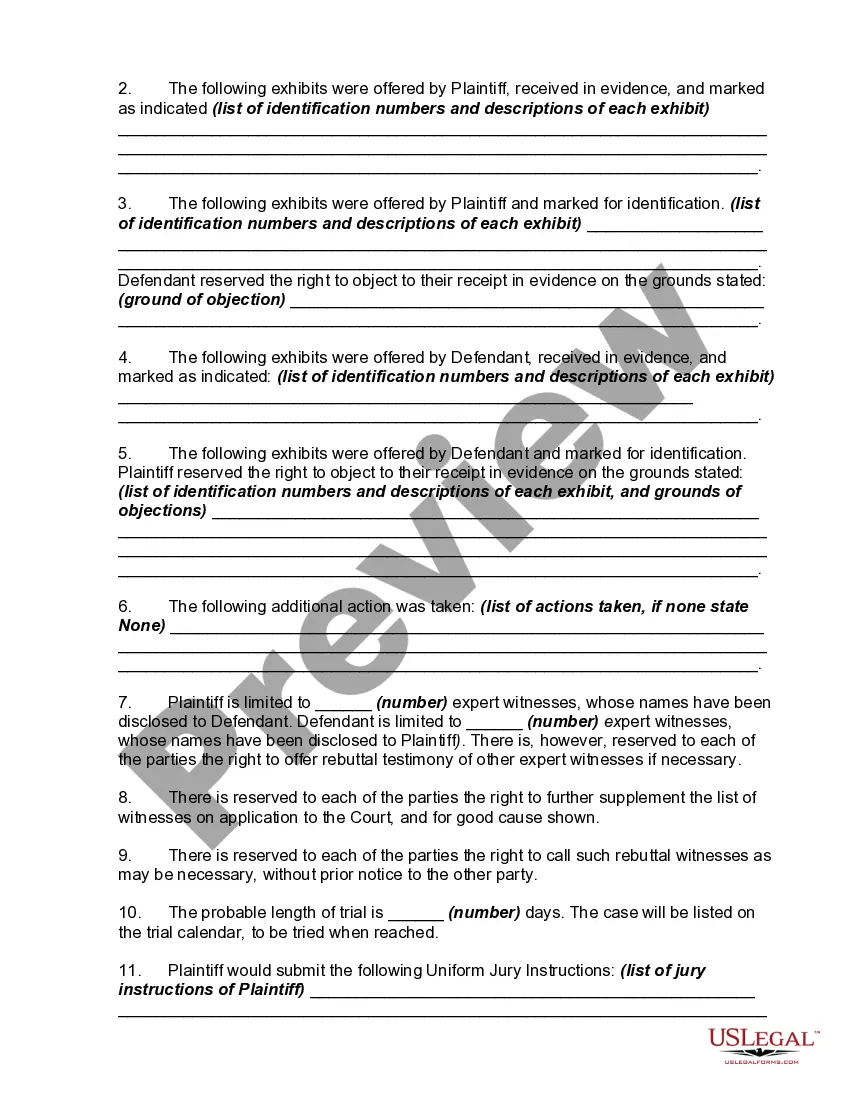
- Details on admitted and identified exhibits for the trial.
- Limitations on the number of expert witnesses for each party.
- Provisions for modifying the order during trial to prevent injustices.
When to use this document
This form is typically used before a trial, during a pretrial conference. It is essential when both parties need to outline their cases to the court, streamline disputes about evidence, and facilitate discussions that could lead to a settlement. Use this form if you are involved in a civil lawsuit that requires a structured pretrial procedure.
Intended users of this form
The following individuals or groups should use this form:
- Attorneys representing plaintiffs and defendants in civil suits.
- Pro se litigants who are representing themselves in court.
- Court clerks involved in trial management.
Steps to complete this form
Follow these steps to complete the General Form of Pretrial Order:
- Identify the court district and state, and fill in the names of the plaintiff and defendant.
- Summarize the nature of the action and state the court's jurisdiction.
- List all agreed-upon facts and contested issues, ensuring all parties are accurately represented.
- Document exhibits offered by both parties, including those received in evidence and those marked for identification.
- Indicate the number of expert witnesses allowed for each party and any stipulations regarding their testimony.
Notarization guidance
This form does not typically require notarization unless specified by local law. Ensure you check any jurisdiction-specific mandates that may necessitate notarization for specific documents within the pretrial procedure.
Get your form ready online
Our built-in tools help you complete, sign, share, and store your documents in one place.
Make edits, fill in missing information, and update formatting in US Legal Forms—just like you would in MS Word.
Download a copy, print it, send it by email, or mail it via USPS—whatever works best for your next step.
Sign and collect signatures with our SignNow integration. Send to multiple recipients, set reminders, and more. Go Premium to unlock E-Sign.
If this form requires notarization, complete it online through a secure video call—no need to meet a notary in person or wait for an appointment.
We protect your documents and personal data by following strict security and privacy standards.

Make edits, fill in missing information, and update formatting in US Legal Forms—just like you would in MS Word.

Download a copy, print it, send it by email, or mail it via USPS—whatever works best for your next step.

Sign and collect signatures with our SignNow integration. Send to multiple recipients, set reminders, and more. Go Premium to unlock E-Sign.

If this form requires notarization, complete it online through a secure video call—no need to meet a notary in person or wait for an appointment.

We protect your documents and personal data by following strict security and privacy standards.
Mistakes to watch out for
- Failing to provide all necessary signatures, including attorneys for both parties.
- Leaving key sections, such as the nature of the action, incomplete.
- Not adhering to state-specific requirements when applicable.
- Overlooking the identification of exhibits, leading to confusion during the trial.
Why use this form online
- Convenience: Download and complete the form at your own pace.
- Editability: Modify the form as required for your specific case details.
- Reliability: Access templates created by licensed attorneys, ensuring legal compliance.
Main things to remember
- The General Form of Pretrial Order is essential for managing civil litigation and streamlining trial preparation.
- Proper completion of the form helps clarify issues and prevent delays in the courtroom.
- Understanding the components of this form is critical for both legal professionals and self-represented parties alike.
Looking for another form?









Form popularity
FAQ
A pretrial hearing, sometimes called a pretrial conference, is a meeting of the defense, the prosecution, and the judge before a trial commences. If one party does not appear, the judge can impose sanctions. During this hearing, a range of documents may be presented, evidence can be presented and excluded, and more.
A hearing conducted before a jury by a judge, an arbitrator, etc., to clarify the legal and factual problems and to stipulate such matters between the parties to speed up the court's justice and the costs.
The purpose of the pretrial is to assure that all parties are prepared to go on to trial, if necessary, and to discuss alternate means of settling the dispute at an early stage of the proceedings.
An order setting forth the substantive and procedural framework of a case to be tried, specifying the parties' claims and defenses, stipulations, and procedural rules.
In sequence, they are: Pleading Stage - filing the complaint and the defense's motions. Pretrial Stage - discovery process, finding of facts. Trial Stage - seating of the jury, testimony on behalf of the plaintiffs and testimony on behalf of the defendants.
A pretrial hearing, sometimes called a pretrial conference, is a meeting of the defense, the prosecution, and the judge before a trial commences. If one party does not appear, the judge can impose sanctions. During this hearing, a range of documents may be presented, evidence can be presented and excluded, and more.
Pretrial release is critical to permit a client to effectively assist in his defense (locate witnesses, review documents, prepare to testify, avoid jail house pallor). Studies have demonstrated a correlation between pretrial release and acquittal at trial.
Call Your Attorney. Write a Journal of Key Events About Your Case. Review the Police Report for Accuracy. Research How a Criminal Conviction Will Impact You or Your Career. Bring Your Calendar.
The scheduling order must limit the time to join other parties, amend the pleadings, complete discovery, and file motions.A represented party must authorize at least one of its attorneys to make stipulations and admissions about all matters that can reasonably be anticipated for discussion at a pretrial conference.