Agreement between Attorney and Client to Collect a Judgment
Overview of this form
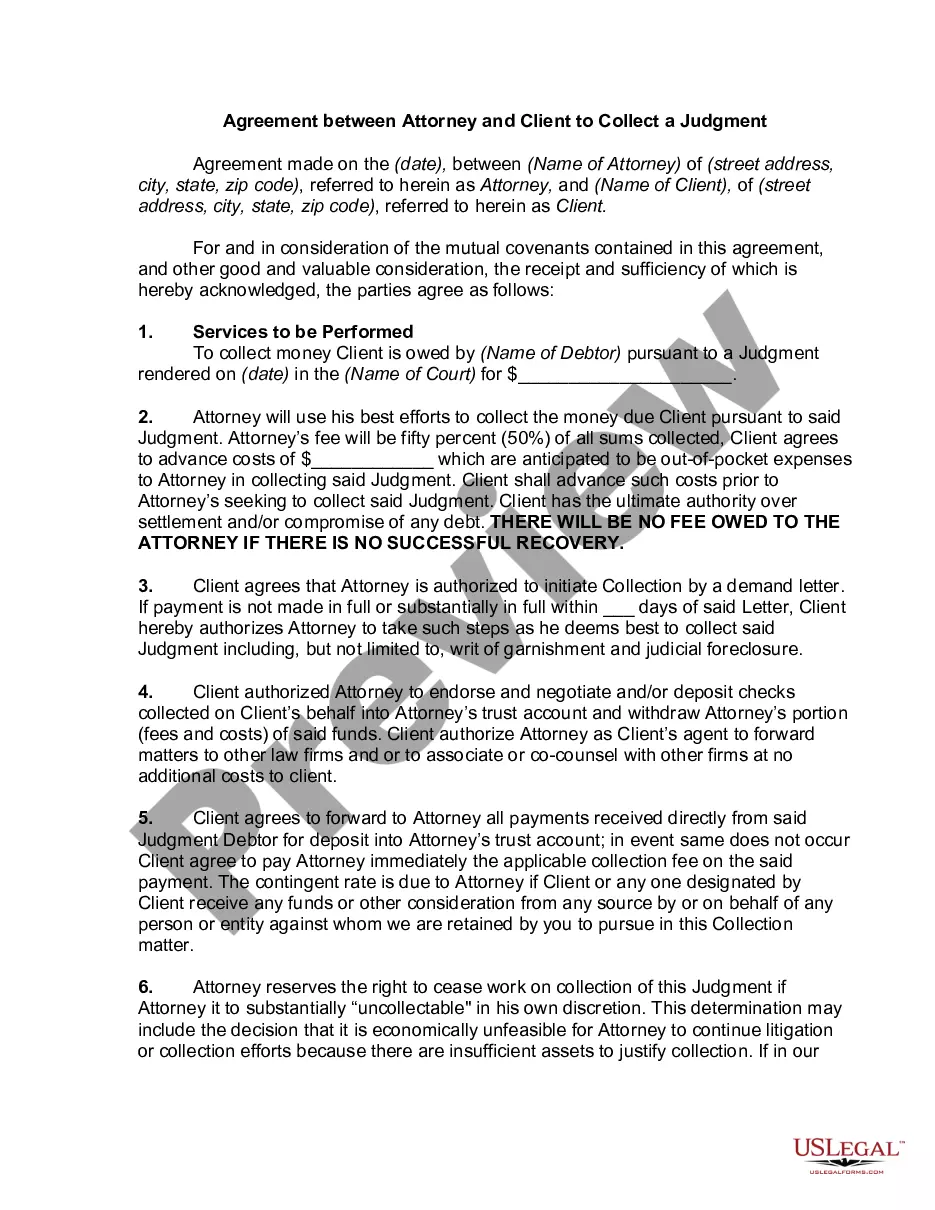
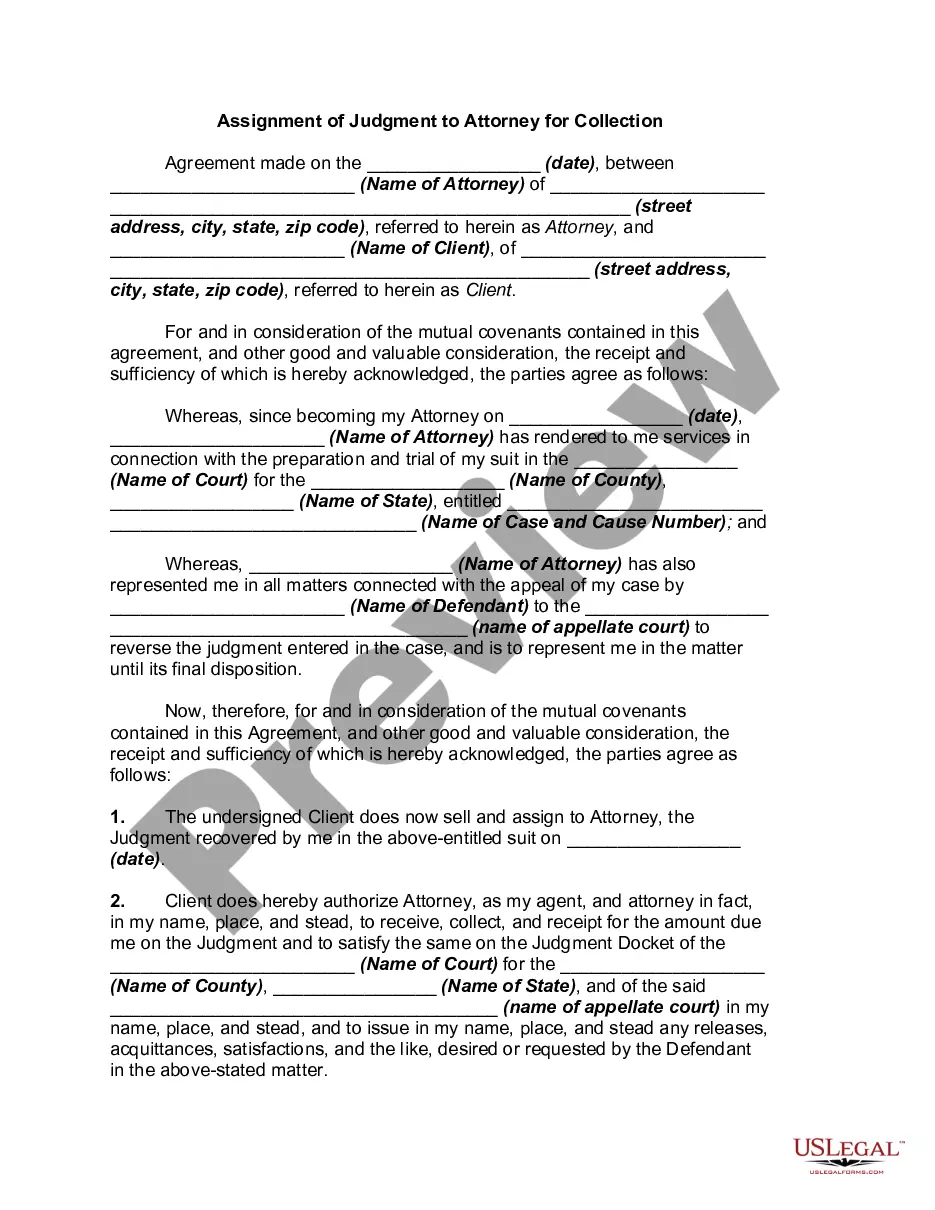
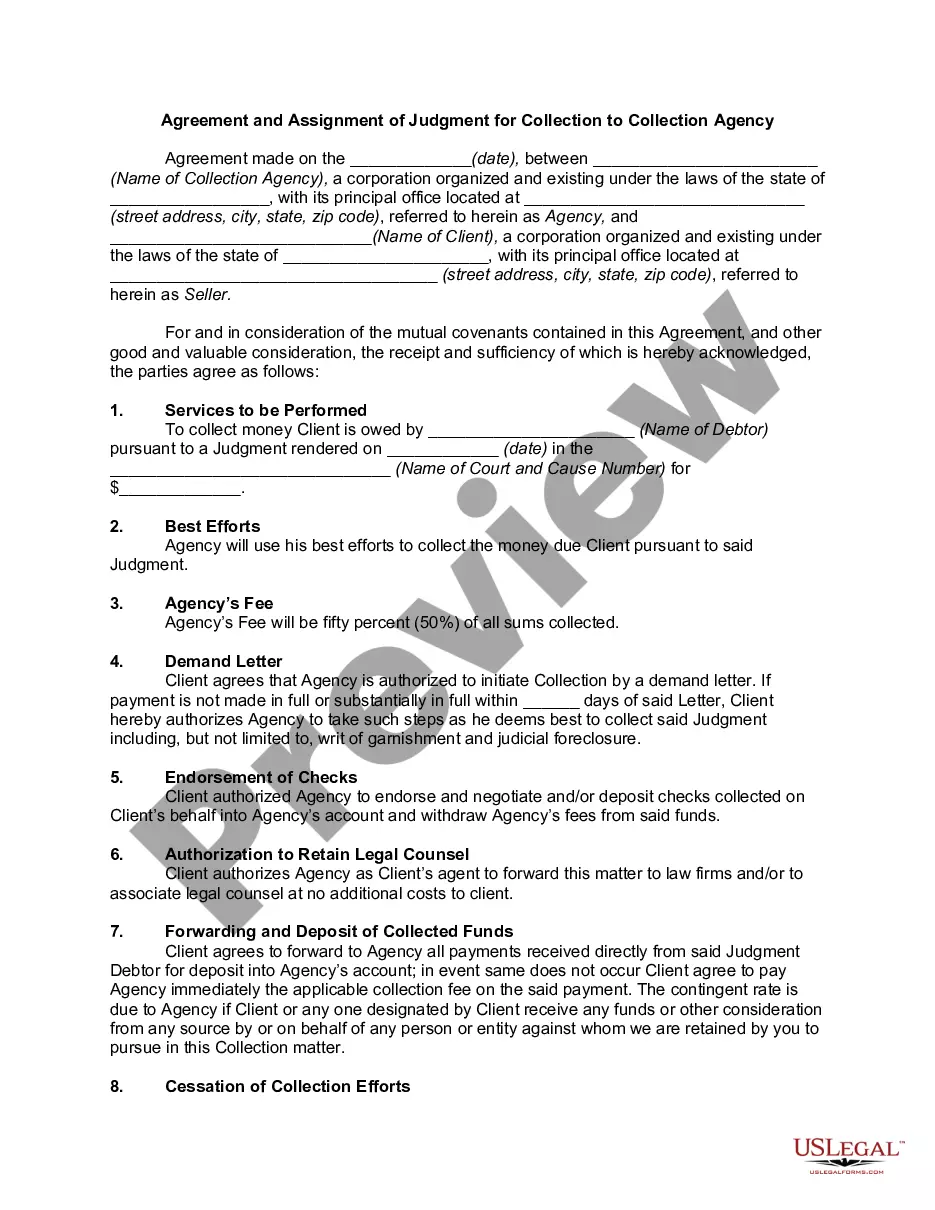
This Agreement between Attorney and Client to Collect a Judgment is a legal document outlining the terms and responsibilities of both parties in the process of collecting a judgment. This form is crucial for establishing the relationship between an attorney and a client concerning the collection of owed money following a legal judgment. It details the fee structure, services to be performed, and the authority granted to the attorney, setting it apart from other legal agreements by its specific focus on judgment collection.
Main sections of this form
- Parties Involved: Identifies the attorney and client, including their addresses.
- Services to be Performed: Describes the attorney's obligation to collect money owed by a debtor.
- Fees and Costs: States the attorney's fee as fifty percent of collected sums and the advance of costs by the client.
- Authority to Collect: Grants the attorney authority to initiate collection efforts, including legal actions.
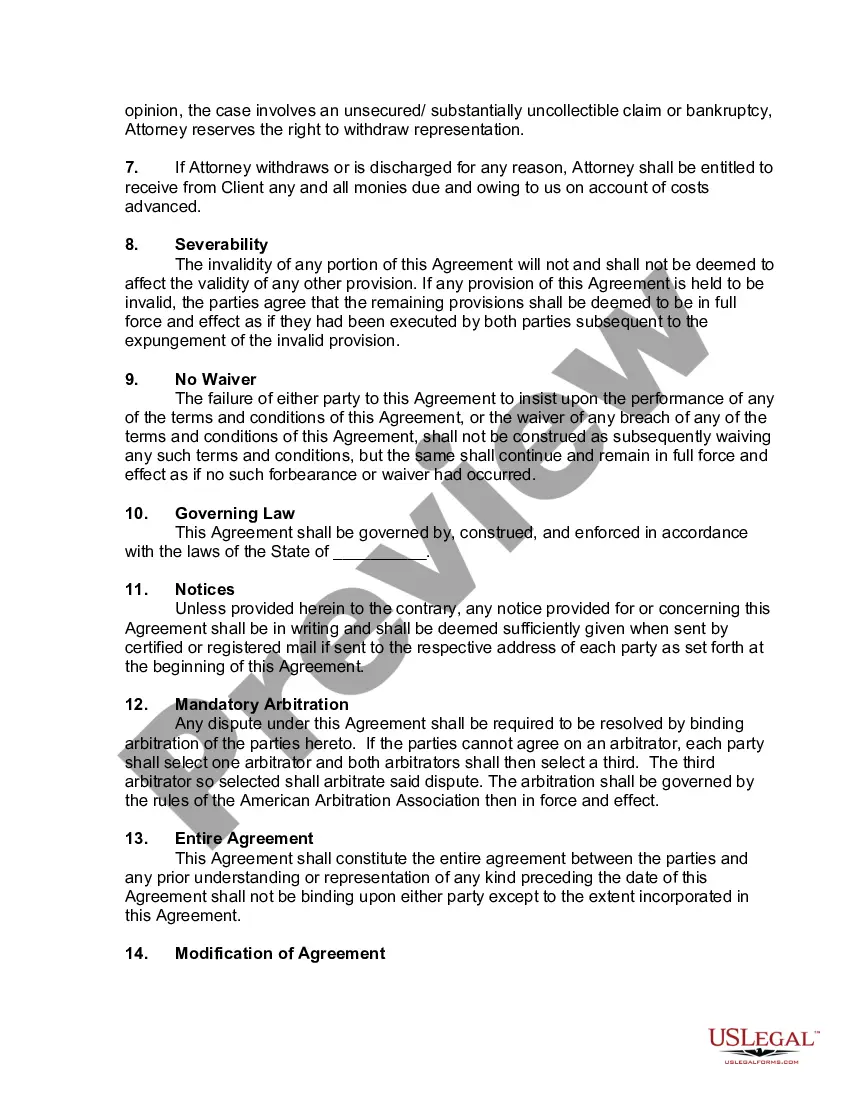
- Withdrawal of Representation: Outlines conditions under which an attorney may cease collection efforts.
- Arbitration Clause: Specifies that disputes will be resolved through binding arbitration.


When to use this document
This form is used when a client has a legal judgment against a debtor and seeks professional assistance to collect the money owed. It is particularly useful in situations where the debtor is unresponsive, or where legal means such as garnishments or foreclosures may be necessary to enforce the judgment. Utilizing this agreement helps clarify the roles and expectations of both the attorney and the client in the collection process.
Intended users of this form
- Individuals or businesses with an outstanding judgment they wish to enforce.
- Clients seeking legal representation in collecting debts from judgment debtors.
- Attorneys providing debt collection services on behalf of clients.
Steps to complete this form
- Identify the parties: Fill in the attorney's and client's names and addresses.
- Enter the date of the agreement and the judgment details including the debtor's name and the court.
- Specify the advanced costs and the fee percentage to be paid to the attorney.
- Grant authority for the attorney to act on the client's behalf in collection efforts.
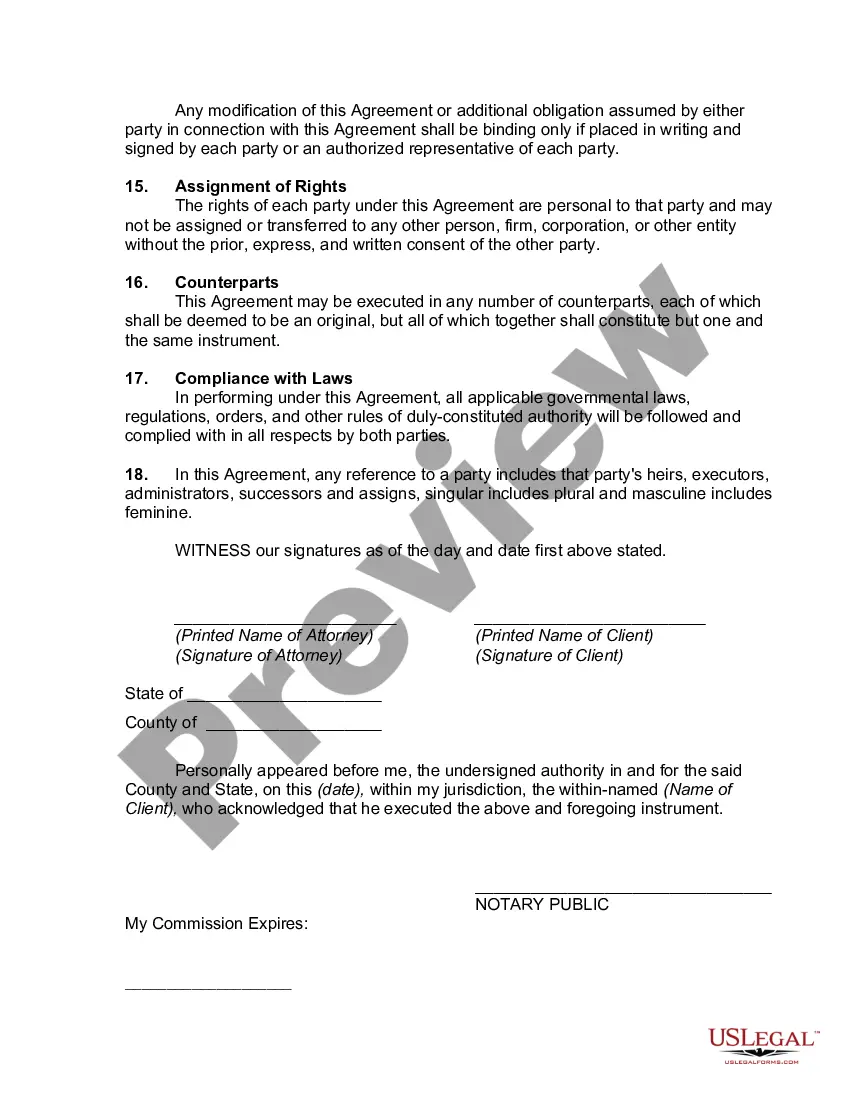
- Sign the agreement and ensure a notary public witnesses the signatures if required by state law.
Is notarization required?
This form must be notarized to be legally valid. US Legal Forms provides secure online notarization powered by Notarize, allowing you to complete the process through a verified video call.
Get your form ready online
Our built-in tools help you complete, sign, share, and store your documents in one place.
Make edits, fill in missing information, and update formatting in US Legal Forms—just like you would in MS Word.
Download a copy, print it, send it by email, or mail it via USPS—whatever works best for your next step.
Sign and collect signatures with our SignNow integration. Send to multiple recipients, set reminders, and more. Go Premium to unlock E-Sign.
If this form requires notarization, complete it online through a secure video call—no need to meet a notary in person or wait for an appointment.
We protect your documents and personal data by following strict security and privacy standards.

Make edits, fill in missing information, and update formatting in US Legal Forms—just like you would in MS Word.

Download a copy, print it, send it by email, or mail it via USPS—whatever works best for your next step.

Sign and collect signatures with our SignNow integration. Send to multiple recipients, set reminders, and more. Go Premium to unlock E-Sign.

If this form requires notarization, complete it online through a secure video call—no need to meet a notary in person or wait for an appointment.

We protect your documents and personal data by following strict security and privacy standards.
Typical mistakes to avoid
- Failing to provide complete and accurate addresses for both the attorney and client.
- Not clearly specifying the terms of the collection fee or anticipated costs.
- Omitting signatures or notary witness when required.
Why complete this form online
- Immediate access to a professionally drafted agreement tailored for your needs.
- Ability to customize the form easily to meet specific requirements.
- Convenient download for quick printing and signing.
Looking for another form?
Form popularity
FAQ
In many situations, one of the best ways to collect a judgment after winning a case is to put a lien on the debtor's property. This gives you a claim to the property and, in some cases, the property will be sold at public auction in order to satisfy the debt that is owed.
A simple way to collect a judgment is by deducting money out of the debtor's paycheck using a wage garnishment. The debtor must have a decent income because both the federal government and states cap the amount you can take, and certain types of income, like Social Security, are off-limits.
Plan Your Strategy. Perfect Your Lien Rights as Soon as Possible. Ask for Your Money. Educate Yourself. Find the Debtor's Assets. Start With Easy-to-Reach Assets. Consider Hiring a Collection Expert. Renew Your Judgment.
What the Agreement for Judgment (AFJ) does? The agreement acts as full and final judgment on the underlying claim filed with the court, without going in front of a clerk magistrate or judge (unless this is small claims court, then a clerk will approve the AFJ once they review the income section on the AFJ form).
In California, you must file a notarized "Acknowledgement Of Satisfaction of Judgment" with the Court. The law ignores the real world possibility of bounced checks and bankruptcy, and requires you to file the Satisfaction within 14 days.
Collecting a Judgment.Collecting a judgment can be just as challenging as winning the lawsuit in some cases. If the defendant has stable finances, they should pay the judgment uneventfully. If the defendant is going through financial difficulties, on the other hand, you may need to force them to pay you.
Give your sheriff or other local official (known as a levying officer) information about the judgment and where the debtor works. This officer will collect the money and give it to you.
Before a person or a company to whom you owe money can win a judgment against you, they must first file a lawsuit in court. If you ignore the lawsuit, the court will enter an automatic judgment against you, known as a default judgment.
What the Agreement for Judgment (AFJ) does? The agreement acts as full and final judgment on the underlying claim filed with the court, without going in front of a clerk magistrate or judge (unless this is small claims court, then a clerk will approve the AFJ once they review the income section on the AFJ form).