Severance Agreement between Employee and Employer
Overview of this form
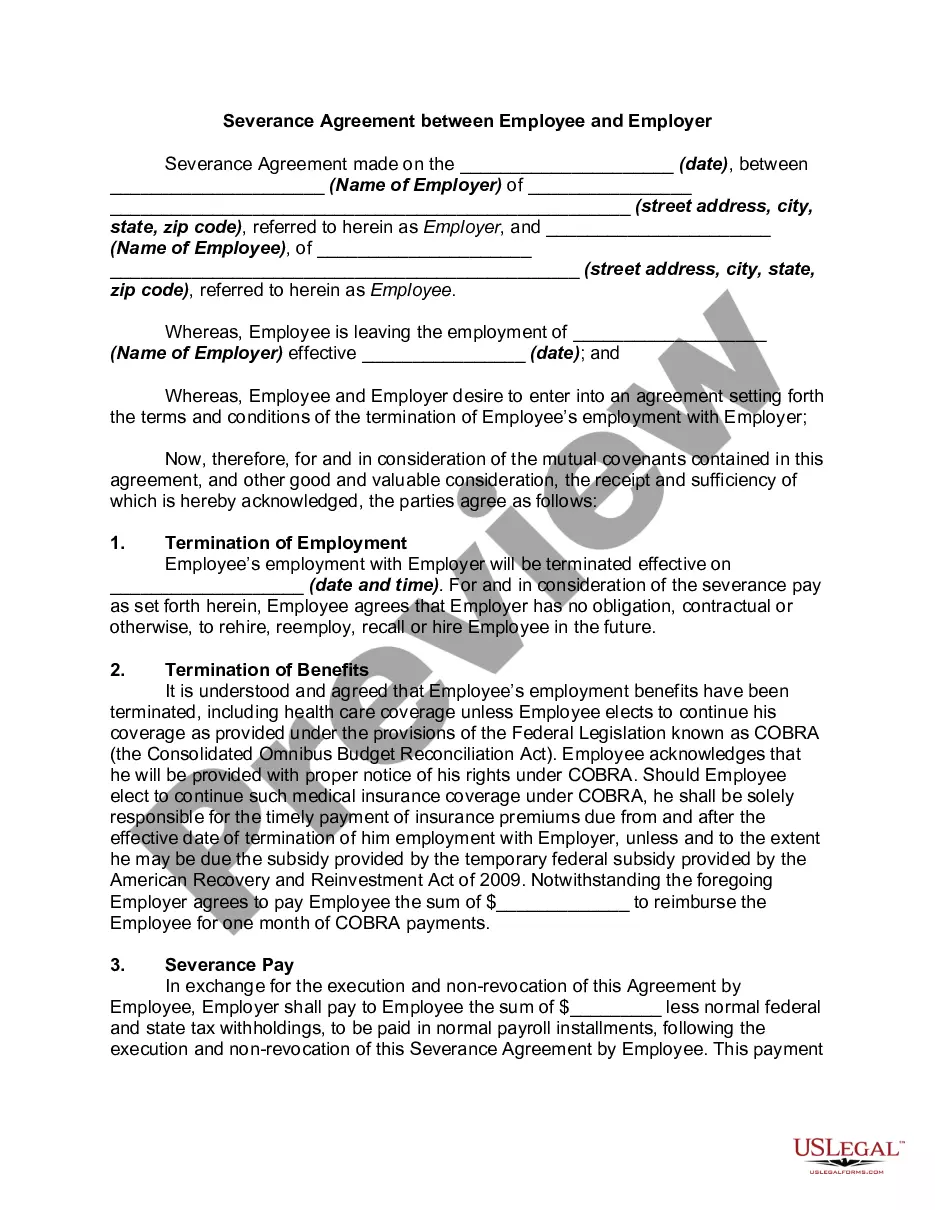
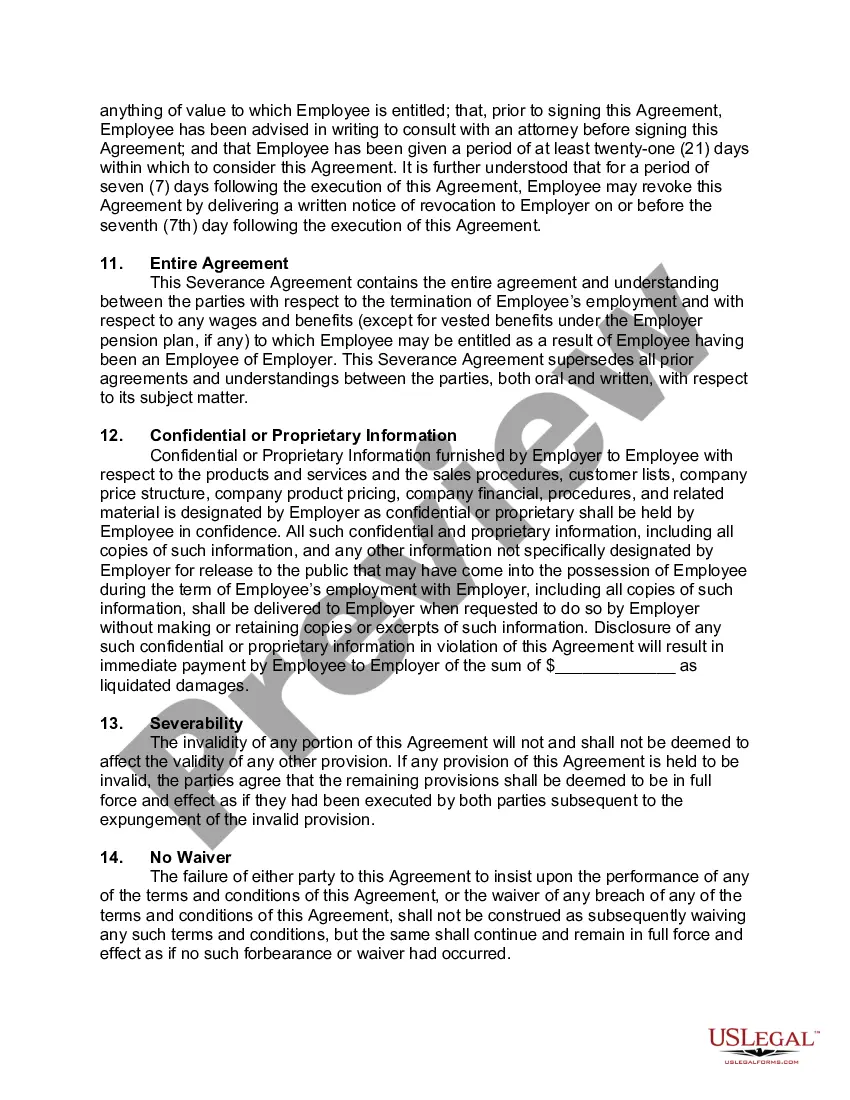
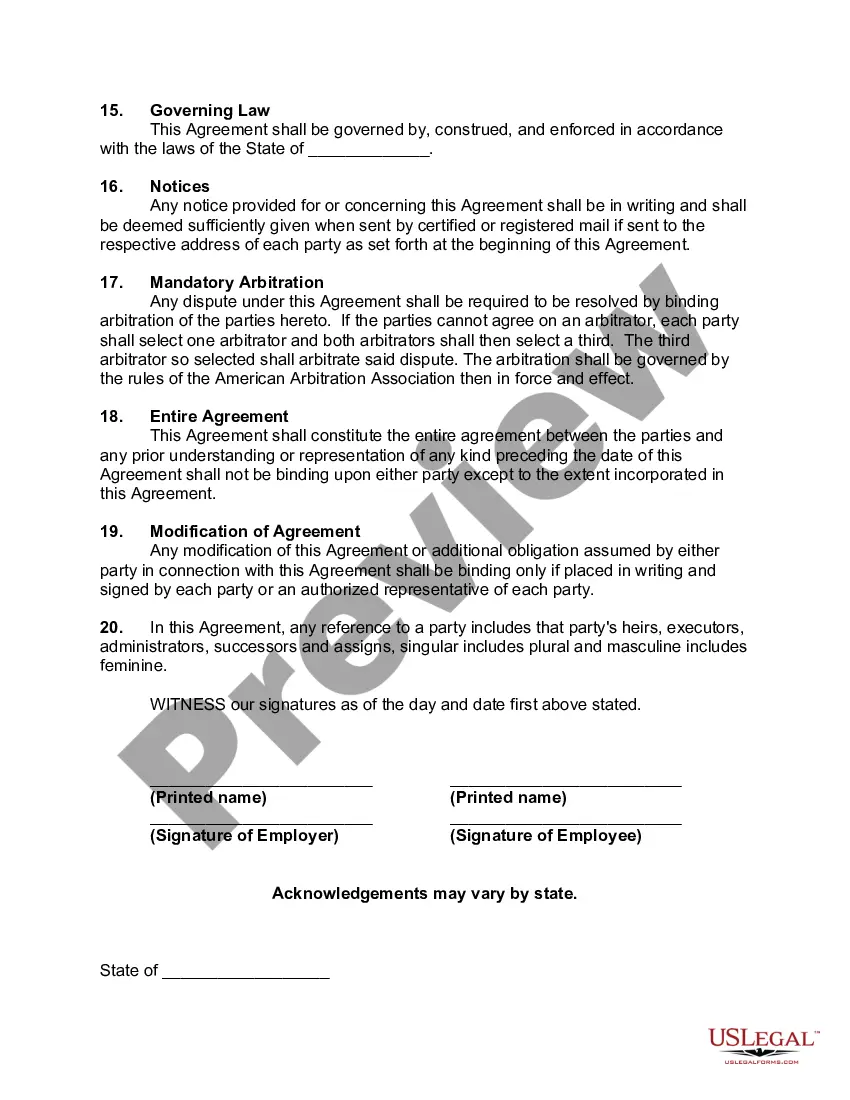
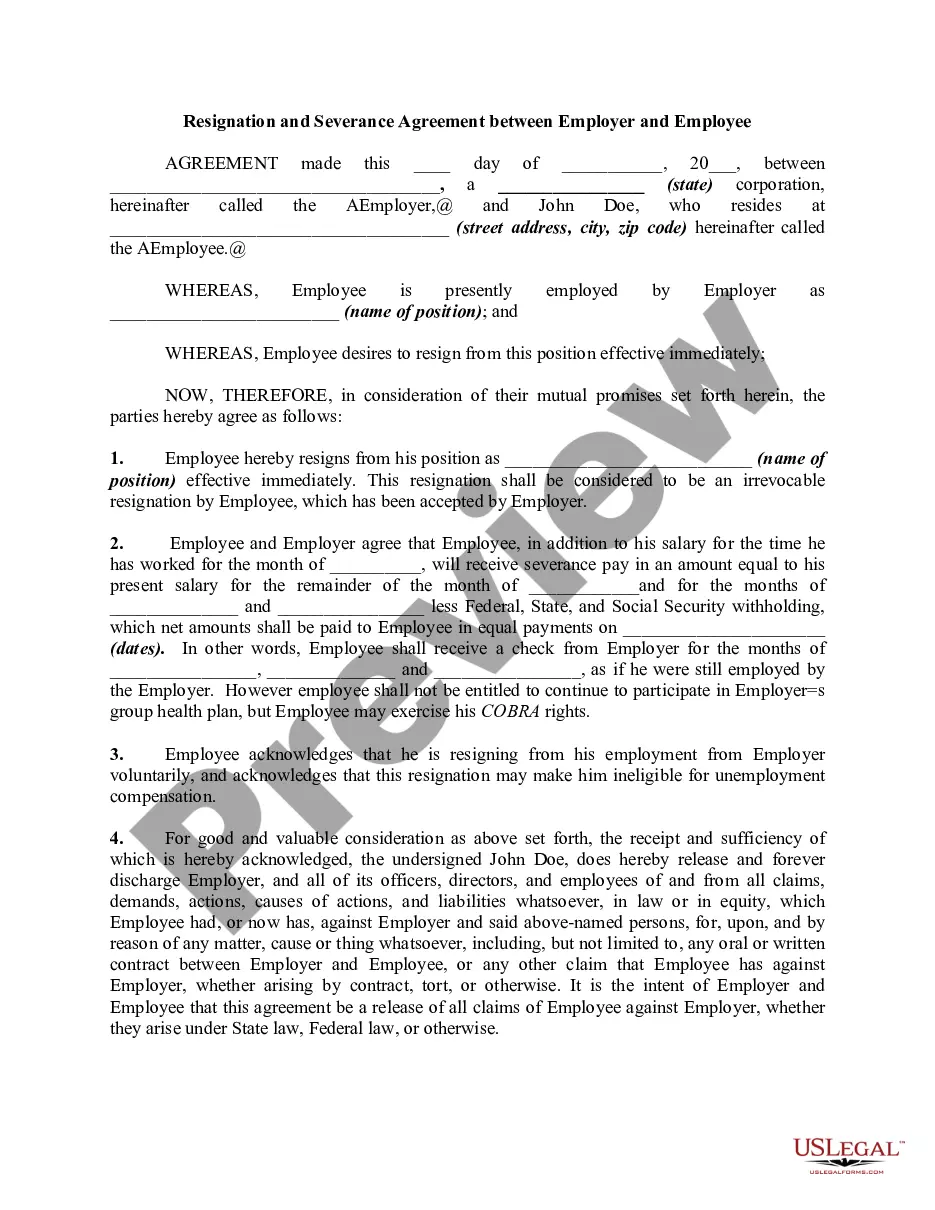
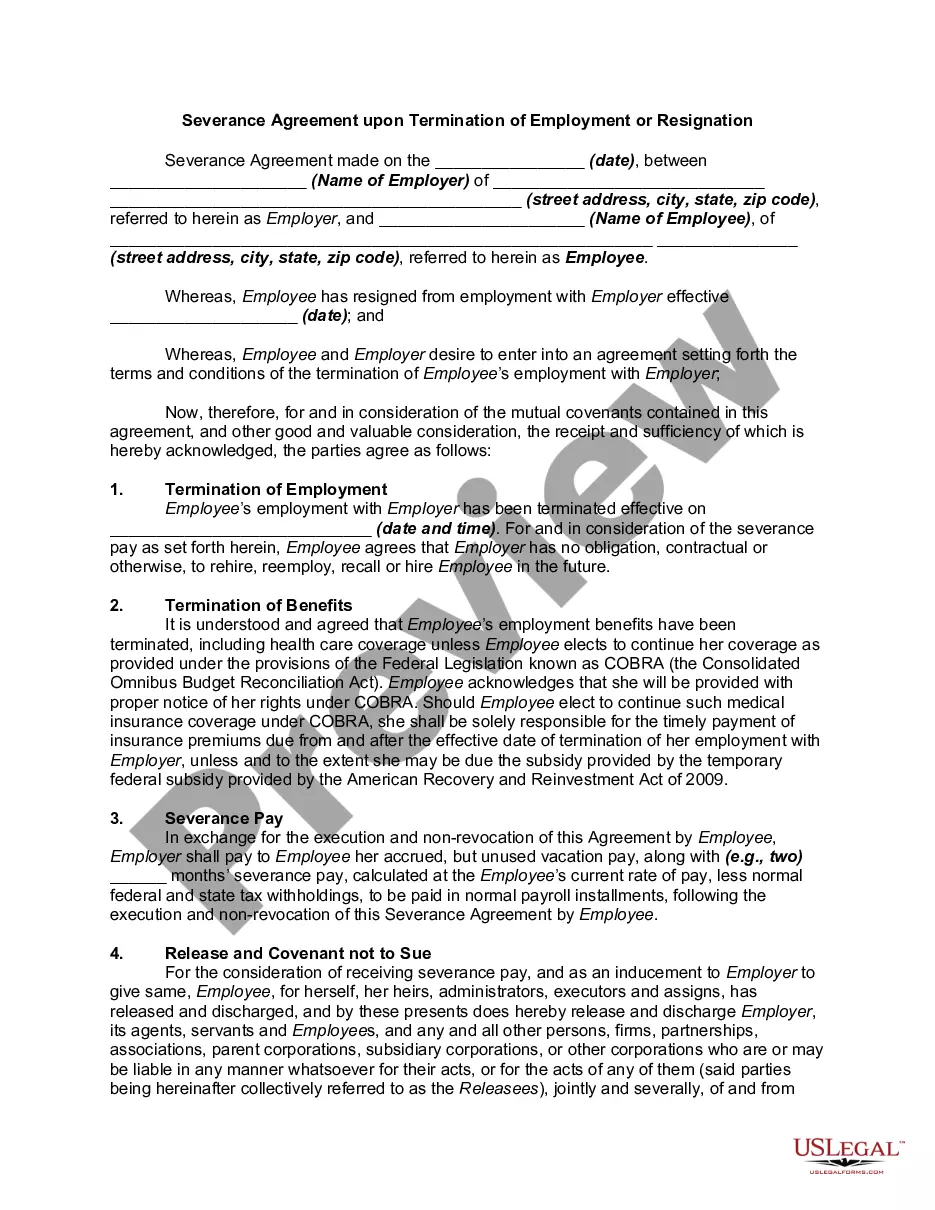
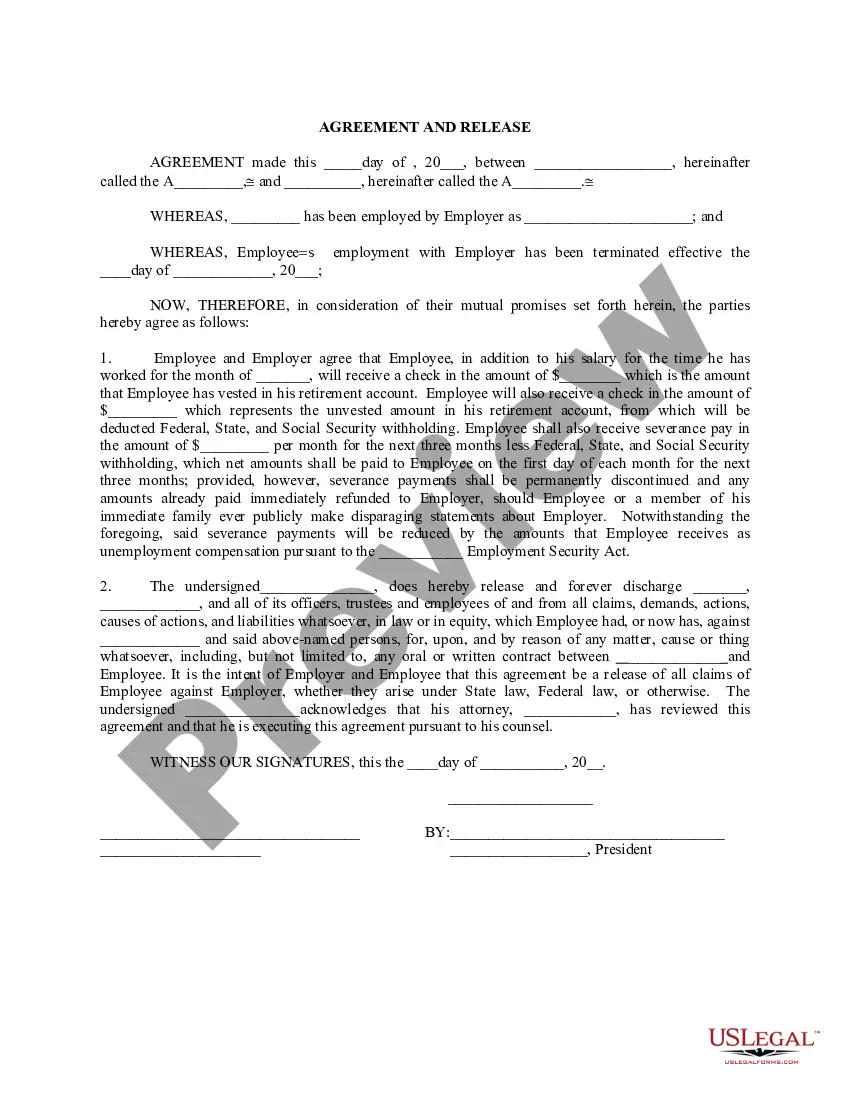
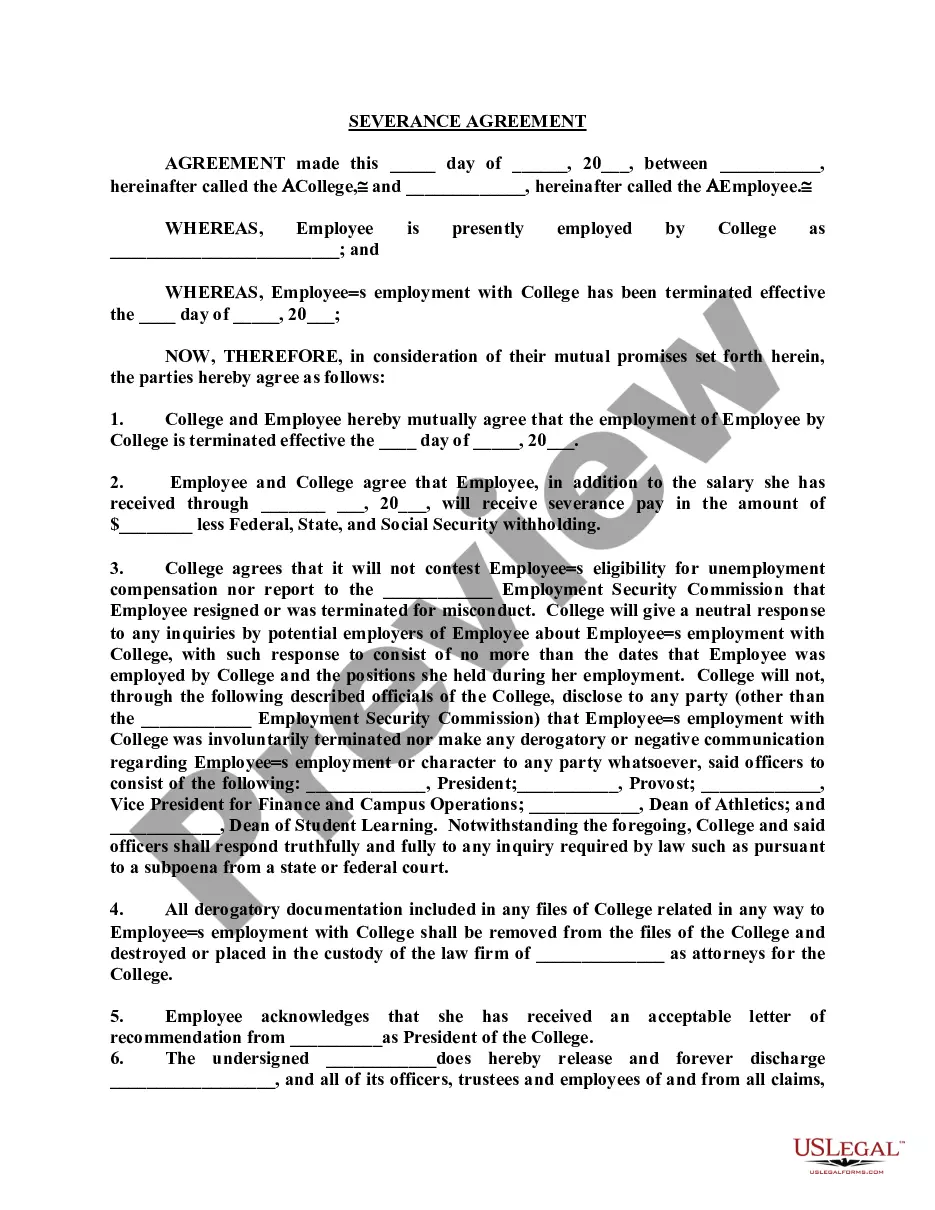
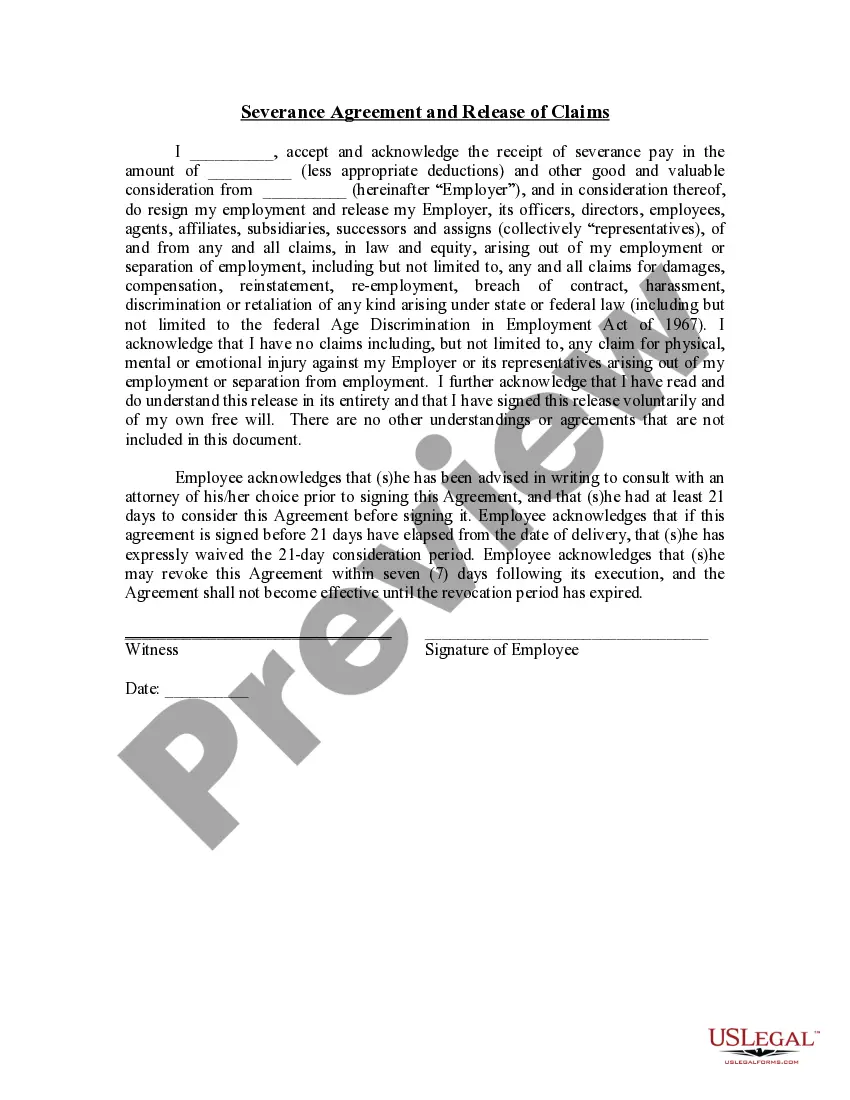
A severance agreement, also known as a termination agreement, is a legal document that outlines the terms under which an employee's relationship with their employer is concluded. This form serves to clarify the rights and obligations of both parties upon termination, ensuring a mutual understanding of benefits and entitlements. Unlike other employment agreements, a severance agreement specifically addresses aspects related to the end of the employment, including severance pay, unemployment benefits, and confidentiality.
Key parts of this document
- Parties involved: Identification of the employer and employee.
- Termination date: The effective date when the employment ends.
- Severance pay: Details of the payment provided to the employee upon termination.
- Benefits termination: Information regarding the termination of benefits, including health insurance.
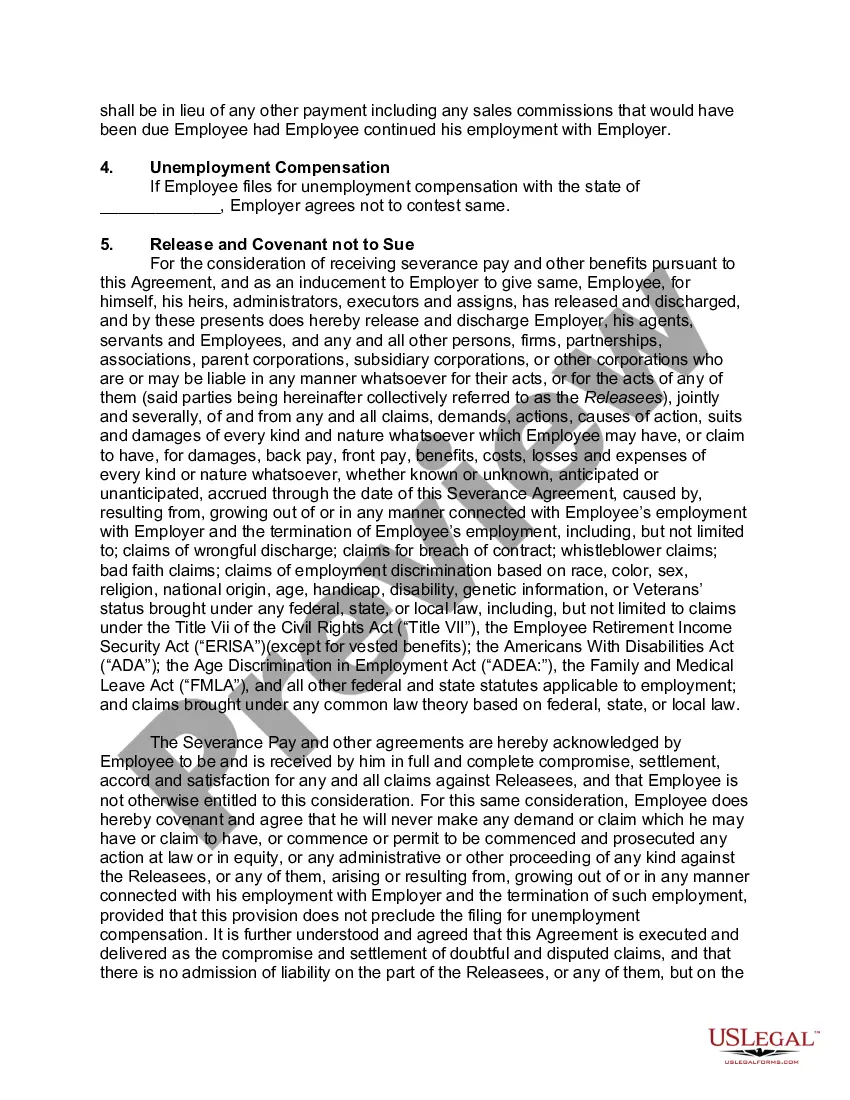
- Release of claims: A clause where the employee waives certain rights to sue the employer.
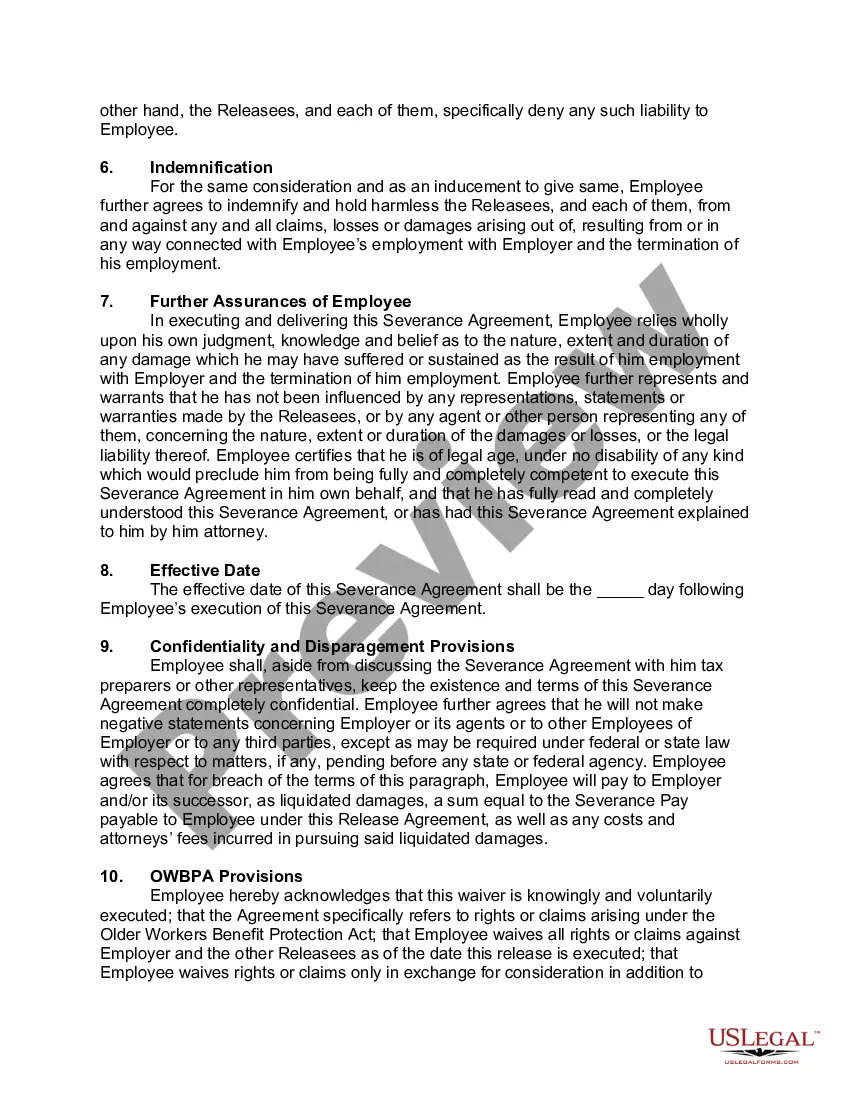
- Confidentiality clause: Provisions regarding non-disclosure of the agreement's terms.
When to use this form
This severance agreement is typically used when an employer and employee are parting ways, whether due to layoffs, resignation, or mutual agreement. It is particularly beneficial when there are negotiations around severance pay or other employment benefits. Situations that may warrant the use of this form include company restructuring, downsizing, or instances where an employee voluntarily leaves to pursue other opportunities but wishes to secure laid-off benefits.
Who should use this form
Eligible parties for the severance agreement include:
- Employees receiving a severance package upon termination.
- Employers laying off or terminating employees due to economic or operational needs.
- HR professionals and legal advisors managing employee separations.
- Any party involved in negotiating the terms of employment termination.
How to prepare this document
- Identify the parties: Fill in the names and addresses of both the employer and the employee.
- Specify the termination date: Clearly state the effective date of the employment termination.
- Detail severance pay: Enter the agreed severance payment amount and any payment structure.
- Outline benefits: Include information about the termination of benefits, especially health coverage under COBRA.
- Signatures: Ensure that both parties sign the agreement and include the date of signature.
Notarization requirements for this form
This form does not typically require notarization unless specified by local law. Employees and employers should confirm the requirements in their specific state to ensure compliance.
Get your form ready online
Our built-in tools help you complete, sign, share, and store your documents in one place.
Make edits, fill in missing information, and update formatting in US Legal Forms—just like you would in MS Word.
Download a copy, print it, send it by email, or mail it via USPS—whatever works best for your next step.
Sign and collect signatures with our SignNow integration. Send to multiple recipients, set reminders, and more. Go Premium to unlock E-Sign.
If this form requires notarization, complete it online through a secure video call—no need to meet a notary in person or wait for an appointment.
We protect your documents and personal data by following strict security and privacy standards.

Make edits, fill in missing information, and update formatting in US Legal Forms—just like you would in MS Word.

Download a copy, print it, send it by email, or mail it via USPS—whatever works best for your next step.

Sign and collect signatures with our SignNow integration. Send to multiple recipients, set reminders, and more. Go Premium to unlock E-Sign.

If this form requires notarization, complete it online through a secure video call—no need to meet a notary in person or wait for an appointment.

We protect your documents and personal data by following strict security and privacy standards.
Common mistakes to avoid
- Failing to include specific dates and amounts, which can lead to confusion.
- Not clearly defining the terms for severance pay and benefits, leaving room for misinterpretation.
- Forgetting to have the document signed by both parties, affecting its enforceability.
- Neglecting to review state-specific laws that may impact the agreement.
Benefits of completing this form online
- Convenient downloading and easy editing to suit specific needs.
- Access to documents created by licensed attorneys, ensuring legality and accuracy.
- Time-saving with immediate availability, allowing for quick processing of termination agreements.
- Secure storage of completed forms online for future reference.
Summary of main points
- A severance agreement formalizes the termination of employment between an employer and employee.
- Ensure all relevant information is detailed, including severance pay and benefits.
- Consider legal guidance to address state-specific requirements and enforceability.
- Both parties should fully understand the terms before signing the agreement.
Looking for another form?







Form popularity
FAQ
Include the specific grounds for termination. Include a severance payment in addition to any vacation time or salary that the employee is owed. Make sure that the agreement complies with state and federal laws. State that the employee must return any company products or business materials in the employee's possession.
The name of the employer and employee. The effective date of the agreement. The employment period of the outgoing employee. The severance pay amount. Terms of continuation of benefits. Employee waiver of legal claims.
A contract (such as a severance agreement) does not have to be notarized to be effective.
A severance agreement is a legal document that goes over all of the responsibilities and rights of each party involved - the employee and the employer. The document lays out all of the benefits offered by the company - including pay, insurance, etc - while also ensuring that the employee was not wrongfully let go.
Most severance agreements are offering you chump change to give up just about every right you've ever been granted under state and federal law. Here's the typical list: claims or lawsuits for discrimination based on age, sex, race, religion, national origin, handicap, disability or "like civil rights"
1 attorney answer Legally, it doesn't really matter. Technically, your former employer is making you an offer, so you would sign it first showing that you accept the offer, and the employer would then sign to acknowledge that you accepted, and that the...
Compensation details. Confidentiality rules following termination. Date of employee's termination. Agreement from both parties in the form of a signature. Details about how long the employee will continue to have access to benefits.