Motion to Quash Subpoena Duces Tecum on the Grounds that Subpoena is Unreasonable and Oppressive
What this document covers
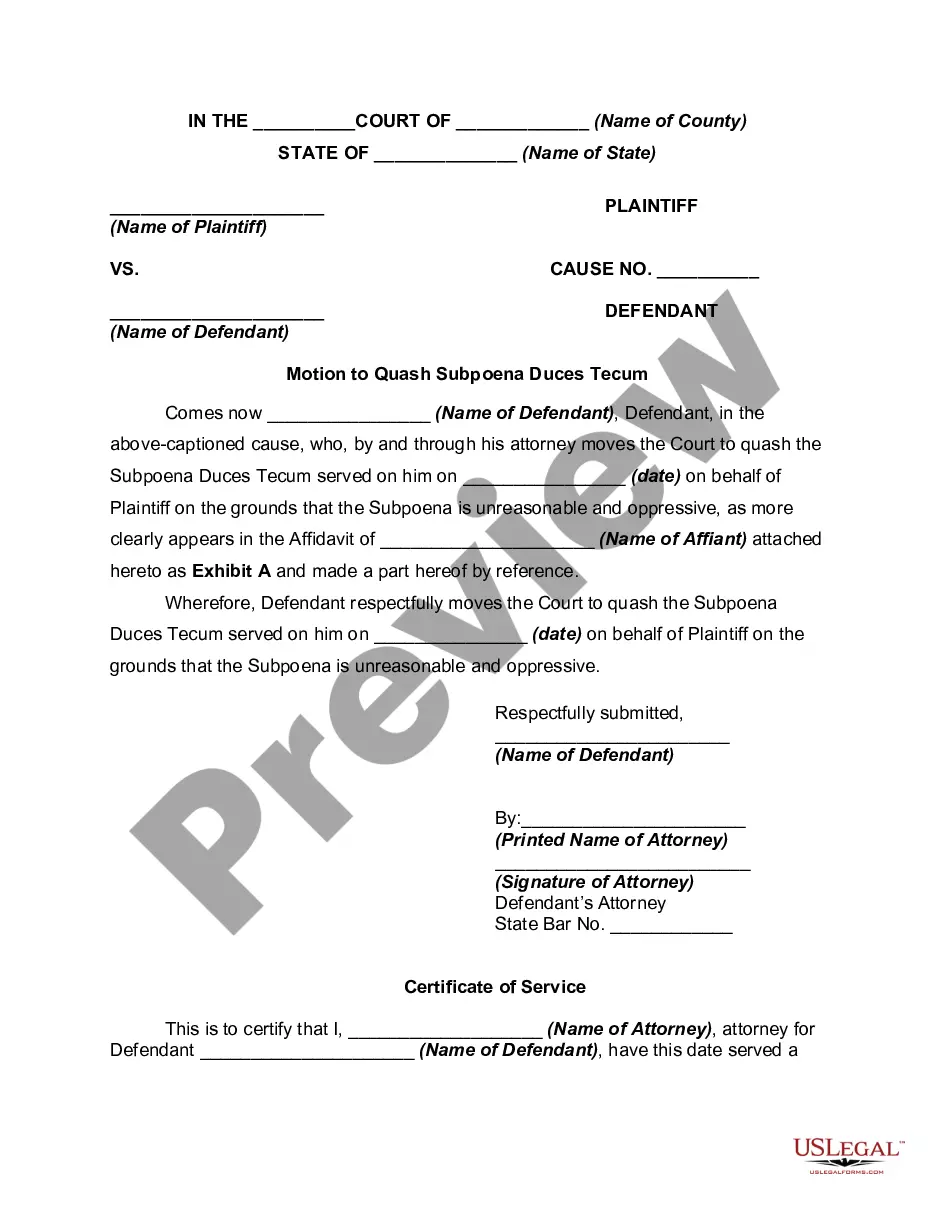
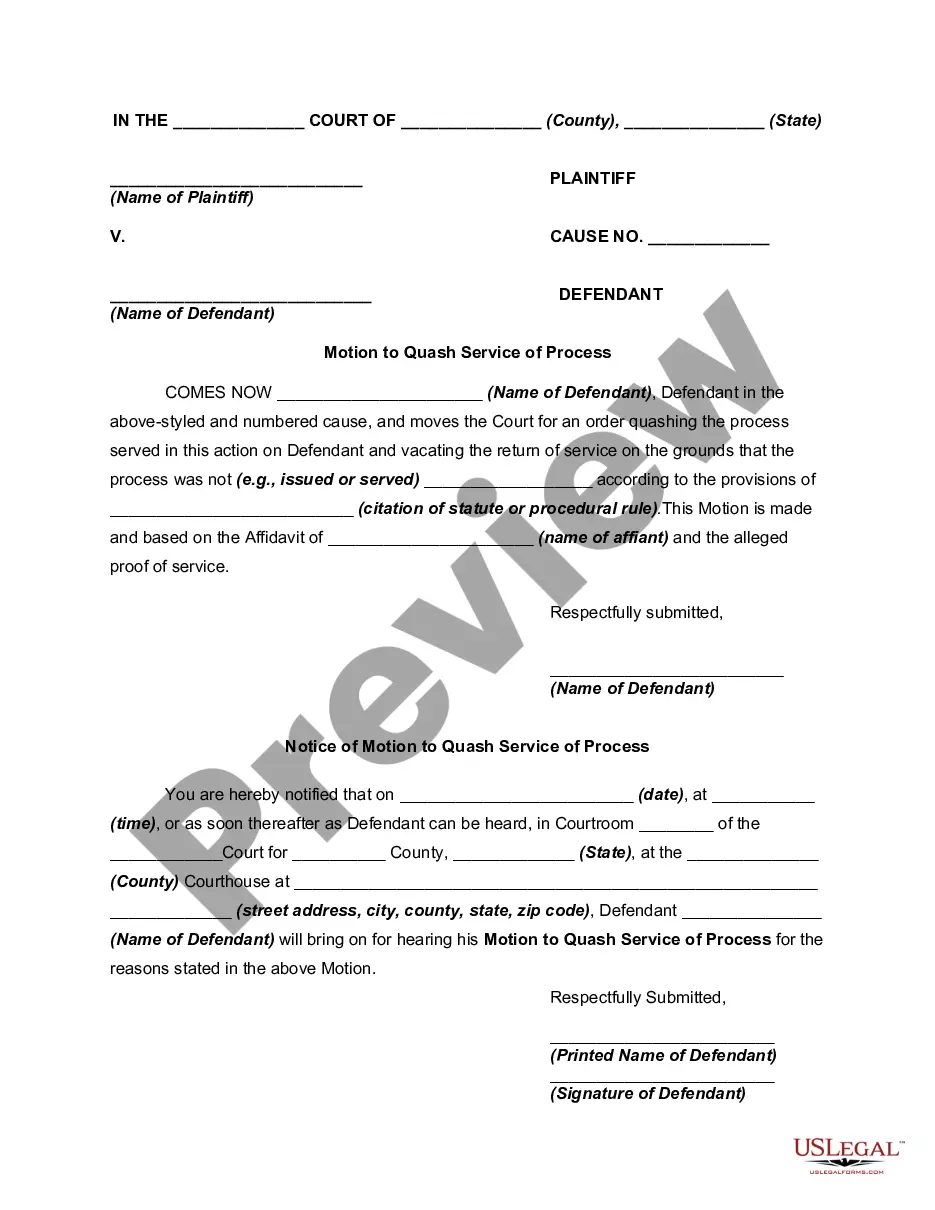
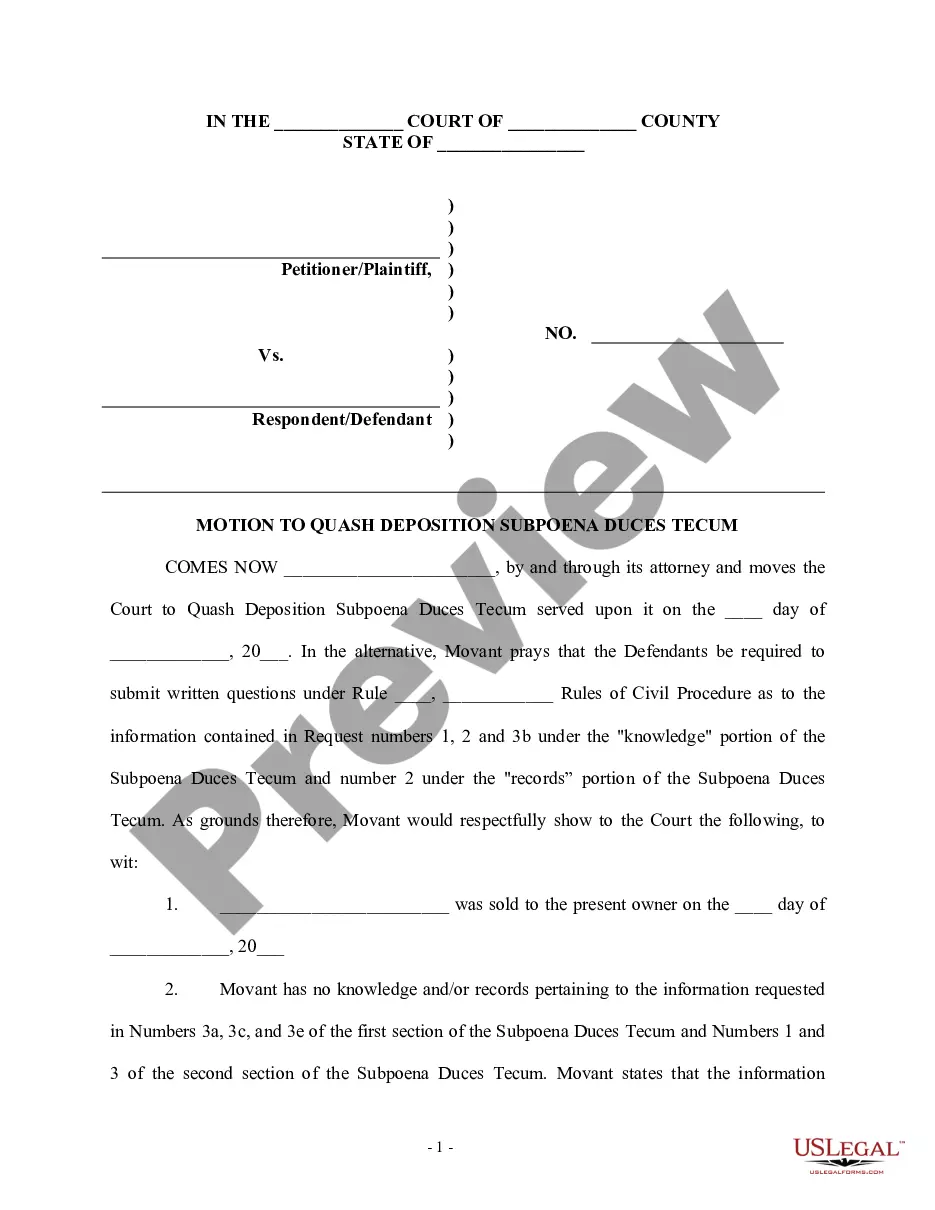
The Motion to Quash Subpoena Duces Tecum on the Grounds that Subpoena is Unreasonable and Oppressive is a legal document that requests a court to nullify a subpoena that demands the production of documents or evidence. This form is specifically used by a defendant seeking to protect themselves from what they believe are excessive or burdensome demands made by the plaintiff. Unlike a standard court motion, this form addresses the specific concerns of being unreasonable and oppressive in nature.
Key parts of this document
- Caption section including the names of the parties and case number.
- Statement identifying the defendant and the grounds for the motion.
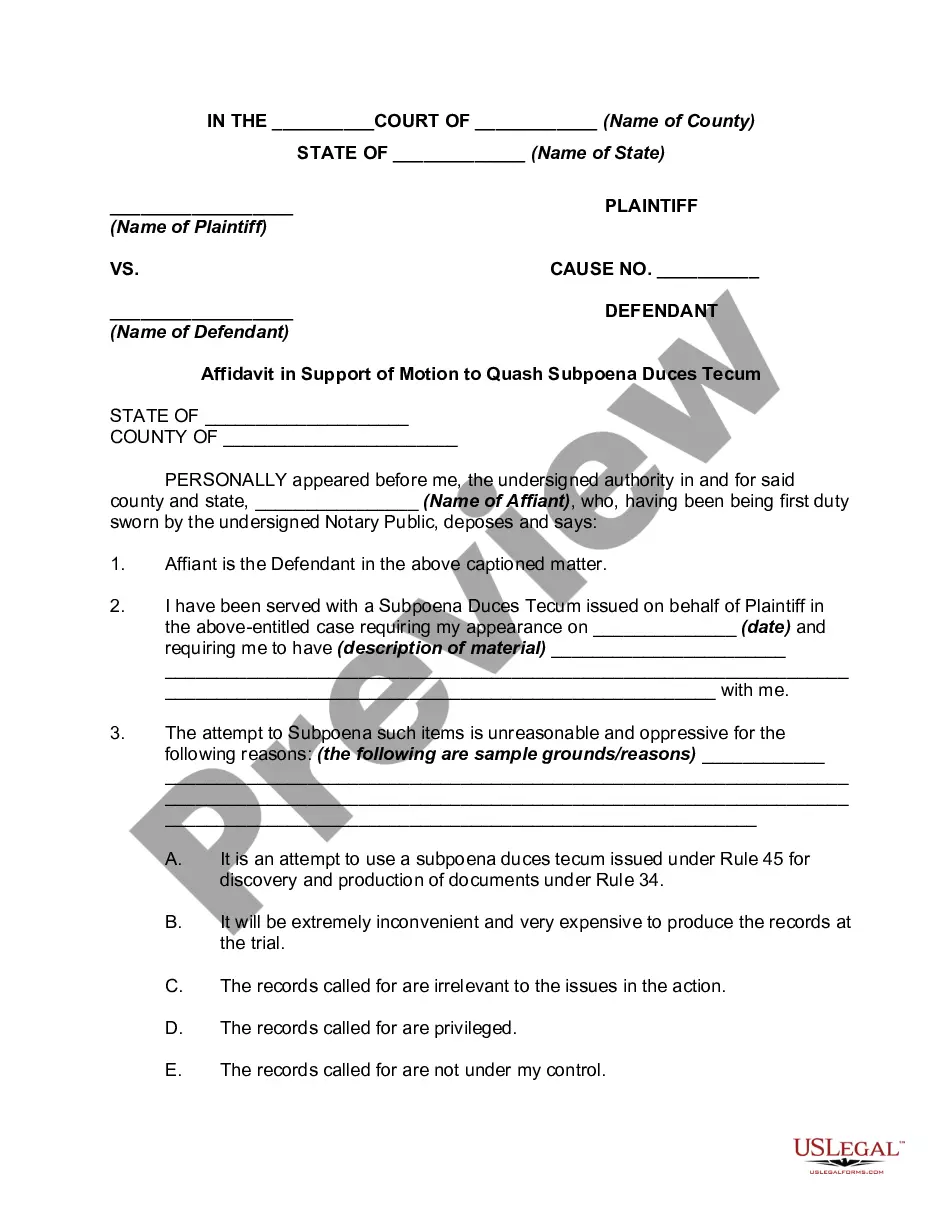
- Affidavit reference that supports claims of unreasonableness.
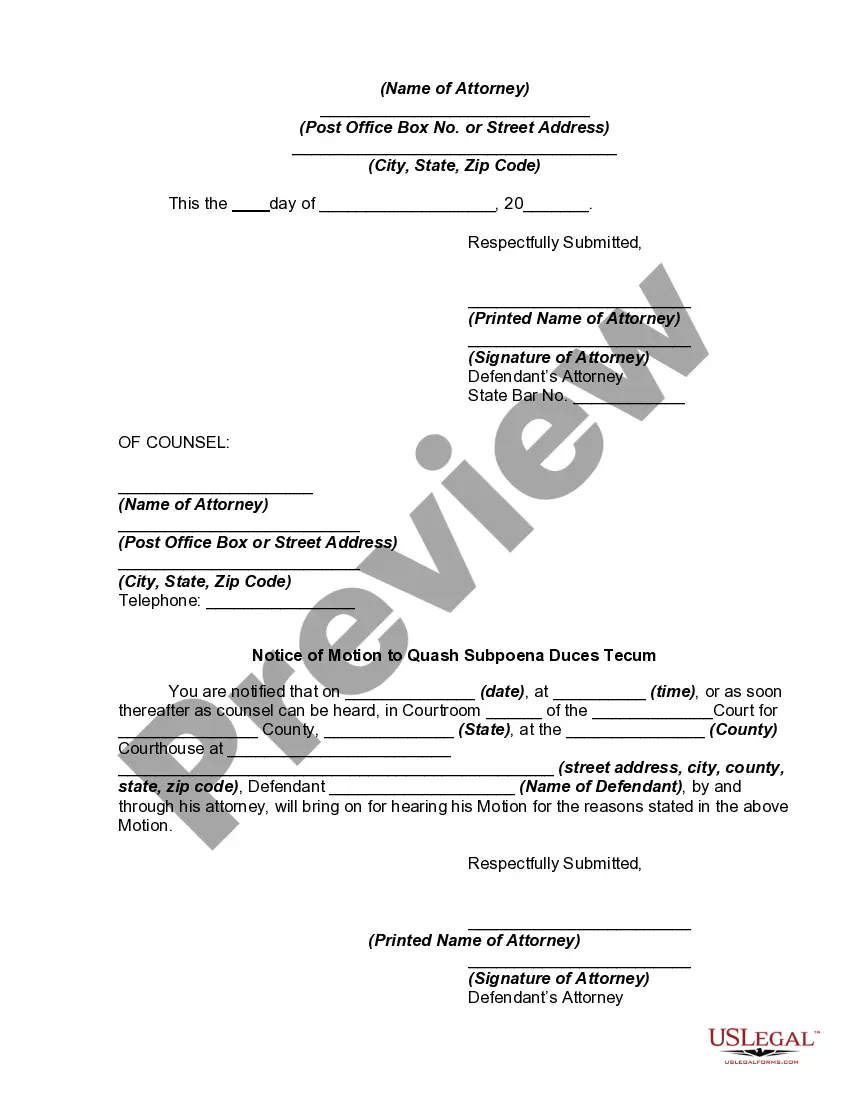
- A detailed section for the notice of motion, including date and time for the hearing.
- Signature lines for both the attorney and the defendant.
When to use this document
Use this Motion to Quash when you have received a subpoena that you believe is unfair, asking for too much information, or is not relevant to the case. It is particularly necessary when the demands of the subpoena could cause undue hardship or violate privacy rights. This form serves as an official request to the court to dismiss the subpoena based on those grounds.
Who should use this form
- Defendants who have been served with a subpoena duces tecum.
- Legal representatives acting on behalf of defendants.
- Individuals who wish to contest a subpoena they believe is unreasonable.
Steps to complete this form
- Fill in the names of the parties in the caption section accurately.
- Provide the case number assigned by the court.
- Clearly state your reasons for believing the subpoena is unreasonable or oppressive.
- Reference the affidavit that supports your claims and attach it as Exhibit A.
- Enter the hearing date and time for the motion and signatures in the appropriate fields.
Notarization guidance
This form does not typically require notarization to be legally valid. However, some jurisdictions or document types may still require it. US Legal Forms provides secure online notarization powered by Notarize, available 24/7 for added convenience.
Get your form ready online
Our built-in tools help you complete, sign, share, and store your documents in one place.
Make edits, fill in missing information, and update formatting in US Legal Forms—just like you would in MS Word.
Download a copy, print it, send it by email, or mail it via USPS—whatever works best for your next step.
Sign and collect signatures with our SignNow integration. Send to multiple recipients, set reminders, and more. Go Premium to unlock E-Sign.
If this form requires notarization, complete it online through a secure video call—no need to meet a notary in person or wait for an appointment.
We protect your documents and personal data by following strict security and privacy standards.

Make edits, fill in missing information, and update formatting in US Legal Forms—just like you would in MS Word.

Download a copy, print it, send it by email, or mail it via USPS—whatever works best for your next step.

Sign and collect signatures with our SignNow integration. Send to multiple recipients, set reminders, and more. Go Premium to unlock E-Sign.

If this form requires notarization, complete it online through a secure video call—no need to meet a notary in person or wait for an appointment.

We protect your documents and personal data by following strict security and privacy standards.
Mistakes to watch out for
- Failing to attach the affidavit that supports the claims.
- Not providing a clear explanation of why the subpoena is unreasonable.
- Missing the deadline to file the motion with the court.
- Incorrectly labeling the document in the header.
Benefits of using this form online
- Instant access to the latest form templates drafted by licensed attorneys.
- Easy customization to fit individual circumstances.
- Convenient download and printing options.
Looking for another form?
Form popularity
FAQ
Consider Engaging an Attorney. Businesses: Notify Anyone Else of Importance. Identify all individuals who have responsive documents. Instruct individuals on how to search for and collect documents. Comply with the subpoena and provide the requested documents. Object to the subpoena. Move to quash the subpoena.
They can object to the subpoena in writing, after which the party that issued the subpoena must ask the court to rule on whether or not the subpoena can be enforced. The third party can also go to court themselves by filing a motion for a protective order or a motion to quash the subpoena.
Ii. A Subpoena Duces Tecum (meaning 'subpoena for production of evidence') is a court order requiring the person subpoenaed to produce books, documents or other records under his or her control at a specified time/place in a court hearing or a deposition.
Whether you've received a subpoena to appear as a witness or a subpoena duces tecum, it's never a good idea to simply ignore the subpoena. If you ignore a subpoena, a judge could hold you in criminal contempt and punish you accordingly.The judge can impose fines or order the person jailed for up to six months.
Under HIPAA, any subpoena duces tecum that is not accompanied by a court order must contain a written statement and accompanying documentation demonstrating that the requesting party made reasonable efforts to (1) notify the patient whose records are being requested, or (2) secure a qualified protective order.
A subpoena is an Order that is issued to require the attendance of a witness to testify at a particular time and place. A subpoena duces tecum is an Order that requires a witness to bring documents, books or other items under his, her or their control, that he she or they is bound by law to produce into evidence.
File a motion to quash the subpoena; Serve written objections to the document request; and/or. Seek a protective order to protect you from unreasonable demands or the invasion of your privacy.
In addition to objecting, you can file a "motion to quash" the subpoena. Once you object, you have responded to the subpoena for the time being. The burden then shifts to the party sending the subpoena to resolve the objections, including use of a court hearing if necessary.
Any employee whose employment records are sought by a subpoena duces tecum may bring a motion to quash. Note that non-party employees may object to a subpoena by serving written objections. 3. Any non-party who has been served with a business records subpoena may bring a motion to quash.