Notice of Opposition to Petition to Distribute Assets and Close Estate
What is this form?
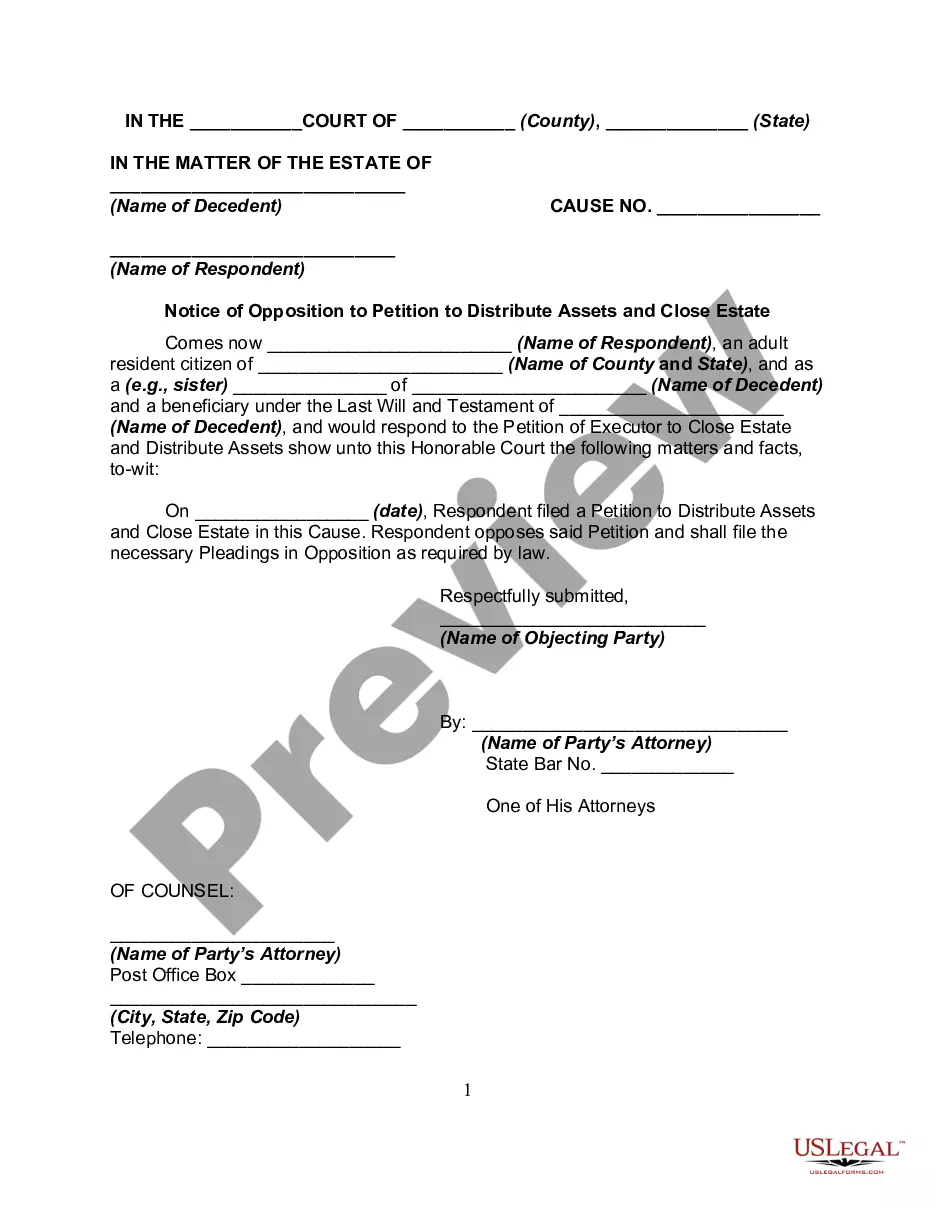
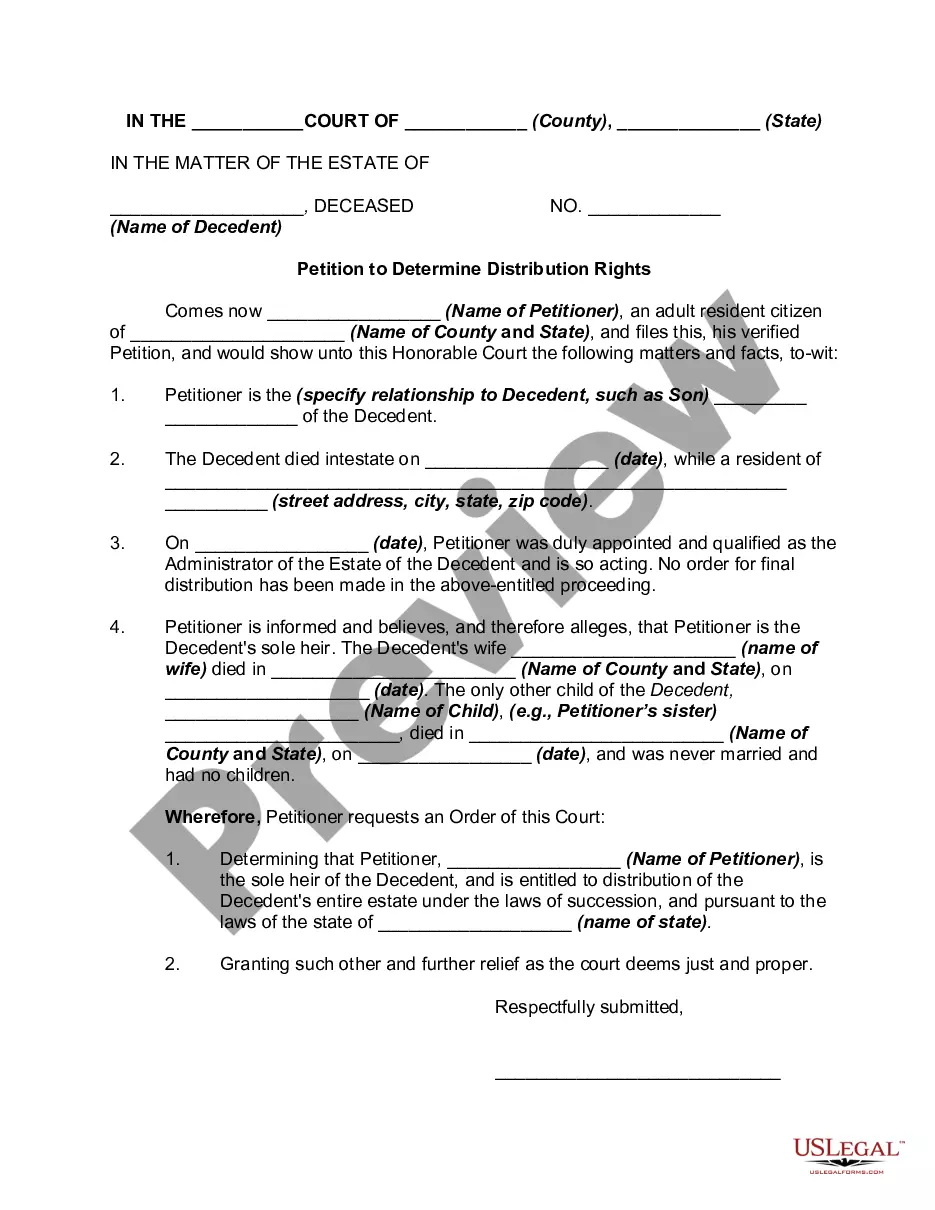
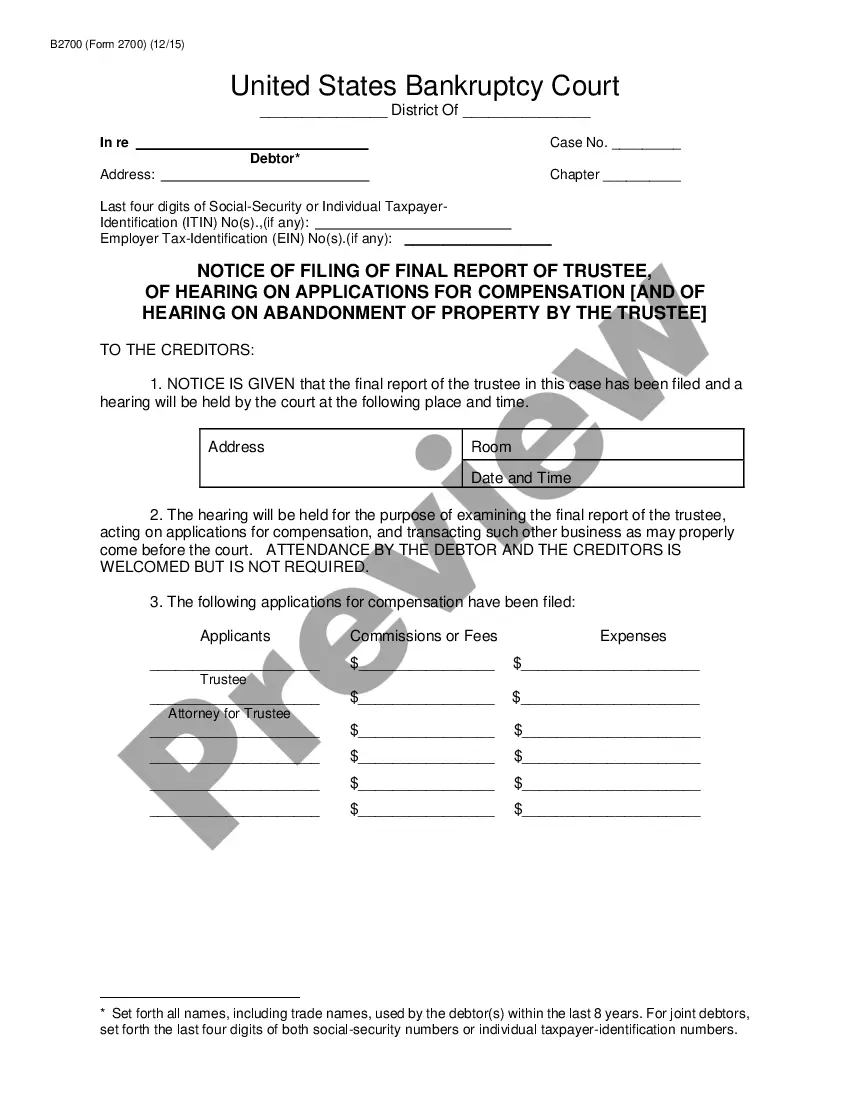
The Notice of Opposition to Petition to Distribute Assets and Close Estate is a legal document filed by a beneficiary to contest a petition for distributing assets and closing an estate. This form allows an individual to formally express their disagreement with the executor's request to finalize estate matters. It provides a structured way to present opposition to the court while ensuring compliance with local laws, which may vary significantly by jurisdiction.
What’s included in this form
- Name of the decedent and relevant estate details
- Identification of the respondent's relationship to the decedent
- Date of the filed petition being opposed
- Statement of opposition with intent to file necessary pleadings
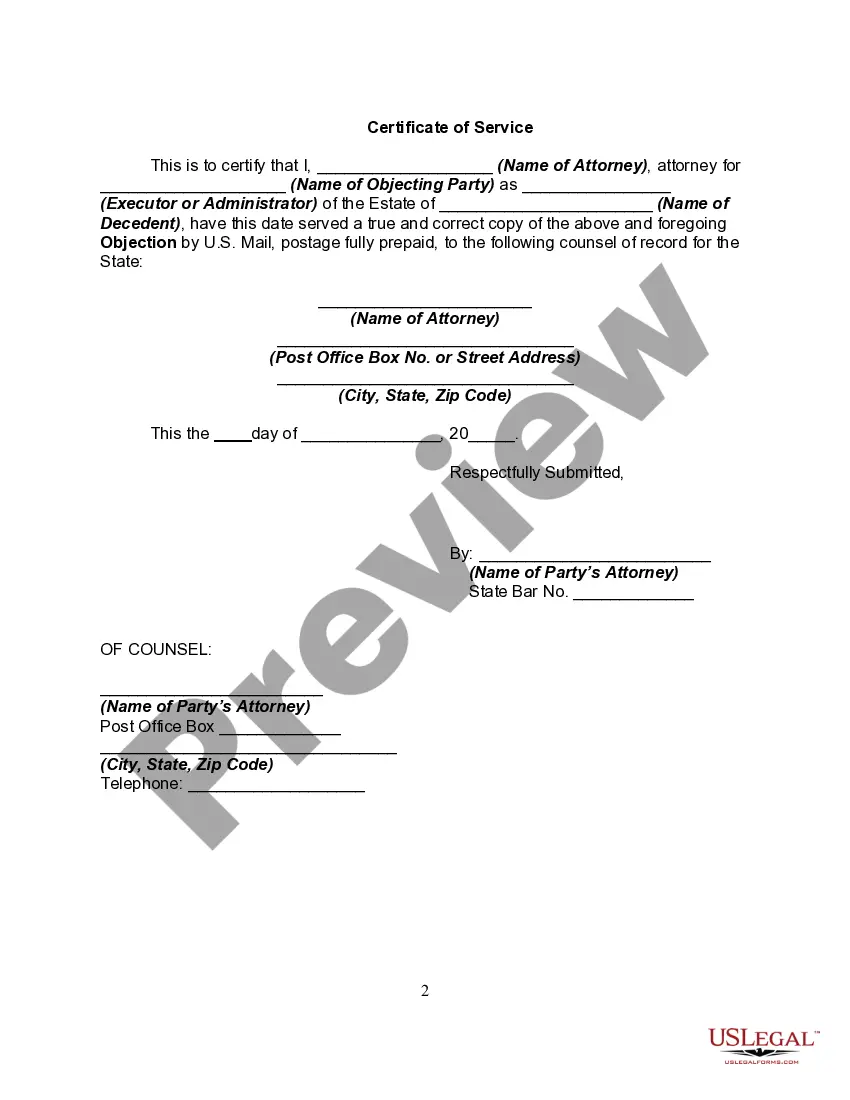
- Signature lines for the objecting party and their attorney
- Certificate of service to confirm delivery to involved parties
Situations where this form applies
This form is necessary in situations where an individual, often a beneficiary, believes they have valid grounds to oppose the distribution of assets proposed by the estate's executor. Scenarios may include disputes over the validity of the will, disagreements on asset distribution, or concerns regarding the management of the estate by the executor.
Who this form is for
This form is intended for:
- Beneficiaries of the estate who wish to contest the executor's actions
- Family members or heirs who have a legal interest in the estate
- Individuals seeking to protect their rights under a decedent's will
How to prepare this document
- Enter the name of the decedent and relevant details of the estate at the top of the form.
- Provide your name and your relationship to the decedent in the appropriate sections.
- Specify the date on which the original petition was filed.
- Clearly state your objections and intentions regarding the petition.
- Include your signature and that of your attorney, along with their contact information.
- Complete the certificate of service to confirm that all parties have been notified.
Does this form need to be notarized?
Notarization is generally not required for this form. However, certain states or situations might demand it. You can complete notarization online through US Legal Forms, powered by Notarize, using a verified video call available anytime.
Get your form ready online
Our built-in tools help you complete, sign, share, and store your documents in one place.
Make edits, fill in missing information, and update formatting in US Legal Forms—just like you would in MS Word.
Download a copy, print it, send it by email, or mail it via USPS—whatever works best for your next step.
Sign and collect signatures with our SignNow integration. Send to multiple recipients, set reminders, and more. Go Premium to unlock E-Sign.
If this form requires notarization, complete it online through a secure video call—no need to meet a notary in person or wait for an appointment.
We protect your documents and personal data by following strict security and privacy standards.

Make edits, fill in missing information, and update formatting in US Legal Forms—just like you would in MS Word.

Download a copy, print it, send it by email, or mail it via USPS—whatever works best for your next step.

Sign and collect signatures with our SignNow integration. Send to multiple recipients, set reminders, and more. Go Premium to unlock E-Sign.

If this form requires notarization, complete it online through a secure video call—no need to meet a notary in person or wait for an appointment.

We protect your documents and personal data by following strict security and privacy standards.
Common mistakes
- Failing to sign and date the form, which may lead to dismissal.
- Not providing sufficient details regarding your opposition.
- Omitting the certificate of service, which is crucial for legal acknowledgment.
- Using incorrect or outdated names of involved parties.
Benefits of completing this form online
- Immediate access to a legally-reviewed template tailored to your needs.
- Edit and customize the form easily to fit your specific situation.
- Downloadable format allows for quick completion and filing.
Looking for another form?




Form popularity
FAQ
Notify all creditors. File tax returns and pay final taxes. File the final accounting with the probate court. Distribute remaining assets to beneficiaries. File a closing statement with the court.
An estate bank account is opened up by the executor, who also obtains a tax ID number. The various accounts of the deceased person are then transferred to the account. The executor must pay creditors, file tax returns and pay any taxes due. Then, he must collect any money or benefits owed to the decedent.
When the executor has paid off the debts, filed the taxes and sold any property needed to pay bills, he can submit a final estate accounting to the probate court. Once the probate court approves the accounting, he can distribute assets to you and other beneficiaries according to the terms of the will.
Introduction. Pay the debts of the estate first. Ask each beneficiary to acknowledge receipt of the gift. Transferring company shares. Transferring real property. Draw up the accounts of the estate. Other claims on the estate. Finishing up.
In most cases, beneficiaries can't go to the court and contest an executor simply because they disagree with one or more of the executor's decisions. In order for the court to remove an executor, someone (usually a beneficiary) must prove that the executor has engaged in misconduct or is otherwise incompetent.
As an Executor, what you cannot do is go against the terms of the Will, Breach Fiduciary duty, fail to act, self-deal, embezzle, intentionally or unintentionally through neglect harm the estate, and cannot do threats to beneficiaries and heirs.
In the claim, you'll state under oath that the debt is owed and provide details on the amount of the debt and any payments the decedent made. If you have written documentation, you can attach it to your claim.
Sell. When the estate includes a few items of significant financial worth that can't be equally distributed among heirs, the property might be sold and the proceeds distributed equally as cash. Leave Instructions. It can help a lot if the decedent decides who will get what. Take Turns. Bidding. Financial Adjustment?
Q: How Long Does an Executor Have to Distribute Assets From a Will? A: Dear Waiting: In most states, a will must be executed within three years of a person's death.