Motion to Refer Case to Mediation
About this form
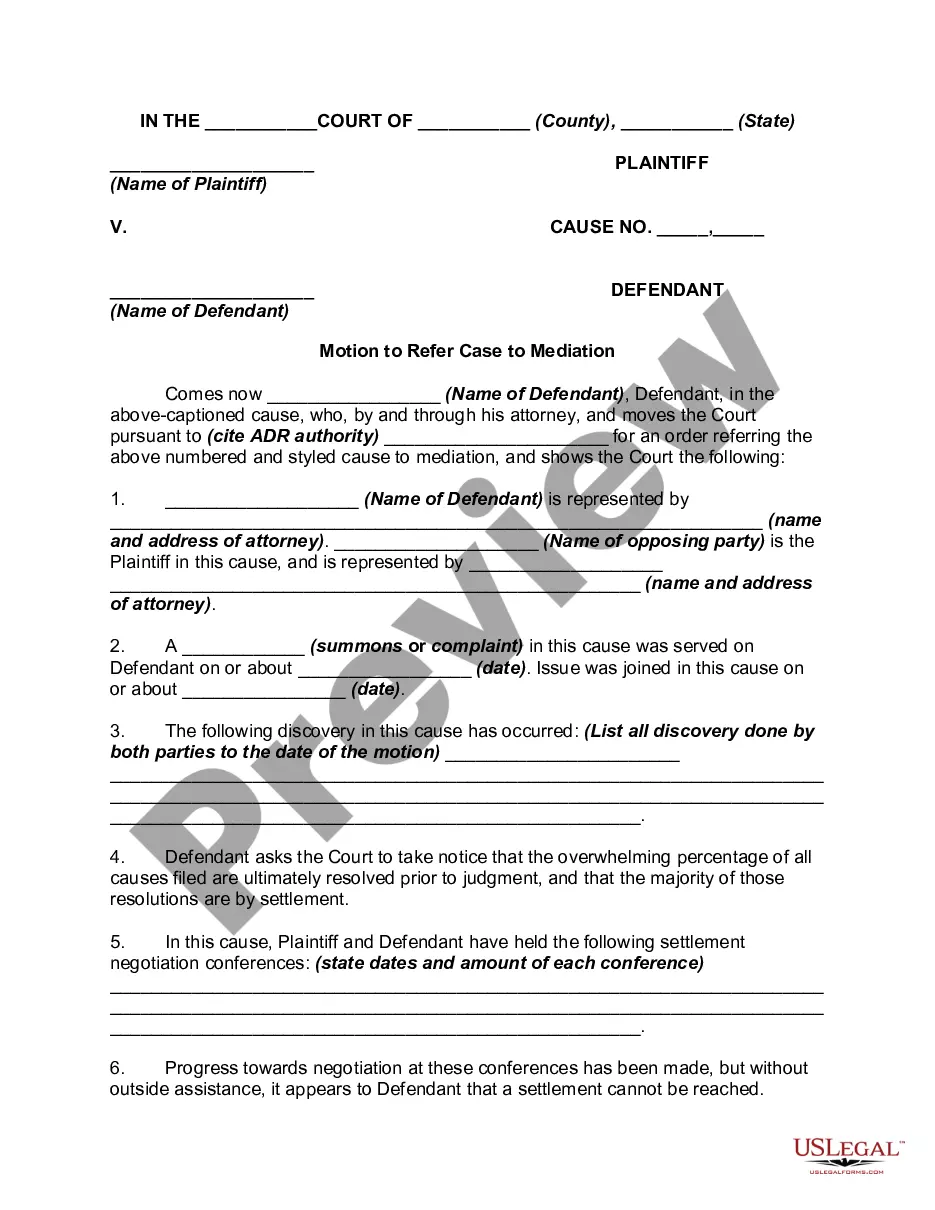
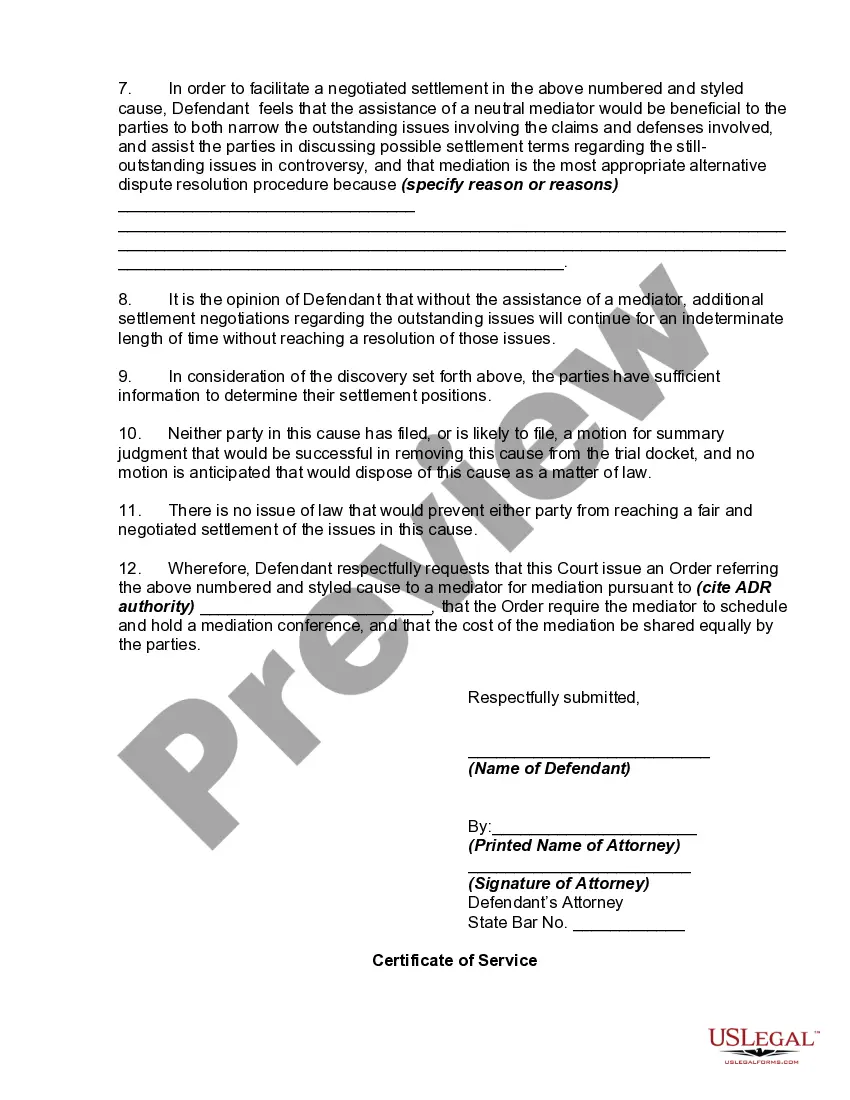
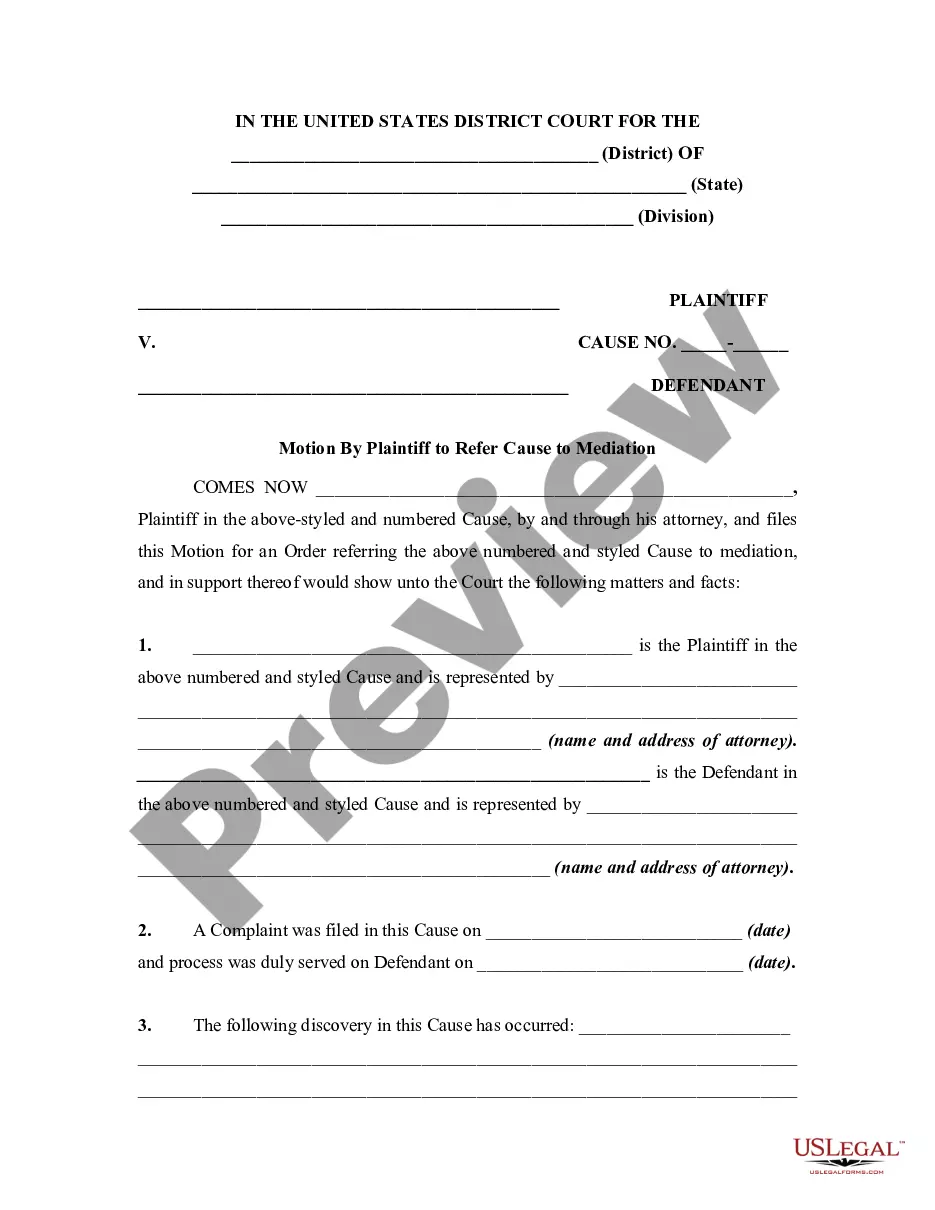
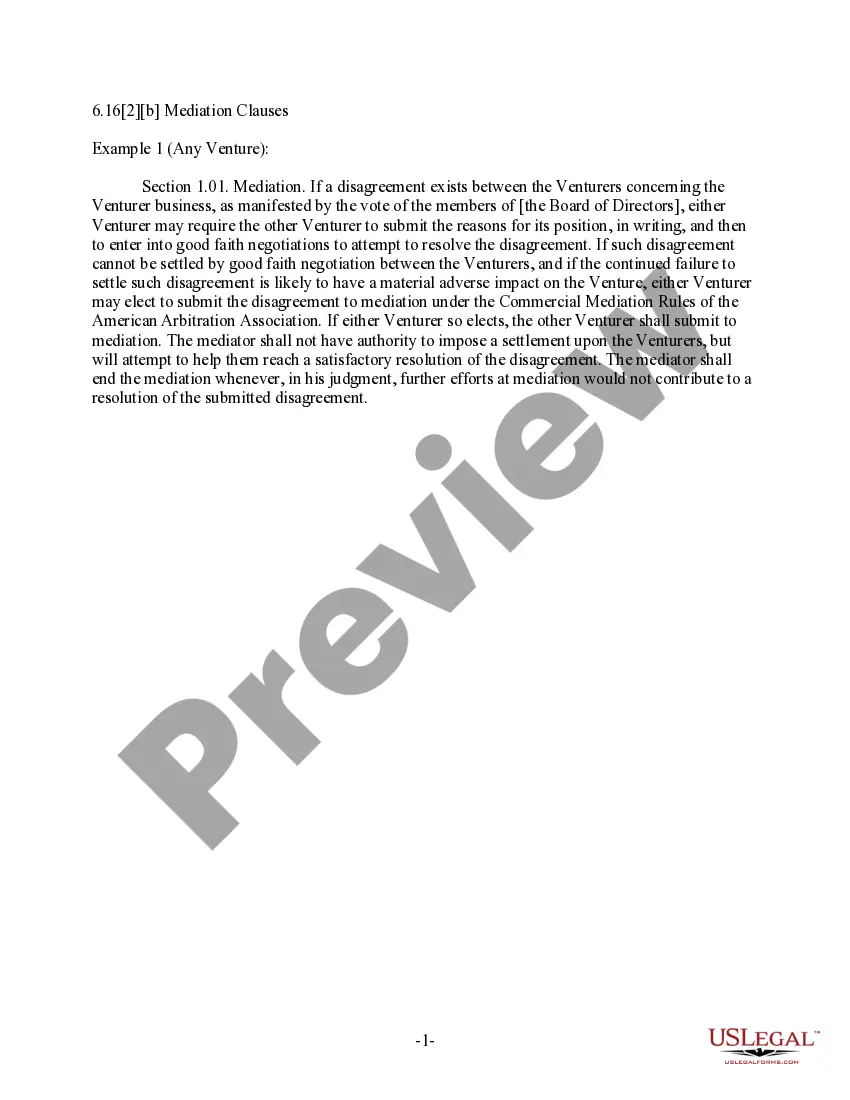
The Motion to Refer Case to Mediation is a legal document used to request the court to order the parties involved in a dispute to participate in mediation. Mediation is a cooperative resolution process facilitated by a neutral third party, aimed at helping conflicting parties reach a consensus without proceeding to trial. This form is distinct from other legal motions as it focuses specifically on initiating mediation as a form of alternative dispute resolution (ADR).
Key parts of this document
- Caption with names of the plaintiff and defendant, and case number.
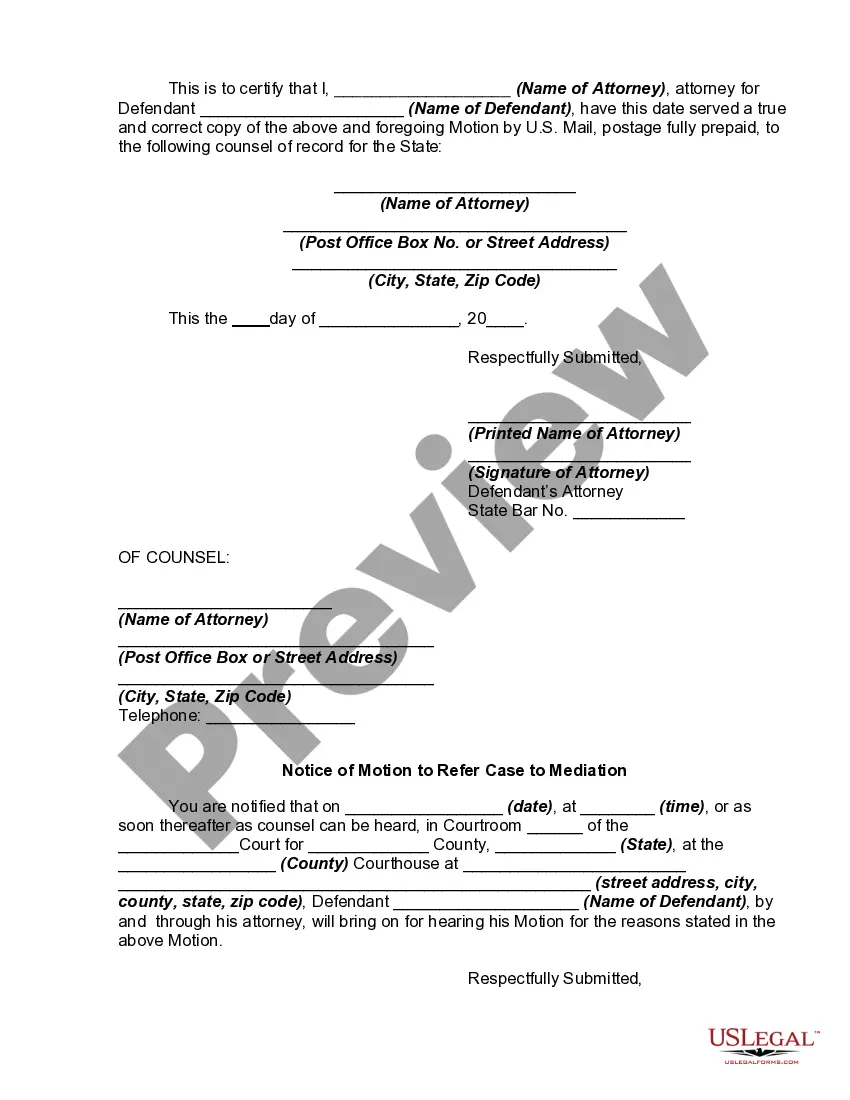
- Details of counsel representing both parties.
- Information regarding the initial complaint and pertinent discovery conducted.
- Records of previous settlement negotiation efforts and dates of those conferences.
- Statements supporting the need for mediation and potential benefits.
- Request for the court to refer the case to a mediator and proposed cost-sharing arrangements.
Situations where this form applies
You should use this form when:
- Both parties have attempted to negotiate a settlement but have failed to reach an agreement.
- You are involved in a divorce case that requires mediation for issues such as child custody or division of property.
- The court has suggested mediation before proceeding to trial in a custody or financial dispute.
Who needs this form
- Defendants in a legal case seeking mediation as a resolution method.
- Attorneys representing parties involved in disputable civil matters.
- Individuals experiencing conflict in matters of family law, such as divorce or custody issues.
Completing this form step by step
- Identify the parties involved, clearly naming the plaintiff and defendant.
- Enter the case number and ensure proper representation details of both parties' attorneys are included.
- List all discovery conducted and relevant dates to demonstrate preparedness for mediation.
- Document previous negotiations and outcomes to provide context for the mediation request.
- Clearly state reasons for seeking mediation and indicate potential benefits.
- Sign the form and include the required certificate of service as per court protocols.
Does this form need to be notarized?
In most cases, this form does not require notarization. However, some jurisdictions or signing circumstances might. US Legal Forms offers online notarization powered by Notarize, accessible 24/7 for a quick, remote process.
Get your form ready online
Our built-in tools help you complete, sign, share, and store your documents in one place.
Make edits, fill in missing information, and update formatting in US Legal Forms—just like you would in MS Word.
Download a copy, print it, send it by email, or mail it via USPS—whatever works best for your next step.
Sign and collect signatures with our SignNow integration. Send to multiple recipients, set reminders, and more. Go Premium to unlock E-Sign.
If this form requires notarization, complete it online through a secure video call—no need to meet a notary in person or wait for an appointment.
We protect your documents and personal data by following strict security and privacy standards.

Make edits, fill in missing information, and update formatting in US Legal Forms—just like you would in MS Word.

Download a copy, print it, send it by email, or mail it via USPS—whatever works best for your next step.

Sign and collect signatures with our SignNow integration. Send to multiple recipients, set reminders, and more. Go Premium to unlock E-Sign.

If this form requires notarization, complete it online through a secure video call—no need to meet a notary in person or wait for an appointment.

We protect your documents and personal data by following strict security and privacy standards.
Common mistakes to avoid
- Failing to include complete attorney contact information for both parties.
- Omitting specific reasons for seeking mediation within the motion.
- Not adhering to local court filing procedures or deadlines.
Why complete this form online
- Convenience of completing the form at your own pace without the need for physical paperwork.
- Editability allows for quick changes to be made to accommodate specific case details.
- Access to professionally drafted templates ensures legal accuracy and compliance.
Main things to remember
- The Motion to Refer Case to Mediation facilitates a collaborative approach to dispute resolution.
- This form is essential for parties looking to engage in mediation instead of litigation.
- Prepare detailed information regarding past negotiations and reasons for mediation to strengthen your motion.
Looking for another form?








Form popularity
FAQ
To find a private mediator you can: contact the Alternative Dispute Resolution Programs and Services on the Law Society NSW website. contact a Registered Mediation Accreditation Body and ask for details of mediators registered with them. For more information go to the Mediator Standards Board.
Avoid saying alienating things, and say difficult things in the least alienating way possible. Set ground rules to avoid attacking openings. Remember that avoiding saying unwelcome things, by having the mediator say them, merely transfers the other party's resentment from counsel to the mediator.
A Position Statement is a permanent record of a party's position, ever present throughout the mediation.Position Statements should be provided by each party to every other party, and the mediator. Often a date for simultaneous exchange is suggested by the mediator or agreed between the parties.
A good mediation summary will include some key components, tell a story, take the right tone, provide evidence, and include a discussion of risk. Your summary should include a brief case description and the legal issues involved in it. Introduce what the dispute is concerning.
Don't just repeat your Statement of Claim or Defence. Do outline the main issues in the case, and your position on each of those issues. Do consider addressing any weaknesses up-front. Do include any settlement offers that have been made to date.
Key components. Your summary should include a brief case description and the legal issues involved in it. Story and theme. Think of your mediation summary as a story; write it persuasively to help the other side understand. Tone. Evidence. Risk. Go online for help writing mediation advocacy. Conclusion.
Be upfront. Your first paragraph should tell the mediator who you represent, who the opponent is, summarize the claims and explain what is at stake. Provide a concise summary of the facts and claims. Summarize prior settlement discussions. Identify strengths and weaknesses. Bring it home.
Avoid saying alienating things, and say difficult things in the least alienating way possible. Set ground rules to avoid attacking openings. Remember that avoiding saying unwelcome things, by having the mediator say them, merely transfers the other party's resentment from counsel to the mediator.
You should put a heading at the top of your position statement containing useful information about the case, such as the case number, the name of the court, yours and the other party's names and the date and time of the court hearing.