Technology License Agreement with a Research Organization as Licensor
Understanding this form
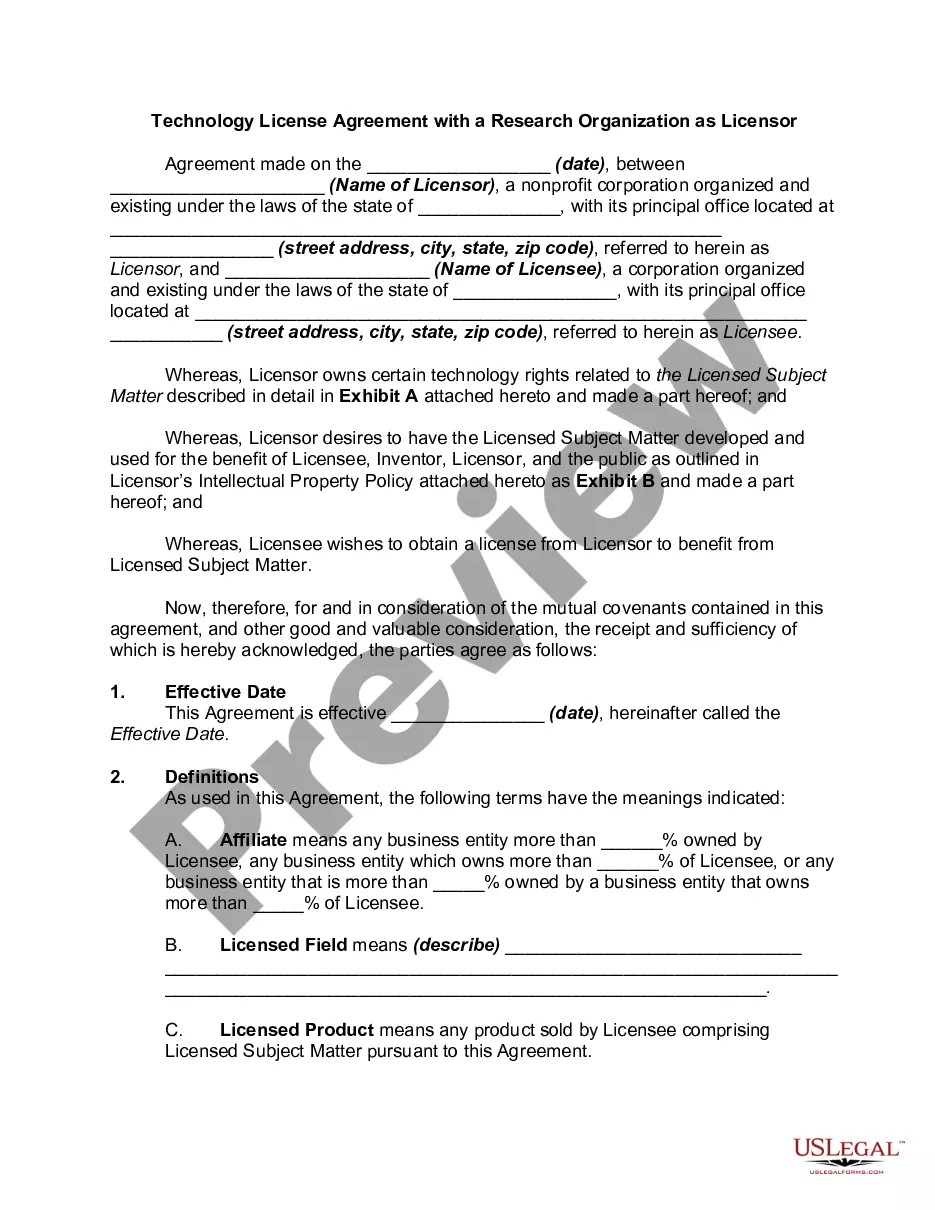
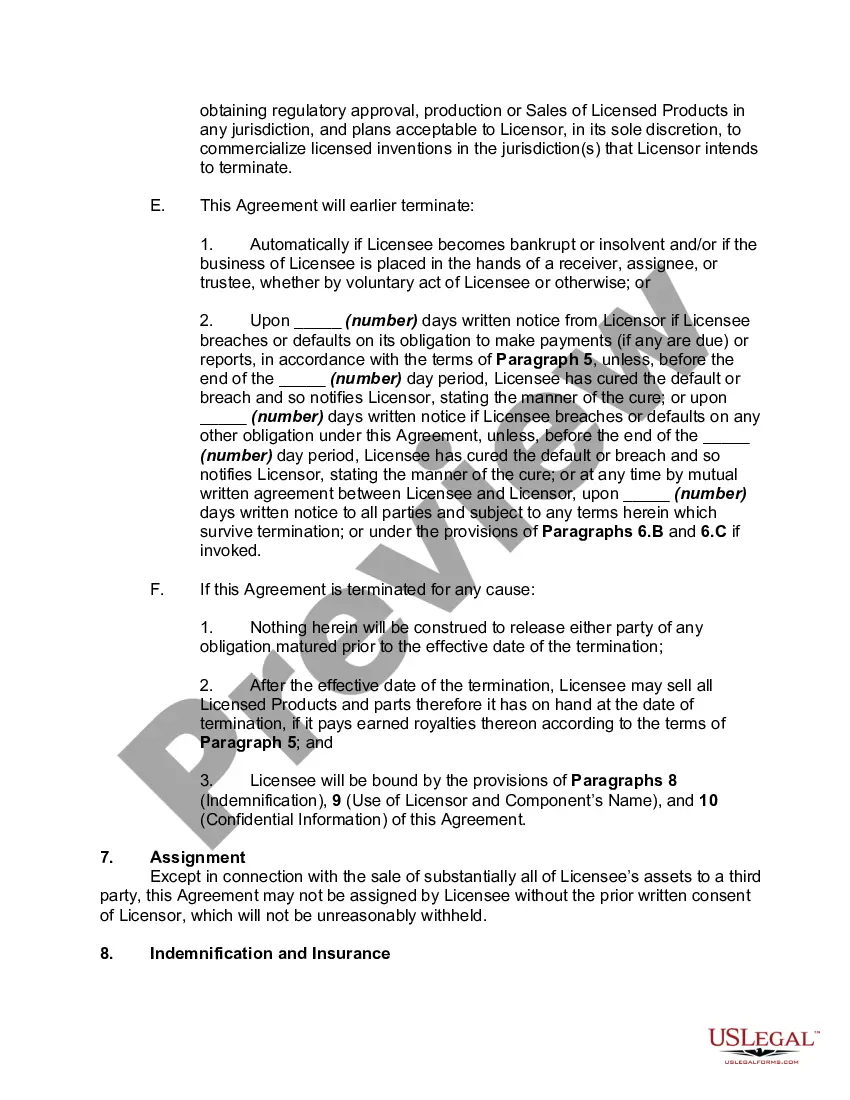
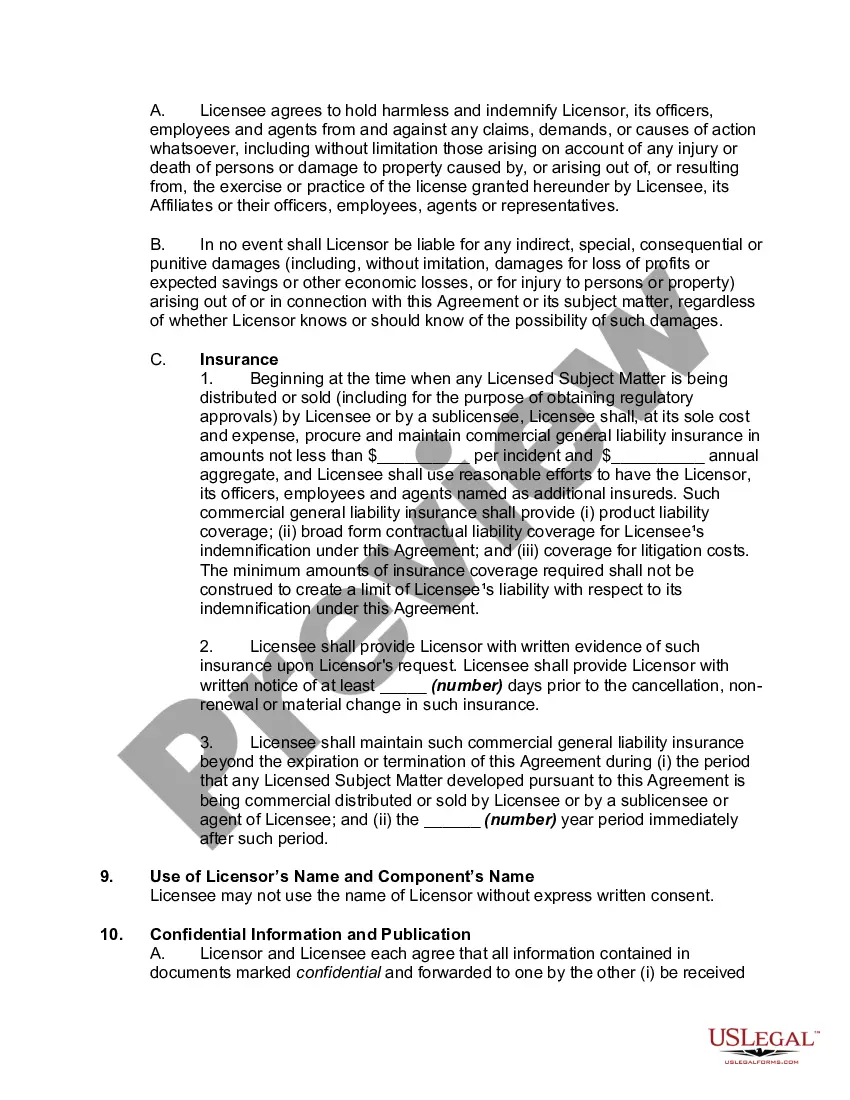
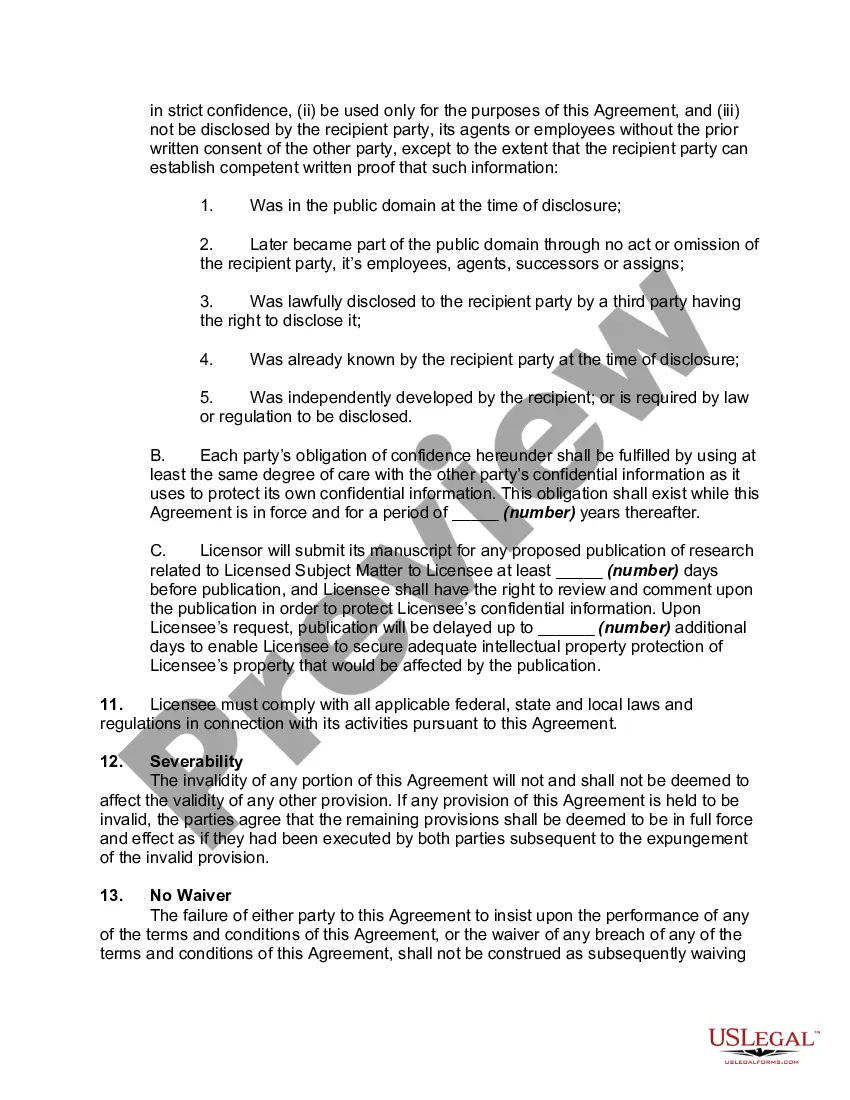
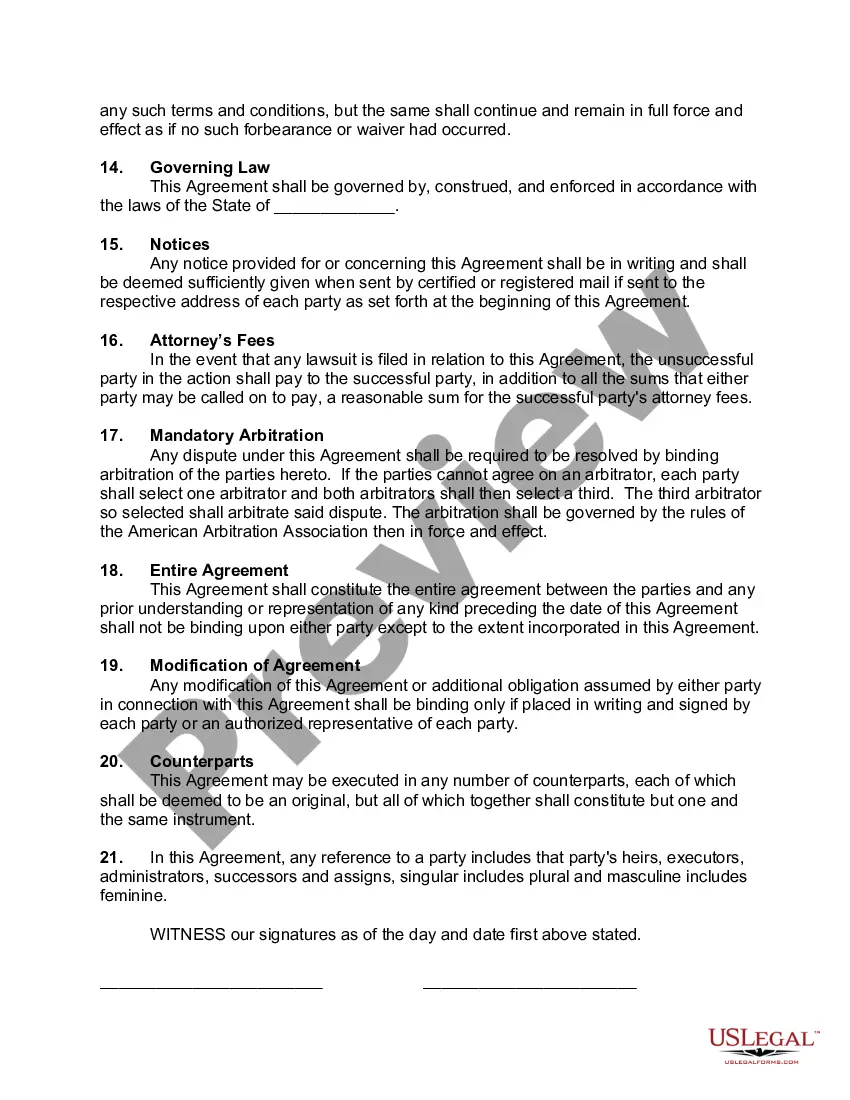
This Technology License Agreement with a Research Organization as Licensor is a contractual document that allows a licensee to use specific technology owned by the licensor under defined terms and conditions. It differs from other agreements by its focus on technology transfer between a nonprofit research entity and a corporate licensee, detailing obligations for both parties regarding the licensed subject matter and commercialization efforts.
Key parts of this document
- Parties Involved: Identifies the licensor and licensee, including their legal structure and addresses.
- Effective Date: Specifies when the agreement begins.
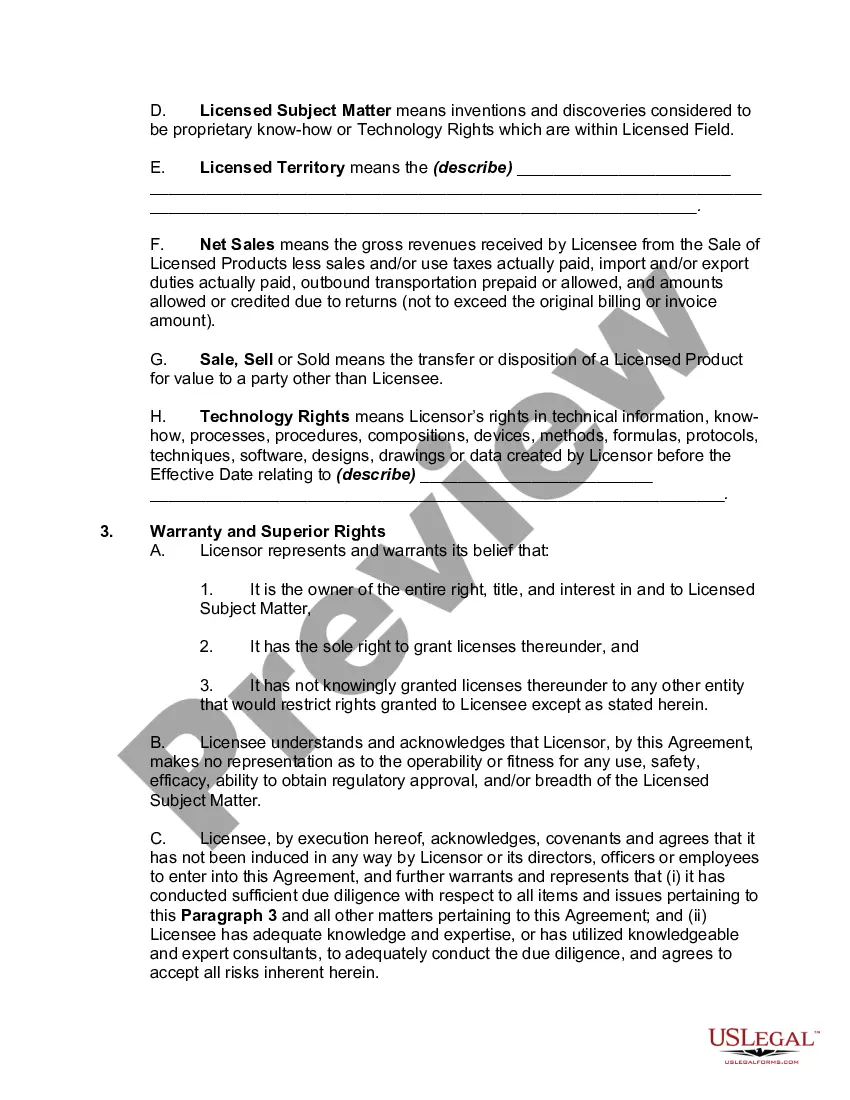
- Definitions: Clarifies key terms such as "Licensed Subject Matter" and "Licensed Territory."
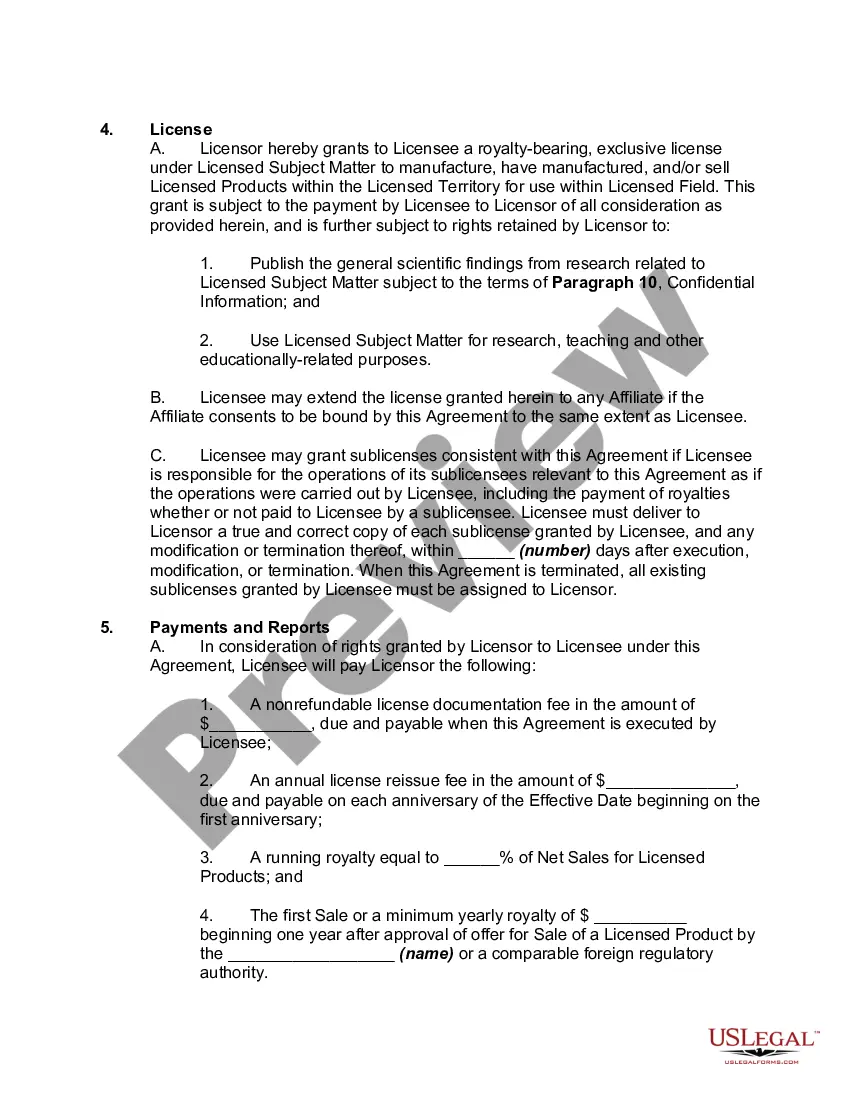
- License Grant: Details the rights granted to the licensee regarding the use of the technology.
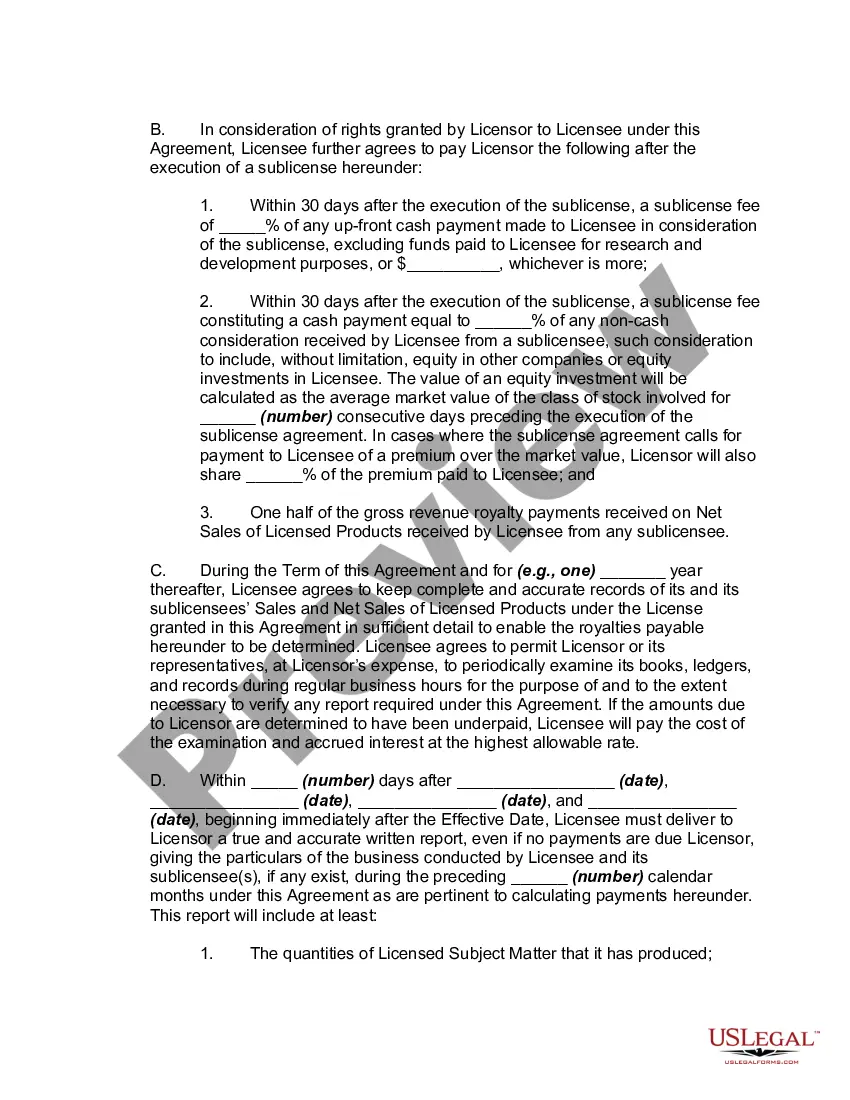
- Payments and Reports: Outlines the financial obligations of the licensee, including royalties and reporting requirements.
- Indemnification: Addresses liability and insurance responsibilities for both parties.
Common use cases
This form should be used when a research organization, typically a nonprofit, wishes to license its proprietary technology to another organization or individual for commercial purposes. It is applicable in situations where the research entity seeks to benefit financially from its technological creations while ensuring that the technology is utilized in a way that aligns with its mission.
Who can use this document
- Nonprofit research organizations: Entities that own technology and wish to license it for commercial use.
- Corporations: Businesses looking to develop and sell products based on licensed technology.
- Legal counsel: Attorneys assisting clients in drafting or reviewing license agreements.
- Inventors: Individuals who have developed technology and are interested in formalizing licensing agreements.
Steps to complete this form
- Identify the parties involved, including their legal names and addresses.
- Enter the effective date of the agreement.
- Define key terms in the agreement to clarify obligations and rights.
- Specify the payment structure, including any fees and royalties due.
- Review sections on indemnification and confidentiality to ensure compliance with your needs.
- Ensure all parties sign the document to validate the agreement.
Is notarization required?
Notarization is not commonly needed for this form. However, certain documents or local rules may make it necessary. Our notarization service, powered by Notarize, allows you to finalize it securely online anytime, day or night.
Get your form ready online
Our built-in tools help you complete, sign, share, and store your documents in one place.
Make edits, fill in missing information, and update formatting in US Legal Forms—just like you would in MS Word.
Download a copy, print it, send it by email, or mail it via USPS—whatever works best for your next step.
Sign and collect signatures with our SignNow integration. Send to multiple recipients, set reminders, and more. Go Premium to unlock E-Sign.
If this form requires notarization, complete it online through a secure video call—no need to meet a notary in person or wait for an appointment.
We protect your documents and personal data by following strict security and privacy standards.

Make edits, fill in missing information, and update formatting in US Legal Forms—just like you would in MS Word.

Download a copy, print it, send it by email, or mail it via USPS—whatever works best for your next step.

Sign and collect signatures with our SignNow integration. Send to multiple recipients, set reminders, and more. Go Premium to unlock E-Sign.

If this form requires notarization, complete it online through a secure video call—no need to meet a notary in person or wait for an appointment.

We protect your documents and personal data by following strict security and privacy standards.
Typical mistakes to avoid
- Failing to clearly define the "Licensed Territory" and "Licensed Field."
- Not including all necessary payment terms and conditions.
- Omitting requirements for reporting or oversight that may affect licensee operations.
- Inaccurately identifying the parties or their legal structures.
Benefits of completing this form online
- Convenience: Easily accessible for download and use at any time.
- Editability: Customize the form to meet specific needs without hassle.
- Reliability: Crafted by licensed attorneys to ensure legal soundness.
Legal use & context
- The agreement facilitates a legal framework for the licensor to protect intellectual property rights while allowing the licensee to leverage the technology.
- It is enforceable in a court of law as long as both parties have executed the agreement under their legal capacities.
- Limitations include ensuring compliance with the terms outlined and applicable laws governing intellectual property and contractual obligations.
Summary of main points
- The Technology License Agreement clearly sets out the rights and responsibilities of both the licensor and licensee.
- Understanding and defining key terms is critical to the enforceability of the agreement.
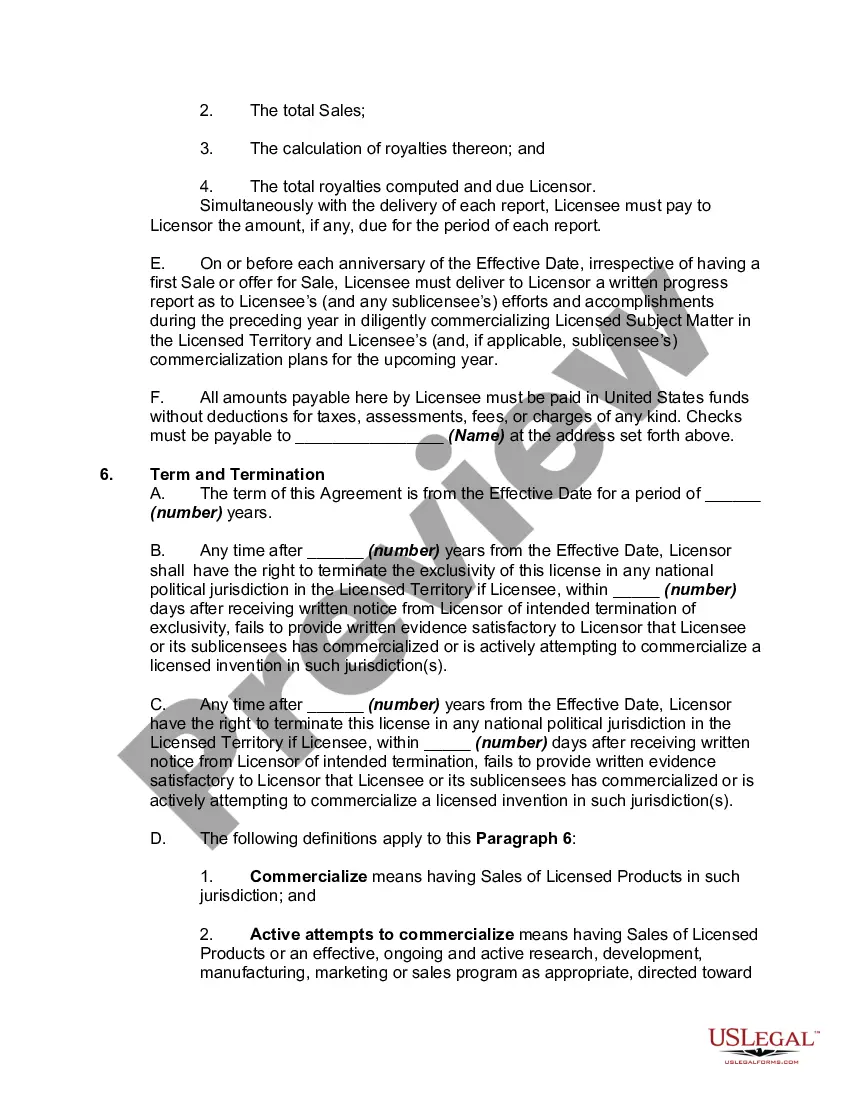
- Both parties should carefully review payment structures and contingencies regarding the agreementâs term and termination.
Looking for another form?
Form popularity
FAQ
An example of a licensing agreement is a contract between the copyright holders of software and another company, allowing the latter to use the computer software for their daily business operations.
What is the most important step in licensing for a licensor? Having a basic understanding of licensing systems and how they work.
An example of a licensing agreement is a contract between the copyright holders of software and another company, allowing the latter to use the computer software for their daily business operations.
In other words, a licensing agreement grants the licensee the ability to use intellectual property owned by the licensor. Licensing agreements are commonly used by the licensor to commercialize their intellectual property.
What Is A Primary Benefit Of A Licensing Agreement For The Licensor? (Points : 2) The Licensor Shares The Entry Costs To The New Market With The Licensee And Increases Control. The Licensor Retains All Control Over The Production Overseas And Lowers Risk. The Licensor Can Gain Experience Curves And Location Economies.
An effective licensing agreement is the most effective solution for protecting your intellectual property. A licensing agreement allows owners of intellectual property to authorize third parties to use, alter, or resell the property for a mutually agreed-upon price, without transferring ownership to the third party.
Do your homework. Before you begin negotiating, you need to understand your licensee's business. Start with a term sheet. Manage your expectations. Be patient. Have a win-win attitude. Don't lose your sense of humor. Remember to hold something back. Put yourself in their shoes.
The party providing the intellectual property is called the licensor while the party receiving the intellectual property is called the licensee. In a licensing agreement, the licensee typically pays an upfront fee in conjunction with a royalty fee.
Download a template for a licensing agreement. Choose your role as the licensor or licensee. Define the license(s) in the agreement. Decide whether the license is exclusive or not. Settle the matter of fees and payment schedule. Add a renewal date and rules.