Agreement to Appear Pursuant to Release on own Recognizance after having been Arrested for A Crime
About this form
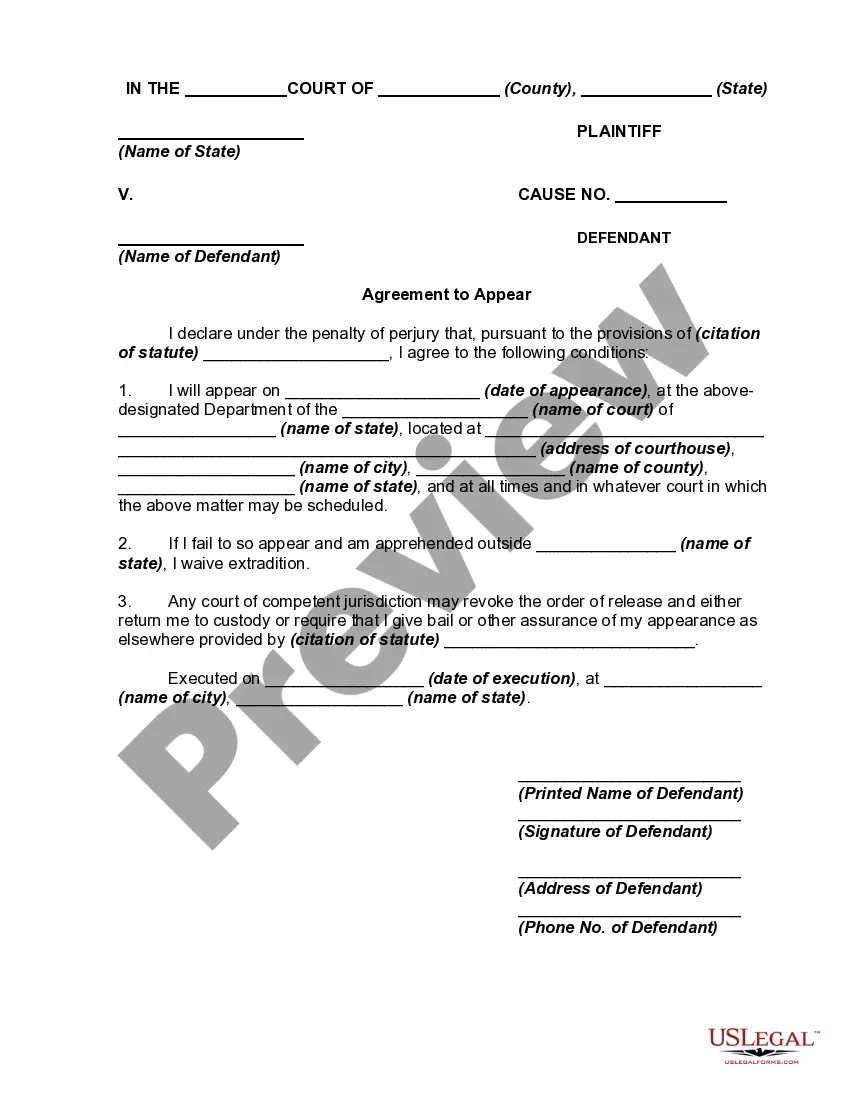
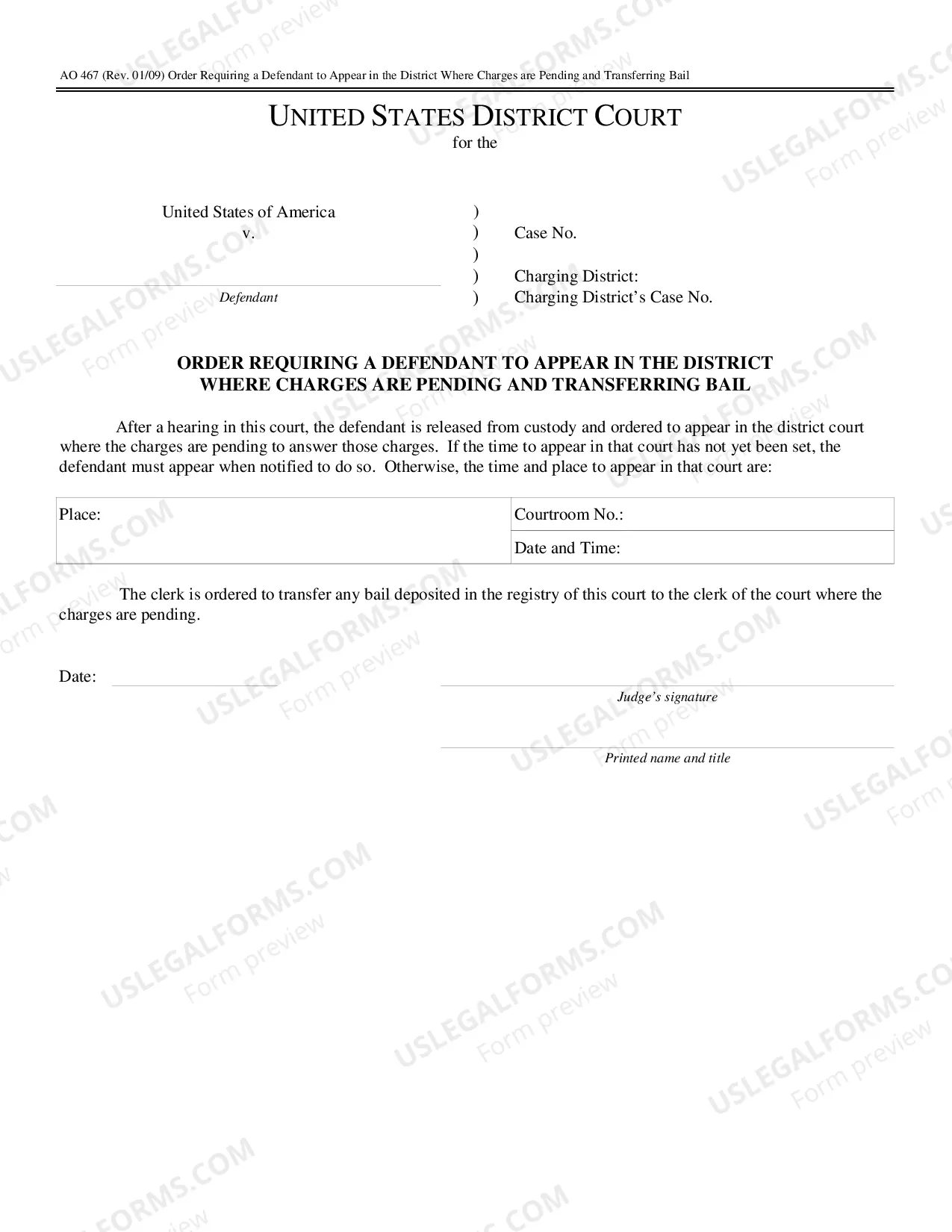
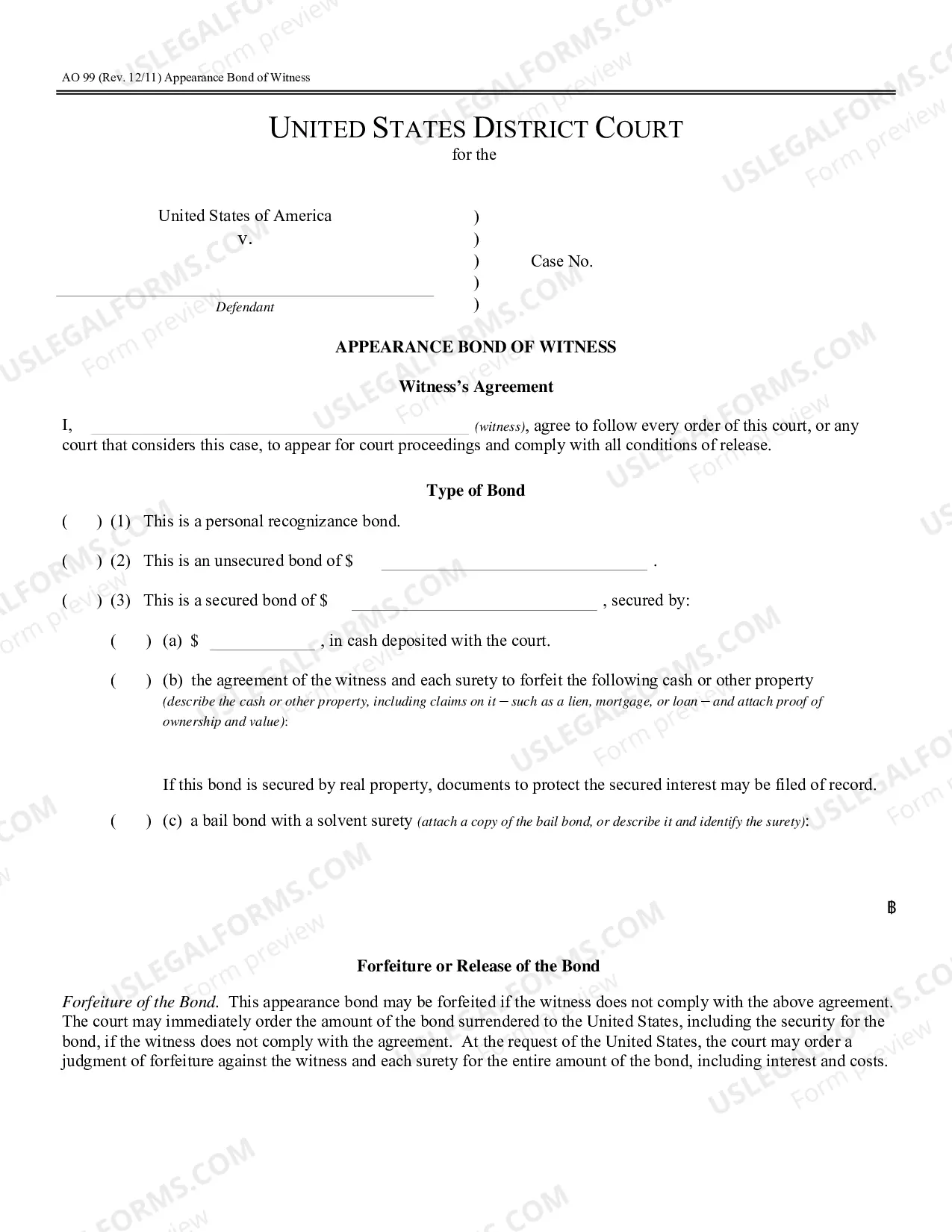
The Agreement to Appear Pursuant to Release on Own Recognizance (ROR) is a legal document that allows a defendant to be released from custody after an arrest for a crime. By signing this agreement, the defendant acknowledges their obligation to appear in court as required. This form is distinct in that it does not involve setting a bail amount, allowing for a more straightforward process for defendants who might be deemed low-risk. It serves as a binding commitment to the court, ensuring that the individual will attend all scheduled court appearances.
Key parts of this document
- Case information: Includes the Plaintiff (State) and Defendant's names, as well as the cause number.
- Declaration: A statement declaring the terms of the recognizance agreement under penalty of perjury.
- Date of appearance: Specifies the date the defendant must appear in court.
- Location details: Includes the name and address of the court where the appearance is required.
- Extradition waiver: Acknowledgement of waiving extradition if they fail to appear outside the state.
- Signature fields: Includes spaces for the defendant's printed name, signature, address, and phone number.
Situations where this form applies
This form should be used when a defendant has been arrested and is seeking release from custody under the condition that they will appear in court as required. It is commonly used in criminal cases where the court determines that bail is not necessary, allowing for the defendant's release on their own recognizance. This can expedite the judicial process and reduce the burden of incarceration for individuals who are likely to comply with court appearances.
Who this form is for
- Defendants who have been arrested for a crime and wish to be released without bail.
- Individuals who have been granted the opportunity to appear in court rather than remain in custody.
- Legal representatives or advocates assisting defendants in preparing for court appearances.
- Anyone who has been informed by the court that they are eligible for release on their own recognizance.
Instructions for completing this form
- Identify the parties: Fill in the names of the Plaintiff (State) and Defendant along with the cause number.
- Enter the date of appearance: Specify when the defendant must appear in court.
- Provide court details: Add the court's name, address, city, county, and state where the appearance is to take place.
- Waive extradition if applicable: Acknowledge extradition waiver if failing to appear outside of the specified state.
- Signer information: Fill in the printed name, signature, address, and phone number of the defendant.
Notarization guidance
This form does not typically require notarization unless specified by local law. However, it is advisable to check state regulations for any specific requirements regarding the notarization of recognizance agreements.
Get your form ready online
Our built-in tools help you complete, sign, share, and store your documents in one place.
Make edits, fill in missing information, and update formatting in US Legal Forms—just like you would in MS Word.
Download a copy, print it, send it by email, or mail it via USPS—whatever works best for your next step.
Sign and collect signatures with our SignNow integration. Send to multiple recipients, set reminders, and more. Go Premium to unlock E-Sign.
If this form requires notarization, complete it online through a secure video call—no need to meet a notary in person or wait for an appointment.
We protect your documents and personal data by following strict security and privacy standards.

Make edits, fill in missing information, and update formatting in US Legal Forms—just like you would in MS Word.

Download a copy, print it, send it by email, or mail it via USPS—whatever works best for your next step.

Sign and collect signatures with our SignNow integration. Send to multiple recipients, set reminders, and more. Go Premium to unlock E-Sign.

If this form requires notarization, complete it online through a secure video call—no need to meet a notary in person or wait for an appointment.

We protect your documents and personal data by following strict security and privacy standards.
Common mistakes to avoid
- Failing to sign the form, which renders it invalid.
- Omitting required information, such as court details or appearance dates.
- Not checking state-specific rules that may affect the use of the form.
- Misunderstanding the implications of waiving extradition.
Benefits of using this form online
- Instant access to a legally vetted template tailored for your needs.
- Edit and customize the form easily to fit local requirements.
- Secure downloading ensures your information remains confidential.
- Convenience of preparing the form from home without needing to visit a legal office.
Main things to remember
- The Agreement to Appear allows for release without bail under specific conditions.
- Accurate completion of the form is crucial for legal acceptance.
- Consultation with a legal professional is recommended to tailor the form as per state laws.
Looking for another form?
Form popularity
FAQ
Section 3. Recognizance Defined. Recognizance is a mode of securing the release of any person in custody or detention for the commission of an offense who is unable to post bail due to abject poverty.
Release on your own recognizance means you don't have to pay bail. Simply put, OR release is no-cost bail. Defendants released on their own recognizance need only sign a written promise to appear in court as required. No bail has to be paid, either to the court or to a bail bond seller.
Can You Leave the State While Under Investigation? After being charged with a crime in a state other than your own, returning home after your arrest may not be as simple as you think. You cannot simply return home and ignore the charges pending against you.
Release on Own Recognizance.People in this situation may be able to obtain a release on their own recognizance, which means that they can get bail without paying bond. A defendant will need to sign a written promise to show up at their scheduled court appearance.
When a criminal suspect is arrested, booked and granted release on their "own recognizance," or "O.R.," no bail money is paid to the court and no bond is posted. The suspect is merely released after promising, in writing, to appear in court for all upcoming proceedings.
To be granted a PR bond, the judge takes in a number of factors such as the type of case it is, if it was violent or non-violent as well as the defendant's criminal history. Other things the judges look for are if they have a good standing in the community in which they reside.
The seriousness of the crime. Previous offenses, criminal record, and history of court date appearances. Whether or not the defendant is considered a flight risk. A background check. Family and ties to the community. Employment.