Motion For Judgment of Acquittal of All Charges
What is this form?
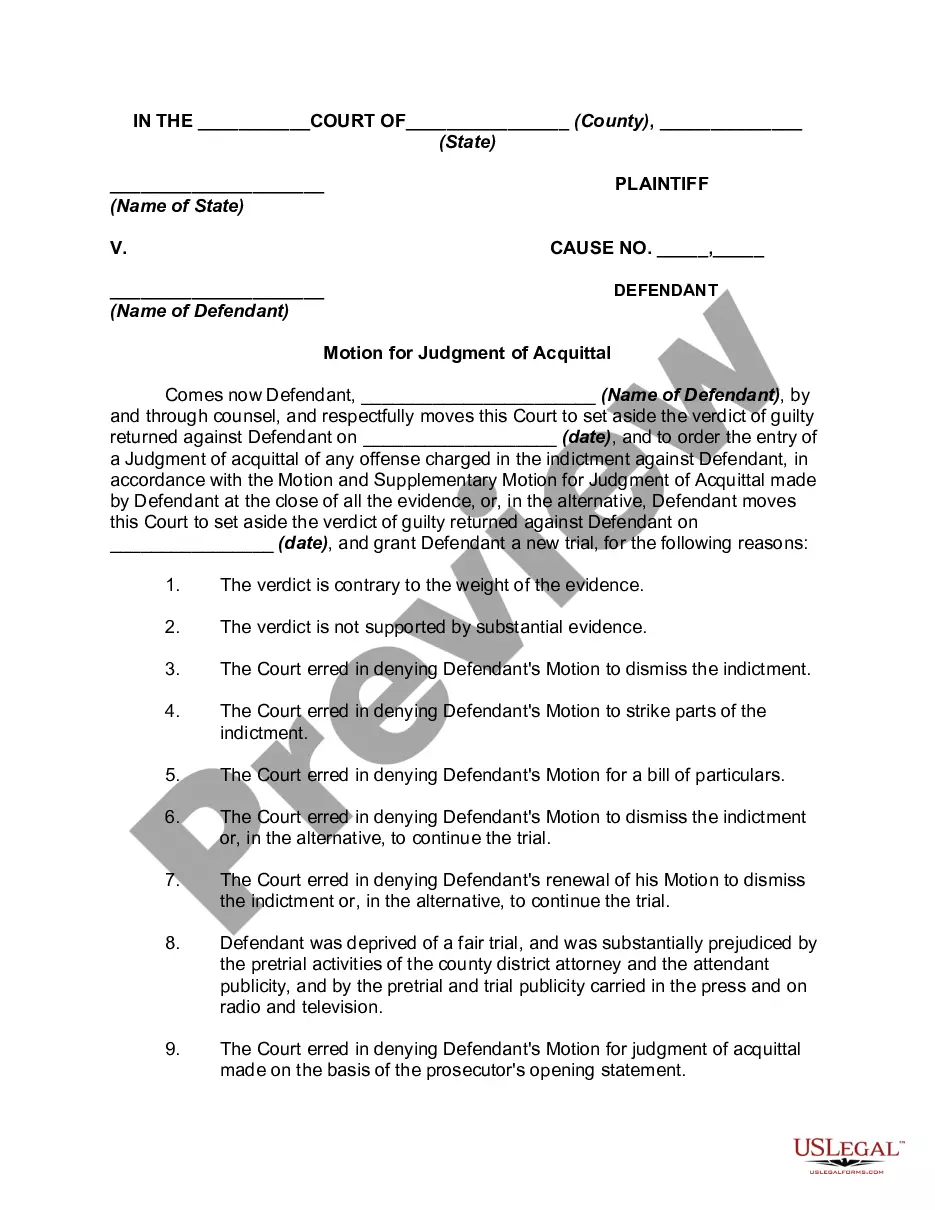
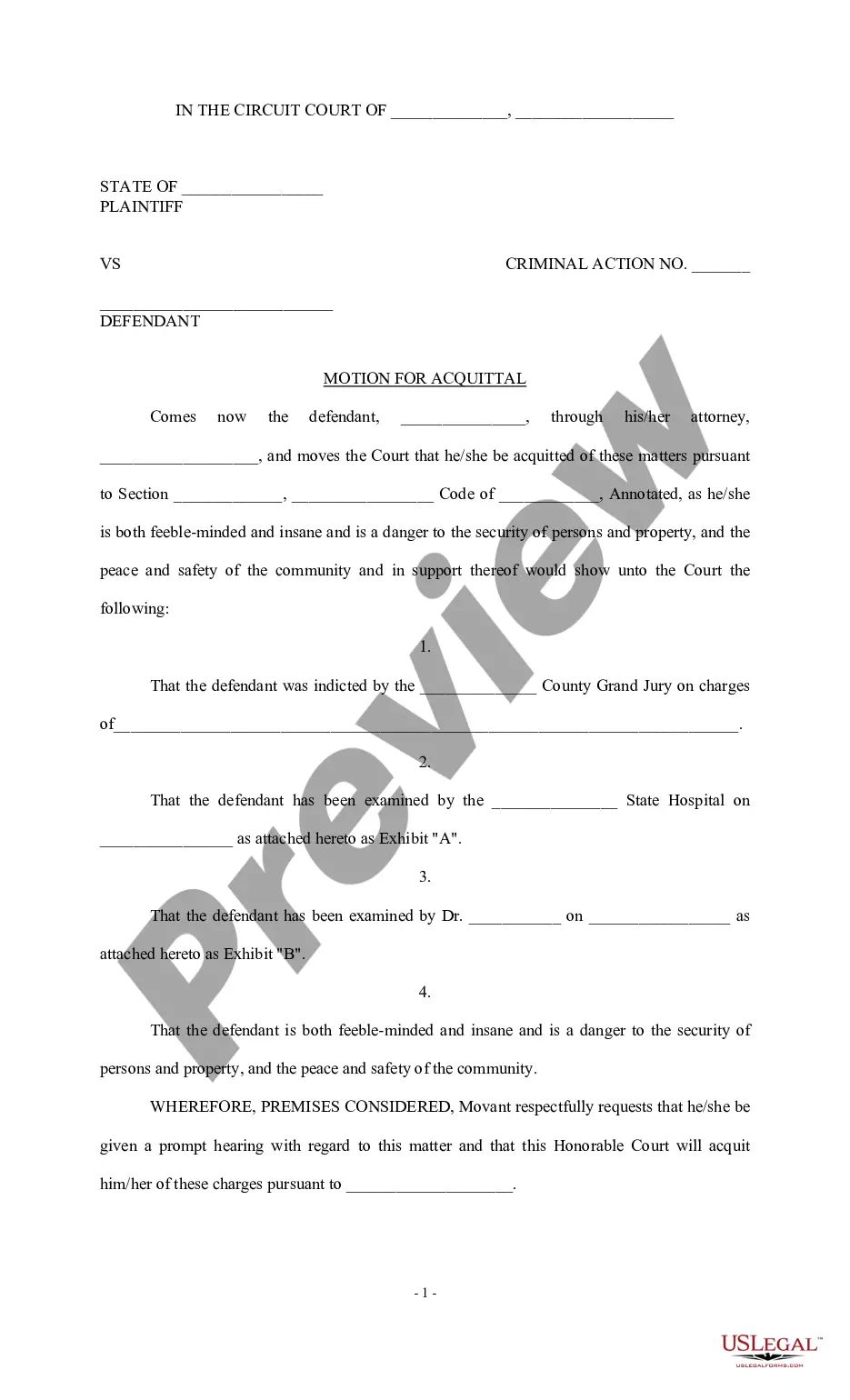
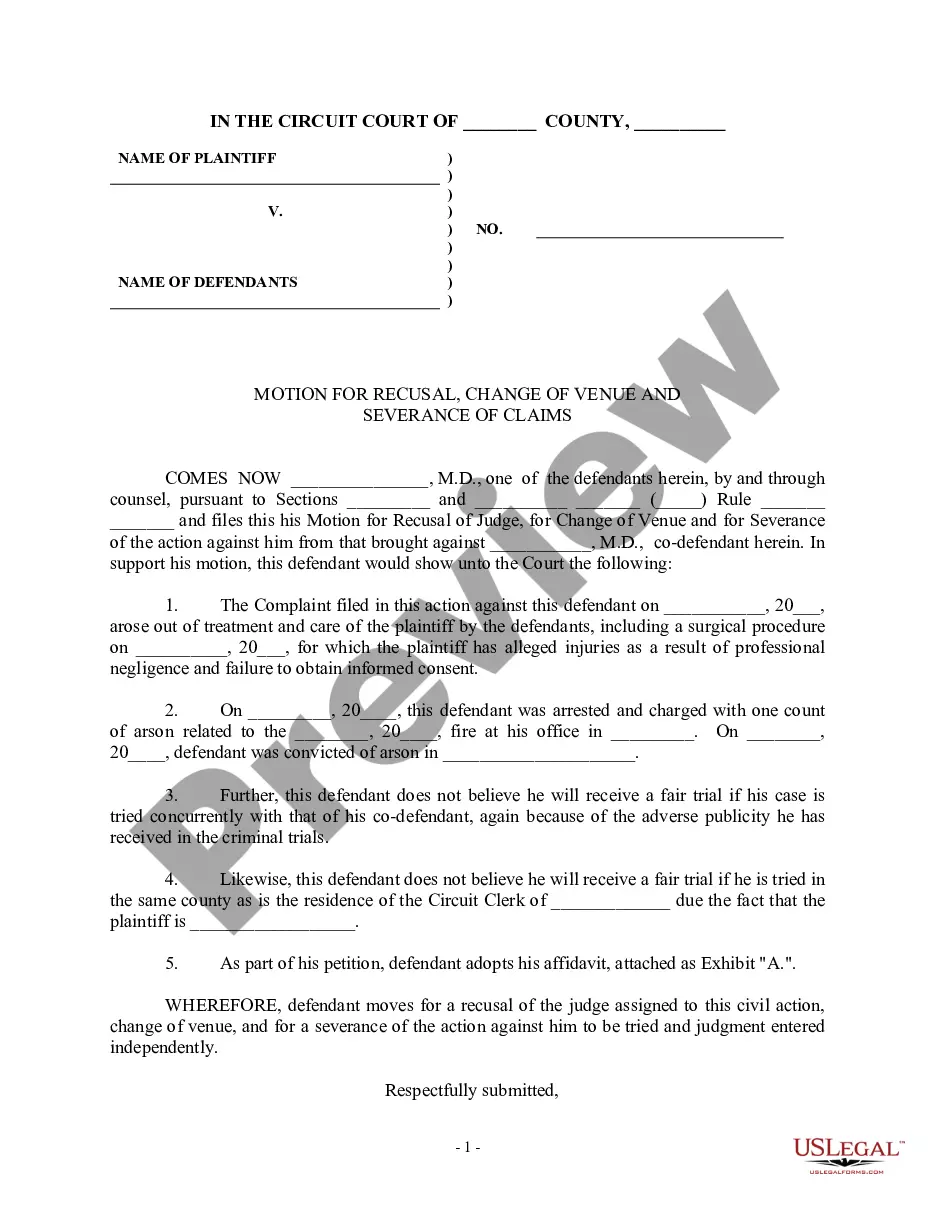
The Motion for Judgment of Acquittal of All Charges is a legal document filed by a defendant in a criminal case after a verdict of guilty has been reached. This motion seeks to overturn the guilty verdict on the grounds that the evidence does not support a conviction. Unlike typical appeal processes, this form allows a defendant to challenge a jury's decision directly based on perceived errors during the trial or insufficiencies in evidence.
Form components explained
- Defendant's details, including name and case number.
- Specific date and context of the original guilty verdict.
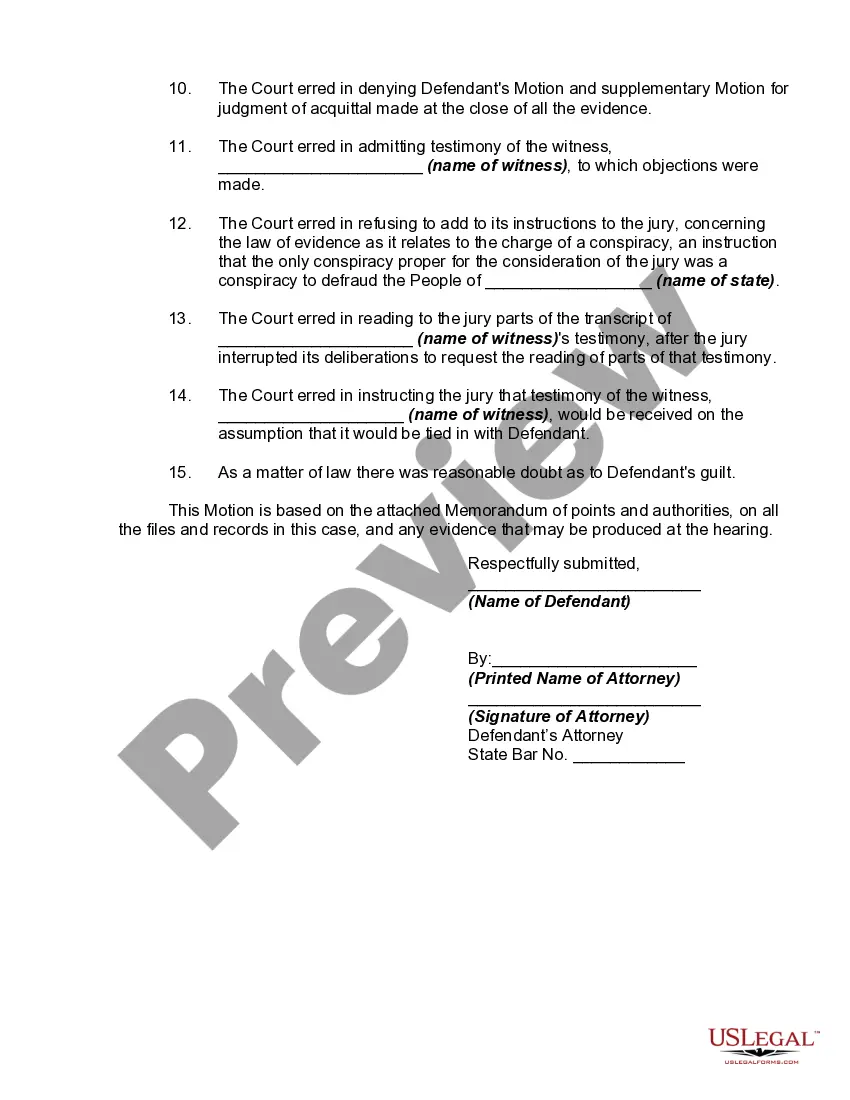
- Grounds for the motion, including claims of insufficient evidence or errors made during the trial.
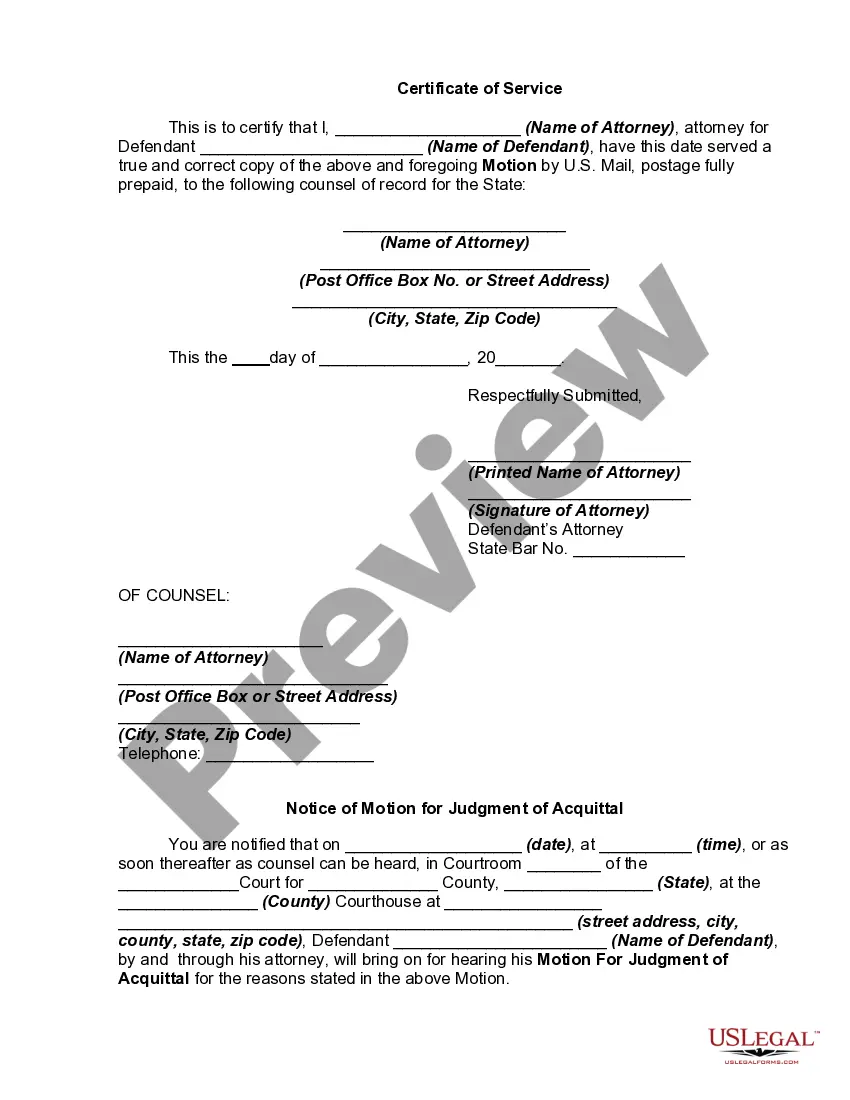
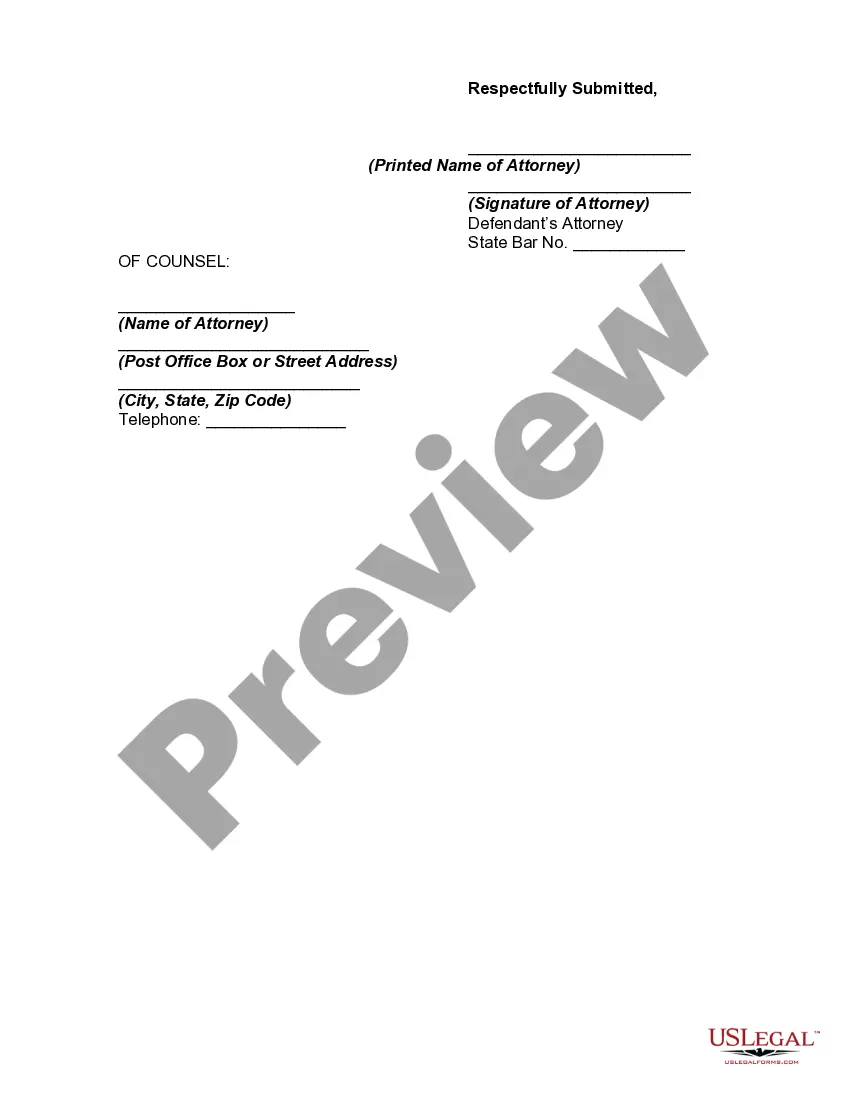
- Signature of the attorney representing the defendant.
- Certificate of service indicating that the motion has been provided to the opposing counsel.
When to use this form
This form should be used after a defendant has received a guilty verdict in a criminal trial and believes that the trial was flawed or that the evidence presented was insufficient to support the conviction. It is typically filed shortly after the verdict, as there may be time limits for making such motions depending on state laws.
Who this form is for
This motion is intended for:
- Defendants who have been convicted of criminal charges and are seeking to challenge the verdict.
- Attorneys representing defendants in criminal cases.
- Legal advocates working to uphold a defendant's rights to a fair trial.
How to prepare this document
- Identify the parties involved, including the defendant and the state.
- Enter the date of the original guilty verdict.
- List the specific grounds for the motion, detailing each reason clearly.
- Have the defending attorney sign the document with their name and state bar number.
- Provide a certificate of service to indicate that other parties have been notified of the filing.
Does this form need to be notarized?
In most cases, this form does not require notarization. However, some jurisdictions or signing circumstances might. US Legal Forms offers online notarization powered by Notarize, accessible 24/7 for a quick, remote process.
Get your form ready online
Our built-in tools help you complete, sign, share, and store your documents in one place.
Make edits, fill in missing information, and update formatting in US Legal Forms—just like you would in MS Word.
Download a copy, print it, send it by email, or mail it via USPS—whatever works best for your next step.
Sign and collect signatures with our SignNow integration. Send to multiple recipients, set reminders, and more. Go Premium to unlock E-Sign.
If this form requires notarization, complete it online through a secure video call—no need to meet a notary in person or wait for an appointment.
We protect your documents and personal data by following strict security and privacy standards.

Make edits, fill in missing information, and update formatting in US Legal Forms—just like you would in MS Word.

Download a copy, print it, send it by email, or mail it via USPS—whatever works best for your next step.

Sign and collect signatures with our SignNow integration. Send to multiple recipients, set reminders, and more. Go Premium to unlock E-Sign.

If this form requires notarization, complete it online through a secure video call—no need to meet a notary in person or wait for an appointment.

We protect your documents and personal data by following strict security and privacy standards.
Avoid these common issues
- Failing to file the motion within the required time frame after the verdict.
- Not clearly stating the specific grounds for the motion, leading to potential dismissal.
- Omitting necessary signatures or information about the attorney.
- Neglecting to serve the motion to the prosecuting counsel as required.
Benefits of using this form online
- Convenience of completing and filing the form from any location.
- Editability allows users to tailor the form to their specific case details.
- Access to attorney-drafted templates increases reliability and ensures legal compliance.
Key takeaways
- The Motion for Judgment of Acquittal is an essential tool for defendants seeking to contest a guilty verdict.
- Successful completion involves accuracy in details and a clear articulation of grounds for the challenge.
- Timeliness in filing this motion is critical to its acceptance in court.
Looking for another form?









Form popularity
FAQ
At the end of a criminal trial, a finding by a judge or jury that a defendant is not guilty. An acquittal signifies that a prosecutor failed to prove his or her case beyond a reasonable doubt, not that a defendant is innocent.
A person who has been acquitted cannot be arrested for the same case in which he has been acquitted by the Court.An order of acquittal is a judicial decision taken after full inquiry establishing the innocence of accused.
A directed verdict is a ruling entered by a trial judge after determining that there is no legally sufficient evidentiary basis for a reasonable jury to reach a different conclusion. The trial court may grant a directed verdict either sua sponte or upon a motion by either party.
An acquittal results from a not guilty verdict and cannot be appealed by the prosecution, overturned by the judge, or retried. When there is a mistrial, however, the case may be retried. Since the 1824 case of United States v.
In the event of a mistrial, the defendant is not convicted, but neither is the defendant acquitted. An acquittal results from a not guilty verdict and cannot be appealed by the prosecution, overturned by the judge, or retried. When there is a mistrial, however, the case may be retried.
Acquitted means that after a jury trial or a bench trial, the trial judge or jury finds the defendant not guilty.It simply means that a prosecutor failed to prove, beyond a reasonable doubt, that the defendant did it.
A motion for judgment of acquittal rests on the claim that the evidence at trial was insufficient for a conviction. In other words, the defendant argues that no reasonable jury could possibly find guilt beyond a reasonable doubt. A defendant can ask a judge to acquit on all of the charges or just some of them.
Search Legal Terms and Definitions A judge in a criminal case may direct a verdict of acquittal on the basis that the prosecution has not proved its case, but the judge may not direct a verdict of guilty, since that would deprive the accused of the constitutional right to a jury trial.
Definition. At the end of a criminal trial, a finding by a judge or jury that a defendant is not guilty. An acquittal signifies that a prosecutor failed to prove his or her case beyond a reasonable doubt, not that a defendant is innocent.