Independent Contractor Agreement Between Licensed Counselor and Therapist and Licensed Counselor and Therapist Practicing as a Solo Practitioner
What this document covers
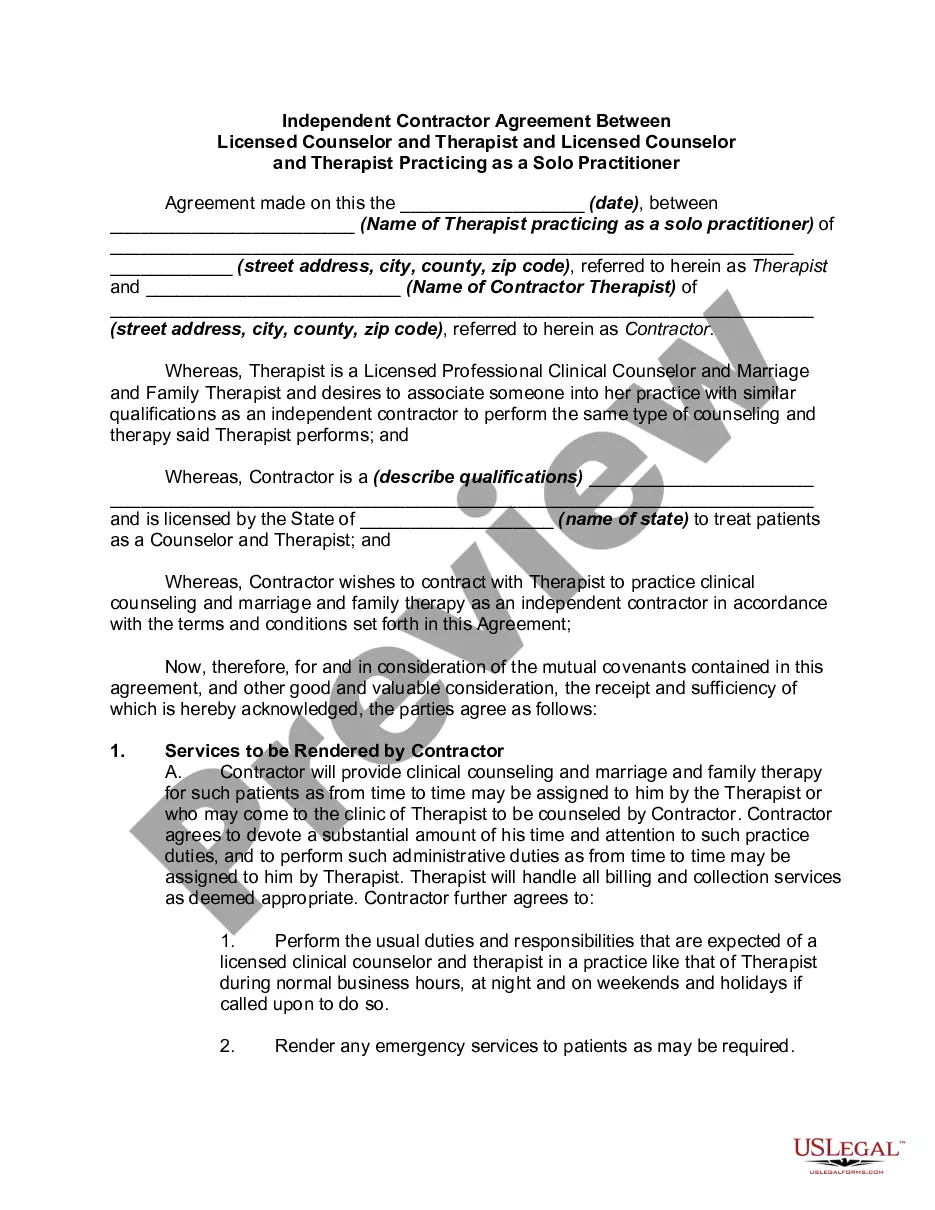
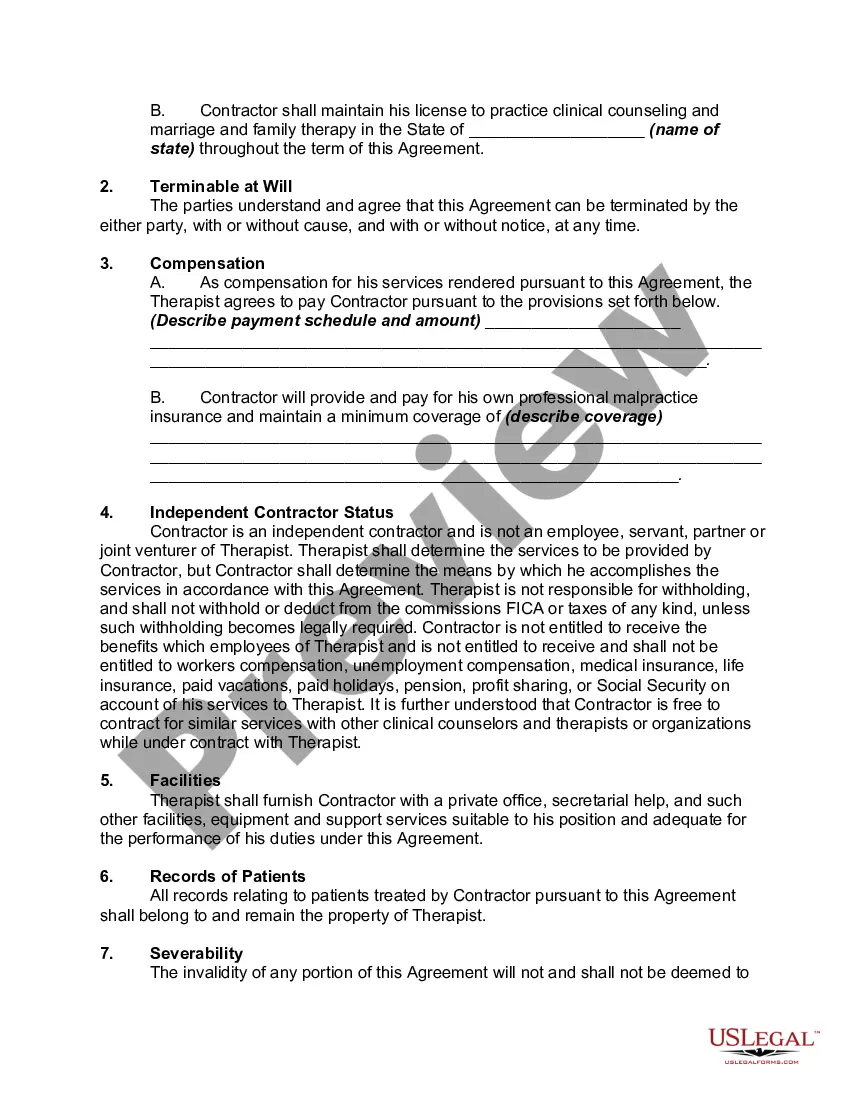
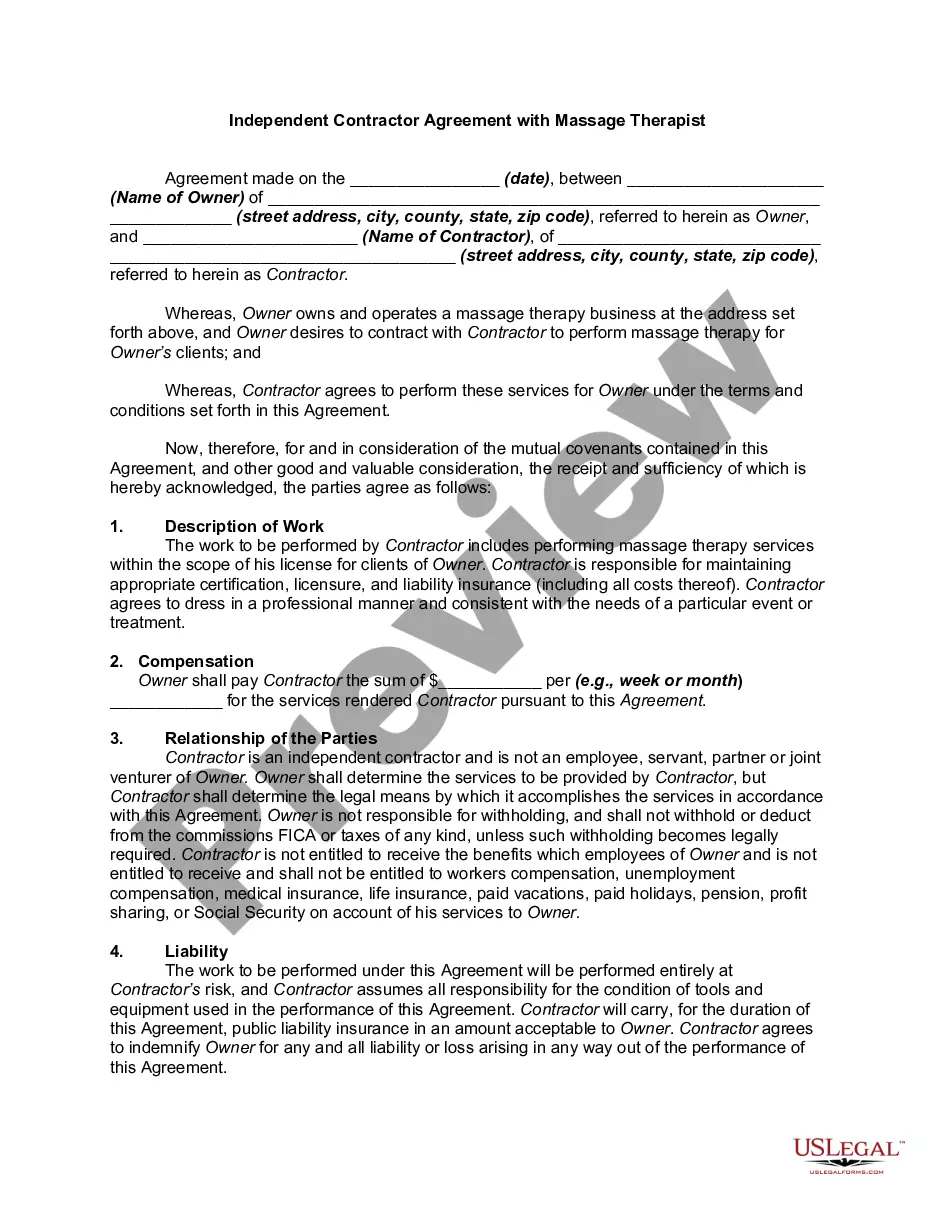
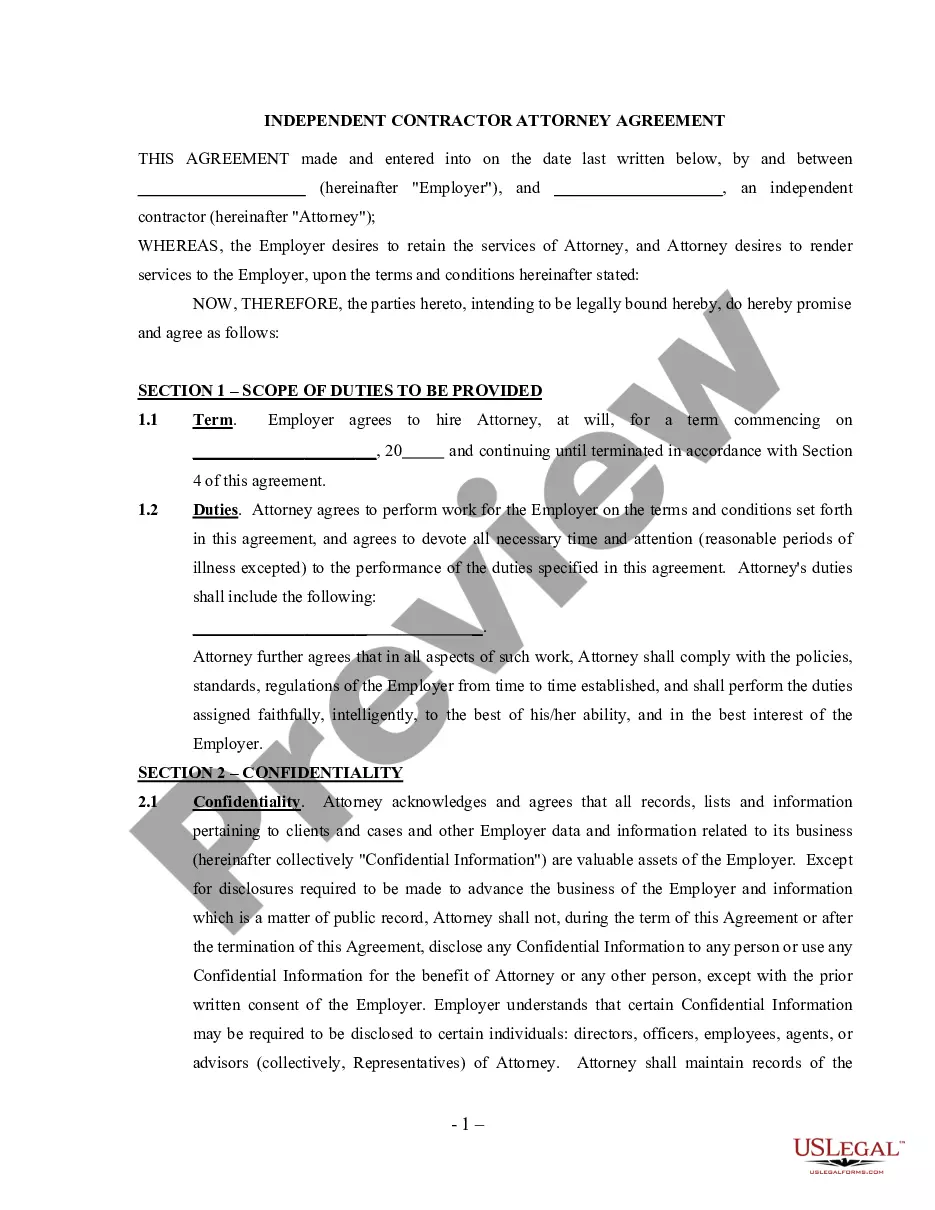
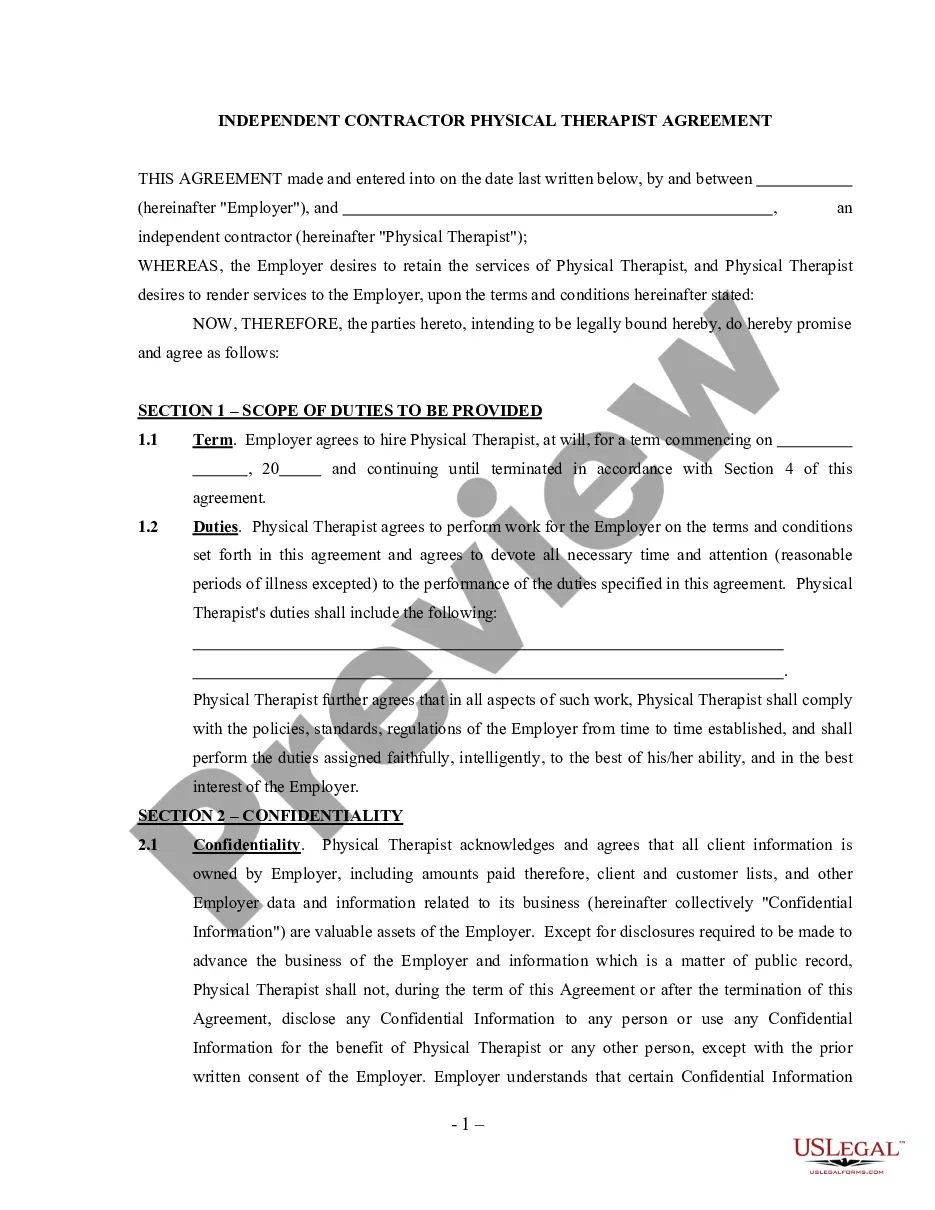
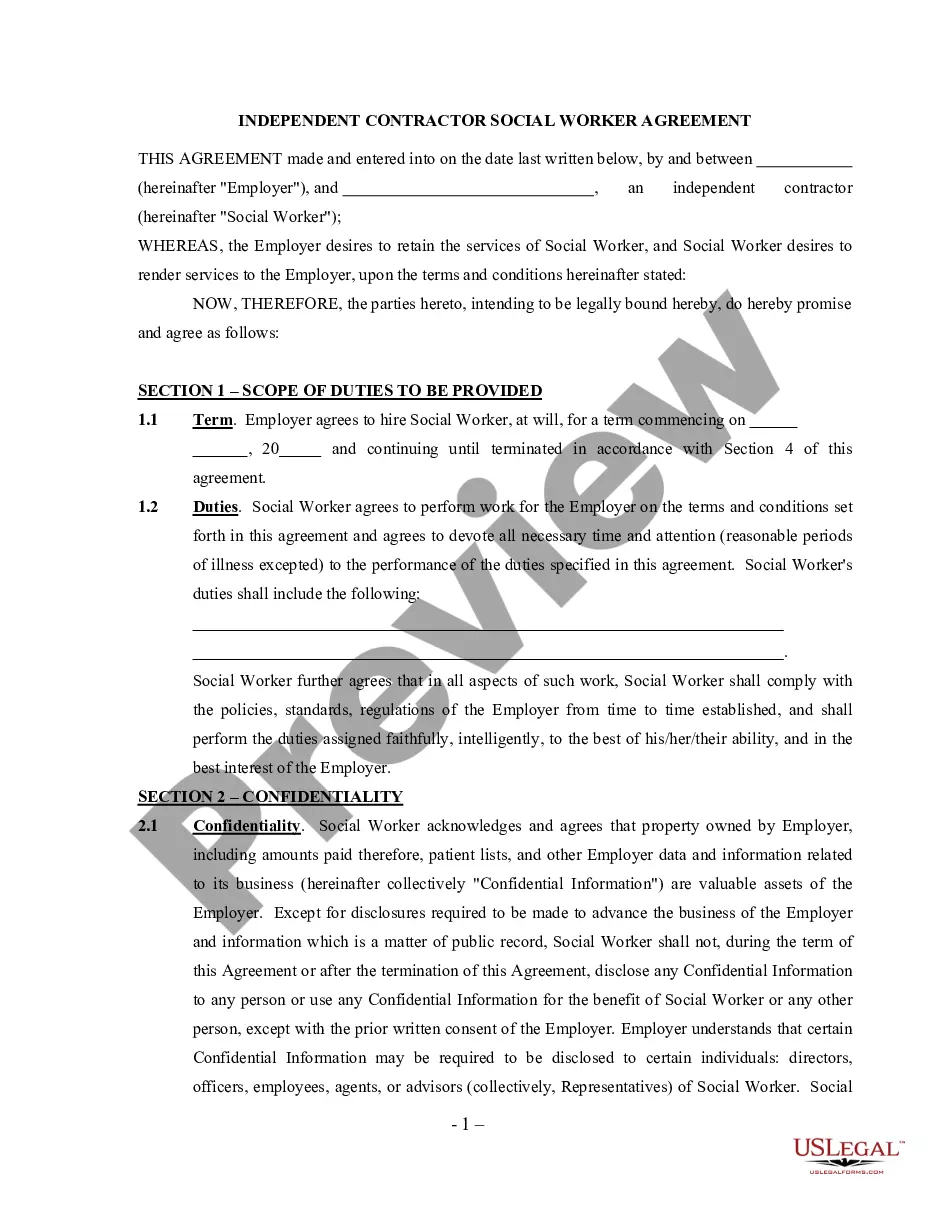
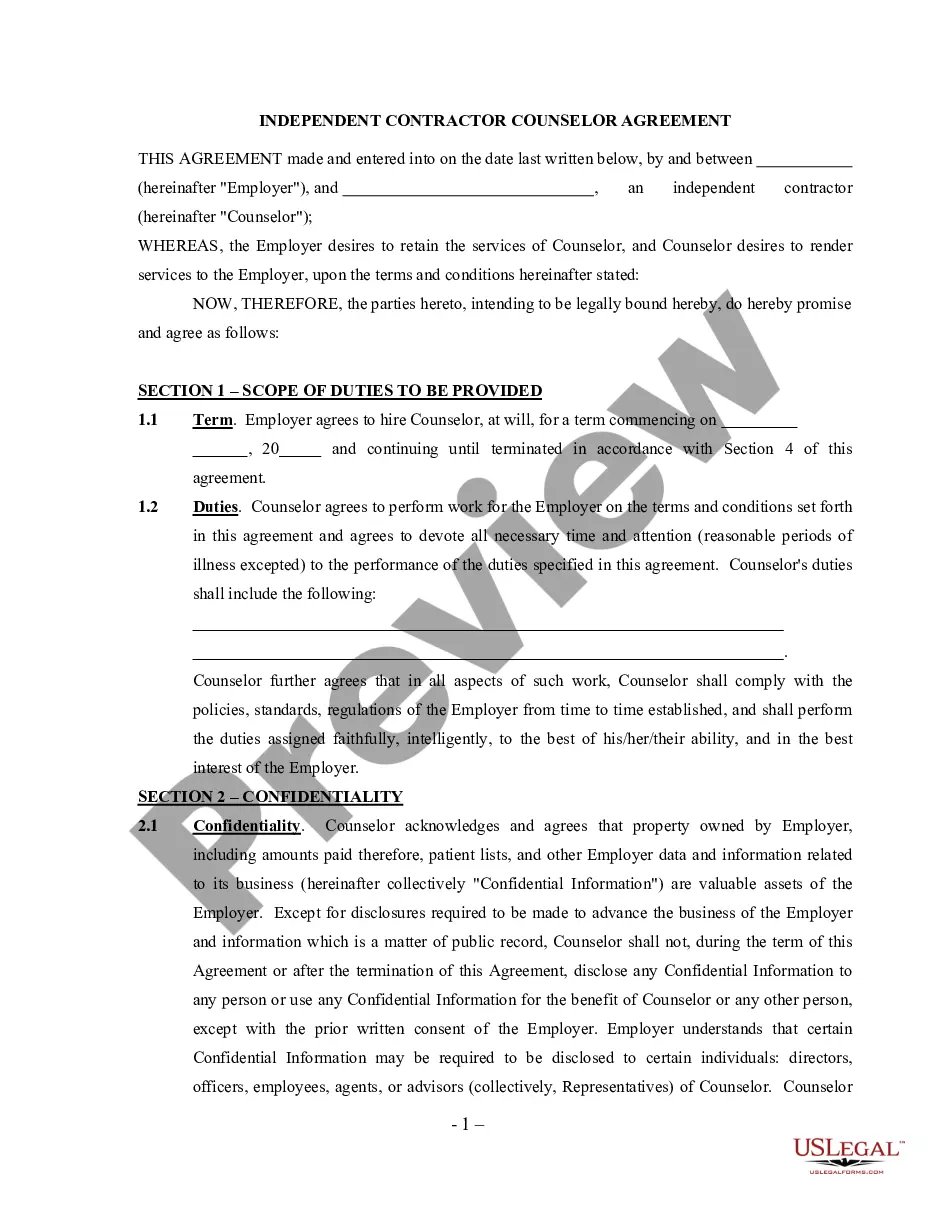
The Independent Contractor Agreement between Licensed Counselor and Therapist is a legal document that outlines the terms of the working relationship between a therapist and an independent contractor therapist. This form establishes the responsibilities and rights of both parties while ensuring clarity in their professional interaction. Unlike an employee contract, this agreement emphasizes the independence of the contractor in managing their work, which is essential for tax and legal purposes.
Key parts of this document
- Identification of the parties involved, including names and addresses.
- Description of the services to be rendered by the contractor.
- Termination conditions specifying that the agreement can be ended at will.
- Compensation details, including payment schedule and professional liability insurance requirements.
- Clarification of the independent contractor status and responsibilities.
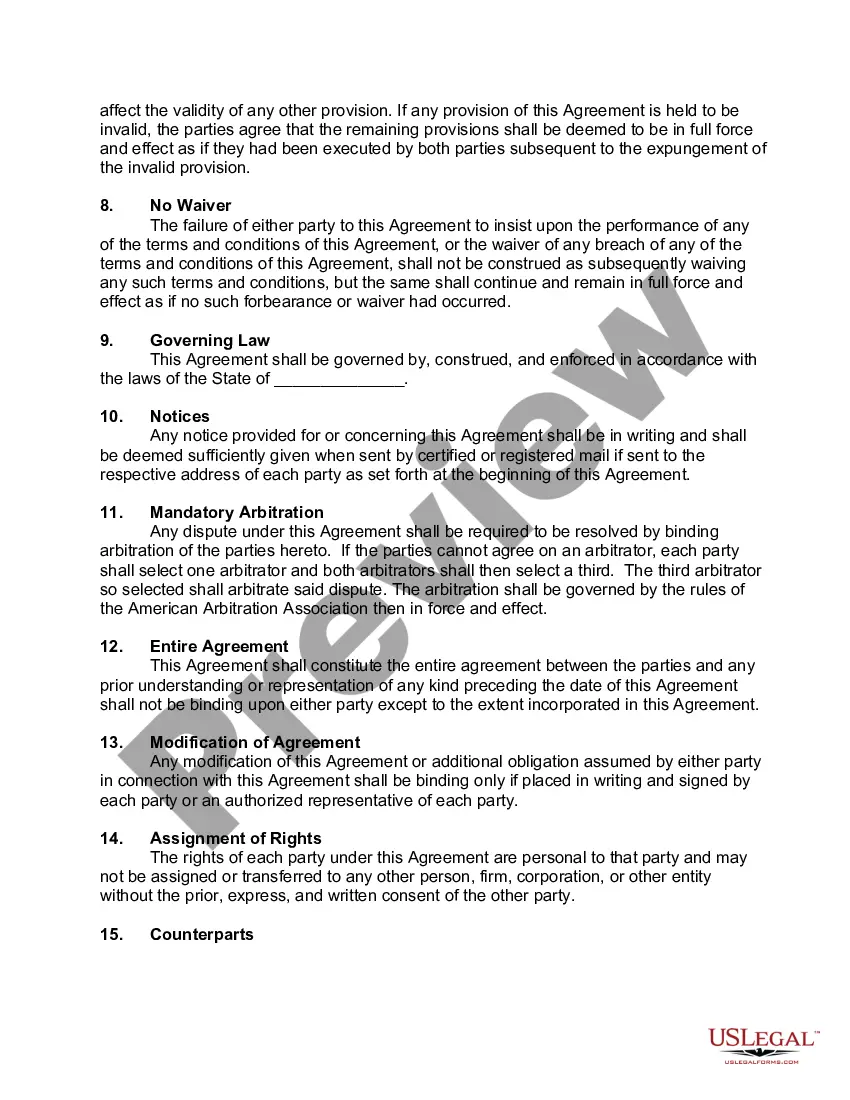
- Governing law and mandatory arbitration clauses to handle disputes.

Common use cases
This agreement should be used when a licensed counselor or therapist wishes to engage another therapist as an independent contractor. It is particularly relevant in situations where the contractor is providing counseling services on behalf of the therapist's practice, allowing for flexibility in service delivery while outlining the professional relationship's structure.
Who can use this document
This form is suitable for:
- Licensed counselors looking to hire fellow licensed therapists on a contractual basis.
- Therapists who operate solo practices and need to define the terms of independent contractors working within their practice.
- Independent contractor therapists who need to clarify their working relationship with a primary therapist.
Instructions for completing this form
- Identify and enter the names and addresses of both the Therapist and the Contractor.
- Clearly state the services the Contractor will provide and any special qualifications they hold.
- Specify the terms of compensation, including payment structure and any required insurance coverage.
- Complete any clauses regarding termination and notice requirements.
- Both parties should sign and date the agreement at the end to make it legally binding.
Notarization guidance
This form does not typically require notarization unless specified by local law. However, it is advisable to check state regulations to ensure compliance.
Get your form ready online
Our built-in tools help you complete, sign, share, and store your documents in one place.
Make edits, fill in missing information, and update formatting in US Legal Forms—just like you would in MS Word.
Download a copy, print it, send it by email, or mail it via USPS—whatever works best for your next step.
Sign and collect signatures with our SignNow integration. Send to multiple recipients, set reminders, and more. Go Premium to unlock E-Sign.
If this form requires notarization, complete it online through a secure video call—no need to meet a notary in person or wait for an appointment.
We protect your documents and personal data by following strict security and privacy standards.

Make edits, fill in missing information, and update formatting in US Legal Forms—just like you would in MS Word.

Download a copy, print it, send it by email, or mail it via USPS—whatever works best for your next step.

Sign and collect signatures with our SignNow integration. Send to multiple recipients, set reminders, and more. Go Premium to unlock E-Sign.

If this form requires notarization, complete it online through a secure video call—no need to meet a notary in person or wait for an appointment.

We protect your documents and personal data by following strict security and privacy standards.
Avoid these common issues
- Not clearly defining the services to be provided, leading to misunderstandings.
- Failing to specify the payment terms, which can result in disputes later.
- Omitting termination clauses, making it difficult to end the agreement when needed.
- Not keeping a signed copy of the agreement for records and proof.
Advantages of online completion
- Convenience of downloading and filling out the form at any time.
- Editable templates allow for easy customization to fit specific needs.
- Reliability of using a legally drafted form created by licensed attorneys.
Looking for another form?


Form popularity
FAQ
The first level, Licensed Professional Counselor (LPC), must practice under the supervision of a licensed counseling professional. The second level, Licensed Clinical Professional Counselor (LCPC), allows the licensee to practice independently.
LCSW has the advantage in all areas except for one: training. LPCs and LMHCs are better trained in therapy. However, the LCSW has more flexibility in doing private practice and working for an employer. Whatever program you choose, just make sure the social work program is CSWE accredited.
With a LPC license, you can become a school guidance counselor, a marriage and family therapist, a mental health counselor, or a substance abuse counselor. With the LCPC license, you can be a licensed clinical social worker, licensed clinical psychologist, or a licensed clinical psychiatrist.
Laws in 32 states explicitly authorize LPCs to diagnosis mental illness, while 16 states do not mention such authority in their statutes. Indiana and Maine explicitly deny LPCs the authority to diagnosis mental illnesses.
Under the law, businesses in California are required to classify their workers as full-time or part-time employees if they do not meet the standard. With the exemption, psychologists can continue offering their services as independent contractors and maintain control over the type of work they want to do.
LCPC 2 years/3,360 hours of full-time, satisfactory, supervised employment or experience working as a clinical professional counselor in a professional capacity under the direction of a qualified supervisor, subsequent to degree. 1,920 hours must be direct face-to-face service to clients.
The specific credentials you should look for are licensed professional counselors (LPC) who have a master's degree in counseling, psychology, or a related field, a licensed clinical social worker (LCSW) or licensed social worker (LSW).
While counselors focus on improving their clients' mental health through counseling sessions, clinical social workers often provide a combination of therapy and assistance accessing community resources. Additionally, the paths to becoming a clinical social worker or mental health counselor differ.
Professional counseling experience. 200 hours of supervision must be under an LPC (100 hours must be immediate supervision). The remaining 3,300 hours can be under the supervision of any licensed mental health professional (LPC, clinical social worker, psychologist, or psychiatrist).