Certificate of Physician as to Competency of an Individual
What is this form?
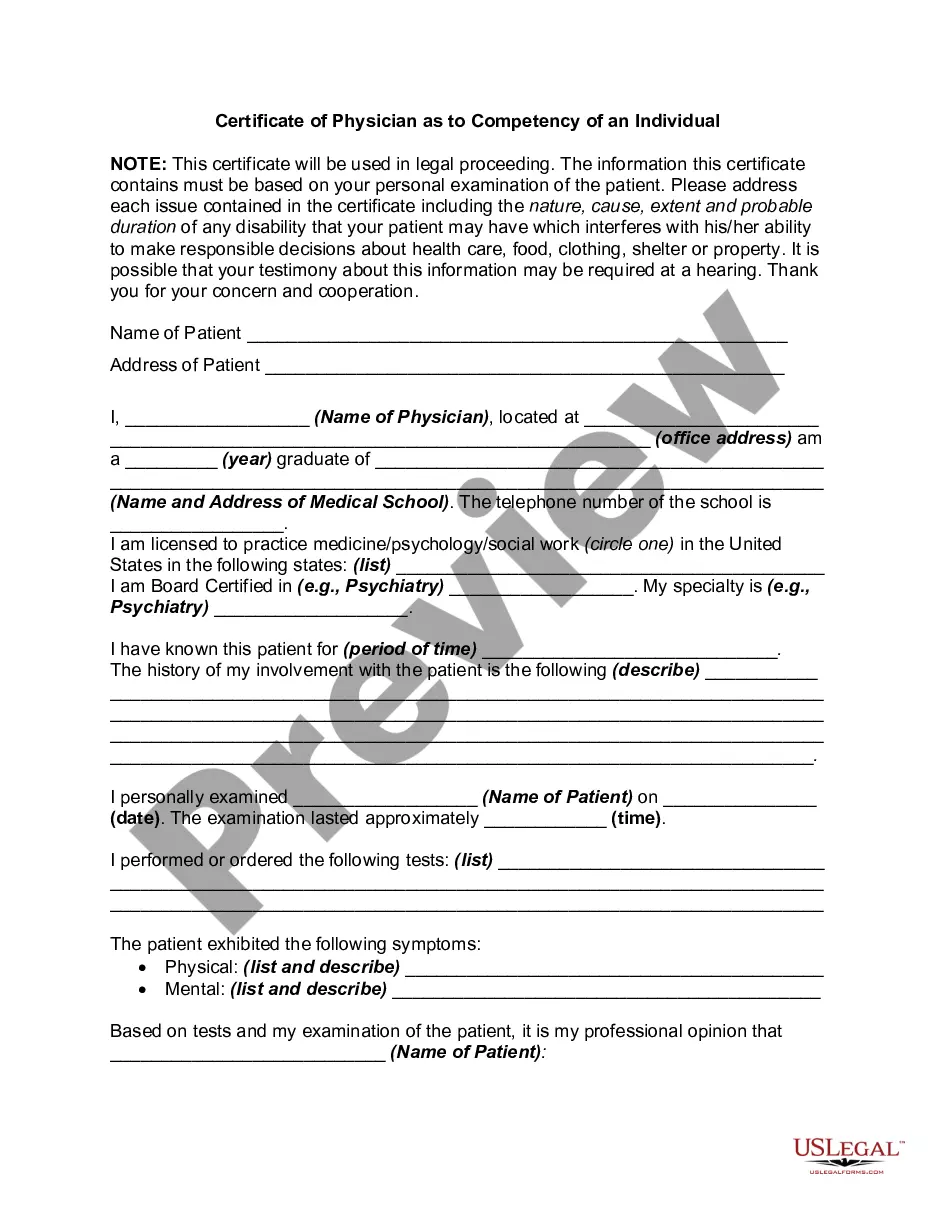
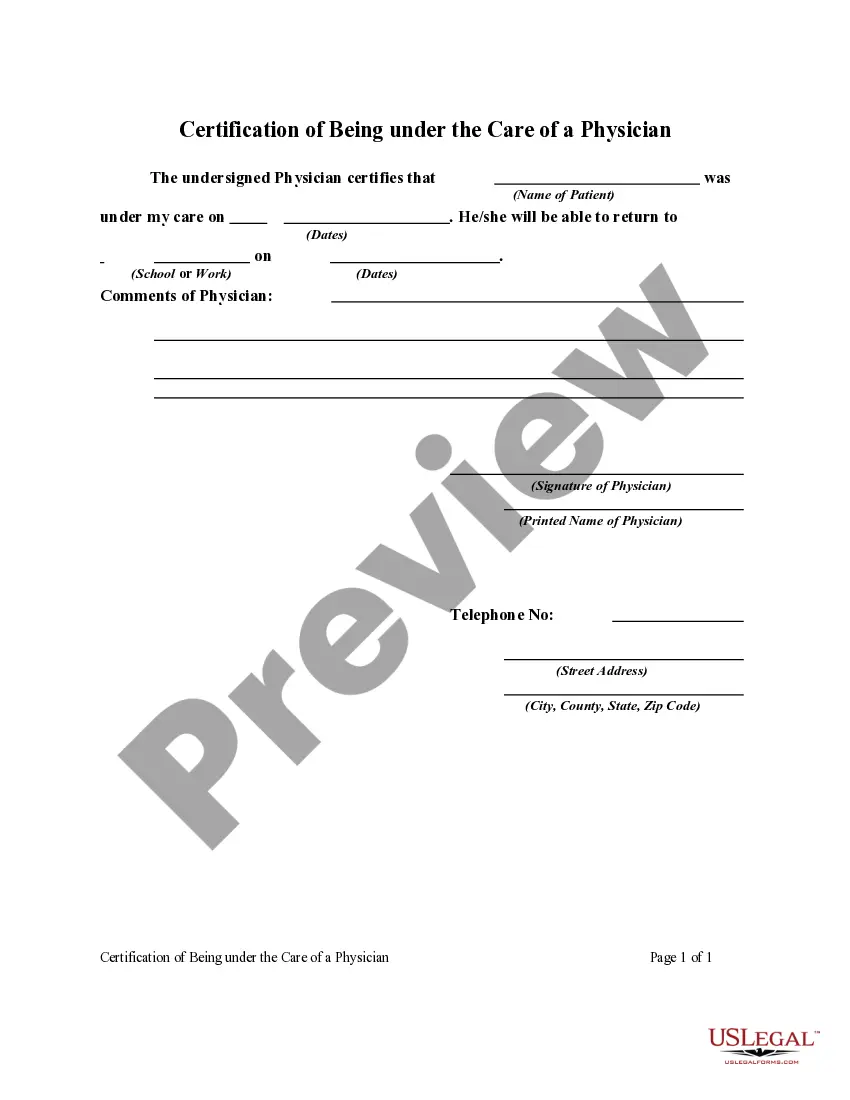
The Certificate of Physician as to Competency of an Individual is a legal document that assesses and certifies an individual's mental and physical competency. This form is specifically used in legal contexts where a person's ability to make responsible decisions regarding health care, property, and personal affairs is questioned. Unlike other legal forms that may simply outline powers or responsibilities, this certificate is crafted by a licensed physician based on a personal examination of the individual in question.
Form components explained
- Name and address of the patient
- Name, credentials, and office address of the physician
- Duration of the physician's acquaintance with the patient
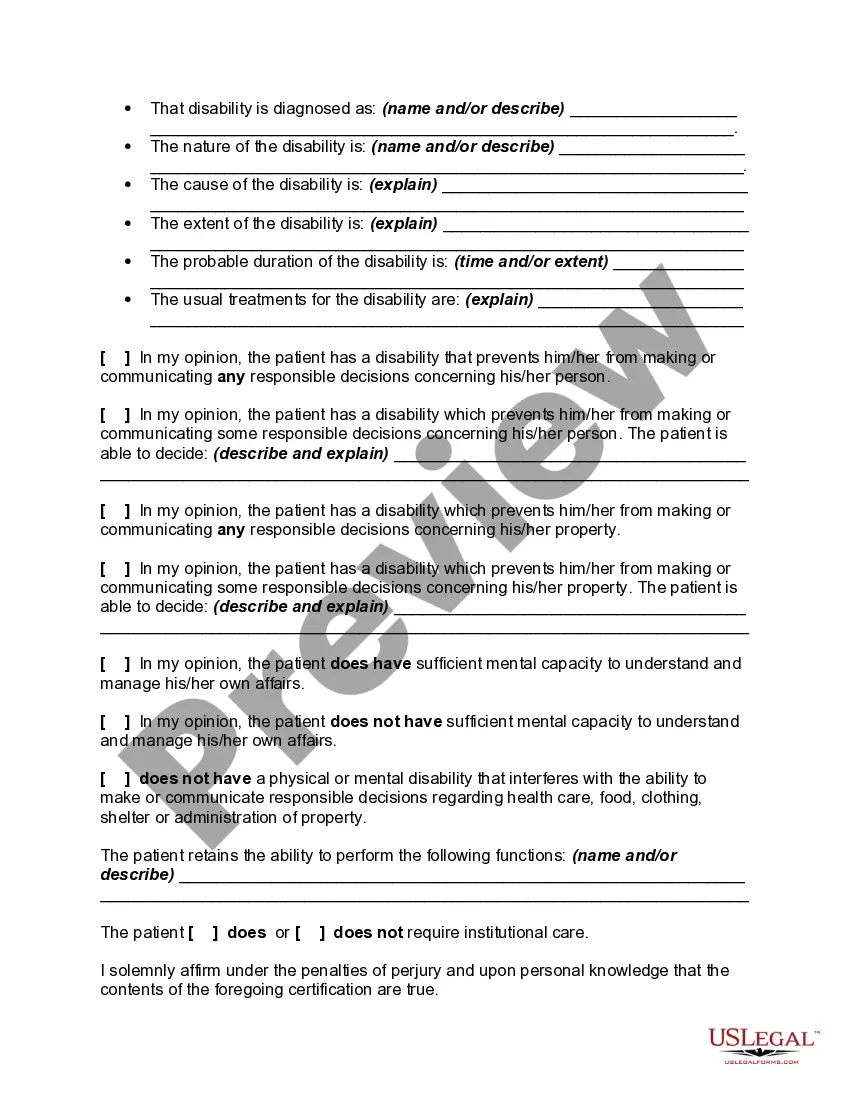
- Description of the patient's condition and relevant symptoms
- Assessment of the patient's ability to make decisions regarding health care and property
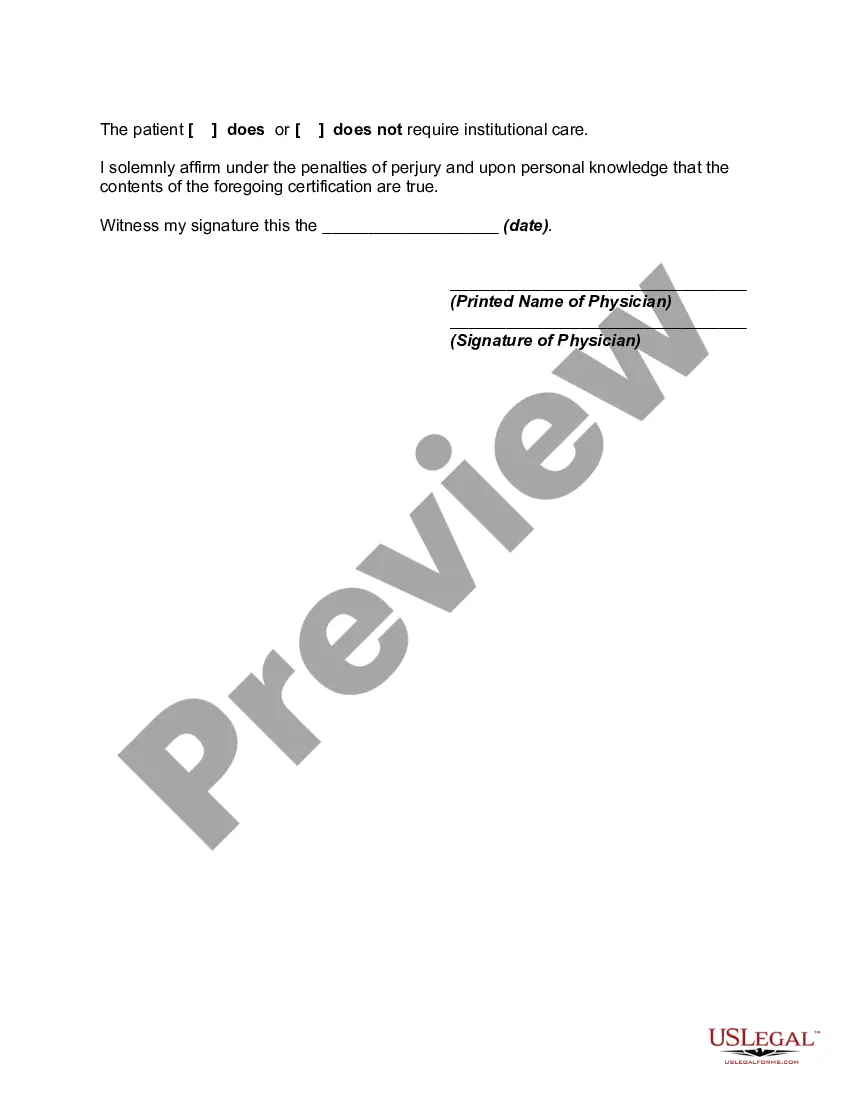
- Physician's signature affirming the truthfulness of the document
When to use this form
This form is needed when a person's mental capacity is in question, particularly in legal proceedings. It may be used to support claims of incompetency that affect decisions about health care, living arrangements, and property management. Relevant scenarios include guardianship cases, estate planning, or situations requiring a legal determination of the individual's ability to manage their own affairs.
Who this form is for
- Physicians evaluating the competency of a patient
- Legal guardians or family members concerned about a loved one's decision-making abilities
- Attorneys representing clients in competence-related legal matters
- Courts or legal entities requiring a formal assessment of an individual's competency
Instructions for completing this form
- Enter the patient's name and address at the beginning of the form.
- Fill in your details as the physician, including your name, title, and office address.
- Provide a detailed history of your involvement with the patient and the examination results.
- Assess the patient's physical and mental capacities by remarking on their symptoms.
- Conclude with your professional opinion regarding the patient's ability to make decisions.
Is notarization required?
Notarization is generally not required for this form. However, certain states or situations might demand it. You can complete notarization online through US Legal Forms, powered by Notarize, using a verified video call available anytime.
Get your form ready online
Our built-in tools help you complete, sign, share, and store your documents in one place.
Make edits, fill in missing information, and update formatting in US Legal Forms—just like you would in MS Word.
Download a copy, print it, send it by email, or mail it via USPS—whatever works best for your next step.
Sign and collect signatures with our SignNow integration. Send to multiple recipients, set reminders, and more. Go Premium to unlock E-Sign.
If this form requires notarization, complete it online through a secure video call—no need to meet a notary in person or wait for an appointment.
We protect your documents and personal data by following strict security and privacy standards.

Make edits, fill in missing information, and update formatting in US Legal Forms—just like you would in MS Word.

Download a copy, print it, send it by email, or mail it via USPS—whatever works best for your next step.

Sign and collect signatures with our SignNow integration. Send to multiple recipients, set reminders, and more. Go Premium to unlock E-Sign.

If this form requires notarization, complete it online through a secure video call—no need to meet a notary in person or wait for an appointment.

We protect your documents and personal data by following strict security and privacy standards.
Avoid these common issues
- Failing to thoroughly document the patient's condition and examination findings.
- Not providing adequate detail about the patient's history or the nature of their disability.
- Leaving sections of the form incomplete or ambiguous, which may lead to legal challenges.
- Neglecting to sign and date the certificate, which is essential for its validity.
Benefits of using this form online
- Convenient access to a customizable template that saves time.
- Edit and save your information securely online.
- Access to forms and documents anytime, allowing for quick updates when needed.
- Assurance that the forms are professionally drafted to ensure legal validity.
Legal use & context
- This form is legally recognized as part of competency evaluations in court settings.
- It serves as evidence of a professional assessment of an individual's capacity.
- Inadequate completion may result in legal challenges regarding the individual's competency.
Main things to remember
- The Certificate of Physician as to Competency establishes an individual's ability to make decisions.
- Accurate and detailed completion ensures its effectiveness in legal situations.
- Consult local laws for any specific requirements related to the form's use.
Looking for another form?

Form popularity
FAQ
A letter of competency should include basic identifying information (name, date of birth) as well as a statement of how long the doctor has known the individual, a statement testifying to their ability or inability to make independent decisions regarding any estate documents they are changing, any relevant diagnosis
Share. The Office of Medical Services (MED) issues a Certificate of Incapacity when a dependent is physically or mentally disabled and unable to be self-supporting and his/her sponsor must continue health insurance coverage.
A letter of competency is typically written by a primary care physician who is familiar with any changes in a patient's baseline mental and physical health.The doctor's statement affirming the patient's ability to make independent decisions regarding finances, legal matters, and healthcare. Relevant medical diagnoses.
Physician certification from the American Board of Physician Specialties (ABPS) is based on rigorous scientific standards and innovative examination techniques that prove your professional competency. When you achieve physician certification through the ABPS, you are doing more than merely passing an exam.
Simply put, competency refers to the mental ability and cognitive capabilities required to execute a legally recognized act rationally. The determination of incompetence is a judicial decision, i.e., decided by the court. An individual adjudicated by the court as incompetent is referred to as de jure incompetent.
It is the attorney's responsibility to determine legal competency of the person who will be signing documents. While that can be accomplished in many ways, it is the attorney's duty to make a legal determination (not judicial, although this is sometimes necessary) of competence.