Helmet Waiver in Favor of a Business Offering Pony Rides
About this form
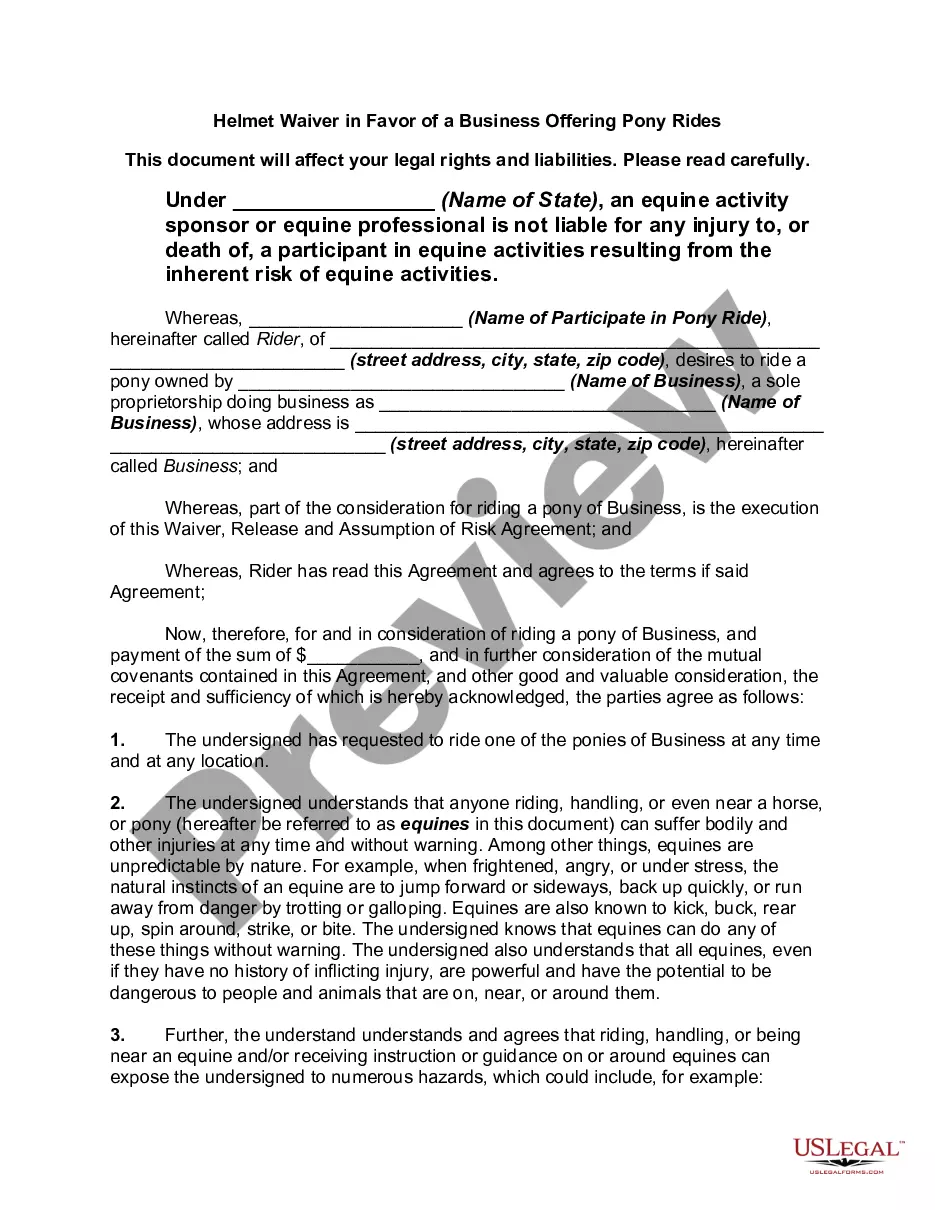
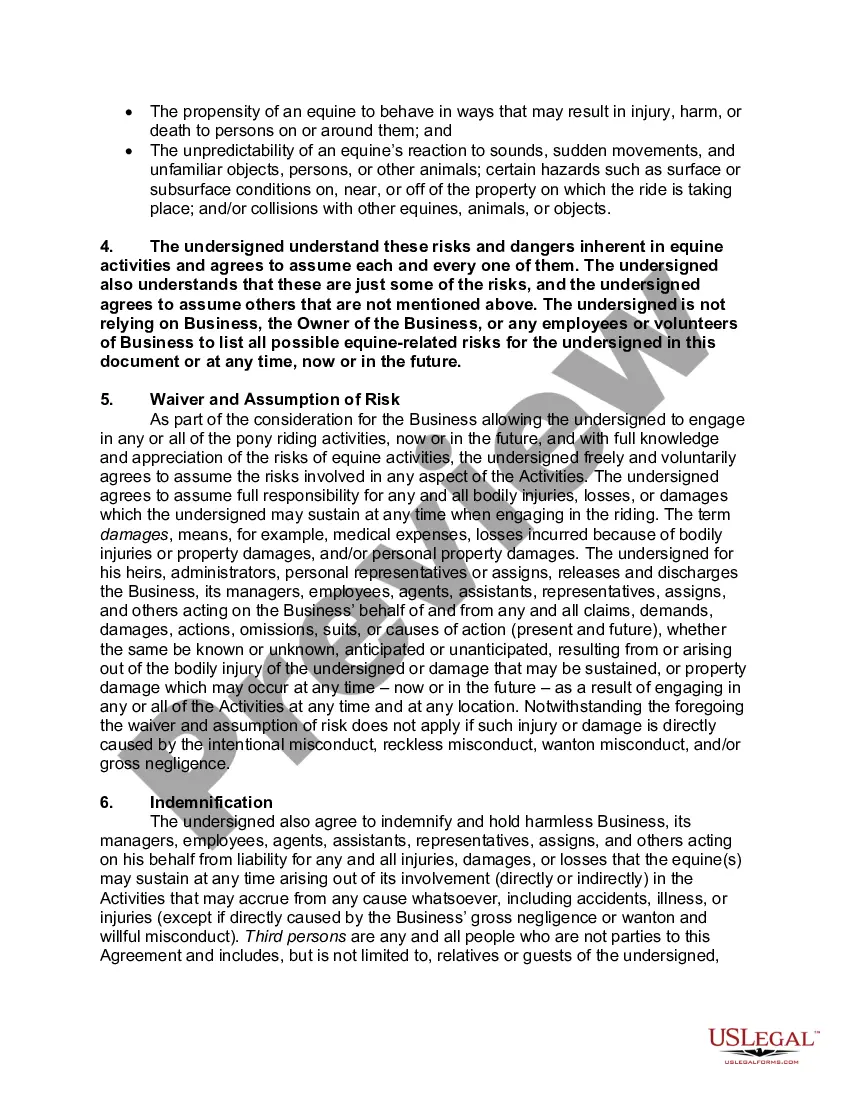
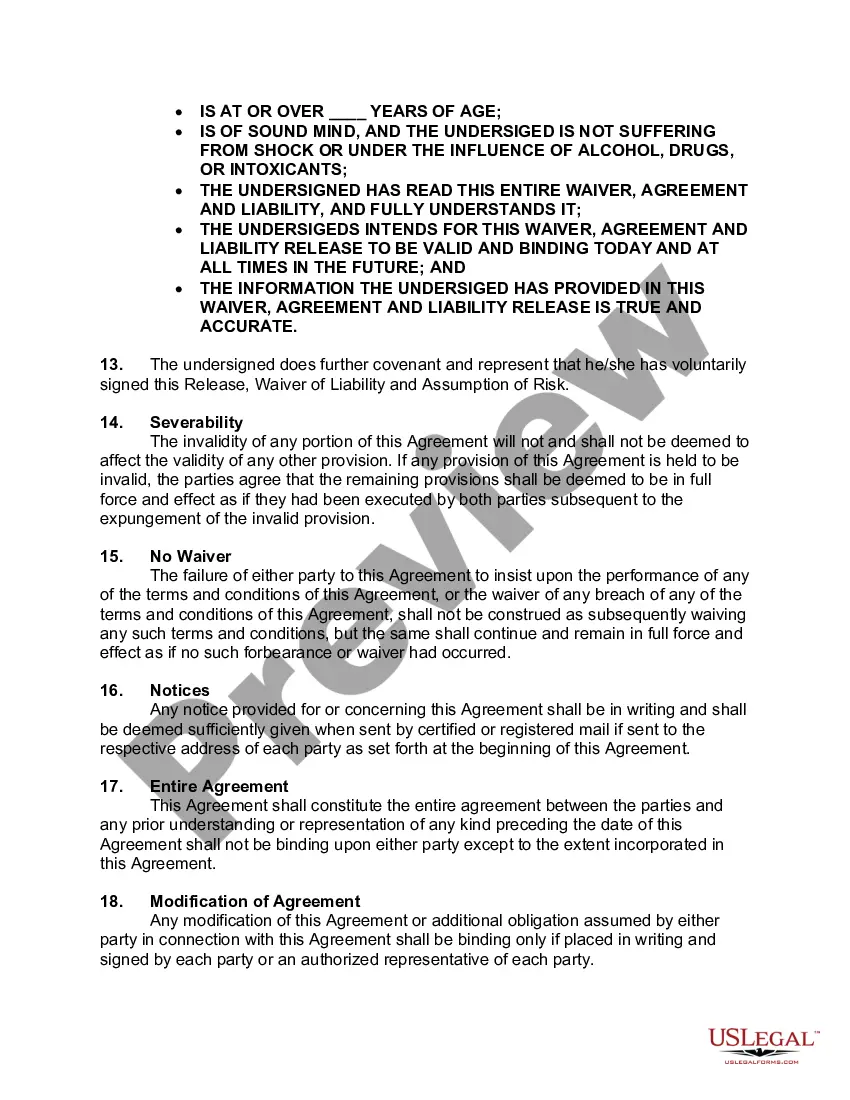
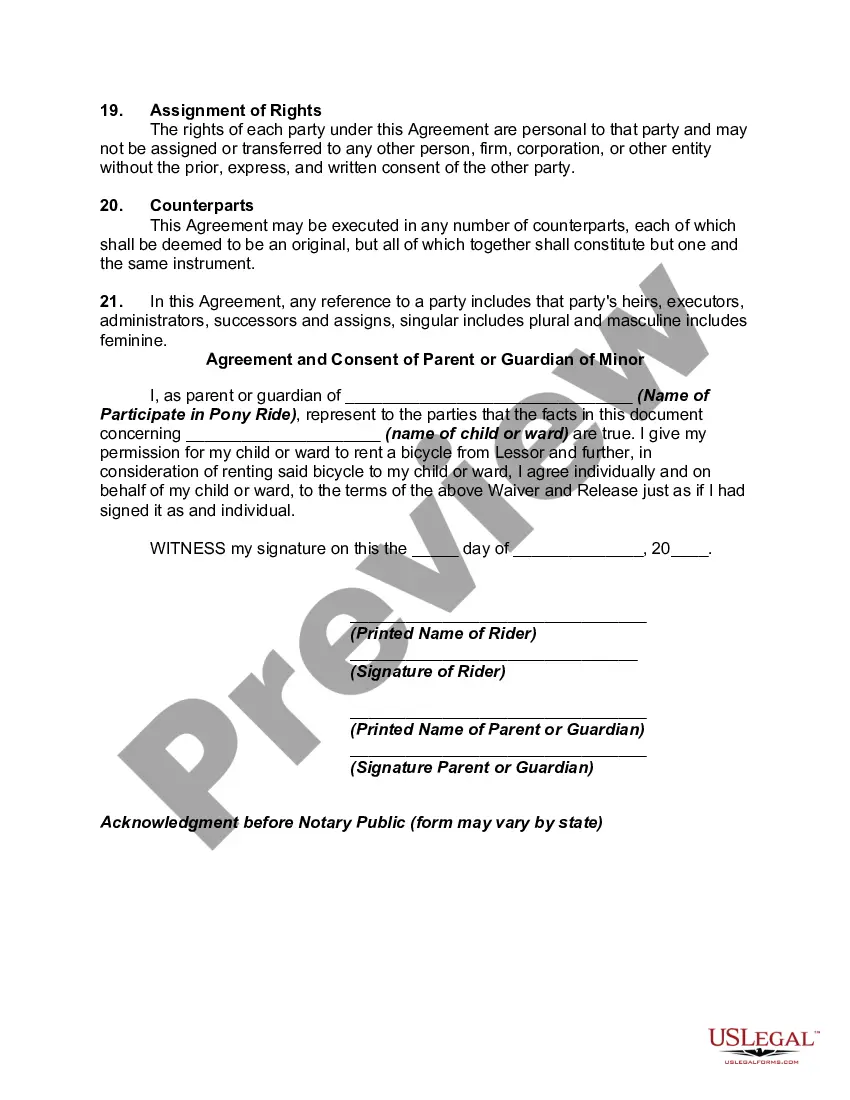
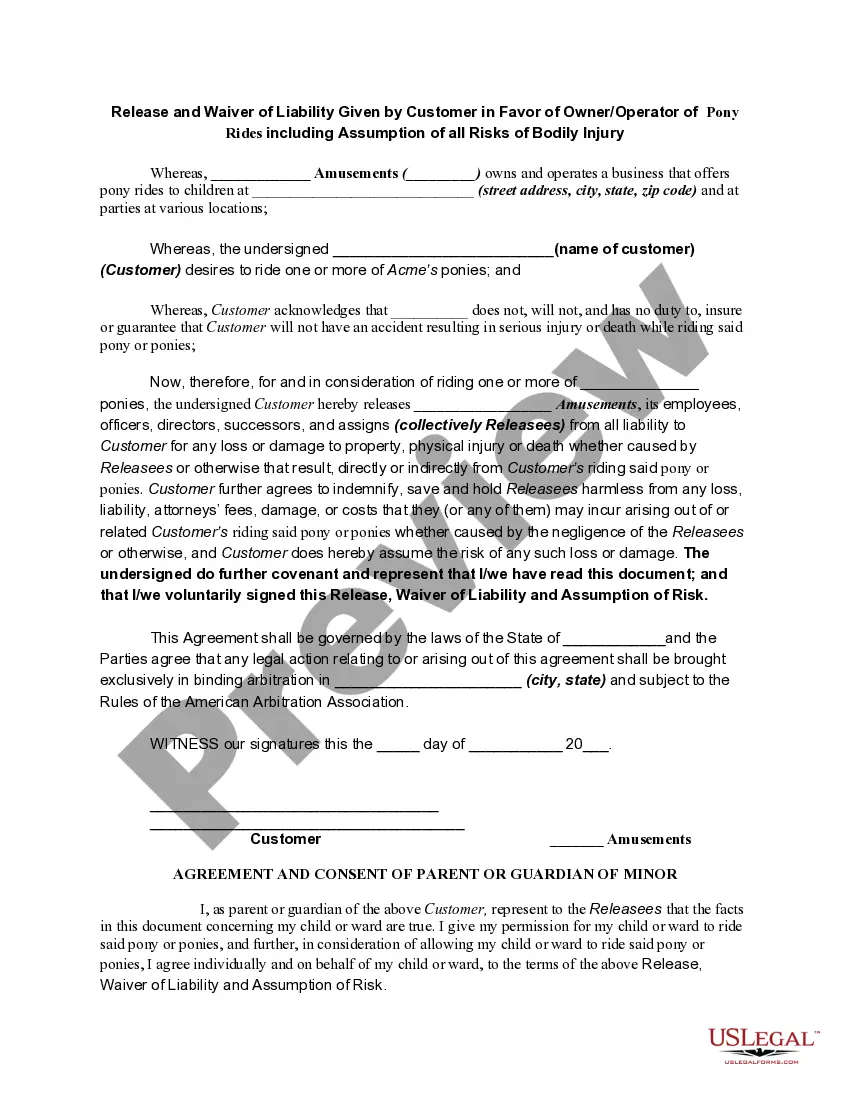
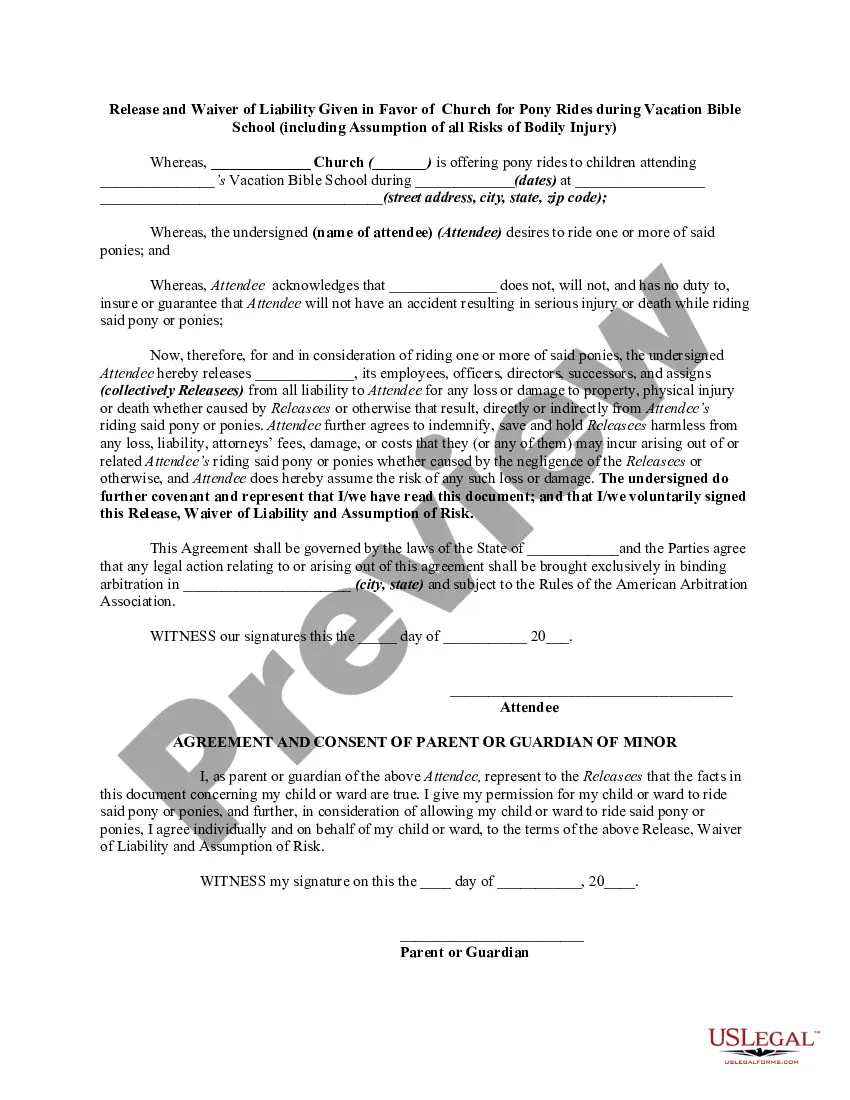
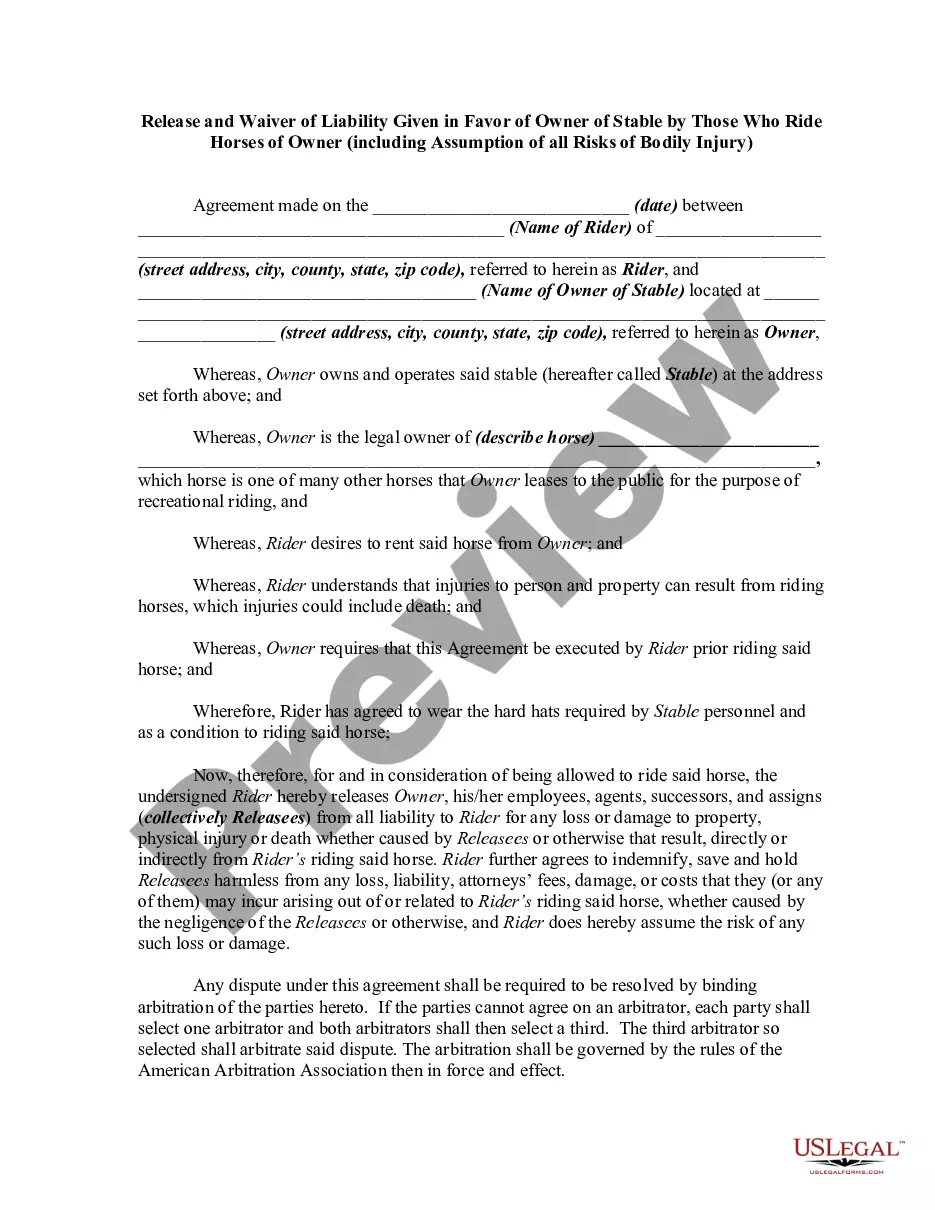
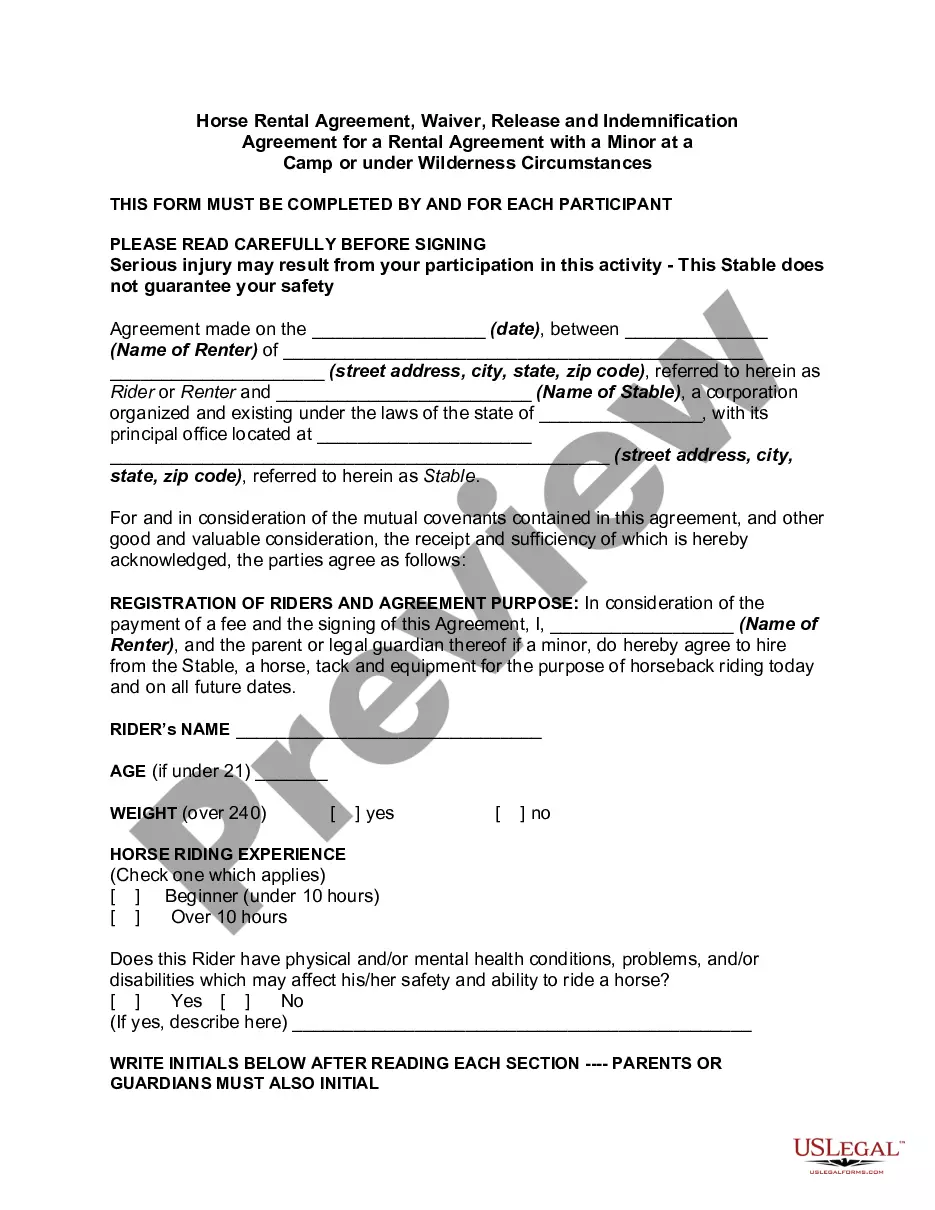
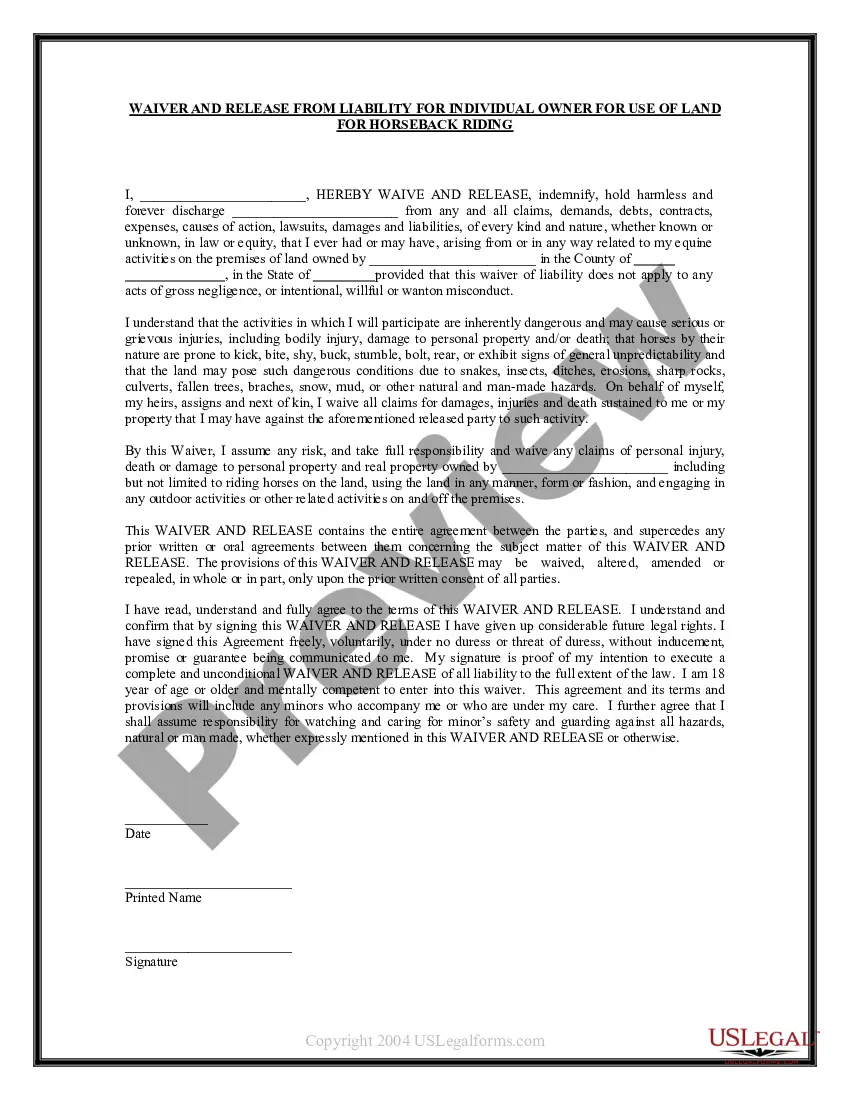
The Helmet Waiver in Favor of a Business Offering Pony Rides is a legal document that releases the pony ride business from liability, particularly in situations where a rider chooses not to wear a helmet. This form serves to protect the business from claims related to injuries that may occur during pony rides, providing a clear understanding of the risks involved. It is distinct from other waivers by its focus on horseback riding activities involving ponies and the specific safety protocols regarding helmet usage.
Key components of this form
- Identification of the state and parties involved in the waiver.
- Details on the inherent risks associated with pony rides.
- Assumption of risk clause acknowledging the risks involved in equine activities.
- Waiver of liability for the business related to injuries or damages.
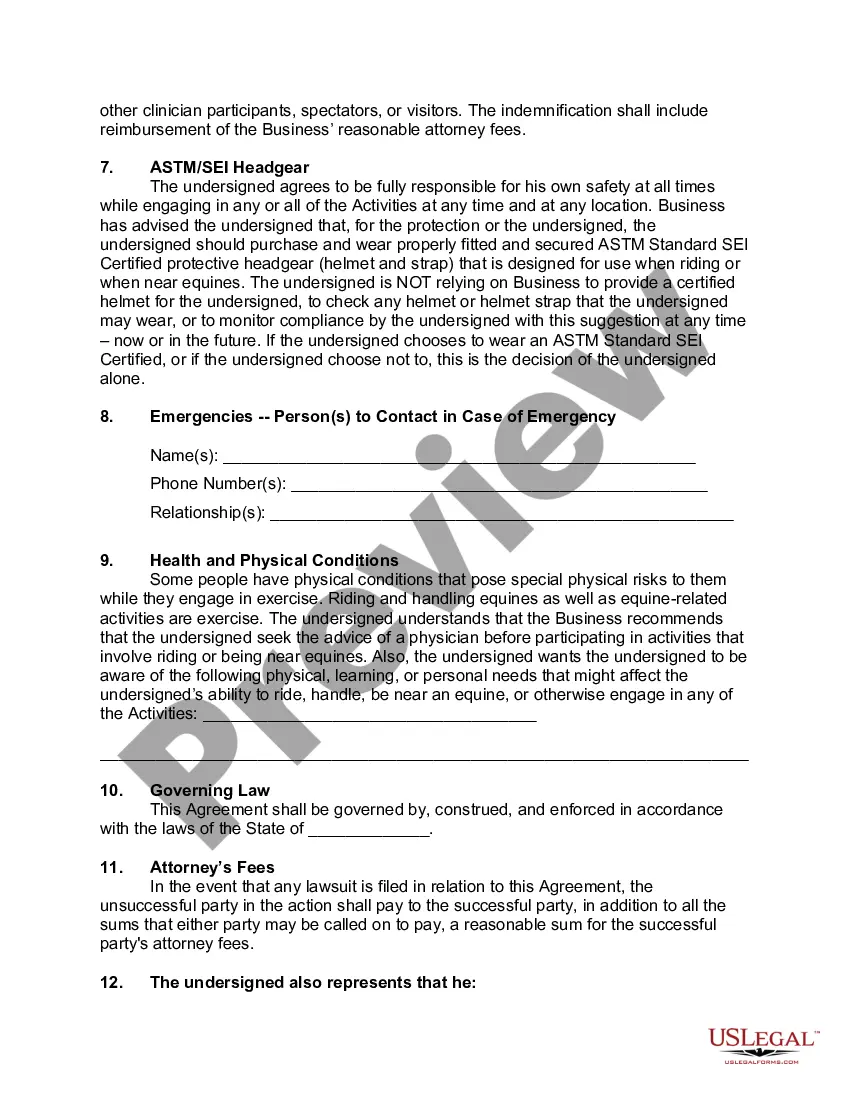
- Indemnification clause to protect the business from third-party claims.
- Emergency contact information for the rider.
When this form is needed
This form should be used whenever an individual intends to participate in pony rides offered by a business. It is particularly relevant in situations where safety gear, such as helmets, is either provided or recommended, but not enforced. By signing this waiver, riders acknowledge the potential risks and agree to engage in the activity voluntarily.
Who should use this form
This form is intended for:
- Businesses offering pony rides as part of their services.
- Participants planning to ride ponies, including children (with a parent or guardian signing on their behalf).
- Any riders who choose not to wear helmets while riding ponies.
Steps to complete this form
- Fill in the rider's name and contact details.
- Specify the business providing the pony rides, including name and address.
- Enter the amount of payment for the pony ride.
- Sign and date the document, ensuring all parties understand the waiver's terms.
- If applicable, include a parent or guardian's consent for minor riders.
Notarization guidance
This form does not typically require notarization unless specified by local law. However, it is advisable to check specific jurisdiction requirements to confirm.
Get your form ready online
Our built-in tools help you complete, sign, share, and store your documents in one place.
Make edits, fill in missing information, and update formatting in US Legal Forms—just like you would in MS Word.
Download a copy, print it, send it by email, or mail it via USPS—whatever works best for your next step.
Sign and collect signatures with our SignNow integration. Send to multiple recipients, set reminders, and more. Go Premium to unlock E-Sign.
If this form requires notarization, complete it online through a secure video call—no need to meet a notary in person or wait for an appointment.
We protect your documents and personal data by following strict security and privacy standards.

Make edits, fill in missing information, and update formatting in US Legal Forms—just like you would in MS Word.

Download a copy, print it, send it by email, or mail it via USPS—whatever works best for your next step.

Sign and collect signatures with our SignNow integration. Send to multiple recipients, set reminders, and more. Go Premium to unlock E-Sign.

If this form requires notarization, complete it online through a secure video call—no need to meet a notary in person or wait for an appointment.

We protect your documents and personal data by following strict security and privacy standards.
Common mistakes to avoid
- Failing to read the waiver fully before signing, missing important terms.
- Not providing accurate emergency contact information.
- Omitting signatures of guardians when minors are involved.
Benefits of using this form online
- Convenience of downloading and completing the form at your own pace.
- Editability allows for personalization to specific needs and circumstances.
- Reliable templates drafted by licensed attorneys ensure legal compliance.
- This waiver aims to limit the liability of the pony ride business under specific conditions.
- The document is enforceable as long as it complies with local regulations and includes necessary disclosures.
- It does not protect the business from claims arising due to gross negligence or willful misconduct.
Summary of main points
- The Helmet Waiver is essential for businesses offering pony rides without helmet mandates.
- Riders must fully understand and accept the risks of pony riding before signing.
- Consult local laws to ensure the form's validity and completeness.
- Both riders and guardians should review this document carefully before participation.
Looking for another form?
Form popularity
FAQ
Liability waivers are enforceable in California solely to the extent they shift to the customer the risk of ordinary negligence. Under California law, a liability waiver cannot excuse an injury caused by a defendant's gross negligence, recklessness or intentional wrongful act.
Essentially, a waiver removes a real or potential liability for the other party in the agreement. For example, in a settlement between two parties, one party might, by means of a waiver, relinquish its right to pursue any further legal action once the settlement is finalized.
In California, a liability waiver must be clear, unambiguous, and explicit. In other words, waivers cannot be printed in faded ink, in small font, on the back of a paper, or in an otherwise ambiguous form. If the waiver that you sign is not represented clearly, it may not hold up in the event of a lawsuit.
Though it is a legal document, most people do not take the time to actually read liability waivers.In California, a liability waiver must be clear, unambiguous, and explicit. In other words, waivers cannot be printed in faded ink, in small font, on the back of a paper, or in an otherwise ambiguous form.
A liability waiver, or release of liability, is a legal document that a company or organization has you sign in order to protect them from being sued in the event that you are injured.
If you've been injured due to negligent actions, you can sue even if you signed a waiver. Winning a lawsuit concerning negligence is not uncommon. Many celebrities have sued for negligence even though they signed documents stating they understood the risks.
A waiver is an essential document that informs participants of the risks involved in certain activities and also protects you from liability. In some cases, you may limit your liability as a business by asking participants to sign a hold- harmless agreement.
In many cases, the waiver is not enforceable.If you've been injured due to negligent actions, you can sue even if you signed a waiver. Winning a lawsuit concerning negligence is not uncommon. Many celebrities have sued for negligence even though they signed documents stating they understood the risks.
1a : to relinquish (something, such as a legal right) voluntarily waive a jury trial. b : to refrain from pressing or enforcing (something, such as a claim or rule) : forgo waive the fee. 2 : to put off from immediate consideration : postpone.