Notice of Changes to Credit Card Agreement
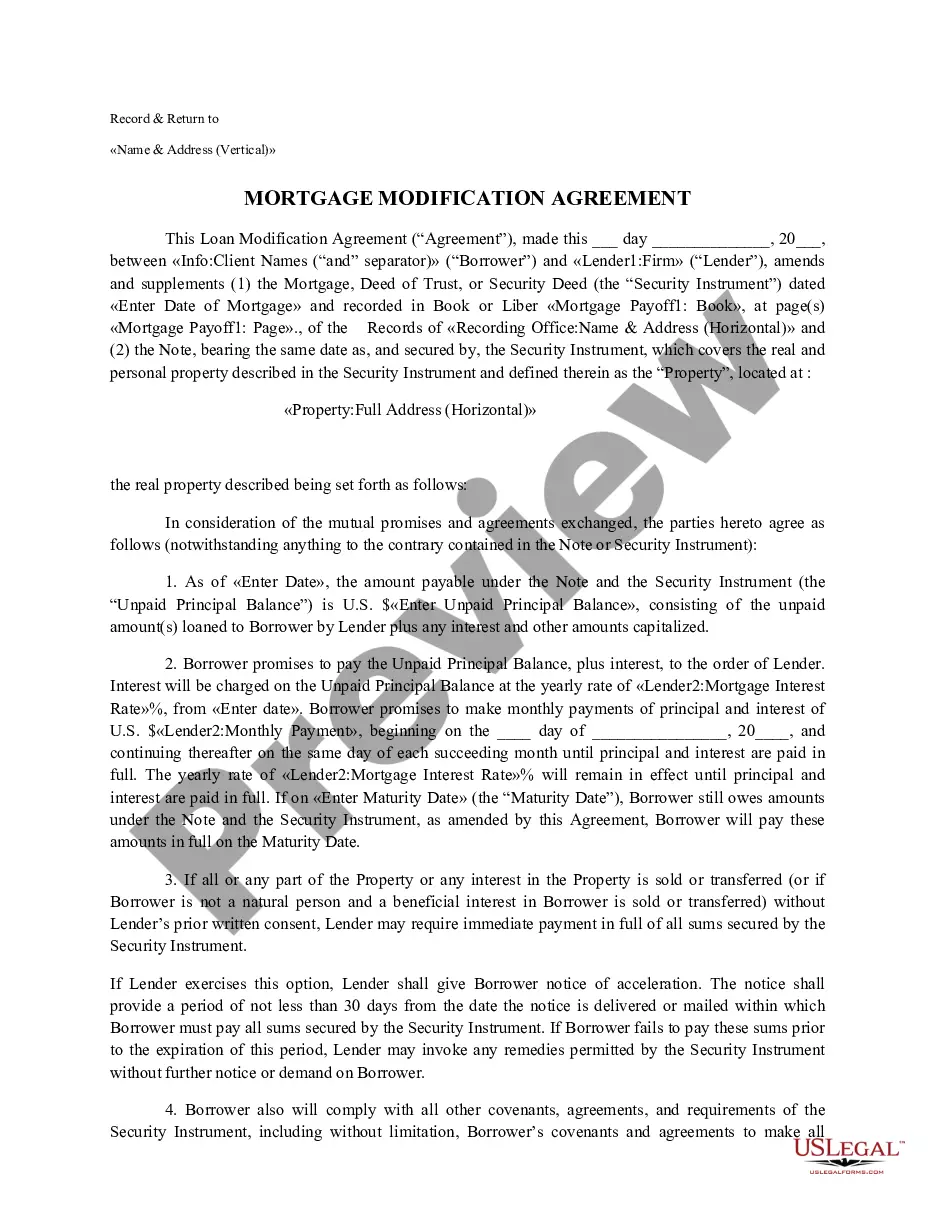
What this document covers
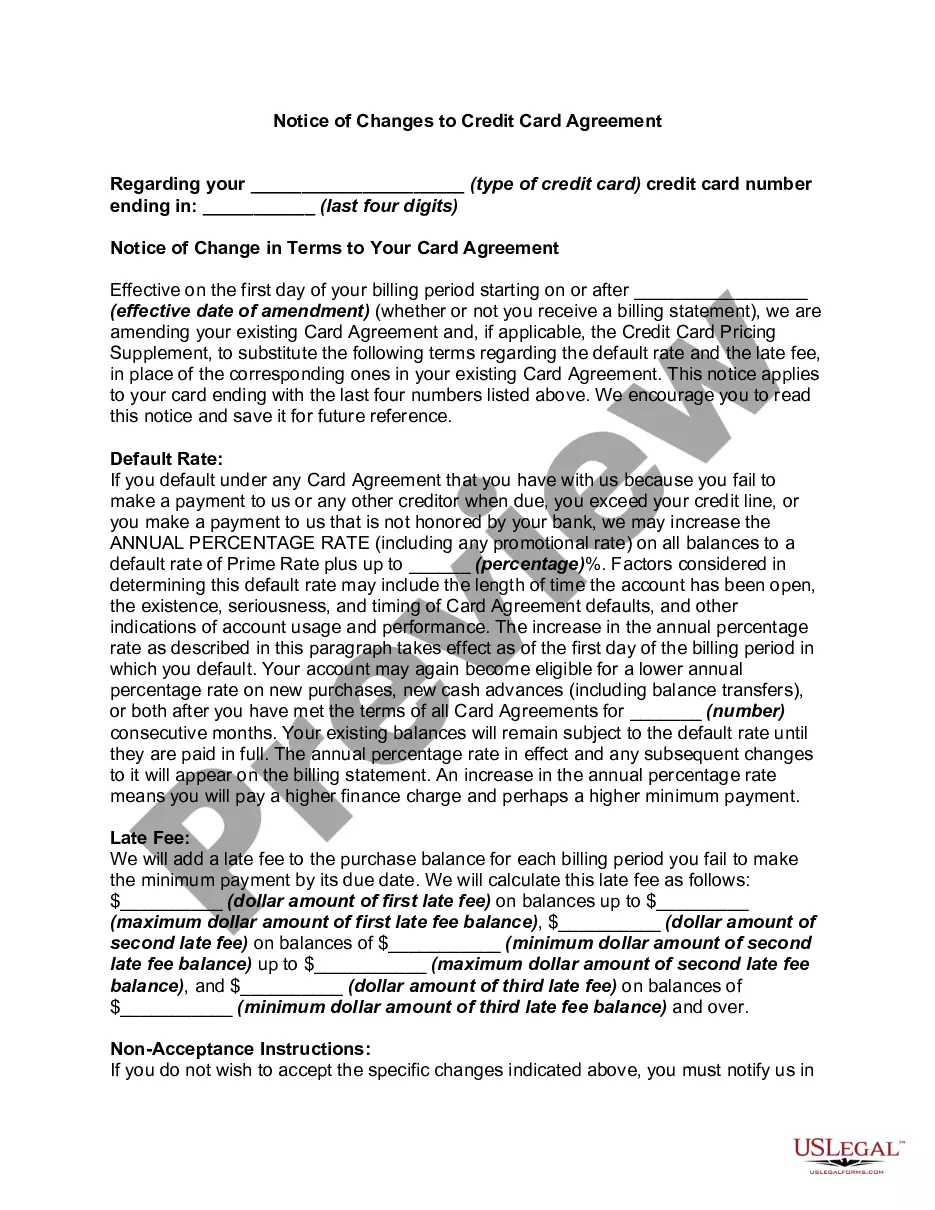
The Notice of Changes to Credit Card Agreement is a legal document issued by a creditor to inform cardholders about changes in the terms of their credit card agreement. This form is required when there are increases in interest rates, fees, or other significant amendments to the terms of the account. It differs from other credit card notices by specifically outlining the right of the cardholder to cancel their account if they do not accept the new terms.
What’s included in this form
- ID of the credit card type and last four digits.
- Description of changes to default rates and late fees.
- Non-acceptance instructions, including the due date and required information.
- Details on how the default rate is determined.
- Information regarding potential late fees based on missed payments.

When this form is needed
This form should be used by creditors who are making significant changes to credit card terms, such as increasing interest rates or changing fee structures. It is essential when the changes require notifying cardholders in advance, especially if such changes involve rights to cancel the credit card account.
Who should use this form
- Creditors issuing notices to their cardholders about changes to agreements.
- Organizations that manage credit card accounts and wish to comply with regulations.
- Legal or financial professionals advising clients on credit card agreements.
How to complete this form
- Identify the type of credit card and enter the last four digits of the card number.
- Fill in the effective date for the changes in the card agreement.
- Specify any new rates, fees, or terms as outlined in the notice.
- Include the deadline for cardholders to notify the creditor of non-acceptance.
- Provide the mailing address for sending notifications of non-acceptance.
Is notarization required?
Notarization is not commonly needed for this form. However, certain documents or local rules may make it necessary. Our notarization service, powered by Notarize, allows you to finalize it securely online anytime, day or night.
Get your form ready online
Our built-in tools help you complete, sign, share, and store your documents in one place.
Make edits, fill in missing information, and update formatting in US Legal Forms—just like you would in MS Word.
Download a copy, print it, send it by email, or mail it via USPS—whatever works best for your next step.
Sign and collect signatures with our SignNow integration. Send to multiple recipients, set reminders, and more. Go Premium to unlock E-Sign.
If this form requires notarization, complete it online through a secure video call—no need to meet a notary in person or wait for an appointment.
We protect your documents and personal data by following strict security and privacy standards.

Make edits, fill in missing information, and update formatting in US Legal Forms—just like you would in MS Word.

Download a copy, print it, send it by email, or mail it via USPS—whatever works best for your next step.

Sign and collect signatures with our SignNow integration. Send to multiple recipients, set reminders, and more. Go Premium to unlock E-Sign.

If this form requires notarization, complete it online through a secure video call—no need to meet a notary in person or wait for an appointment.

We protect your documents and personal data by following strict security and privacy standards.
Avoid these common issues
- Failing to send the notice at least 45 days before the effective date.
- Incomplete information on changes, such as missing rates or fees.
- Not clearly specifying the process for cardholders to opt-out.
- Incorrectly addressing or omitting the creditor's mailing address.
Why use this form online
- Immediate access to a legally drafted template, saving time and effort.
- Editability, allowing users to customize the form based on specific needs.
- Convenience of downloading the form for instant use without the need for in-person meetings.
- Reliability, ensuring the form meets current legal standards.
Legal use & context
- Compliance with credit card regulations set forth by federal law.
- Protection for consumers by ensuring they are informed of changes.
- Establishes a clear record of communication between creditor and cardholder.
Key takeaways
- This form is essential for notifying cardholders of significant changes to credit card agreements.
- Cardholders have rights to cancel their accounts upon receiving the notice.
- Complete and accurate information is crucial to maintain legal compliance.
Looking for another form?


Form popularity
FAQ
The Notice of Changes to Credit Card Agreement is a creditor-issued document informing cardholders about material changes to their terms, such as higher interest rates or new fees. It is used when changes are significant and advance notice is required, and it explains the cardholder’s right to cancel if they do not accept the new terms. It lists the card type, the changes, non-acceptance instructions, how the default rate is set, and related late-fee details.
Yes. A creditor may alter terms like interest rates or fees, but must issue a Notice of Changes to Credit Card Agreement to inform cardholders in advance. The notice describes the changes, provides non-acceptance instructions and due dates, explains how the default rate is determined, and notes potential late fees based on missed payments.
Included are the card type and last four digits; a description of changes to default rates and late fees; non-acceptance instructions with the due date and required information; how the default rate is determined; and information about late fees for missed payments.
Use this notice when a creditor makes significant changes to credit card terms, such as higher interest rates or new or revised fees. It is essential to provide advance notice to cardholders, particularly when the changes affect the right to cancel the account.
This form is intended for creditors issuing notices to cardholders about changes to credit card agreements, organizations that manage credit card accounts to stay compliant, and legal or financial professionals advising clients on credit card terms.
This notice uniquely highlights the cardholder’s right to cancel the account if they do not accept the new terms, a feature not always present in standard change notices. It also explicitly sets out non-acceptance instructions and how the default rate is determined.