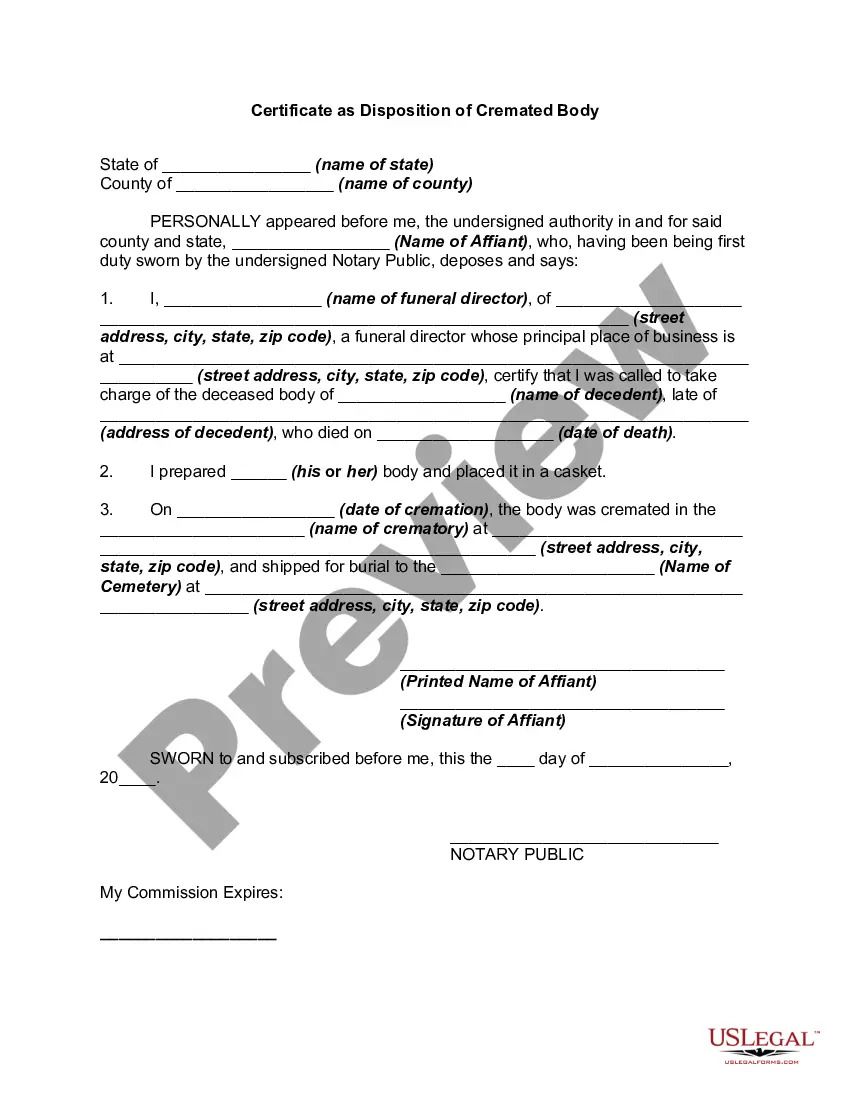
Certificate as Disposition of Cremated Body
Overview of this form
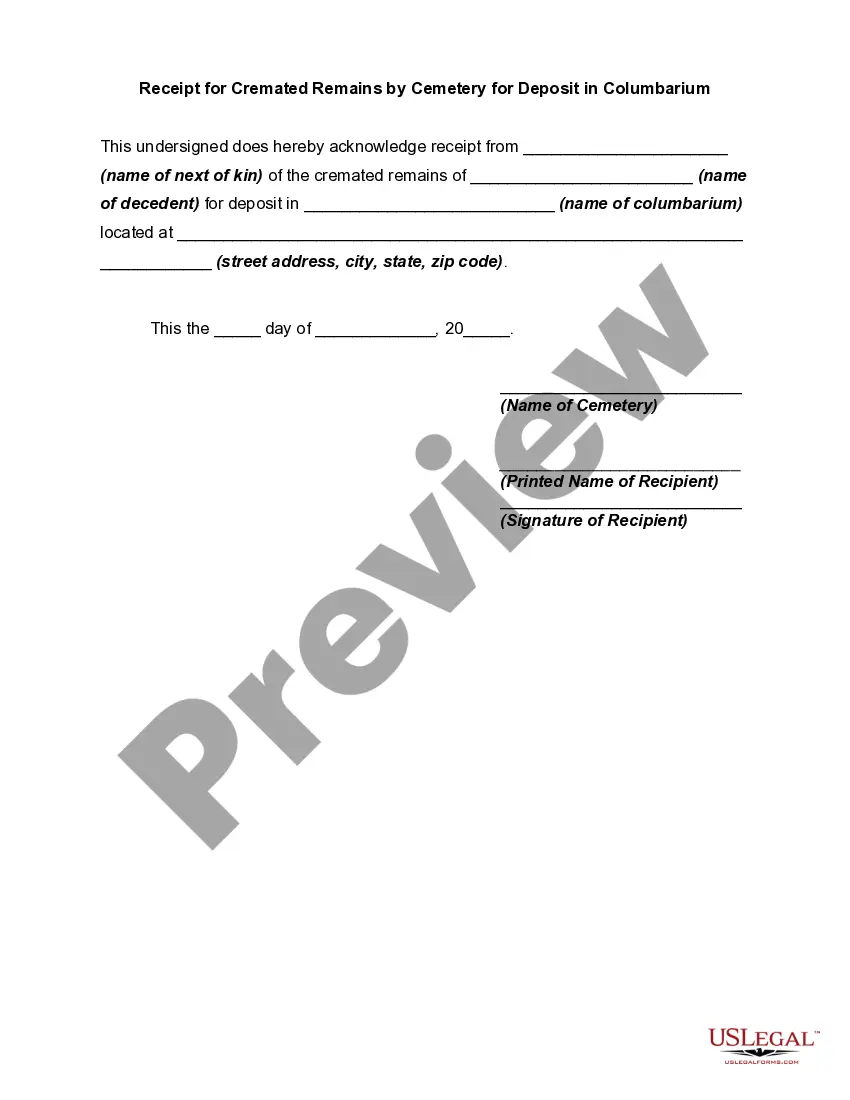
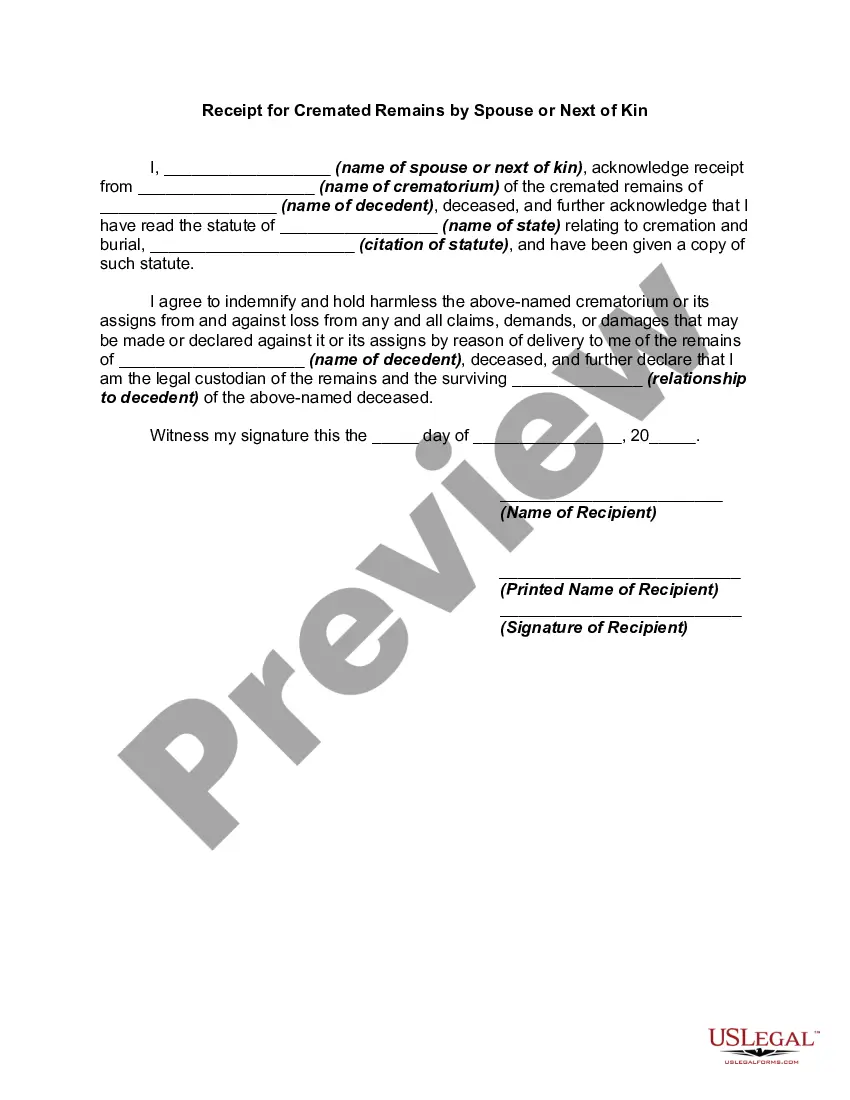
The Certificate as Disposition of Cremated Body is a legal document that certifies the cremation of a deceased individual. This form serves as an official record of the cremation process and provides essential information regarding the deceased and their final arrangements. Unlike other affidavits, this certificate specifically addresses the cremation of a body and ensures compliance with state laws governing cremation and disposition. It provides important evidence for legal purposes when a witness cannot testify in person.
Main sections of this form
- Name and details of the affiant, typically the funeral director.
- Information about the deceased, including their name and address.
- Date of death and details regarding the cremation.
- Name and address of the crematory facility.
- Signature of the affiant, verified by a notary public.
Common use cases
This form is necessary when a deceased person's remains have been cremated, and there is a need to document the disposition of those remains officially. It is typically used by funeral directors or family members during the cremation process and can serve various purposes, such as fulfilling legal requirements for the burial of cremated remains or when organizing memorial services.
Who this form is for
- Funeral directors responsible for managing cremation processes.
- Family members or relatives of the deceased who are overseeing final arrangements.
- Legal representatives involved in the estate of the deceased.
How to prepare this document
- Identify the state and county where the cremation occurred.
- Fill in the name and contact details of the affiant, usually the funeral director.
- Provide information about the deceased, including their name and address.
- Enter the date of cremation and the name and address of the crematory.
- Have the affiant sign the document in the presence of a notary public.
Is notarization required?
This document requires notarization to meet legal standards. US Legal Forms provides secure online notarization powered by Notarize, allowing you to complete the process through a verified video call, available 24/7.
Get your form ready online
Our built-in tools help you complete, sign, share, and store your documents in one place.
Make edits, fill in missing information, and update formatting in US Legal Forms—just like you would in MS Word.
Download a copy, print it, send it by email, or mail it via USPS—whatever works best for your next step.
Sign and collect signatures with our SignNow integration. Send to multiple recipients, set reminders, and more. Go Premium to unlock E-Sign.
If this form requires notarization, complete it online through a secure video call—no need to meet a notary in person or wait for an appointment.
We protect your documents and personal data by following strict security and privacy standards.

Make edits, fill in missing information, and update formatting in US Legal Forms—just like you would in MS Word.

Download a copy, print it, send it by email, or mail it via USPS—whatever works best for your next step.

Sign and collect signatures with our SignNow integration. Send to multiple recipients, set reminders, and more. Go Premium to unlock E-Sign.

If this form requires notarization, complete it online through a secure video call—no need to meet a notary in person or wait for an appointment.

We protect your documents and personal data by following strict security and privacy standards.
Avoid these common issues
- Failing to provide complete information about the deceased.
- Omitting the date of cremation or details of the crematory.
- Not having the document notarized when required.
Why use this form online
- Convenient access to forms that can be downloaded and completed at your own pace.
- Ability to edit and customize the form to meet specific state requirements.
- Reliable templates drafted by licensed attorneys, ensuring legal accuracy.
Looking for another form?
Form popularity
FAQ
It is an official record certifying the cremation and disposition of a deceased person. The form collects the affiant's details, the deceased's information, the cremation date, the crematory facility, and a notarized signature. It is used by funeral directors or family members to document disposition and provide evidence when a witness cannot testify in person.
No. The Certificate as Disposition of Cremated Body documents cremation and final disposition, not the death certificate itself. A separate death certificate is issued by the appropriate vital records authority. This certificate may support related legal matters but does not replace a death certificate.
Not a death certificate, and it cannot substitute for a death certificate, which records the death and certifies the cause and manner of death. The Certificate as Disposition of Cremated Body documents cremation details and disposition. In some contexts it may accompany the death certificate, but it does not replace it.
The form names an affiant, typically the funeral director, who completes the deceased and cremation details. The affiant then signs the document, and the signature is verified by a notary public. This notarization creates an official, sworn record of the cremation and disposition.
Required information includes the affiant's name and contact details, the deceased's name and address, the date of death and cremation details, the crematory facility name and address, and the affiant's signature with notary verification. This ensures a complete record of disposition.
It is tailored to certify the cremation and disposition of a body as an official record, including affiant and notary elements, cremation date, and crematory facility. Unlike more general cremation affidavits, it specifically addresses cremation procedures and disposition and supports compliance with applicable cremation laws. It provides evidence when a witness cannot testify in person.