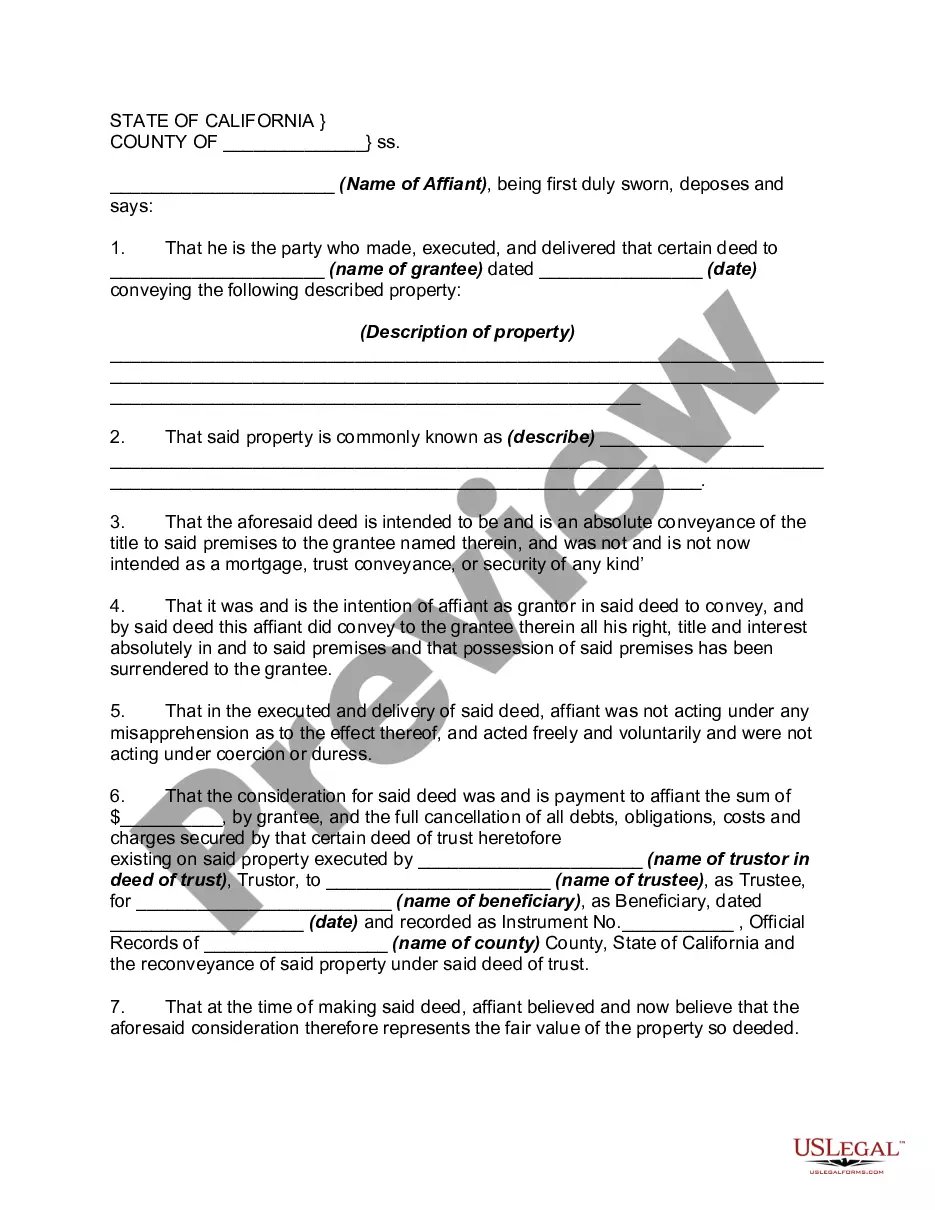
General Disclosures Required By The Federal Truth In Lending Act - Retail Installment Contract - Closed End Disclosures
What is this form?
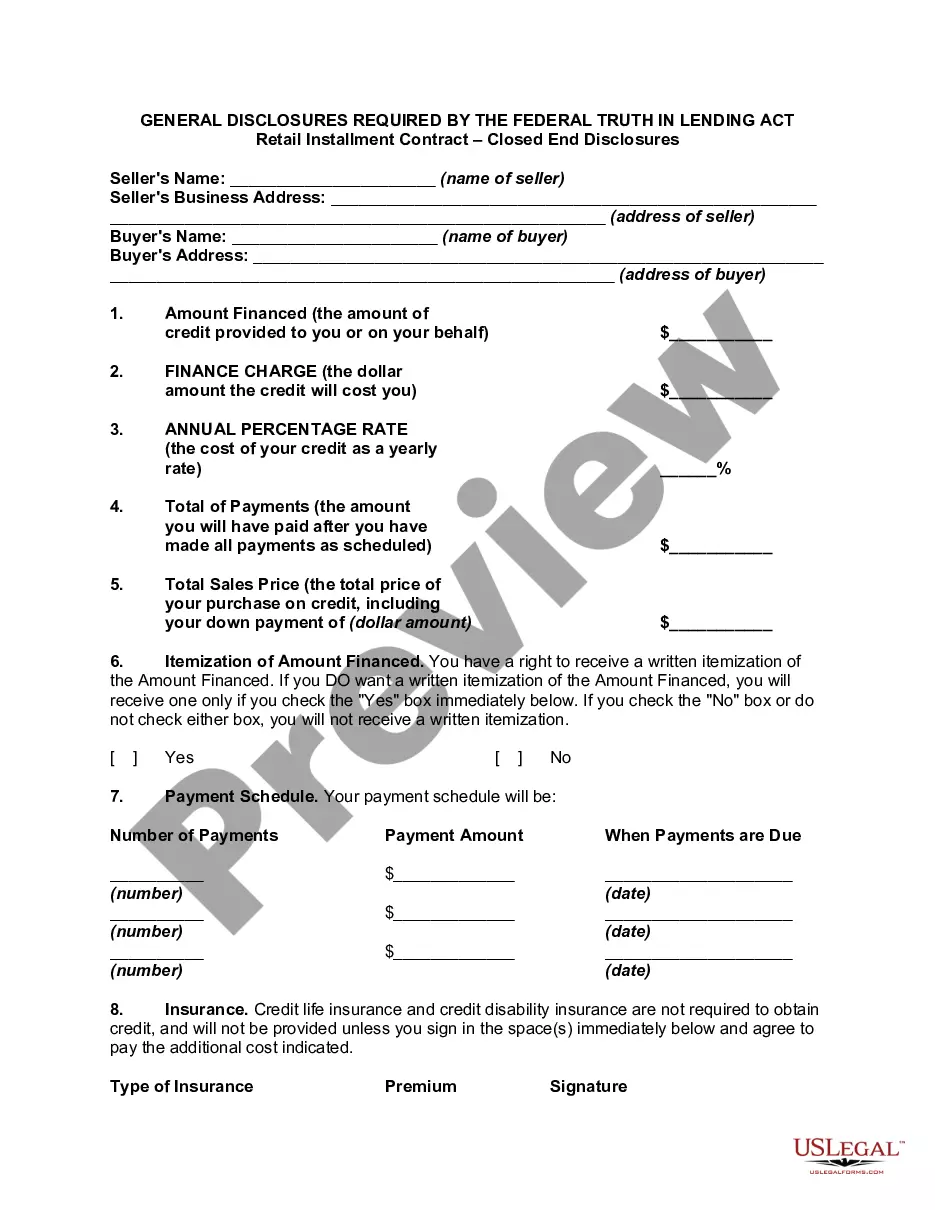
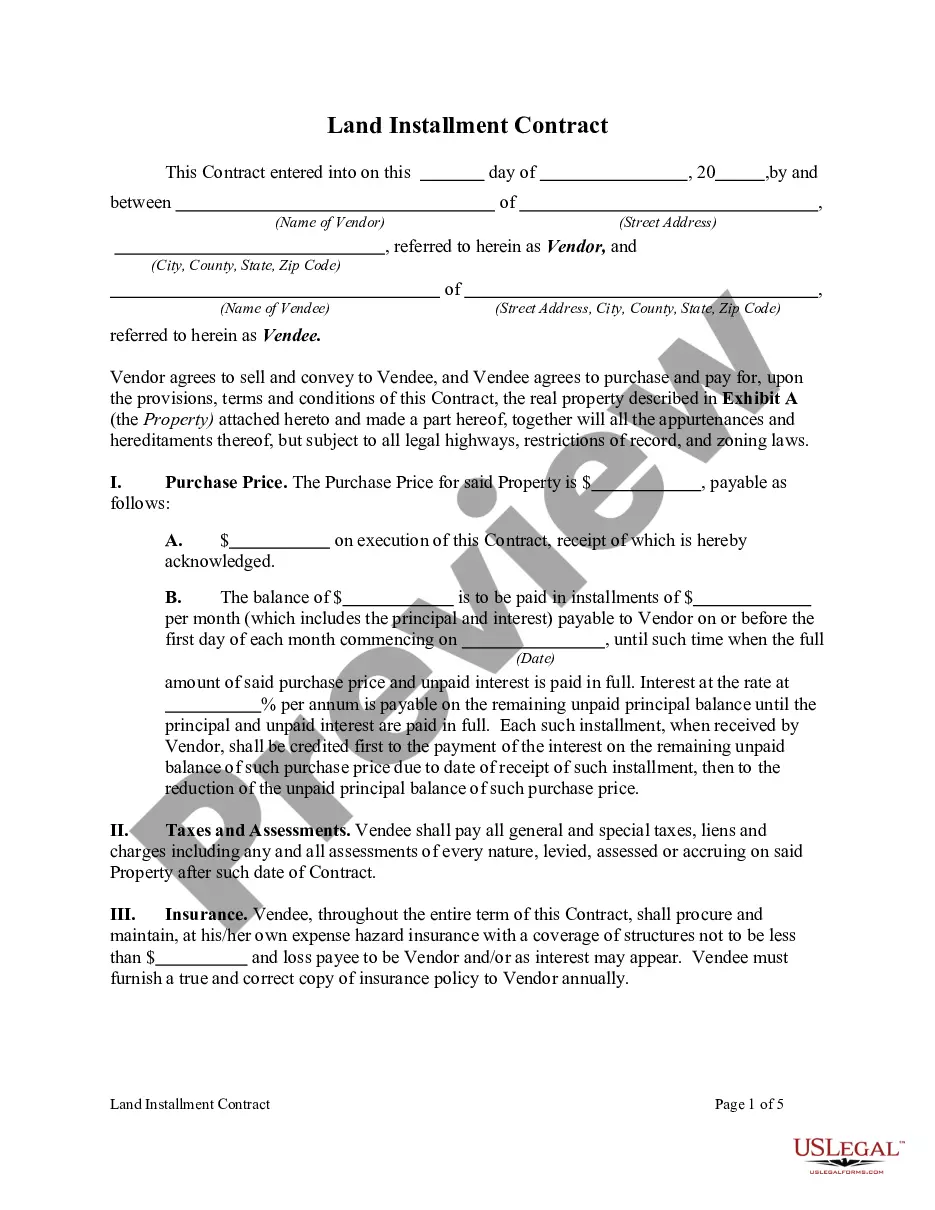
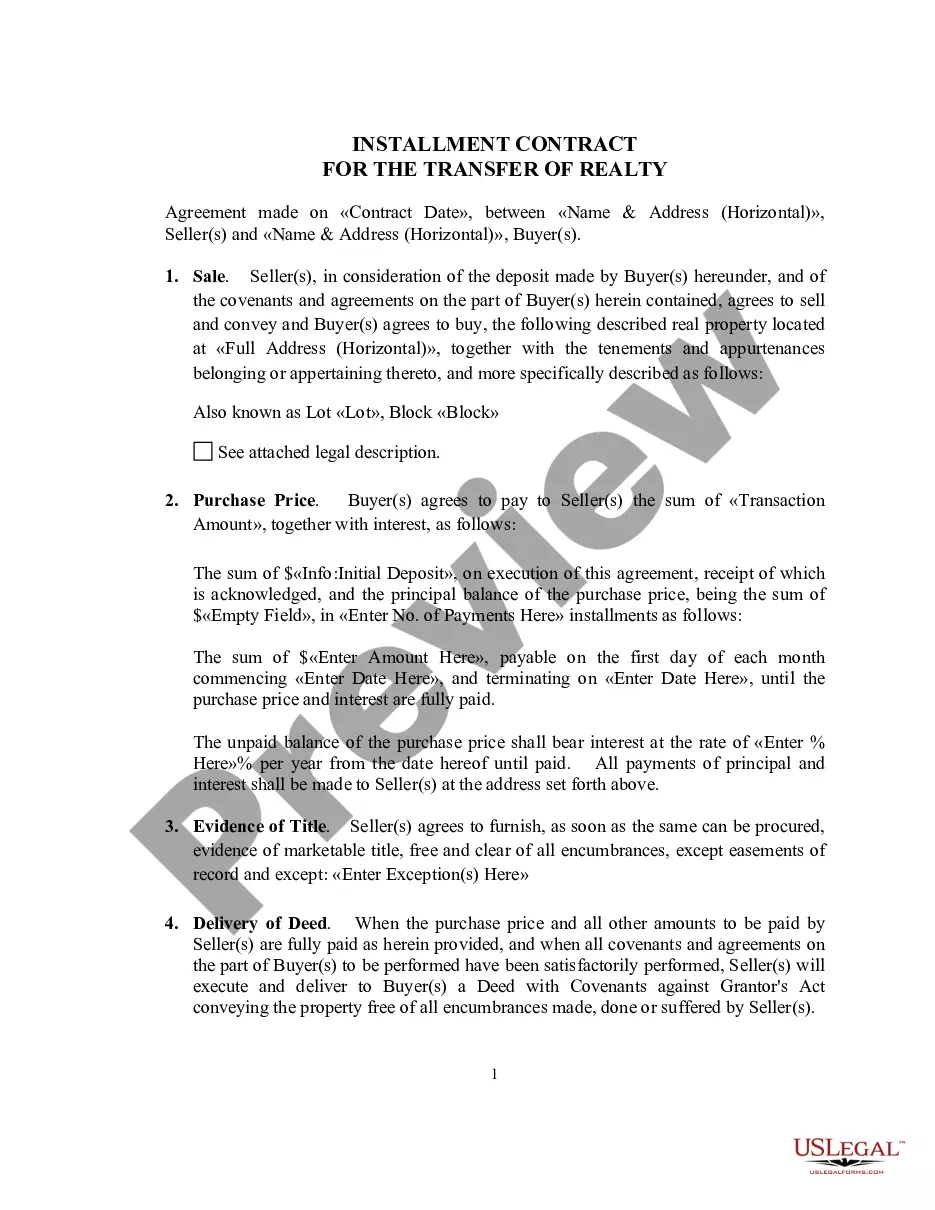
The General Disclosures Required By The Federal Truth In Lending Act - Retail Installment Contract - Closed End Disclosures is a legal document designed to ensure that lenders fully disclose the costs associated with the credit they provide. This form lays out the details required under the Truth-in-Lending Act (TILA) which aims to promote transparency in consumer credit transactions. Unlike other credit disclosure forms, this specific form focuses on closed-end transactions where a fixed amount is borrowed and repaid over time, such as in retail installment contracts. It helps borrowers understand their financial obligations clearly.
Form components explained
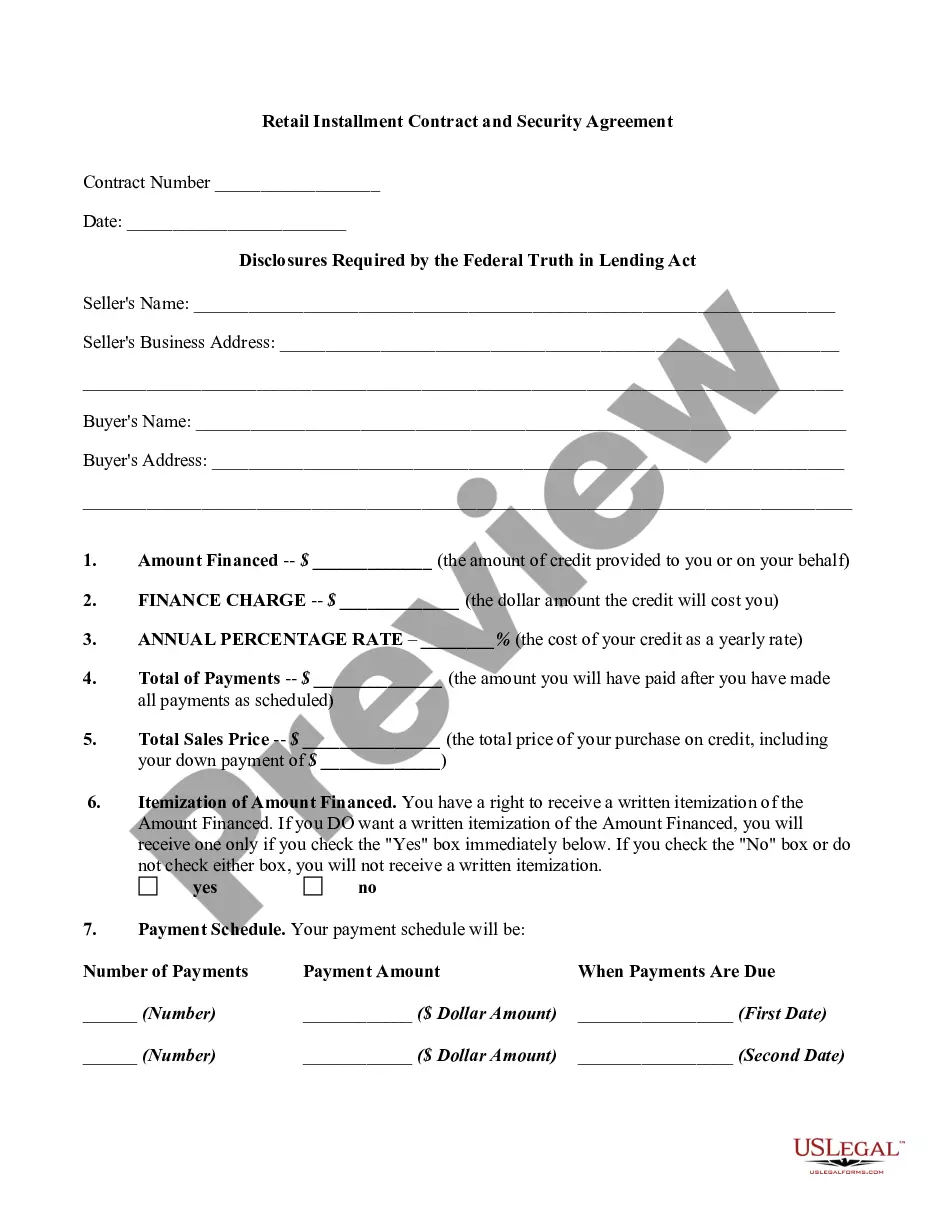
- Sellers and buyers' names and addresses
- Amount financed, including details on finance charge
- Annual percentage rate and total payments expected
- Payment schedule with specific dates and amounts
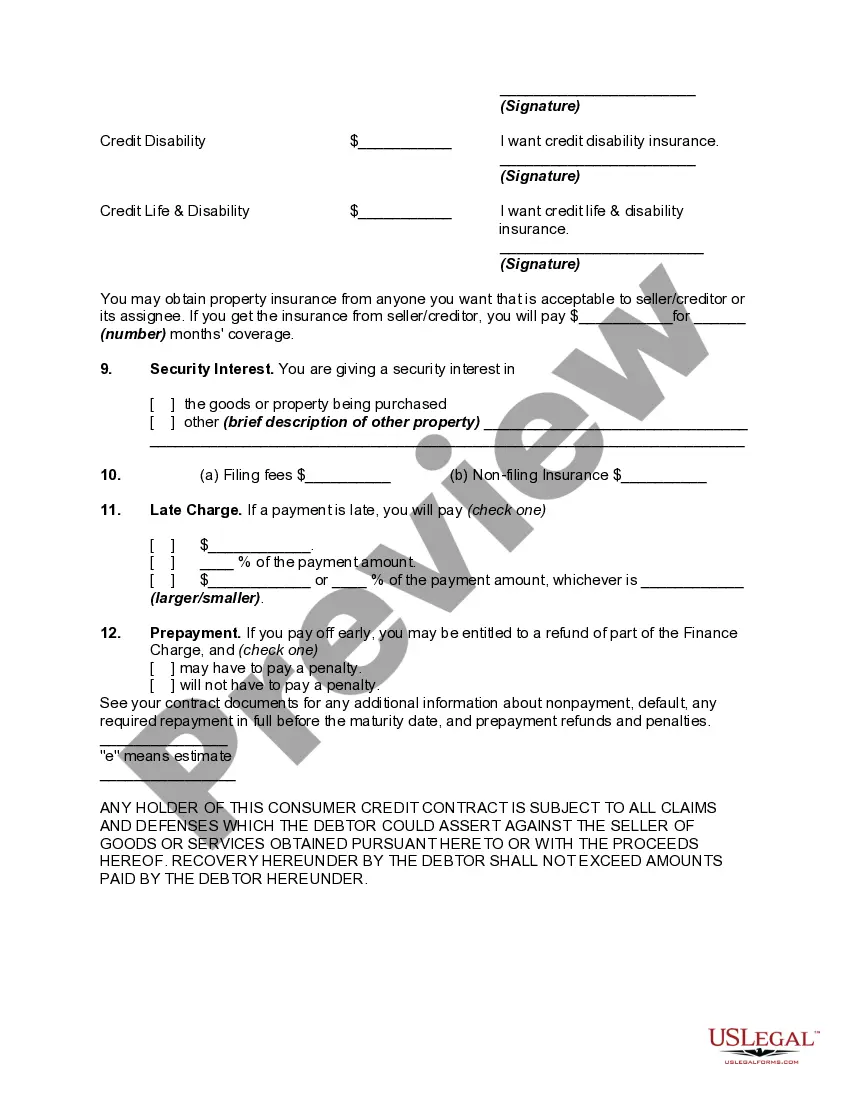
- Options for credit life and disability insurance
- Details about security interests and any related fees

Situations where this form applies
This form should be used when entering into a closed-end retail installment contract for consumer credit. It is suitable for situations where a buyer finances a purchase and agrees to pay back the loan amount over a defined period with specified payments. Examples include financing a car, purchasing high-value appliances, or securing a personal loan for household use.
Who needs this form
This form is intended for:
- Consumers purchasing goods or services on credit.
- Lenders and financial institutions providing credit to consumers.
- Sellers who are entering into retail installment contracts with buyers.
How to prepare this document
- Identify the seller and buyer by filling in their names and addresses.
- Enter the amount financed and calculate the finance charge to determine the total cost.
- Provide the annual percentage rate along with the total payments expected over the loan period.
- Outline the payment schedule, specifying the number of payments, amounts, and due dates.
- Check the boxes to opt for any additional insurance coverage as desired.
- Sign and date the form to acknowledge understanding of the terms and conditions.
Is notarization required?
This form does not typically require notarization unless specified by local law. Be sure to check if your state has additional requirements regarding notarization for retail installment contracts.
Get your form ready online
Our built-in tools help you complete, sign, share, and store your documents in one place.
Make edits, fill in missing information, and update formatting in US Legal Forms—just like you would in MS Word.
Download a copy, print it, send it by email, or mail it via USPS—whatever works best for your next step.
Sign and collect signatures with our SignNow integration. Send to multiple recipients, set reminders, and more. Go Premium to unlock E-Sign.
If this form requires notarization, complete it online through a secure video call—no need to meet a notary in person or wait for an appointment.
We protect your documents and personal data by following strict security and privacy standards.

Make edits, fill in missing information, and update formatting in US Legal Forms—just like you would in MS Word.

Download a copy, print it, send it by email, or mail it via USPS—whatever works best for your next step.

Sign and collect signatures with our SignNow integration. Send to multiple recipients, set reminders, and more. Go Premium to unlock E-Sign.

If this form requires notarization, complete it online through a secure video call—no need to meet a notary in person or wait for an appointment.

We protect your documents and personal data by following strict security and privacy standards.
Avoid these common issues
- Failing to enter accurate names or addresses for both the buyer and seller.
- Not calculating the finance charge correctly, leading to misunderstandings about total costs.
- Omitting to sign the form or missing out on necessary signatures for insurance options.
- Neglecting to establish a clear payment schedule with accurate due dates.
Benefits of using this form online
- Convenience of downloading and filling the form at your own pace.
- Editability allows for adjustments before finalizing your agreement.
- Access to expert-drafted templates ensures adherence to legal standards.
What to keep in mind
- The form promotes transparency in credit transactions under TILA.
- It is essential for closed-end retail installment contracts.
- Accurate completion ensures legal compliance and minimizes disputes.
Looking for another form?






Form popularity
FAQ
TILA and the CARD Act A card issuer must disclose interest rates, grace periods and annual fees. The issuer is also required to remind you of an upcoming annual fee prior to a card's renewal. If the issuer offers credit insurance, you must be made aware of changes in coverage.
A triggering term is a word or phrase that, when used in advertising literature, requires the presentation of the terms of a credit agreement. Triggering terms are intended to help consumers compare credit and lease offers on a fair and equal basis.
Under these rules, lenders must disclose interest rates in writing, give borrowers the chance to cancel certain types of loans within a specified period, use clear language about loan and credit terms, and respond to complaints, among other provisions.
Lenders must provide a Truth in Lending (TIL) disclosure statement that includes information about the amount of your loan, the annual percentage rate (APR), finance charges (including application fees, late charges, prepayment penalties), a payment schedule and the total repayment amount over the lifetime of the loan.
The regulation requires that the terms "finance charge" and "annual percentage rate" be disclosed more conspicuously than any other required disclosure. The finance charge and APR, more than any other disclosures, enable consumers to understand the cost of the credit and to comparison shop for credit.
The amount or percentage of the down payment; The terms of repayment; and. The "annual percentage rate,"using that term spelled out in full.
The TILA disclosures will also include other important terms such as the number of payments, the monthly payment, late fees,, whether you can prepay your loan without a penalty, and other important terms.
Applicability. The requirements of § 1026.24(f)(2) apply to advertisements for loans where more than one simple annual rate of interest will apply. The requirements of A§ 1026.24(f)(3)(i)(A) require a clear and conspicuous disclosure of each payment that will apply over the term of the loan.