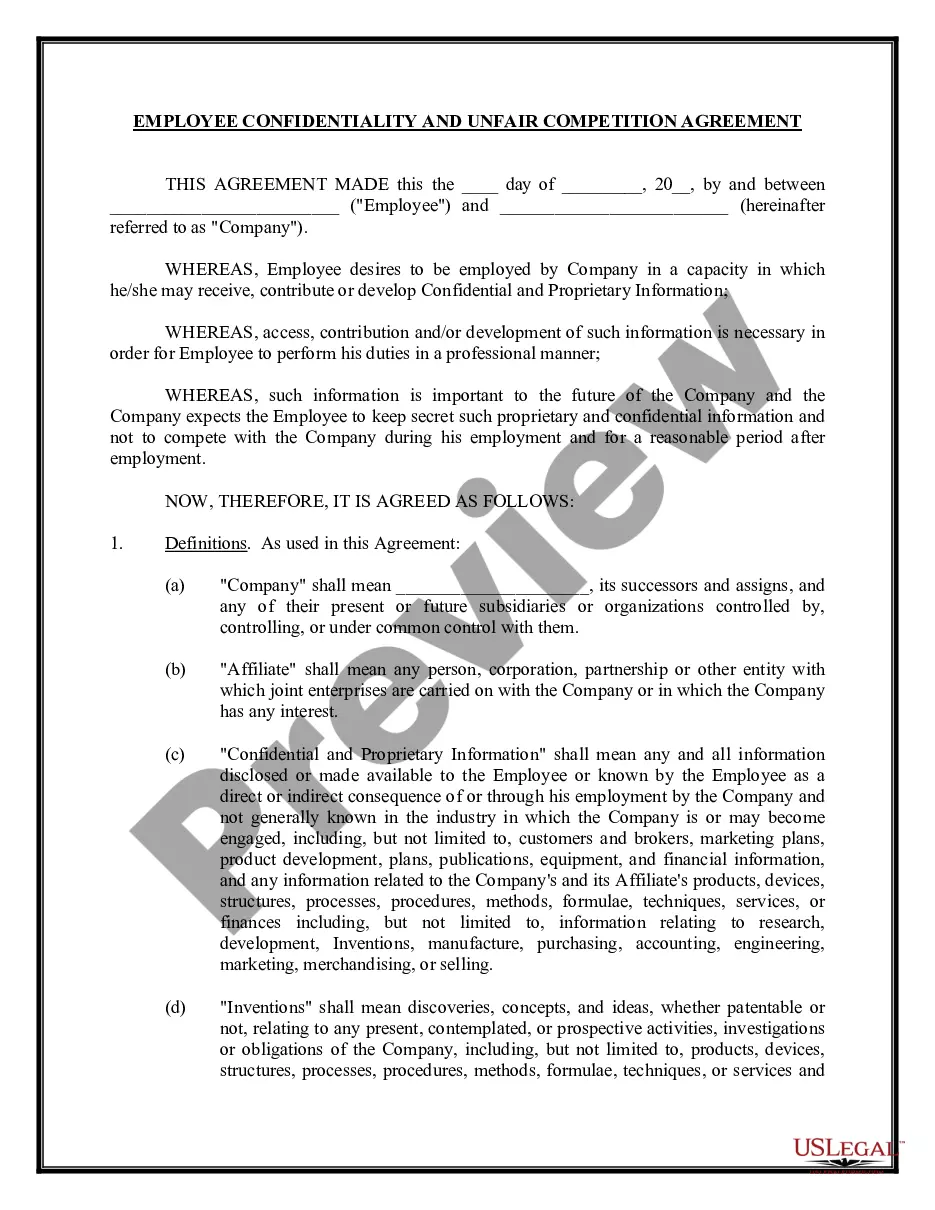
Assignment of Copyright to Multiple Works Pursuant to Asset Purchase
What is this form?
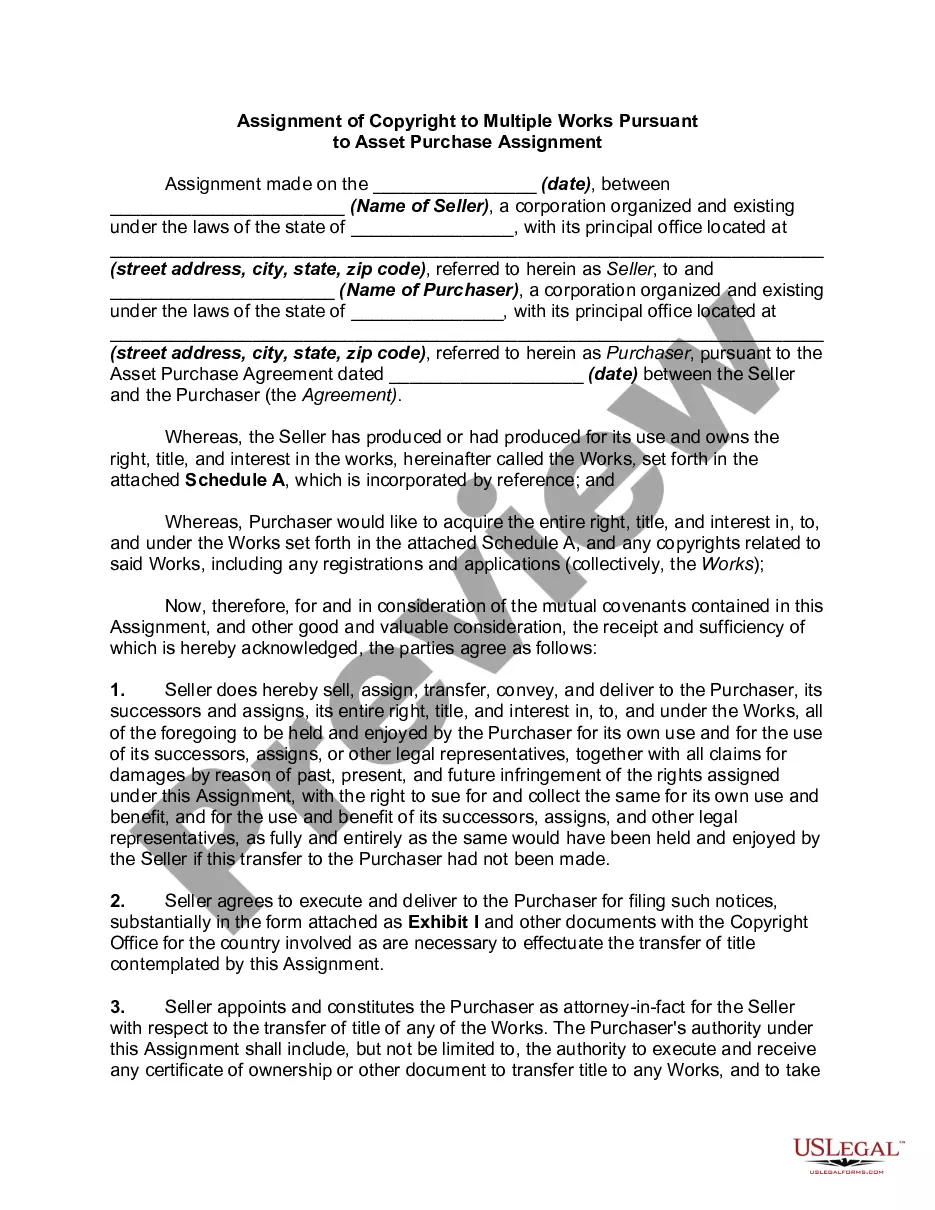
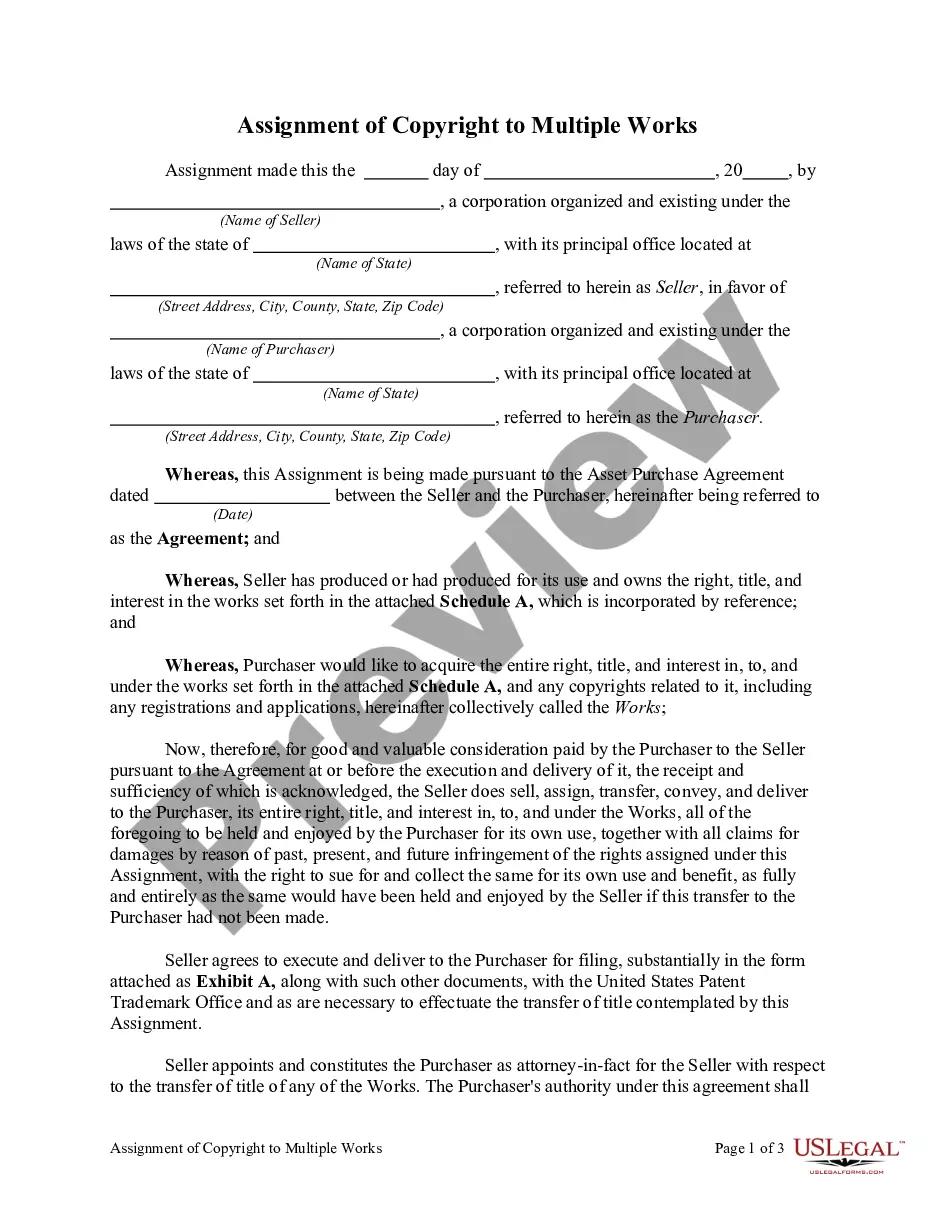
The Assignment of Copyright to Multiple Works Pursuant to Asset Purchase is a legal document that allows the seller to transfer ownership of copyright from original works of authorship to a purchaser. This form is essential for businesses and individuals who wish to formalize the sale of creative works, ensuring that all rights, title, and interests are legally transferred. Unlike generic copyright agreements, this form is specifically tailored for asset purchase scenarios, making it more comprehensive for transactions involving multiple works.
Form components explained
- Date of assignment.
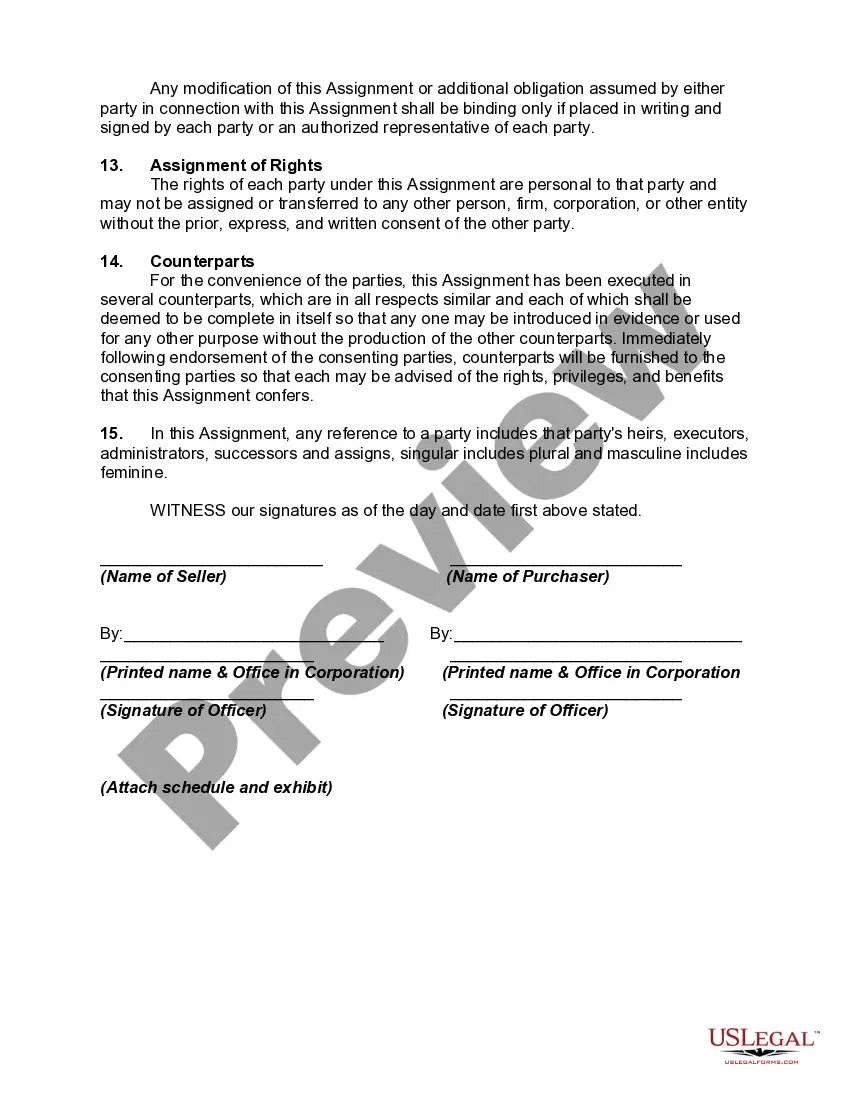
- Identification of the seller and purchaser, including their corporate details.
- Description of works being assigned, referenced in Schedule A.
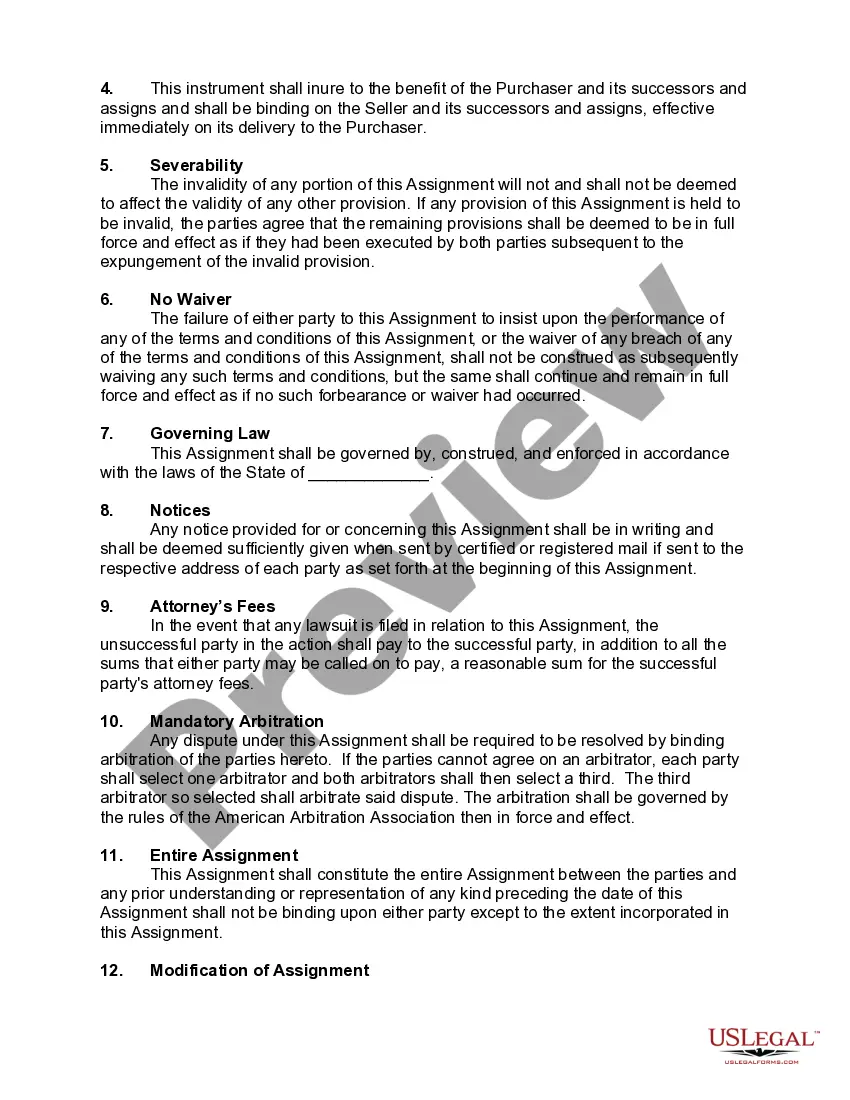
- Provisions related to the rights transferred and claims for damages from infringement.
- Responsibilities for executing necessary forms with the Copyright Office.
- Clauses addressing governing law, severability, and modification of the assignment.

When this form is needed
This form should be used whenever a seller intends to transfer copyright ownership of multiple original works to a purchaser, especially in connection with an asset purchase agreement. It is suitable when a business is selling creative content, such as artwork, scripts, music, or other intellectual property, ensuring that the purchaser receives all rights to exploit these works without concerns about infringement from the seller.
Who this form is for
- Businesses or individuals involved in buying or selling creative works.
- Corporations looking to acquire intellectual property as part of an asset purchase.
- Authors, artists, or creators needing to formalize their copyright transfers.
- Attorneys handling asset purchases that include the transfer of copyright.
Steps to complete this form
- Identify and fill in the date of the assignment.
- Clearly state the names of the seller and purchaser, including their corporate structures and addresses.
- Detail the specific works being assigned in the attached Schedule A.
- Enter relevant dates and sign the form where indicated.
- Ensure that all parties understand the implications of the transfer, including the rights to sue for infringement.
Does this form need to be notarized?
This form does not typically require notarization to be legally valid. However, some jurisdictions or document types may still require it. US Legal Forms provides secure online notarization powered by Notarize, available 24/7 for added convenience.
Get your form ready online
Our built-in tools help you complete, sign, share, and store your documents in one place.
Make edits, fill in missing information, and update formatting in US Legal Forms—just like you would in MS Word.
Download a copy, print it, send it by email, or mail it via USPS—whatever works best for your next step.
Sign and collect signatures with our SignNow integration. Send to multiple recipients, set reminders, and more. Go Premium to unlock E-Sign.
If this form requires notarization, complete it online through a secure video call—no need to meet a notary in person or wait for an appointment.
We protect your documents and personal data by following strict security and privacy standards.

Make edits, fill in missing information, and update formatting in US Legal Forms—just like you would in MS Word.

Download a copy, print it, send it by email, or mail it via USPS—whatever works best for your next step.

Sign and collect signatures with our SignNow integration. Send to multiple recipients, set reminders, and more. Go Premium to unlock E-Sign.

If this form requires notarization, complete it online through a secure video call—no need to meet a notary in person or wait for an appointment.

We protect your documents and personal data by following strict security and privacy standards.
Common mistakes to avoid
- Failing to accurately describe the works in Schedule A.
- Not including signatures from both parties.
- Overlooking the need to file necessary documents with the Copyright Office.
- Using vague language that does not clearly convey the intent of the assignment.
Why use this form online
- Convenient access to legally drafted templates anytime, from anywhere.
- Editable format allows for quick customization to fit specific needs.
- Reliable forms drafted by licensed attorneys, reducing the risk of errors.
- Immediate download and use, saving time compared to traditional methods.
Legal use & context
- The Assignment of Copyright protects the seller's right to transfer ownership legally and ensures the purchaser can enforce copyright protection.
- Proper completion and execution of this form safeguard against future ownership disputes over the assigned works.
Quick recap
- This form is essential for transferring copyright ownership legally.
- It includes provisions for documentation and enforcement of rights.
- Accuracy in completing the form is vital to avoid disputes.
Looking for another form?

Form popularity
FAQ
As per section 19, assignment of copyright is valid only if it is in writing and signed by the assignor or his duly authorized agent. The assignment of a copyright in a work should identify the work and specify kind of rights assigned and the duration and territorial extent of such assignment.
Assignment of Copyright The rights of a copyright owner can be assigned by him to any other person by way of an assignment.According to the Indian Copyright Act, 1957 a prospective owner of the copyright of the future work may also assign his rights partially or wholly.
A copyright assignment agreement must be in writing but need not be witnessed by a notary public.
(1) The ownership of a copyright may be transferred in whole or in part by any means of conveyance or by operation of law, and may be bequeathed by will or pass as personal property by the applicable laws of intestate succession.
No assignment of the copyright in any work shall be considered valid unless it is in writing and signed by the assignor/ his duly authorized agent. The assignment of copyright in any work shall identify such work, and specify the rights assigned duration and territorial extent of such assignment.
The copyright transfer agreement should be filled out using MS Word or hand-printed and signed by all authors (coauthors and copyright holders). These agreements are contracts of adhesion. A copyright transfer agreement enters into force if a manuscript is accepted for publication in English.
A copyright owner's exclusive rights (either in whole or in part) can be transferred to another party, but it must be in writing and signed by the copyright owner to be considered valid. An authorized agent of the copyright owner (such as an attorney or business associate) can also sign the writing.