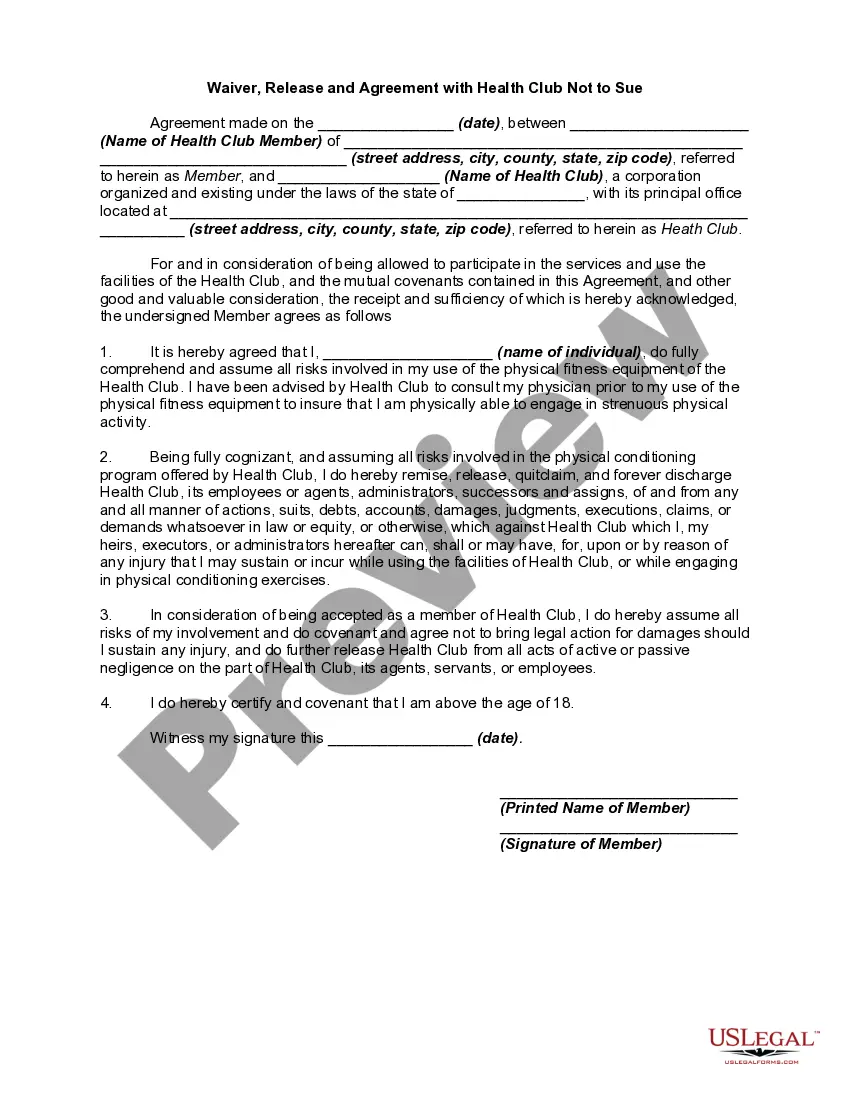
Waiver, Release and Agreement with Health Club Not to Sue
What is this form?
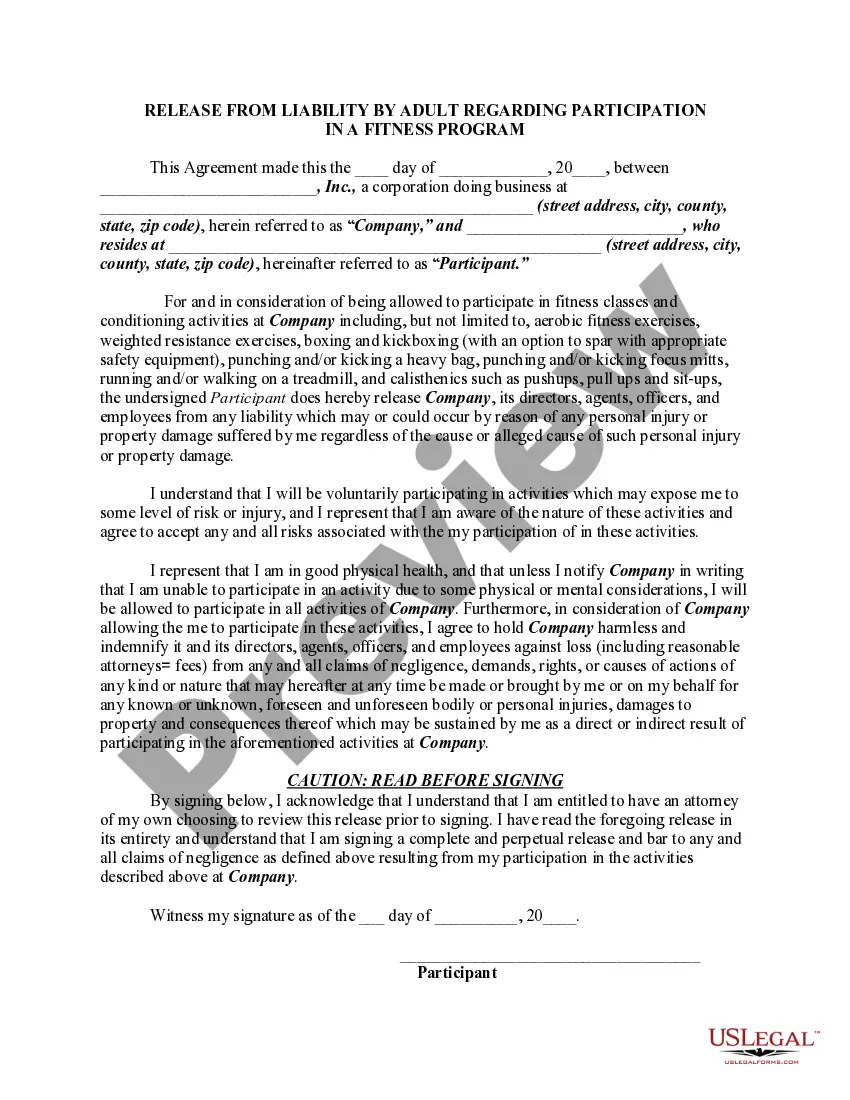
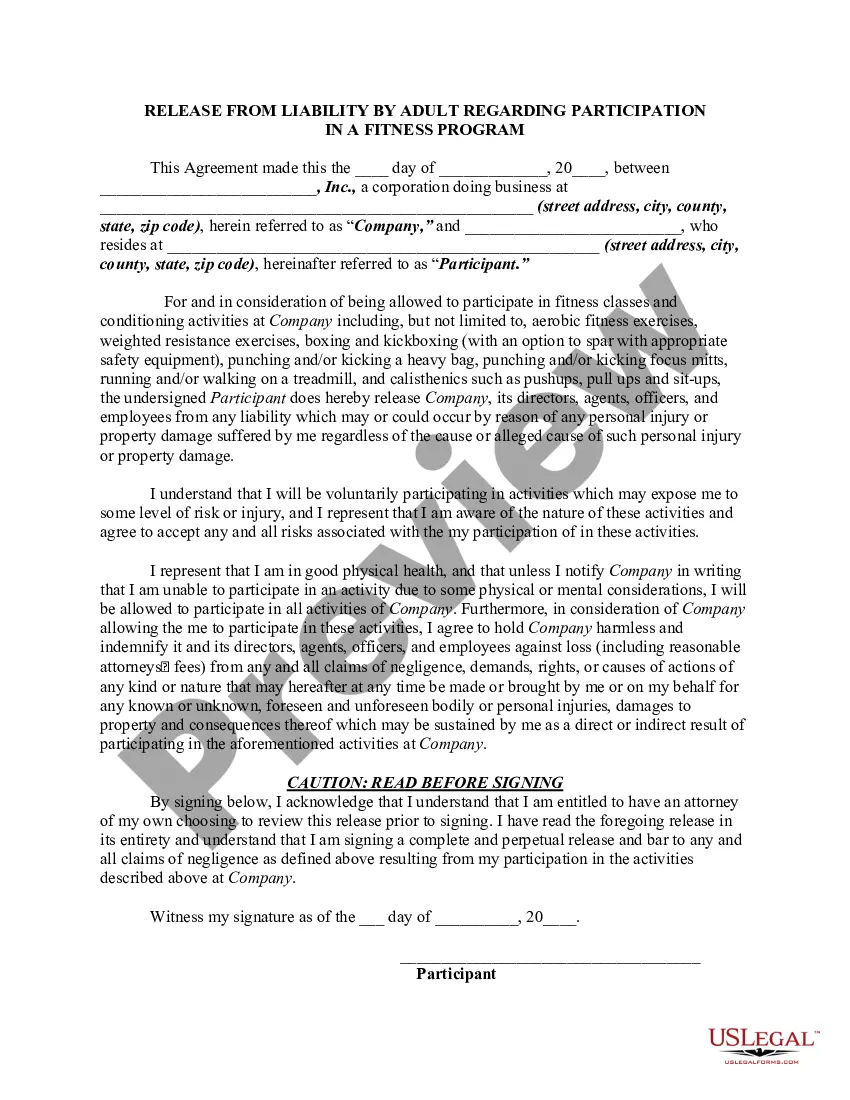
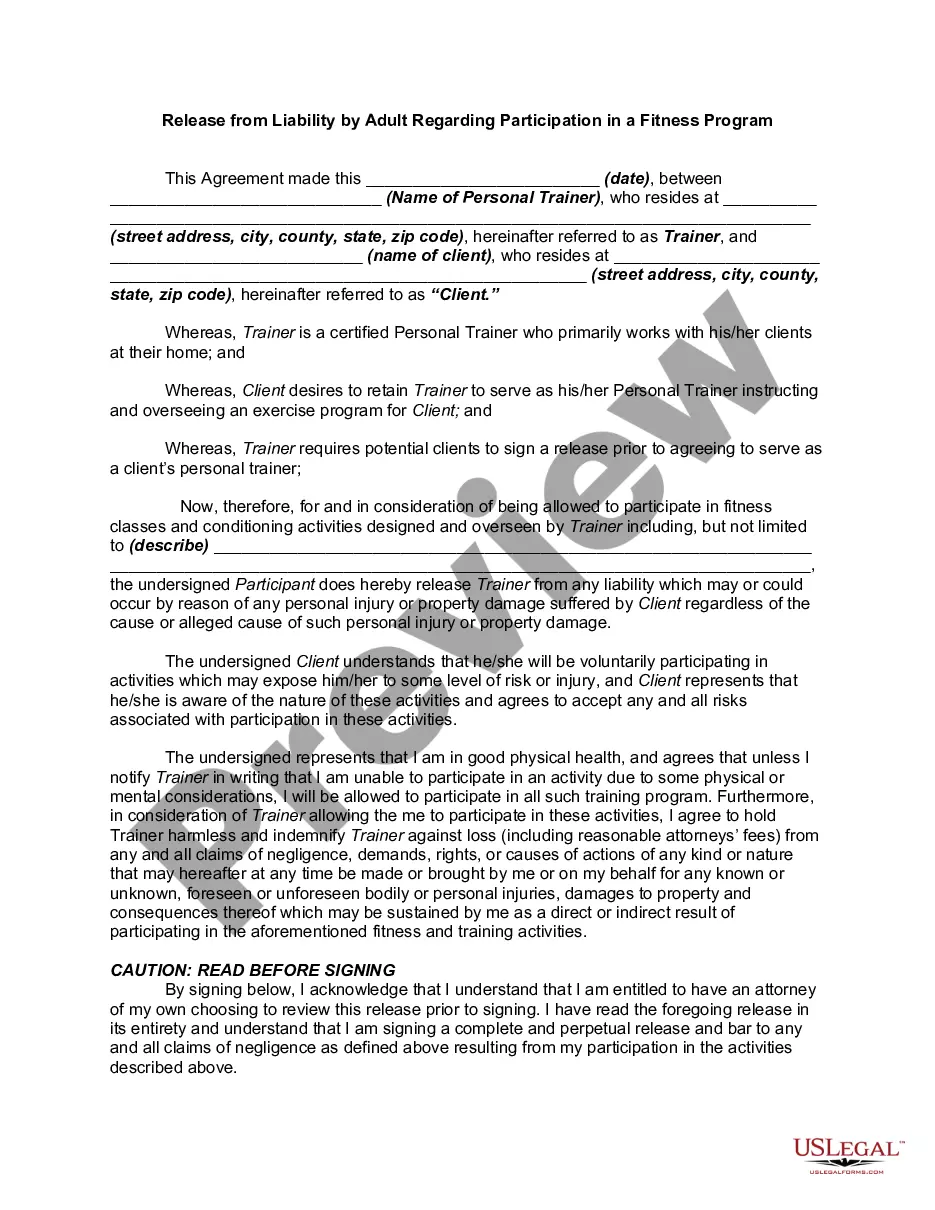
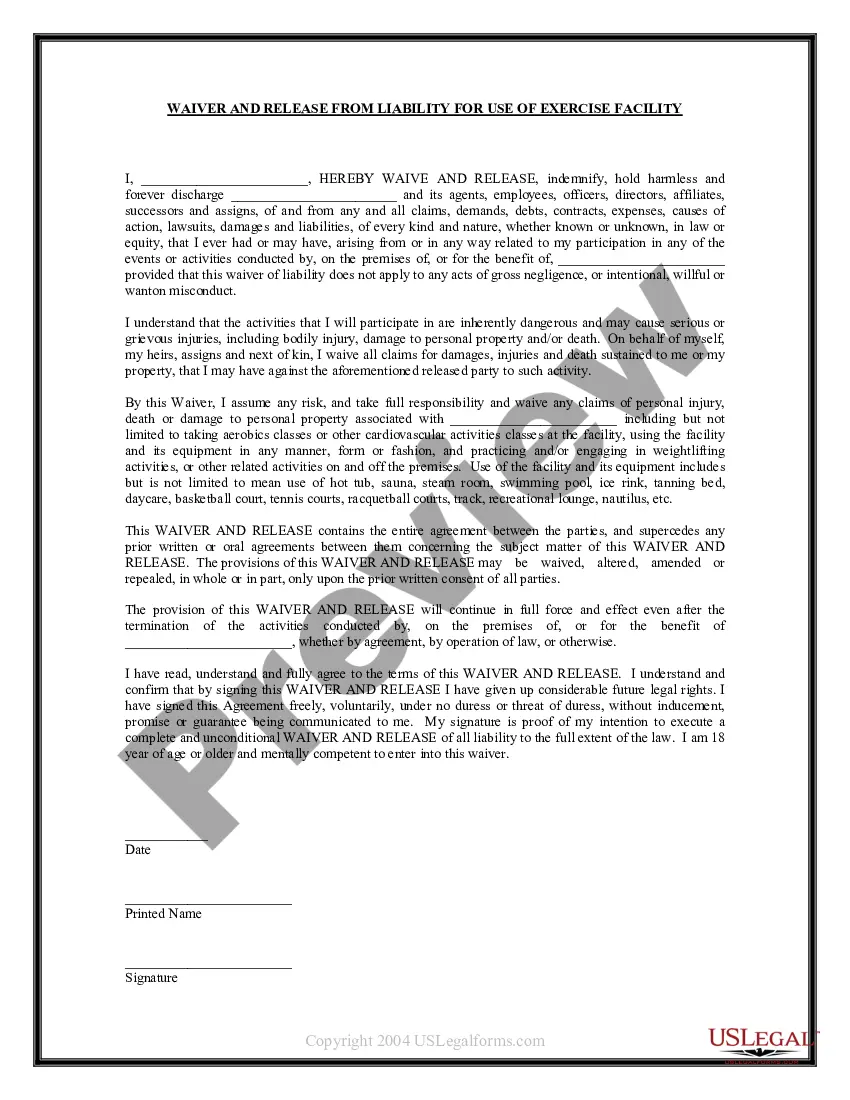
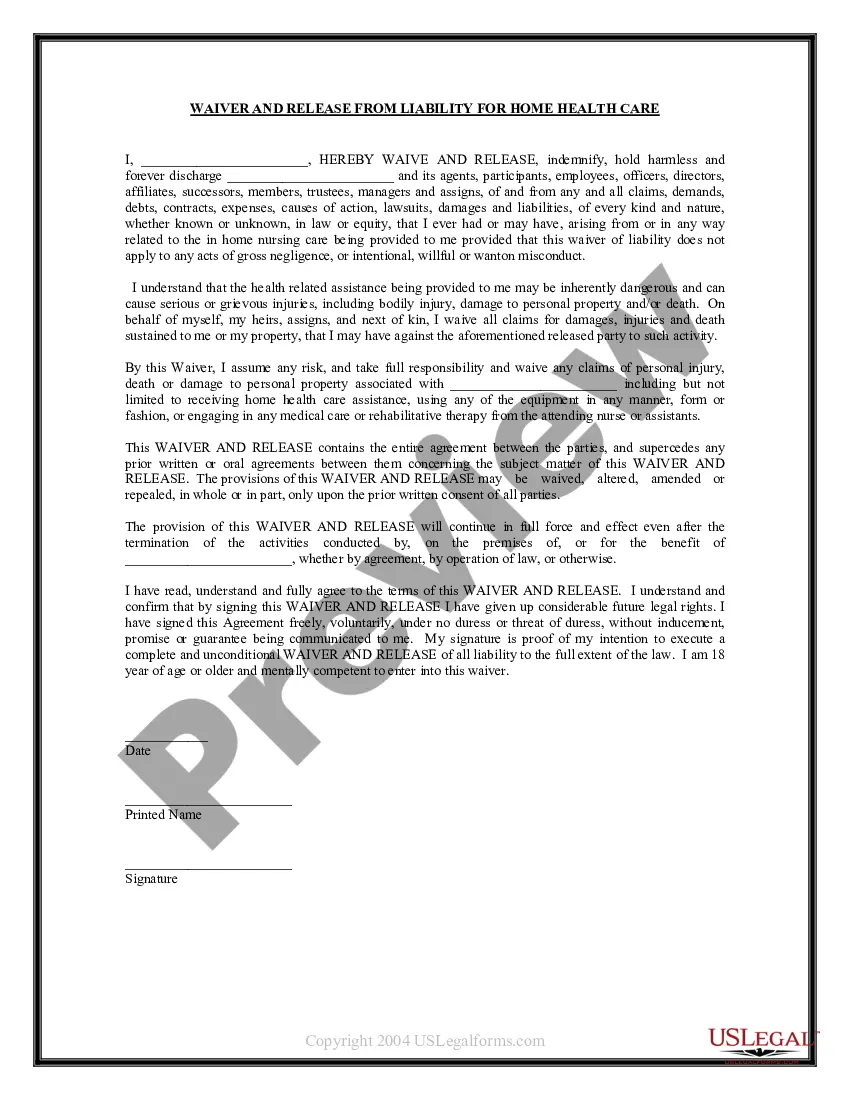
The Waiver, Release and Agreement with Health Club Not to Sue is a legal document that allows participants at health clubs or fitness facilities to relinquish their right to sue the club for any injuries incurred while using its services or facilities. This form is designed to protect health clubs from legal actions related to personal injuries, provided that the injuries are not a result of gross negligence or willful misconduct. It serves a distinct purpose compared to other waiver forms as it specifically addresses the risks associated with physical fitness activities.
Key components of this form
- Member's Information: Name and address of the health club member.
- Health Club's Information: Name and address of the health club.
- Assumption of Risk: Acknowledgment of understanding and assuming all risks associated with physical fitness activities.
- Release of Liability: Agreement to release the health club from any future claims for injuries.
- Age Certification: Confirmation that the member is at least 18 years old.
- Signature: Member's printed name and signature, along with the date of signing.
When to use this form
This form should be used when an individual is becoming a member of a health club or fitness facility and wishes to participate in its programs or use its equipment. It is particularly important for individuals who engage in high-intensity workouts, classes, or training sessions where the risk of injury may be heightened. By signing this waiver, members acknowledge the inherent risks and agree not to hold the health club liable for any injuries sustained while participating in activities.
Intended users of this form
This form is intended for:
- Individuals aged 18 or older who are joining a health club.
- Health clubs and fitness facilities that require liability waivers from members.
- Members who want to ensure their participation is legally protected against personal injury claims.
Steps to complete this form
- Identify the date of the agreement.
- Provide the member's full name and address.
- Fill in the health club's name and address.
- Review and confirm understanding of the risks involved with fitness activities.
- Sign the document and include the printed name and date.
Is notarization required?
Notarization is generally not required for this form. However, certain states or situations might demand it. You can complete notarization online through US Legal Forms, powered by Notarize, using a verified video call available anytime.
Get your form ready online
Our built-in tools help you complete, sign, share, and store your documents in one place.
Make edits, fill in missing information, and update formatting in US Legal Forms—just like you would in MS Word.
Download a copy, print it, send it by email, or mail it via USPS—whatever works best for your next step.
Sign and collect signatures with our SignNow integration. Send to multiple recipients, set reminders, and more. Go Premium to unlock E-Sign.
If this form requires notarization, complete it online through a secure video call—no need to meet a notary in person or wait for an appointment.
We protect your documents and personal data by following strict security and privacy standards.

Make edits, fill in missing information, and update formatting in US Legal Forms—just like you would in MS Word.

Download a copy, print it, send it by email, or mail it via USPS—whatever works best for your next step.

Sign and collect signatures with our SignNow integration. Send to multiple recipients, set reminders, and more. Go Premium to unlock E-Sign.

If this form requires notarization, complete it online through a secure video call—no need to meet a notary in person or wait for an appointment.

We protect your documents and personal data by following strict security and privacy standards.
Typical mistakes to avoid
- Failing to read and understand all terms before signing.
- Not including the correct information for both the member and the health club.
- Signing the form without confirming age eligibility (must be over 18).
Why complete this form online
- Immediate access to a legally vetted template designed by licensed attorneys.
- Convenient download for easy use without the need to visit a lawyer.
- Editability allows customization to fit specific health club needs.
Legal use & context
This waiver is legally binding upon execution and is designed to protect health clubs from legal action related to injuries sustained by members during their use of facilities. However, its enforceability is subject to state laws and the specific circumstances surrounding each case. Courts may not uphold waivers in cases of gross negligence or when involving minors.
Summary of main points
- The form protects health clubs from liability due to member injuries.
- Members must understand the risks associated with using health club facilities.
- It is important to complete the waiver accurately to ensure legality.
- Check local laws to ensure compliance regarding waivers and releases.
Looking for another form?
Form popularity
FAQ
A release form or a waiver is simply a legal document containing an agreement between two parties.A waiver is an essential document that informs participants of the risks involved in certain activities and also protects you from liability.
A waiver is not complete until it includes the signatures of both the event host and business owner and that of the participant. The date should also be included alongside the signatures. You may also include a signature line for a witness if necessary.
Get help. Writing a waiver should not be complicated. Use the correct structure. Proper formatting. Include a subject line. Include a caution! Talk about the activity risks. Do not forget an assumption of risk. Hold harmless.
In California, a liability waiver must be clear, unambiguous, and explicit. In other words, waivers cannot be printed in faded ink, in small font, on the back of a paper, or in an otherwise ambiguous form. If the waiver that you sign is not represented clearly, it may not hold up in the event of a lawsuit.
A liability waiver, or release of liability, is a legal document that a company or organization has you sign in order to protect them from being sued in the event that you are injured.
In California, a liability waiver must be clear, unambiguous, and explicit. In other words, waivers cannot be printed in faded ink, in small font, on the back of a paper, or in an otherwise ambiguous form. If the waiver that you sign is not represented clearly, it may not hold up in the event of a lawsuit.
At the ski hill, the fair, or a hockey game, Canadians must sign waivers before participating in a wide variety of activities and events.A waiver can significantly limit the right to sue for a personal injury, but is not always enforceable. The courts can use a series of factors to test the enforceability of a waiver.
Many people believe the myth that if you sign a waiver, you're not allowed to sue. However, that is simply not true. Waivers are intended to inform the participant of possible harm. Upon signing, the participant is surrendering a known right or acknowledging that harm may occur.
In California, a liability waiver must be clear, unambiguous, and explicit. In other words, waivers cannot be printed in faded ink, in small font, on the back of a paper, or in an otherwise ambiguous form. If the waiver that you sign is not represented clearly, it may not hold up in the event of a lawsuit.