Interrogatories in Federal Court to Judgment Debtor in General and
What is this form?
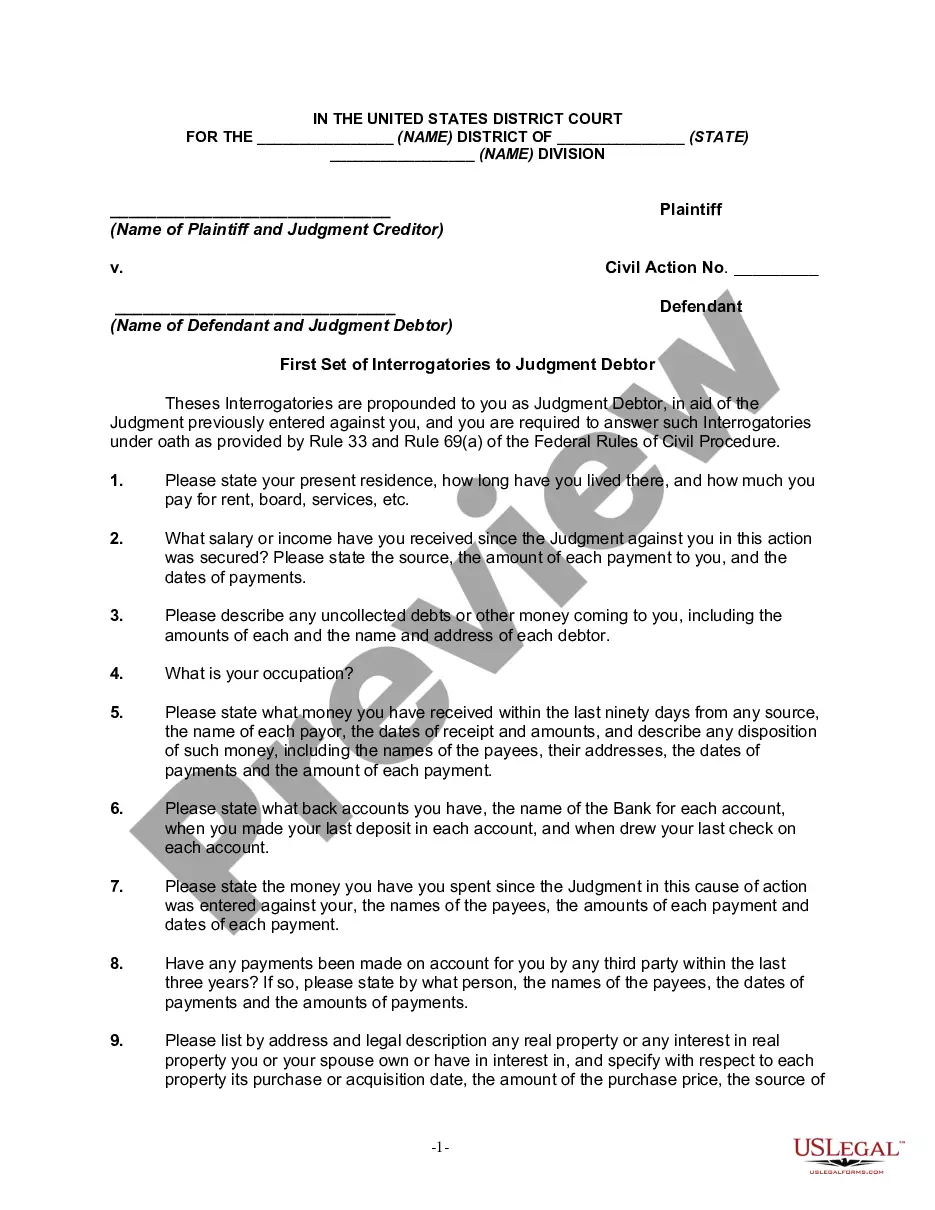
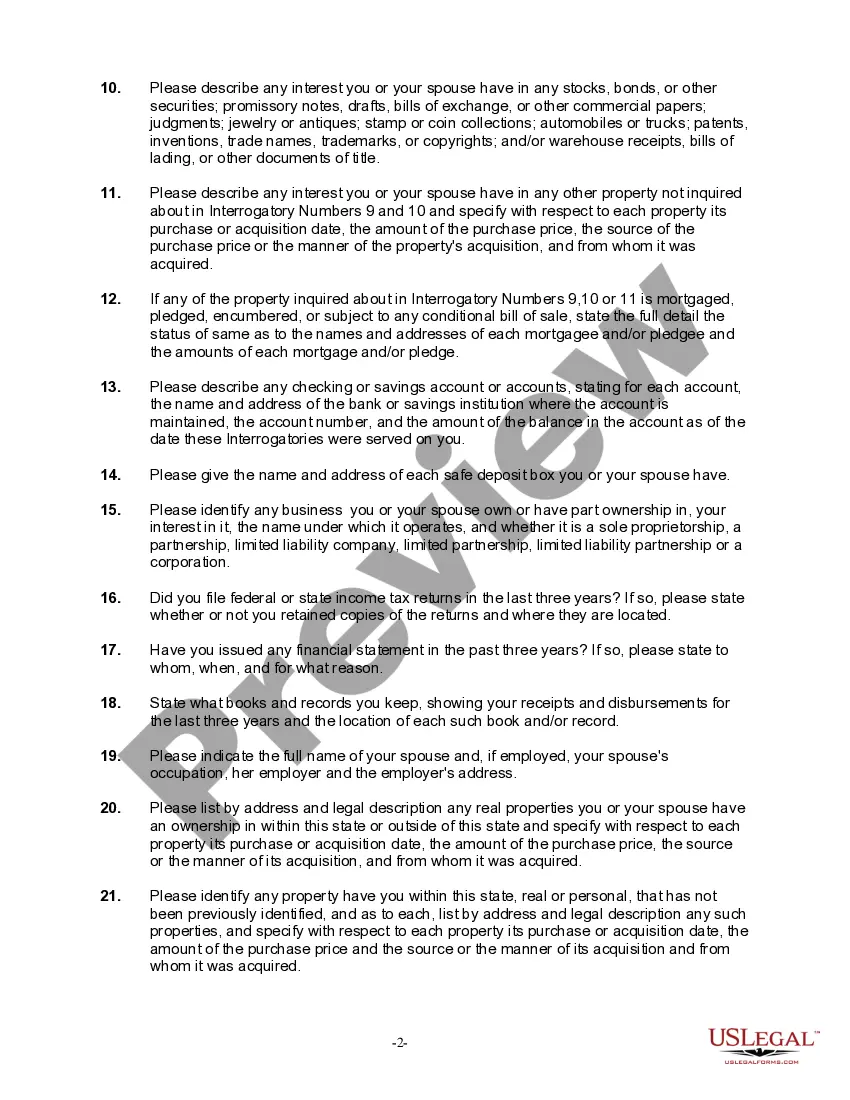
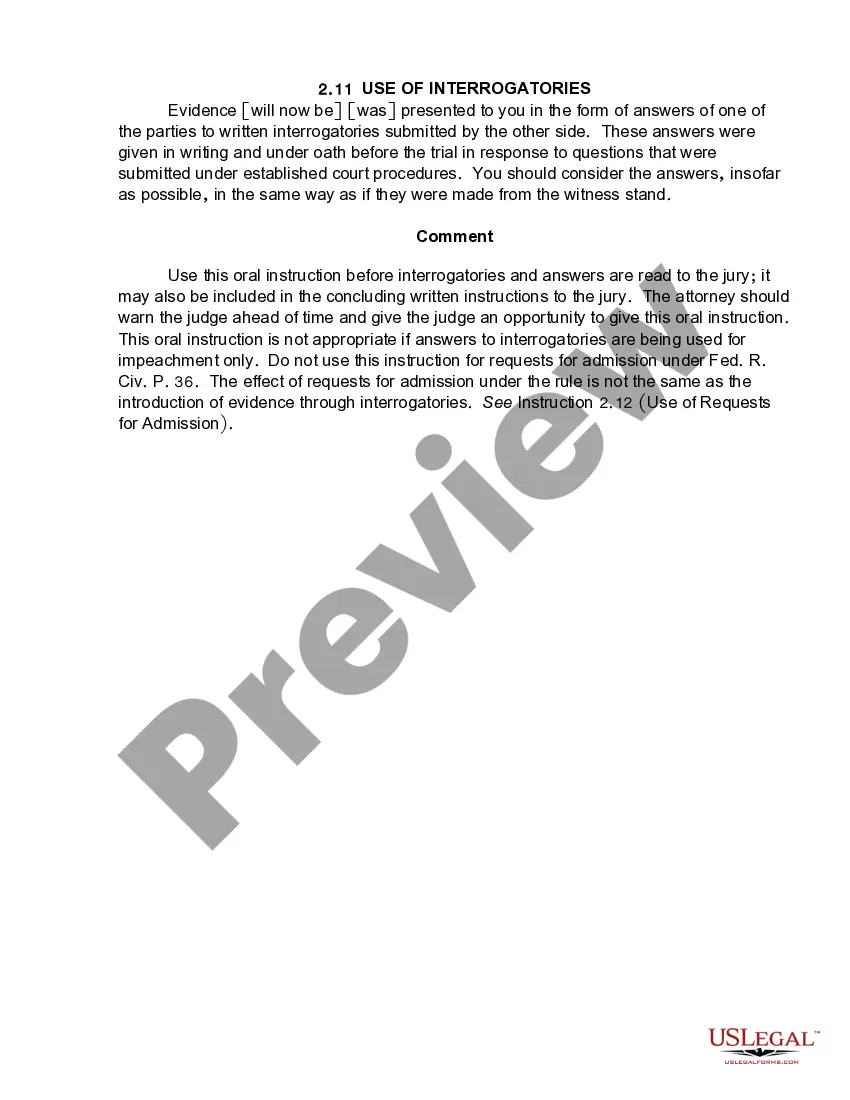
The Interrogatories in Federal Court to Judgment Debtor is a legal document used in federal court proceedings to gather information from a debtor following a judgment against them. It allows a creditor to inquire about the debtor's assets, income, and financial obligations to aid in collecting the judgment. This form is distinct from other interrogatories because it specifically targets judgment debtors, giving creditors crucial insights into the debtor's financial standing.
What’s included in this form
- Identification of the plaintiff (creditor) and defendant (debtor) in the case.
- A series of interrogatories directed at the debtor to disclose information about their financial situation.
- Requirements for the debtor to respond under oath according to Federal Rules of Civil Procedure.
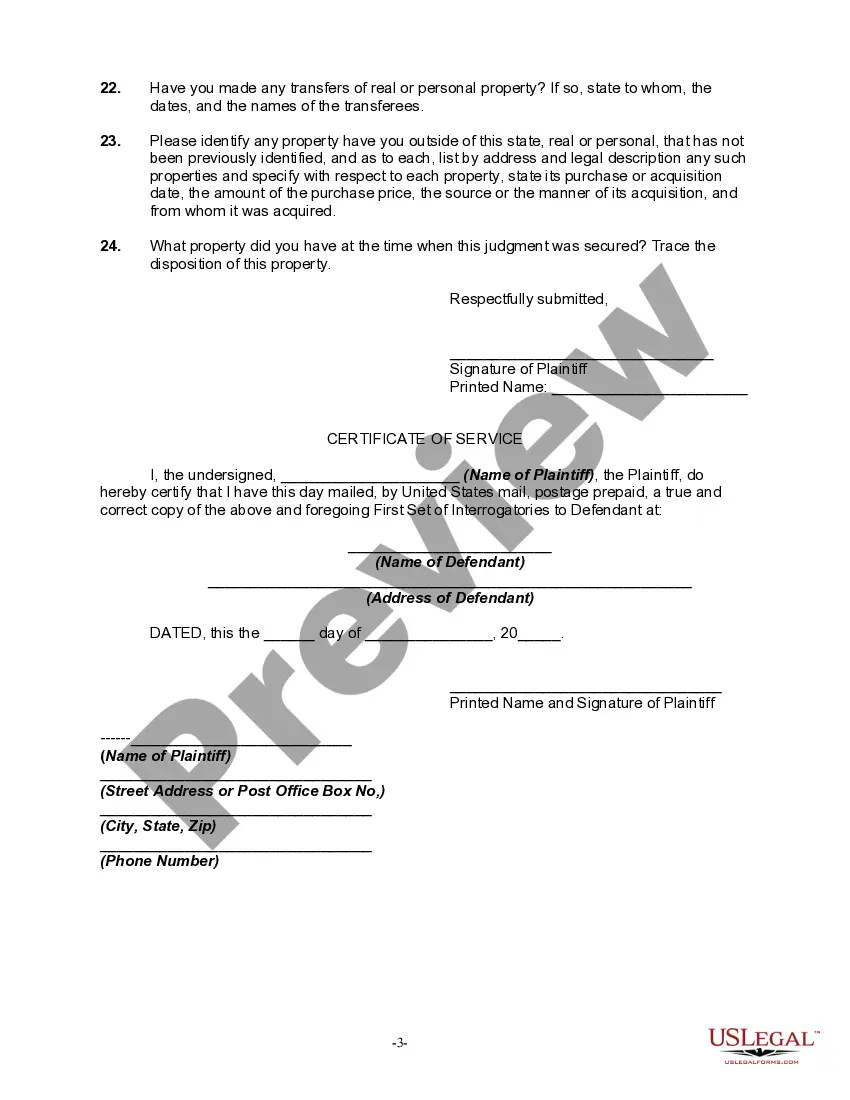
- A certification of service to confirm that the debtor received the interrogatories.
- Spaces for the names and addresses of both parties and their respective legal representatives.


When to use this form
This form is used when a creditor has obtained a judgment against a debtor and seeks to uncover information about the debtor's assets and income for collection purposes. It is particularly useful after a court ruling when the creditor needs to enforce the judgment and wants to establish the debtor's ability to pay. This form can help creditors identify hidden assets or income sources that may not have been disclosed previously.
Who needs this form
This form is intended for use by:
- Civil judgment creditors seeking to enforce a court judgment against a debtor.
- Attorneys representing creditors in federal court cases.
- Individuals or businesses who have won a legal judgment and need to collect on that judgment.
Completing this form step by step
- Begin by filling in the case number and names of both the plaintiff and defendant.
- List your interrogatories, ensuring clarity and specificity in each question.
- Provide spaces for the debtor's required sworn answers to each interrogatory.
- Complete the certification of service section to verify that the debtor received the form.
- Sign and date the form, ensuring compliance with local court rules regarding submission.
Does this form need to be notarized?
This form does not typically require notarization to be legally valid. However, some jurisdictions or document types may still require it. US Legal Forms provides secure online notarization powered by Notarize, available 24/7 for added convenience.
Get your form ready online
Our built-in tools help you complete, sign, share, and store your documents in one place.
Make edits, fill in missing information, and update formatting in US Legal Forms—just like you would in MS Word.
Download a copy, print it, send it by email, or mail it via USPS—whatever works best for your next step.
Sign and collect signatures with our SignNow integration. Send to multiple recipients, set reminders, and more. Go Premium to unlock E-Sign.
If this form requires notarization, complete it online through a secure video call—no need to meet a notary in person or wait for an appointment.
We protect your documents and personal data by following strict security and privacy standards.

Make edits, fill in missing information, and update formatting in US Legal Forms—just like you would in MS Word.

Download a copy, print it, send it by email, or mail it via USPS—whatever works best for your next step.

Sign and collect signatures with our SignNow integration. Send to multiple recipients, set reminders, and more. Go Premium to unlock E-Sign.

If this form requires notarization, complete it online through a secure video call—no need to meet a notary in person or wait for an appointment.

We protect your documents and personal data by following strict security and privacy standards.
Avoid these common issues
- Failing to limit the number of interrogatories to twenty-five, including subparts.
- Not correctly identifying parties involved in the case.
- Submitting the form without all required signatures or certifications of service.
Advantages of online completion
- Convenience of downloading and printing the form from anywhere at any time.
- Easy to edit and customize the interrogatories to meet individual case needs.
- Access to legally vetted templates drafted by licensed attorneys, ensuring reliability.
Legal use & context
- The form is essential for creditors to enforce judgments in federal court.
- Responses to the interrogatories are legally binding and must be truthful.
- Failure to respond appropriately may result in legal consequences for the debtor.
Quick recap
- The Interrogatories in Federal Court to Judgment Debtor is a vital tool for creditors.
- Completion and accuracy of this form can significantly impact judgment collection efforts.
- Always verify compliance with local court rules to ensure proper submission.
Looking for another form?



Form popularity
FAQ
In the normal California state court action, plaintiffs are permitted to begin written discovery, without leave of the court at any time 2026However, in a federal court action, a party may not serve discovery until after the meeting of counsel under Federal Rule of Civil Procedure 26.
Federal cases are fairly easy when it comes to judgment enforcement or investigations across state lines. You simply open a "miscellaneous case" in the district where you want to do the enforcement to register the judgment in that district, then proceed with whatever process you want to do from there.
Your answers to the interrogatories should usually be short, clear, and direct and should answer only the question that is being asked. This is not the time to set out your entire case or defense to the other side. Take the time to make sure your answers are correct and truthful.
You do not file anything with the federal court. relating to your initial disclosures. Sign the disclosures, include a certificate of service on the disclosures and keep a copy for your files as evidence that you served the disclosures should...
But disclosures under Rule 26(a)(1) or (2) and the following discovery requests and responses must not be filed until they are used in the proceeding or the court orders filing: depositions, interrogatories, requests for documents or tangible things or to permit entry onto land, and requests for admission.
As a threshold matter, the federal Rules provide that the scope of discovery, unless otherwise limited by the court, is the following: Parties may obtain discovery regarding any nonprivileged matter that is relevant to any party's claim or defense including the existence, description, nature, custody, condition, and
A simple way to collect a judgment is by deducting money out of the debtor's paycheck using a wage garnishment. The debtor must have a decent income because both the federal government and states cap the amount you can take, and certain types of income, like Social Security, are off-limits.
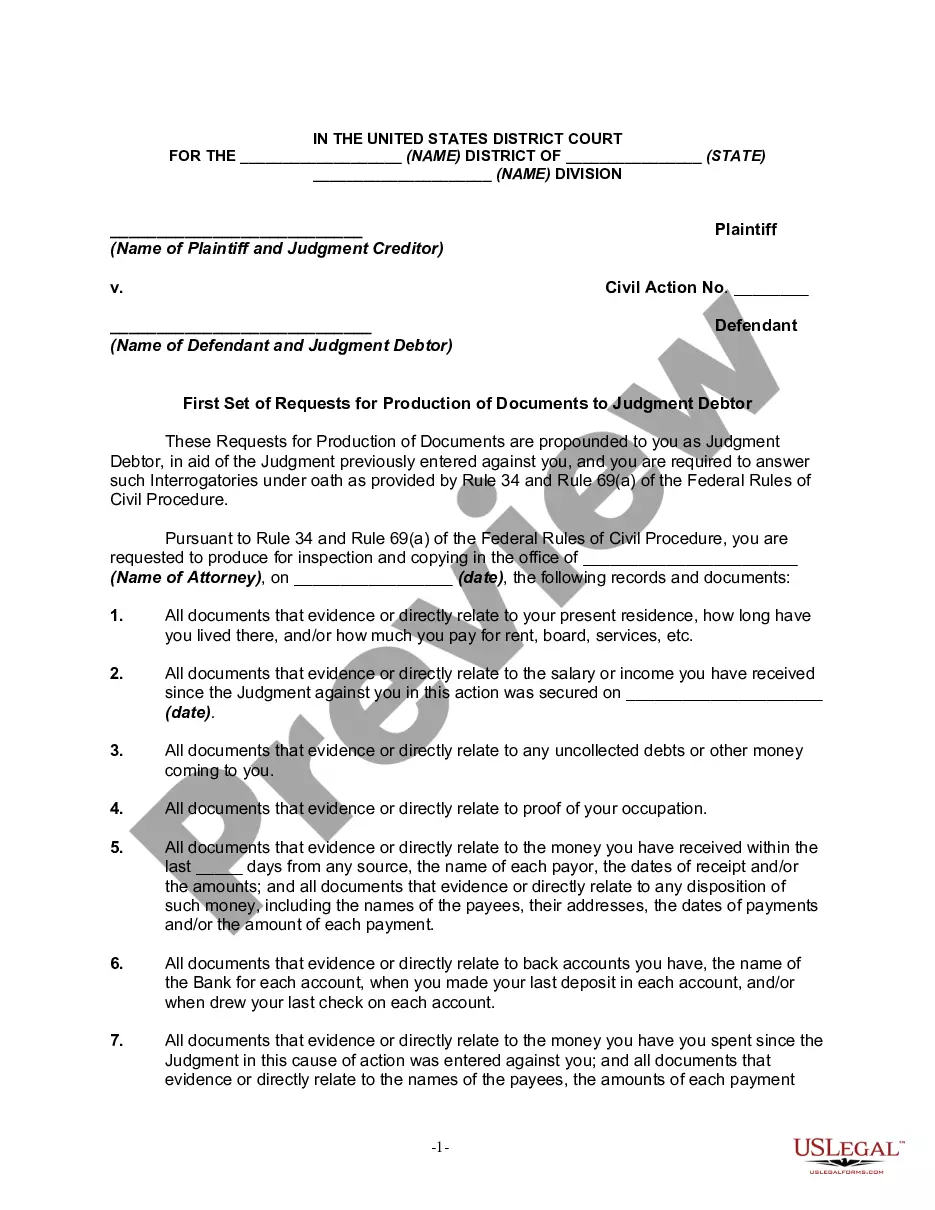
For Federal Court, you want to look at the Federal Rules of Civil Procedure, particularly rules 33 and 34. Doc requests don't require verifications, and you serve only objections, you don't need verifications for interrogatory responses.