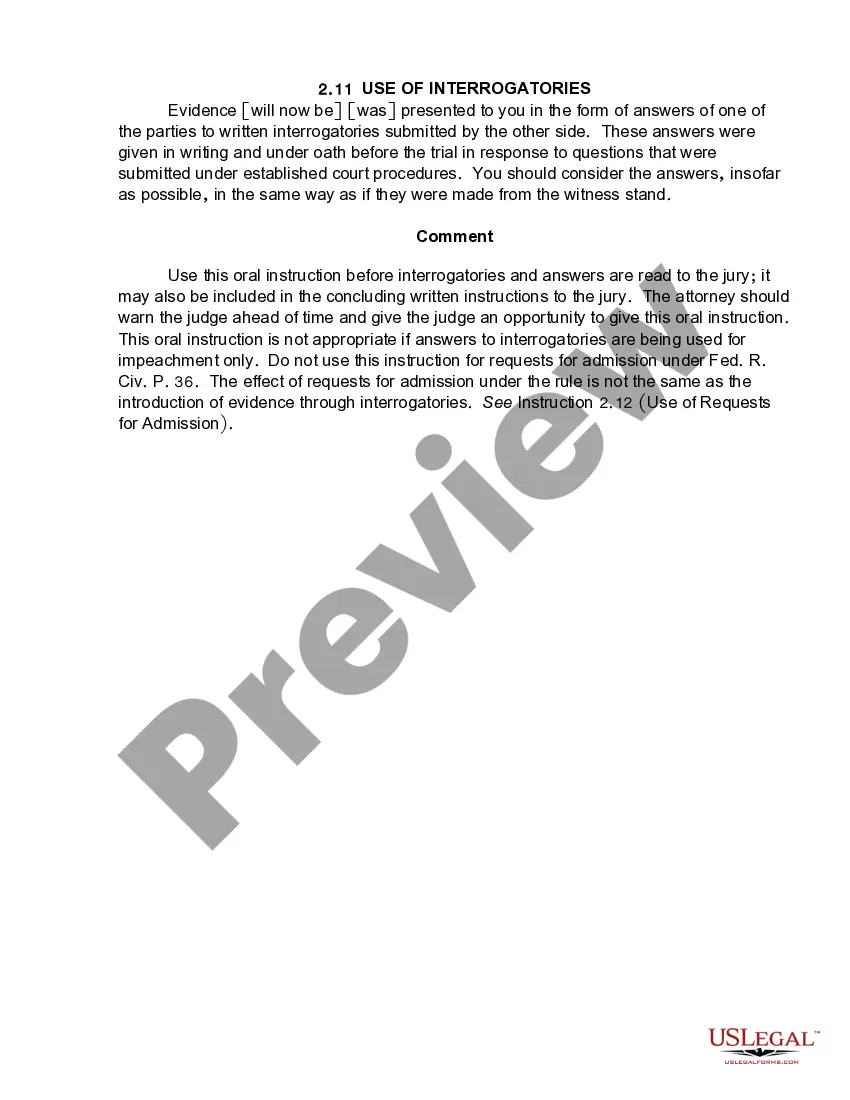
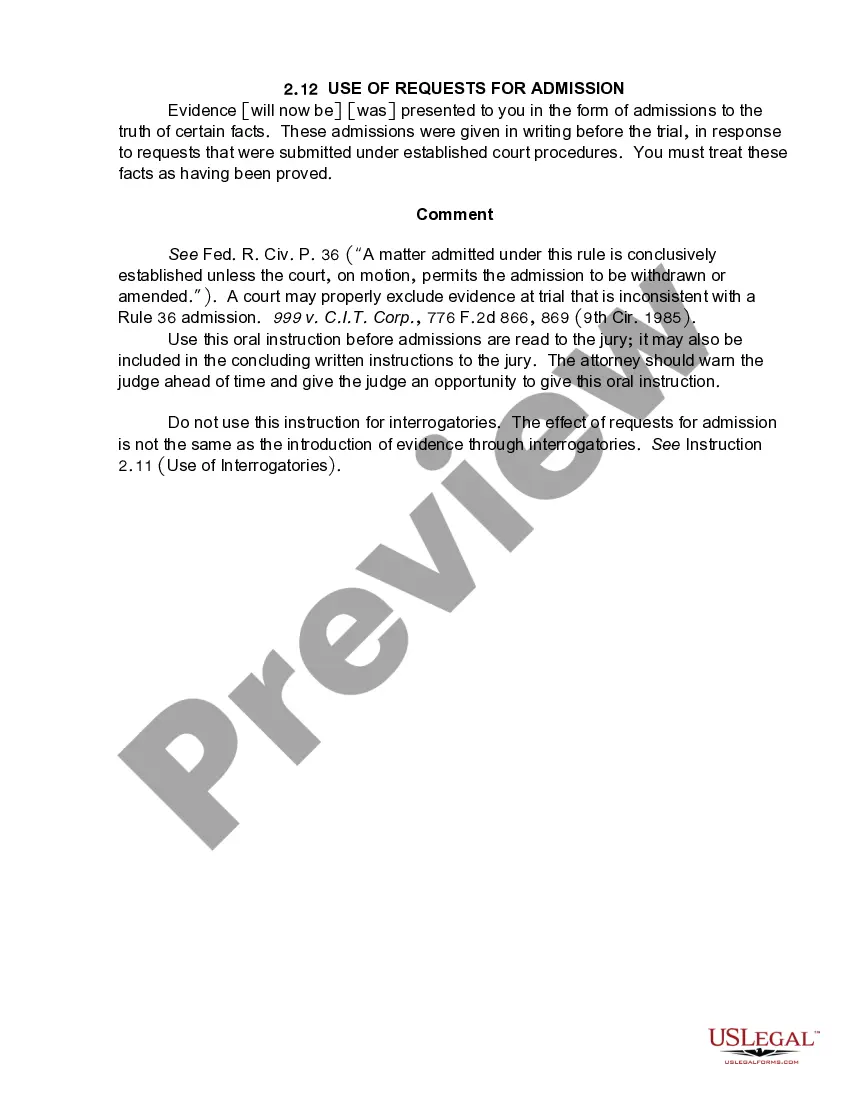
2.11 Use of Interrogatories

Notarization requirements for this form
This form usually doesn’t need to be notarized. However, local laws or specific transactions may require it. Our online notarization service, powered by Notarize, lets you complete it remotely through a secure video session, available 24/7.
Get your form ready online
Our built-in tools help you complete, sign, share, and store your documents in one place.
Make edits, fill in missing information, and update formatting in US Legal Forms—just like you would in MS Word.
Download a copy, print it, send it by email, or mail it via USPS—whatever works best for your next step.
Sign and collect signatures with our SignNow integration. Send to multiple recipients, set reminders, and more. Go Premium to unlock E-Sign.
If this form requires notarization, complete it online through a secure video call—no need to meet a notary in person or wait for an appointment.
We protect your documents and personal data by following strict security and privacy standards.

Make edits, fill in missing information, and update formatting in US Legal Forms—just like you would in MS Word.

Download a copy, print it, send it by email, or mail it via USPS—whatever works best for your next step.

Sign and collect signatures with our SignNow integration. Send to multiple recipients, set reminders, and more. Go Premium to unlock E-Sign.

If this form requires notarization, complete it online through a secure video call—no need to meet a notary in person or wait for an appointment.

We protect your documents and personal data by following strict security and privacy standards.
Looking for another form?
Form popularity
FAQ
Interrogatories allow the parties to ask who, what, when, where and why questions, making them a good method for obtaining new information in a case. There are two types of interrogatories: form interrogatories and special interrogatories.
In civil procedure, an interrogatory is a list of written questions one party sends to another as part of the discovery process. The recipient must answer in writing under oath and ing to the case's schedule.
Generally, interrogatories are objectionable if they seek information that is not within the scope of discovery as defined in Maryland Rule 402 or Federal Rule 26(b). These are typically requests that are not relevant, unduly burdensome, broad, vague, privileged. or protected by the work product doctrine.
For example, under Rule 33 of the Federal Rules of Civil Procedure, each party may only ask the other party 25 interrogatory questions, unless the court permits them to ask more. The parties may also agree on the number of questions on their interrogatories subject to the court's approval.
Interrogatories are lists of questions sent to the other party that s/he must respond to in writing. You can use interrogatories to find out facts about a case but they cannot be used for questions that draw a legal conclusion.
Interrogatories can only be sent to the opposing party ? they cannot be sent to experts or other witnesses. The disadvantage of interrogatories is that the answers are typically prepared by the attorney rather than by the client.
Interrogatories are a helpful discovery tool for obtaining written answers to questions directed to your opponent ? which you can use to support your claims or defenses in a lawsuit.
Interrogatories can be quicker, less costly, and less complicated than depositions, but there are downsides. Since the questions are written, the witness may have more time to think and craft answers, rather than providing more candid answers during discovery.