Covenant not to Sue, Release, Assumption of Risk and Indemnity Agreement by User of Recreational Sports Vehicle in Park
Understanding this form
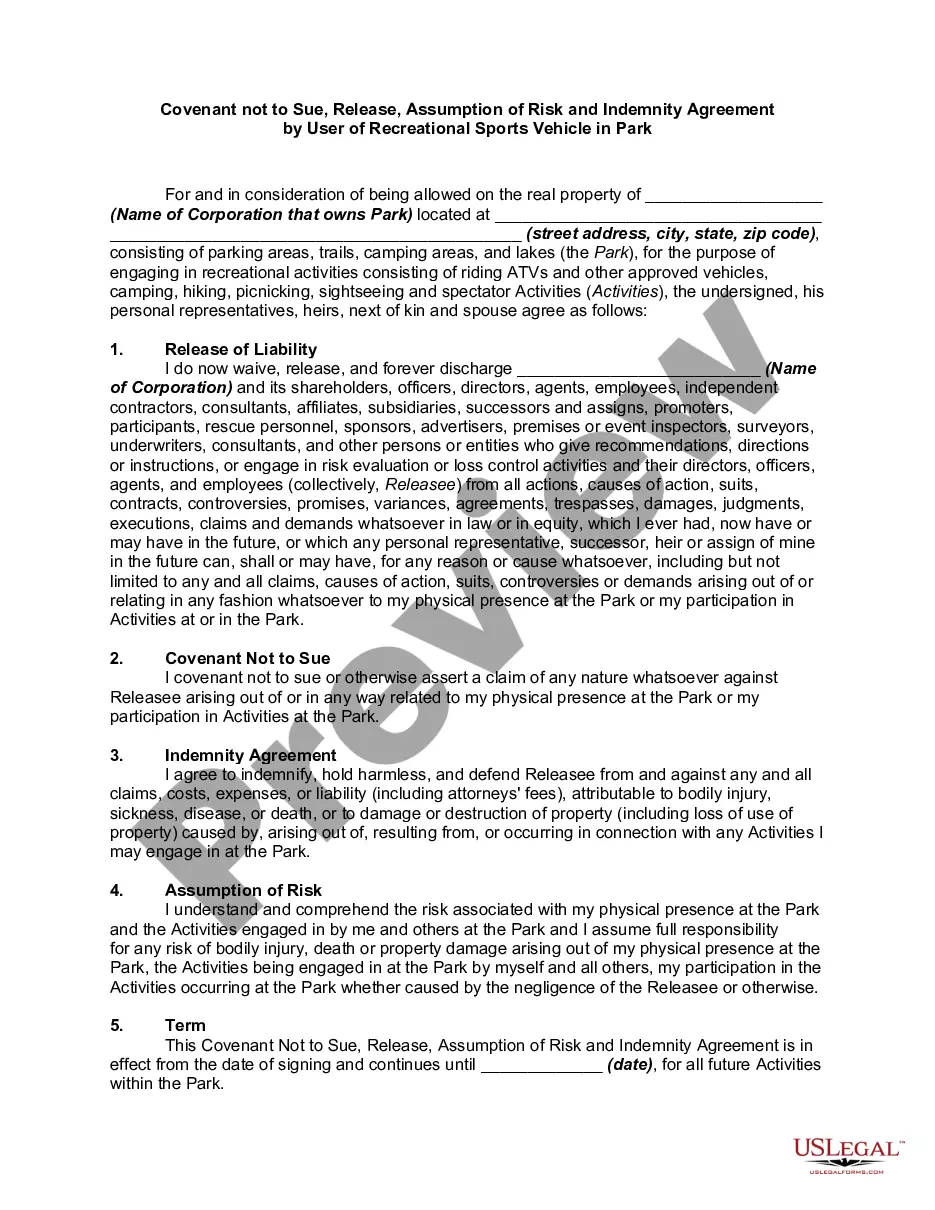
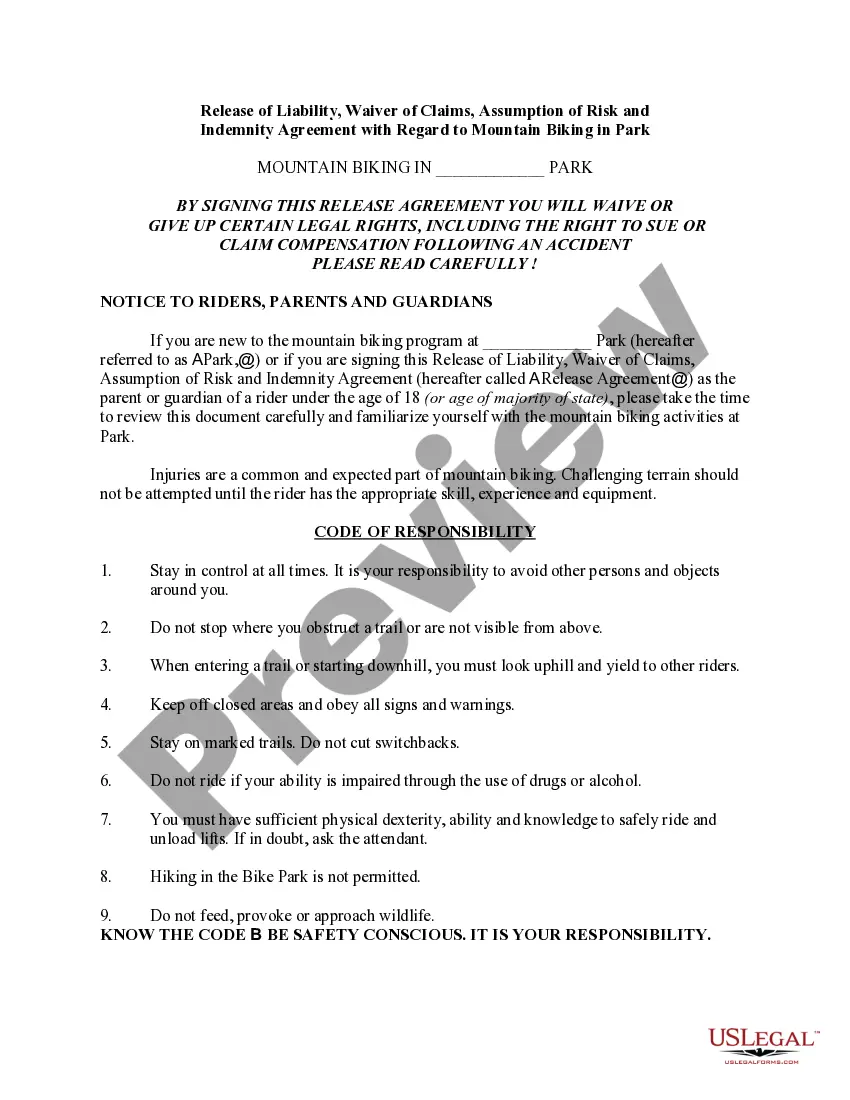
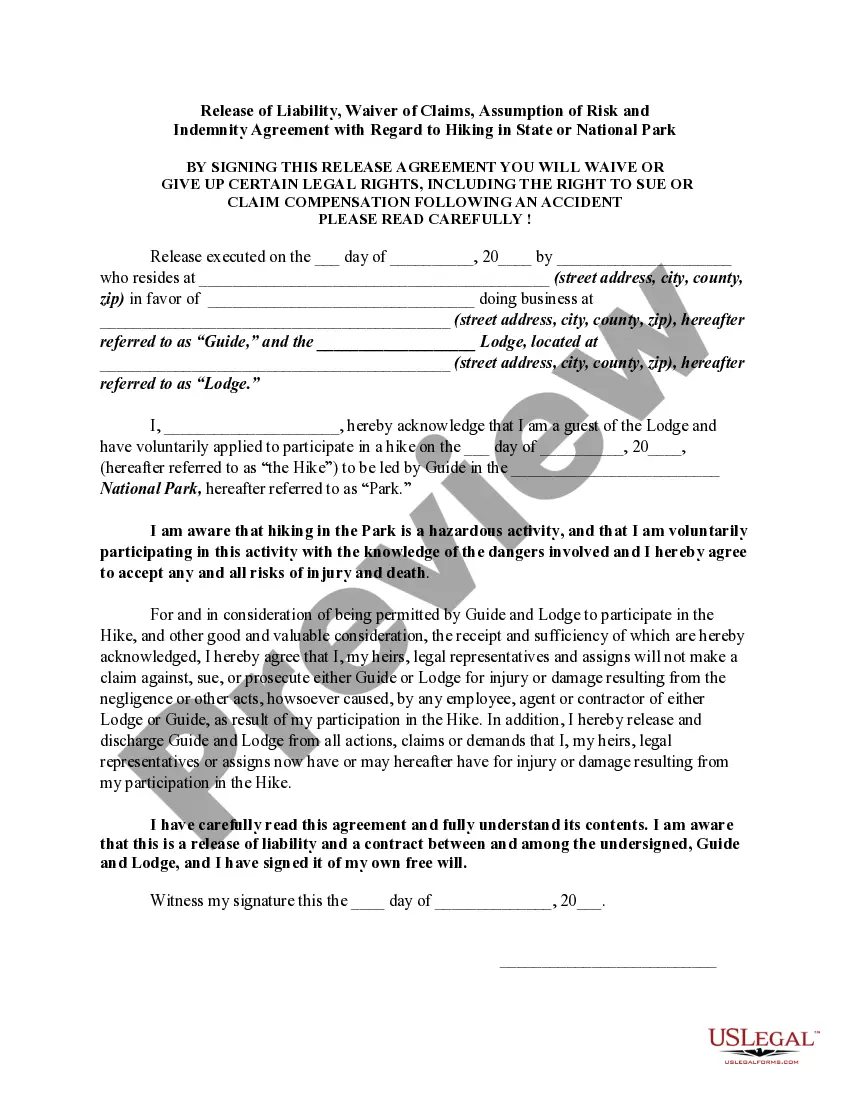
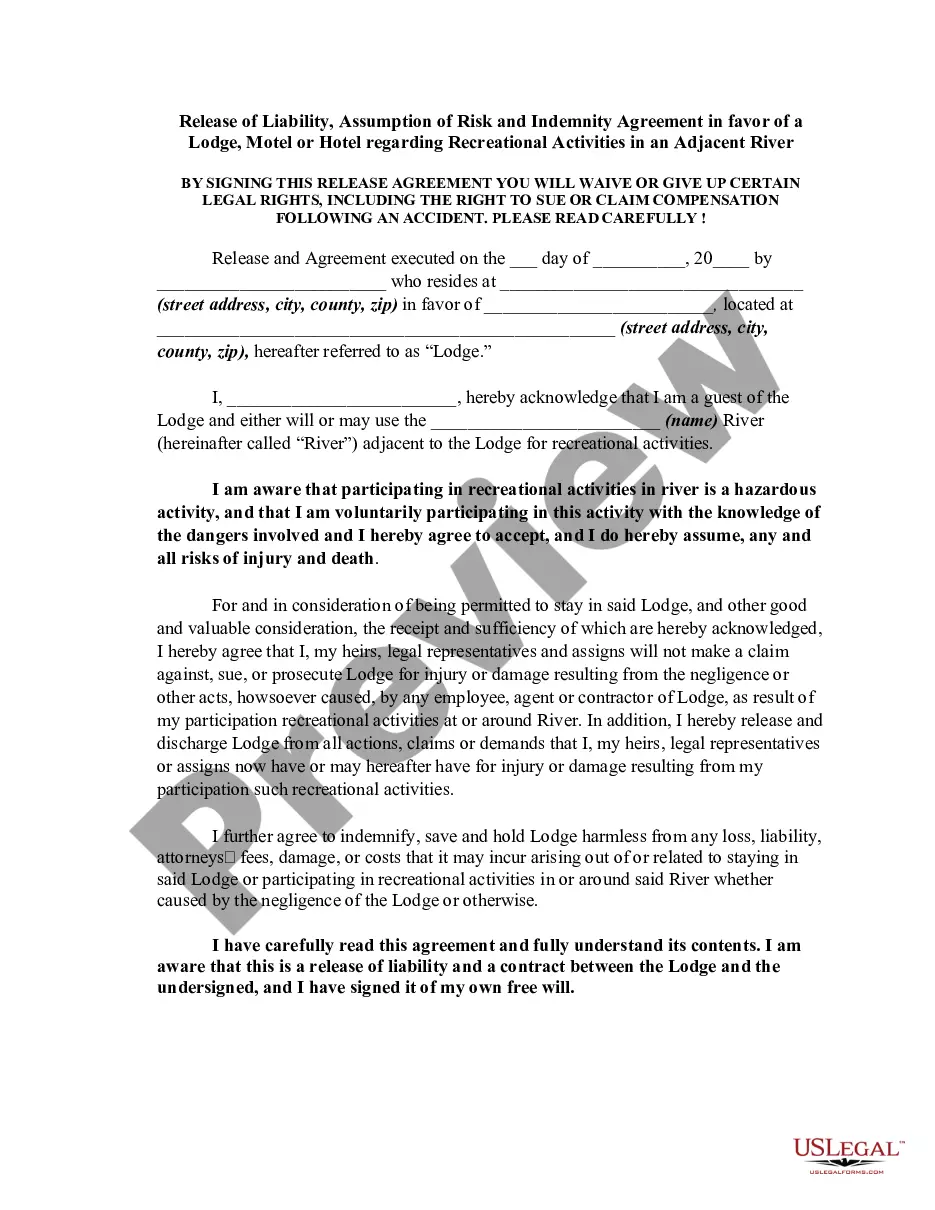
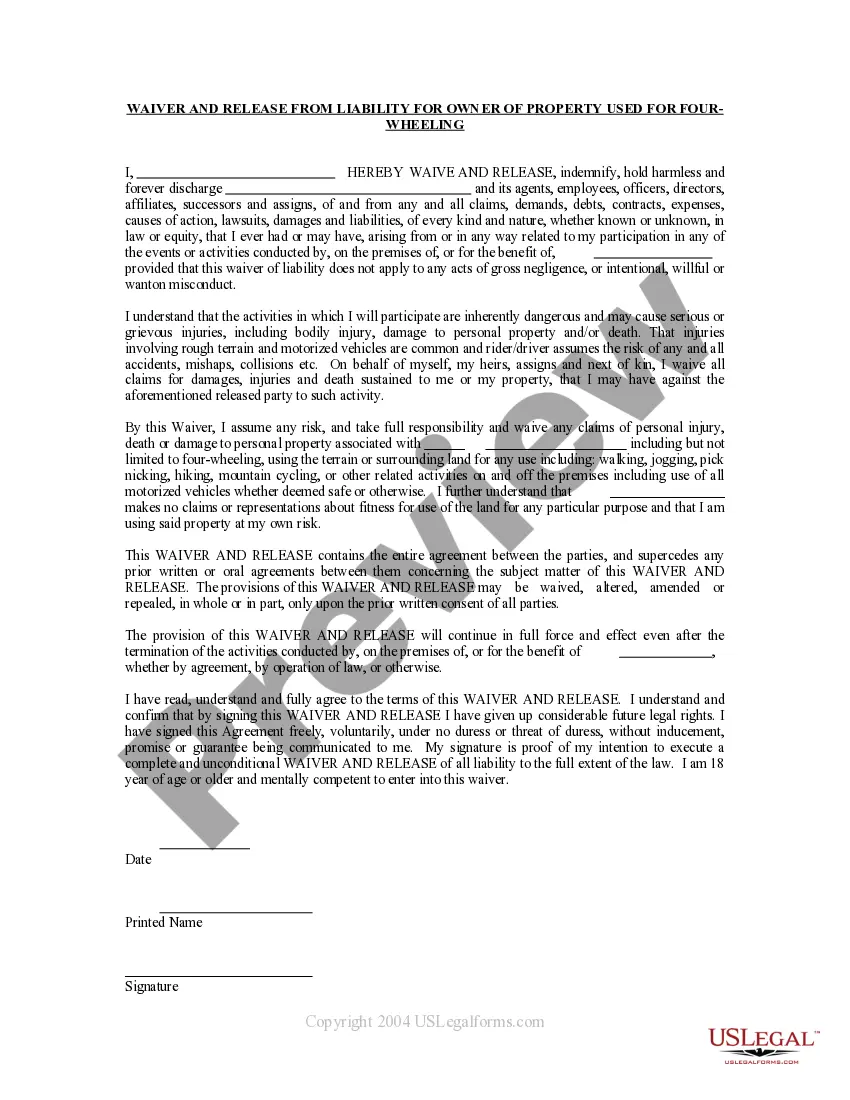
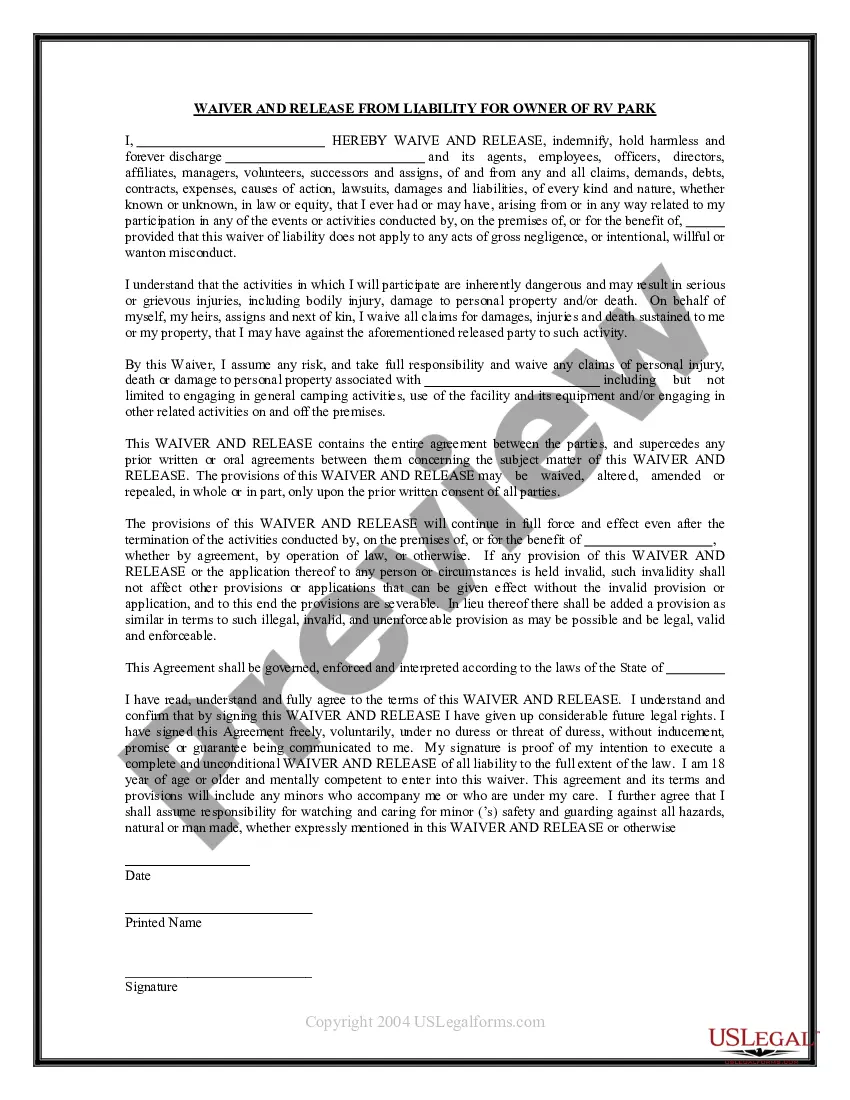
This document is a Covenant Not to Sue, Release, Assumption of Risk, and Indemnity Agreement designed specifically for users of recreational sports vehicles in a park setting. It serves to inform participants about the inherent risks associated with activities such as ATV riding, camping, and hiking, and provides a clear release of liability for park owners and operators. Unlike standard waivers or releases, this form explicitly covers various aspects of indemnity and risk assumption, tailoring its provisions to recreational activities in specific locations.
Key components of this form
- Release of Liability: Releases the park owners from claims related to injuries or damages incurred during activities.
- Covenant Not to Sue: Prevents participants from filing lawsuits against the park owners related to their use of the park.
- Indemnity Agreement: Requires participants to cover any costs the park owners incur from claims involving injuries or damages.
- Assumption of Risk: Acknowledges that participants understand and accept the risks involved in the activities.
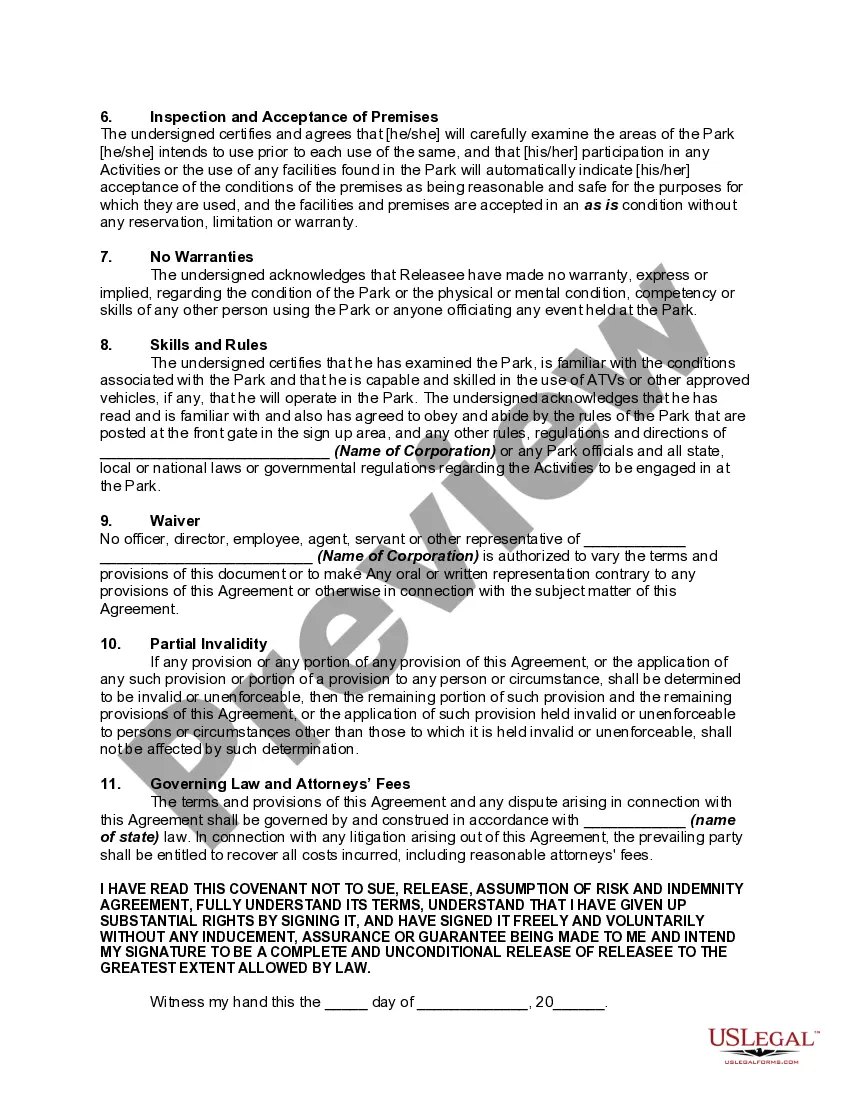
- Inspection and Acceptance of Premises: Participants certify their acceptance of the park's conditions prior to engaging in activities.
- No Warranties: Clarifies that the park owners provide no guarantees about the park's safety or condition.
When to use this document
This form should be used whenever an individual plans to participate in recreational activities in a park that involves the use of sports vehicles, such as ATVs. It protects the park owners from legal claims resulting from injuries or accidents that may occur while engaging in these activities. It is especially important for organized events, recreational vehicle rentals, or any scenario where activities pose inherent risks.
Who should use this form
- Individuals participating in recreational activities involving ATVs or other vehicles in a park.
- Event organizers or sponsors offering recreational activities in a public or private park.
- Park owners or operators who need to minimize liability exposure when allowing public access.
- Participants of any age, with parental consent typically required for minors.
Instructions for completing this form
- Identify the park corporation's name and provide its address in the designated fields.
- Clearly outline the activities you intend to participate in at the park.
- Fill in the date until which the agreement is valid, indicating the duration of liability coverage.
- Sign and date the form to demonstrate understanding and acceptance of its terms.
- If applicable, ensure a parent or guardian signs for minors to validate the waiver.
Does this form need to be notarized?
In most cases, this form does not require notarization. However, some jurisdictions or signing circumstances might. US Legal Forms offers online notarization powered by Notarize, accessible 24/7 for a quick, remote process.
Get your form ready online
Our built-in tools help you complete, sign, share, and store your documents in one place.
Make edits, fill in missing information, and update formatting in US Legal Forms—just like you would in MS Word.
Download a copy, print it, send it by email, or mail it via USPS—whatever works best for your next step.
Sign and collect signatures with our SignNow integration. Send to multiple recipients, set reminders, and more. Go Premium to unlock E-Sign.
If this form requires notarization, complete it online through a secure video call—no need to meet a notary in person or wait for an appointment.
We protect your documents and personal data by following strict security and privacy standards.

Make edits, fill in missing information, and update formatting in US Legal Forms—just like you would in MS Word.

Download a copy, print it, send it by email, or mail it via USPS—whatever works best for your next step.

Sign and collect signatures with our SignNow integration. Send to multiple recipients, set reminders, and more. Go Premium to unlock E-Sign.

If this form requires notarization, complete it online through a secure video call—no need to meet a notary in person or wait for an appointment.

We protect your documents and personal data by following strict security and privacy standards.
Common mistakes
- Failing to read and understand the terms and conditions before signing.
- Not entering accurate information for the park's name and address.
- Neglecting to have a guardian sign for minor participants.
- Signing the form without being aware of the risks associated with the activities.
Benefits of using this form online
- Immediate access to a legally-sound document created by licensed attorneys.
- Conveniently fill out and download the form from anywhere at any time.
- Editable fields allow for customization to suit specific events and activities.
- Ensures compliance with general legal requirements across multiple jurisdictions.
Legal use & context
- This form is intended to protect park owners against liability claims arising from the inherent risks of recreational activities.
- Enforceability may depend on state laws, particularly regarding minors and gross negligence exceptions.
- Individuals should understand that signing this release waives significant legal rights.
Looking for another form?

Form popularity
FAQ
While courts typically frown upon adhesiontype (i.e., take it or leave it) contracts where the weaker party is unrepresented and asked to give up certain rights they would otherwise have without fully understanding the consequences, No Sue Agreements have been found to be enforceable by various courts in a variety of
The covenant not to execute is a promise by the plaintiff not to seek further damages from the insured. Insurance claim lawsuits involve three main parties: the insured, the insurer, and the claimant.In this case, the insured and claimant may agree to limit the judgment so that the claimant can go after the insurer.
California law doesn't permit covenants not so sue if it is to exempt someone from fraud, willful injury or violation of the law. The court determined that that wasn't the case here. consultation over a two-year period, militates against a conclusion that the covenant not to sue is procedurally unconscionable.