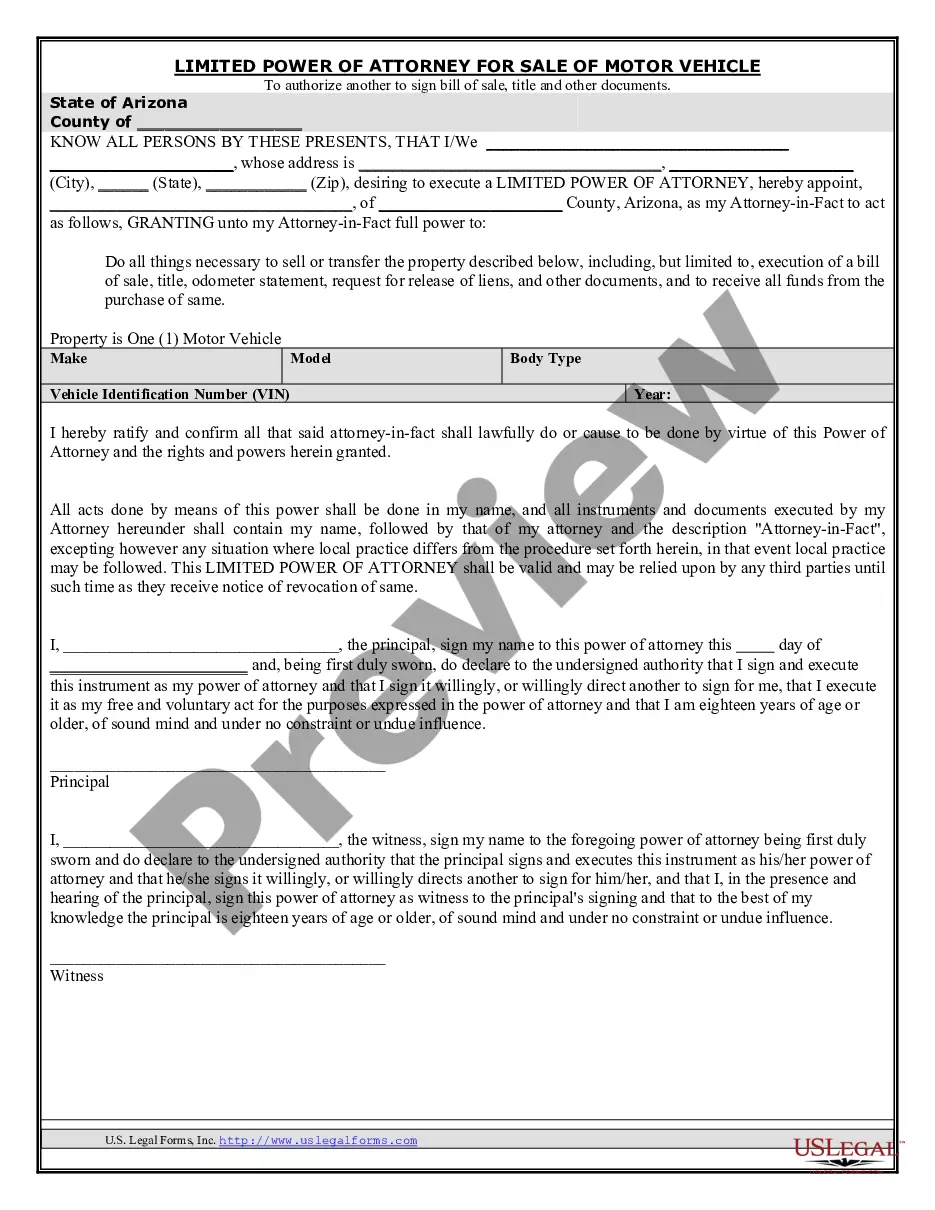
Agency Agreement between Writer and Literary Agent
What is this form?
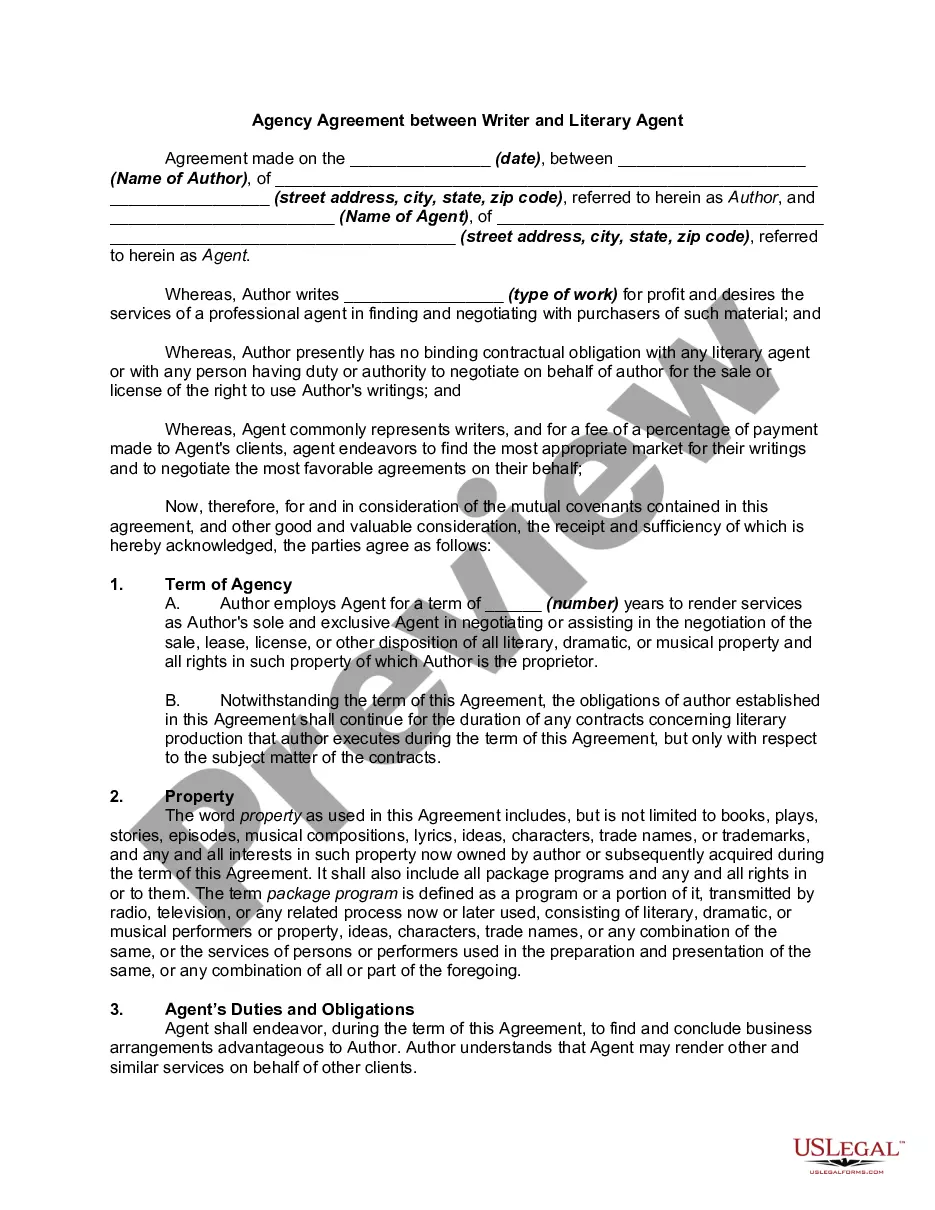
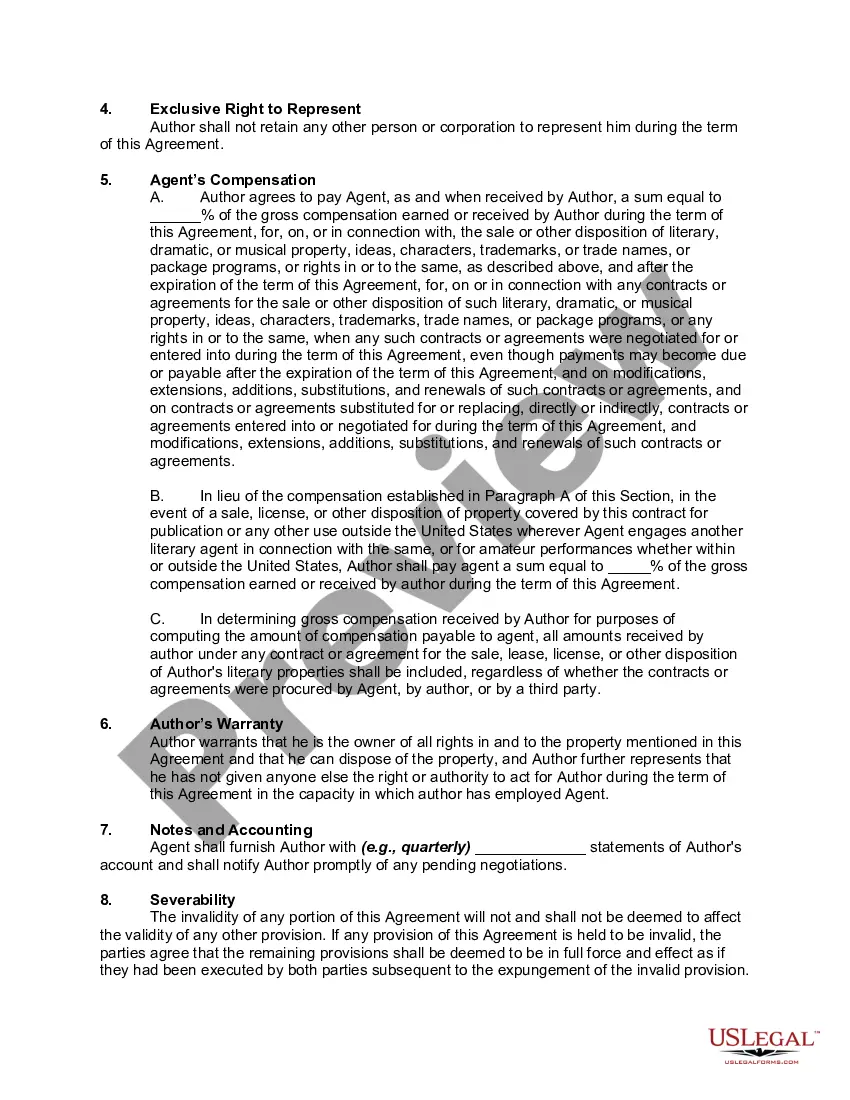
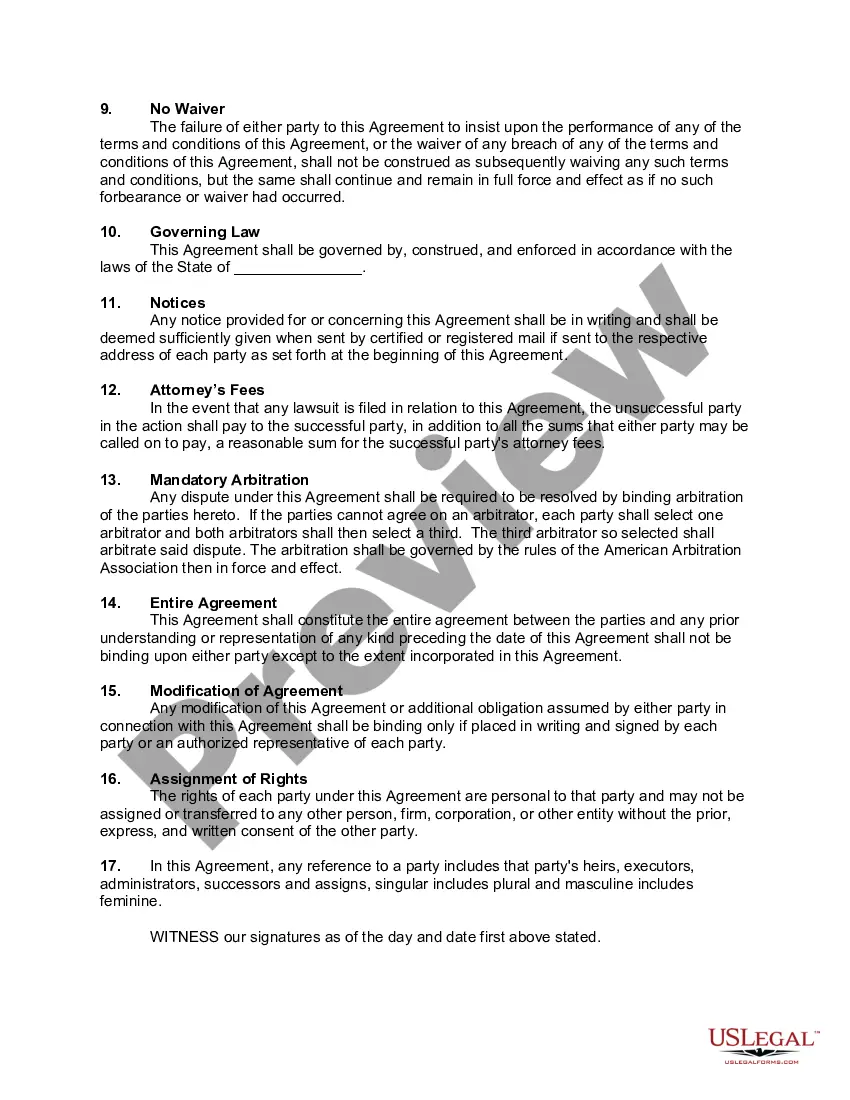
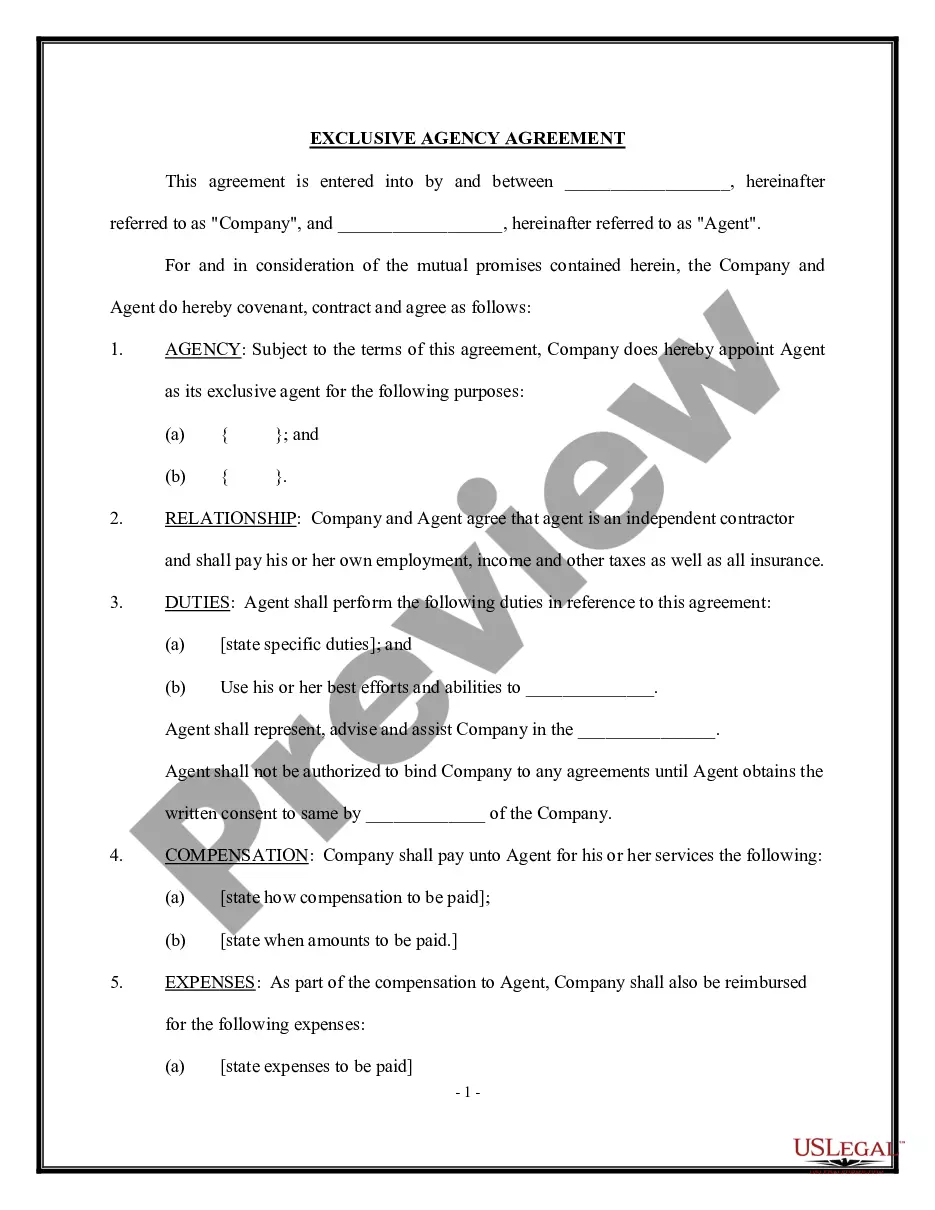
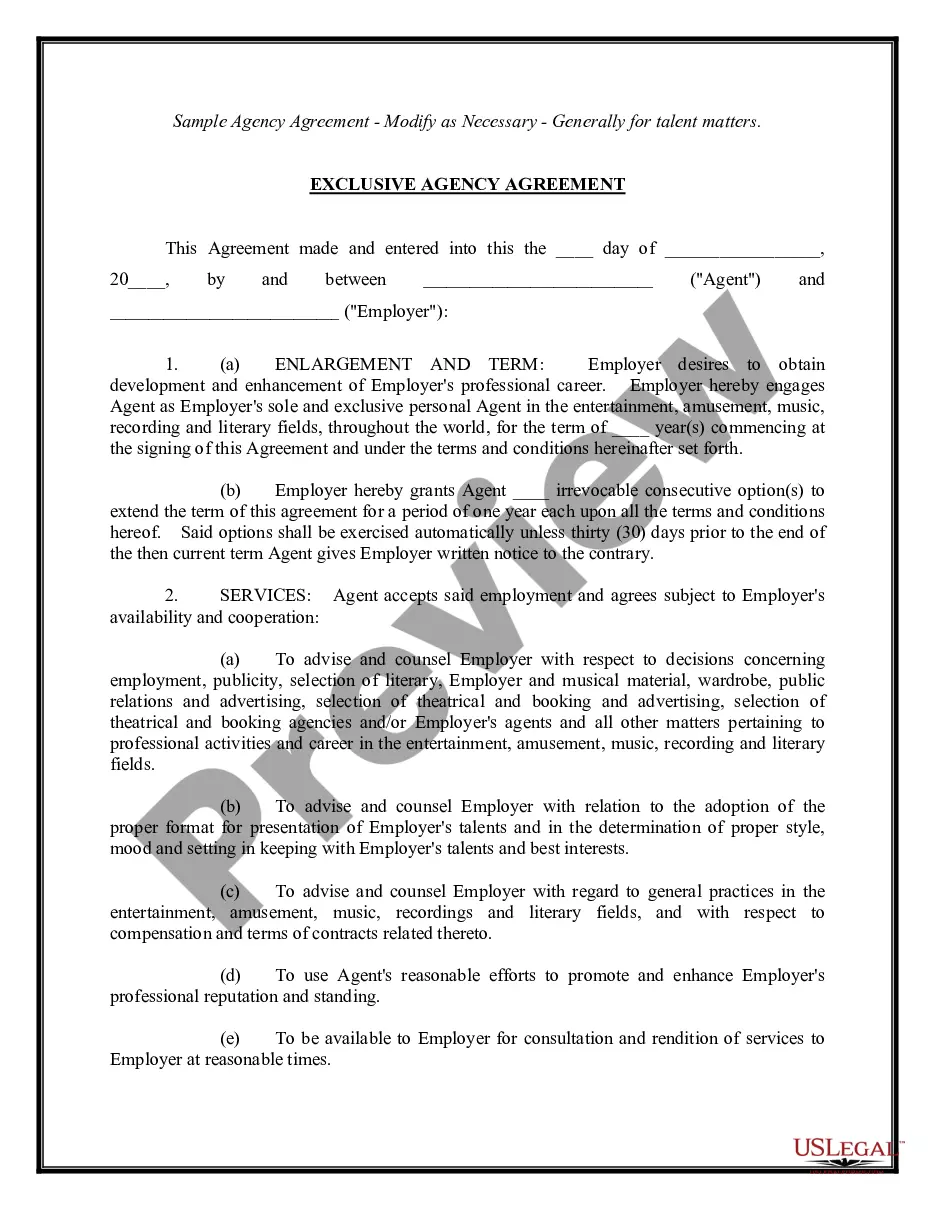
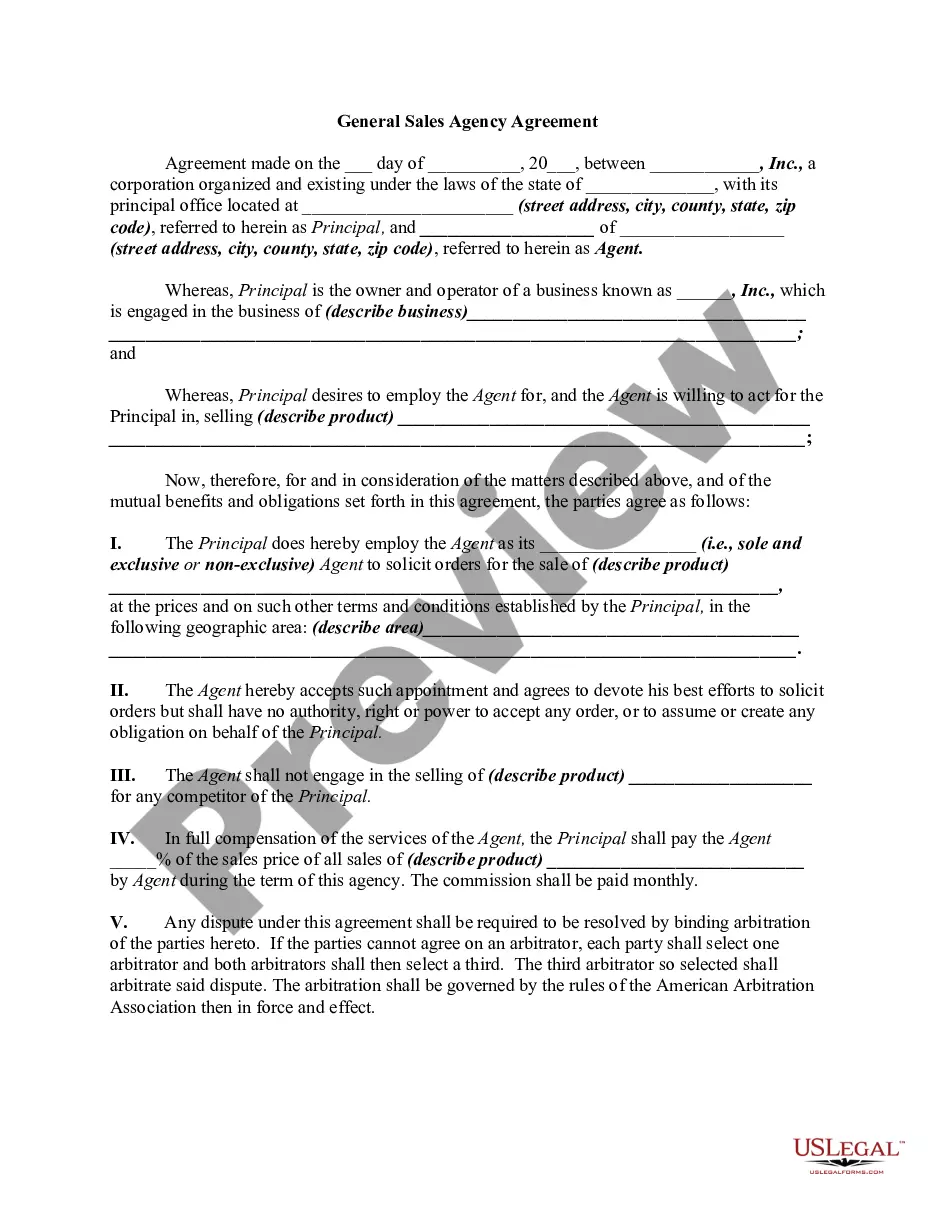
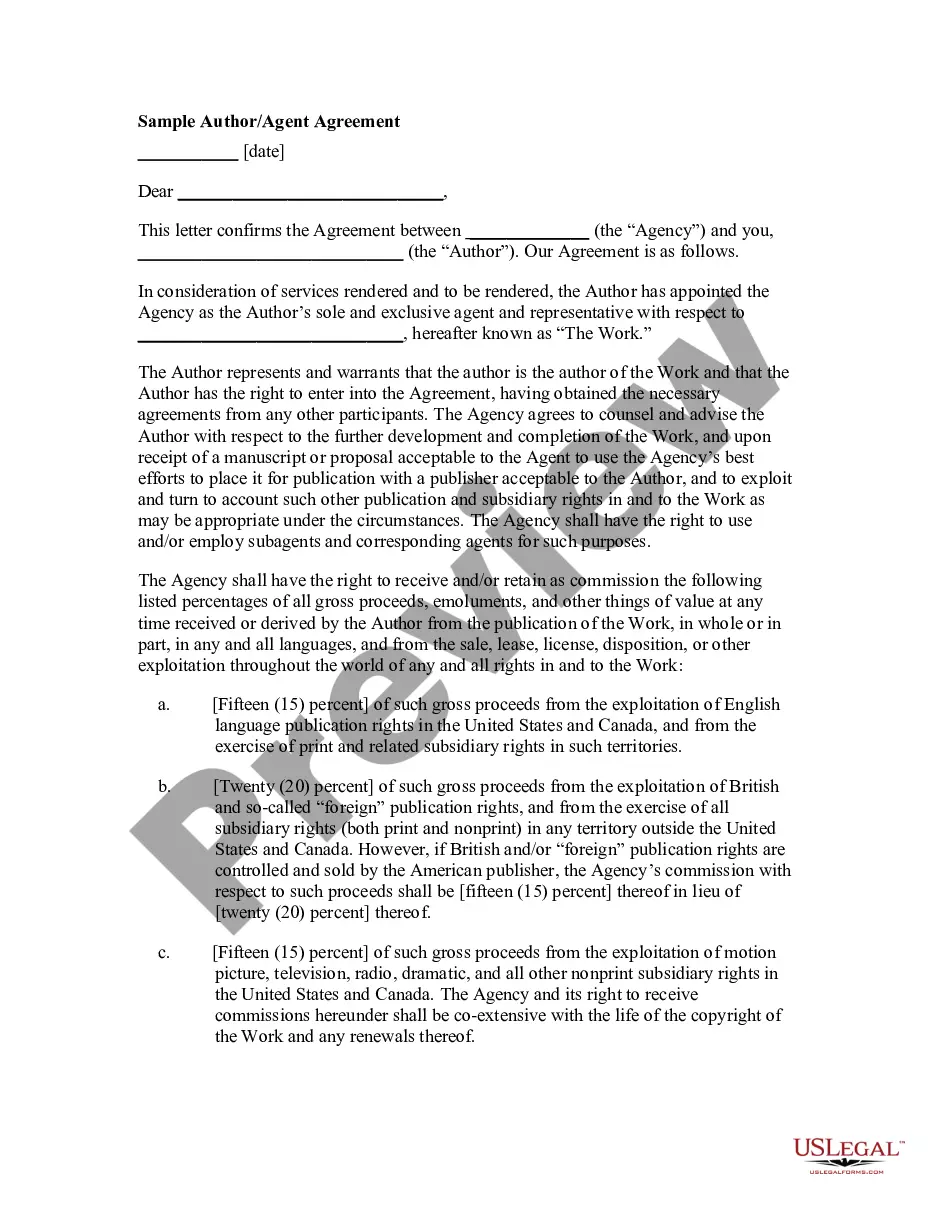
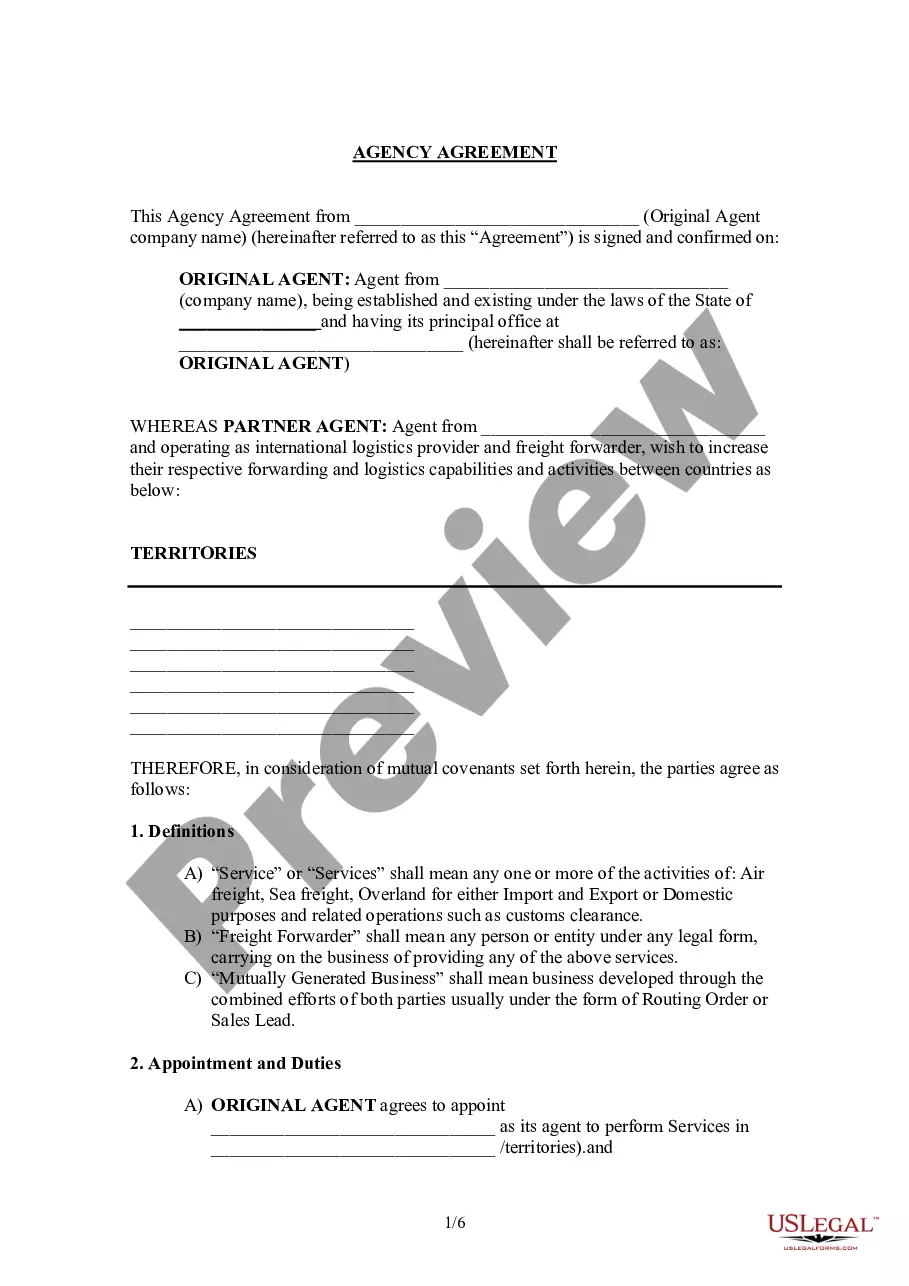
The Agency Agreement between Writer and Literary Agent is a legal document that establishes a professional relationship between an author and a literary agent. This form outlines the agent's responsibilities and the author's expectations, ensuring that the agent can represent the author effectively in negotiations with publishers. Unlike other general contracts, this agreement specifically addresses the unique aspects of literary representation and the rights pertaining to the author's works.
What’s included in this form
- Date of agreement initiation.
- Identification of the author and agent, including contact information.
- Definition of the scope of the agency, including the type of works represented.
- Compensation structure outlining the agent's fees based on the author's earnings.
- Duration of the agency relationship.
- Provisions addressing the agent's duties and the author's warranties regarding ownership rights.
- Details on accounting and reporting by the agent to the author.
When to use this document
This form should be used when an author seeks to hire a literary agent to represent them in selling or licensing their written works. Authors looking for favorable negotiations with publishers or other entities involving their literary, musical, or dramatic works will find this form essential. It is beneficial in situations where the author wants to ensure that their rights are protected and their interests are represented in the literary marketplace.
Who needs this form
- Authors seeking representation for their literary works.
- Writers of books, plays, or musical compositions in need of professional guidance.
- Individuals who have not yet signed contracts with other literary agents.
Instructions for completing this form
- Identify and enter the date when the agreement is made.
- Fill in the names and addresses of both the author and the agent.
- Specify the type of works the author intends to be represented for.
- Determine and note the term of agency and compensation percentages.
- Review and sign the agreement to validate the terms.
Is notarization required?
This form does not typically require notarization unless specified by local law. Authors should verify their state's requirements for agency agreements to ensure legal compliance.
Get your form ready online
Our built-in tools help you complete, sign, share, and store your documents in one place.
Make edits, fill in missing information, and update formatting in US Legal Forms—just like you would in MS Word.
Download a copy, print it, send it by email, or mail it via USPS—whatever works best for your next step.
Sign and collect signatures with our SignNow integration. Send to multiple recipients, set reminders, and more. Go Premium to unlock E-Sign.
If this form requires notarization, complete it online through a secure video call—no need to meet a notary in person or wait for an appointment.
We protect your documents and personal data by following strict security and privacy standards.

Make edits, fill in missing information, and update formatting in US Legal Forms—just like you would in MS Word.

Download a copy, print it, send it by email, or mail it via USPS—whatever works best for your next step.

Sign and collect signatures with our SignNow integration. Send to multiple recipients, set reminders, and more. Go Premium to unlock E-Sign.

If this form requires notarization, complete it online through a secure video call—no need to meet a notary in person or wait for an appointment.

We protect your documents and personal data by following strict security and privacy standards.
Mistakes to watch out for
- Failing to clearly define the types of works to be represented.
- Not specifying the compensation structure accurately.
- Overlooking the duration of the agency term, which can lead to misunderstandings.
- Not providing full and correct contact information for both parties.
Benefits of using this form online
- Immediate access to a legally drafted template tailored for author-agent relationships.
- Convenience of downloading and customizing the form as needed.
- Ensured compliance with general legal standards prevalent in literary contracts.
Looking for another form?
Form popularity
FAQ
Make sure the agreement defines specifically what works are covered. An agent may only want to represent one book, or a series of books, or only your new work, or work produced during the term of the agreement, or even all of your work.
An agency agreement is a legal contract creating a fiduciary relationship whereby the first party ("the principal") agrees that the actions of a second party ("the agent") binds the principal to later agreements made by the agent as if the principal had himself personally made the later agreements.
Get it in writing. Keep it simple. Deal with the right person. Identify each party correctly. Spell out all of the details. Specify payment obligations. Agree on circumstances that terminate the contract. Agree on a way to resolve disputes.
The agency agreement between a principal and the agent must always be in writing with clear terms and conditions with explicit language limiting the principal's liability if the agent does something that wasn't authorized. This protects you personally and professionally.
Generally speaking, literary agents take 15% of your total income from the first sale of your book before taxes. For example, if you receive a $10,000 advance on the first sale of the book to a major publisher, your literary agent will take a commission of $1,500.
Traditionally, agents get paid only when they sell your work, and they receive a 15 percent commission on everything you get paid (your advance and royalties). It is best to avoid agents who charge fees other than the standard 15 percent.
Fill in all sections. It's essential that you don't leave any fields in the agency agreement blank. Don't amend the terms. Include the full names of all parties. Ensure parties sign at the same time. Confirm authority to sign. Clearly identify the property. Specify the commission amount. Make the exclusive period clear.
1.) Don't Use Legalese. 2.) Start by Citing Both Parties. 3.) Specify Duration and What Signifies the End. 4.) Clearly Define the Scope of Work. 5.) Talk About Additional, Out of Scope Work. 6.) Identify Budget and Payment Terms. 7.) Address Refund Requests. 8.) Termination Clause.
Your contract may stipulate the method of termination. Most literary agents require sixty days written notice. Some will require a letter; for others email is acceptable. Be sure that you follow the terms of your contract so there can be no question later on about the termination.