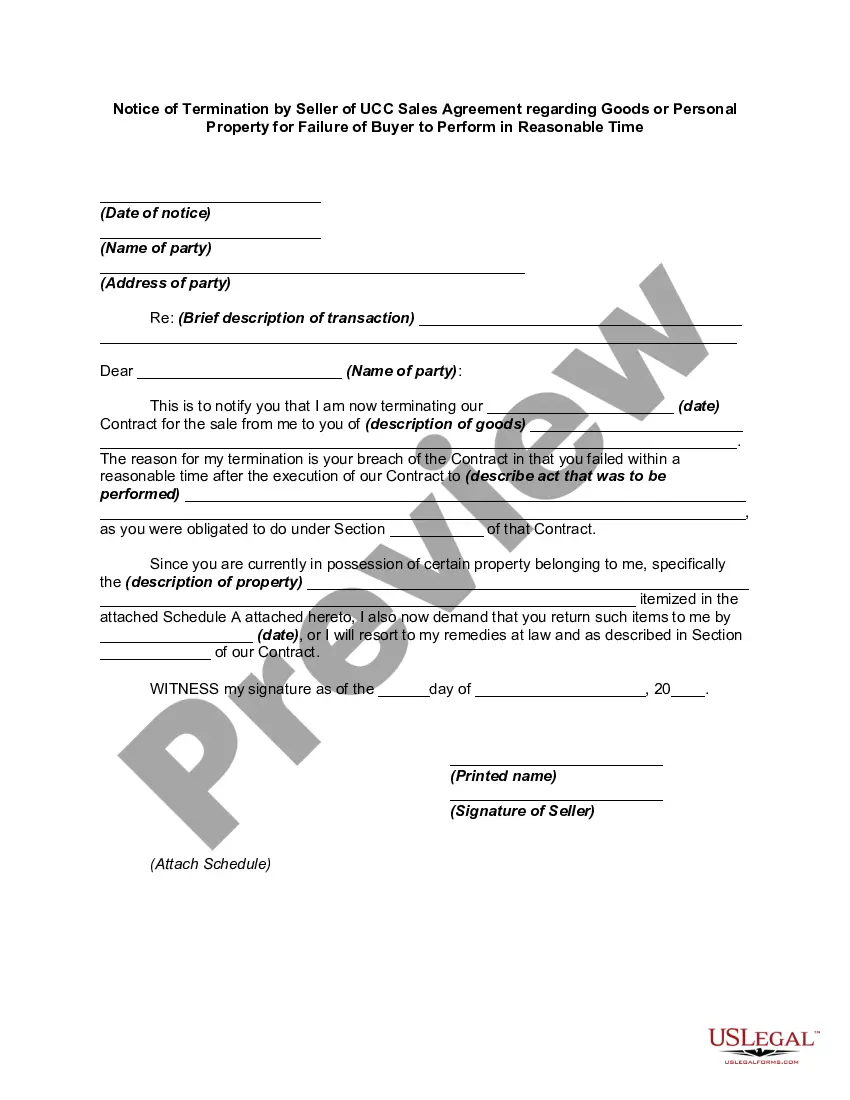
Notice of Termination or Cancellation by Seller of UCC Sales Agreement regarding Goods or Personal Property for Failure of Buyer to Perform in Reasonable Time
About this form
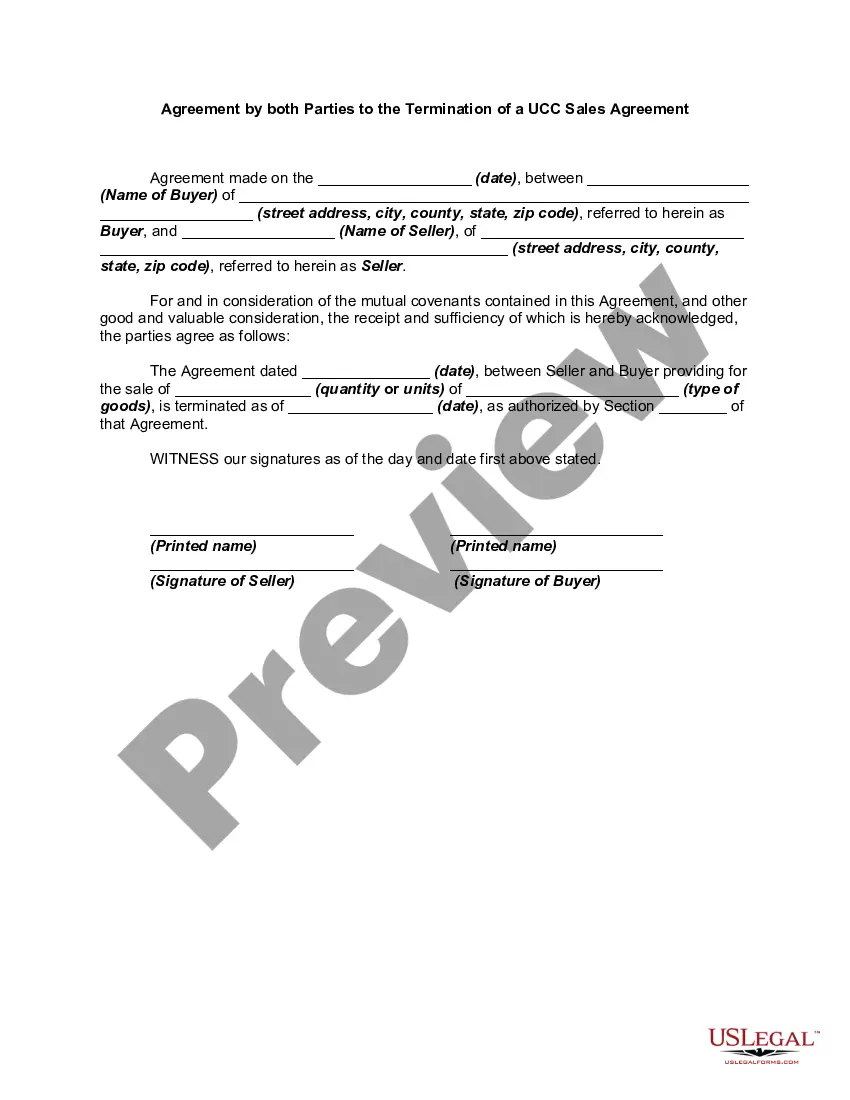
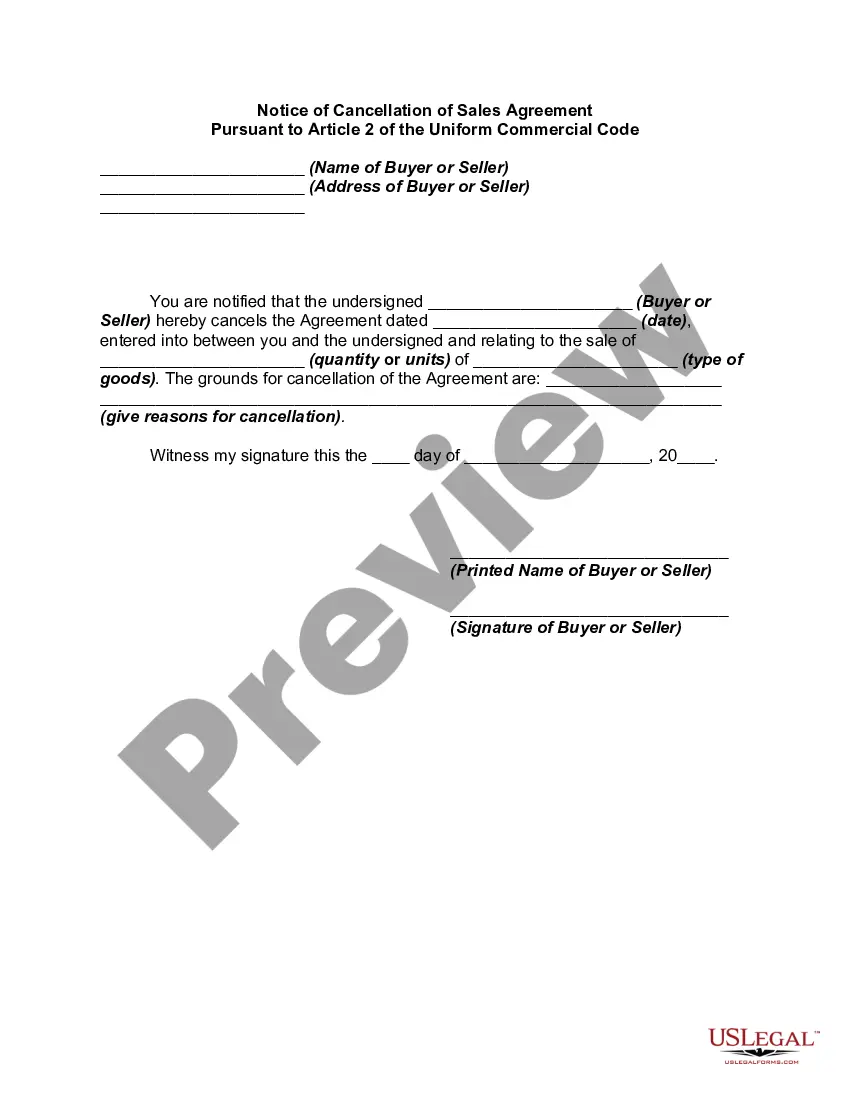
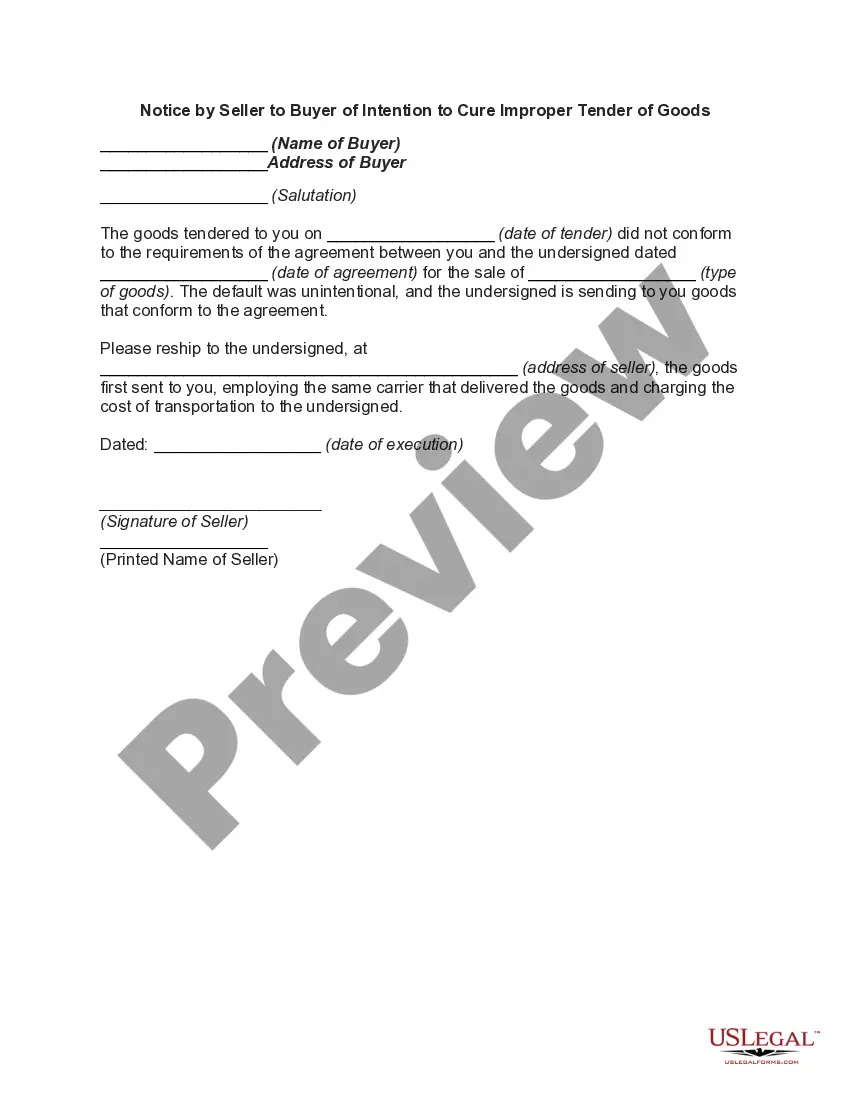
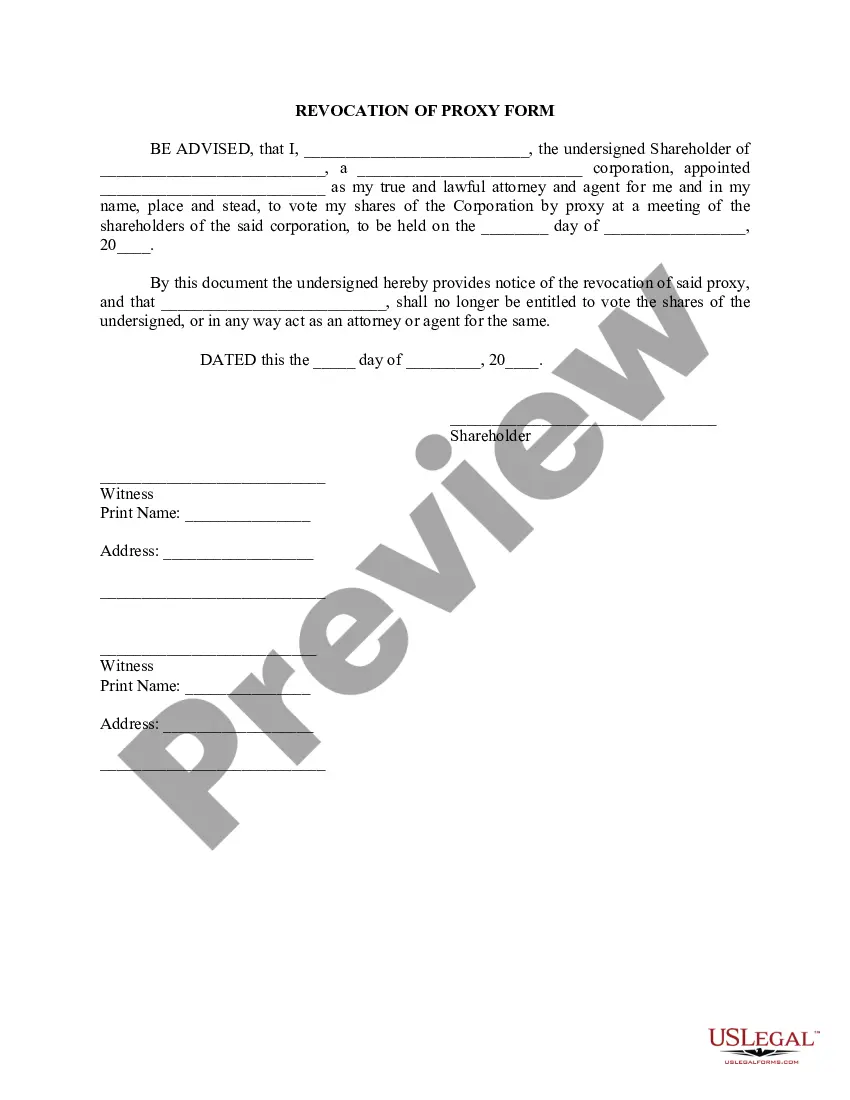
The Notice of Termination or Cancellation by Seller of UCC Sales Agreement regarding Goods or Personal Property is a legal document used by a seller to formally terminate a sales agreement under the Uniform Commercial Code (UCC). This form is specifically designed for situations where a buyer fails to perform their duties under the contract within a reasonable time. It allows the seller to assert their rights and delineate their expectations for the return of property, which distinguishes it from other termination notices that may not involve UCC regulations.
Form components explained
- Date of notice
- Name and address of the party receiving the notice
- Description of the transaction
- Details of the breach of contract by the buyer
- Demand for the return of property with a specified deadline
- Signature sections for the seller
Common use cases
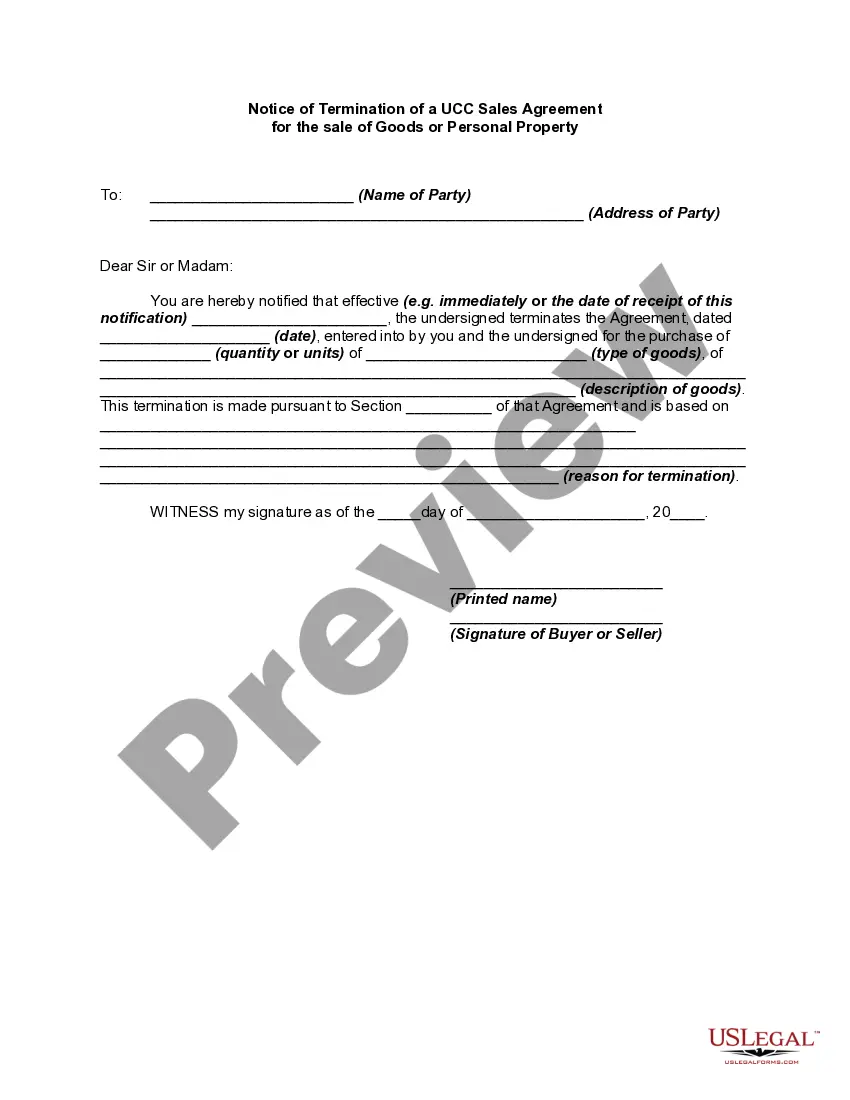
This form should be used when a seller needs to terminate a sales agreement due to the buyer's failure to perform their contractual obligations in a timely manner. It is ideal for situations where the buyer is in possession of goods or personal property that rightfully belongs to the seller, allowing the seller to reclaim their property and assert their legal rights under the UCC.
Intended users of this form
- Sellers who have entered into a UCC sales agreement
- Individuals or businesses seeking to reclaim property from a buyer
- Parties needing to document a breach of contract formally
- Those requiring a structured approach to notify a buyer of termination
How to prepare this document
- Enter the date of the notice and the name and address of the party receiving the notice.
- Provide a brief description of the transaction and specify the goods involved.
- Clearly outline the reasons for termination, specifically noting the buyer's breach of contract.
- Specify the property that must be returned, including a deadline for return.
- Sign and date the form, ensuring that all required parties are identified.
Does this form need to be notarized?
This form usually doesn’t need to be notarized. However, local laws or specific transactions may require it. Our online notarization service, powered by Notarize, lets you complete it remotely through a secure video session, available 24/7.
Get your form ready online
Our built-in tools help you complete, sign, share, and store your documents in one place.
Make edits, fill in missing information, and update formatting in US Legal Forms—just like you would in MS Word.
Download a copy, print it, send it by email, or mail it via USPS—whatever works best for your next step.
Sign and collect signatures with our SignNow integration. Send to multiple recipients, set reminders, and more. Go Premium to unlock E-Sign.
If this form requires notarization, complete it online through a secure video call—no need to meet a notary in person or wait for an appointment.
We protect your documents and personal data by following strict security and privacy standards.

Make edits, fill in missing information, and update formatting in US Legal Forms—just like you would in MS Word.

Download a copy, print it, send it by email, or mail it via USPS—whatever works best for your next step.

Sign and collect signatures with our SignNow integration. Send to multiple recipients, set reminders, and more. Go Premium to unlock E-Sign.

If this form requires notarization, complete it online through a secure video call—no need to meet a notary in person or wait for an appointment.

We protect your documents and personal data by following strict security and privacy standards.
Common mistakes
- Failing to provide complete and accurate information about the transaction.
- Not clearly specifying the obligations that were not fulfilled by the buyer.
- Neglecting to provide a specific deadline for the return of property.
- Omitting signatures or dates, which can invalidate the notice.
Why use this form online
- Convenient access to legal forms from anywhere, at any time.
- Editability allows you to personalize the form to fit your specific situation.
- Reliable templates drafted by licensed attorneys ensure legal compliance.
- Quick download and easy storage for your records.
Legal use & context
- The form serves as a legally recognized means of notification to terminate a contract under UCC guidelines.
- Failure to properly execute this form may limit the seller's legal remedy options.
Main things to remember
- The notice is essential for enforcing rights under a UCC sales agreement.
- It is important to be precise and clear when detailing the buyer's breach.
- Returning property promptly is crucial to avoid potential legal disputes.
Looking for another form?







Form popularity
FAQ
The Uniform Commercial Code (UCC) is a set of laws that provide legal rules and regulations governing commercial or business dealings and transactions.The code has the effect of law only when it is adopted by different states. The UCC has been adopted by all 50 states of the U.S, although with variations.
Contract law is governed by the common law and the Uniform Commercial Code "UCC." Common law governs contractual transactions with real estate, services, insurance, intangible assets and employment. UCC governs contractual transaction with goods and tangible objects (such as a purchase of a car).
Generally speaking, the UCC requires that any contract for the sale of goods with a price of $500 or more must be in writing.The written contract need not be detailed. In fact, even if it fails to include or incorrectly states various contract terms (for example, date of delivery; unit price), it is still enforceable.
The parties are almost always allowed to contract out of the UCC. If the merchants do discuss and agree to terms different from the UCC, then the parties' own terms will apply. The UCC takes a very pragmatic and common sense approach to commercial transactions.
Under California law, the seller has an affirmative duty to report any defects and the buyer does not have to ask about the conditions on the property to learn of such defects. Whether a defect is considered material depends on the characteristics of the property and the statements made by the buyer to the seller.
Article 2 of the UCC deals with the sale of goods. Goods means all things, including specially manufactured goods, which are tangible and moveable at the time of identification to the contract for sale. This includes unborn animals, growing crops and other identified things attached to realty.
Article 2 is a vast segment of the UCC that specifically addresses contracts for the sale of goods. A good is any movable property identified at the time of the contract. 'Goods' are also sometimes known as 'chattels.Under the UCC, a sale of goods is the transfer of title from seller to buyer for a price.
Under the UCC, a seller's primary obligation is "tender of delivery." In other words, delivering the goods to the buyer.In other cases, it may mean that the seller holds the goods where the buyer can take possession of them. Often the manner in which the goods are to be tendered is specified in the sales contract.
THE SALES ARTICLE OF THE UNIFORM COMMERCIAL CODE APPLIES TO GOVERNMENT CONTRACTS.Even though the Federal Acquisition Regulation (FAR) controls government contracts, the Uniform Commercial Code provides useful guidance in applying general contract principles.