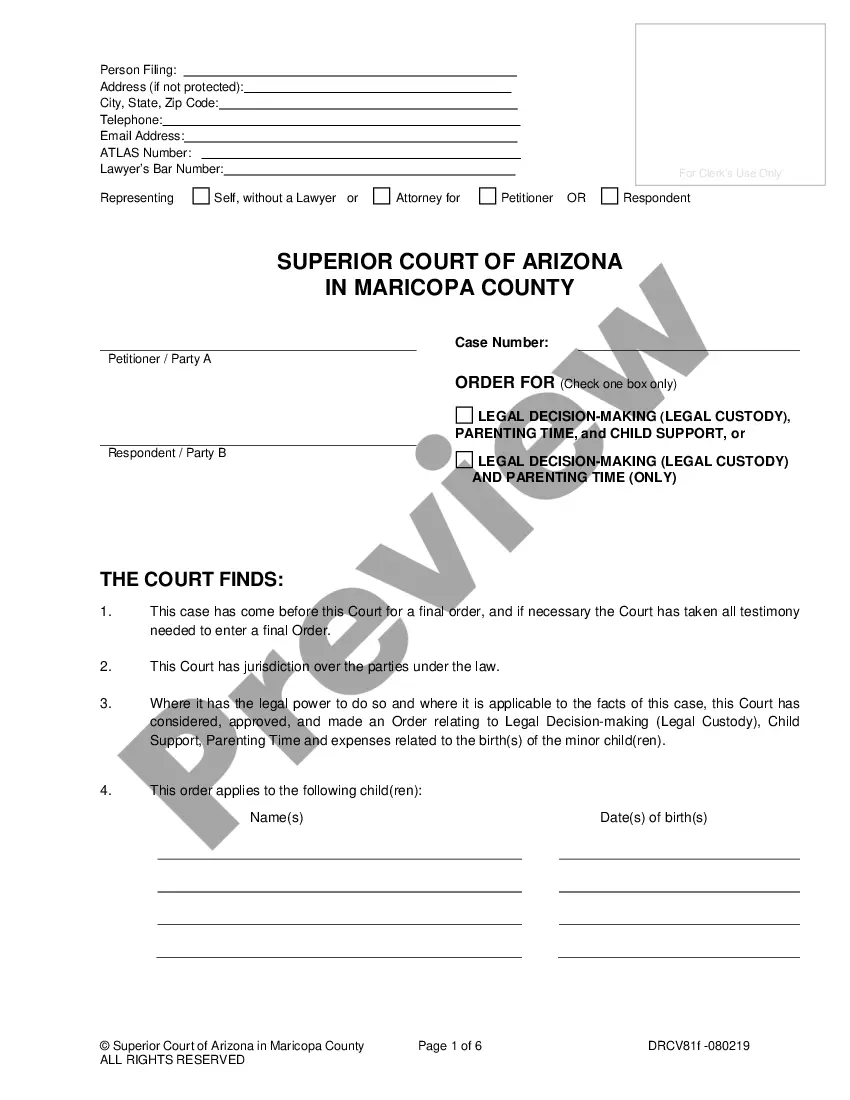
Parking License Granted by Owners Association of Condominium
Understanding this form
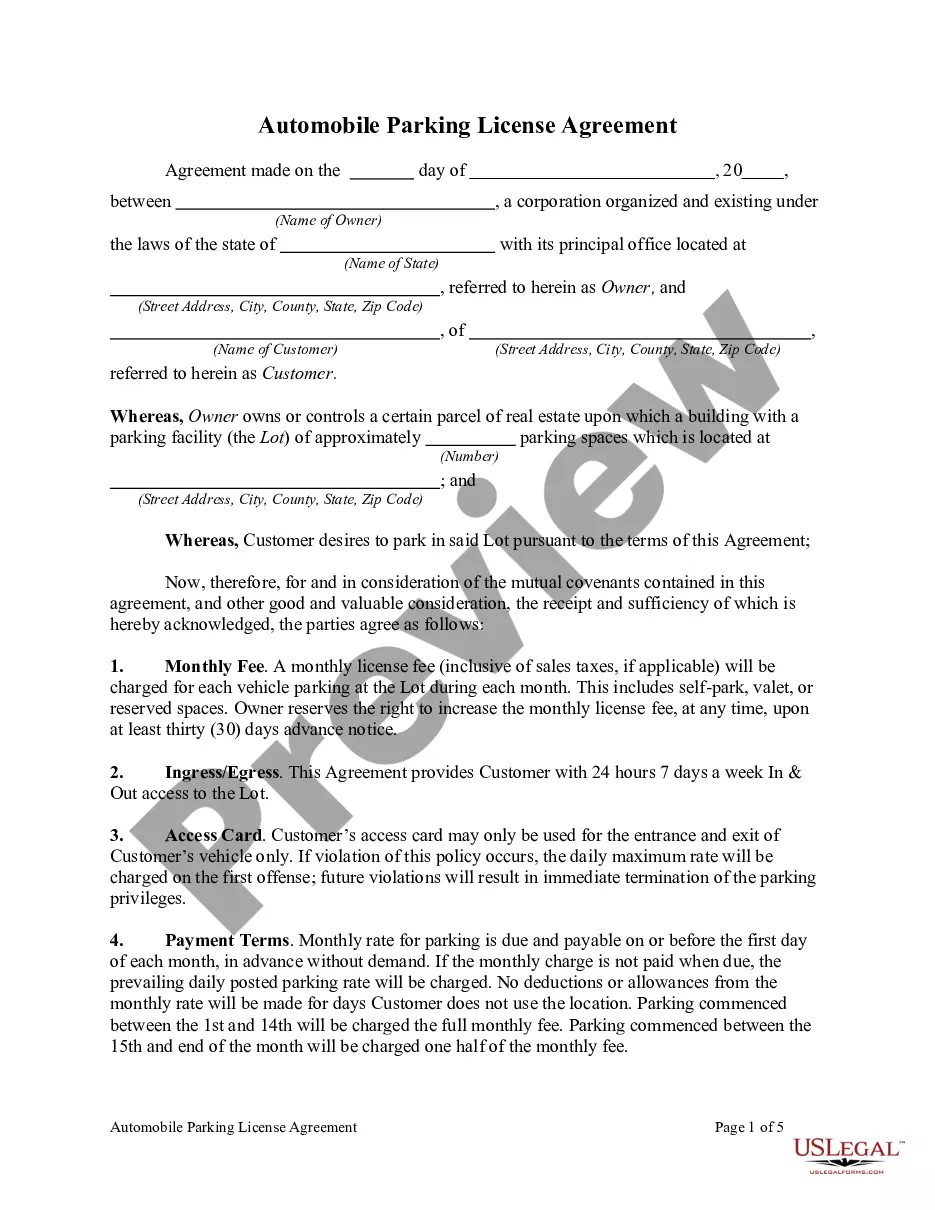
This Parking License Granted by Owners Association of Condominium form is a legal document that permits a car owner to use a designated parking space managed by a condominium owners association. It outlines the rights and responsibilities of both the car owner and the association, serving as a formal agreement for parking privileges within the property. Unlike general parking agreements, this form caters specifically to condominium settings, ensuring compliance with community rules and regulations.
Key components of this form
- Date of agreement and parties involved, including the car owner and the association.
- Description of the automobile being parked, including make, model, and VIN.
- Terms of use for the designated parking space and payment obligations.
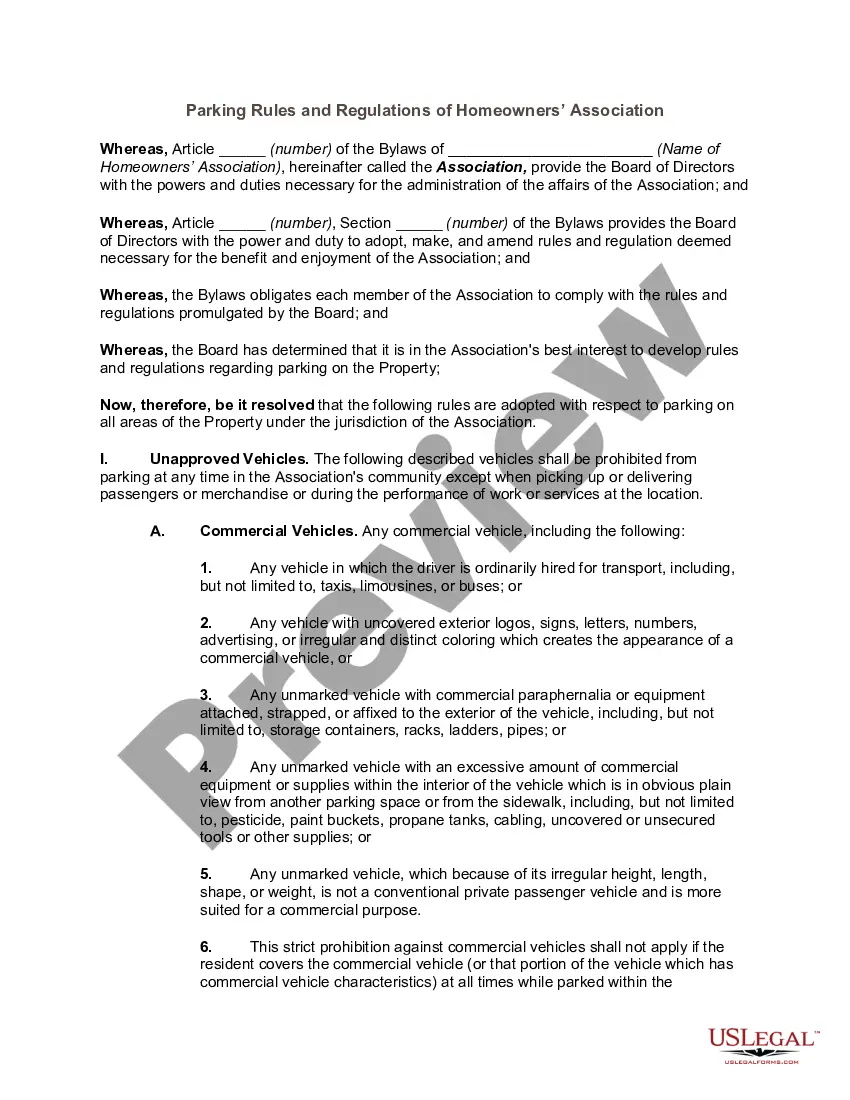
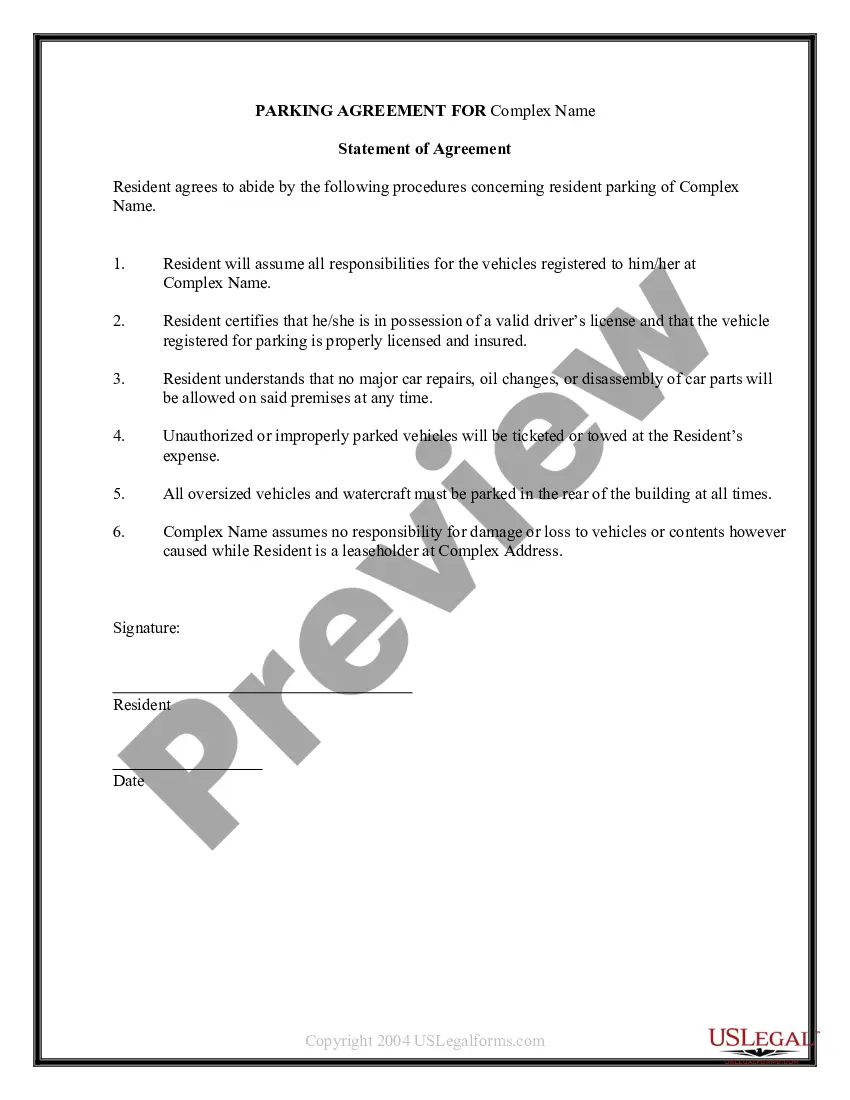
- Responsibilities related to compliance with association rules and regulations.
- Clauses outlining termination rights and conditions.
- Indemnity and liability disclaimers for the association.


When to use this document
This form should be used when a car owner seeks permission to park their vehicle in a designated area managed by a condominium owners association. It is essential when entering into an agreement for monthly parking fees, ensuring clarity about the use of the parking space and the rules applicable to residents.
Who this form is for
- Condominium owners who need access to assigned parking spaces.
- Condominium owners' associations managing parking facilities.
- Residents requiring a formalized agreement for parking within a community.
Instructions for completing this form
- Fill in the date of the agreement.
- Provide the full names and addresses of both the car owner and the condominium owners association.
- Describe the vehicle by entering the make, model, year, body type, and VIN.
- Indicate the monthly parking fee to be paid and specify the terms of payment.
- Both parties should sign and date the agreement to finalize the contract.
Does this document require notarization?
Notarization is generally not required for this form. However, certain states or situations might demand it. You can complete notarization online through US Legal Forms, powered by Notarize, using a verified video call available anytime.
Get your form ready online
Our built-in tools help you complete, sign, share, and store your documents in one place.
Make edits, fill in missing information, and update formatting in US Legal Forms—just like you would in MS Word.
Download a copy, print it, send it by email, or mail it via USPS—whatever works best for your next step.
Sign and collect signatures with our SignNow integration. Send to multiple recipients, set reminders, and more. Go Premium to unlock E-Sign.
If this form requires notarization, complete it online through a secure video call—no need to meet a notary in person or wait for an appointment.
We protect your documents and personal data by following strict security and privacy standards.

Make edits, fill in missing information, and update formatting in US Legal Forms—just like you would in MS Word.

Download a copy, print it, send it by email, or mail it via USPS—whatever works best for your next step.

Sign and collect signatures with our SignNow integration. Send to multiple recipients, set reminders, and more. Go Premium to unlock E-Sign.

If this form requires notarization, complete it online through a secure video call—no need to meet a notary in person or wait for an appointment.

We protect your documents and personal data by following strict security and privacy standards.
Mistakes to watch out for
- Failing to provide complete vehicle details, including VIN.
- Not reviewing association rules before signing the agreement.
- Neglecting to specify the correct monthly fee or payment terms.
- Overlooking the need for signatures from both parties.
Why complete this form online
- Easy access to a legally vetted template drafted by licensed attorneys.
- Convenient download options for immediate use.
- Editable format allows for customization based on specific needs.
- Time-saving process compared to drafting a form from scratch.
Looking for another form?






Form popularity
FAQ
This Parking License Granted by Owners Association of Condominium is a formal agreement that lets a condo owner use a designated parking space managed by the association. It outlines the rights and responsibilities of both the owner and the association and governs use, payments, and compliance with community rules for parking privileges within the property.
The license creates enforceable expectations by tying parking use to specific terms, including payment obligations and adherence to association rules. Key provisions—such as termination rights and the owner’s duty to comply with rules—help the association enforce penalties or restrictions if terms are violated, while the indemnity and liability disclaimers help limit the association’s exposure.
Condominium parking lots are generally private property managed by the condominium association, not public property. The Parking License granted by the association formalizes an owner’s right to use a designated space within that private property, subject to the association’s rules and regulations. Always review governing documents for specifics about property status in your community.
Under this form, the association grants a license to use a specific parking space and sets terms for use and payment. It does not create ownership rights or authorize the association to rent out spaces belonging to other owners. For any disputes or unusual arrangements, consult the condo association’s governing documents.
This form lists the date of agreement and parties involved, including the car owner and the association. Typically, it is signed by the car owner and an authorized representative of the condominium owners association, making the license binding for parking privileges within the property.
What makes this form different from a general parking license is that it is specifically designed for condominium settings and ties use to a condo association’s rules. It includes termination rights and an indemnity or liability disclaimer for the association, ensuring the license operates within the community’s governance framework rather than a generic parking arrangement.