Affidavit of Both Domestic Partners to Employer in Order to Receive Benefits
About this form
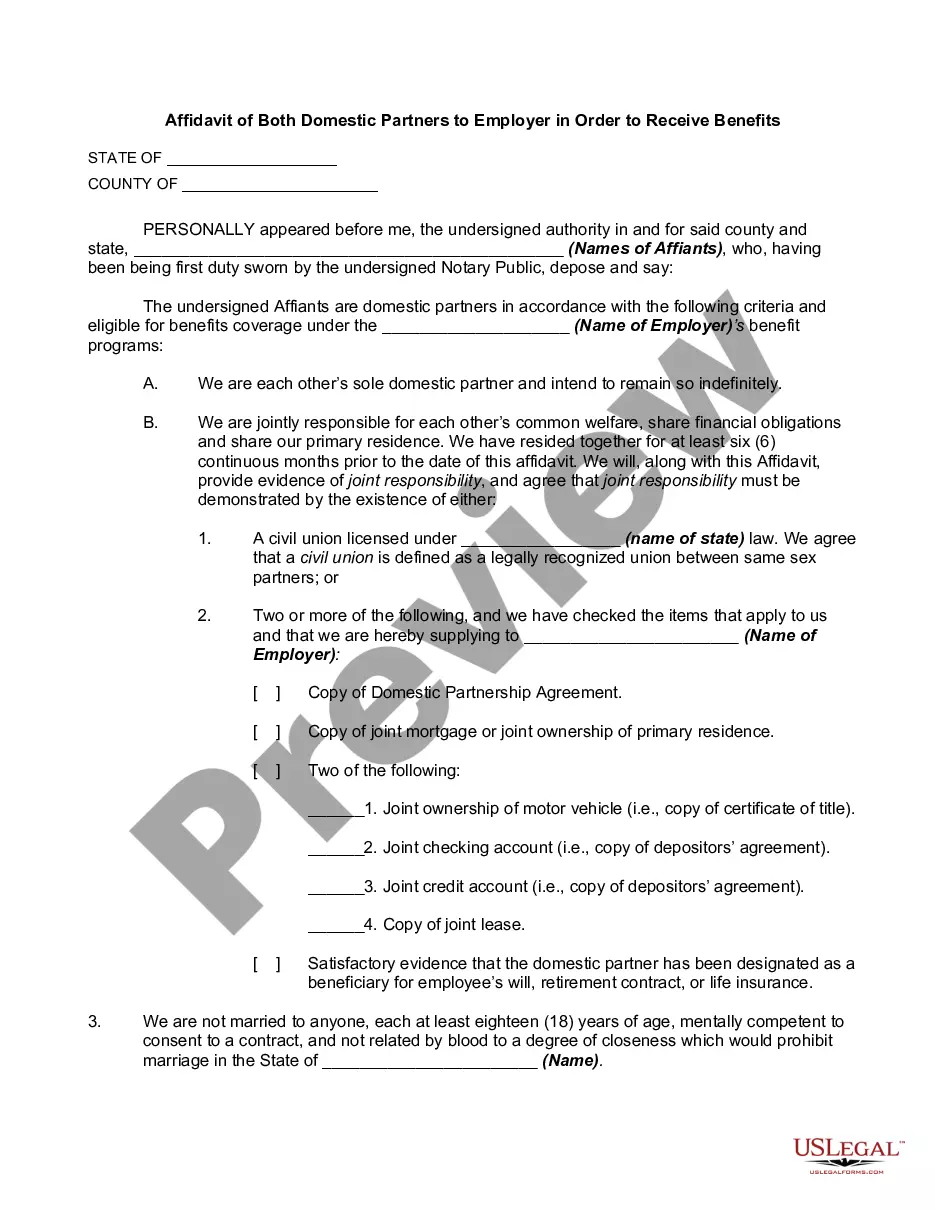
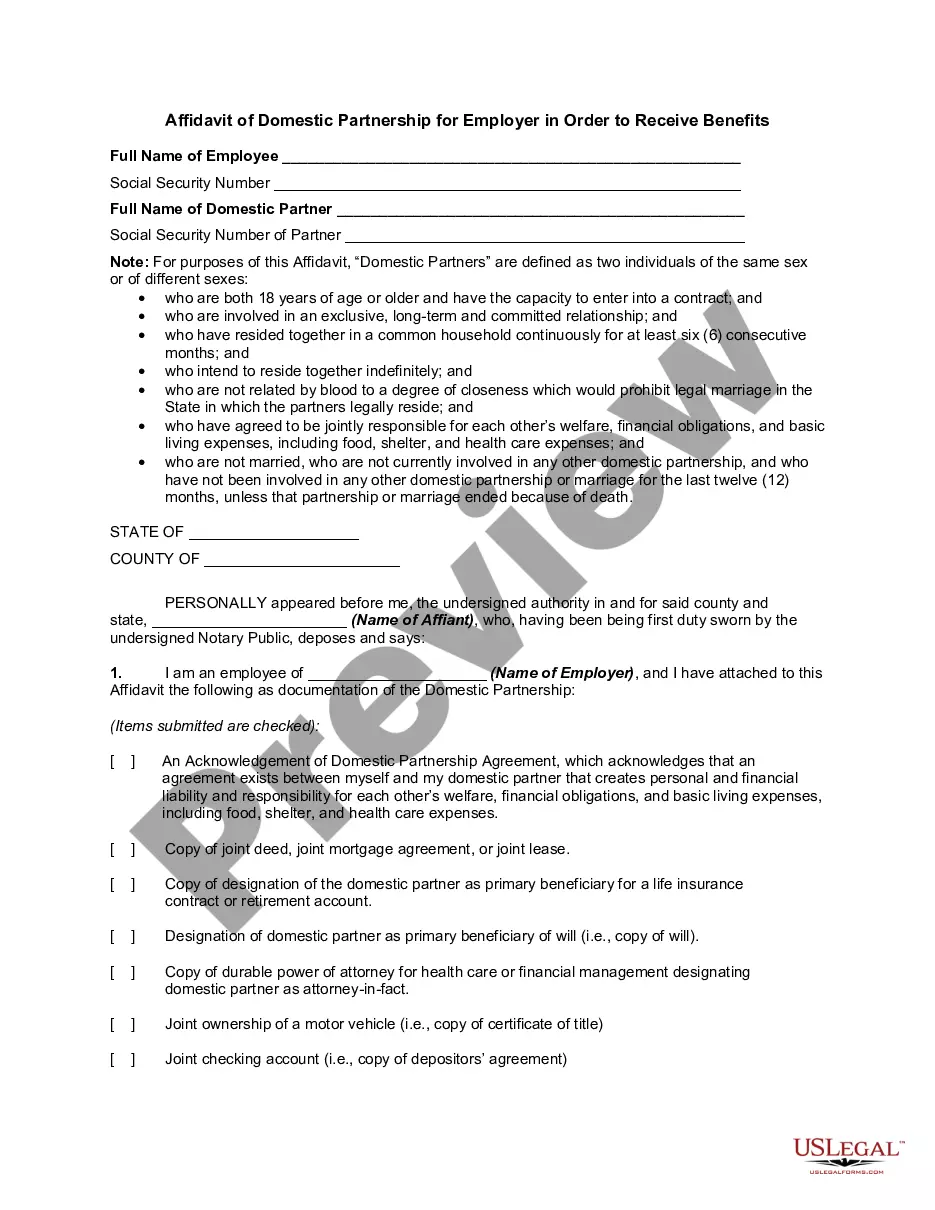
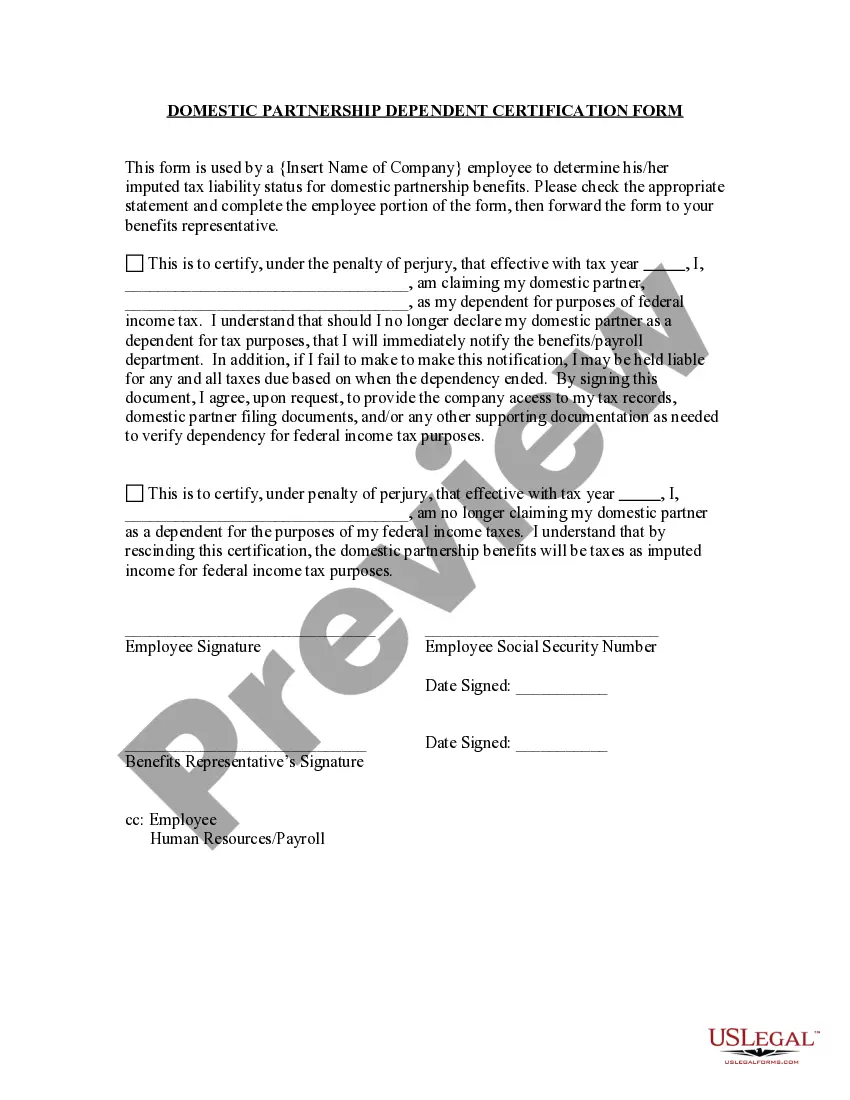
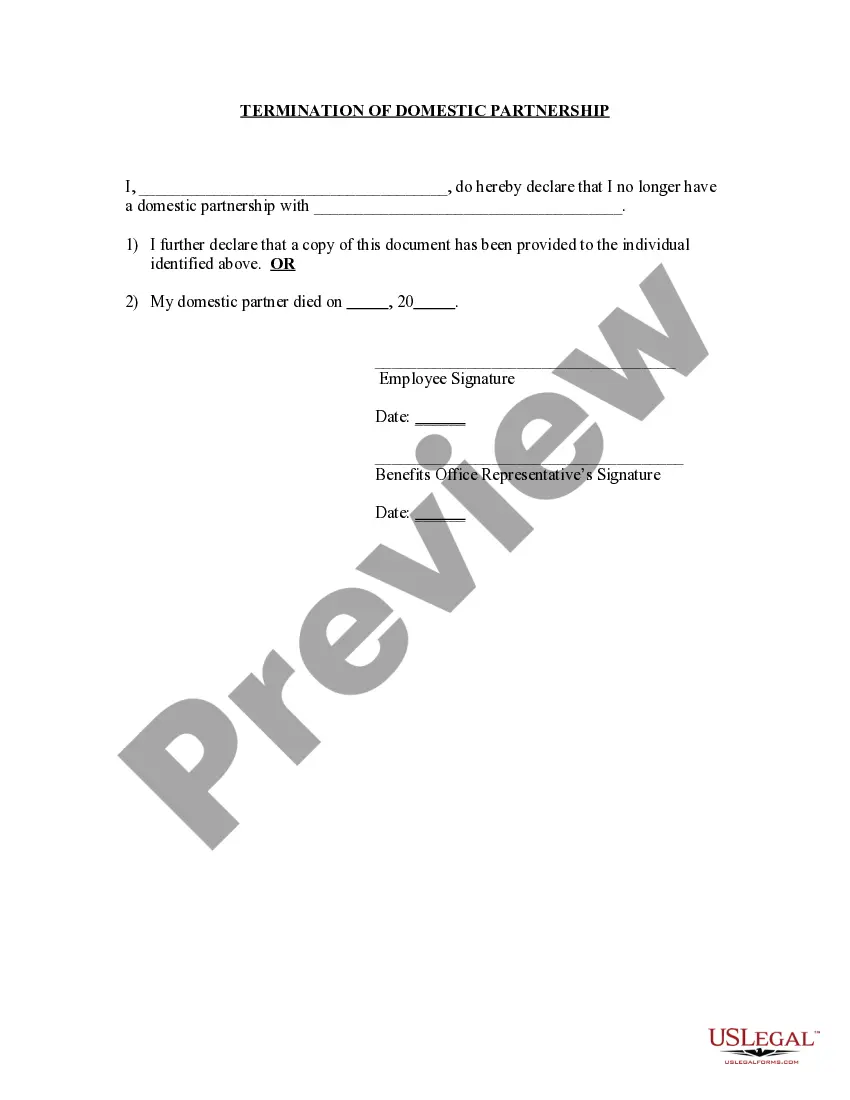
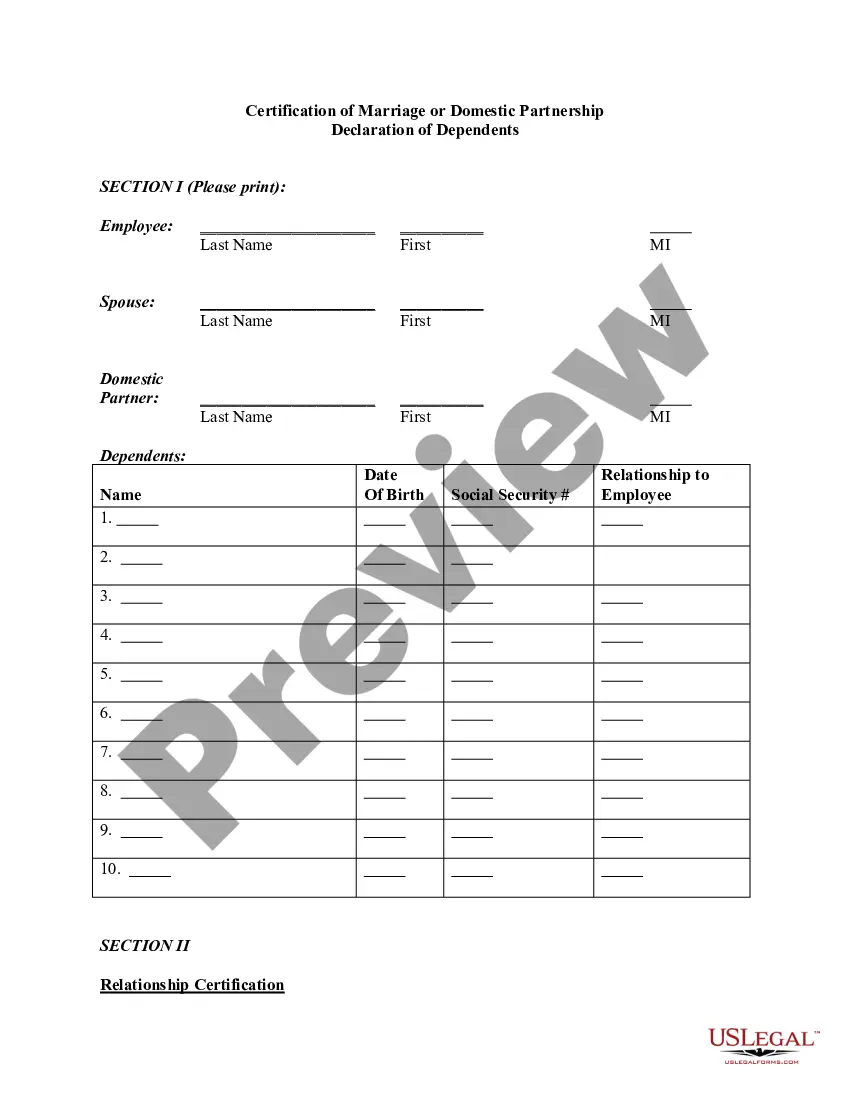
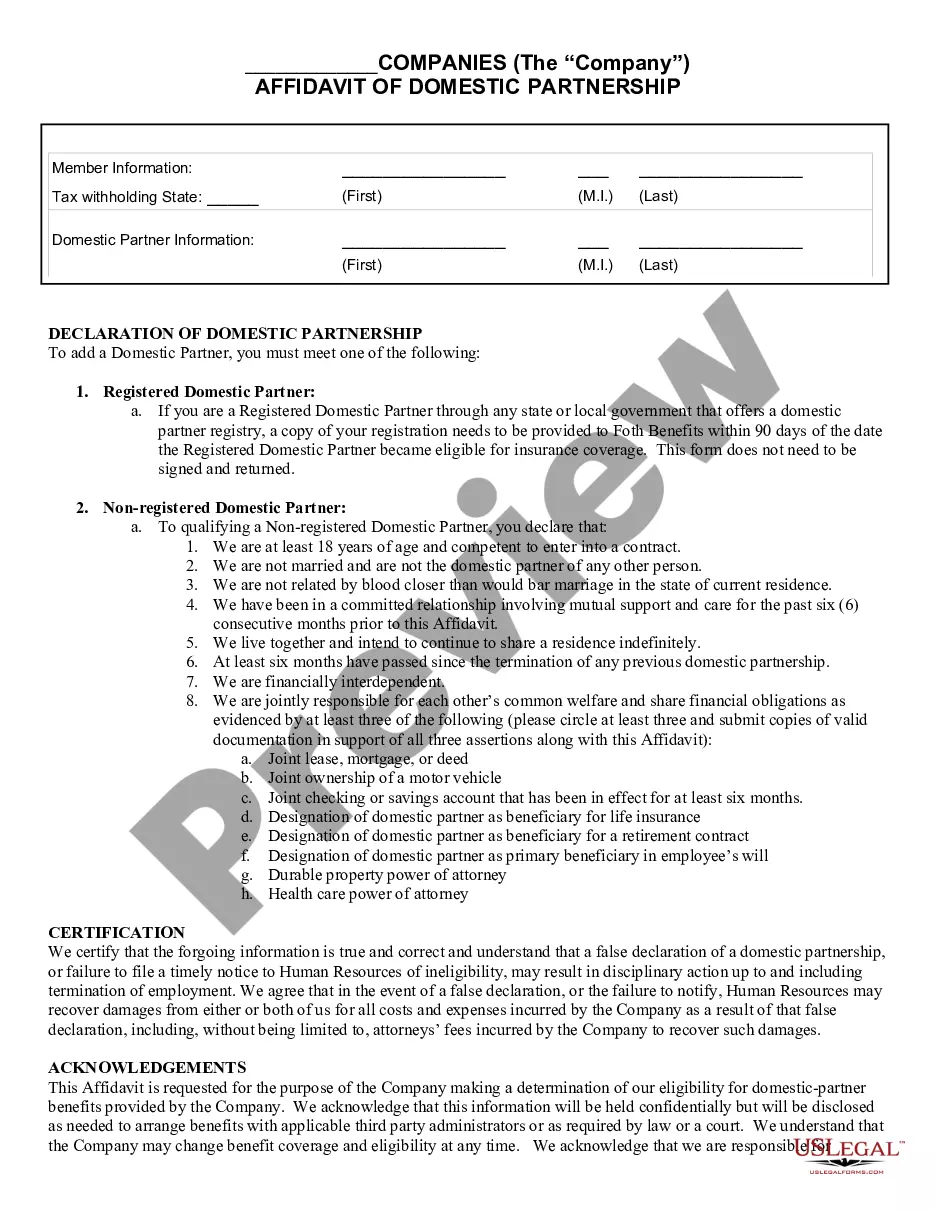
The Affidavit of Both Domestic Partners to Employer in Order to Receive Benefits is a legal document that certifies two individuals as domestic partners. This affidavit is typically required by employers that provide benefits to domestic partners. It outlines the eligibility criteria for receiving benefits under the employer's programs, distinguishing it from other benefit application forms by its focus on the domestic partnership status rather than marriage.
Key components of this form
- Names of the affiants who confirm their domestic partnership.
- Criteria for qualifying as domestic partners, including mutual responsibilities and shared residence.
- Evidence required to demonstrate shared responsibilities, such as joint accounts or property agreements.
- Affirmation that the partners are not married to anyone else and meet age and competency requirements.
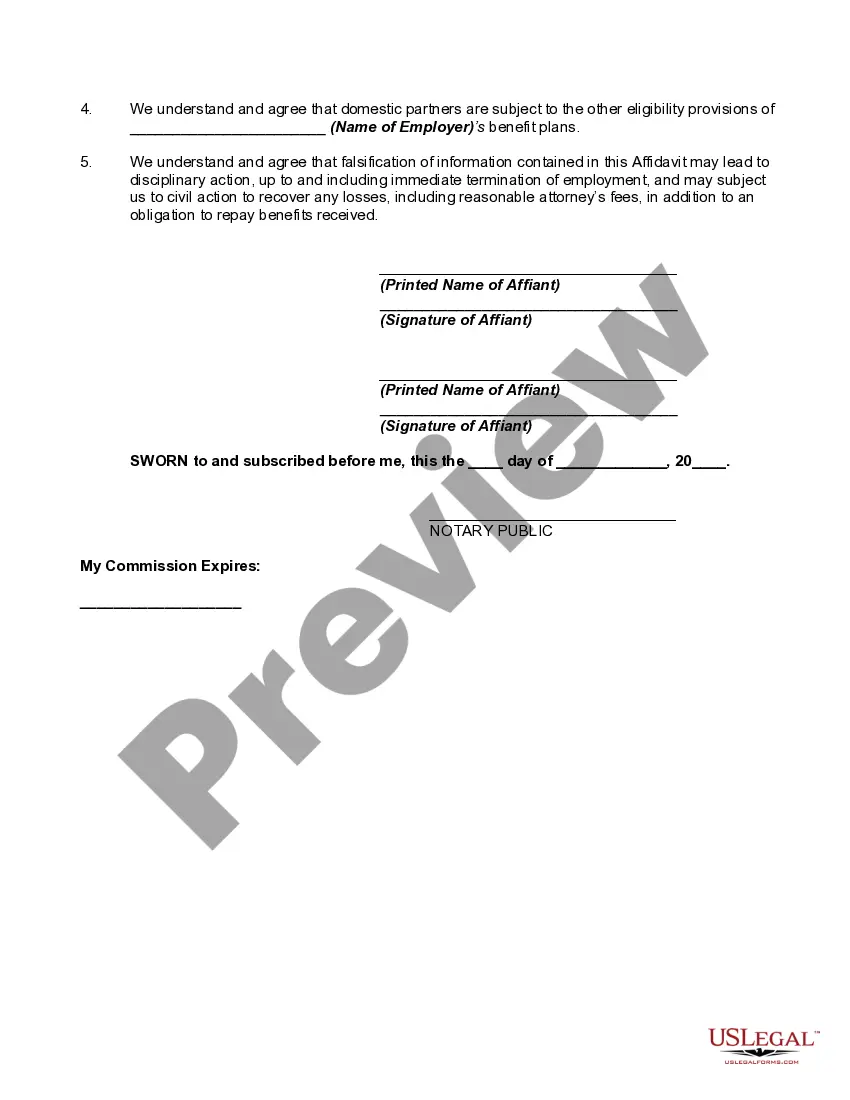
- Understanding of consequences for providing false information in the affidavit.
Situations where this form applies
This form should be used when domestic partners need to verify their relationship to an employer to qualify for benefits such as health insurance, retirement plans, or other employment-related perks. It is essential in scenarios where employers require official documentation to extend benefits usually reserved for legally married couples.
Who this form is for
- Domestic partners seeking to receive employment benefits from their employer.
- Individuals who are not legally married but share a domestic partnership status.
- Couples who have lived together for at least six months and wish to certify their partnership for benefits.
Steps to complete this form
- Identify the names of both partners at the beginning of the affidavit.
- Review and check off the criteria that confirm your domestic partnership status.
- Gather and attach the required documentation, such as joint accounts or agreements.
- Sign the affidavit before a notary public to ensure its validity.
- Submit the completed affidavit to your employer for processing benefits.
Is notarization required?
To make this form legally binding, it must be notarized. Our online notarization service, powered by Notarize, lets you verify and sign documents remotely through an encrypted video session.
Get your form ready online
Our built-in tools help you complete, sign, share, and store your documents in one place.
Make edits, fill in missing information, and update formatting in US Legal Forms—just like you would in MS Word.
Download a copy, print it, send it by email, or mail it via USPS—whatever works best for your next step.
Sign and collect signatures with our SignNow integration. Send to multiple recipients, set reminders, and more. Go Premium to unlock E-Sign.
If this form requires notarization, complete it online through a secure video call—no need to meet a notary in person or wait for an appointment.
We protect your documents and personal data by following strict security and privacy standards.

Make edits, fill in missing information, and update formatting in US Legal Forms—just like you would in MS Word.

Download a copy, print it, send it by email, or mail it via USPS—whatever works best for your next step.

Sign and collect signatures with our SignNow integration. Send to multiple recipients, set reminders, and more. Go Premium to unlock E-Sign.

If this form requires notarization, complete it online through a secure video call—no need to meet a notary in person or wait for an appointment.

We protect your documents and personal data by following strict security and privacy standards.
Mistakes to watch out for
- Failing to provide all required documentation to support the partnership claim.
- Incorrectly listing names or missing signatures can invalidate the affidavit.
- Not notarizing the form before submission, if required by local law.
Benefits of using this form online
- Conveniently download and complete the affidavit from home.
- Edit and customize the form to meet specific legal requirements.
- Access forms prepared by licensed attorneys, ensuring accuracy and compliance.
Looking for another form?
Form popularity
FAQ
Common-Law Marriages Are Entitled to the Same Benefits As Traditional Marriages. The Social Security benefits you receive as a common-law marriage couple include spousal benefits, survivor benefits and even benefits from an ex-common law spouse.
Unmarried couples that live together are often at a disadvantage when it comes to Social Security benefitsespecially if one partner stays at home caring for children or running the household. Typically, you qualify for Social Security benefits based on your own earnings record.
Domestic partners are not eligible for Social Security or other federal benefits based on marriage.
Under the California Insurance Equity Act, carriers can only require documentation of domestic partnership if they also require proof of marriage.Employers may allow employees to add their domestic partner to their coverage outside of the open enrollment period when they enter into a new domestic partnership mid-year.
We recognize same-sex couples' marriages in all states, and some non-marital legal relationships (such as some civil unions and domestic partnerships), for purposes of determining entitlement to Social Security benefits, Medicare entitlement, and eligibility and payment amount for Supplemental Security Income (SSI).
It's important to note that companies are not required by federal law to provide domestic partner benefits even if they offer coverage to married couples, but some states and municipalities do mandate that businesses offer coverage to unmarried couples.
Couples of the same and opposite sex are able to share insurance under a domestic partner insurance coverage just as a married couple would.If your employer's health insurance plan does not provide domestic partner insurance, you can check with a private company."
Domestic partners can receive the same health insurance that's offered to married employees. "Domestic Partner Health Insurance is when an insurance contract extends the definition of spouse to recognize domestic partners, Burns says.
A domestic partner is treated by Social Security at all times as a single individual and eligible for benefits only on his own record of Social Security payments.