General Form of Consent to Medical Treatment
Overview of this form
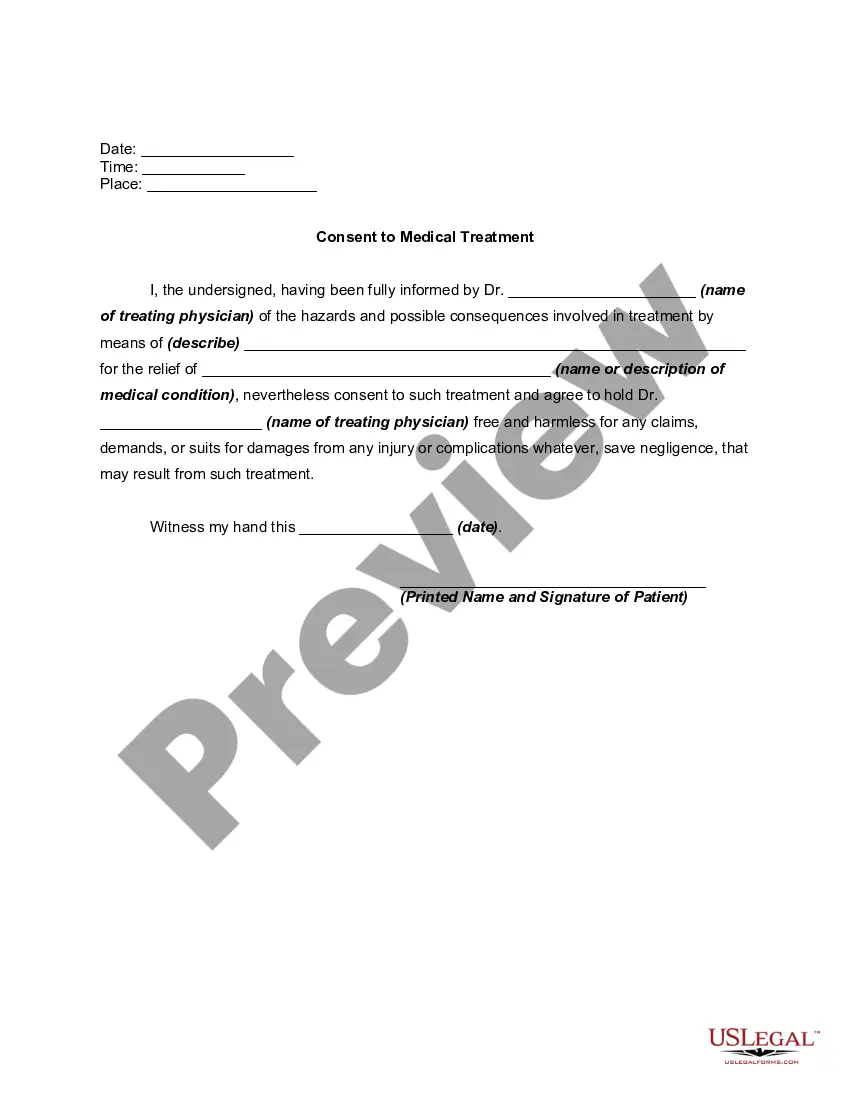
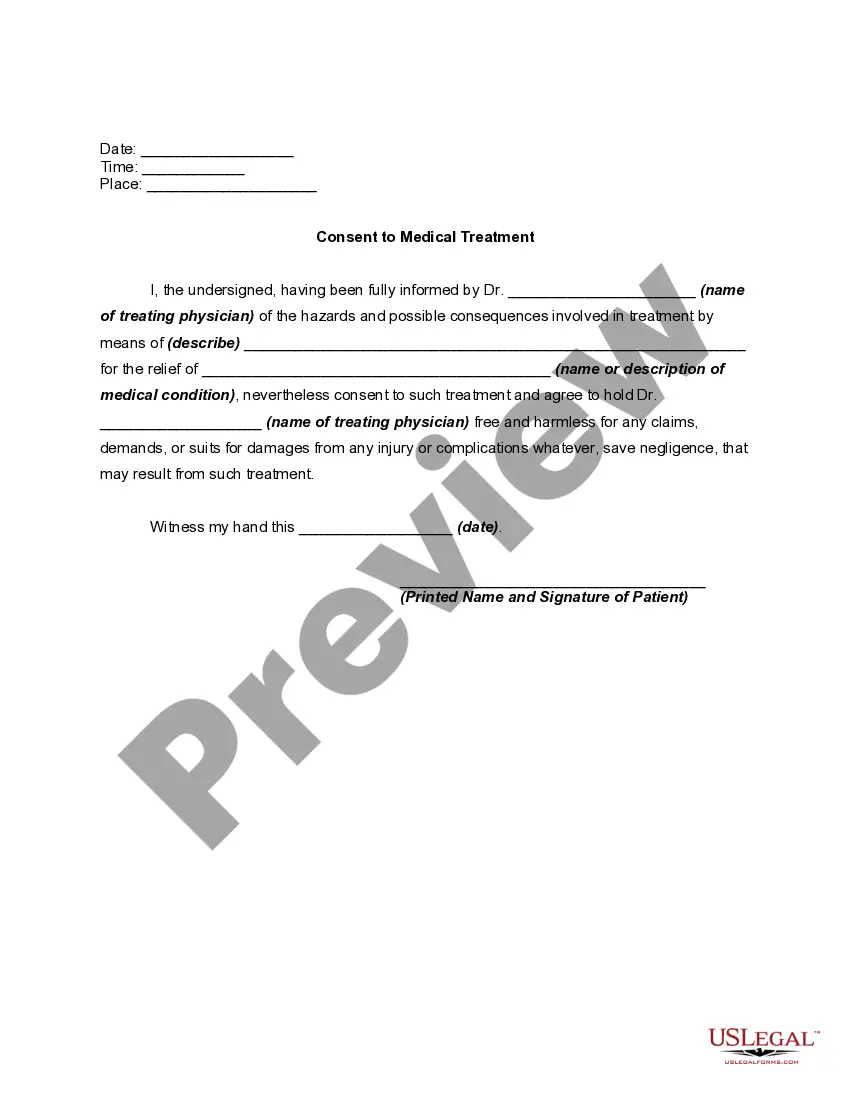
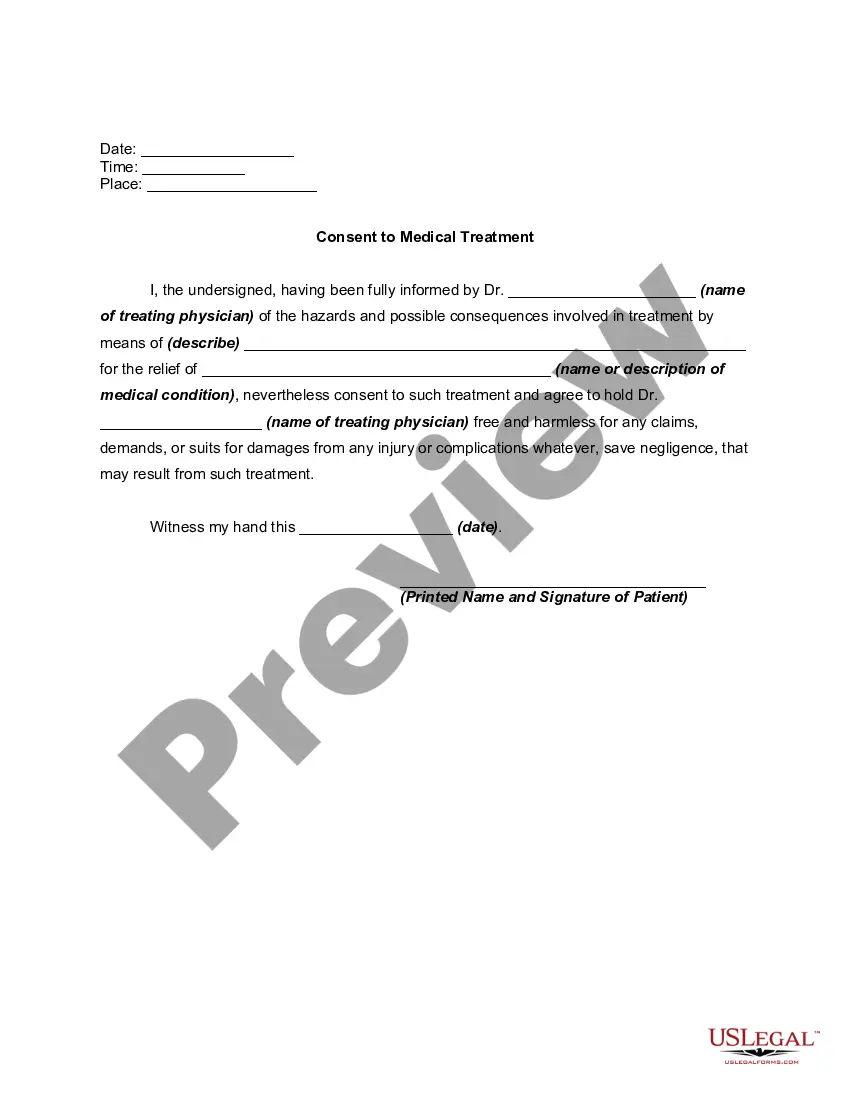
The General Form of Consent to Medical Treatment is a legal document that allows a patient to grant permission for a healthcare provider to administer treatment. This form is crucial in ensuring that the patient understands the potential risks and benefits of the proposed procedure. It differs from other consent forms by explicitly addressing the specific treatment and its implications, making it a vital component in medical settings.
Key parts of this document
- Identification of the patient and treating physician.
- Description of the medical treatment proposed.
- Statement of potential hazards and consequences of the treatment.
- Consent clause absolving the physician from liability except in cases of negligence.
- Space for date and patient signature.
Situations where this form applies
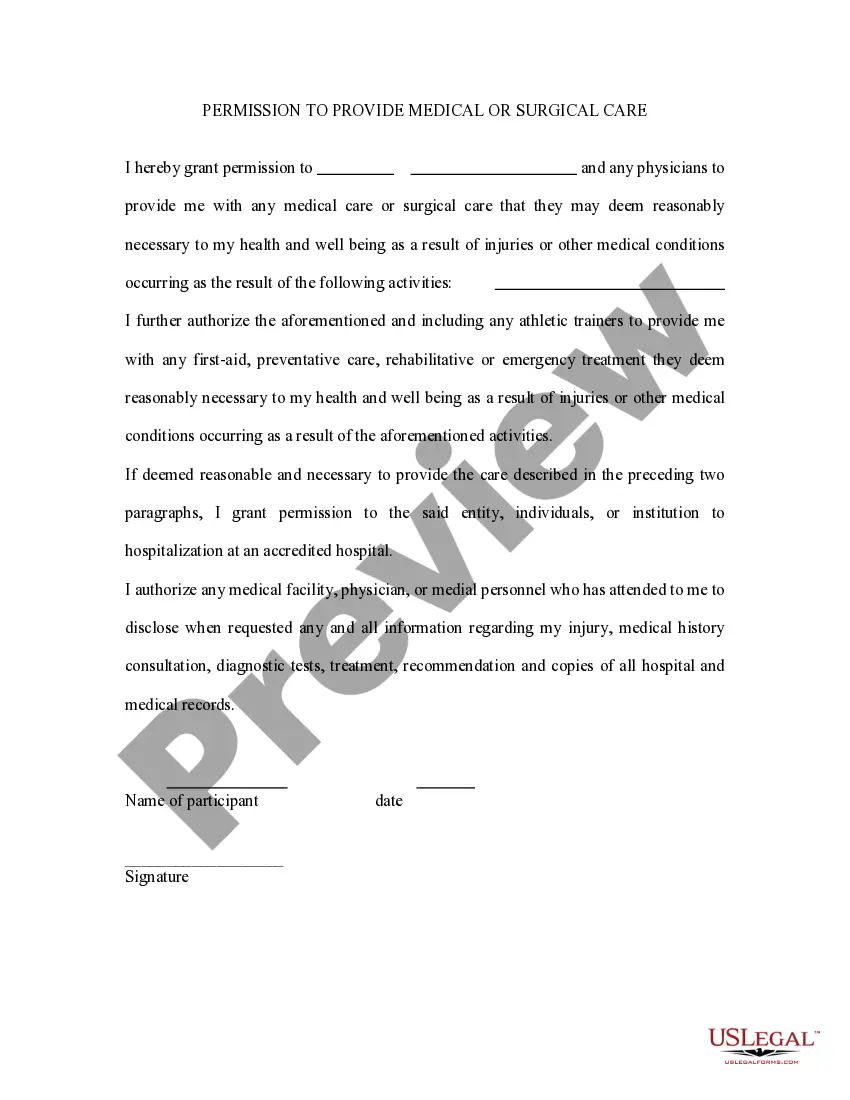
This form should be used whenever a patient is to undergo a medical procedure that requires informed consent. Scenarios include surgeries, diagnostic tests, and treatments involving medication or other therapies. It is essential to use this form whenever the medical treatment involves risks that the patient needs to understand before proceeding.
Who can use this document
- Patients receiving medical treatment or procedures.
- Healthcare providers seeking informed consent from patients.
- Legal representatives of patients who are unable to provide consent themselves.
How to complete this form
- Fill in the time and place of the treatment.
- Enter the name of the treating physician.
- Describe the specific medical treatment being consented to.
- State the medical condition being treated.
- Sign and date the form after reading it carefully.
Does this document require notarization?
This form does not typically require notarization to be legally valid. However, some jurisdictions or document types may still require it. US Legal Forms provides secure online notarization powered by Notarize, available 24/7 for added convenience.
Get your form ready online
Our built-in tools help you complete, sign, share, and store your documents in one place.
Make edits, fill in missing information, and update formatting in US Legal Forms—just like you would in MS Word.
Download a copy, print it, send it by email, or mail it via USPS—whatever works best for your next step.
Sign and collect signatures with our SignNow integration. Send to multiple recipients, set reminders, and more. Go Premium to unlock E-Sign.
If this form requires notarization, complete it online through a secure video call—no need to meet a notary in person or wait for an appointment.
We protect your documents and personal data by following strict security and privacy standards.

Make edits, fill in missing information, and update formatting in US Legal Forms—just like you would in MS Word.

Download a copy, print it, send it by email, or mail it via USPS—whatever works best for your next step.

Sign and collect signatures with our SignNow integration. Send to multiple recipients, set reminders, and more. Go Premium to unlock E-Sign.

If this form requires notarization, complete it online through a secure video call—no need to meet a notary in person or wait for an appointment.

We protect your documents and personal data by following strict security and privacy standards.
Typical mistakes to avoid
- Not fully understanding the treatment risks before giving consent.
- Failing to specify the medical condition being treated.
- Omitting the physician's name or other required details.
Benefits of using this form online
- Convenient access from any device, allowing quick completion.
- Editability to tailor the document to specific treatment situations.
- Reliability, as the form is drafted by licensed attorneys to meet legal standards.
Legal use & context
- This form legally protects both the patient and the physician by documenting informed consent.
- It can be used in legal contexts to demonstrate that the patient agreed to the treatment after receiving relevant information.
Main things to remember
- The General Form of Consent to Medical Treatment is crucial for patient-physician relationships.
- It ensures that patients are informed of treatment risks before consenting.
- Completing the form accurately is vital to legal protection for all parties involved.
Looking for another form?







Form popularity
FAQ
Consent can involve a combination of people parent or legal guardian. court (eg for permanent sterilisation procedures) other agencies (eg in NSW the consent of Guardianship Tribunal is required for 'special medical treatment'. Special medical treatment includes sterilisation, vasectomy or tubal occlusion).
Once appointed, the Medical Enduring Power of Attorney can give consent on behalf of the person in care. In the case of an emergency, doctors and other healthcare professionals can make authorisations for treatment.
Obtaining informed consent in medicine is process that should include: (1) describing the proposed intervention, (2) emphasizing the patient's role in decision-making, (3) discussing alternatives to the proposed intervention, (4) discussing the risks of the proposed intervention and (5) eliciting the patient's
Types of consent include implied consent, express consent, informed consent and unanimous consent.
Valid informed consent for research must include three major elements: (1) disclosure of information, (2) competency of the patient (or surrogate) to make a decision, and (3) voluntary nature of the decision. US federal regulations require a full, detailed explanation of the study and its potential risks.
This consent form is designed to provide a written confirmation of such discussions by recording some of the more significant medical information given to you. It is intended to make you better informed so that you may give or withhold your consent to the proposed procedure(s).
General consent is required before the patient can be examined or treated or before minor testing (such as lab work or routine imaging studies) can be done. No explanation of the contact is necessary, but consent to touch the patient is required.
Step 1 Find a Competent Guardian. Step 2 Inform the Guardian of Child's Medical Issues (if any) Step 3 Inform the Guardian of the Child's Medications. Step 4 Determine an End Date. Step 5 Sign the Document.