Letter Agreement with Wedding Consultant, Planner or Coordinator - Self-Employed
About this form
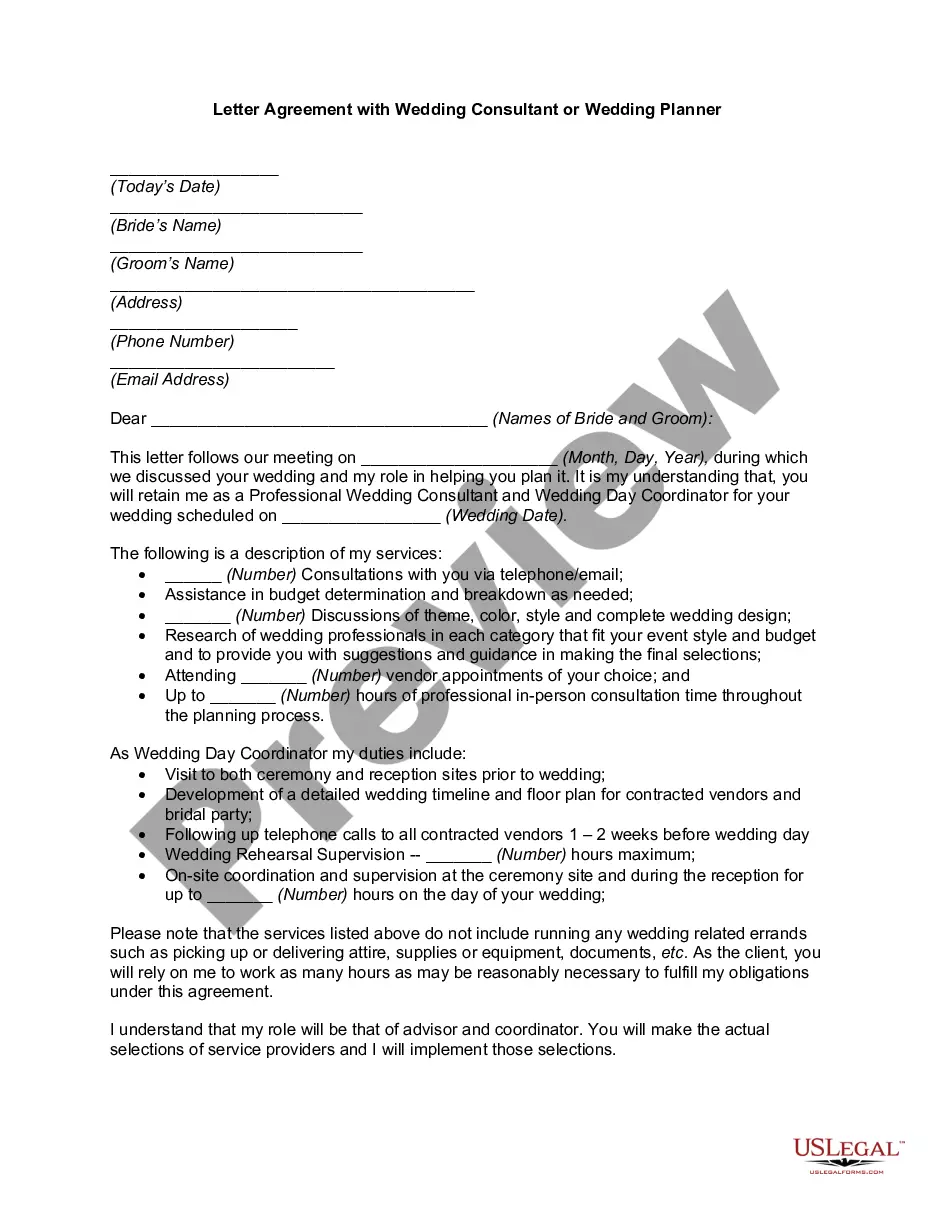
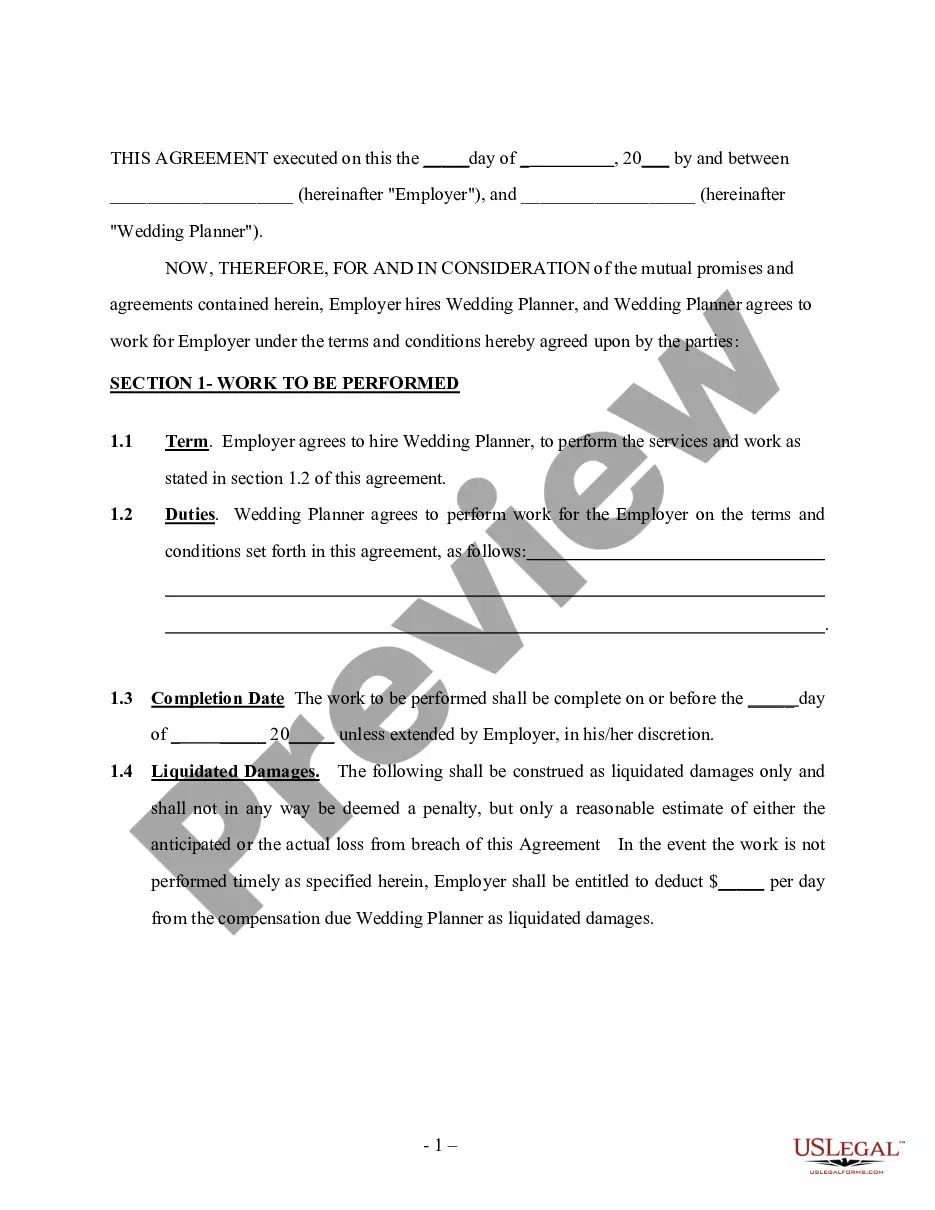
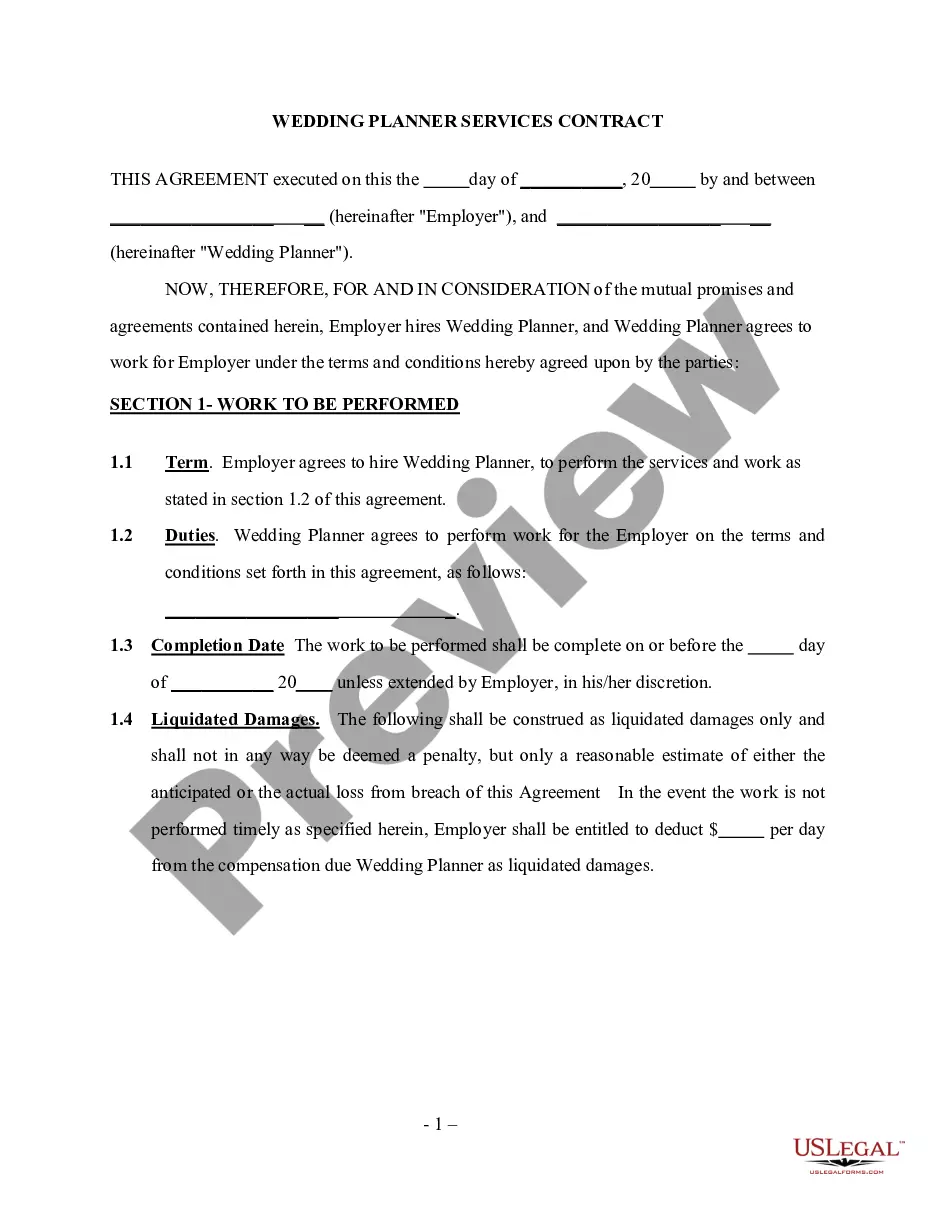
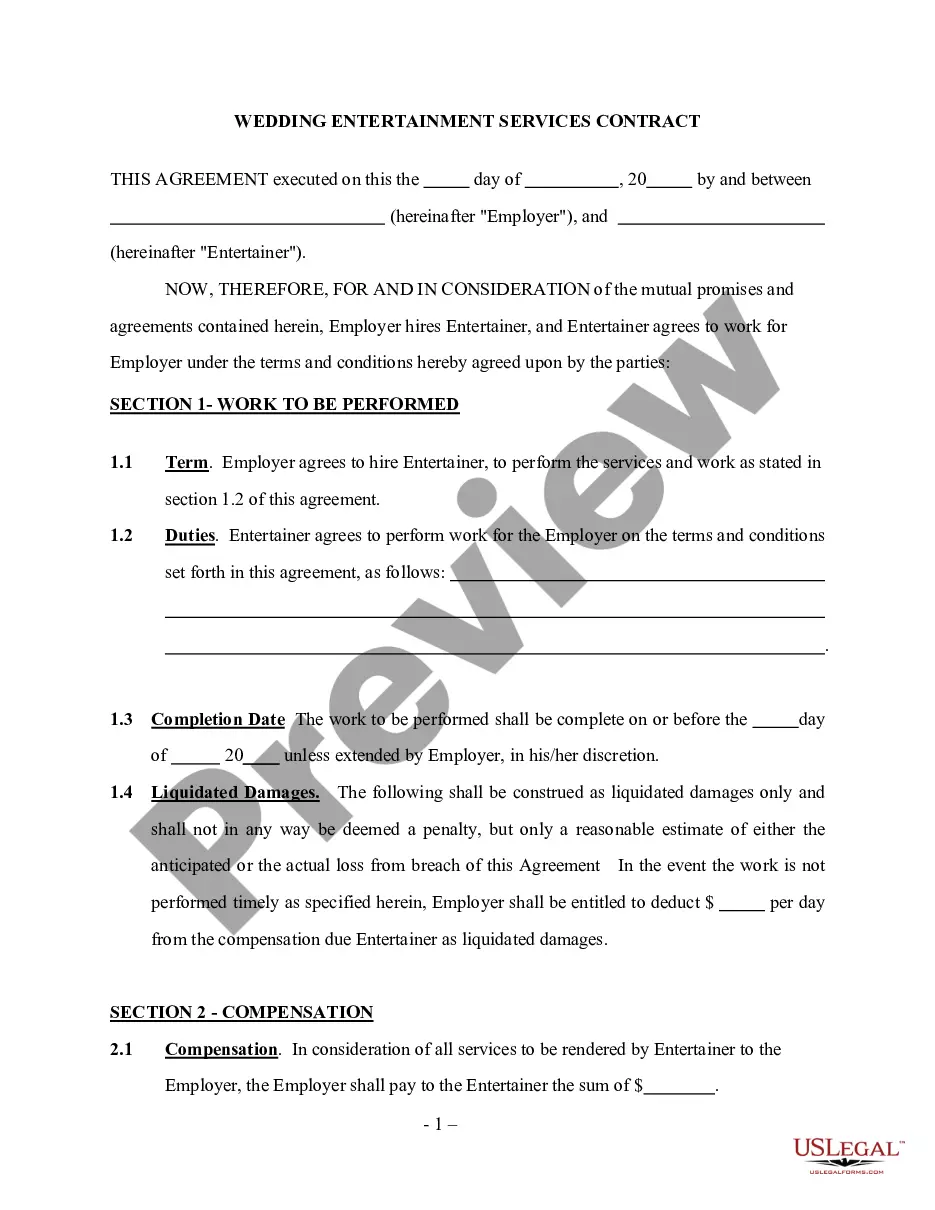
The Letter Agreement with Wedding Consultant, Planner or Coordinator - Self-Employed is a legal document that outlines the terms of engagement between a couple and a wedding consultant. This form clarifies the roles and responsibilities of the consultant during the wedding planning process, differentiating it from other wedding planning documents by specifying the consultant's services, payment structure, and cancellation policies. It ensures both parties have a clear understanding of the consultant's advisory and coordinative role in making the wedding day memorable.
Form components explained
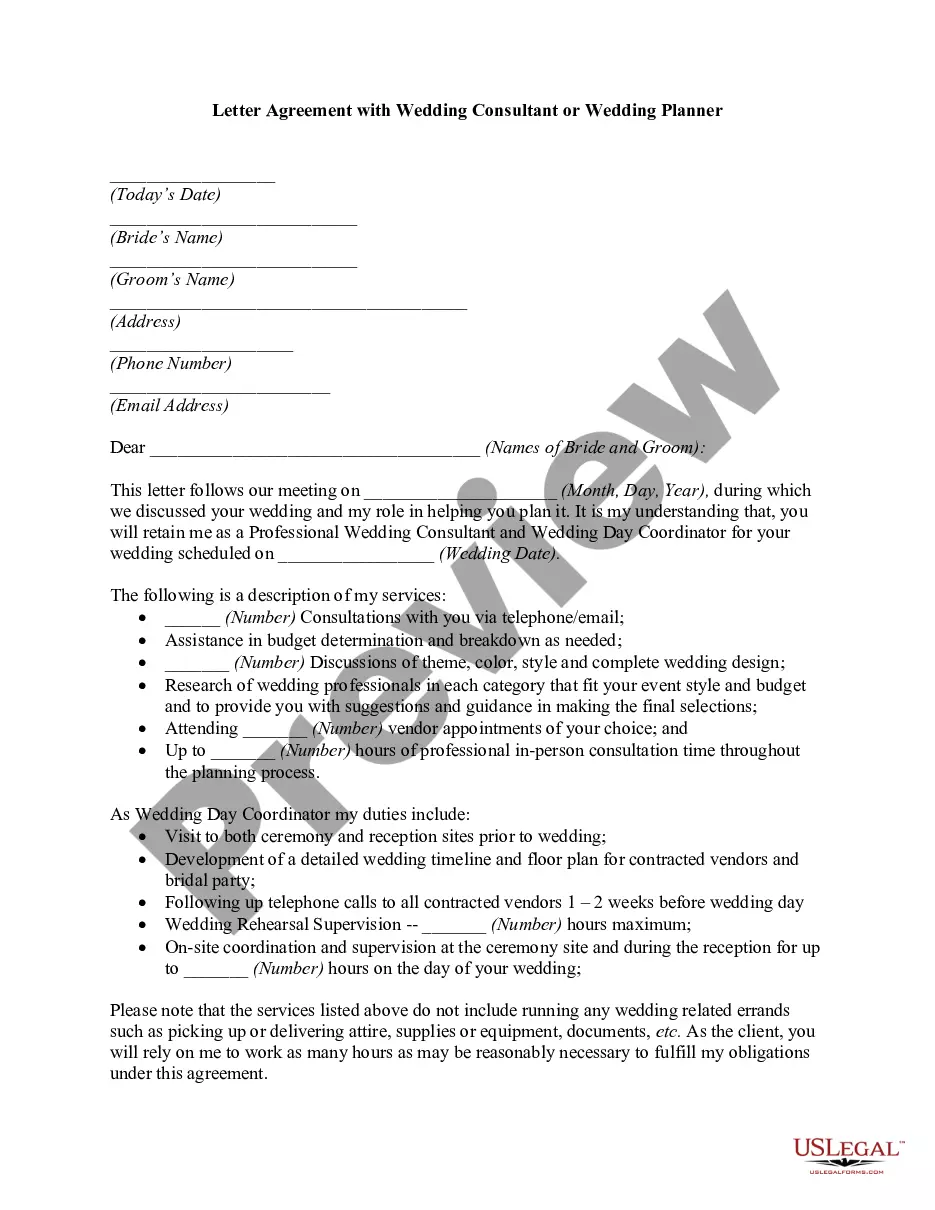
- Date of the agreement and contact information for the bride and groom.
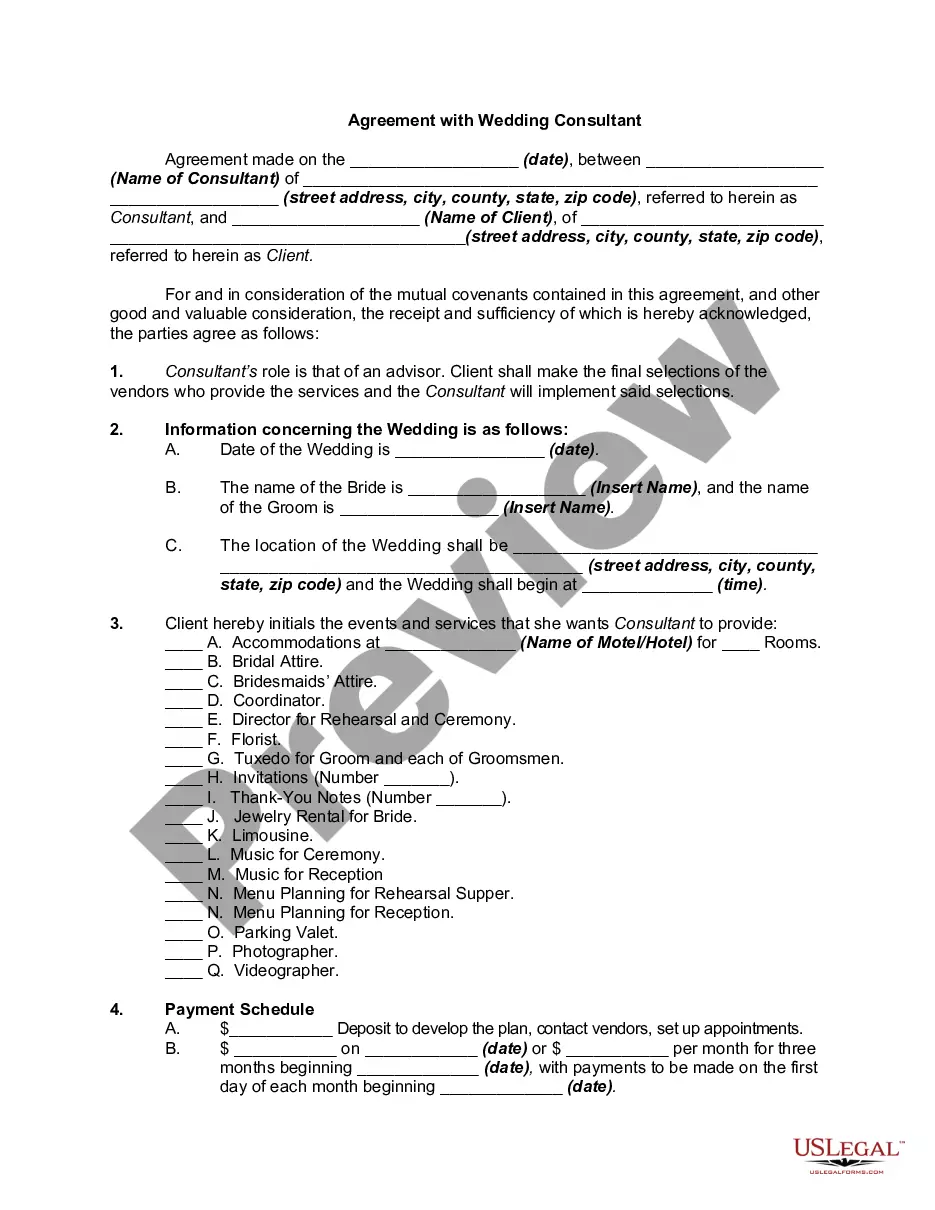
- Details of the wedding consultant's services, including consultations and planning assistance.
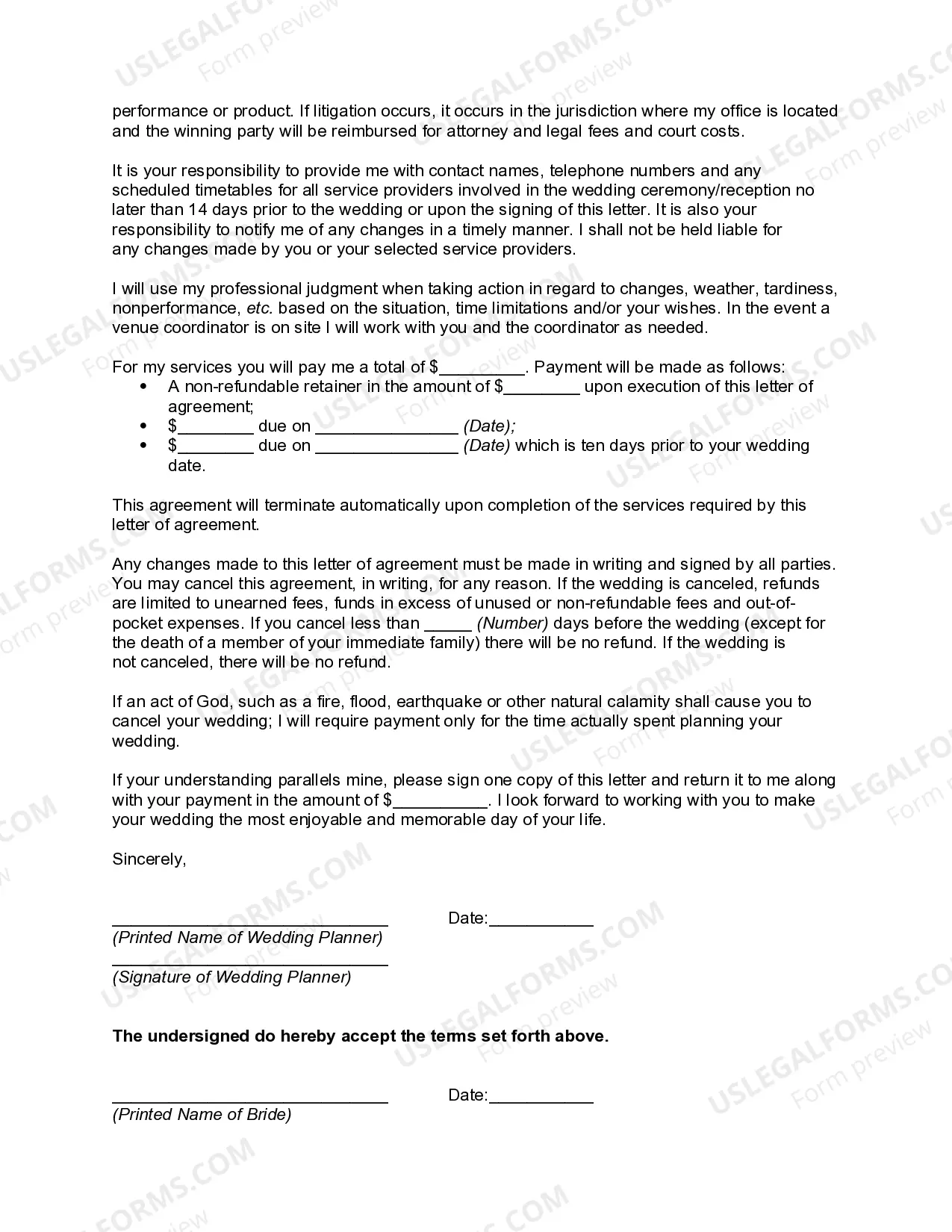
- Payment structure, including retainer and due dates.
- Responsibilities of both the wedding consultant and the clients.
- Cancellation policy and terms regarding refunds.

Situations where this form applies
This form is ideal for couples who are hiring a wedding consultant to assist with planning their wedding. It should be used when the couple seeks professional help to navigate the complexities of wedding planning, wish to clarify the specific services provided by the consultant, and want to establish a formal agreement that outlines payment and cancellation terms.
Intended users of this form
- Couples planning a wedding who require professional assistance.
- Self-employed wedding consultants providing services to clients.
- Individuals who want to ensure clear communication and expectations from their wedding consultant.
How to complete this form
- Fill in the date and the contact details of the bride and groom.
- Clearly outline the services being provided by the wedding consultant.
- Specify the payment terms, including retainer amounts and due dates.
- Ensure both parties understand their responsibilities, particularly regarding vendor communication.
- Both parties should sign the form to validate the agreement.
Is notarization required?
This form does not typically require notarization unless specified by local law. Always check for any specific notarization requirements in your jurisdiction.
Get your form ready online
Our built-in tools help you complete, sign, share, and store your documents in one place.
Make edits, fill in missing information, and update formatting in US Legal Forms—just like you would in MS Word.
Download a copy, print it, send it by email, or mail it via USPS—whatever works best for your next step.
Sign and collect signatures with our SignNow integration. Send to multiple recipients, set reminders, and more. Go Premium to unlock E-Sign.
If this form requires notarization, complete it online through a secure video call—no need to meet a notary in person or wait for an appointment.
We protect your documents and personal data by following strict security and privacy standards.

Make edits, fill in missing information, and update formatting in US Legal Forms—just like you would in MS Word.

Download a copy, print it, send it by email, or mail it via USPS—whatever works best for your next step.

Sign and collect signatures with our SignNow integration. Send to multiple recipients, set reminders, and more. Go Premium to unlock E-Sign.

If this form requires notarization, complete it online through a secure video call—no need to meet a notary in person or wait for an appointment.

We protect your documents and personal data by following strict security and privacy standards.
Common mistakes to avoid
- Not clearly specifying the services to be provided, leading to misunderstandings.
- Failing to include key payment deadlines or amounts.
- Not signing and dating the agreement, which may affect its enforceability.
Advantages of online completion
- Convenient access to legal forms from anywhere, simplifying the planning process.
- Editable templates allow customization to meet specific needs.
- Reliable and vetted forms ensure they meet legal standards.
Key takeaways
- Establish a clear agreement with your wedding consultant to avoid misunderstandings.
- Ensure both parties are aware of their responsibilities and the terms of payment.
- Utilize this agreement to formalize the services provided by the consultant.
Looking for another form?










Form popularity
FAQ
On average, a wedding planner costs $1,800 for a range of service packages. Higher-end estimates are over $4,000 while low ranges with minimal assistance can run several hundred dollars. Some wedding planners offer different levels of coordination to match both your budget and desired level of service.
Introduce yourself and the project. Begin with a brief introduction to you and your event planning business. Write an attractive event description. List all services provided. Show your previous work. Incorporate monetary information throughout.
On average, a wedding coordinator costs between $600 and $950 nationwide. Numerous factors affect the final cost that wedding planners charge including the type of wedding, the total budget, the event design, the size of the wedding party, and the timing and location of the event.
A list of services being provided. The agreement should contain clear expectations as to what services are provided and what those services are. Payment schedule. Cancellation terms. Termination clause. Indemnification clause. Cancelation-by-you clause.
Get it in writing. Keep it simple. Deal with the right person. Identify each party correctly. Spell out all of the details. Specify payment obligations. Agree on circumstances that terminate the contract. Agree on a way to resolve disputes.
While you do not need an official certification or license to become an event planner, you may want to register your event management company and business's name. Then, be sure to open separate accounting for your business, and track all your expenses and income for tax purposes.
Hourly Rate. Ask yourself what you think you are worth and decide on a set hourly rate. Flat Fee. Charging a flat fee is the most common and preferred method of billing your client. Percentage of the Event. Day-of Coordination. Vendor Commission.
Name and Contact Info for You and the Vendor. Date, Times and Locations of Your Ceremony and Reception. Itemized List of All the Services You Need. A List of Anything the Planner Will Supply or Take Care Of. Arrival Times and Time Needed for Setup at the Ceremony and Reception Sites.
Today's Date. Wedding Date (and time if you know it) Name of Bride & Groom. Bride & Groom's Contact Info address, telephone, email, etc. Conditions your role as wedding planner and restrictions. Your Compensation your total fees, initial deposit and payment schedule.