Farm Lease or Rental with Right to Make Improvements and Receive Reimbursements
What this document covers
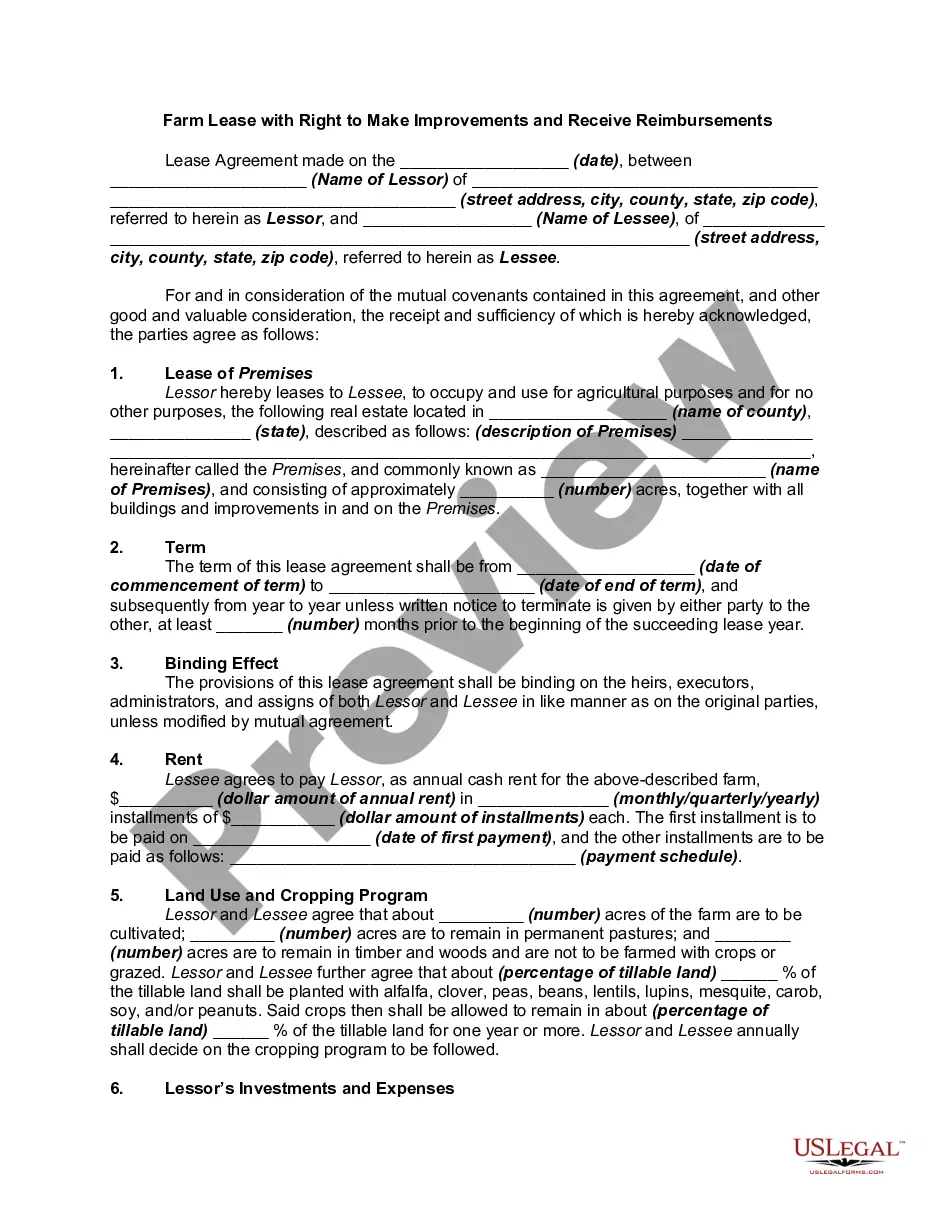
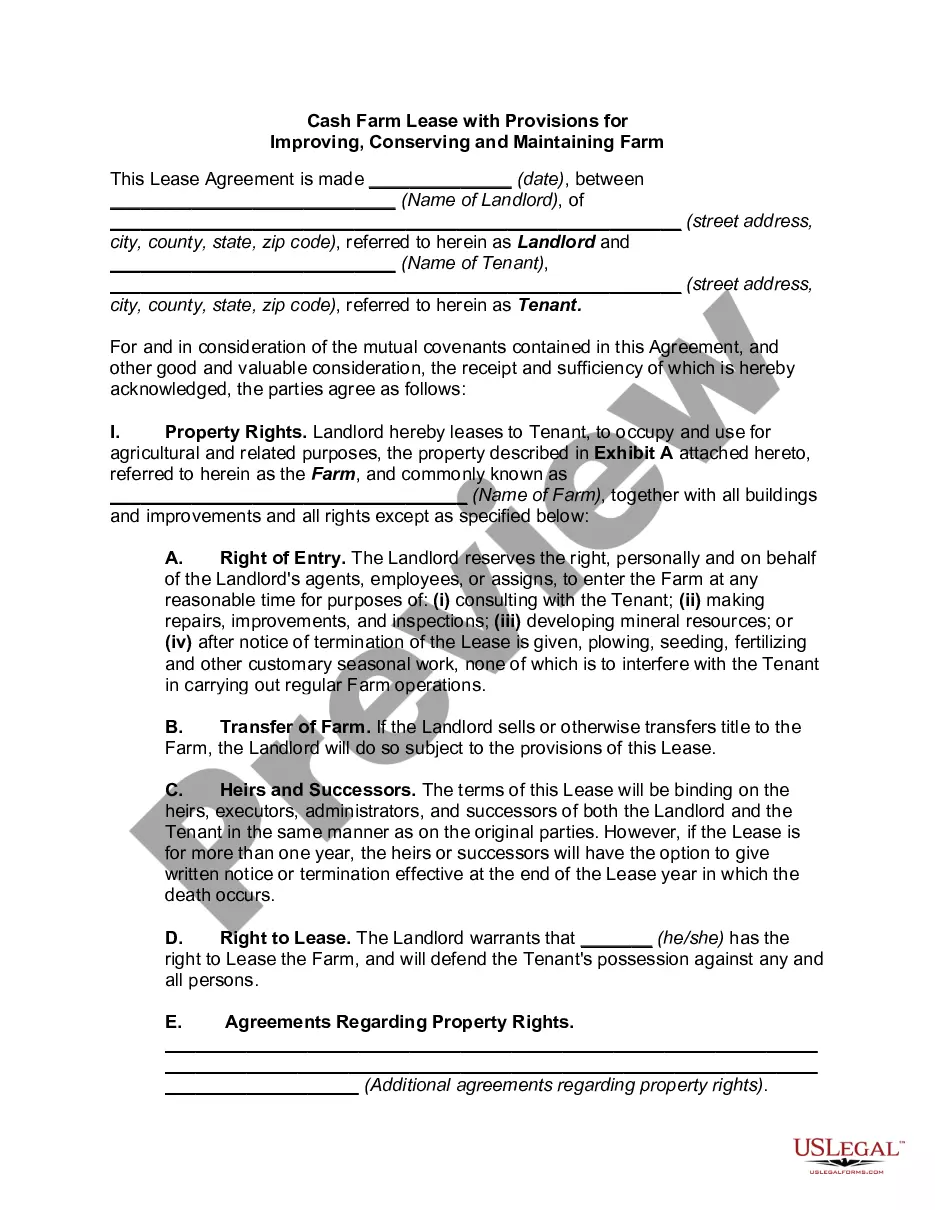
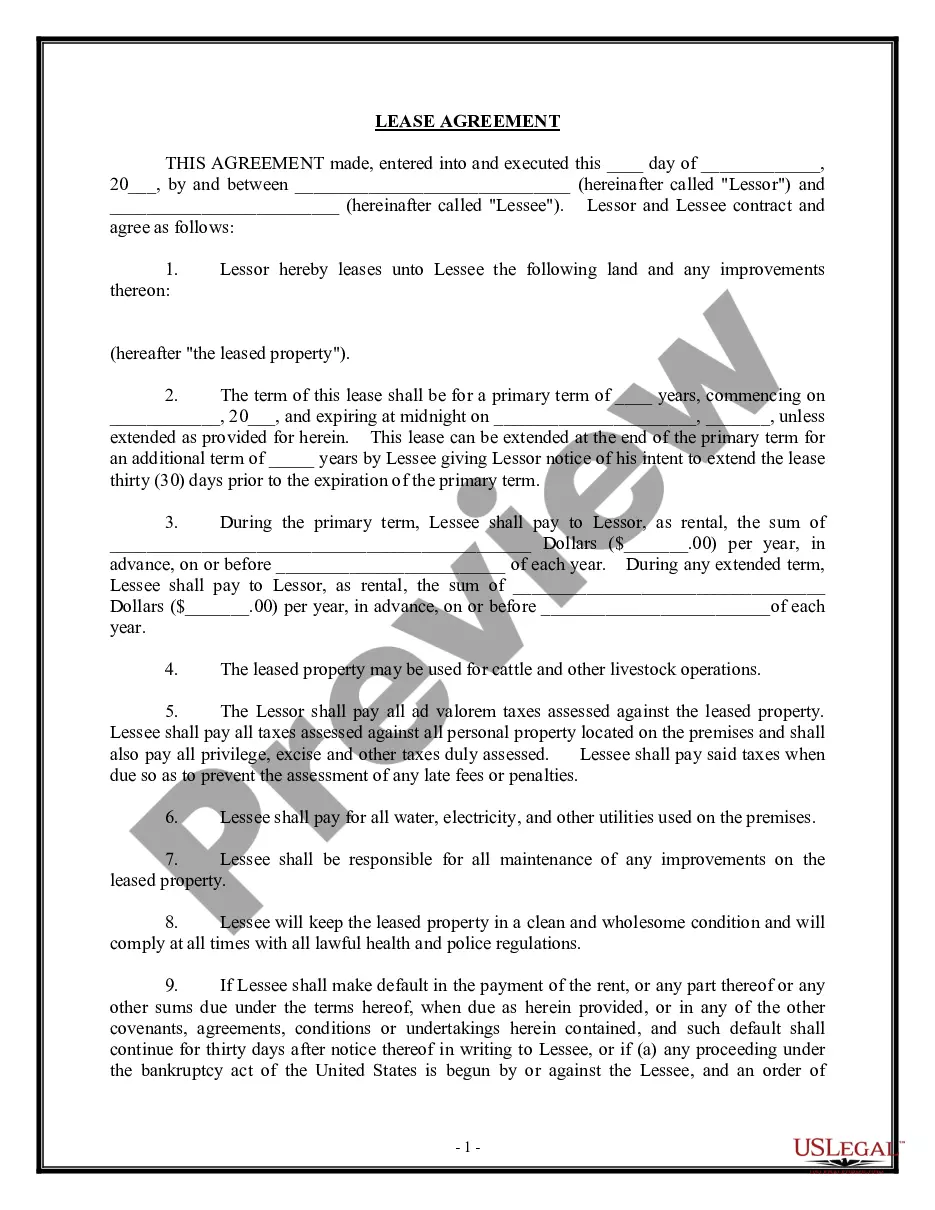
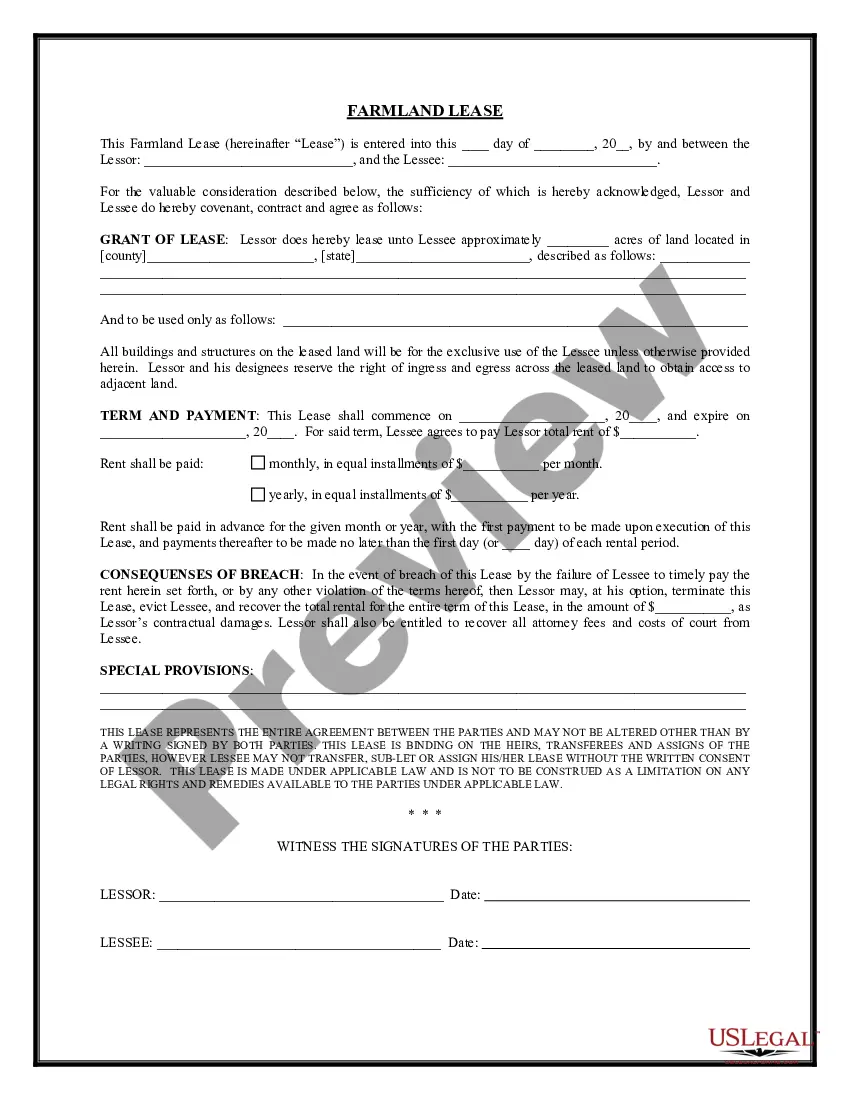
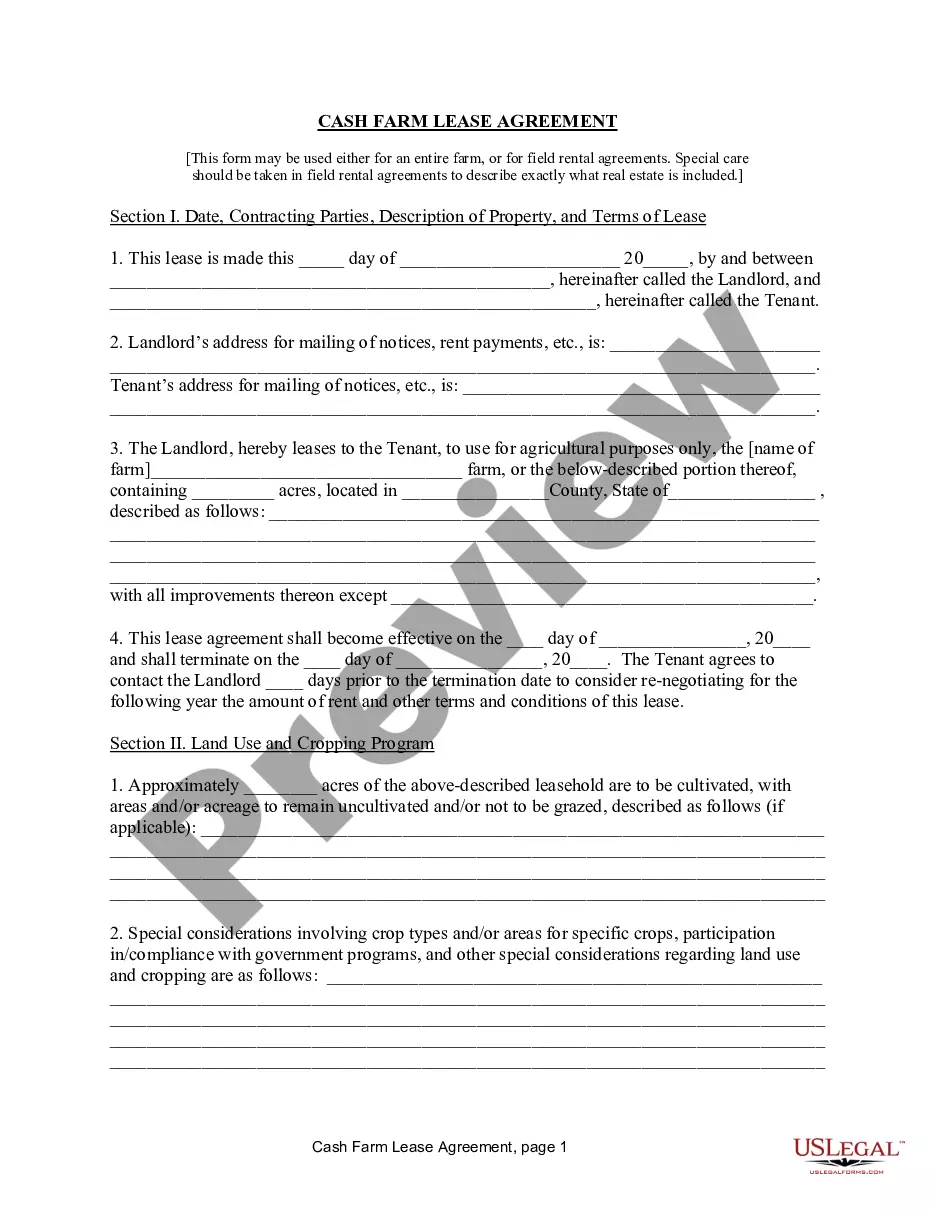
The Farm Lease or Rental with Right to Make Improvements and Receive Reimbursements is a legal document that outlines the terms under which a lessor (landowner) rents agricultural land to a lessee (tenant). This form specifically grants the lessee the right to make improvements on the property and seek reimbursement for certain expenses related to those improvements. It differs from standard rental agreements by emphasizing the rights and responsibilities related to property enhancements, which can significantly impact both parties involved.
What’s included in this form
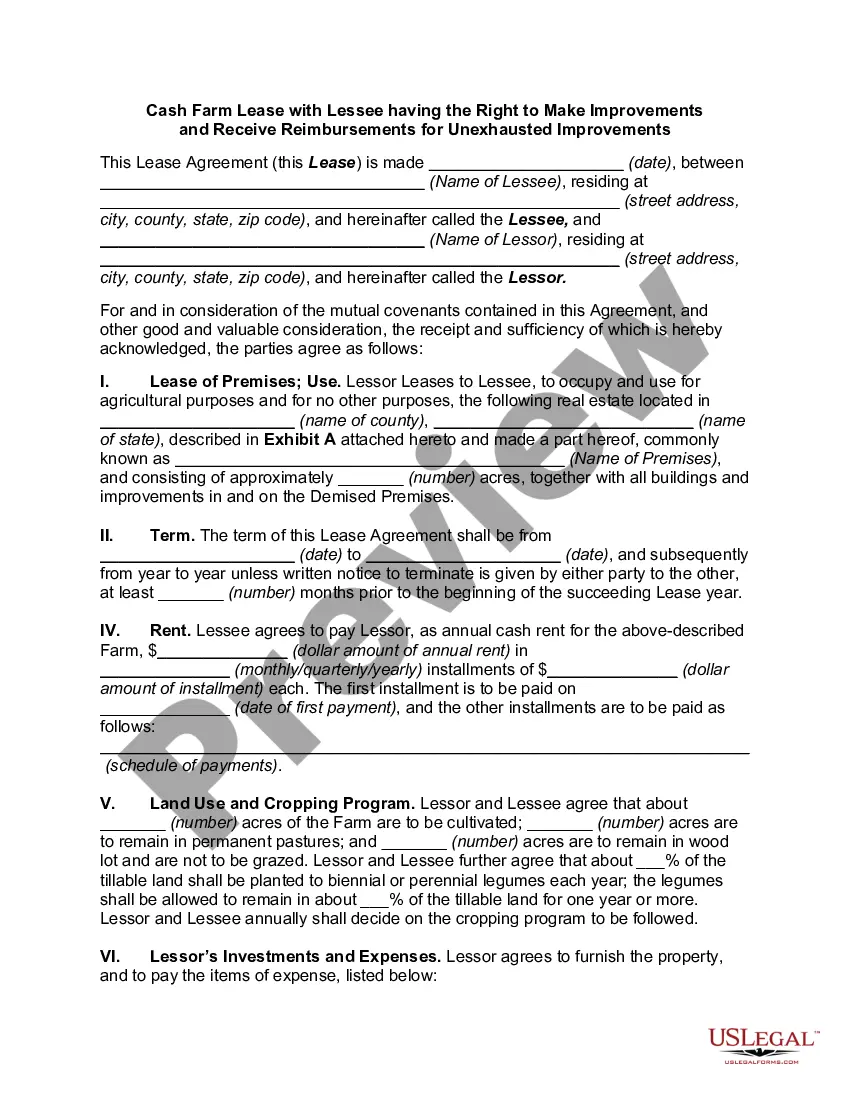
- Identification of the parties involved, including the lessor and lessee.
- Description of the leased premises and its intended agricultural use.
- Details regarding the term of the lease, renewal, and termination clauses.
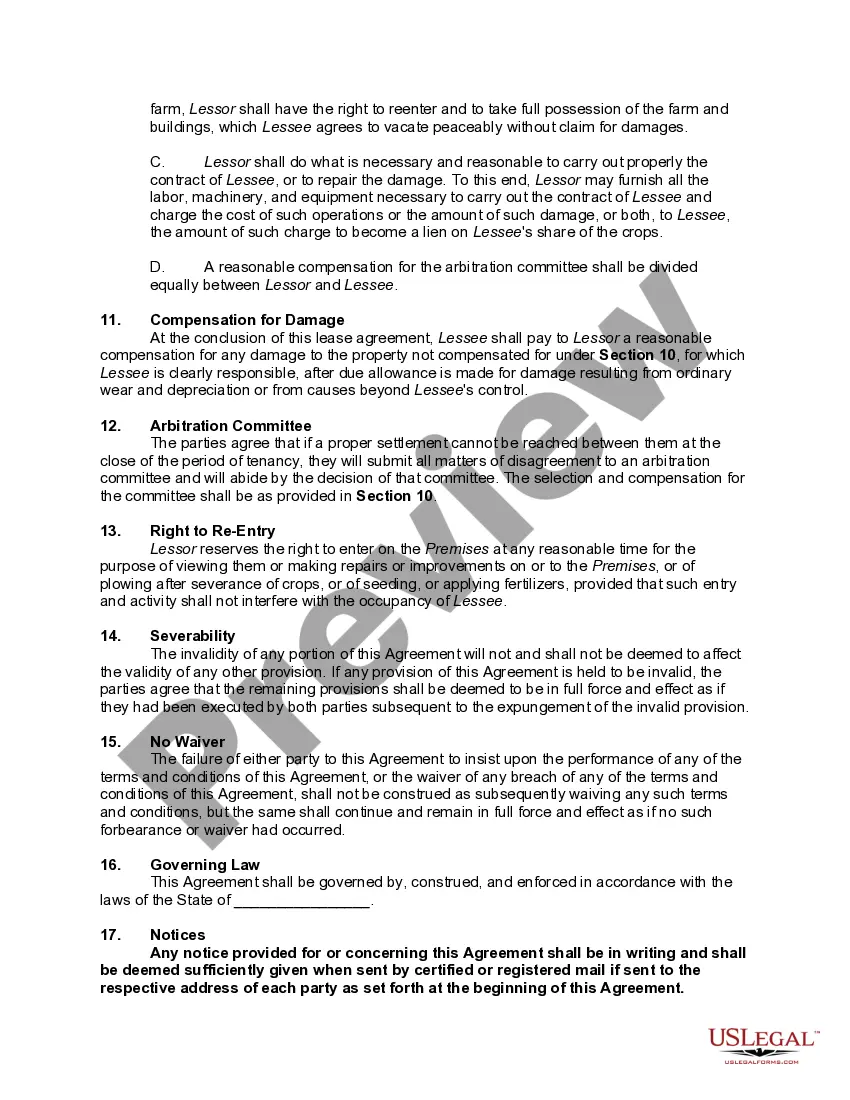
- Agreements on rental payments, including amounts and payment schedules.
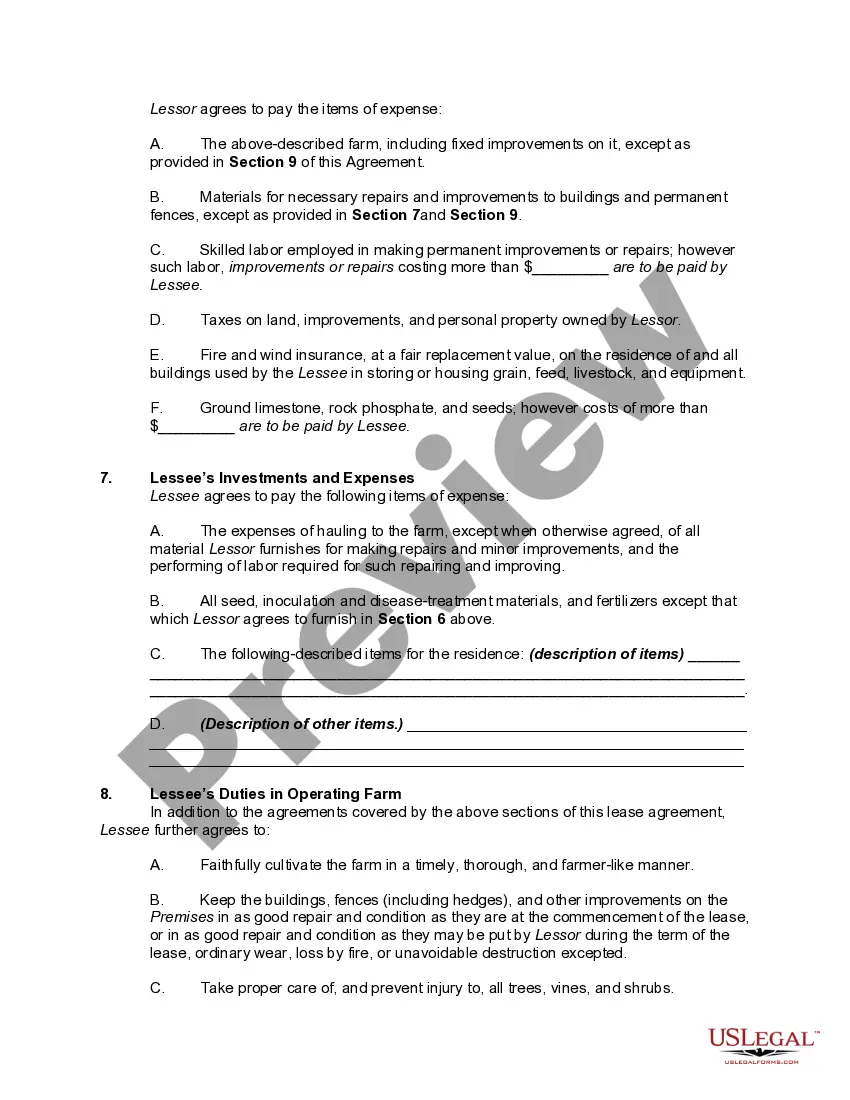
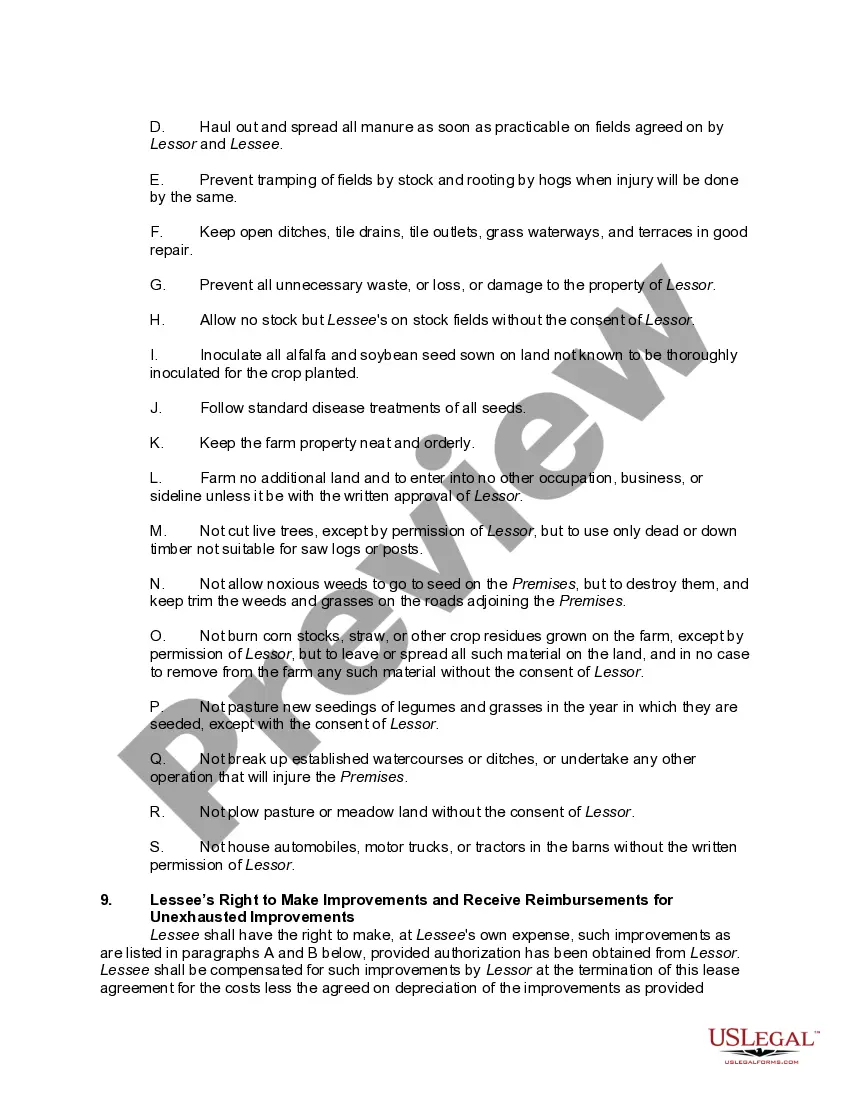
- Responsibilities for land use, cropping programs, and investment in improvements.
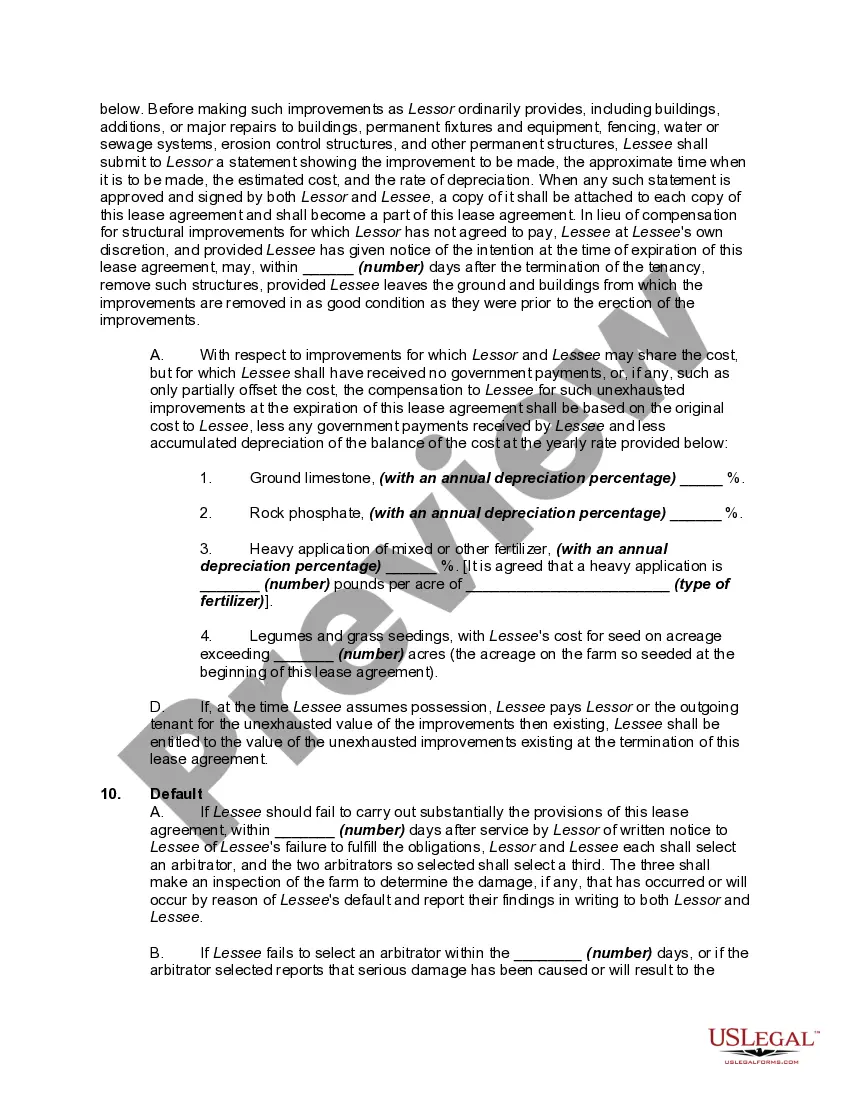
- Provisions for the lessee's right to make improvements and receive reimbursement.

Common use cases
This form is necessary when a landowner wishes to lease agricultural land and wants to allow the tenant to make improvements. It's particularly useful for leases that may involve significant modifications or enhancements to the property, such as building structures, installing irrigation, or other enhancements that may require financial investment from the lessee. This form ensures clarity and mutual agreement on expenditures and responsibilities for both parties during the leasing period.
Who needs this form
This form is suitable for:
- Lessees looking to lease agricultural land with the intention of making improvements.
- Lessees who want assurance of receiving reimbursement for enhancements made to the property.
- Lessees and lessors who need a clear agreement to avoid disputes over improvements and financial responsibilities.
- Landowners who want to attract responsible tenants willing to invest in the property.
Completing this form step by step
- Identify and enter the names and addresses of both the lessor and lessee.
- Provide a detailed description of the premises being leased, including its acreage and any existing structures.
- Specify the lease term, including the start and end dates, as well as any renewal terms.
- Outline the rental payment amount, schedule, and method of payment.
- Detail the agreed-upon responsibilities for land use and improvements, including any expenses covered by each party.
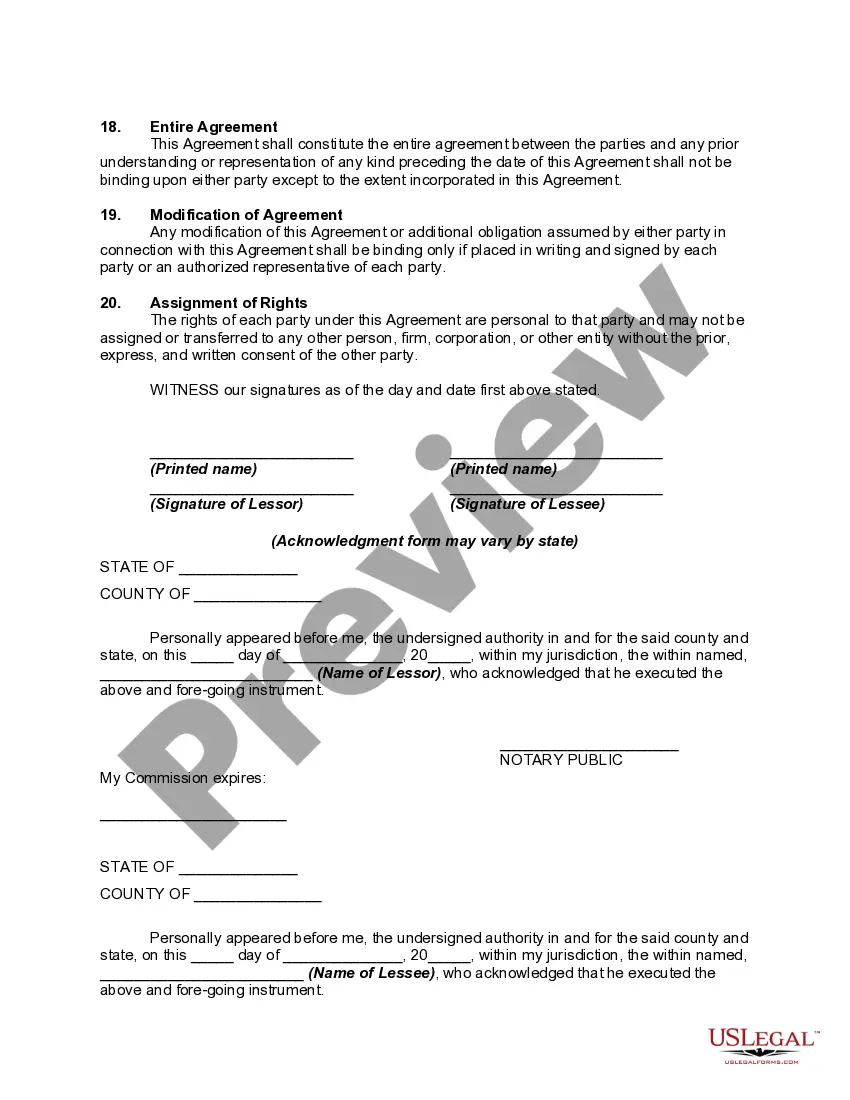
Notarization requirements for this form
Notarization is required for this form to take effect. Our online notarization service, powered by Notarize, lets you verify and sign documents remotely through an encrypted video session, available 24/7.
Get your form ready online
Our built-in tools help you complete, sign, share, and store your documents in one place.
Make edits, fill in missing information, and update formatting in US Legal Forms—just like you would in MS Word.
Download a copy, print it, send it by email, or mail it via USPS—whatever works best for your next step.
Sign and collect signatures with our SignNow integration. Send to multiple recipients, set reminders, and more. Go Premium to unlock E-Sign.
If this form requires notarization, complete it online through a secure video call—no need to meet a notary in person or wait for an appointment.
We protect your documents and personal data by following strict security and privacy standards.

Make edits, fill in missing information, and update formatting in US Legal Forms—just like you would in MS Word.

Download a copy, print it, send it by email, or mail it via USPS—whatever works best for your next step.

Sign and collect signatures with our SignNow integration. Send to multiple recipients, set reminders, and more. Go Premium to unlock E-Sign.

If this form requires notarization, complete it online through a secure video call—no need to meet a notary in person or wait for an appointment.

We protect your documents and personal data by following strict security and privacy standards.
Mistakes to watch out for
- Failing to clearly define the leased premises, which can lead to disputes later.
- Not specifying the lease term and renewal process adequately.
- Ignoring local laws about agricultural leases and improvements.
- Not completing the section regarding improvements and reimbursements properly.
- Overlooked signatures or notarial requirements that invalidate the agreement.
Advantages of online completion
- Convenient access to the form from any location, saving time and effort.
- Editability allows users to customize the document to fit their specific situation easily.
- Reliable templates drafted by licensed attorneys ensure adherence to legal standards.
- Instant downloads provide quick availability for immediate use.
Legal use & context
- This lease agreement functions as a legally binding contract ensuring that both the lessor and lessee are aware of their rights and responsibilities.
- It is enforceable in a court of law, providing recourse for either party if the terms are not met.
- Properly documenting the lease terms helps prevent misunderstandings and conflicts during and after the lease period.
Summary of main points
- The Farm Lease or Rental enables agricultural land leasing with specific improvement rights.
- Clearly addressed improvements and reimbursements can protect both parties' interests.
- It is crucial to be familiar with state laws regarding agricultural leases to ensure compliance.
- Properly completed forms minimize disputes and facilitate a successful leasing relationship.
Looking for another form?





Form popularity
FAQ
Advantages. One big advantage to this is that you can purchase your home for much less than a traditional home because you don't have to buy the land. At the same time, leased-land properties may offer better surroundings than apartment living for children and pets, and you can invest the money that leasing saves you.
With Tenant Consent. If the tenant and landlord both agree to the change, the parties can either (1) execute a new lease or rental agreement that includes the new clause, or (2) amend the existing lease or rental agreement. Without Tenant Consent.
Your landlord can change a rental agreement at any time during the term of the agreement, with or without your consent. Changes must be made with adequate notice; notice periods are 30 days in most states. Changing a lease is harder because both parties must consent to almost any change.
The average rate to rent irrigated and non-irrigated cropland in 2018 was $215 and $125 per acre, respectively. The average rate to rent pastureland was $12.50 per acre in 2018.Granted, that money would then be taxable, and you would need to fill out Form 4835 with the IRS to list your farm rental income.
Leasing land is also much more fluid, so they're not constrained when they choose to stop farming themselves. As far as the benefits to you, you don't have to sell the family property after all and can continue to earn a farmland rental income from it at the same time.
If you are a leaseholder, you cannot change the lease terms without agreeing such change with your landlord. The reason for this is that as the lease is a contract between two parties, the leaseholder and the landlord, both parties must agree to change (referred to also as variation) of the terms of the lease.
A ground lease involves leasing land for a long-term periodtypically for 50 to 99 yearsto a tenant who constructs a building on the property. A 99-year lease is generally the longest possible lease term for a piece of real estate property.Tenants generally assume responsibility for any and all expenses.
The Lease Must be in Writing It does not matter if the lease is handwritten or typed. If the lease is for more than one year, it must be in written form and contain the following terms.
Farm Land Leases In a typical cash rent lease, the tenant is obligated to pay a set price per acre or a set rate for the leased land. With this form of lease, the tenant bears certain economic risks, and the landlord is guaranteed a predictable return, regardless of commodity prices.