Do Not Resuscitate Order - DNR or Advance Directive
Overview of this form
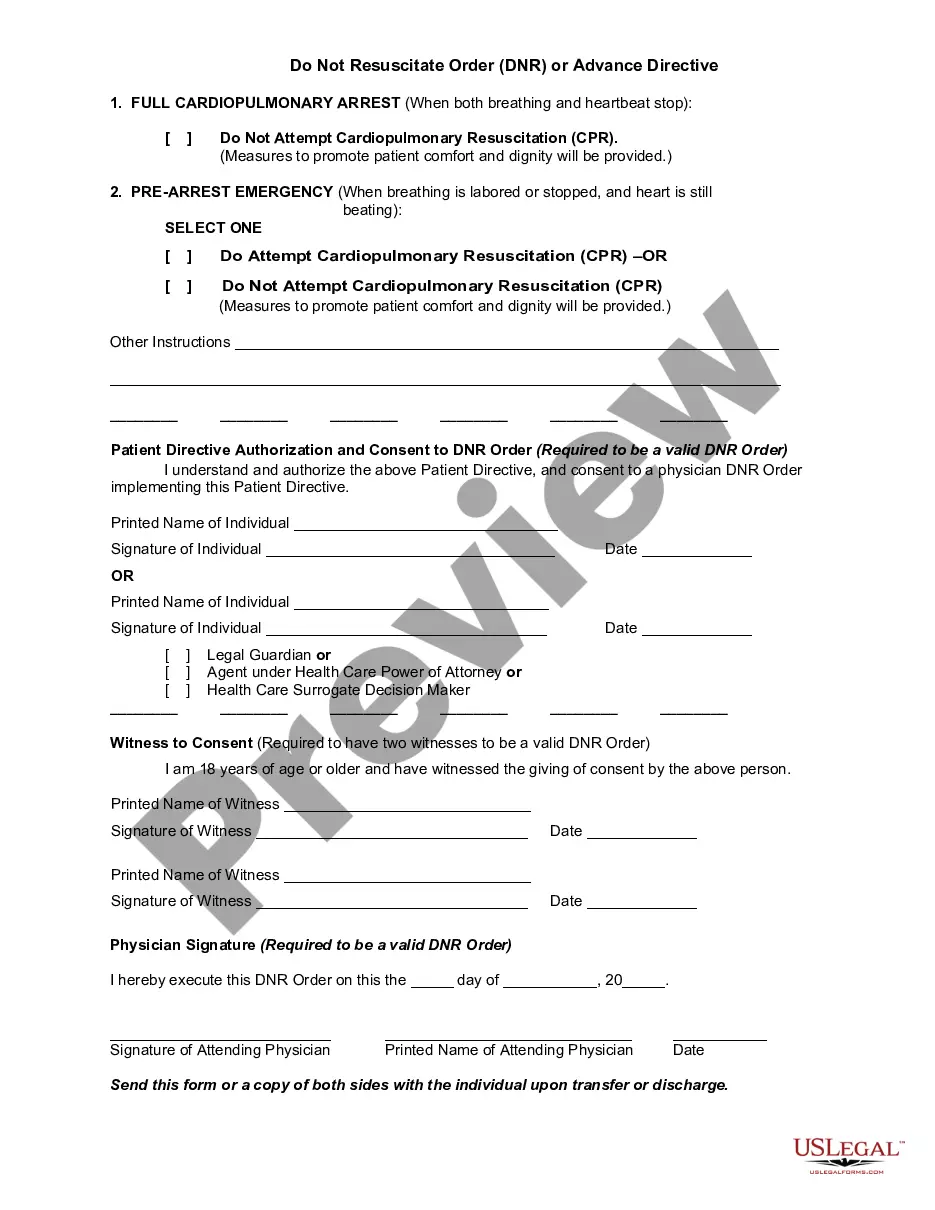
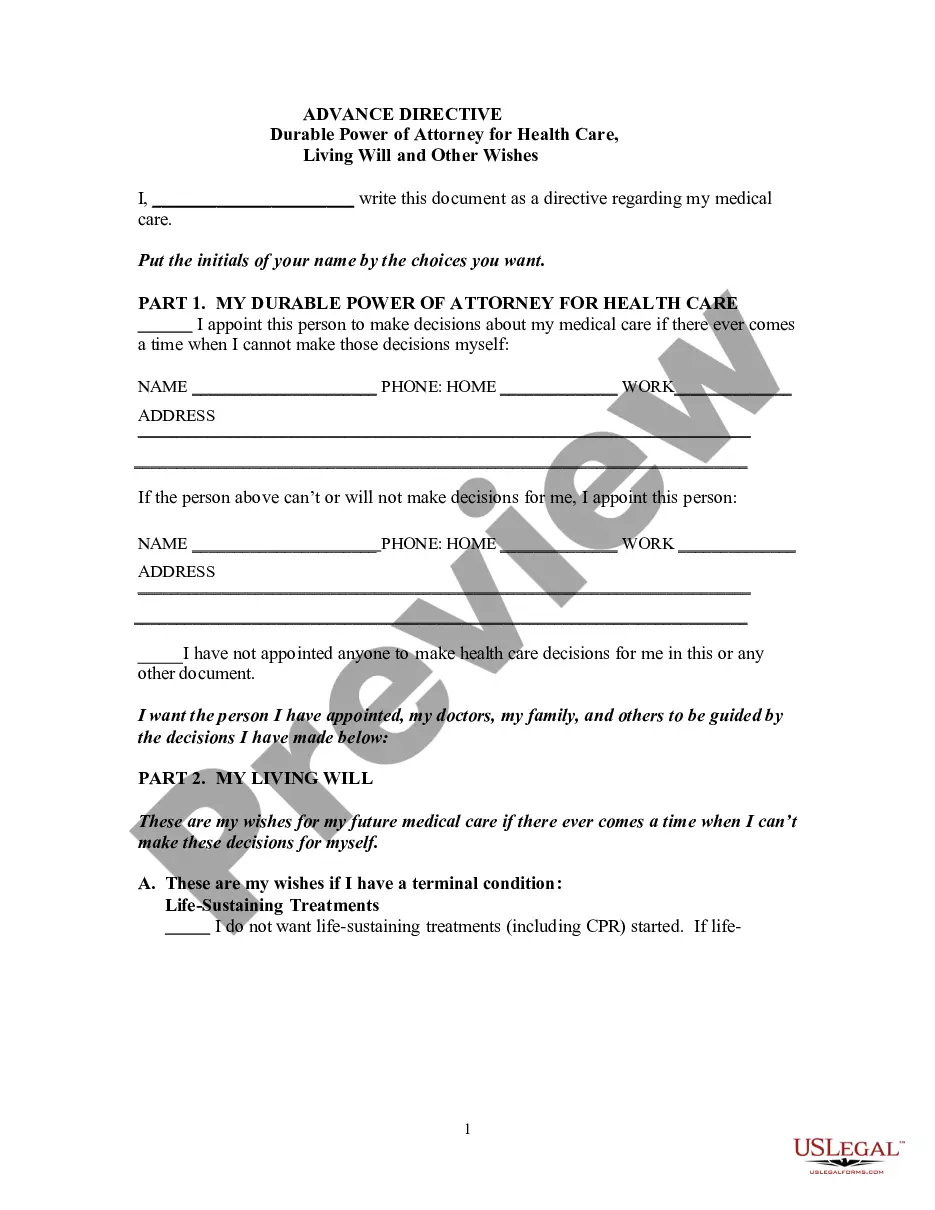
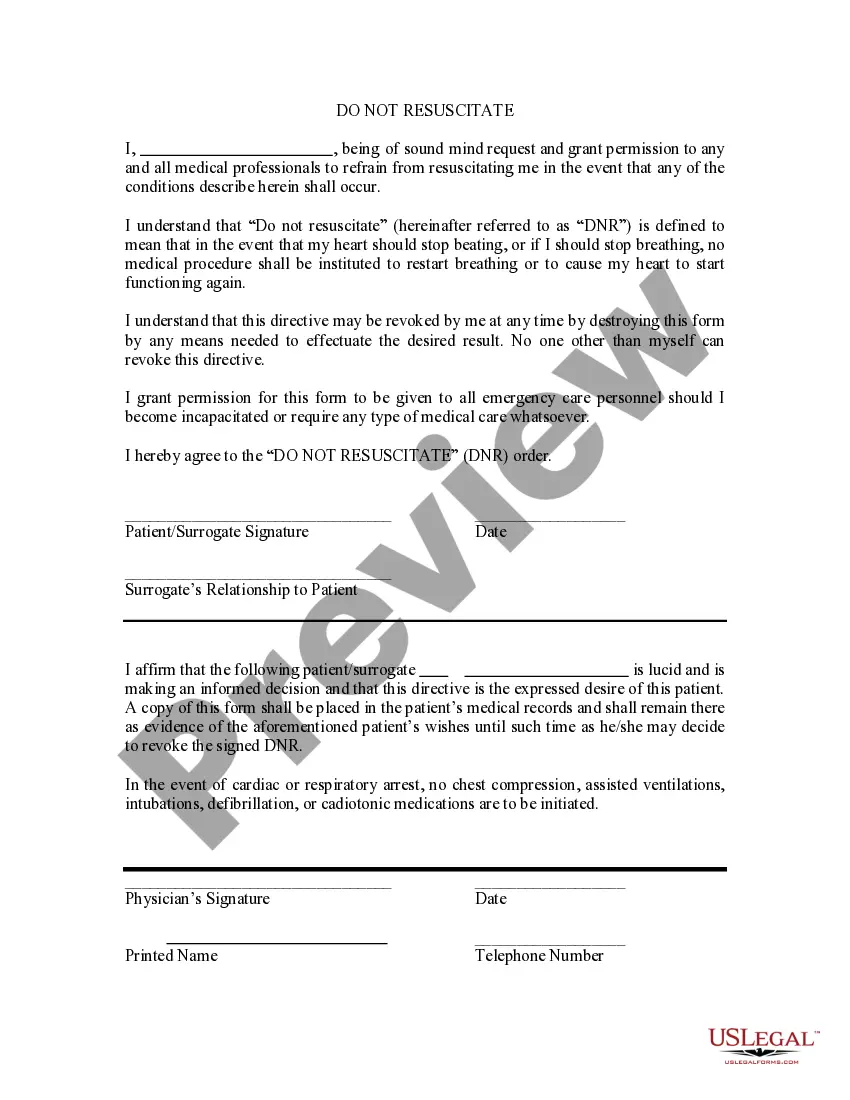
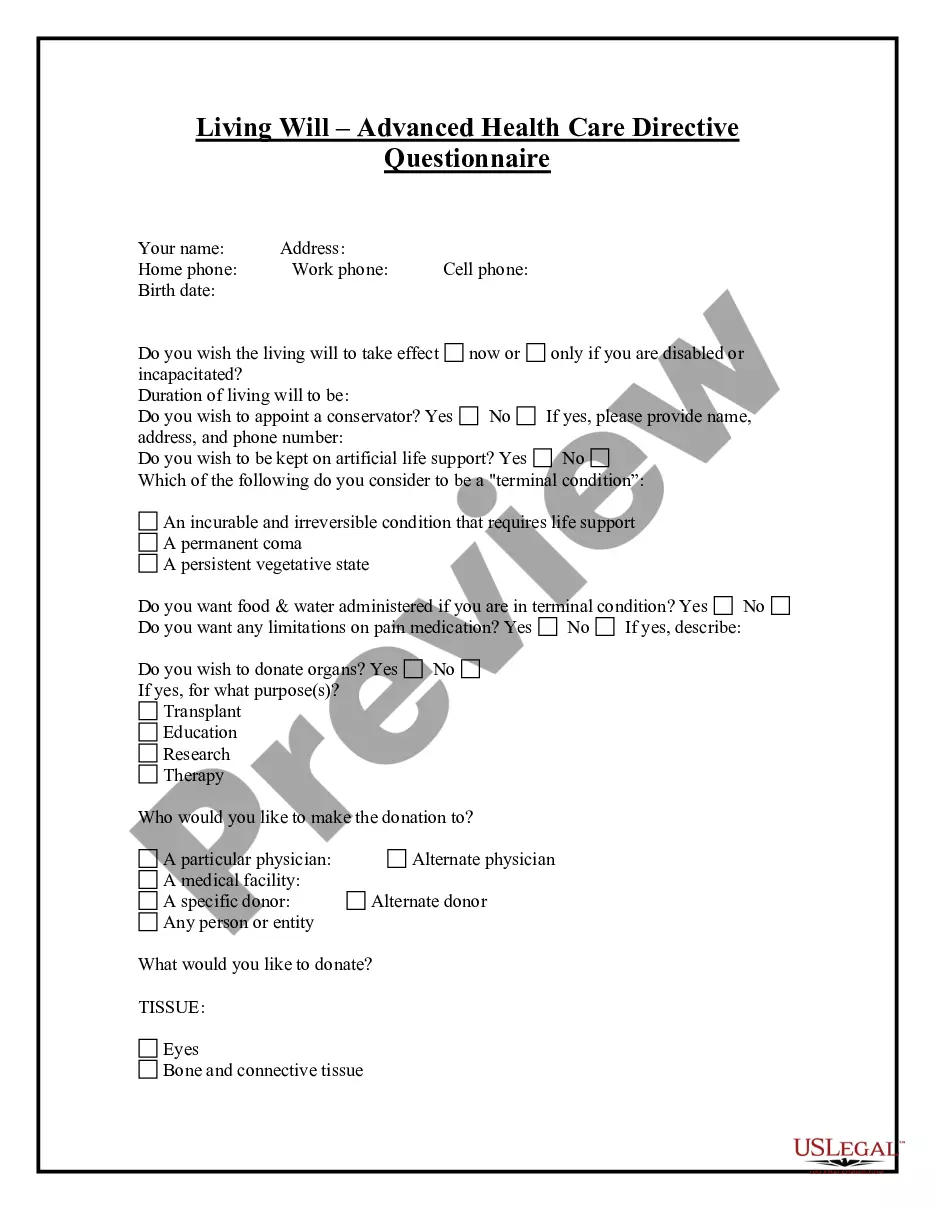
A Do Not Resuscitate (DNR) order is a legal document that instructs medical personnel not to perform cardiopulmonary resuscitation (CPR) if your heart ceases to function or if you stop breathing. This form is crucial in situations where you wish to decline life-saving measures to enhance your comfort and dignity at the end of life. While similar to other advance directives, such as living wills, a DNR specifically addresses the decision to forgo CPR.
Main sections of this form
- Full cardiopulmonary arrest instructions: Indicates whether to attempt CPR when both breathing and heartbeat stop.
- Pre-arrest emergency instructions: Allows you to specify your preferences when breathing is labored but the heart is still beating.
- Patient directive authorization: Confirms that you understand and authorize the DNR order.
- Legal guardian or agent information: Provides space for consent from a healthcare surrogate or legal representative.
- Witness signatures: Requires two witnesses to validate the order.
- Physician signature: Ensures that the order is executed by a qualified physician.
Situations where this form applies
This form is used when individuals want to clearly communicate their wishes regarding resuscitation efforts in the event of a medical emergency. It is particularly beneficial for patients with serious, life-limiting illnesses or those who prefer to avoid aggressive medical interventions that could prolong suffering. Additionally, it can be beneficial when transitioning to a new care setting, where prior instructions may not be readily accessible.
Who this form is for
This form is intended for:
- Individuals with serious health conditions who wish to decline resuscitation efforts.
- Patients undergoing end-of-life care who prioritize comfort and dignity.
- Legal guardians or health care surrogates acting on behalf of someone unable to make their own medical decisions.
- Any person looking to ensure their medical treatment preferences are respected in emergencies.
Completing this form step by step
- Review the entire form to understand its components and implications.
- Complete the full cardiopulmonary arrest and pre-arrest emergency sections based on your wishes.
- Sign and date the Patient Directive Authorization section.
- Have two witnesses sign to validate the document.
- Ensure a physician signs to execute the order legally.
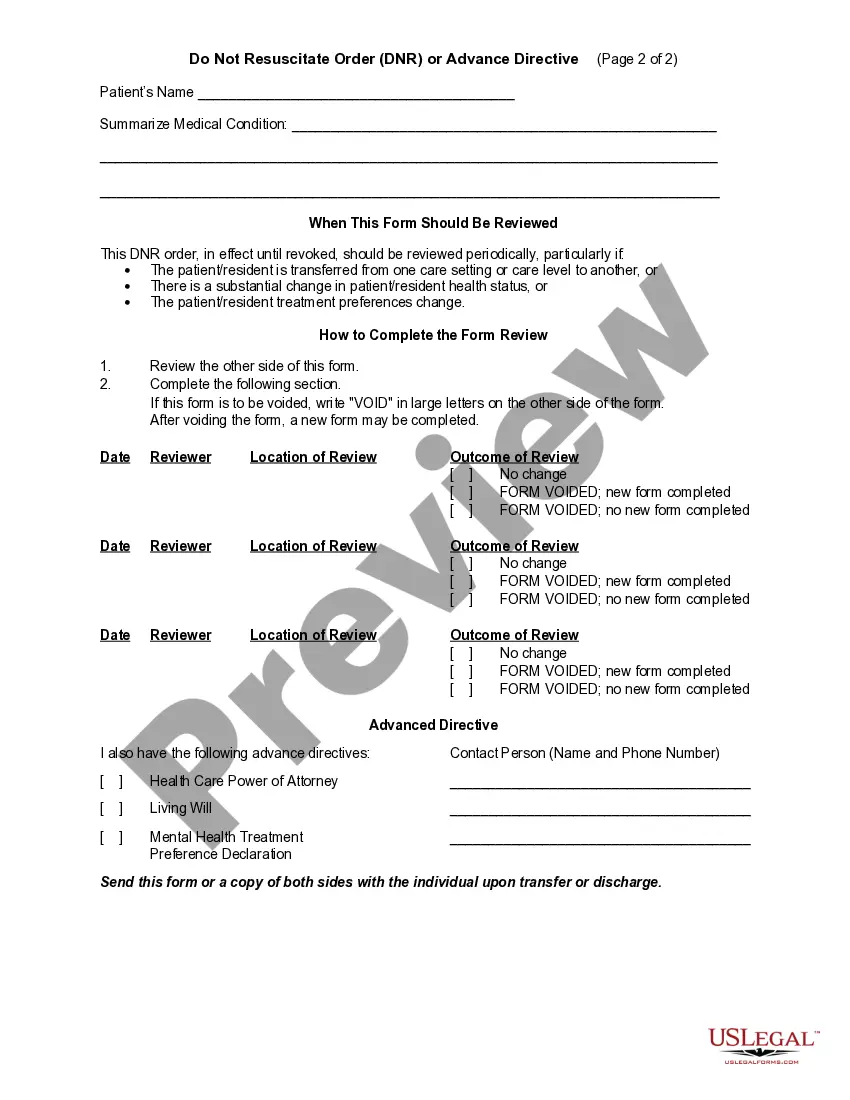
- Keep copies of the completed form within easy reach for health care providers.
Is notarization required?
This form does not typically require notarization to be legally valid. However, some jurisdictions or document types may still require it. US Legal Forms provides secure online notarization powered by Notarize, available 24/7 for added convenience.
Get your form ready online
Our built-in tools help you complete, sign, share, and store your documents in one place.
Make edits, fill in missing information, and update formatting in US Legal Forms—just like you would in MS Word.
Download a copy, print it, send it by email, or mail it via USPS—whatever works best for your next step.
Sign and collect signatures with our SignNow integration. Send to multiple recipients, set reminders, and more. Go Premium to unlock E-Sign.
If this form requires notarization, complete it online through a secure video call—no need to meet a notary in person or wait for an appointment.
We protect your documents and personal data by following strict security and privacy standards.

Make edits, fill in missing information, and update formatting in US Legal Forms—just like you would in MS Word.

Download a copy, print it, send it by email, or mail it via USPS—whatever works best for your next step.

Sign and collect signatures with our SignNow integration. Send to multiple recipients, set reminders, and more. Go Premium to unlock E-Sign.

If this form requires notarization, complete it online through a secure video call—no need to meet a notary in person or wait for an appointment.

We protect your documents and personal data by following strict security and privacy standards.
Avoid these common issues
- Not consulting a physician before completing the DNR order, leading to discrepancies in understanding.
- Failing to have two witnesses sign, which invalidates the order.
- Not keeping the form accessible for health care professionals during emergencies.
- Ignoring state-specific requirements, which may affect the enforceability of the DNR order.
Benefits of completing this form online
- Convenience: Accessible from anywhere, allowing you to complete the form at your own pace.
- Editability: Easily fill out or update your preferences as your medical situation changes.
- Compliance assurance: Forms are created to meet legal standards, reducing the risk of errors.
Looking for another form?

Form popularity
FAQ
The name and contact information of your healthcare agent/proxy. Answers to specific questions about your preferences for care if you become unable to speak for yourself. Names and signatures of individuals who witness your signing your advance directive, if required.
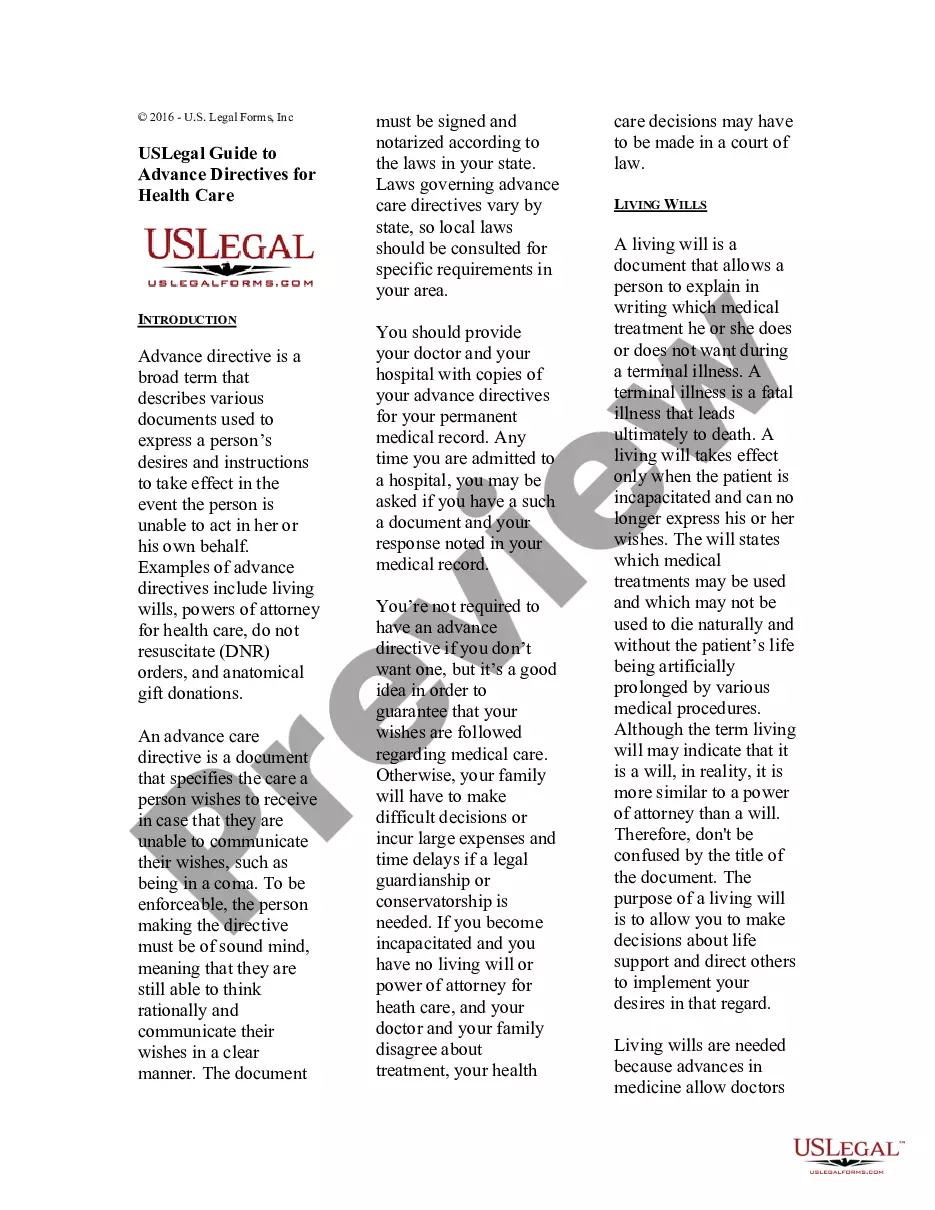
A breathing machine, CPR, and artificial nutrition and hydration are examples of life-sustaining treatments. Living willAn advance directive that tells what medical treatment a person does or doesn't want if he/she is not able to make his/her wishes known.
The living will. Durable power of attorney for health care/Medical power of attorney. POLST (Physician Orders for Life-Sustaining Treatment) Do not resuscitate (DNR) orders. Organ and tissue donation.
You can get the forms in a doctor's office, hospital, law office, state or local office for the aging, senior center, nursing home, or online. When you write your advance directive, think about the kinds of treatments that you do or don't want to receive if you get seriously hurt or ill.
A Do Not Resuscitate (DNR) order is another kind of advance directive. A DNR is a request not to have cardiopulmonary resuscitation (CPR) if your heart stops or if you stop breathing. (Unless given other instructions, hospital staff will try to help all patients whose heart has stopped or who have stopped breathing.)
You can use an advance directive form to make this request or tell your doctor that you don't want to be resuscitated. In this case, a DNR order is put in your medical record by your doctor. DNR orders are accepted by doctors and hospitals in all states.
Talk to your agent. Talk to the person or persons you want to make decisions for you so they: Write your personal directive. You have 2 options: Sign it. You and a witness have to sign the personal directive to make it a legal document. Give out copies.
The living will.Durable power of attorney for health care/Medical power of attorney.POLST (Physician Orders for Life-Sustaining Treatment)Do not resuscitate (DNR) orders.Organ and tissue donation.