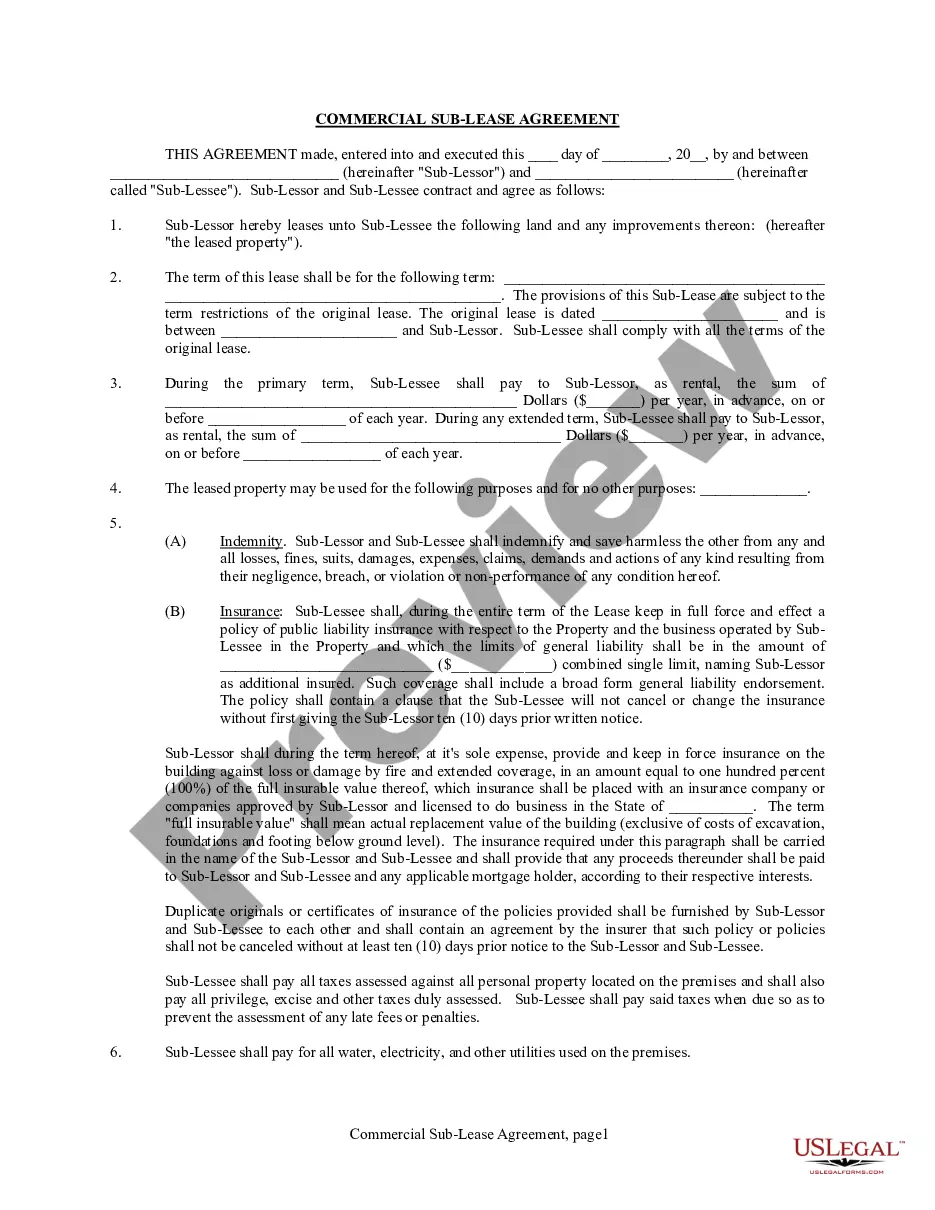
Snow Removal Agreement - Removal of Snow on Roads
Understanding this form
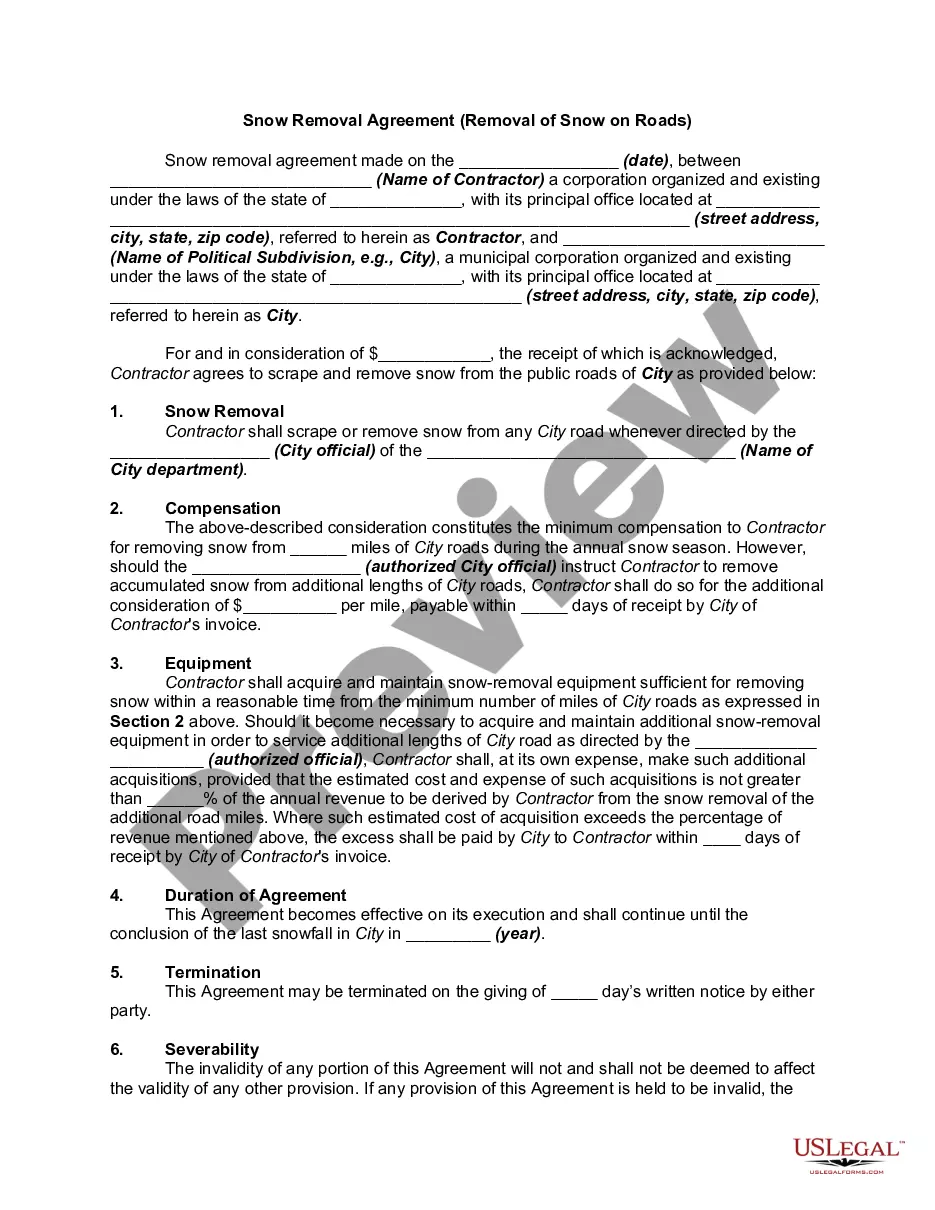
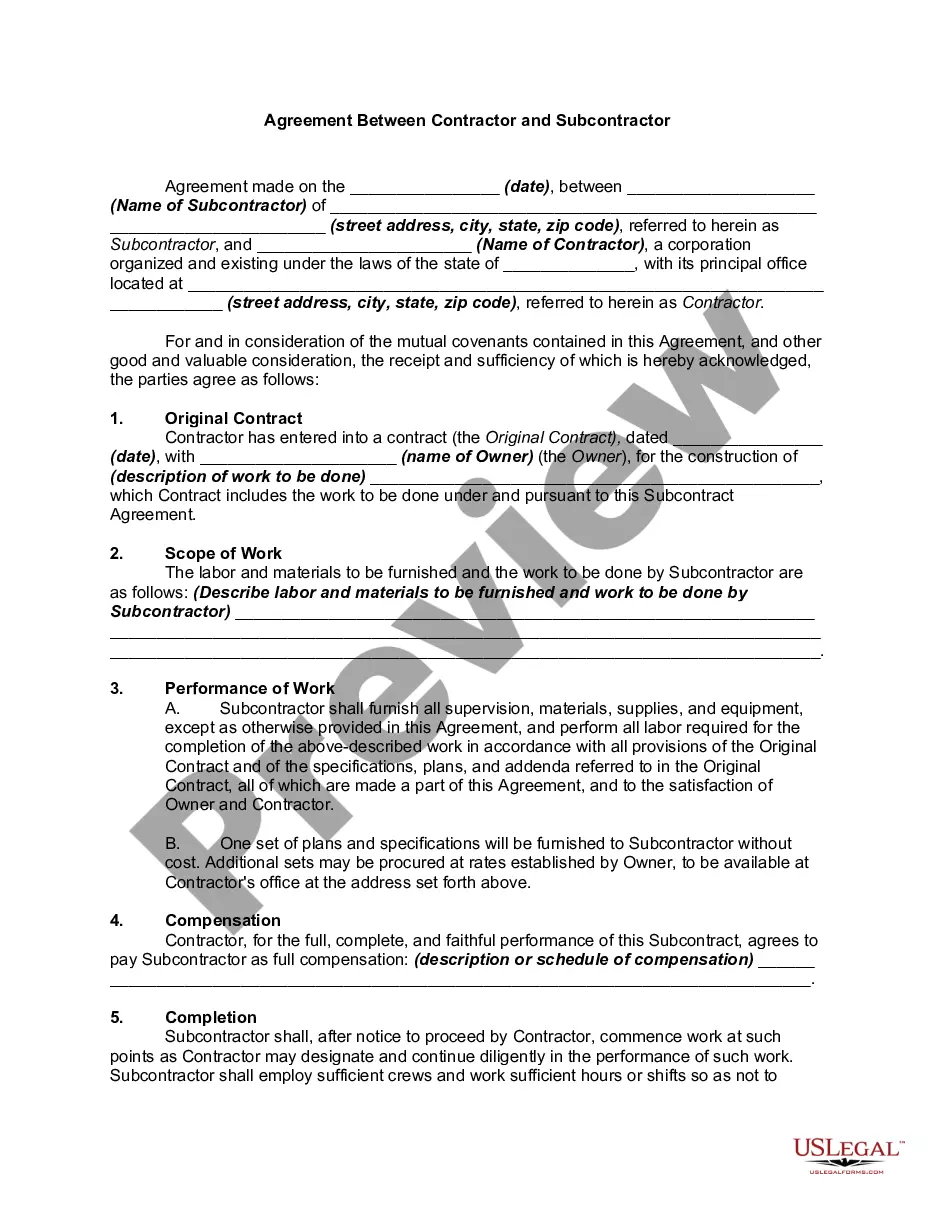
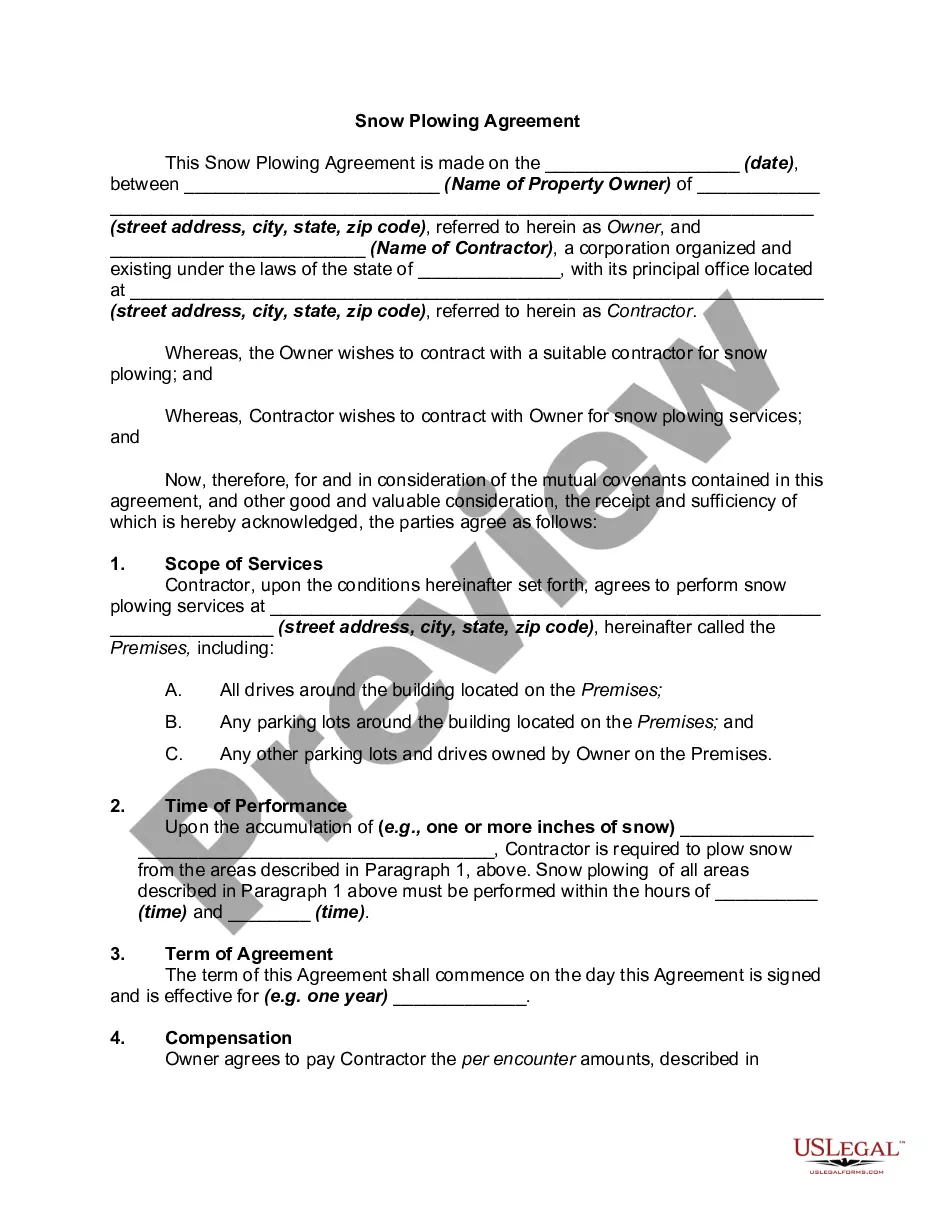
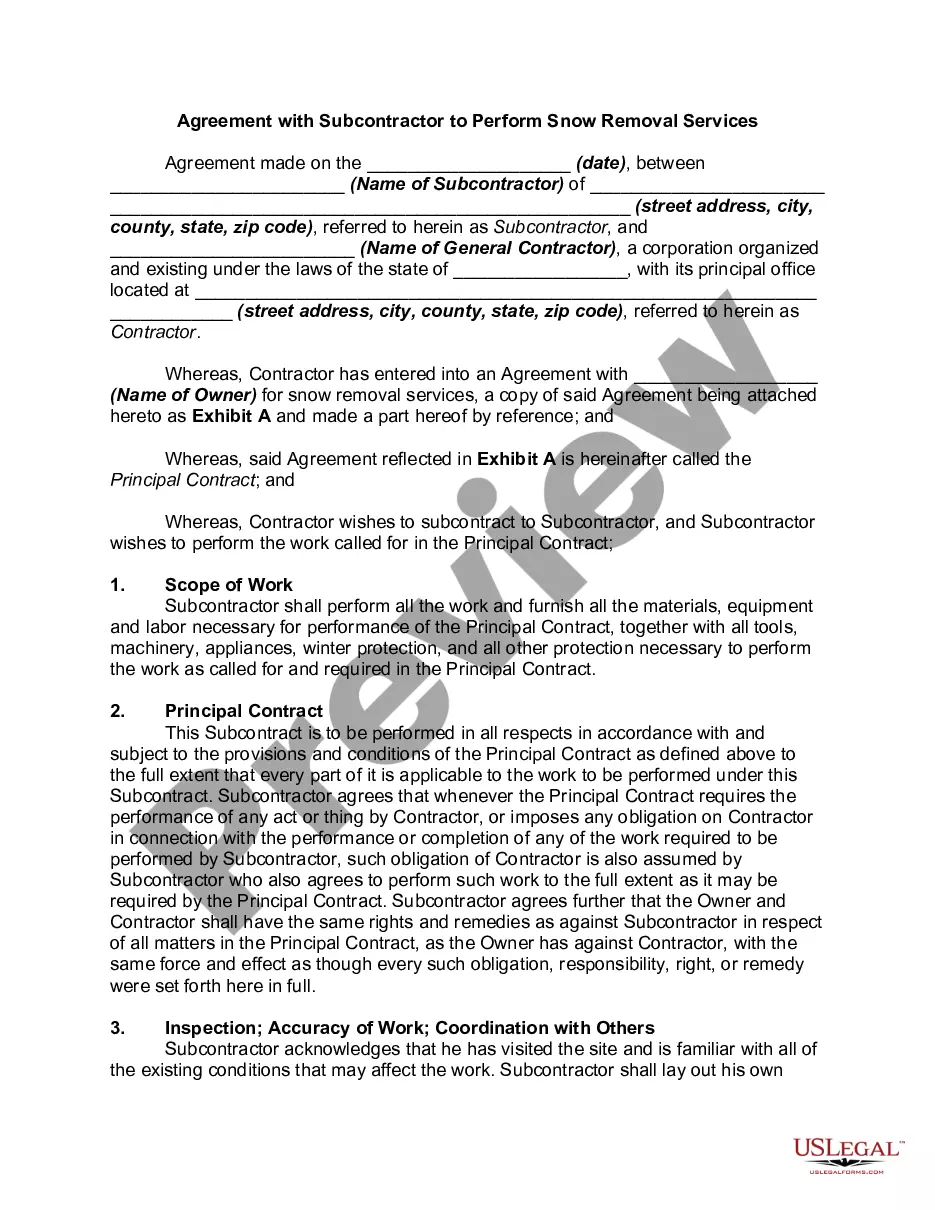
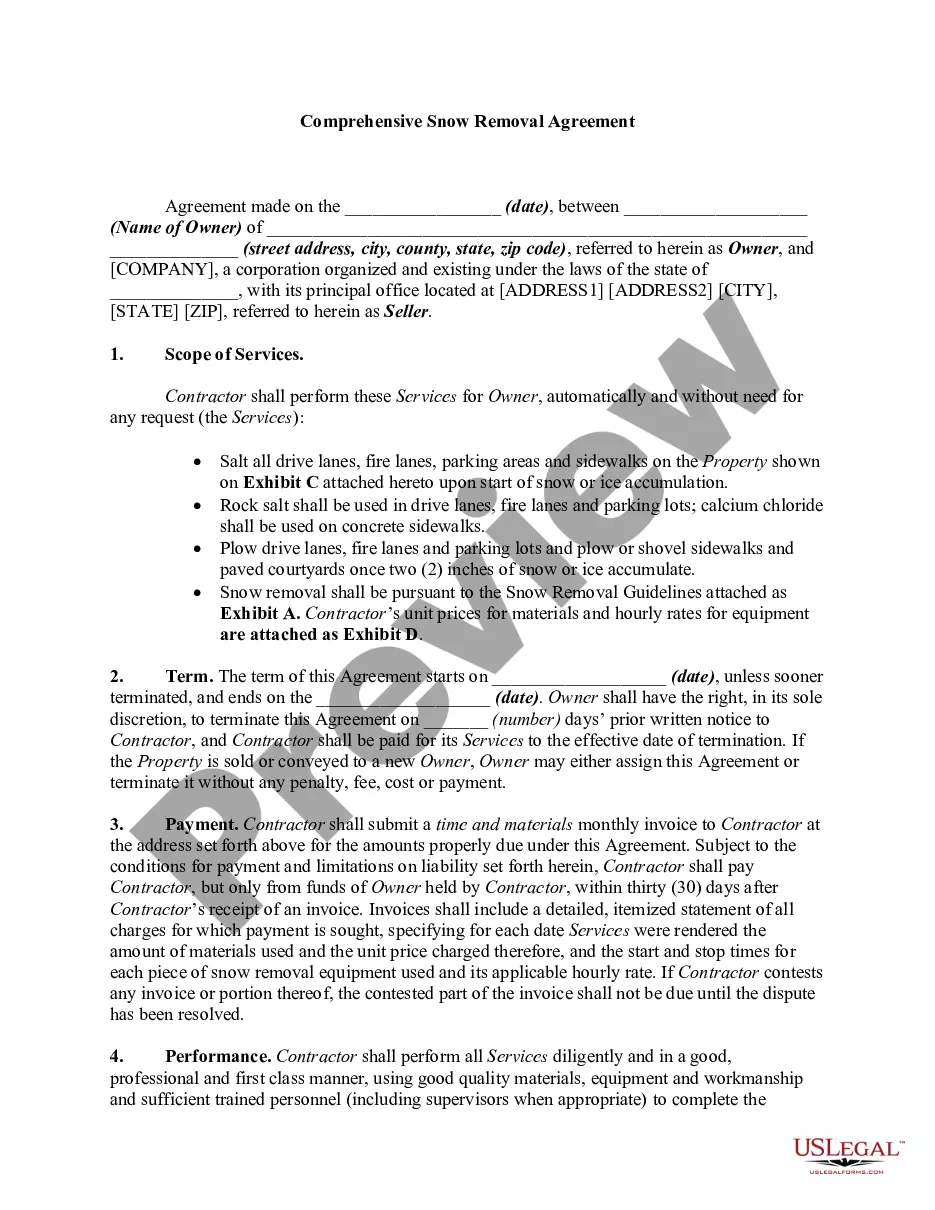
The Snow Removal Agreement for the Removal of Snow on Roads is a legal document designed to outline the responsibilities and compensation related to snow removal from public roads by a contractor. This form differentiates itself by being specific to agreements between a contractor and a municipal entity, detailing terms such as the extent of snow removal services and compensation structures, which can vary by jurisdiction.
Form components explained
- Identification of the parties involved, including the contractor and the municipal corporation.
- Details regarding the snow removal tasks, including specific directives from city officials.
- Compensation terms based on the mileage of roads serviced.
- Requirements for the contractor's snow-removal equipment.
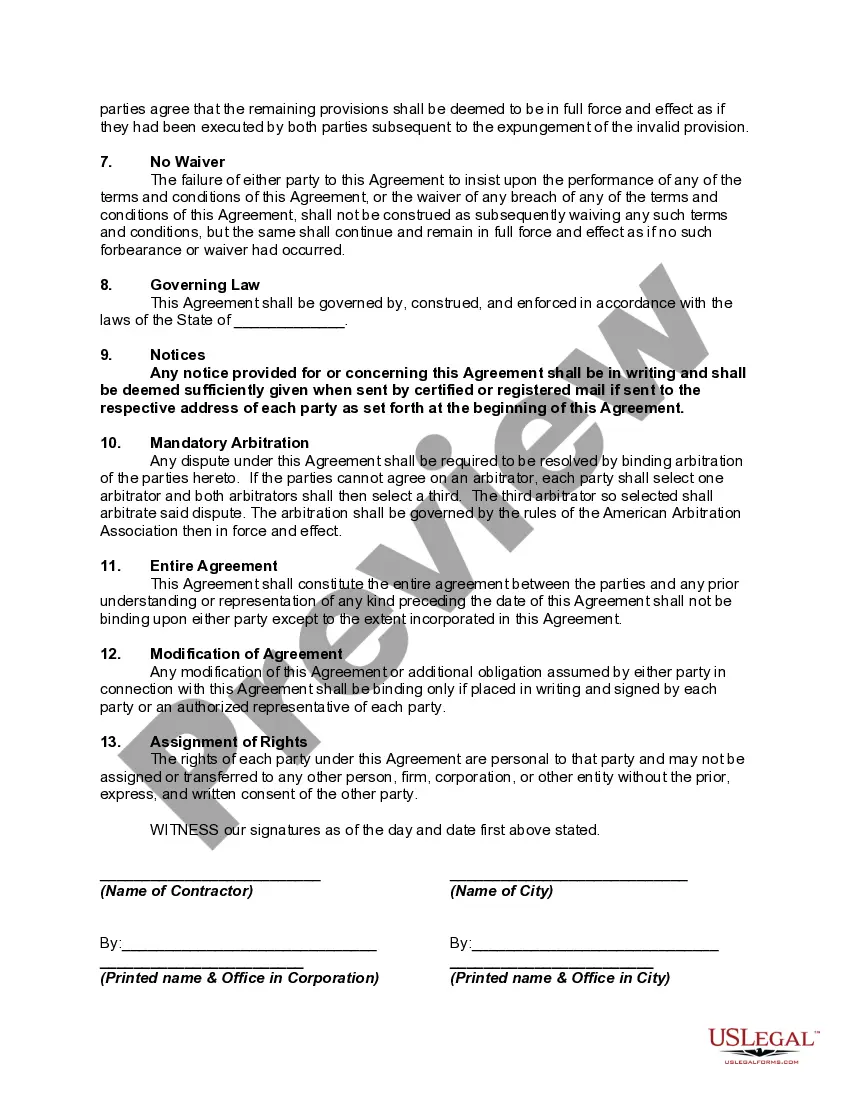
- Provisions for the duration and termination of the agreement.
- Legal standards for notices, arbitration, and modification of the agreement.

When this form is needed
This form should be used when a municipality seeks to contract a service provider for snow removal on its public roads. It is essential for ensuring that both parties clearly understand their obligations and benefits, particularly during the snow season when timely road clearance is crucial for public safety.
Who needs this form
- Municipalities looking to engage a contractor for snow removal services.
- Contractors in the snow removal business that require formal agreements with local government entities.
- Civil officials responsible for managing public works or city services.
Completing this form step by step
- Identify the parties by entering the names of the contractor and the municipal entity.
- Specify the date of the agreement and the official responsible for snow removal instructions.
- Outline the compensation details, including the per mile rate and payment timeline.
- Include equipment requirements and any conditions for additional expenses.
- Enter the effective date and termination conditions of the agreement.
- Gather signatures from authorized representatives of both parties to finalize the agreement.
Notarization requirements for this form
Notarization is generally not required for this form. However, certain states or situations might demand it. You can complete notarization online through US Legal Forms, powered by Notarize, using a verified video call available anytime.
Get your form ready online
Our built-in tools help you complete, sign, share, and store your documents in one place.
Make edits, fill in missing information, and update formatting in US Legal Forms—just like you would in MS Word.
Download a copy, print it, send it by email, or mail it via USPS—whatever works best for your next step.
Sign and collect signatures with our SignNow integration. Send to multiple recipients, set reminders, and more. Go Premium to unlock E-Sign.
If this form requires notarization, complete it online through a secure video call—no need to meet a notary in person or wait for an appointment.
We protect your documents and personal data by following strict security and privacy standards.

Make edits, fill in missing information, and update formatting in US Legal Forms—just like you would in MS Word.

Download a copy, print it, send it by email, or mail it via USPS—whatever works best for your next step.

Sign and collect signatures with our SignNow integration. Send to multiple recipients, set reminders, and more. Go Premium to unlock E-Sign.

If this form requires notarization, complete it online through a secure video call—no need to meet a notary in person or wait for an appointment.

We protect your documents and personal data by following strict security and privacy standards.
Avoid these common issues
- Failing to include the necessary signatures from both parties.
- Not specifying the exact compensation terms, leading to misunderstandings.
- Neglecting to outline the requirements for snow-removal equipment.
- Overlooking local legal requirements that may affect the agreement's validity.
Why use this form online
- Convenience of immediate access to a legal template without the need for personal visits to legal offices.
- Editability allows users to customize terms as needed for specific agreements.
- Reliable resources from licensed attorneys ensure the document meets legal standards.
Quick recap
- The Snow Removal Agreement is a vital tool for municipalities contracting snow removal services.
- Clear definitions of responsibilities and compensation can prevent future disputes.
- Consult local laws to ensure compliance with jurisdictional requirements.
- Using this form online provides convenience and legal reliability.
Looking for another form?
Form popularity
FAQ
Per Push - A Per Push Contract is available for businesses who prefer to pay each time snow and ice is removed, plowed, etc.Therefore, that means that there will need to be multiple trips by the snow plows & salt trucks throughout the day to maintain the area.
If there's like, an inch of snow, but just a tiny bit to shovel, then lets say $5. If you have a huge amount to shovel, go up with the amount. If you have an average amount of snow, and a normal amount of area to shovel, then i'd say 1020 dollars. Minimum wage.
Often, commercial contracts include agreements to visit the property multiple times during a snowstorm. Residential: $25 to $75 per hour. $30 to $50 per visit. Commercial: $50 to $150 per hour.
One way to make money plowing is to be a one-man operation with just you and your plow truck. There are several different methods you could use to make money plowing snow with your own truck. One method is to use Residential Snow Removal Contracts.
The snow in the hill stations can be removed by adding salt to the snow and letting it melt off. This is majorly because of a rule which lowers the melting point of the ice formed. So, even at negative temperatures where ice is formed, the ice gets melted because of the phenomenon.
Kawasaki offers a quality Warn Pro Vantage winch and 542033 inch plow system, and a large windshield as optional accessories. Kawasaki ATVs are also well known for their reliability and toughness, just not as good as Honda and Yamaha. Fuel injection makes the ATV easy to start in the cold.
In general, Smith recommends giving $5 to $10 to each worker for a quick job, and $20 to $25 for bigger projects.
The Different Types Of Snow Removal Contracts Clients pay your snow removal service a fixed amount no matter how many times it snows. These contracts are usually set for three to five years to save time and eliminate a long vetting process every season.