Consignment Agreement for the Sale of an Automobile
About this form
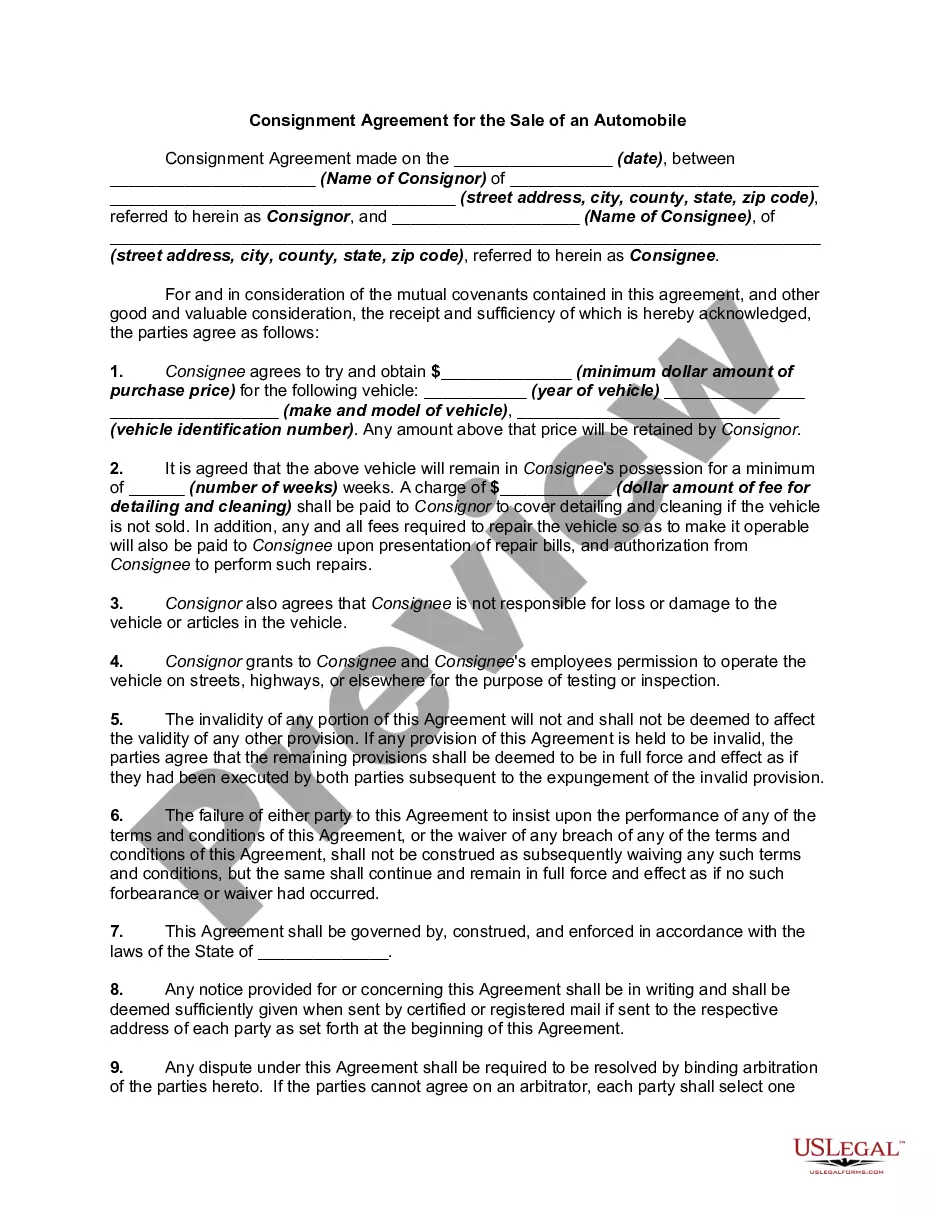
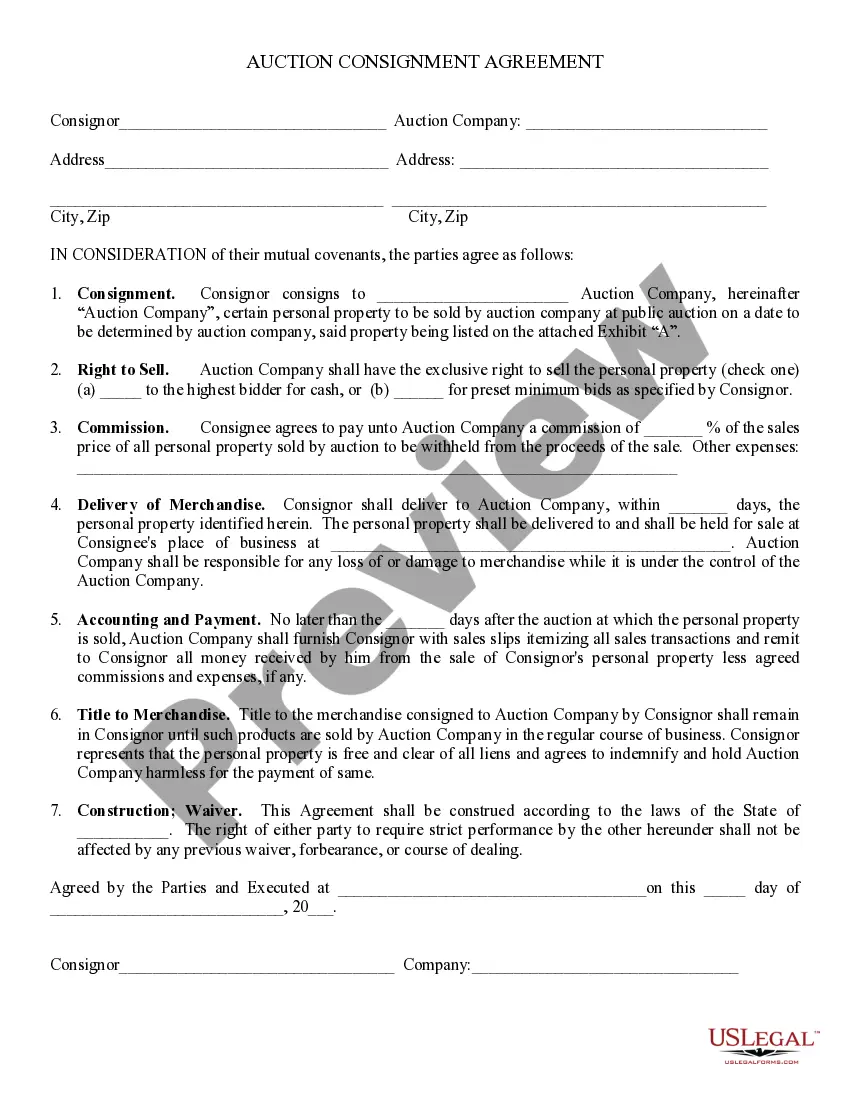
The Consignment Agreement for the Sale of an Automobile is a legal document that outlines the terms under which a vehicle is entrusted to a consignee for sale. This form establishes the responsibilities of both the consignor (the vehicle owner) and the consignee (the agent selling the vehicle). It differs from sales contracts in that it allows the consignee to sell the vehicle on behalf of the owner, without transferring full ownership until the sale is completed.
Form components explained
- Identification of the parties involved: Names and addresses of the consignor and consignee.
- Vehicle description: Details about the automobile including year, make, model, and vehicle identification number (VIN).
- Minimum sale price: Specifies the lowest price the consignee must attempt to obtain for the vehicle.
- Terms of possession: Duration the vehicle will remain with the consignee and conditions for cleaning and detailing fees.
- Liability clauses: Outlines responsibilities regarding loss or damage to the vehicle.
- Governing law and dispute resolution: Indicates the state law governing the agreement and the process for resolving disputes.

Common use cases
This form is needed when a vehicle owner wants to sell their automobile through a third party while retaining ownership until the vehicle is sold. It is useful in scenarios where the owner does not have the time or expertise to sell the vehicle themselves and seeks professional assistance from a dealer or agent.
Intended users of this form
This agreement is intended for:
- Individuals who own an automobile and wish to sell it via consignment.
- Car dealerships or agents who facilitate the sale of vehicles on behalf of consignors.
- Anyone seeking clarity on the terms of a consignment sale to ensure protection of their rights and assets.
Instructions for completing this form
To complete this form:
- Identify the parties: Fill in the names and addresses of both the consignor and the consignee.
- Specify the vehicle: Enter details such as the year, make, model, and VIN of the automobile.
- Set the minimum sale price: Indicate the minimum dollar amount the consignee must aim to sell the vehicle for.
- Determine the terms of possession: Fill in the duration the vehicle will be with the consignee and any fees associated with cleaning or repairs.
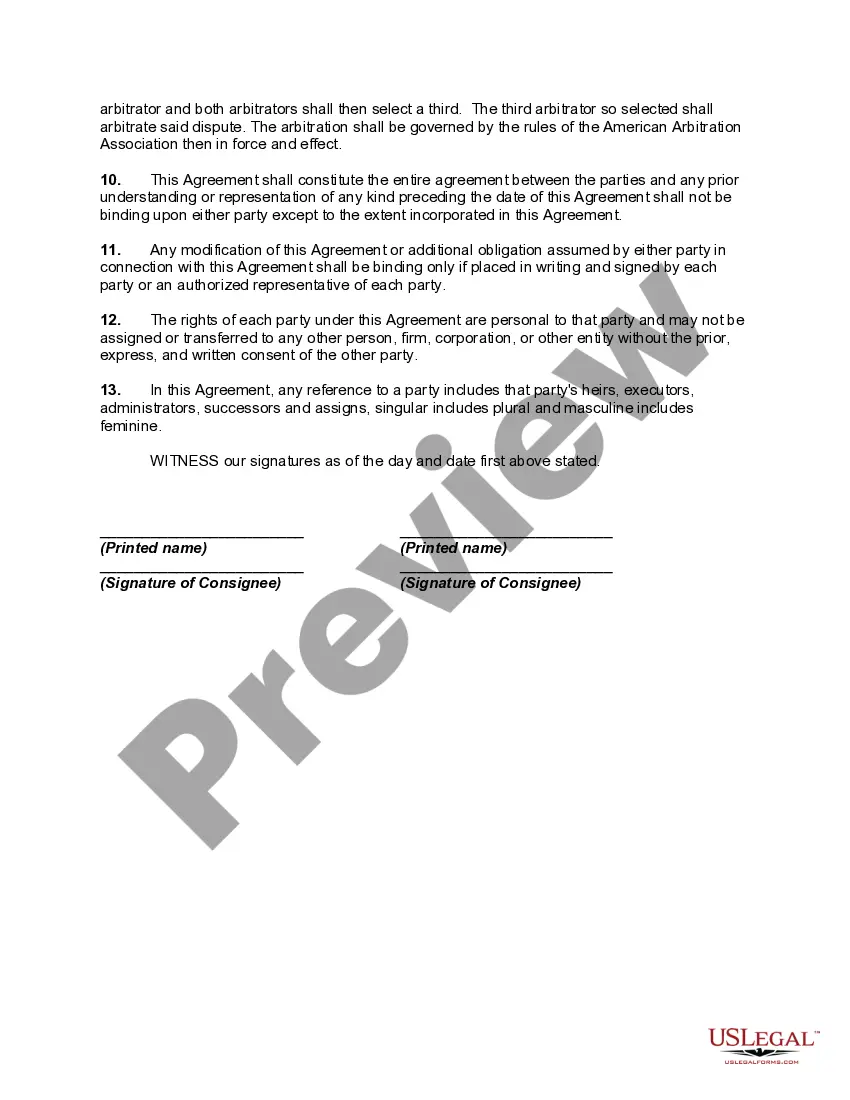
- Sign the agreement: Ensure both parties sign and date the form to make it legally binding.
Notarization requirements for this form
This form does not typically require notarization unless specified by local law. It is advisable to check your stateâs specific requirements regarding consignment agreements to ensure compliance.
Get your form ready online
Our built-in tools help you complete, sign, share, and store your documents in one place.
Make edits, fill in missing information, and update formatting in US Legal Forms—just like you would in MS Word.
Download a copy, print it, send it by email, or mail it via USPS—whatever works best for your next step.
Sign and collect signatures with our SignNow integration. Send to multiple recipients, set reminders, and more. Go Premium to unlock E-Sign.
If this form requires notarization, complete it online through a secure video call—no need to meet a notary in person or wait for an appointment.
We protect your documents and personal data by following strict security and privacy standards.

Make edits, fill in missing information, and update formatting in US Legal Forms—just like you would in MS Word.

Download a copy, print it, send it by email, or mail it via USPS—whatever works best for your next step.

Sign and collect signatures with our SignNow integration. Send to multiple recipients, set reminders, and more. Go Premium to unlock E-Sign.

If this form requires notarization, complete it online through a secure video call—no need to meet a notary in person or wait for an appointment.

We protect your documents and personal data by following strict security and privacy standards.
Avoid these common issues
- Failing to specify the minimum sale price can lead to conflicts over expectations.
- Not clearly defining the duration of the consignment can result in misunderstandings regarding the agreement's term.
- Neglecting to include all parties' correct contact information may complicate communication.
- Overlooking the need for signatures can render the agreement unenforceable.
Why complete this form online
- Convenience of downloading and customizing the agreement to fit your specific needs.
- Ensures that the legal framework surrounding consignment sales is clearly outlined, protecting both parties.
- Reduces the likelihood of disputes by clearly specifying the terms and responsibilities.
Legal use & context
- This agreement creates a binding contract between the consignor and consignee, governed by state law.
- It is vital to ensure all terms are clear to enforce the rights of both parties effectively.
- Legal representations regarding the vehicle must be accurate to avoid potential legal consequences.
Summary of main points
- The Consignment Agreement defines the relationship between a vehicle owner and an agent selling the vehicle.
- Key components include vehicle details, sale terms, and liability clauses.
- Always consult with local laws to ensure the agreement meets jurisdiction-specific regulations.
- Carefully complete the form to avoid common mistakes that could lead to disputes.
Looking for another form?
Form popularity
FAQ
The parties to a consignment are consignor and consignee whereas the parties to the sale are buyer and seller.In consignment, only the possession of goods transfers not the ownership. On the other hand, in the sale, both the ownership and possession are transferred to the buyer.
Parties. Provide the names and addresses of the consignor and the consignee. Item(s) for sale. Pricing. Payment. Expenses. Record-keeping. Ownership. Insurance.
Auto consignment offers an attractive option for vehicle owners who would like to get more money for their car than the dealer trade-in price, as the vehicle will be marketed professionally without the traditional hassle and frustration of trying to sell it yourself.
A consignment agreement is a contract that places an item the consignor (or owner) owns with the consignee (or seller) for the consignee to sell. The consignee often takes a commission or fee and then the remainder of the sale price is paid to the consignor.
Introduction of Parties. Identifies the parties and the date of the agreement. Recitals. Section 1: Consigned Property. Section 2: Delivery of Goods. Section 3: Consignment Period. Section 4: Efforts to Sell. Section 5: Title to Products. Section 6: Payment; Commission.
Depending on the consignment shop and the item being sold, the seller may concede 25% to 60% of the sales price in consignment fees. Consignment arrangements typically are in effect for a set period of time. After this time, if a sale is not made, the goods are returned to their owner.
A consignment agreement is an agreement between a consignee and consignor for the storage, transfer, sale or resale and use of the commodity. The consignee may take goods from the consignment stock for use or resale subject to payment to the consignor agreeably to the terms bargained in the consignment agreement.
Specifically, the contract should include details about payment and what happens if the consignee does not fulfill their duties. The Consignment Contract should outline all of the parties expectations for their working relationship. It should be created, printed, and signed by both parties before the work begins.