Sample Letter for Settlement Check - Enclosure - Full, Final and Absolute Mutual Release
What is this form?
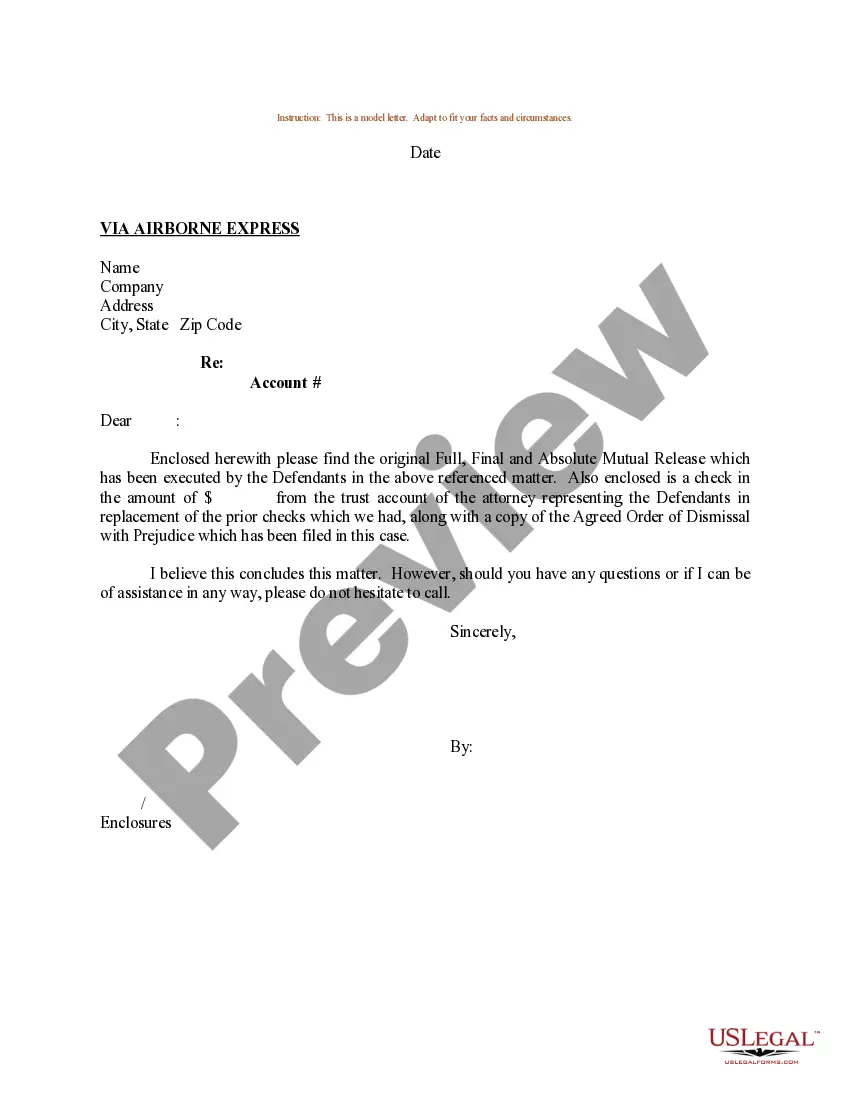
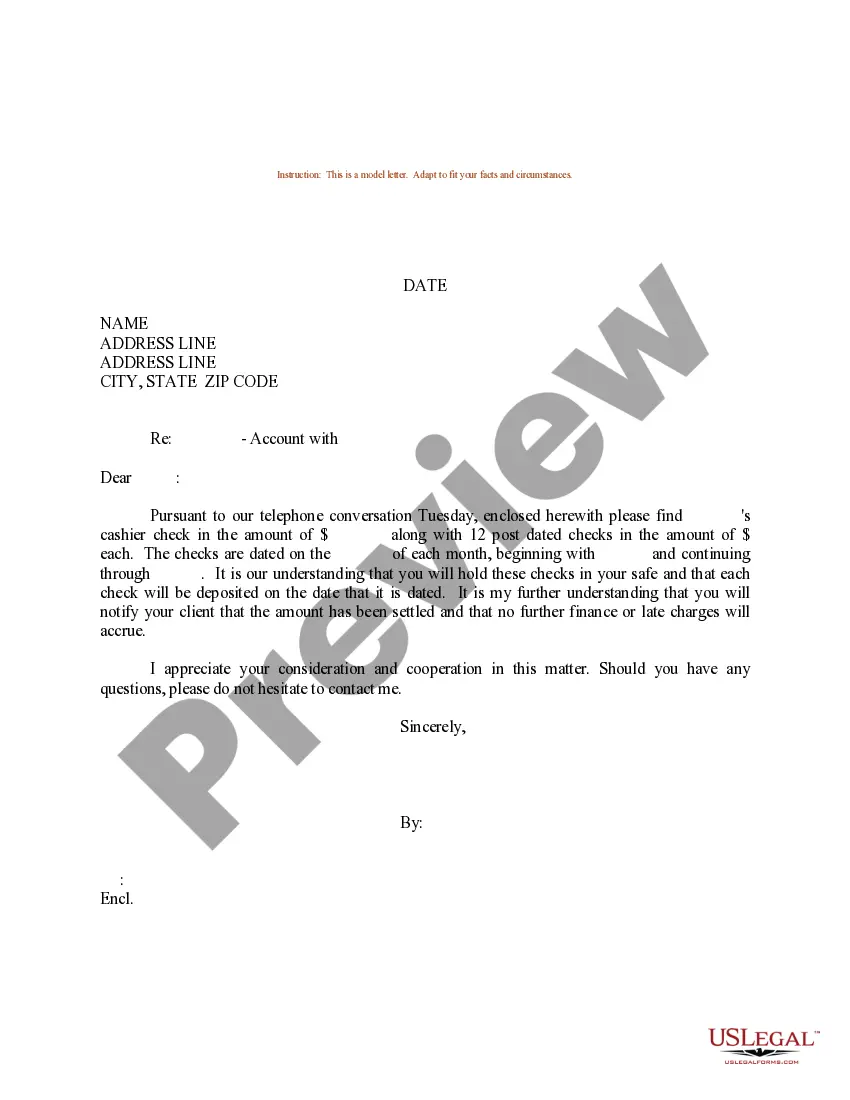
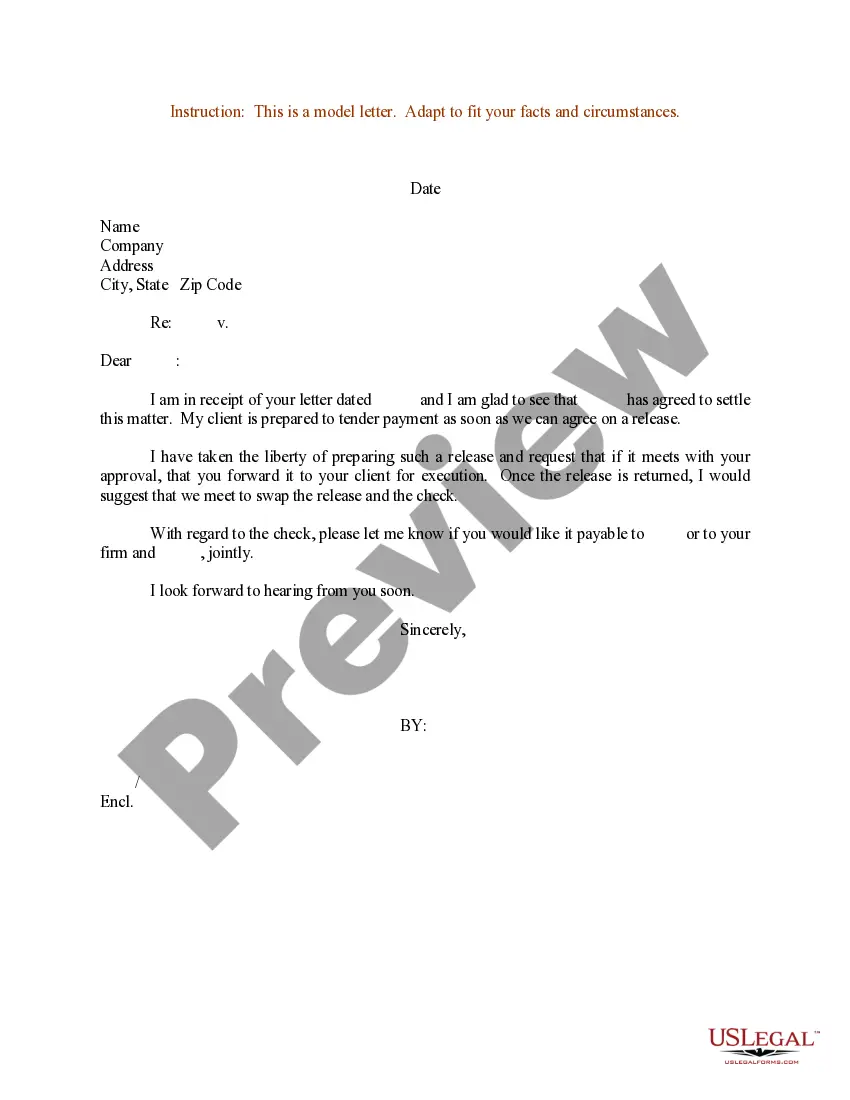
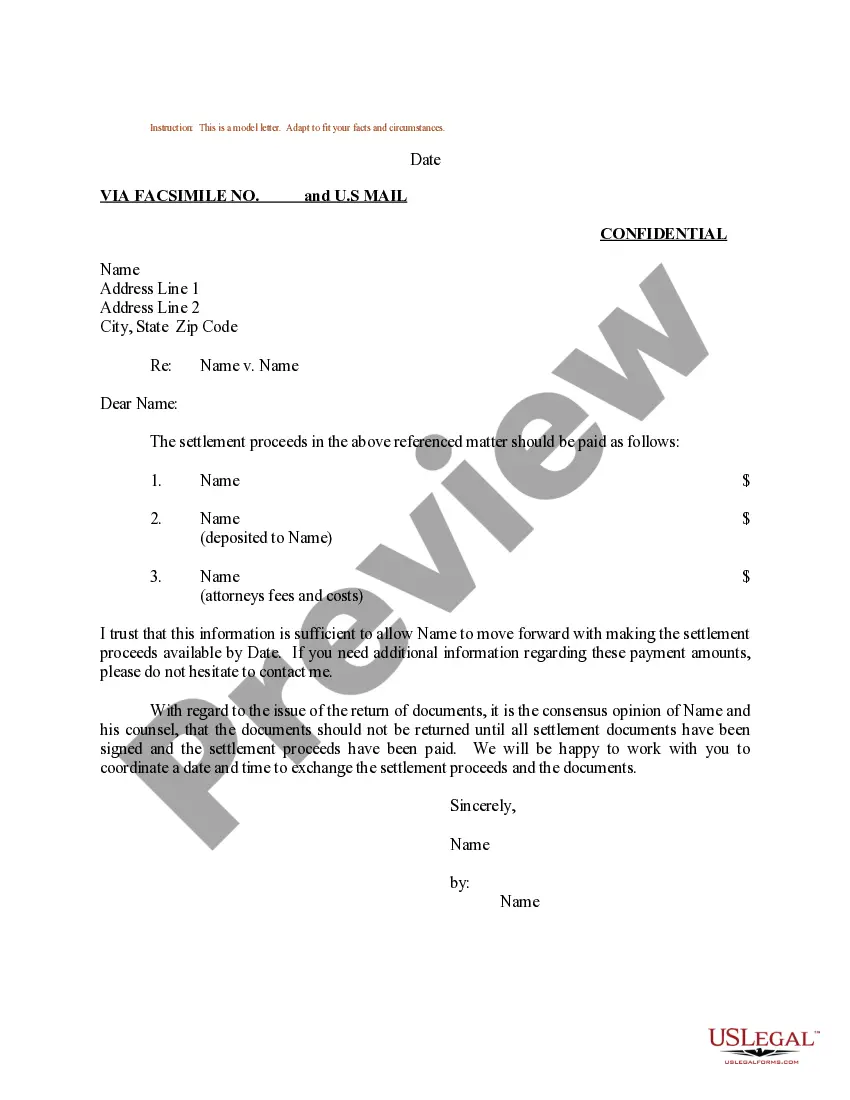
The Sample Letter for Settlement Check - Enclosure - Full, Final and Absolute Mutual Release is designed to facilitate the settlement process between parties involved in a legal agreement. This sample letter serves as a formal communication accompanying a settlement check, ensuring that both parties acknowledge the resolution of their dispute and the release of any further claims. Unlike general correspondence, this letter is specifically drafted to include mutual release language, making it essential for closing legal matters effectively.
What’s included in this form
- Date: The date when the letter is drafted.
- Recipient information: Includes the name, company, address, and location of the other party.
- Settlement details: A reference to the settlement agreement being finalized.
- Release language: Clauses that confirm the release of claims by both parties involved.
- Signature line: Area for the sender's signature to authenticate the letter.
Situations where this form applies
This form is useful when one party has agreed to pay a settlement amount and needs to send a check to the other party along with a letter. It is specifically applicable in scenarios where both parties wish to formally conclude their legal matters with a mutual release of claims, preventing any future disputes regarding the same issue.
Who this form is for
This form is suitable for:
- Individuals engaged in a legal dispute who have reached a settlement.
- Attorneys representing clients in settling claims.
- Business partners who are finalizing settlement agreements.
- Any party needing to provide written confirmation of a settlement in exchange for payment.
Steps to complete this form
- Identify the date at the top of the letter.
- Fill in the recipient's name, company, address, city, state, and zip code.
- Reference the specific settlement agreement in the letter body.
- Include clear release language confirming that both parties release any claims related to the agreement.
- Sign the letter to validate the release of claims.
Notarization requirements for this form
This form does not typically require notarization unless specified by local law. However, depending on the jurisdiction and the nature of the settlement, it may be advisable to consult with a legal professional to ensure compliance with any required formalities.
Get your form ready online
Our built-in tools help you complete, sign, share, and store your documents in one place.
Make edits, fill in missing information, and update formatting in US Legal Forms—just like you would in MS Word.
Download a copy, print it, send it by email, or mail it via USPS—whatever works best for your next step.
Sign and collect signatures with our SignNow integration. Send to multiple recipients, set reminders, and more. Go Premium to unlock E-Sign.
If this form requires notarization, complete it online through a secure video call—no need to meet a notary in person or wait for an appointment.
We protect your documents and personal data by following strict security and privacy standards.

Make edits, fill in missing information, and update formatting in US Legal Forms—just like you would in MS Word.

Download a copy, print it, send it by email, or mail it via USPS—whatever works best for your next step.

Sign and collect signatures with our SignNow integration. Send to multiple recipients, set reminders, and more. Go Premium to unlock E-Sign.

If this form requires notarization, complete it online through a secure video call—no need to meet a notary in person or wait for an appointment.

We protect your documents and personal data by following strict security and privacy standards.
Typical mistakes to avoid
- Failing to include all required recipient information.
- Not specifying the exact terms of the settlement or release.
- Leaving the letter unsigned or improperly dated.
- Using vague language that could lead to misunderstandings about the settlement.
Benefits of completing this form online
- Convenience of immediate access to a professionally drafted form.
- Customizability to meet specific legal requirements or personal preferences.
- Reliable templates drafted by licensed attorneys, ensuring legal validity.
- Simple downloading and editing process to save time and reduce stress.
What to keep in mind
- The Sample Letter for Settlement Check provides a formal way to finalize settlements.
- It includes necessary components such as recipient details and release language.
- This form helps prevent future legal disputes by clearly outlining mutual releases.
- Utilizing this form online streamlines the process while ensuring legal compliance.
Looking for another form?



Form popularity
FAQ
It’s a standardized letter template used to accompany a settlement check and document that the dispute has been fully resolved with a mutual release of claims. It references the settlement agreement, includes mutual release language, and provides space for the date, recipient information, settlement details, and a signature line to close the matter.
Use this form to document that a dispute was resolved and a settlement check is being sent. Fill in the date, recipient information, and a reference to the settlement agreement, then include the release language and a signature line to confirm mutual release and close the matter.
Not this form. The Sample Letter for Settlement Check - Enclosure - Full, Final and Absolute Mutual Release is used after the parties have reached an agreement and are sending a settlement check. It references the settlement and includes the mutual release language, along with spaces for date, recipient details, and signature.
The form’s release language provides a mutual release of claims and is intended to accompany a settlement check. Use it to document that both parties have resolved the dispute, with sections for date, recipient information, settlement details, and a signature line to finalize the settlement.
In general, a settlement agreement is a contract that resolves a dispute, and a mutual release means both parties give up their right to pursue further claims. This form uses those concepts by including mutual release language in the enclosure letter accompanying a settlement check.
This form uniquely combines a settlement check enclosure with full, final and absolute mutual release language, ensuring both payment and a mutual release are documented in one step. It also lists standard fields for date, recipient, settlement details, and a signature line to close the matter.