Certificate of Directors as to Contents of the Bylaws of the Corporation
About this form
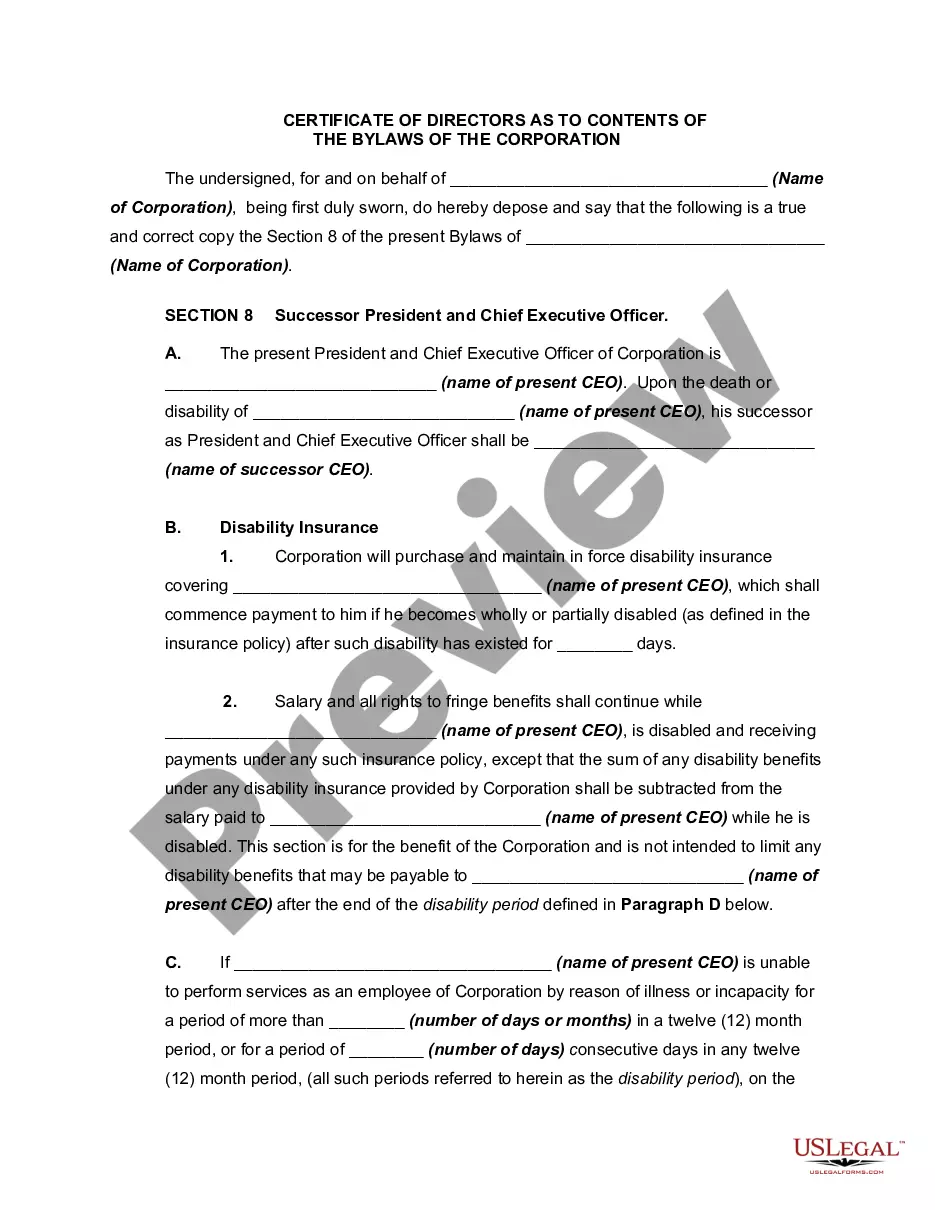
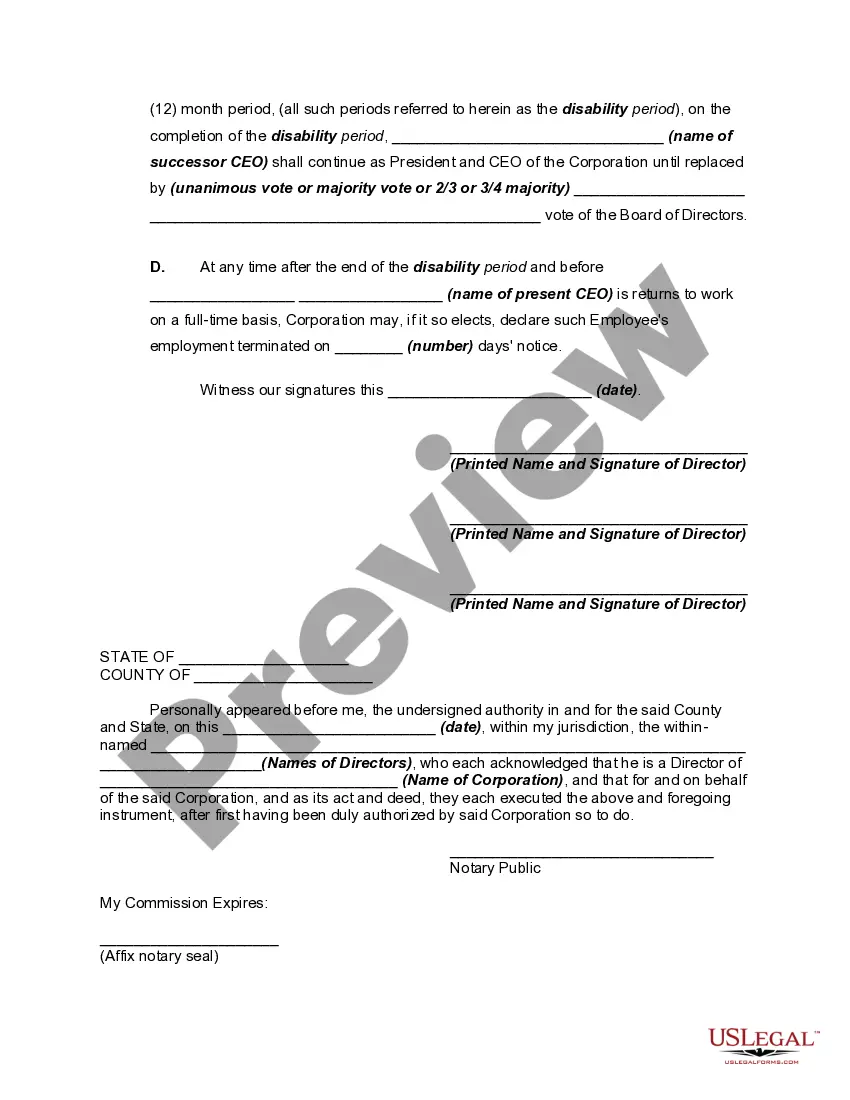
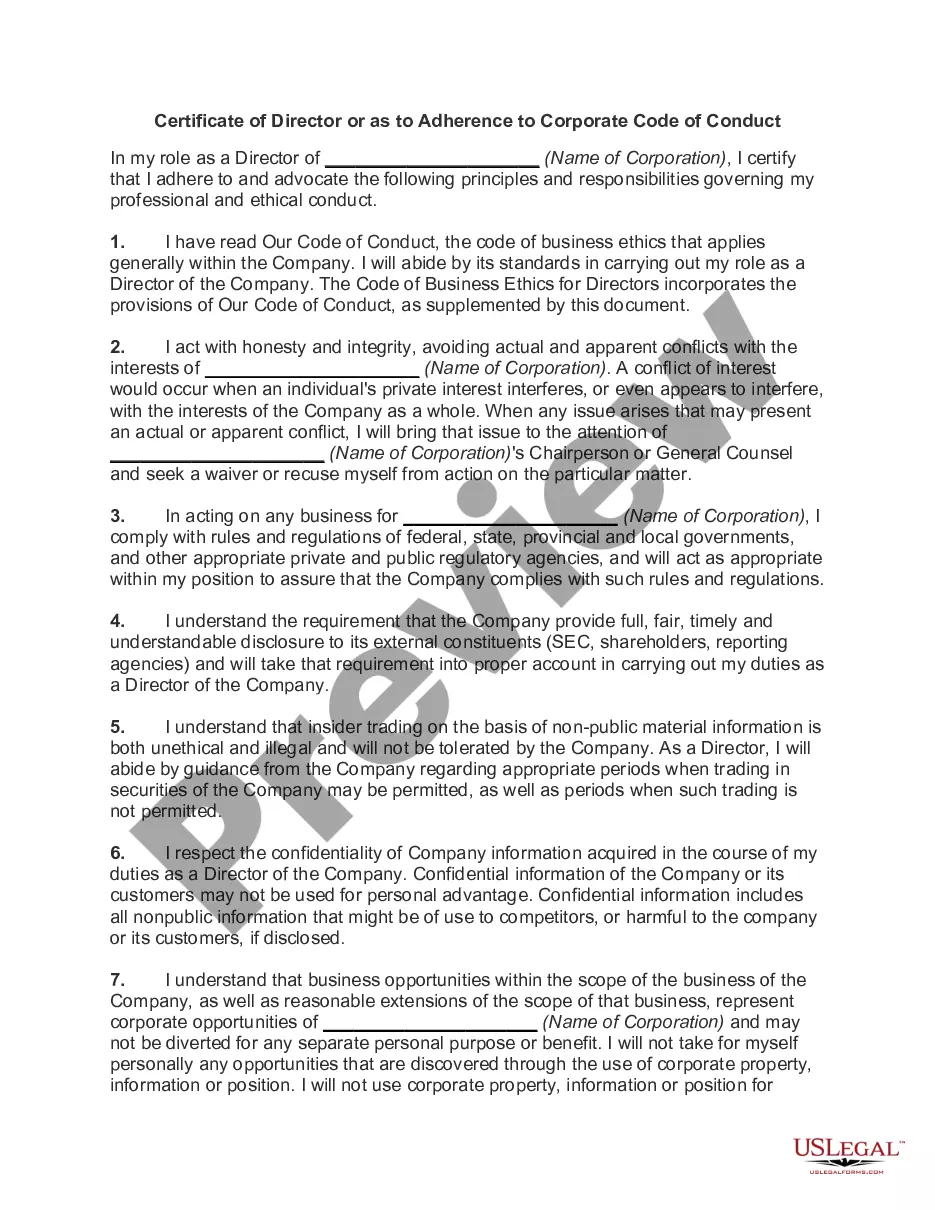
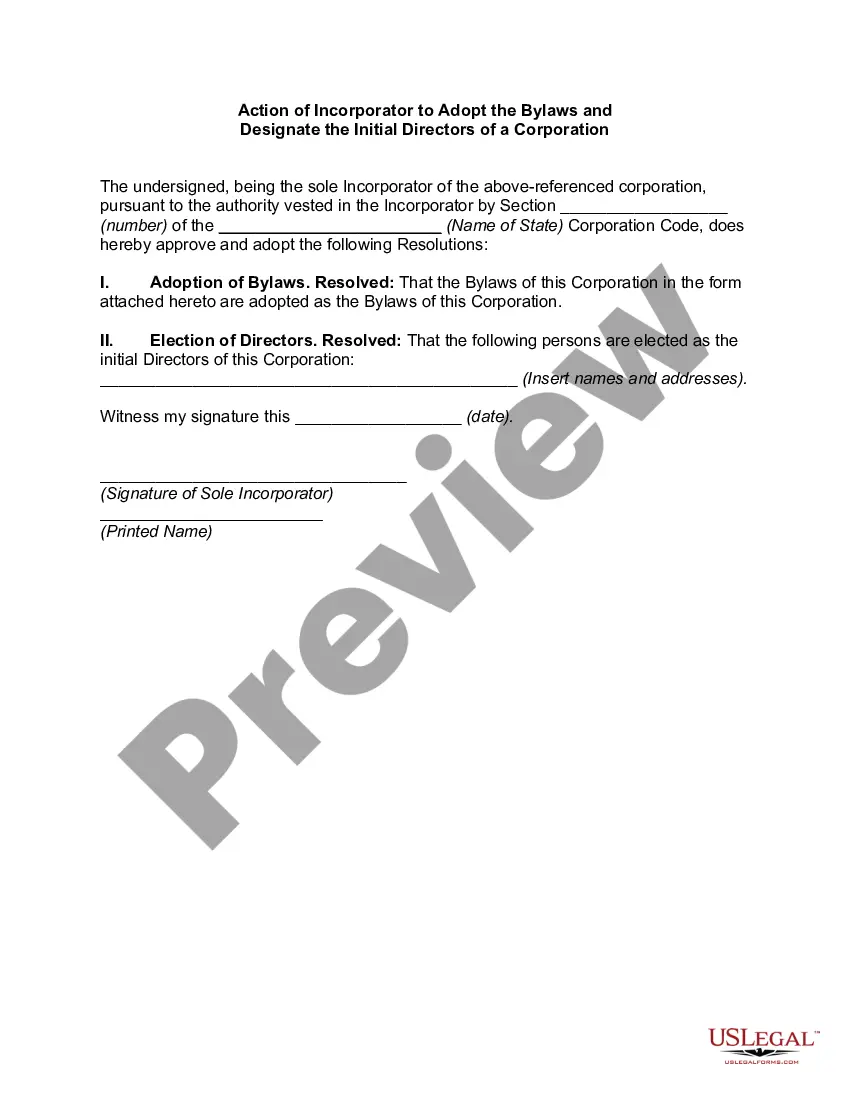
The Certificate of Directors as to Contents of the Bylaws of the Corporation is a legal document that certifies the sections of the bylaws governing a corporation, particularly focusing on the succession plan for the President and Chief Executive Officer. This form serves to ensure that all corporate members are clear about the provisions in place regarding leadership changes, particularly in cases of disability or death. It differs from other corporate documents by specifically documenting the bylaws' subsection that outlines the responsibilities and benefits associated with the position of CEO.
Main sections of this form
- Name of the corporation certifying the bylaws.
- Identification of the current President and Chief Executive Officer.
- Provisions for disability insurance for the CEO.
- Details regarding the successor for the CEO position.
- Conditions for termination of employment due to disability.
- Signatures of the directors and notarization details.

When this form is needed
This form is necessary when a corporation needs to formalize and document its bylaws concerning the succession of its President and Chief Executive Officer. It should be used when drafting the bylaws, updating them to reflect current leadership, or when required by state law to maintain corporate governance practices. This is particularly important during transitions of leadership due to planned succession or unforeseen events like disability or death.
Who should use this form
- Corporate board of directors seeking to ensure compliance with governance standards.
- Corporations undergoing leadership transitions.
- Legal counsel preparing corporate documentation.
- Shareholders interested in understanding corporate bylaws.
How to complete this form
- Enter the full name of the corporation at the beginning of the form.
- Specify the name of the current President and Chief Executive Officer.
- Detail the name of the designated successor for the CEO position.
- Fill in the provisions related to disability insurance covering the current CEO.
- Obtain signatures from the board of directors to validate the document.
- Arrange for notarization to complete the formal process.
Notarization requirements for this form
This form must be notarized to be legally valid. US Legal Forms provides secure online notarization powered by Notarize, allowing you to complete the process through a verified video call.
Get your form ready online
Our built-in tools help you complete, sign, share, and store your documents in one place.
Make edits, fill in missing information, and update formatting in US Legal Forms—just like you would in MS Word.
Download a copy, print it, send it by email, or mail it via USPS—whatever works best for your next step.
Sign and collect signatures with our SignNow integration. Send to multiple recipients, set reminders, and more. Go Premium to unlock E-Sign.
If this form requires notarization, complete it online through a secure video call—no need to meet a notary in person or wait for an appointment.
We protect your documents and personal data by following strict security and privacy standards.

Make edits, fill in missing information, and update formatting in US Legal Forms—just like you would in MS Word.

Download a copy, print it, send it by email, or mail it via USPS—whatever works best for your next step.

Sign and collect signatures with our SignNow integration. Send to multiple recipients, set reminders, and more. Go Premium to unlock E-Sign.

If this form requires notarization, complete it online through a secure video call—no need to meet a notary in person or wait for an appointment.

We protect your documents and personal data by following strict security and privacy standards.
Avoid these common issues
- Failing to obtain all necessary signatures from directors.
- Incorrectly specifying the terms of disability coverage.
- Neglecting to notarize the form where required.
- Omitting key details about the succession plan for the CEO.
Benefits of completing this form online
- Convenience of accessing the form at any time from anywhere.
- Easy to edit and customize based on specific corporate needs.
- Reliable templates drafted by licensed attorneys to ensure legal compliance.
Summary of main points
- The Certificate of Directors as to Contents of the Bylaws is essential for corporate governance.
- Properly completed, it ensures clarity regarding the succession of the CEO.
- State-specific laws may influence the form, so review local regulations.
- Notarization is required for this form to confirm the authenticity of signatures.
Looking for another form?
Form popularity
FAQ
Like the Constitution, your bylaws should deal with only the highest level of governing issues such as: Organizational purpose, board structure, officer position descriptions and responsibilities, terms of board service, officer/board member succession and removal, official meeting requirements, membership provisions,
The AOA contains the bye-laws of the company.
Basic Corporate Information. The bylaws should include your corporation's formal name and the address of its main place of business. Board of Directors. Officers. Shareholders. Committees. Meetings. Conflicts of Interest. Amendment.
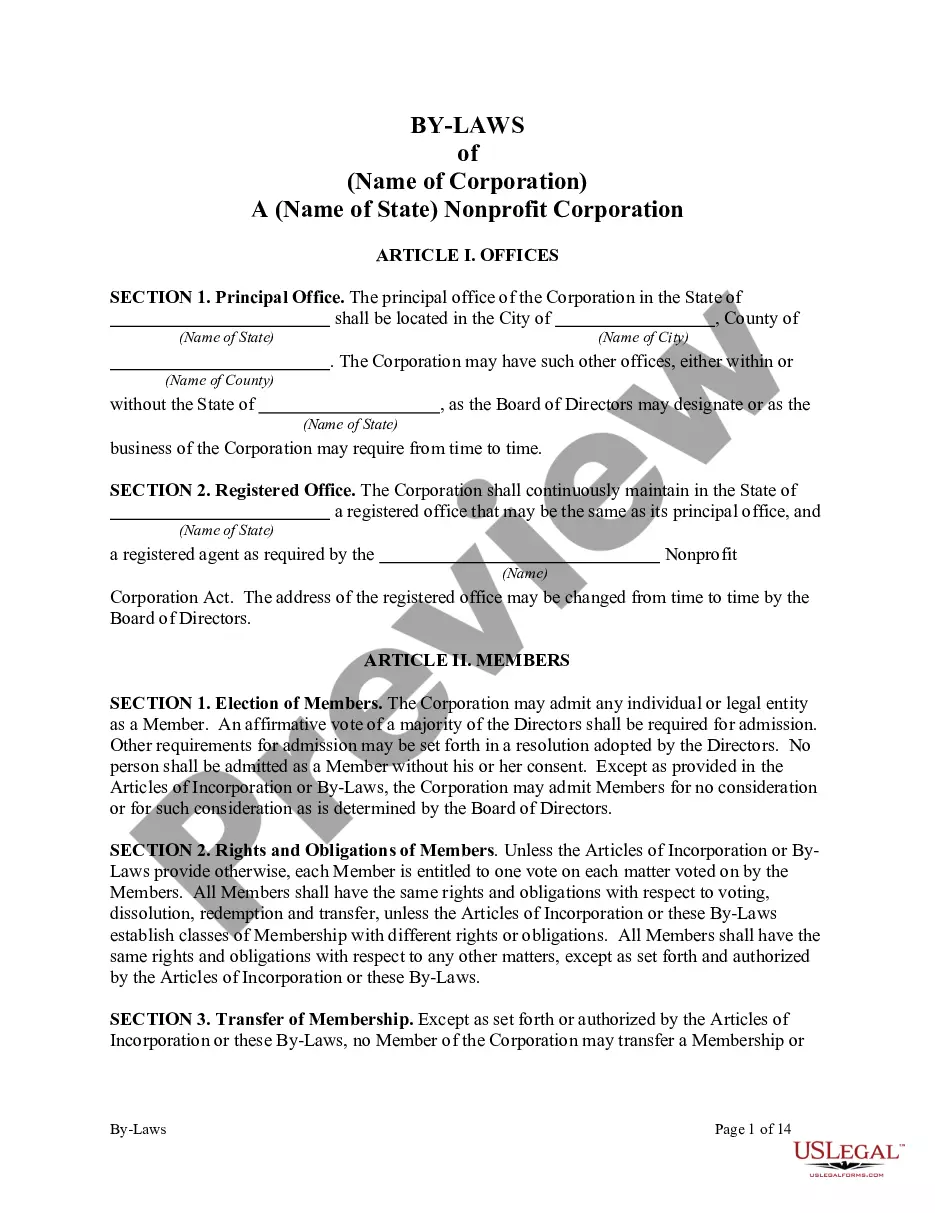
The bylaws of a corporation are the governing rules by which the corporation operates. Bylaws are created by the board of directors when the corporation is formed.
Bylaws generally define things like the group's official name, purpose, requirements for membership, officers' titles and responsibilities, how offices are to be assigned, how meetings should be conducted, and how often meetings will be held.
Basic Corporate Information. The bylaws should include your corporation's formal name and the address of its main place of business. Board of Directors. Officers. Shareholders. Committees. Meetings. Conflicts of Interest. Amendment.
The basic difference is pretty simple. Articles of Incorporation are public records, Bylaws are not.In the case of a corporation, the name and address of each incorporator must be listed in the Articles of Incorporation.
Like the Constitution, your bylaws should deal with only the highest level of governing issues such as: Organizational purpose, board structure, officer position descriptions and responsibilities, terms of board service, officer/board member succession and removal, official meeting requirements, membership provisions,
Article I. Name and purpose of the organization. Article II. Membership. Article III. Officers and decision-making. Article IV. General, special, and annual meetings. Article V. Board of Directors.