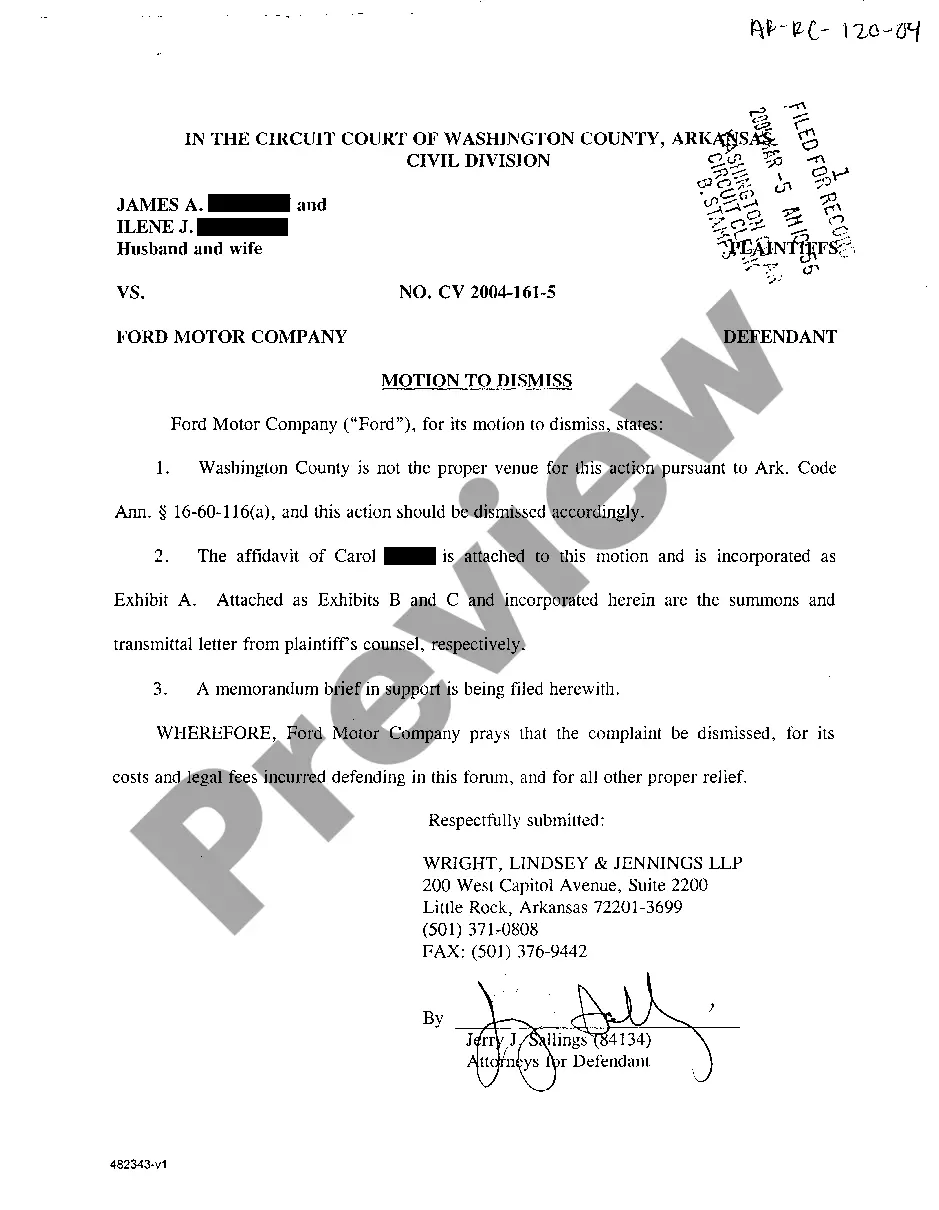
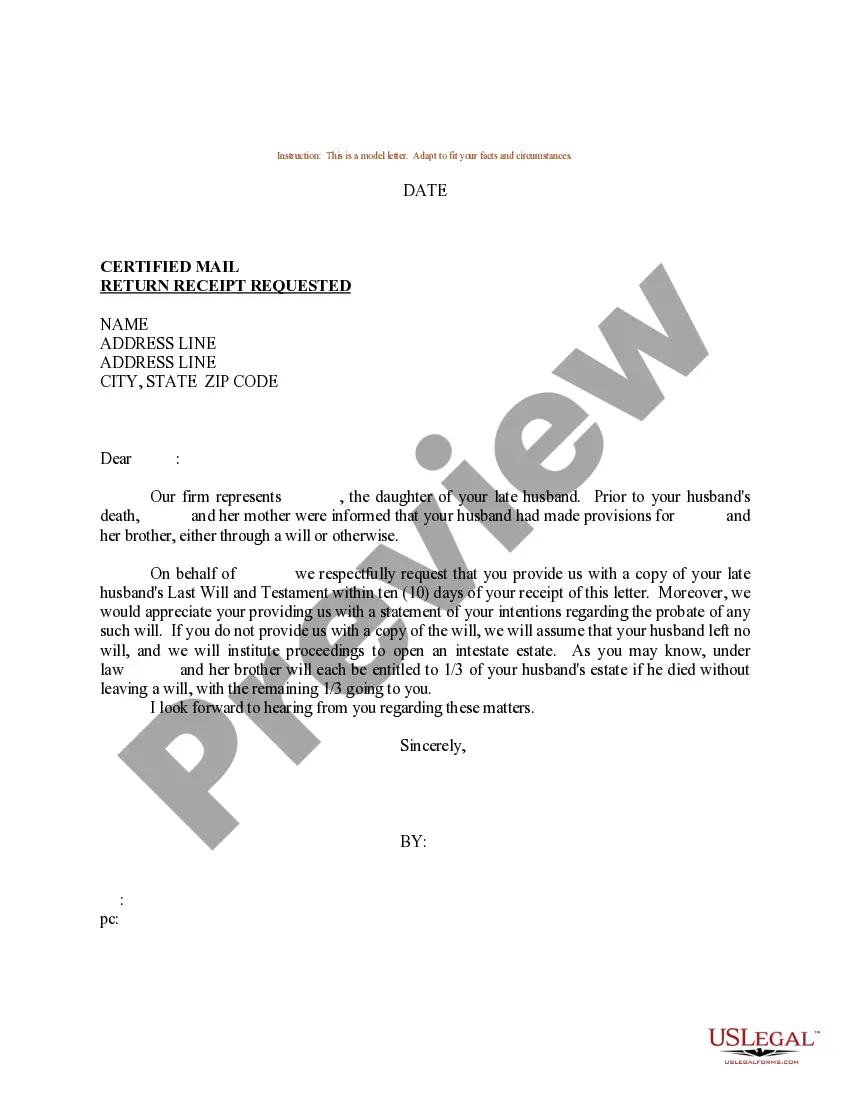
Sample Letter with Request for Copy of Last Will and Testament of Decedent
Understanding this form
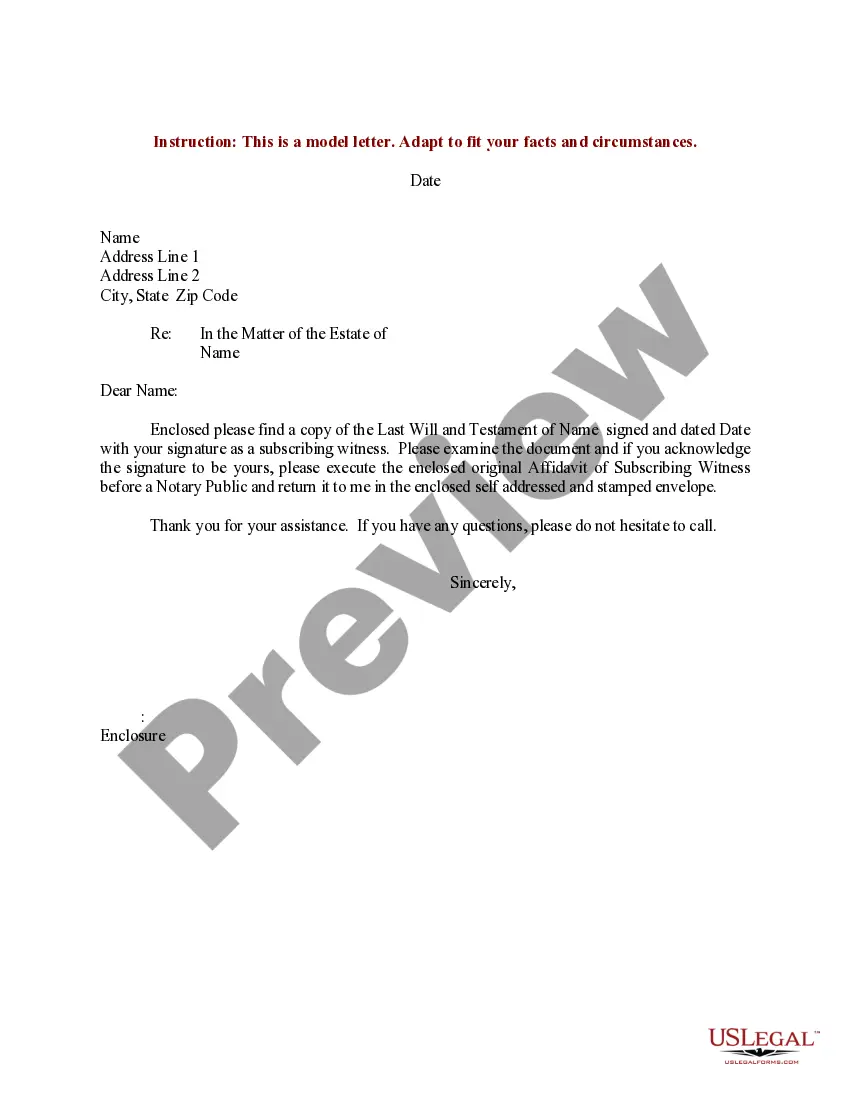
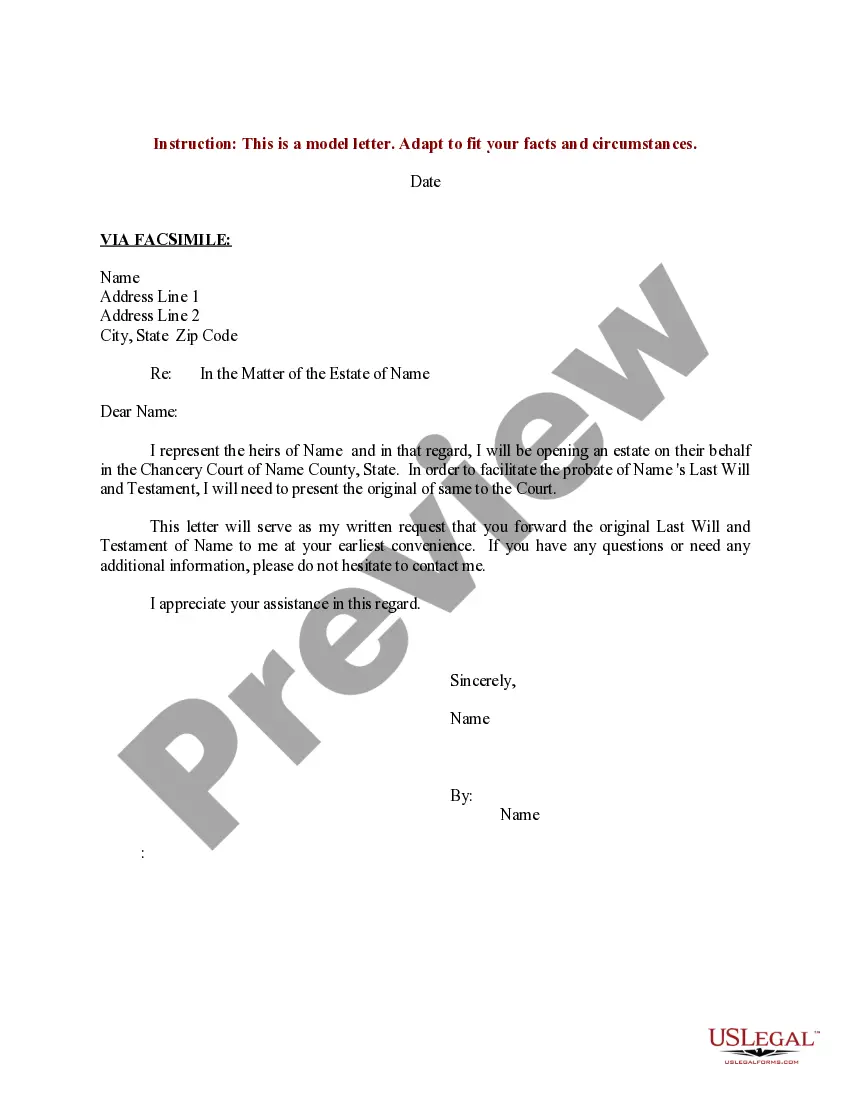
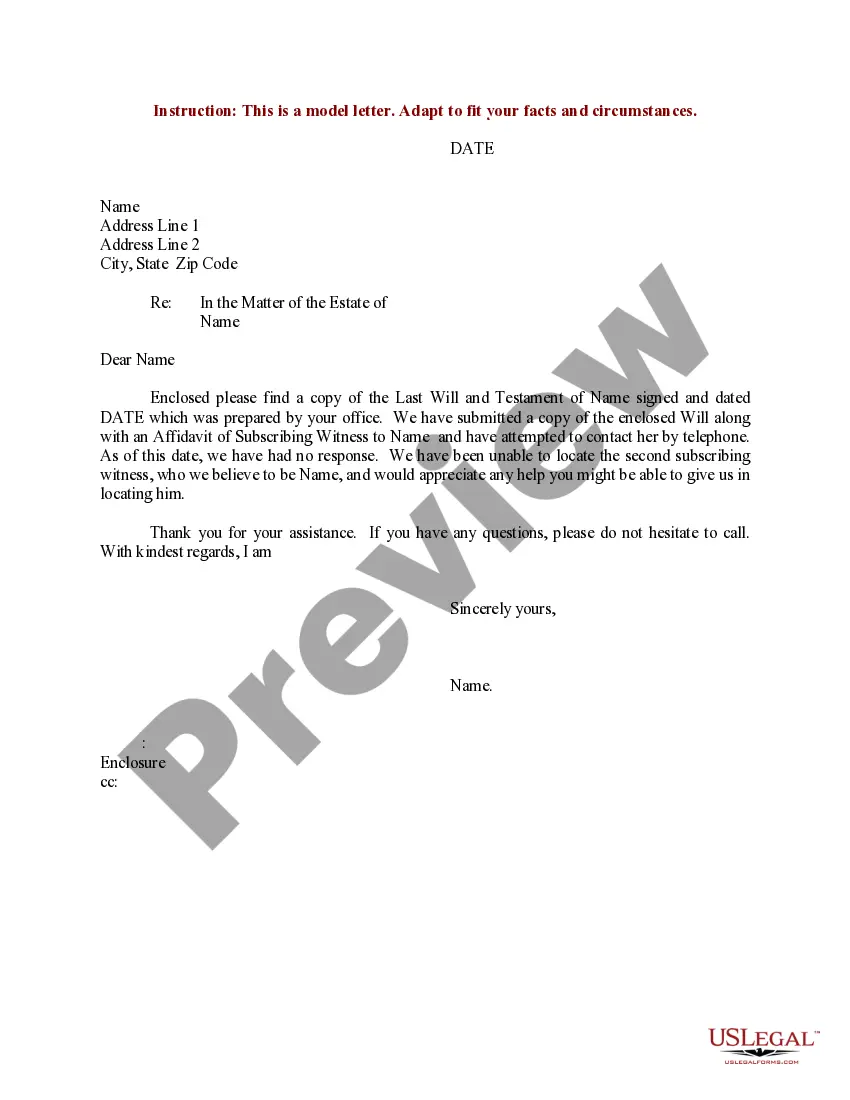
This form is a sample letter with a request for a copy of the last will and testament of a deceased individual. It serves as a formal communication to the executor or administrator of the estate, enabling you to request critical documents necessary for understanding the decedent's wishes and managing their estate. Unlike other forms, this letter is specifically tailored to address the need for accessing a last will and testament, ensuring that your request is clear and legally appropriate.
Key components of this form
- Date: The date on which the letter is sent.
- Recipient information: Includes the name and address of the executor or estate administrator.
- Subject line: A brief statement indicating the purpose of the letter.
- Body: Contains the request for the last will and testament, clearly stating your relationship to the decedent.
- Signature: Your signature and printed name to authenticate the request.
Situations where this form applies
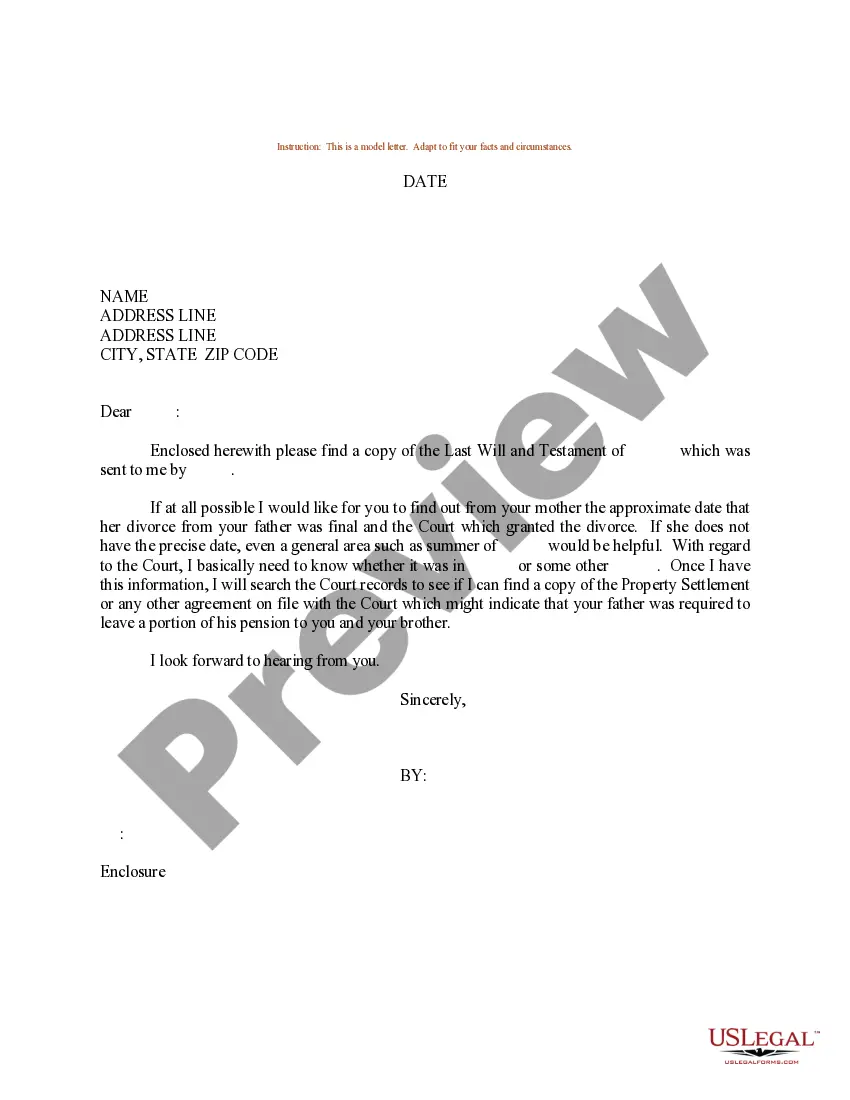
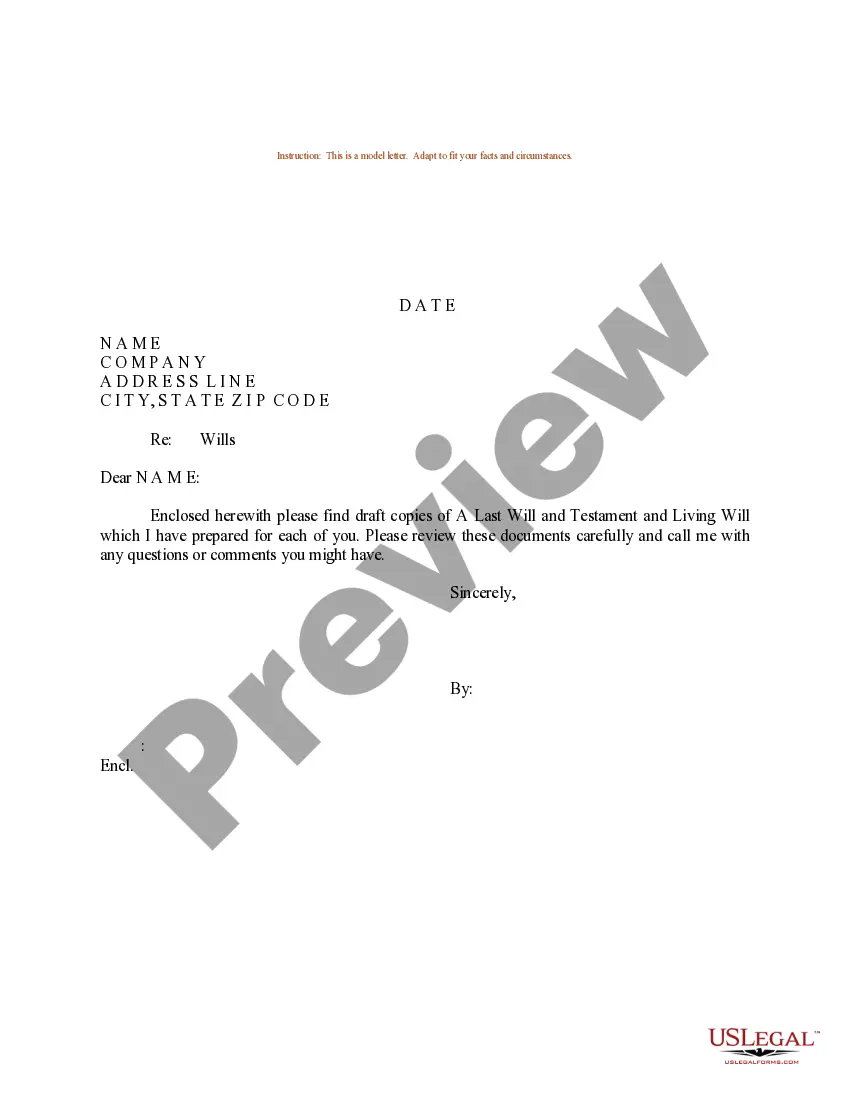
You should use this form when you need to obtain a copy of the last will and testament of someone who has passed away. This is essential if you are an heir, beneficiary, or someone with a legal interest in the estate and wish to understand their rights or responsibilities concerning the estate. It can also be useful in scenarios where the executor is unresponsive or if you believe there may be more to the will than what has been shared.
Who can use this document
Eligible individuals for this form include:
- Family members of the decedent seeking information regarding the estate.
- Beneficiaries named in the will who wish to confirm the distribution of assets.
- Lawyers or legal representatives acting on behalf of an interested party.
- Anyone with a legitimate interest in the estateâs affairs.
How to prepare this document
To complete this form, follow these steps:
- Identify the date of your request and write it at the top of the letter.
- Fill in the recipient's name and address, ensuring accuracy.
- Craft a clear and concise subject line that reflects the purpose of your request.
- In the body of the letter, politely request a copy of the last will and testament, stating your relationship to the decedent.
- Sign the letter with your name below your written request.
Notarization requirements for this form
This form does not typically require notarization unless specified by local law. However, if you choose to have it notarized, US Legal Forms provides integrated online notarization with 24/7 availability, secure video calls, and legal equivalence, eliminating the need for travel.
Get your form ready online
Our built-in tools help you complete, sign, share, and store your documents in one place.
Make edits, fill in missing information, and update formatting in US Legal Forms—just like you would in MS Word.
Download a copy, print it, send it by email, or mail it via USPS—whatever works best for your next step.
Sign and collect signatures with our SignNow integration. Send to multiple recipients, set reminders, and more. Go Premium to unlock E-Sign.
If this form requires notarization, complete it online through a secure video call—no need to meet a notary in person or wait for an appointment.
We protect your documents and personal data by following strict security and privacy standards.

Make edits, fill in missing information, and update formatting in US Legal Forms—just like you would in MS Word.

Download a copy, print it, send it by email, or mail it via USPS—whatever works best for your next step.

Sign and collect signatures with our SignNow integration. Send to multiple recipients, set reminders, and more. Go Premium to unlock E-Sign.

If this form requires notarization, complete it online through a secure video call—no need to meet a notary in person or wait for an appointment.

We protect your documents and personal data by following strict security and privacy standards.
Mistakes to watch out for
- Failing to include your relationship to the decedent, which may affect the response.
- Not addressing the letter correctly, which could delay your request.
- Leaving out the date, making the request appear informal.
- Being unclear about what you are requesting, which can lead to misunderstandings.
Why complete this form online
Using this form online provides several advantages:
- Convenience: Download and complete the form from anywhere at any time.
- Editability: Easily customize the letter to fit your specific circumstances.
- Legal assurance: The form is prepared by licensed attorneys, ensuring it meets legal standards.
Looking for another form?

Form popularity
FAQ
Explain why you are giving property to certain beneficiaries and not to others. explain disparities in bequests. express positive or negative sentiments about a beneficiary. express wishes about how to care for a pet.
Bank accounts. Brokerage or investment accounts. Retirement accounts and pension plans. A life insurance policy.
Only the executors appointed in a will are entitled to see the will before probate is granted. If you are not an executor, the solicitors of the person who has died or the person's bank, if it has the will, cannot allow you to see it or send you a copy of it, unless the executors agree.
Get legal advice. Make an application to administer an estate. Get a copy of a will from the High Court. Get a copy of a will from the deceased person's lawyer.
Give the letter a personal touch and address each of your heirs and beneficiaries personally. Tell them any last wishes you may have or any hopes you have for their future. Write as clearly as possible. Use specific details and avoid using shorthand.
Explain that the trust exists. Provide your name and contact information. Tell beneficiaries that they have the right to see a copy of the trust document and that you will send them one if they request it. Give the deadline for court challenges.
Only the executors appointed in a will are entitled to see the will before probate is granted. If you are not an executor, the solicitors of the person who has died or the person's bank, if it has the will, cannot allow you to see it or send you a copy of it, unless the executors agree.
Once the testator has died, if that will has been filed with the probate court of the county the deceased resided in, the court will open the will and it becomes public record.Getting a copy of a will is possible by paying a copying fee. Some courts will also provide you with a copy by fax or mail of a will on file.
It has no legal standing, so it can't supersede a will, but a letter of intent (LOI), also called a letter of instruction, can be of enormous practical and emotional value to your loved ones.The letter should go to your spouse, a child, a close friend, or a family member. A copy should go to the executor of the will.