Affidavit of Loss of Written Instrument
Overview of this form
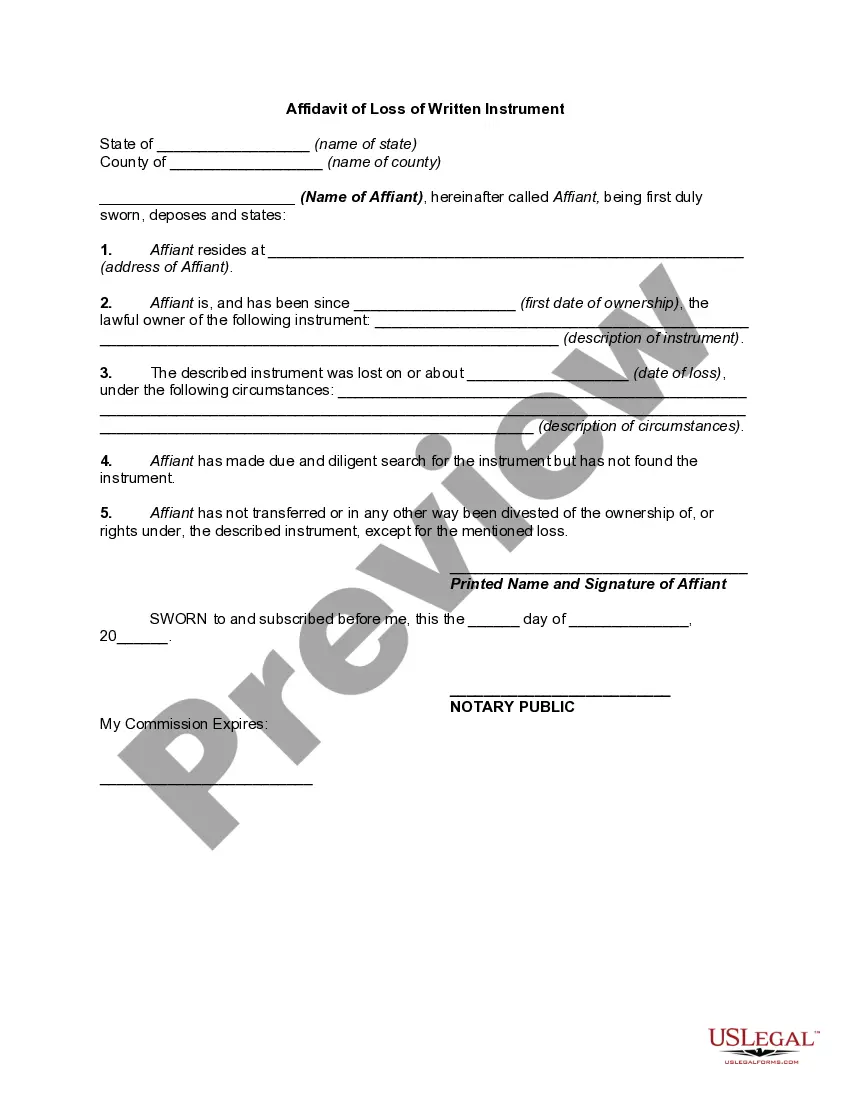
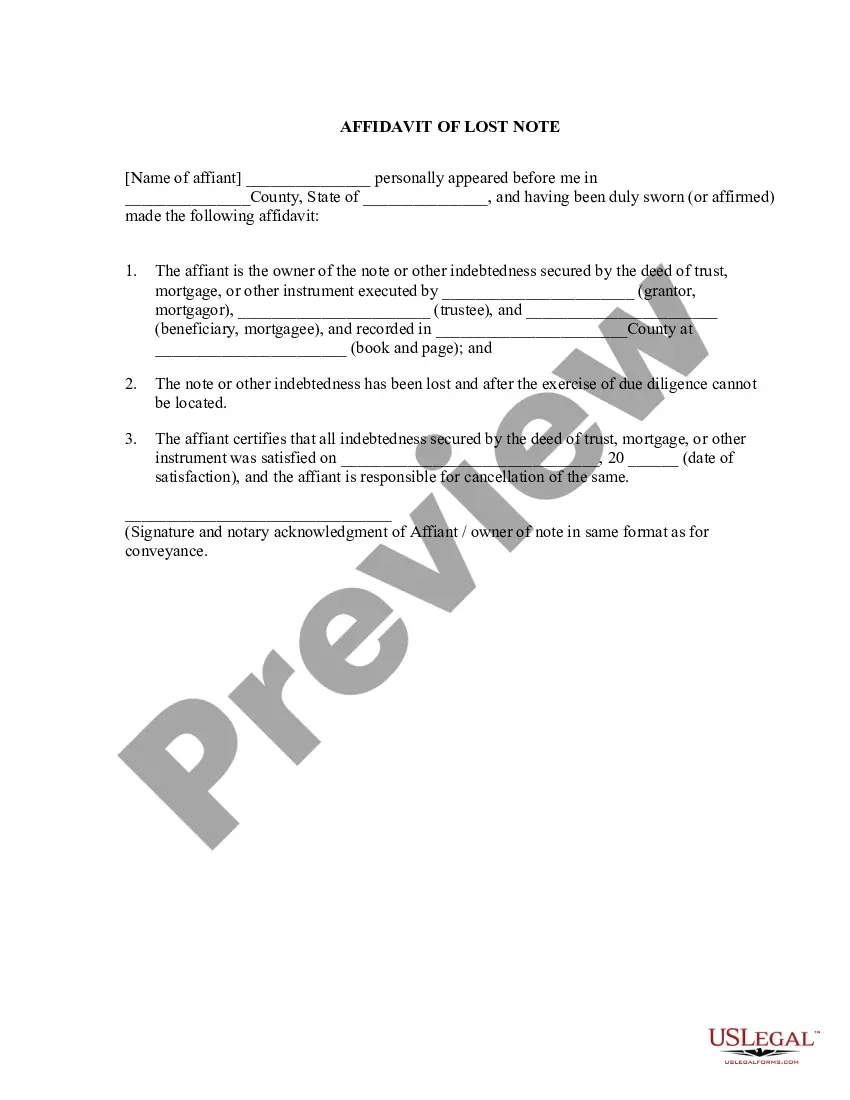
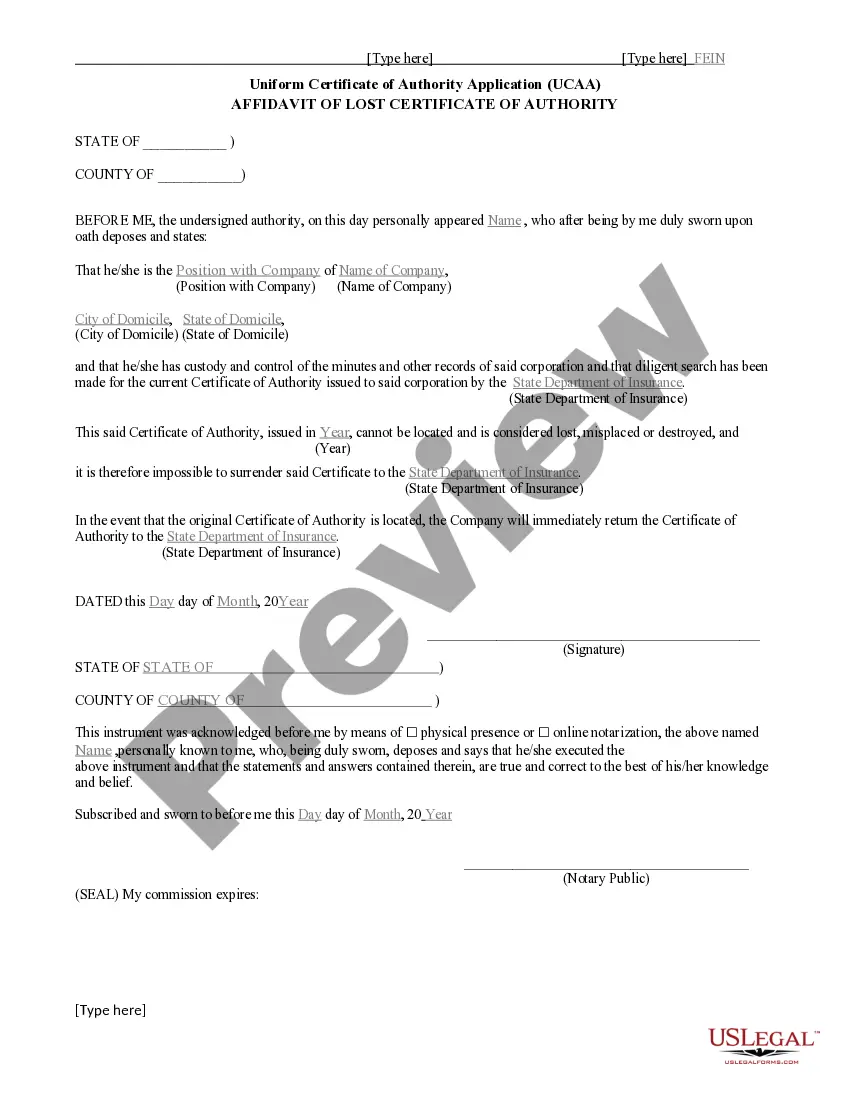
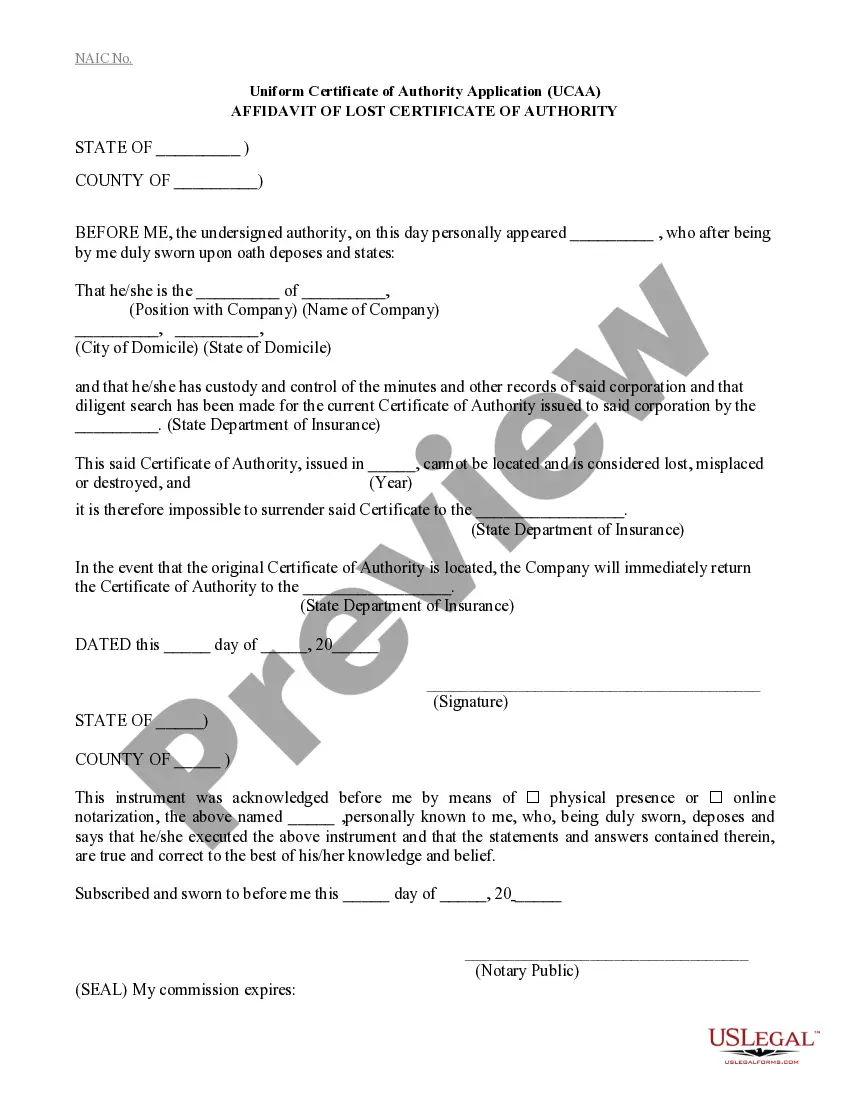
The Affidavit of Loss of Written Instrument is a legal document used to formally declare that a written instrument, such as a contract or certificate, has been lost. This form allows the affiant (the person making the declaration) to assert ownership and explain the circumstances surrounding the loss. Unlike other affidavits, this specific affidavit is tailored for situations where proof of the loss of a legal document is necessary to either recover the lost instrument or to affirm its non-existence for legal purposes.
Main sections of this form
- Affiant's personal details, including their name and address.
- Date of ownership for the lost instrument.
- Description of the lost instrument.
- Date and circumstances under which the instrument was lost.
- A statement of diligent search for the lost instrument.
- A declaration of continued ownership despite the loss.
- Signature of the affiant and notarization section.
Common use cases
This form should be used when an individual or entity has lost a written instrument that is important for legal or financial purposes. It might be needed for situations such as: - Seeking to replace or recover a lost check, bond, or stock certificate. - Making a declaration for legal proceedings where the original document is required. - Providing evidence of ownership in disputes related to the lost instrument.
Intended users of this form
- Individuals who are the rightful owners of a lost written instrument.
- Business entities needing to replace important corporate documentation.
- Legal representatives acting on behalf of clients regarding lost instruments.
- Anyone needing to assert ownership while demonstrating the loss of an important document.
Instructions for completing this form
- Enter the name of the state and county at the top of the form.
- Fill in the affiant's full name and residential address.
- Document the date you first owned the lost instrument.
- Provide a detailed description of the lost instrument.
- Specify the date the instrument was lost and the circumstances of the loss.
- Sign the affidavit in the presence of a notary public.
Notarization requirements for this form
Yes, this form must be notarized to be legally valid. Notarization ensures that the affidavit is executed properly, providing an additional layer of verification of the affiantâs identity and intention. US Legal Forms offers integrated online notarization services, available 24/7 through secure video calls, ensuring convenience and compliance.
Get your form ready online
Our built-in tools help you complete, sign, share, and store your documents in one place.
Make edits, fill in missing information, and update formatting in US Legal Forms—just like you would in MS Word.
Download a copy, print it, send it by email, or mail it via USPS—whatever works best for your next step.
Sign and collect signatures with our SignNow integration. Send to multiple recipients, set reminders, and more. Go Premium to unlock E-Sign.
If this form requires notarization, complete it online through a secure video call—no need to meet a notary in person or wait for an appointment.
We protect your documents and personal data by following strict security and privacy standards.

Make edits, fill in missing information, and update formatting in US Legal Forms—just like you would in MS Word.

Download a copy, print it, send it by email, or mail it via USPS—whatever works best for your next step.

Sign and collect signatures with our SignNow integration. Send to multiple recipients, set reminders, and more. Go Premium to unlock E-Sign.

If this form requires notarization, complete it online through a secure video call—no need to meet a notary in person or wait for an appointment.

We protect your documents and personal data by following strict security and privacy standards.
Common mistakes to avoid
- Failing to clearly describe the lost instrument may lead to confusion.
- Not providing sufficient details about the circumstances of the loss.
- Omitting the date of loss, which is crucial for legal clarity.
- Forgetting to have the document notarized, if required.
Why complete this form online
- Convenience of accessing and completing the form from anywhere.
- Editability allows you to tailor the affidavit to your specific situation.
- Reliability of forms created by licensed attorneys to meet legal standards.
- Immediate download after completion for quick use.
Summary of main points
- The Affidavit of Loss of Written Instrument allows individuals to formally declare a lost document.
- It is essential to provide comprehensive details about the instrument and the circumstances of its loss.
- Notarization is required for the affidavit to be legally valid.
Looking for another form?
Form popularity
FAQ
Affidavits can be written in your own handwriting or typed. 2."Notarized" means that you have sworn under oath that the facts in the affidavit are true, the document has been signed in front of a notary public, and a notary public has signed and put a seal on the affidavit.
Step 1: Decide what the title of your affidavit will be. Step 2: Put the name and personal background information of the person giving the information in the first paragraph. Step 3: Write an opening sentence in the first person tense. Step 4: Make an outline of the information given or state the facts of the case.
Title the affidavit. First, you'll need to title your affidavit. Craft a statement of identity. The very next section of your affidavit is what's known as a statement of identity. Write a statement of truth. State the facts. Reiterate your statement of truth. Sign and notarize.
An affidavit is basically a sworn letter. The person who writes an affidavit is an affiant. The affiant swears to the affidavit's truth. When submitting I-751 affidavits to USCIS, experts recommend a typed letter.
I ____ (Applicant Name as per id proof), residing at _______(Address as per address proof) do solemnly affirm and stated as under: I am _____ and my name _______, appearing on the enclosed ID proof, is single name. My father's name is ________________.
In the sentence, the person writing the statement must state that he or she is stating that the information is accurate. (Example: I, Jane Doe, solemnly swear that the contents of this document are true and correct, and that I agree to abide by the terms in this affidavit.)
An affidavit of loss can be filed for other types of document, such as those related to ownership of a house, a passport, a diploma or even an ATM card.Some require an affidavit of loss to be notarized.
A narration of the circumstances of the loss, which includes (i) description of the item or document lost; (ii) description of how it got lost; (iii) the effort exerted to find it; and (iv) your request for a replacement of the item or document lost. The signature of the affiant.