Affidavit of Lost Certificate of Authority
About this form
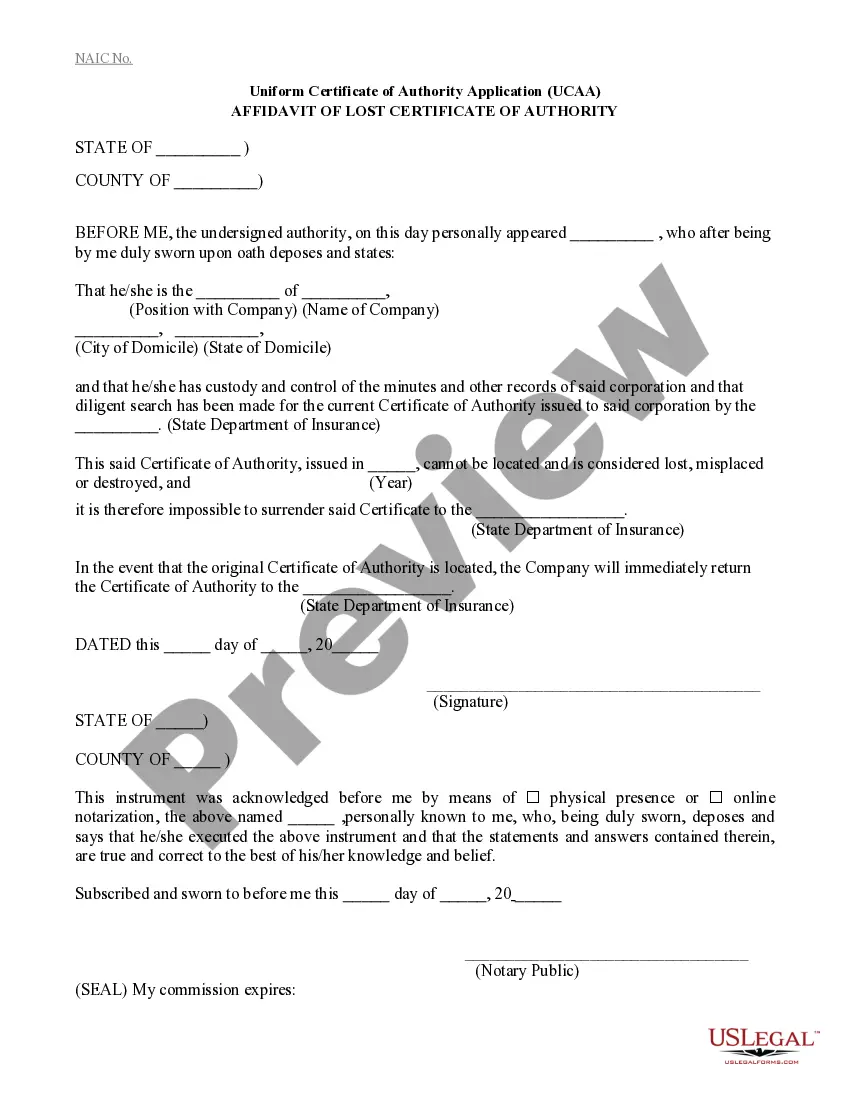
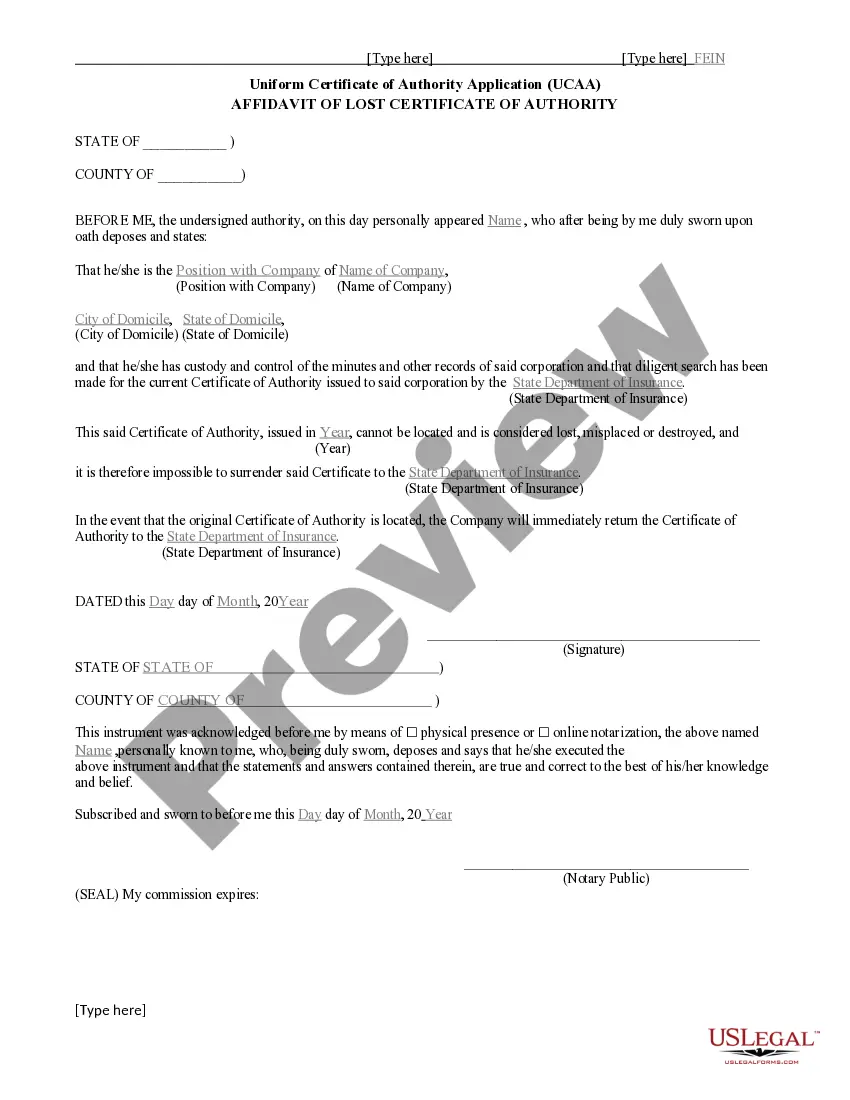
The Affidavit of Lost Certificate of Authority is a legal document used when the original certificate of authority for a corporation is lost, stolen, or destroyed. This affidavit serves to declare the loss and provides a sworn statement for the company to inform the relevant authority, typically the state department that issued the original certificate, about the situation. It is important to note that this affidavit differs from other forms related to corporate governance, as it specifically addresses the loss of the certificate rather than changes in corporate structure or ownership.
Key parts of this document
- Affiant's name and position within the company.
- Details about the corporation, including its name and domicile state.
- A statement about the diligent search conducted for the lost certificate.
- The year when the original certificate was issued.
- Assurances about returning the original certificate if found.
- Notary acknowledgment section for legal verification.
When to use this document
This affidavit is used when a corporation cannot locate their original certificate of authority. Common scenarios include incidents of theft, misplacement during office relocations, or accidental destruction due to unforeseen events. Business owners are encouraged to use this form promptly to avoid interruptions in their business operations, as the certificate often reflects the legal status required for conducting business in the state.
Intended users of this form
- Corporation officers or directors who have custody of corporate records.
- Business owners who are responsible for maintaining the companyâs legal documents.
- Individuals filing on behalf of corporations that have lost their Certificate of Authority.
How to complete this form
- Enter the affiant's name and their position within the corporation.
- Provide the name and domicile information of the corporation.
- Detail the diligent search conducted for the lost certificate.
- Fill in the year the original certificate was issued.
- Sign the affidavit in the designated area.
- Complete the notary section, confirming the identity of the affiant.
Notarization requirements for this form
Yes, this form must be notarized to be legally valid. US Legal Forms offers integrated online notarization, making it easy to complete your affidavit through a secure video call with a licensed notary. This service is available twenty-four hours a day, ensuring you can finalize your document without the need for travel.
Get your form ready online
Our built-in tools help you complete, sign, share, and store your documents in one place.
Make edits, fill in missing information, and update formatting in US Legal Forms—just like you would in MS Word.
Download a copy, print it, send it by email, or mail it via USPS—whatever works best for your next step.
Sign and collect signatures with our SignNow integration. Send to multiple recipients, set reminders, and more. Go Premium to unlock E-Sign.
If this form requires notarization, complete it online through a secure video call—no need to meet a notary in person or wait for an appointment.
We protect your documents and personal data by following strict security and privacy standards.

Make edits, fill in missing information, and update formatting in US Legal Forms—just like you would in MS Word.

Download a copy, print it, send it by email, or mail it via USPS—whatever works best for your next step.

Sign and collect signatures with our SignNow integration. Send to multiple recipients, set reminders, and more. Go Premium to unlock E-Sign.

If this form requires notarization, complete it online through a secure video call—no need to meet a notary in person or wait for an appointment.

We protect your documents and personal data by following strict security and privacy standards.
Avoid these common issues
- Failing to include all required details about the corporation.
- Not properly stating the diligent search conducted for the lost certificate.
- Neglecting to have the form notarized, if required by the state.
- Leaving the signature or date blank.
Benefits of using this form online
- Convenient access to the affidavit 24/7 from any location.
- Edit and customize the form to suit specific corporate needs.
- Reliable documentation drafted to meet legal standards.
- Immediate download after completion for quick filing.
Legal use & context
- Affidavit serves as a sworn statement, essential in legal processes related to business operations.
- Properly completed affidavits help mitigate issues with lost documentation during audits or inspections.
- Enforceability of the affidavit hinges on accurate representation of the lost certificate.
Main things to remember
- The Affidavit of Lost Certificate of Authority is essential for corporations that have lost their original certificate.
- Completion of the form requires specific company information and diligent search evidence.
- Notarization is necessary to ensure the affidavit's validity.
Looking for another form?
Form popularity
FAQ
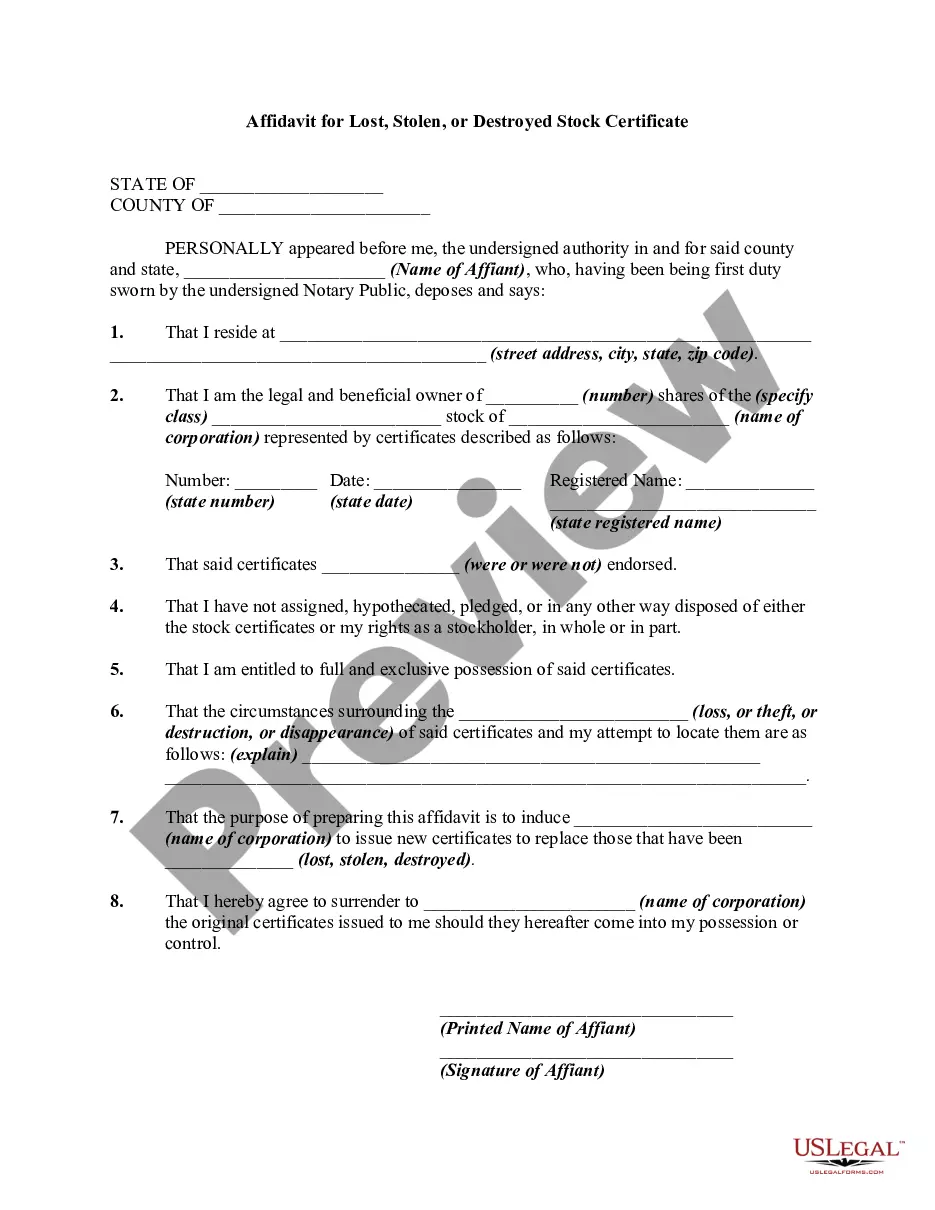
An affidavit of loss is a document declaring that a security, such as a stock certificate, is lost or destroyed. The security issuer requires an affidavit in order to indemnify the holder or replace the certificate. Individuals can file affidavits of loss for other types of document, such as a passport or diploma.
The affidavit of loss should describe the security that has been lost with one or more documents evincing your ownership of the said security. It must give a detailed explanation of the circumstances that led to the loss as well as verify your identity as the owner.
When you need an affidavit you will need to have the document notarized in order for it to be legally binding. This can be done with a traditional in-person or mobile notary, or an affiant can provide their statement using Remote Online Notarization (RON).
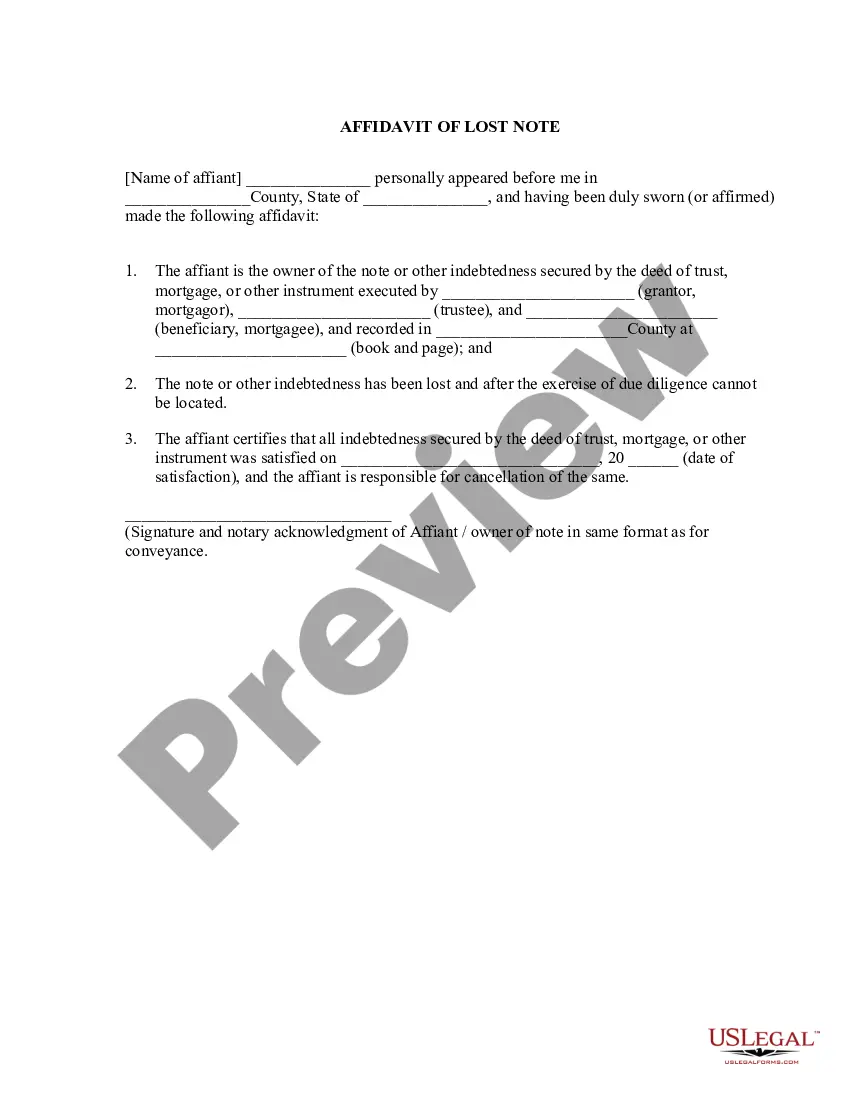
What is an Affidavit of Lost Document? An Affidavit of Lost Document is a sworn statement that is used to confirm that a document was lost and to request a replacement. Losing an important document is stressful, but the recovery process doesn't have to be.
An affidavit is a sworn statement put in writing. When you use an affidavit, you're claiming that the information within the document is true and correct to the best of your knowledge. Like taking an oath in court, an affidavit is only valid when you make it voluntarily and without any coercion.
Affidavit of Loss Full legal name of the affiant; Date of birth of the affiant; Address of the affiant; Identifying details of the lost item; The date of loss or discovery of loss; An explanation of the circumstances surrounding the loss; and. The signature and notarization.