Employment Agreement of Belly Dance Instructor with Dance Studio
About this form
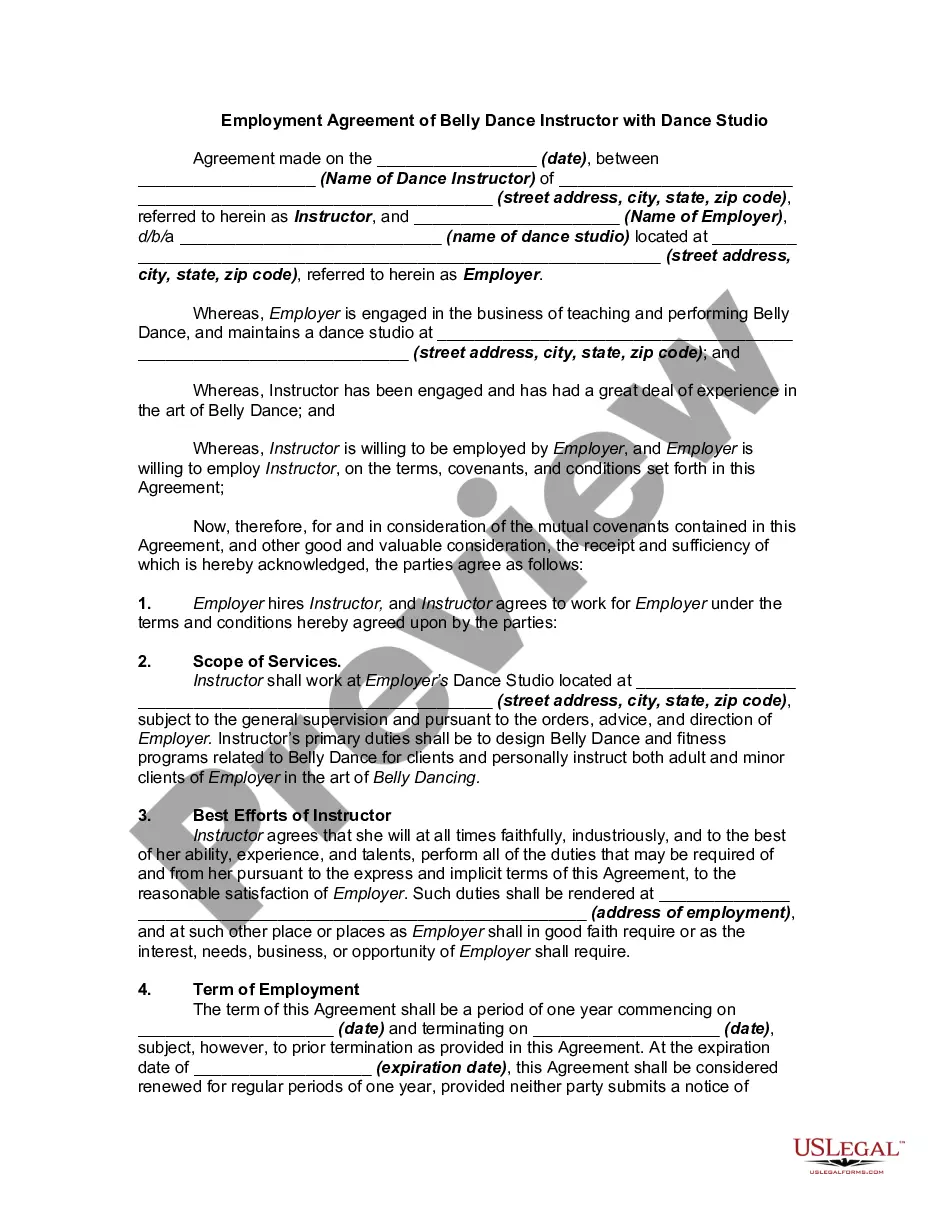
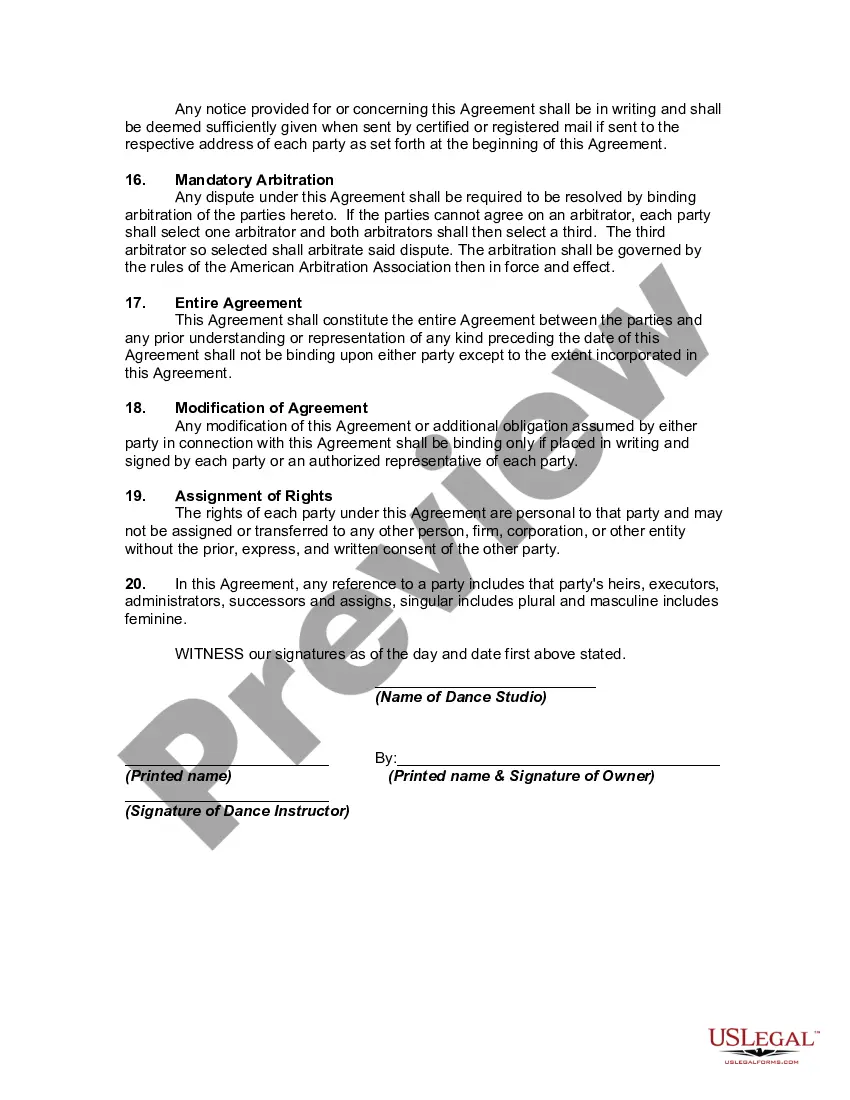
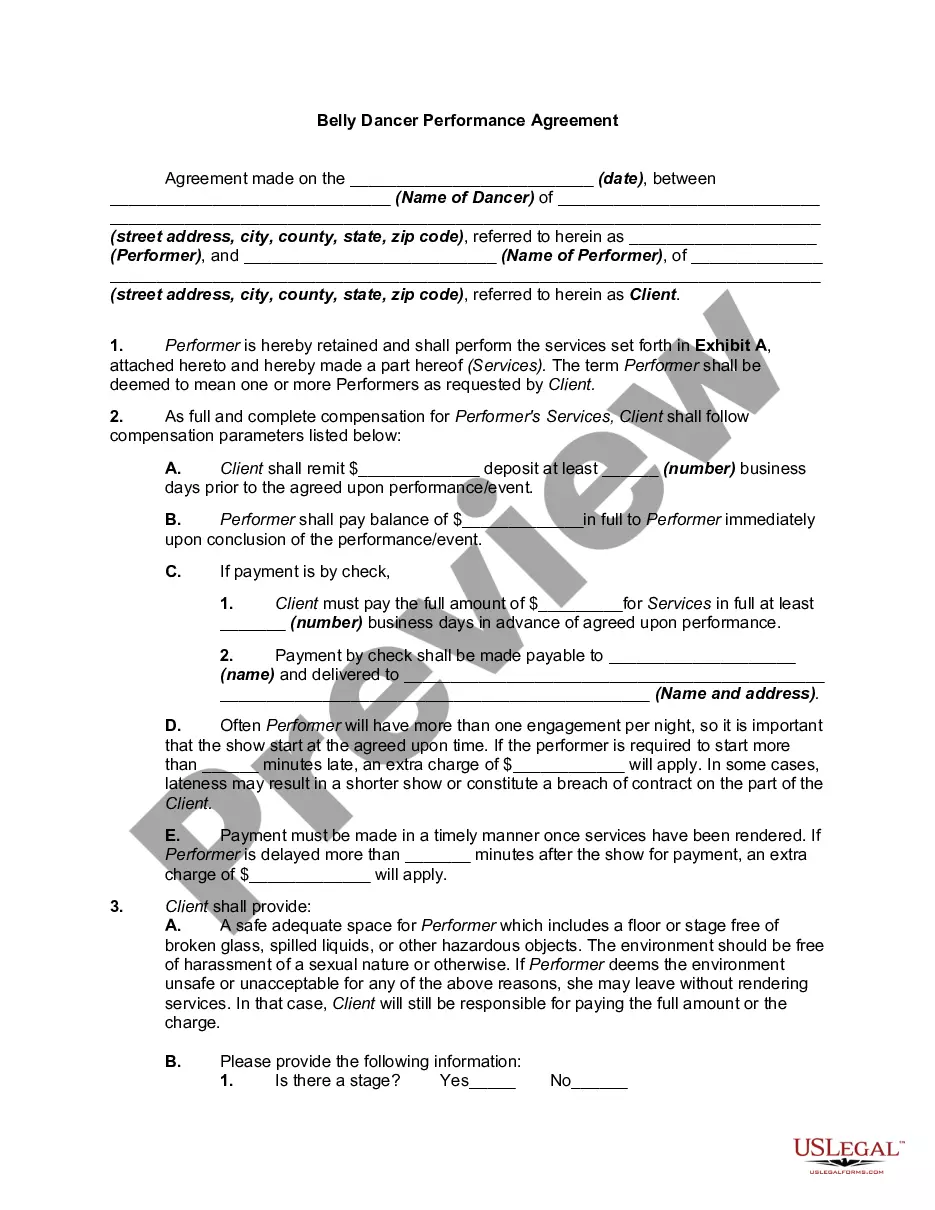
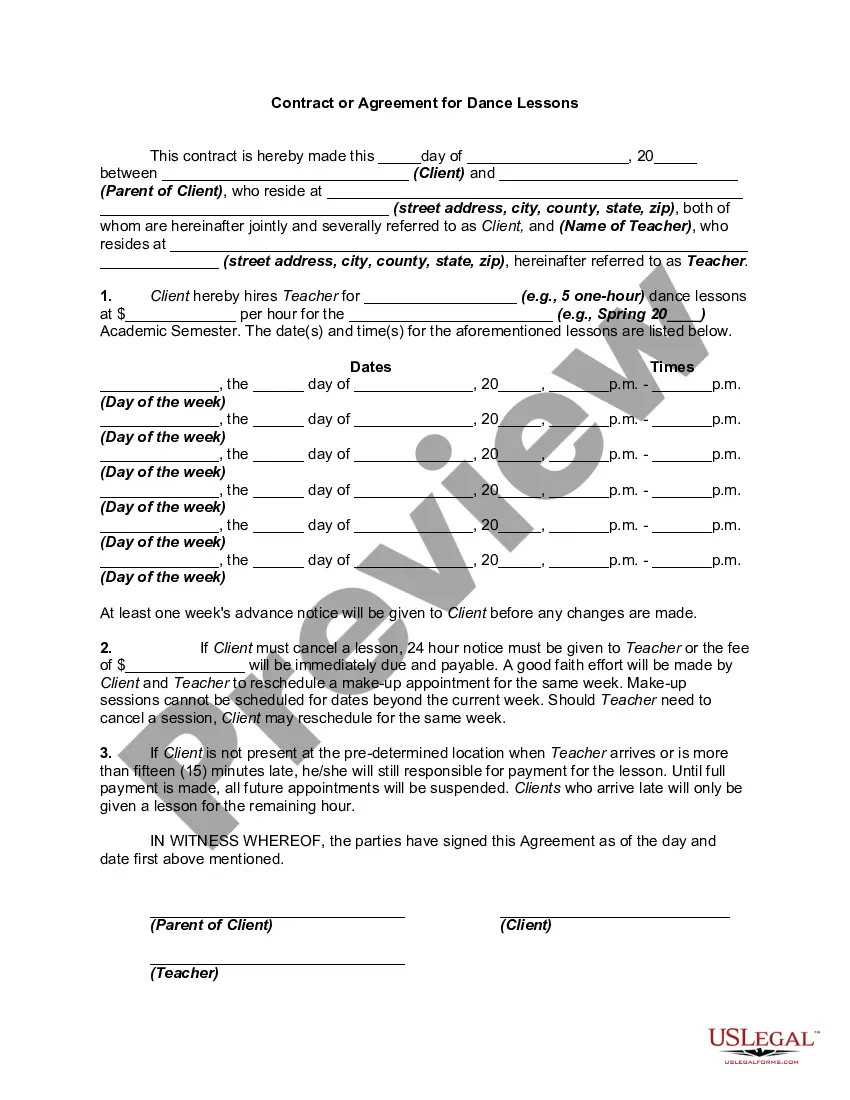
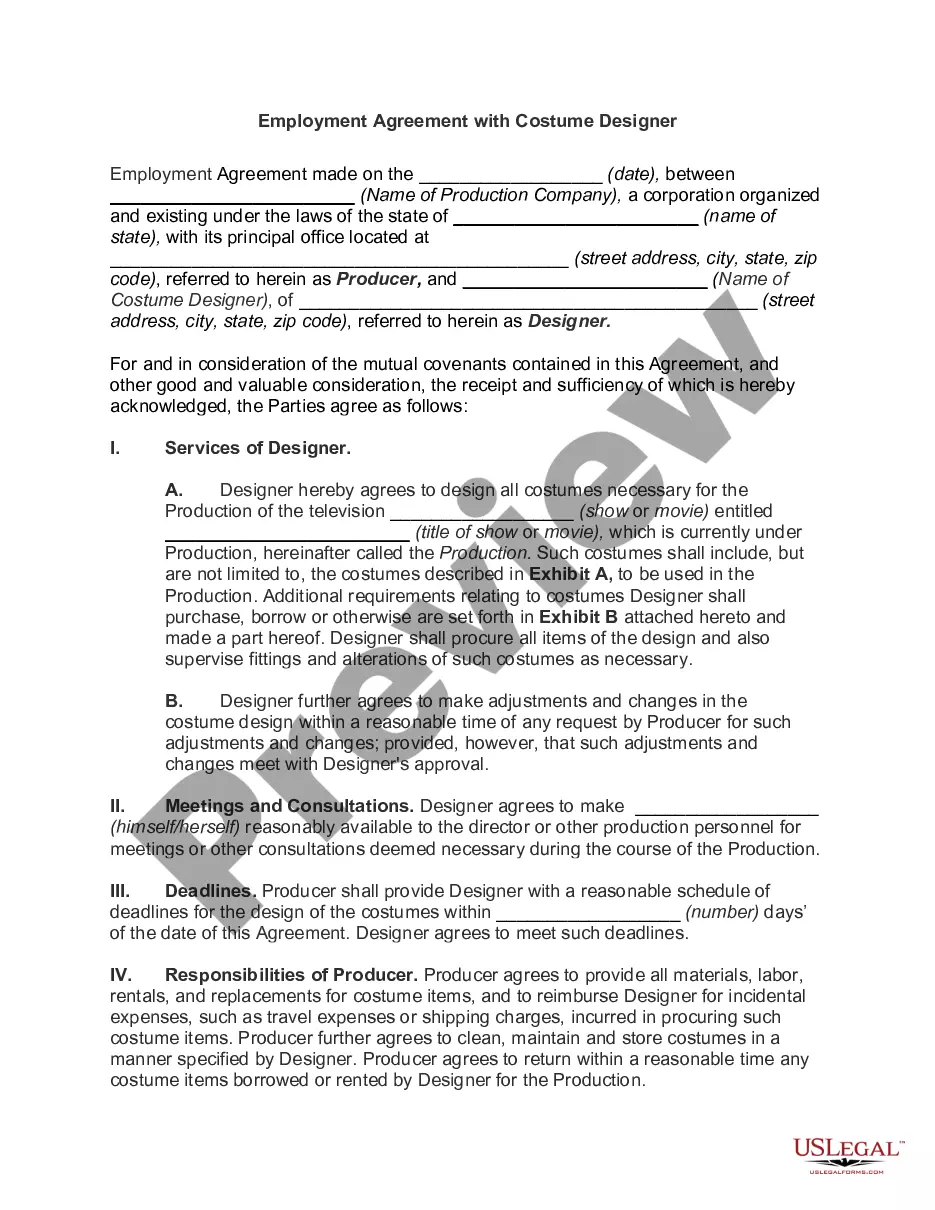
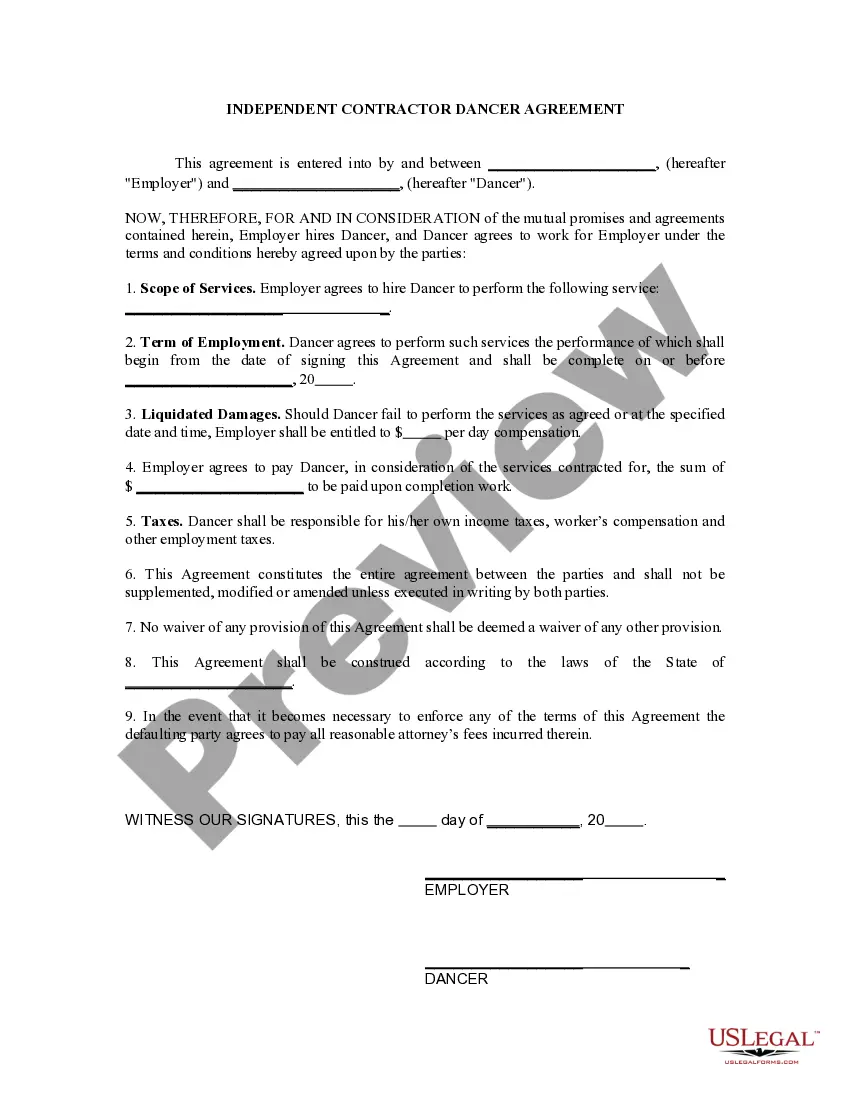
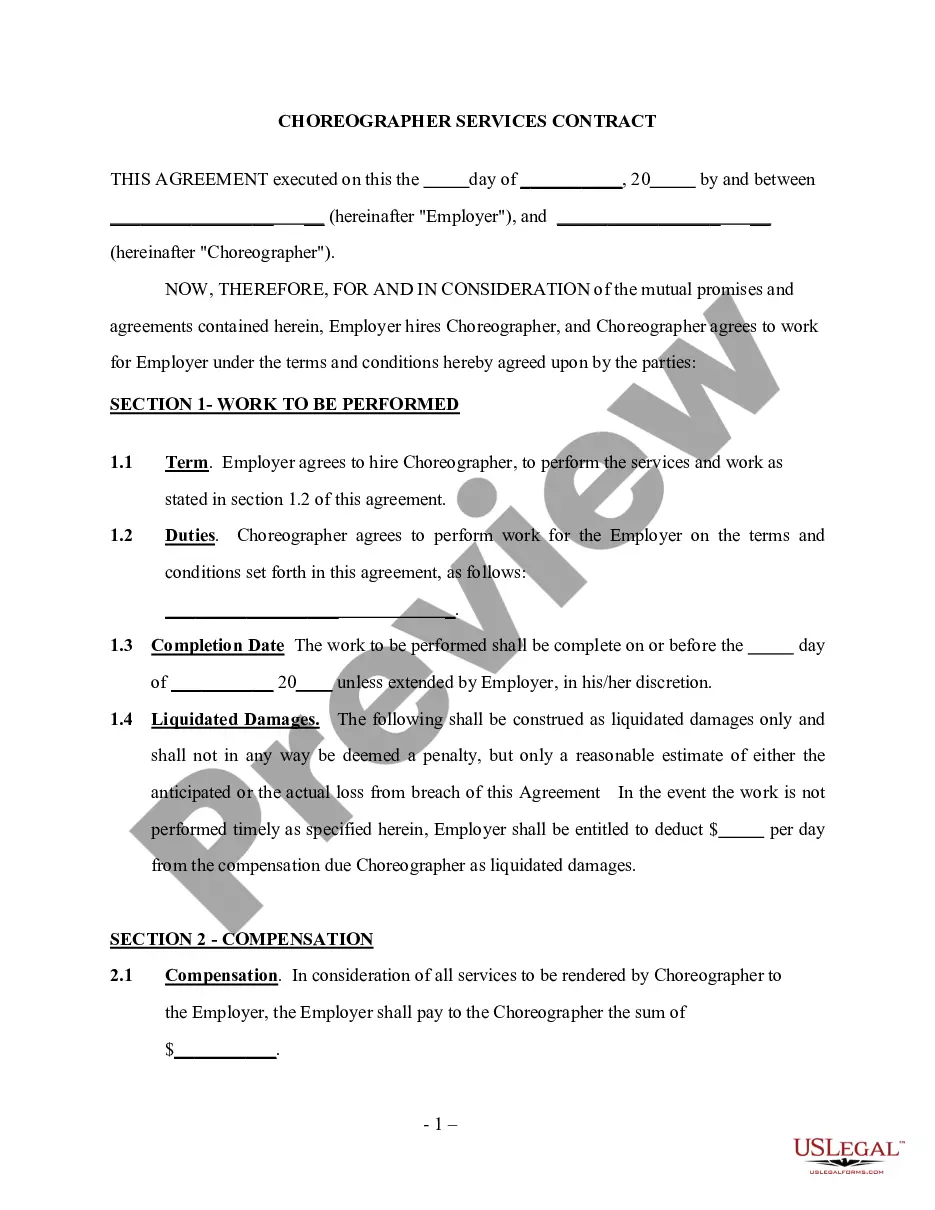
The Employment Agreement of Belly Dance Instructor with Dance Studio is a legal document outlining the terms and conditions of employment between a dance instructor and a studio. This form establishes the responsibilities of the instructor, compensation details, and non-competition clauses, making it a fundamental tool for both parties to ensure clarity and protection of interests. Unlike generic employment contracts, this agreement is specifically tailored for the realm of dance instruction, addressing unique aspects of that employment context.
What’s included in this form
- Agreement details, including the names and addresses of both parties.
- Scope of services to be provided by the instructor.
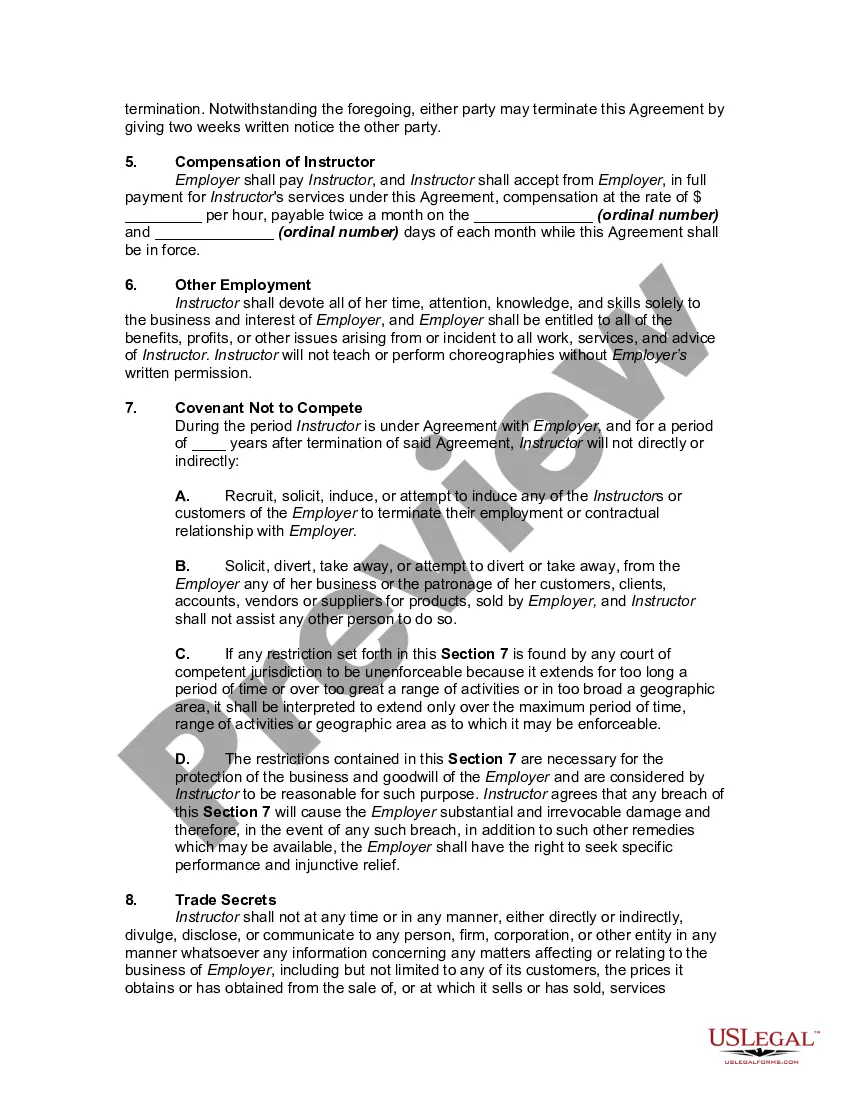
- Compensation details, including pay rate and payment schedule.
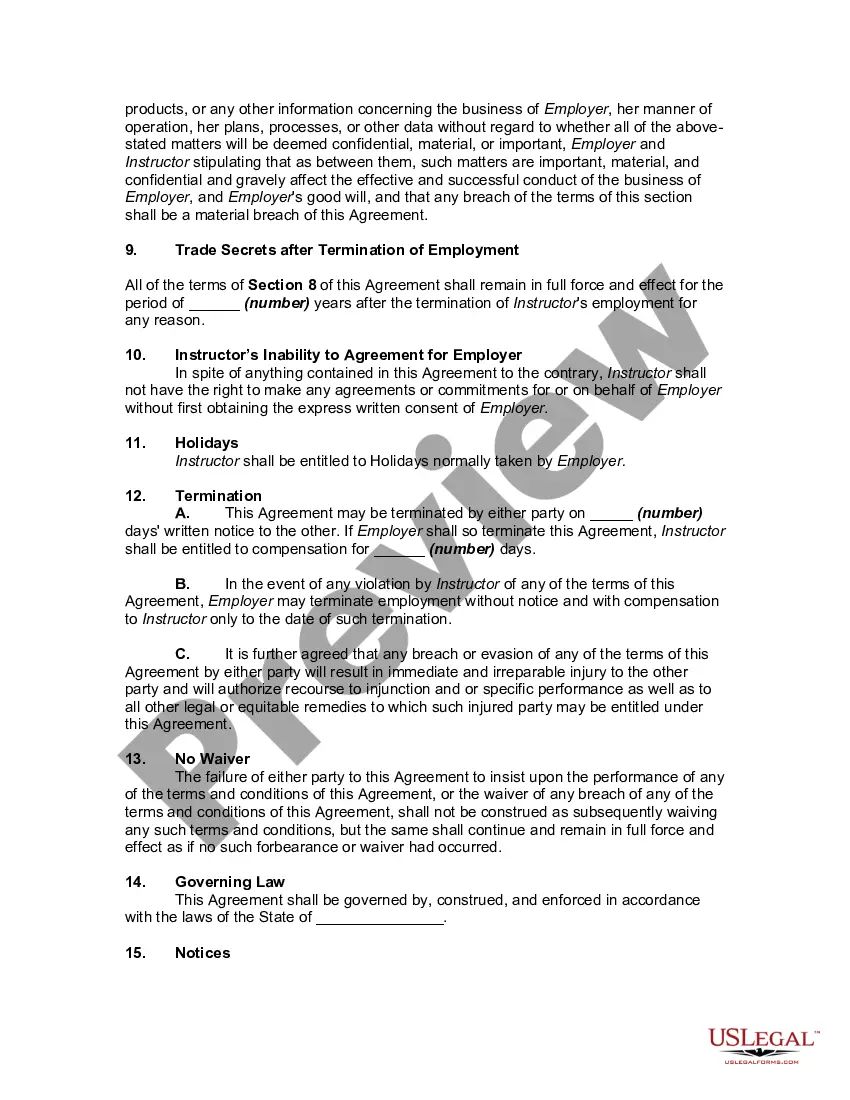
- Covenant not to compete, preventing the instructor from soliciting clients or teaching elsewhere during and after employment.
- Termination conditions, outlining how either party can end the agreement.
When to use this document
This employment agreement should be used when a dance studio hires a belly dance instructor. Itâs necessary for establishing clear expectations and responsibilities concerning employment duties, compensation, and confidentiality. Whether starting a new dance studio or hiring an instructor for an established one, having a formal agreement protects both the studio's interests and the instructor's rights.
Who this form is for
- Dance studio owners or managers looking to hire belly dance instructors.
- Belly dance instructors seeking formal employment agreements.
- Legal advisors who assist dance studios in drafting employment contracts.
How to prepare this document
- Identify the parties involved by entering the names and addresses of the instructor and the employer.
- Specify the scope of services the instructor will provide, including details about the dance programs and instruction.
- Enter the compensation details, including the hourly rate and payment schedule.
- Outline the non-compete clauses clearly, including the duration of this restriction after employment ends.
- Complete the termination conditions, allowing flexibility for either party to end the agreement with notice.
Does this form need to be notarized?
This form does not typically require notarization unless specified by local law. However, consult with a legal professional to ensure compliance with state-specific requirements.
Get your form ready online
Our built-in tools help you complete, sign, share, and store your documents in one place.
Make edits, fill in missing information, and update formatting in US Legal Forms—just like you would in MS Word.
Download a copy, print it, send it by email, or mail it via USPS—whatever works best for your next step.
Sign and collect signatures with our SignNow integration. Send to multiple recipients, set reminders, and more. Go Premium to unlock E-Sign.
If this form requires notarization, complete it online through a secure video call—no need to meet a notary in person or wait for an appointment.
We protect your documents and personal data by following strict security and privacy standards.

Make edits, fill in missing information, and update formatting in US Legal Forms—just like you would in MS Word.

Download a copy, print it, send it by email, or mail it via USPS—whatever works best for your next step.

Sign and collect signatures with our SignNow integration. Send to multiple recipients, set reminders, and more. Go Premium to unlock E-Sign.

If this form requires notarization, complete it online through a secure video call—no need to meet a notary in person or wait for an appointment.

We protect your documents and personal data by following strict security and privacy standards.
Avoid these common issues
- Failing to specify the exact compensation rate or payment frequency.
- Not including the scope of services, leading to misunderstandings about job expectations.
- Leaving out the non-compete clause or failing to make it clear and reasonable.
- Neglecting to state how termination will be managed.
Benefits of completing this form online
- Convenience: Download and fill out the form at your own pace from anywhere.
- Editability: Easily customize the agreement to fit your specific needs.
- Reliability: Access professionally drafted forms ensuring legal validity.
Legal use & context
- This agreement serves to establish a formal employment relationship, protecting both the studio and instructor legally.
- Non-compete clauses need to be reasonable and justifiable to be enforceable in court.
- Terms should ensure clarity regarding duties and compensation to avoid misunderstandings.
Summary of main points
- Clear agreements can prevent disputes between employers and employees.
- Understanding your rights and obligations is crucial when signing employment contracts.
- Customized forms can address unique aspects of employment in specialized fields like dance.
Looking for another form?






Form popularity
FAQ
Secure any slots you can to begin with. Make your classes stand out from the competition. Give constructive feedback to your classes. Let your passion drive you. Keep creating. Take care of yourself. Remember you're more than just a dancer. Specialist dance insurance from Insure4Sport.
The average Dance teacher salary is £55,772. This is 53.0% above the national average advertised salary of A£36,448.
Anyone can be a dancer, but not everyone has the skills and aptitude to be an effective dance instructor.Some would prefer a teacher with more relaxed teaching methods, while others work best with a teacher that is strict and micromanaging. There is no one style of teaching to rule them all.
You'll need at least a level 3 qualification in performing arts dance or higher, if you want to teach, for example in a further education college. You would also need a teaching qualification that is relevant to the level of teaching responsibility you'll have in your job.
As of Apr 12, 2021, the average hourly pay for a Dance Teacher in the United States is $24.56 an hour.A Dance Teacher in your area makes on average $25 per hour, or $0.58 (2%) more than the national average hourly salary of $24.56. ranks number 1 out of 50 states nationwide for Dance Teacher salaries.
Secure any slots you can to begin with. Make your classes stand out from the competition. Give constructive feedback to your classes. Let your passion drive you. Keep creating. Take care of yourself. Remember you're more than just a dancer. Specialist dance insurance from Insure4Sport.
In most cases of studio owners I've encountered, your teachers are considered employees, not independent contractors. However, the business of dance studios is a very diverse group when it comes to schedules and employee structures.
NO. You do not need to go to university or college to be a dance teacher as long as your goal is to teach dance in privately owned studios, online or in some community settings.
You'll need a relevant degree in dance or performing arts. To teach in a state school you'll need qualified teacher status (QTS). As a primary teacher, you would be trained to teach all subjects, but may develop a subject specialism in physical education, which could include dance or creative movement.