Assignment of Rights to Frozen Embryos
About this form
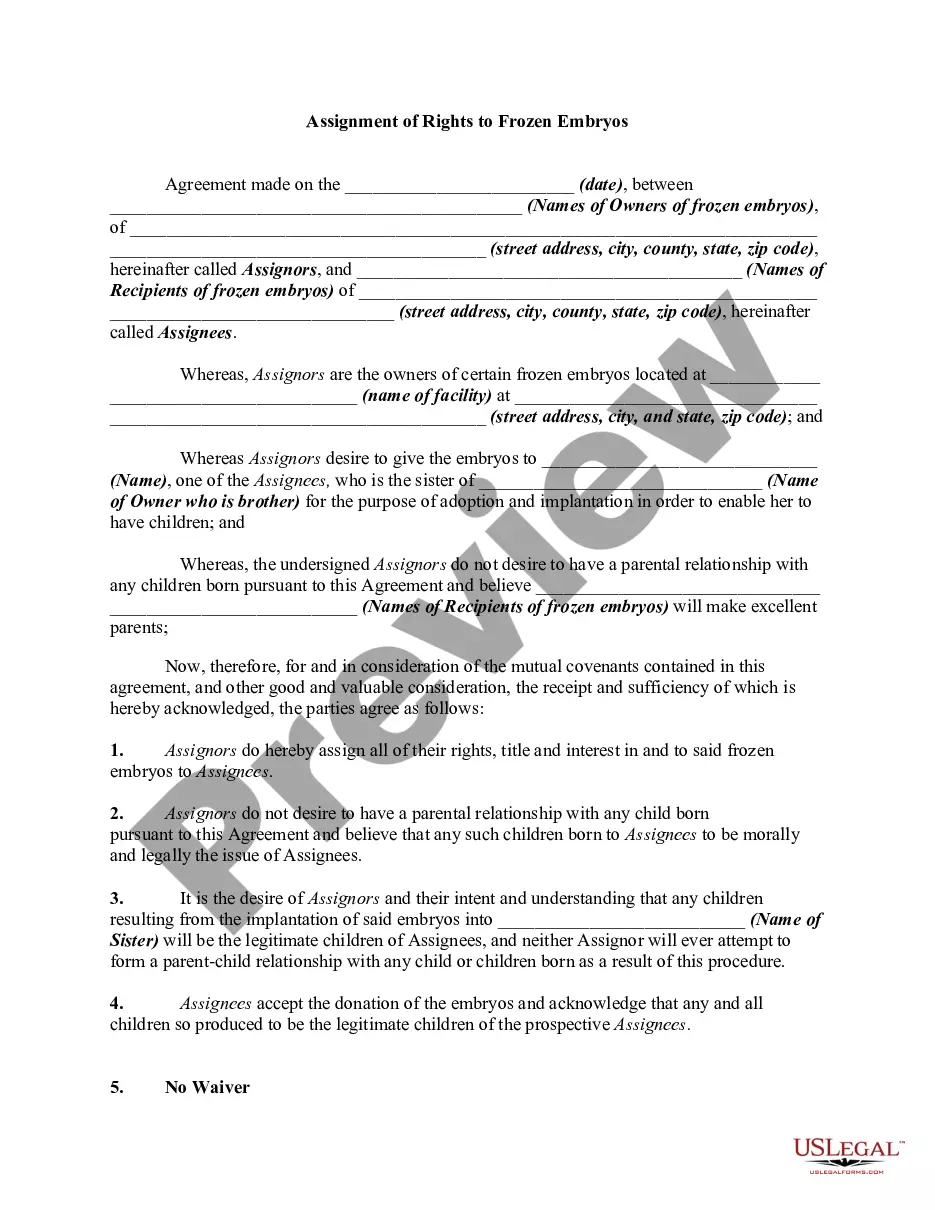
The Assignment of Rights to Frozen Embryos is a legal document used by individuals or couples to transfer ownership and parental rights of frozen embryos to designated recipients. This form is particularly important in situations where the original owners do not wish to retain parental responsibilities for any children born from the embryos. It serves to clarify the legal responsibilities and intentions of both parties involved in the embryo donation process.
Key parts of this document
- Identifies the Assignors (owners) and Assignees (recipients) of the frozen embryos.
- Details the specific frozen embryos being assigned, including their location.
- States the intent of the Assignors to relinquish parental rights post-implantation.
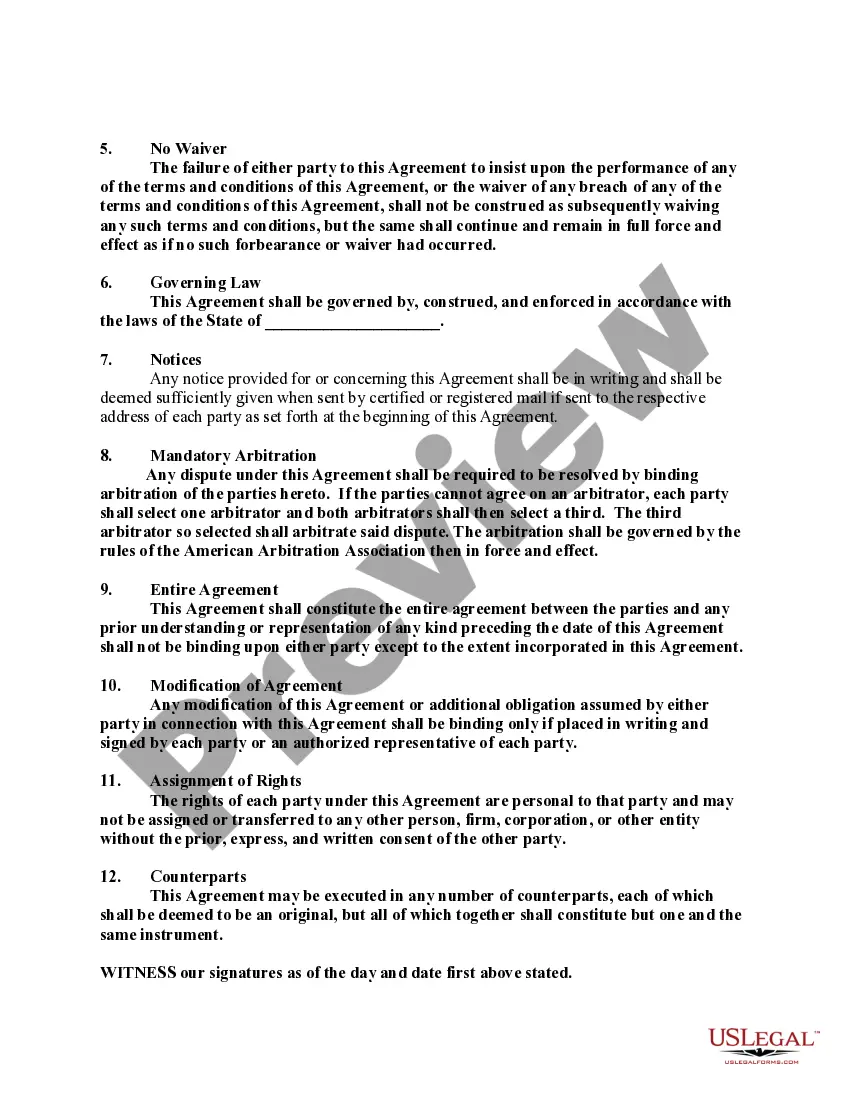
- Includes a clause about governing law based on the relevant state's legal framework.
- Specifies that any disputes will be resolved through binding arbitration.
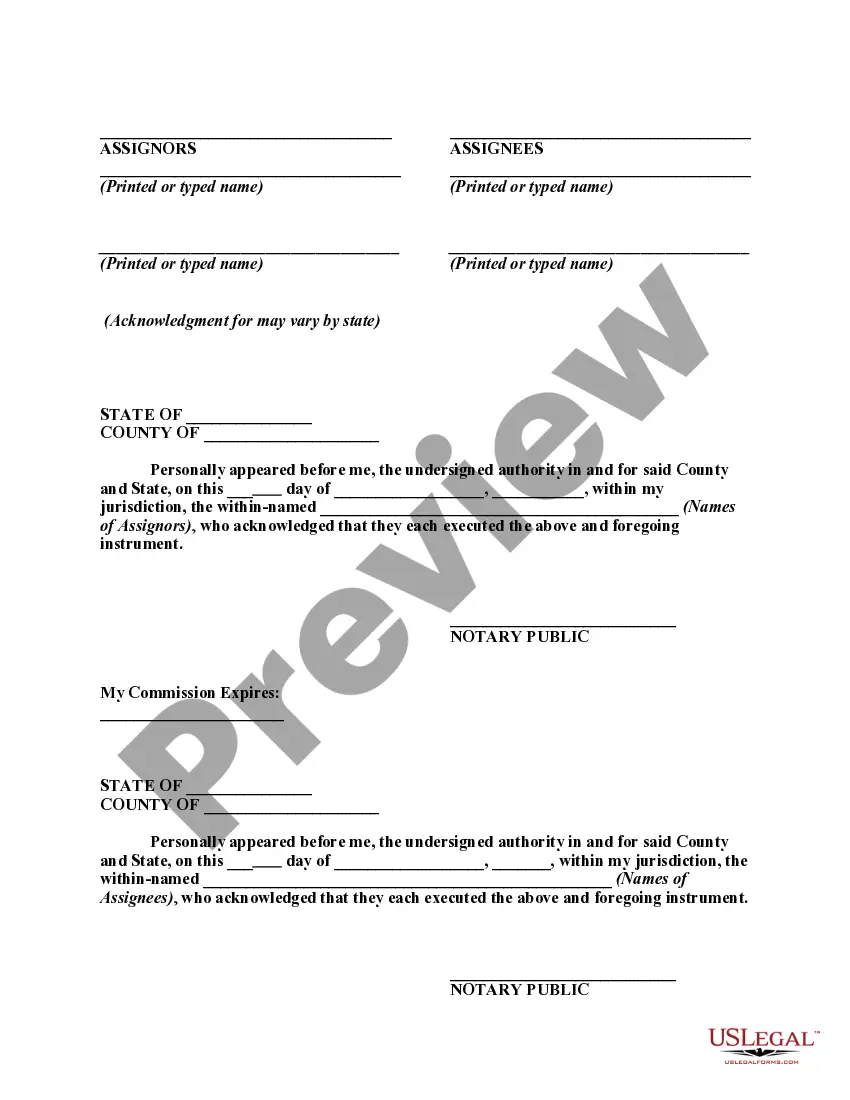
- Includes signature and notarization requirements for legal validity.

When to use this document
This form is typically used in cases where individuals or couples wish to donate their frozen embryos to another party, such as family members or friends, for the purpose of assisted reproduction. It is essential in situations where the original owners do not plan to have a parental role in the future children produced from these embryos.
Intended users of this form
- Individuals or couples with frozen embryos that they wish to donate.
- Recipients who are family members or friends looking to adopt frozen embryos.
- Healthcare professionals assisting with embryo donation processes.
How to complete this form
- Identify the Assignors and Assignees by entering their full names and addresses.
- Specify the details of the frozen embryos, including the storage facility name and address.
- Clearly state the intent of the Assignors not to exert parental rights over any resulting children.
- Include the date of the agreement and sign in the presence of a notary public.
- Ensure that all parties have a copy of the signed agreement for their records.
Is notarization required?
To make this form legally binding, it must be notarized. Our online notarization service, powered by Notarize, lets you verify and sign documents remotely through an encrypted video session.
Get your form ready online
Our built-in tools help you complete, sign, share, and store your documents in one place.
Make edits, fill in missing information, and update formatting in US Legal Forms—just like you would in MS Word.
Download a copy, print it, send it by email, or mail it via USPS—whatever works best for your next step.
Sign and collect signatures with our SignNow integration. Send to multiple recipients, set reminders, and more. Go Premium to unlock E-Sign.
If this form requires notarization, complete it online through a secure video call—no need to meet a notary in person or wait for an appointment.
We protect your documents and personal data by following strict security and privacy standards.

Make edits, fill in missing information, and update formatting in US Legal Forms—just like you would in MS Word.

Download a copy, print it, send it by email, or mail it via USPS—whatever works best for your next step.

Sign and collect signatures with our SignNow integration. Send to multiple recipients, set reminders, and more. Go Premium to unlock E-Sign.

If this form requires notarization, complete it online through a secure video call—no need to meet a notary in person or wait for an appointment.

We protect your documents and personal data by following strict security and privacy standards.
Typical mistakes to avoid
- Failing to properly identify all parties involved in the agreement.
- Not consulting state-specific laws which may affect the validity of the agreement.
- Omitting signatures or notaries, which can render the form unenforceable.
Why complete this form online
- Convenient access to the form anytime, allowing for adjustments as needed.
- Editability ensures that users can customize the document before completion.
- Reliable templates drafted by licensed attorneys provide peace of mind regarding legal validity.
What to keep in mind
- The form facilitates the legal transfer of rights to frozen embryos from donors to recipients.
- It helps clarify parental rights, ensuring the Assignors have no legal relationship with any resulting children.
- Proper completion and notarization are essential for the agreement to be enforceable under the law.
Looking for another form?



Form popularity
FAQ
Foods that are embryo-transfer friendly include: Soups. Whole grains found in quinoa, farro, and whole-grain pasta. Legumes like beans, lentils and chickpeas.
If the embryo transferred doesn't result in a successful pregnancy, you have two options. You can do another fresh, full IVF cycle, or you can transfer one or two of your previously cryopreserved embryos. The most cost-effective option would be to transfer one of your previously frozen embryos.
The survival rate was 69% for thawed zygotes, 85% for D3 embryos, and 88% for blastocysts Table 1.
One of the ways we can improve implantation is by accurate delivery of the embryo to the endometrium. Using ultrasound we can see the tip of the transfer catheter in the uterus, guiding it into proper location.
Because there are so many benefits to PGS testing, it is common for individuals to ask if PGS testing can also be performed on frozen embryos. Fortunately, PGS testing is still completely viable for frozen embryos and can improve our patients' chances of having a healthy pregnancy and baby.
Look into blastocyst transfer. Consider embryo screening. Investigate the EmbryoScope. Ask about assisted hatching. Talk to your doctor about estrogen and progesterone supplementation. Take it easy. Abstain from vigorous exercise and sexual intercourse. Eat as if you're already pregnant.
Request the most experienced doctor. Do a dummy run. Don't have a hydrosalpinx. Test, test and test again. Take folic acid ideally within a multivitamin. If you're over 40, consider transferring two embryos.
Take it Easy: Take Rest but not Exactly: It as if you are Pregnant Already. Take your Medicines religiously. Abstain from vigorous exercise. Take it Easy:Avoid Extreme of Temperature. Expect the Worst and Wait for the Best. Lean on Your Support System.
The best way to prepare for your embryo transfer is to follow all directions from your clinic and learn more about what to expect on the day of the transfer. Plan ahead for getting to the clinic on time think of traffic, weather, and other issues that may cause a delay.