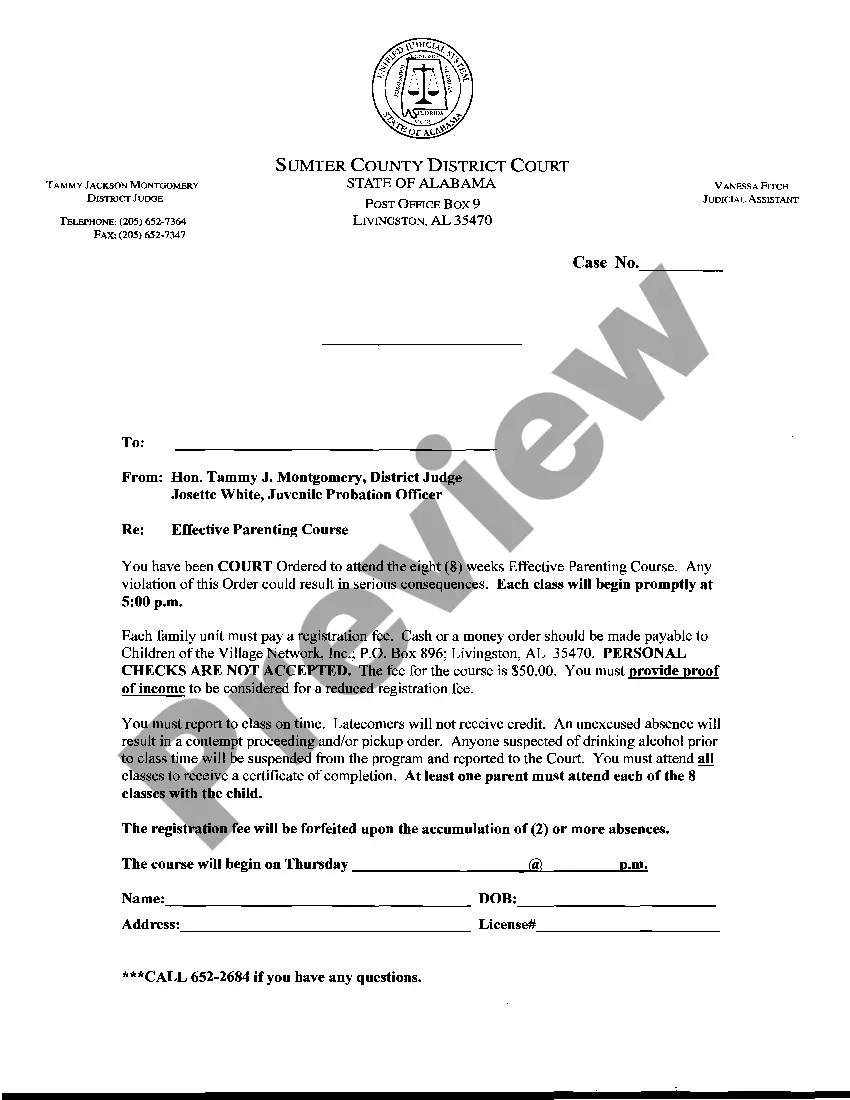
License for the use of a Copyright
What is this form?
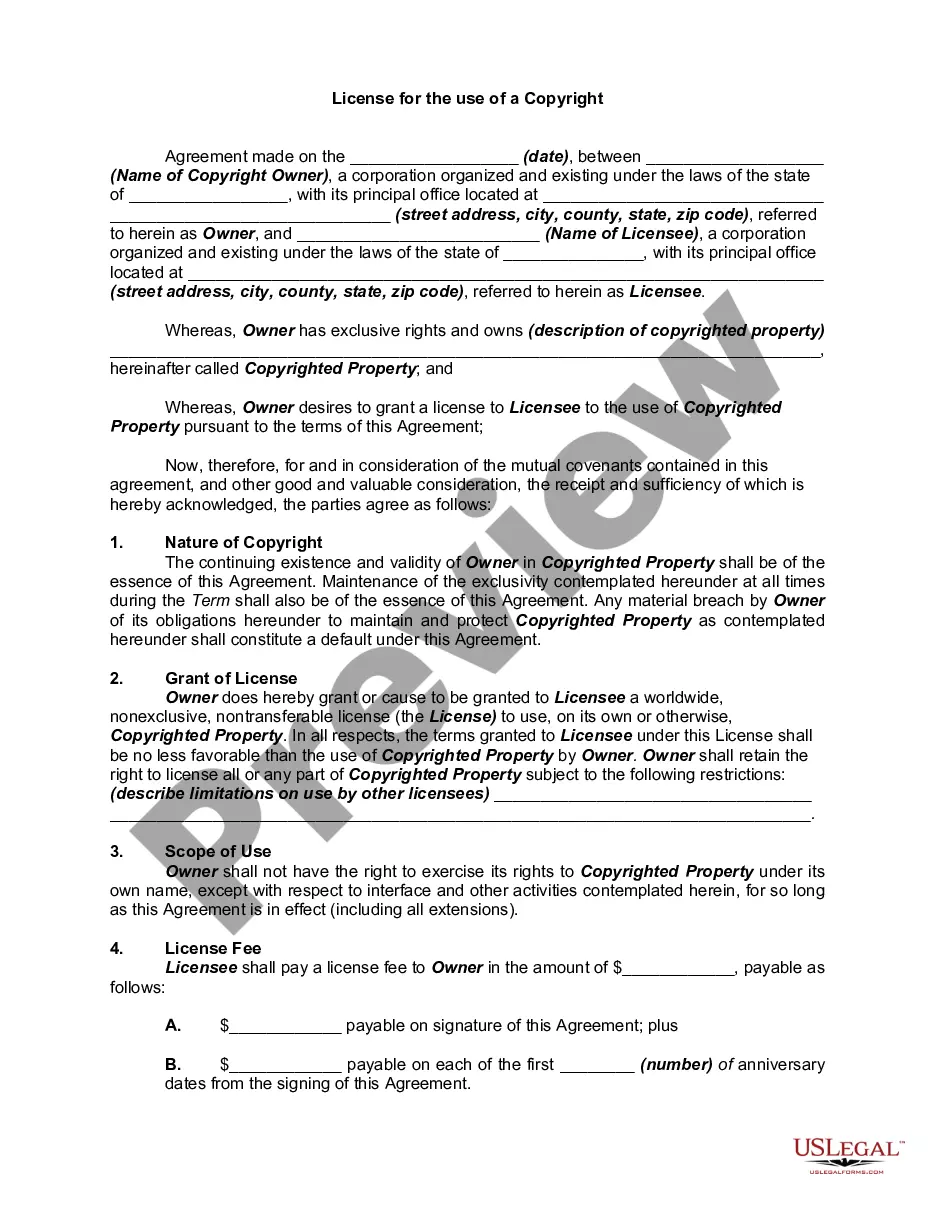
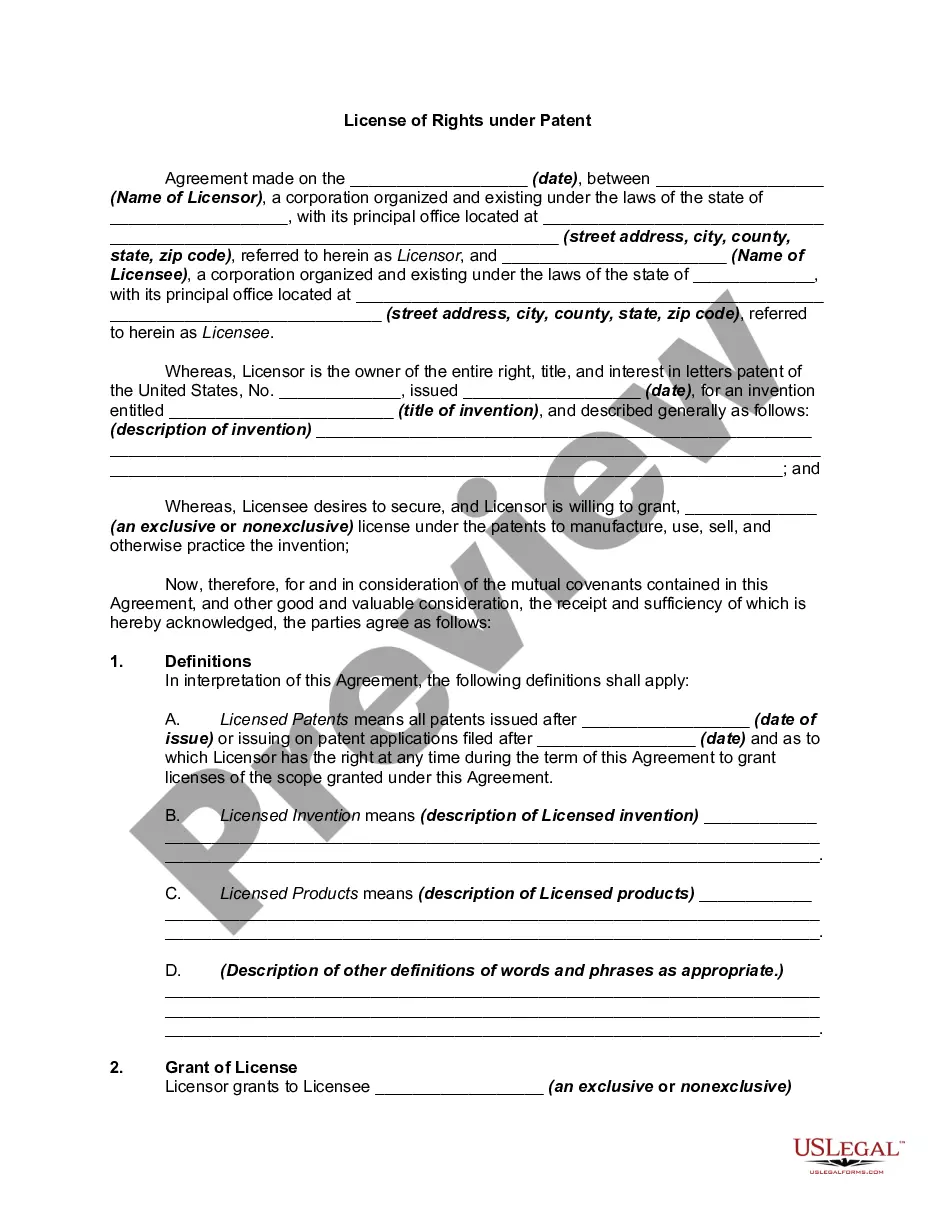
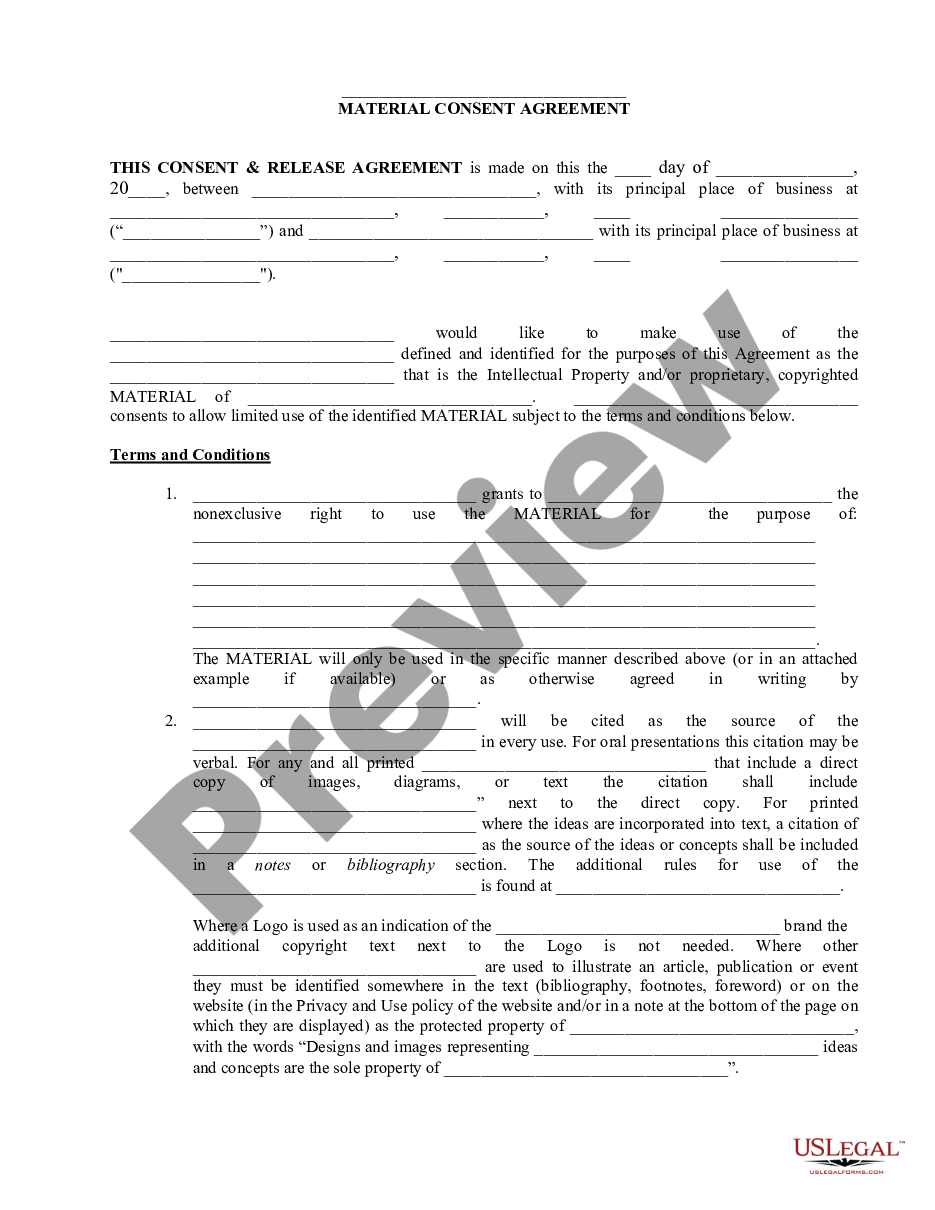
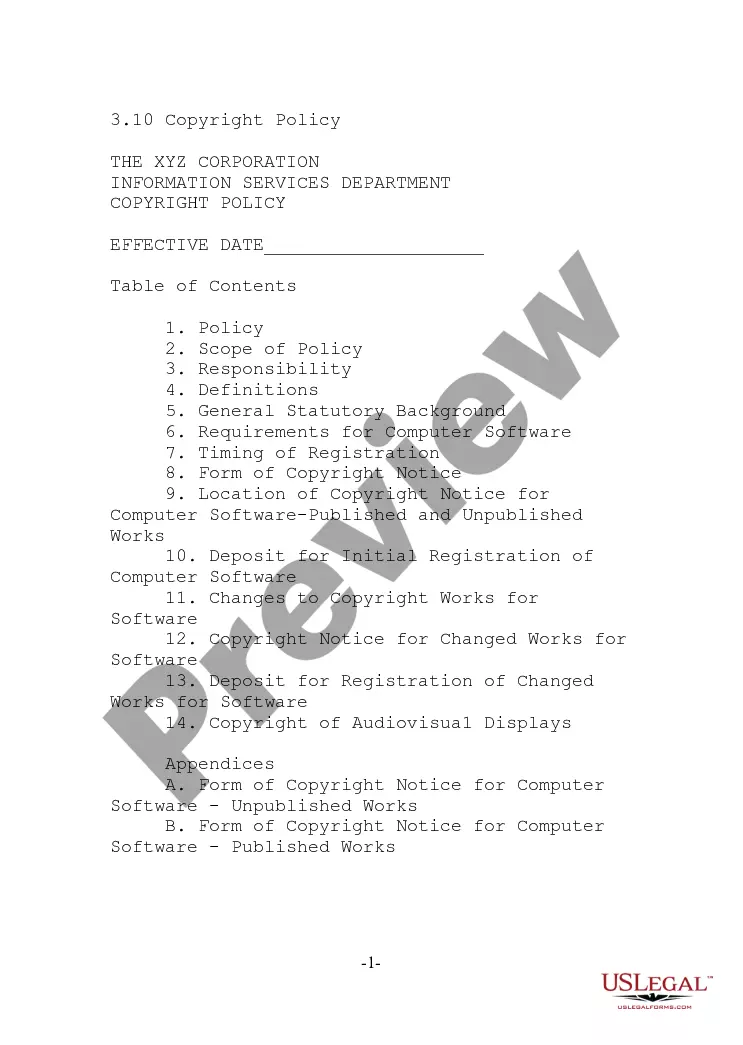
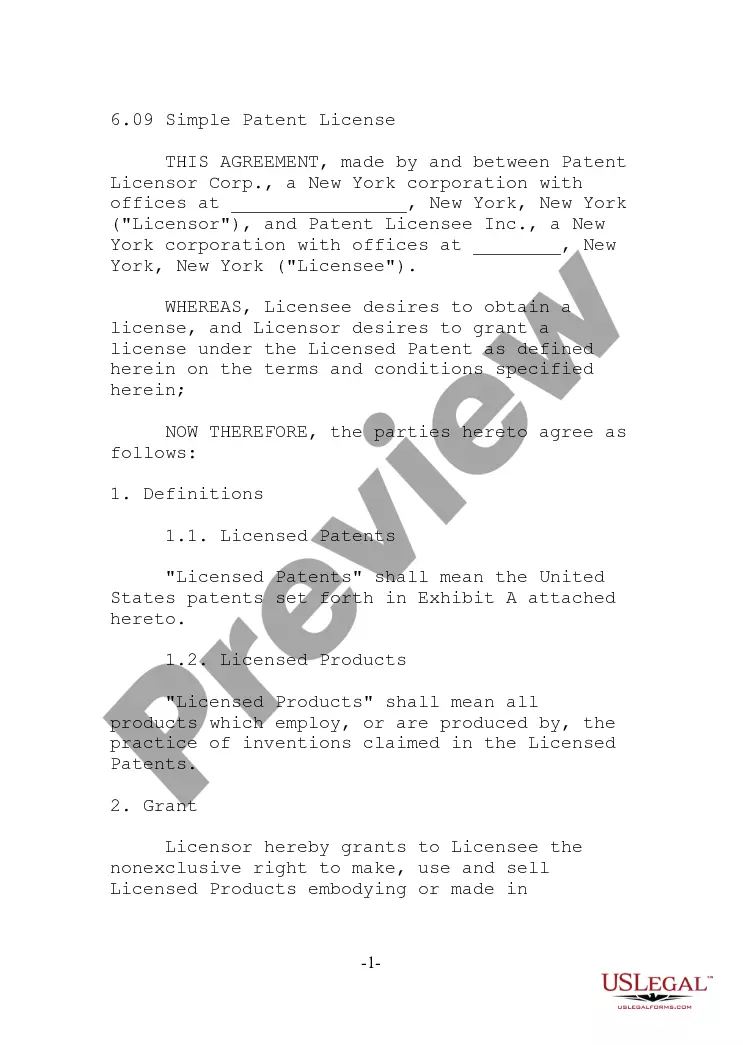
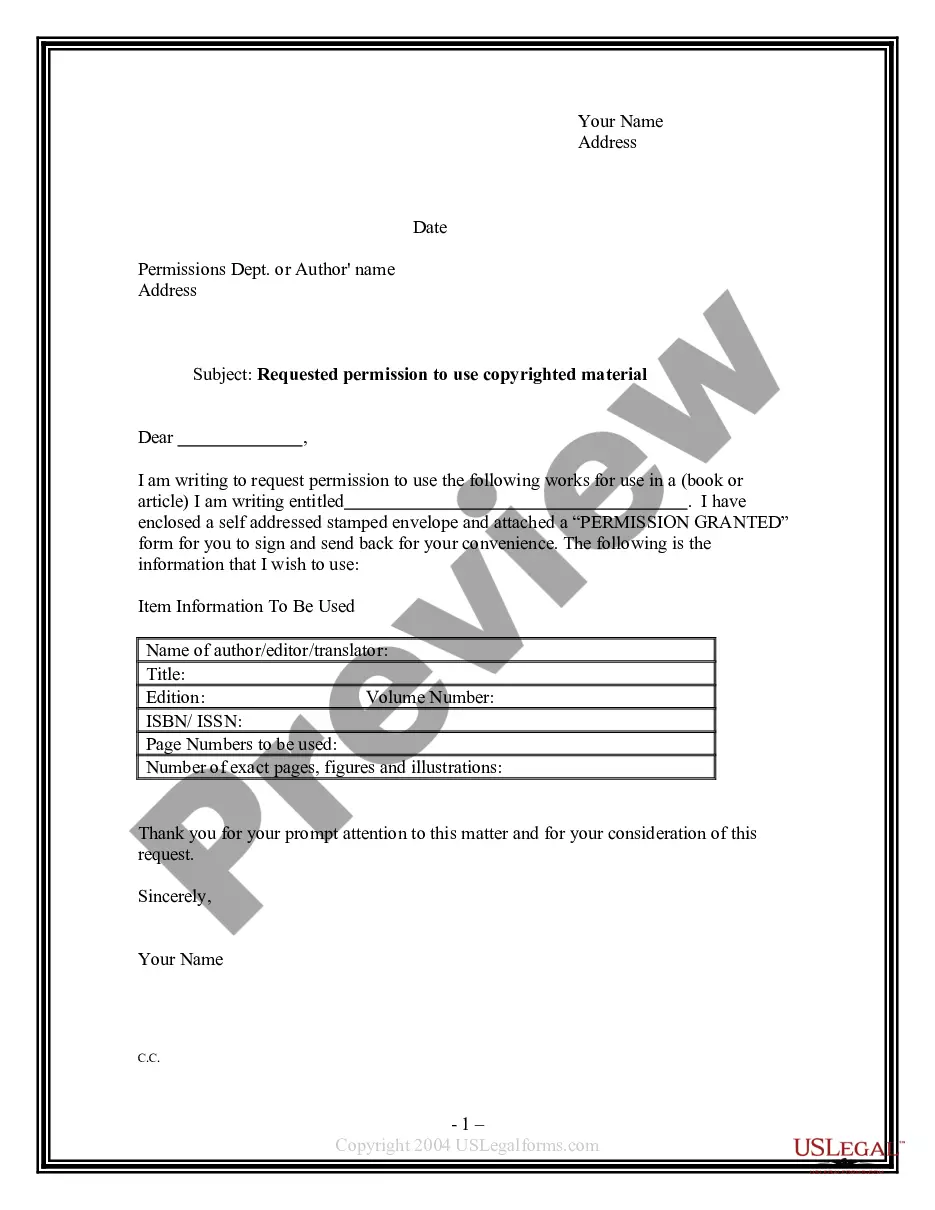
This License for the Use of a Copyright is a legal document that allows a copyright owner (the Owner) to grant permission to another party (the Licensee) to use their copyrighted work. Unlike a copyright transfer, this agreement does not transfer ownership, but rather permits specific usage under defined terms. It is essential for parties wishing to legally utilize copyrighted materials without infringing on the Owner's rights.
What’s included in this form
- Date of agreement: The date on which the license agreement is executed.
- Parties involved: Identification of the Owner and Licensee, including their corporate structures and addresses.
- Description of copyrighted property: Clear identification of the copyrighted work being licensed.
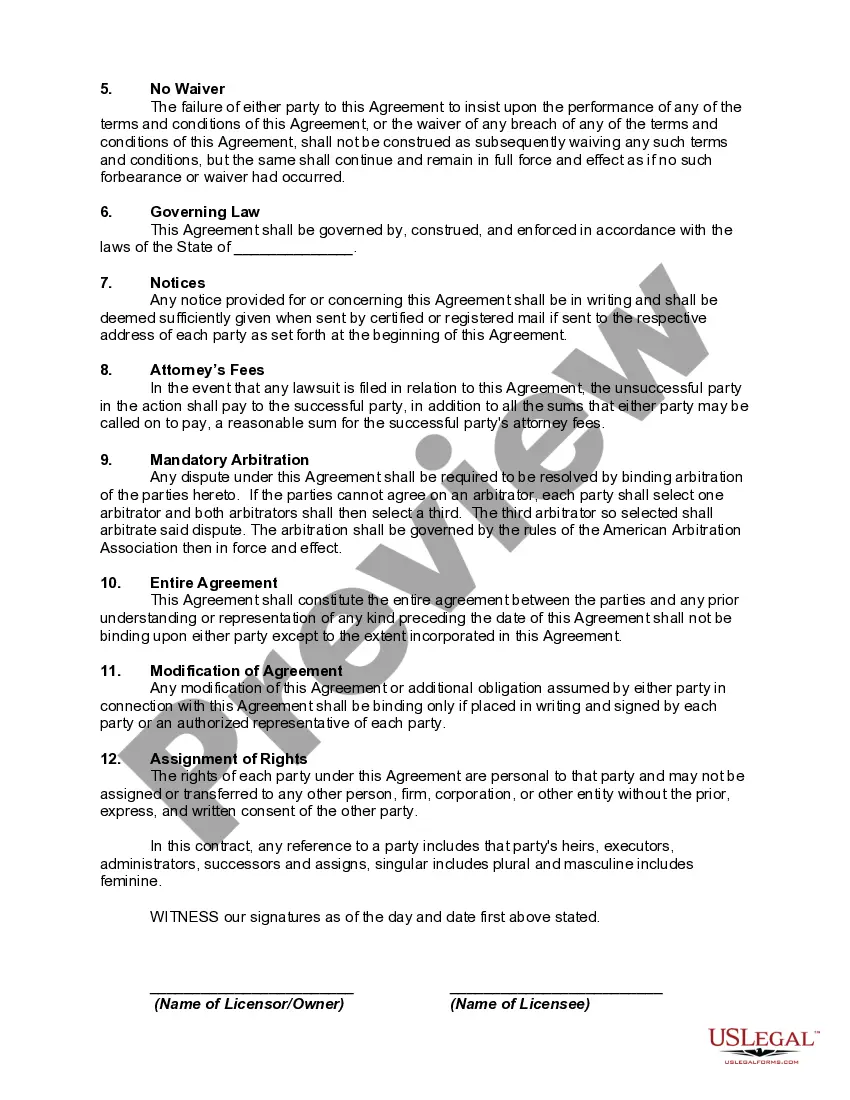
- Grant of license: Specifies the nature and scope of the license granted to the Licensee.
- License fee: Details the payment terms associated with the license.
- Governing law: Indicates the state law that will govern the agreement.
When to use this form
This form should be used when a copyright owner wants to allow another party to make use of their copyrighted materials without transferring ownership. This can be applicable in various scenarios, such as when a musician allows a record label to distribute their music, an author permits a publisher to print their book, or an artist licenses their artwork for reproduction in marketing materials.
Who should use this form
This form is ideal for:
- Copyright owners looking to retain control over their works while allowing others to use them.
- Businesses or individuals (Licensees) seeking to gain legal access to copyrighted materials for their projects.
- Attorneys or legal representatives drafting agreements between Owners and Licensees.
How to complete this form
- Identify the parties: Enter the names and addresses of the copyright owner and the licensee.
- Describe the copyrighted property: Provide a thorough description of the copyrighted work being licensed.
- Specify the terms: Clearly outline the scope of use, including any restrictions or limitations.
- Enter the license fee: Fill in the amounts for the initial payment and any subsequent payments.
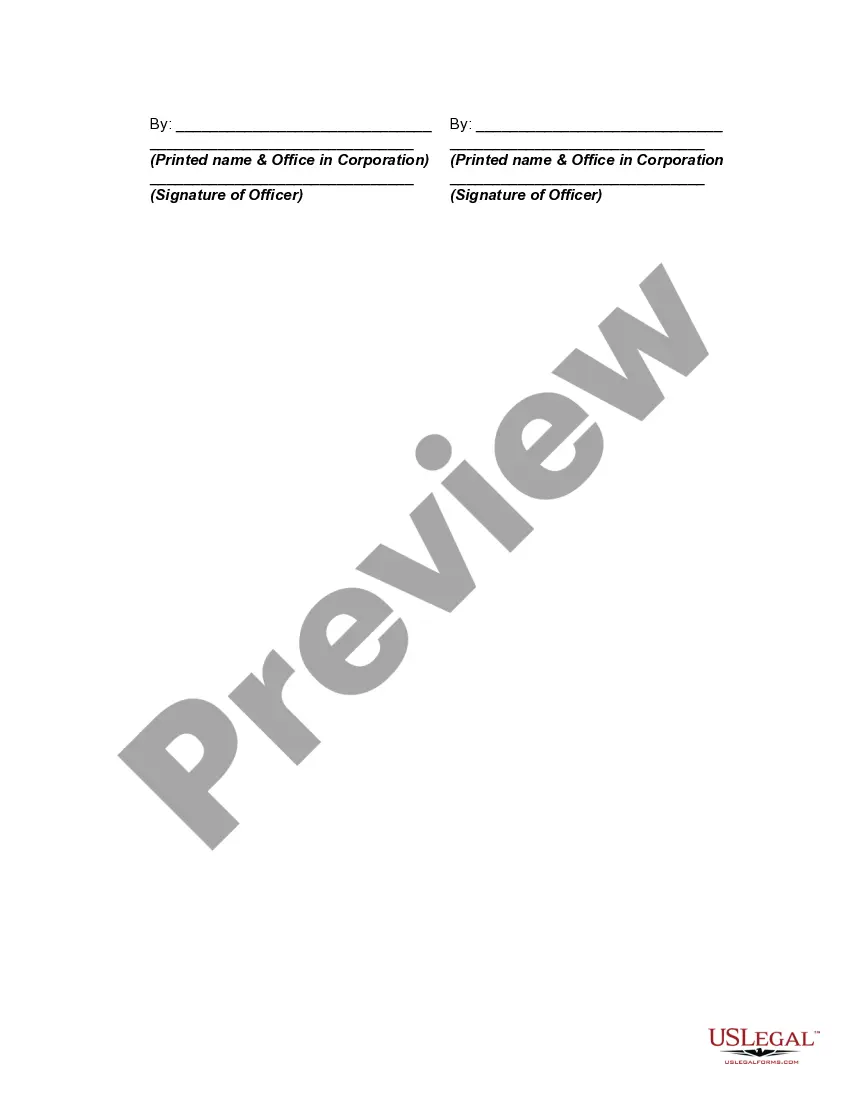
- Sign and date the agreement: Both parties must sign to validate the agreement.
Does this form need to be notarized?
This form does not typically require notarization to be legally valid. However, some jurisdictions or document types may still require it. US Legal Forms provides secure online notarization powered by Notarize, available 24/7 for added convenience.
Get your form ready online
Our built-in tools help you complete, sign, share, and store your documents in one place.
Make edits, fill in missing information, and update formatting in US Legal Forms—just like you would in MS Word.
Download a copy, print it, send it by email, or mail it via USPS—whatever works best for your next step.
Sign and collect signatures with our SignNow integration. Send to multiple recipients, set reminders, and more. Go Premium to unlock E-Sign.
If this form requires notarization, complete it online through a secure video call—no need to meet a notary in person or wait for an appointment.
We protect your documents and personal data by following strict security and privacy standards.

Make edits, fill in missing information, and update formatting in US Legal Forms—just like you would in MS Word.

Download a copy, print it, send it by email, or mail it via USPS—whatever works best for your next step.

Sign and collect signatures with our SignNow integration. Send to multiple recipients, set reminders, and more. Go Premium to unlock E-Sign.

If this form requires notarization, complete it online through a secure video call—no need to meet a notary in person or wait for an appointment.

We protect your documents and personal data by following strict security and privacy standards.
Common mistakes
- Failing to clearly define the scope of use for the copyrighted material.
- Omitting essential details about the licensed property, which can lead to misunderstandings.
- Not specifying payment terms or the license fee, which may result in disputes later on.
- Neglecting to sign the form, making it unenforceable.
Advantages of online completion
- Convenience: Easily download the form and customize it according to specific needs.
- Editability: Make necessary adjustments to the terms before finalizing the agreement.
- Accessibility: Have immediate access to legal documents without needing to visit a lawyer in person.
- Reliability: The templates are drafted by licensed attorneys, ensuring compliance with legal standards.
Legal use & context
- This form protects the interests of both the copyright owner and the licensee.
- The licensed work must not be used beyond the agreed scope to prevent potential legal disputes.
- It establishes clear expectations regarding the rights granted and any limitations.
Looking for another form?








Form popularity
FAQ
In general, for works created on or after January 1, 1978, the term of copyright is the life of the author plus seventy years after the author's death. If the work is a joint work with multiple authors, the term lasts for seventy years after the last surviving author's death.
Copyright is a legal means of protecting an author's work. It is a type of intellectual property that provides exclusive publication, distribution, and usage rights for the author.Many different types of content can be protected by copyright. Examples include books, poems, plays, songs, films, and artwork.
Fair use allows limited use of copyrighted material without permission from the copyright holder for purposes such as criticism, parody, news reporting, research and scholarship, and teaching. There are four factors to consider when determining whether your use is a fair one.
Copyright requirements There are three basic requirements for copyright protection: that which is to be protected must be a work of authorship; it must be original; and it must be fixed in a tangible medium of expression.
Form XIV application should be filed. The application should be filed separately for each work along with 6 hard copies and 3 soft copies of the work. The application should be filed and signed by the owner and countersigned by his advocate.
A form of protection provided by the laws of the United States for "original works of authorship", including literary, dramatic, musical, architectural, cartographic, choreographic, pantomimic, pictorial, graphic, sculptural, and audiovisual creations.
To register your copyright, you need to go to the eCO Online System, create an account, and then fill out the online form. There's a basic fee of $35 if you file online. The processing times are generally faster if you apply online, but eFiling still takes between three and four months, according to Copyright.gov.
Works without enough originality (creativity) to merit copyright protection such as titles, names, short phrases and slogans, familiar symbols or designs, font design, ingredients or contents, facts, blank forms, etc. cannot be copyrighted.
Copyright is the legal and exclusive right to copy, or permit to be copied, some specific work of art. If you own the copyright on something, someone else cannot make a copy of it without your permission. Copyright usually originates with the creator of a work, but can be sold, traded, or inherited by others.
Copyright, a form of intellectual property law, protects original works of authorship including literary, dramatic, musical, and artistic works, such as poetry, novels, movies, songs, computer software, and architecture.