Demand and Notice for Payment of Demand Promissory Note with FDCPA Validation Notice
About this form
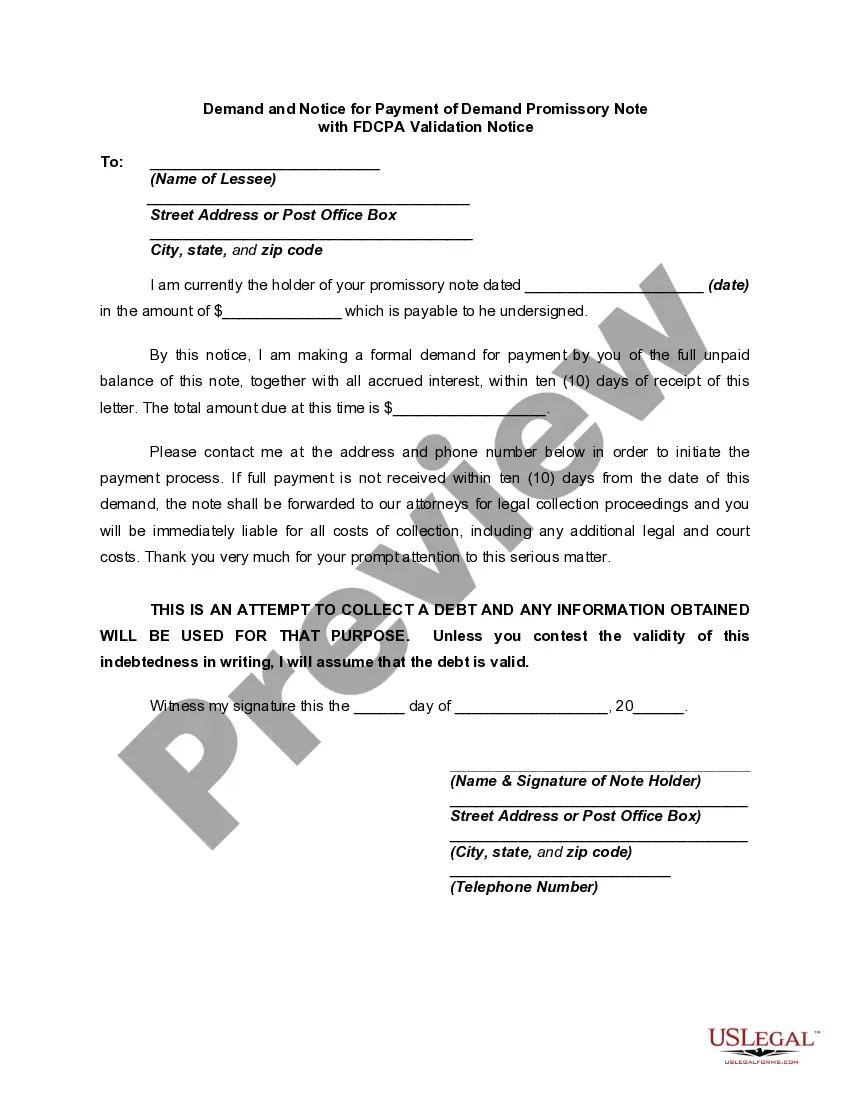
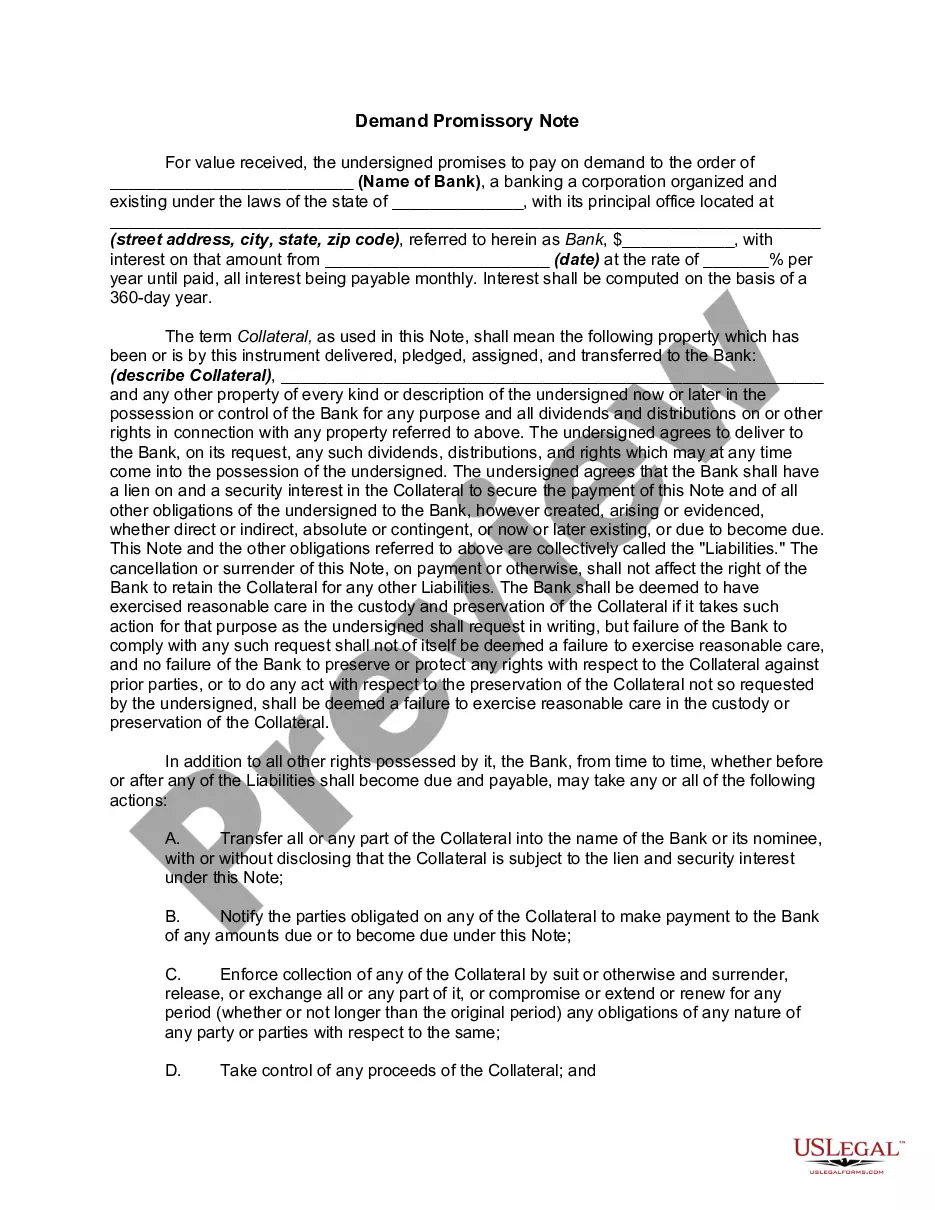
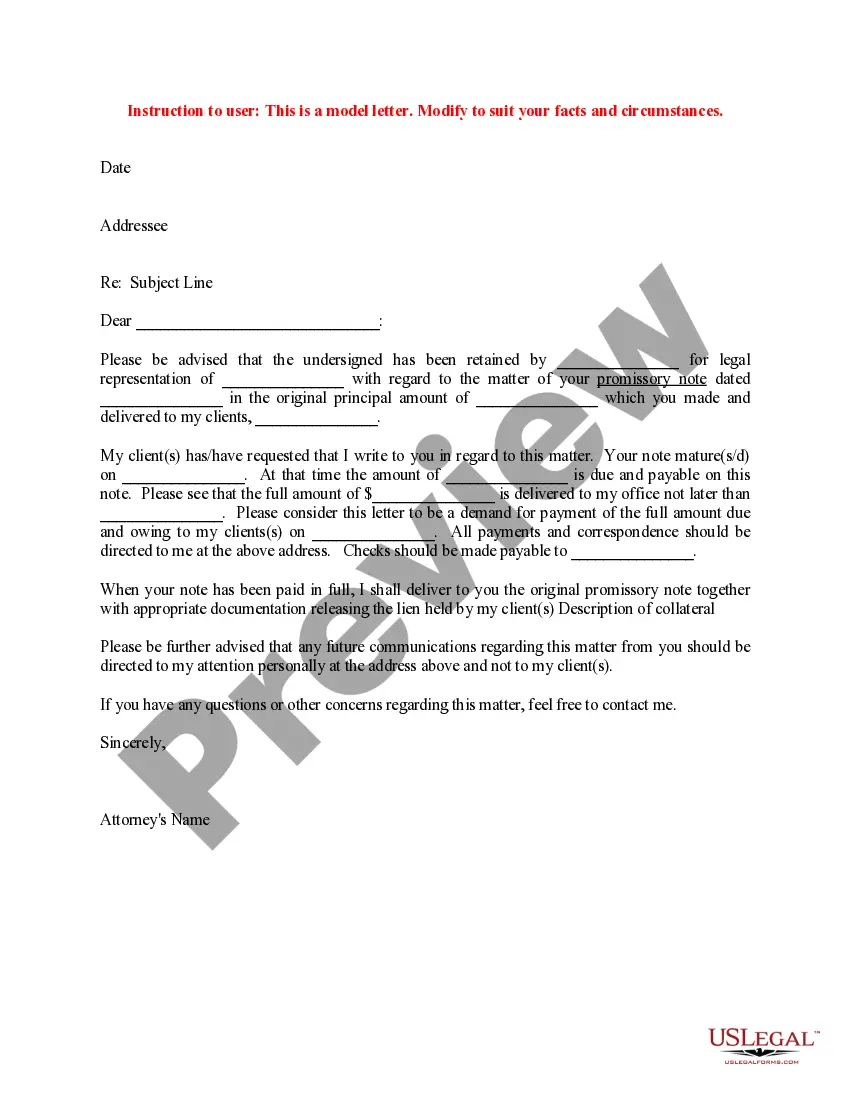
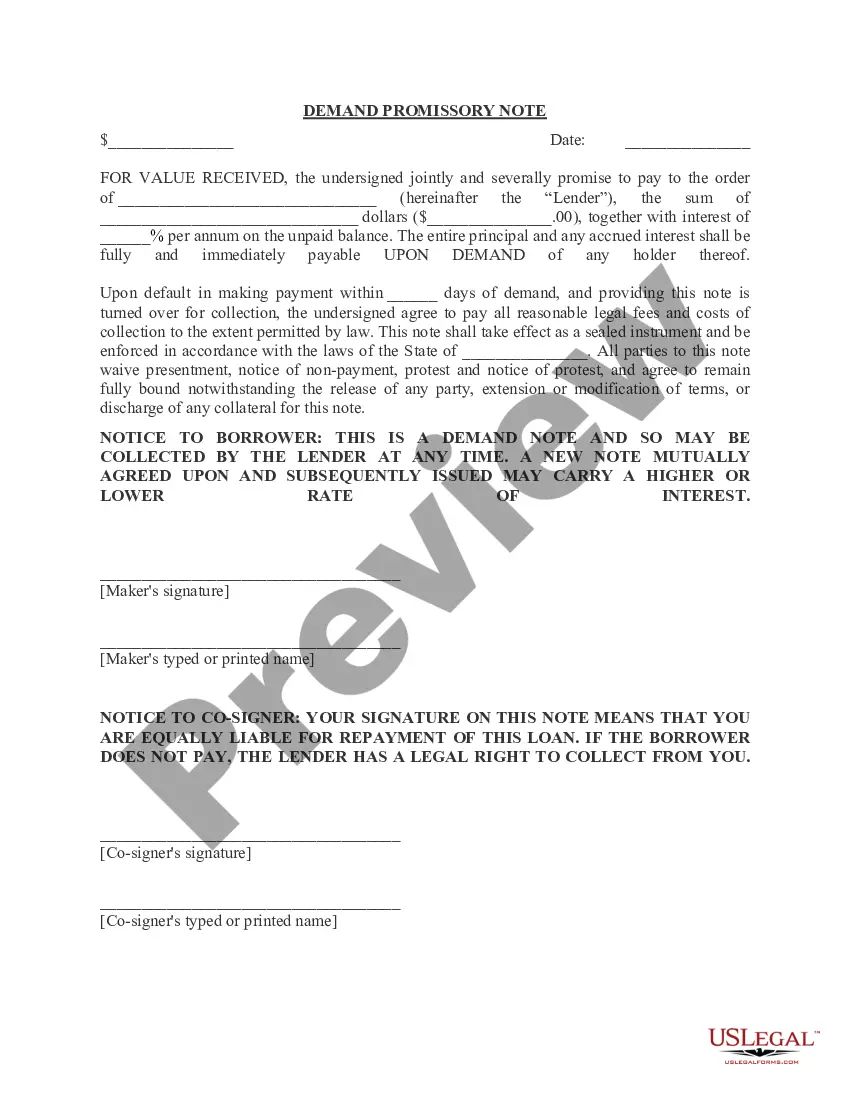
The Demand and Notice for Payment of Demand Promissory Note with FDCPA Validation Notice is a legal document used to formally request payment for a debt specified in a promissory note. It includes a validation notice in compliance with the Fair Debt Collection Practices Act (FDCPA), which informs the debtor of their rights regarding the debt. This form is distinct from other debt collection notices as it emphasizes the debtor's ability to contest the validity of the debt and outlines potential legal actions if payment is not made.
Key parts of this document
- Debtor's name and contact information.
- Details of the promissory note including date and amount.
- Formal demand for payment, including the total amount due.
- Instructions regarding the consequences of non-payment.
- Signature section for the note holder.
- FDCPA validation notice that informs the debtor of their rights.
When to use this form
This form should be used when a holder of a promissory note needs to demand payment from the debtor. It is particularly relevant if the debtor has failed to make timely payments as agreed in the note. The form serves as an official communication that initiates the collection process, providing the debtor with the details of the debt and the implications of non-payment.
Intended users of this form
- Individuals or entities who hold a valid promissory note and are seeking to collect payment.
- Creditors needing to inform debtors of their remaining balance and payment obligations.
- Collection agencies that are legally permitted to demand payment on behalf of creditors.
Instructions for completing this form
- Identify the debtor by entering their name and contact information.
- Fill in the details of the promissory note, including the date and original amount.
- Calculate and enter the total outstanding balance due.
- Clearly state the demand for payment and the deadline for response.
- Provide your contact information for the debtor to initiate payment.
- Sign and date the document to make it legally binding.
Notarization requirements for this form
In most cases, this form does not require notarization. However, some jurisdictions or signing circumstances might. US Legal Forms offers online notarization powered by Notarize, accessible 24/7 for a quick, remote process.
Get your form ready online
Our built-in tools help you complete, sign, share, and store your documents in one place.
Make edits, fill in missing information, and update formatting in US Legal Forms—just like you would in MS Word.
Download a copy, print it, send it by email, or mail it via USPS—whatever works best for your next step.
Sign and collect signatures with our SignNow integration. Send to multiple recipients, set reminders, and more. Go Premium to unlock E-Sign.
If this form requires notarization, complete it online through a secure video call—no need to meet a notary in person or wait for an appointment.
We protect your documents and personal data by following strict security and privacy standards.

Make edits, fill in missing information, and update formatting in US Legal Forms—just like you would in MS Word.

Download a copy, print it, send it by email, or mail it via USPS—whatever works best for your next step.

Sign and collect signatures with our SignNow integration. Send to multiple recipients, set reminders, and more. Go Premium to unlock E-Sign.

If this form requires notarization, complete it online through a secure video call—no need to meet a notary in person or wait for an appointment.

We protect your documents and personal data by following strict security and privacy standards.
Common mistakes
- Failing to include all required debtor information.
- Not specifying the due date for payment clearly.
- Leaving out the FDCPA validation notice or not properly stating the rights of the debtor.
- Not signing the document, which can render it unenforceable.
Benefits of completing this form online
- Convenient access to a legally vetted form that can be downloaded instantly.
- Editability allows users to customize the document for their specific needs.
- Reliability through attorney-drafted templates that ensure compliance with legal standards.
Looking for another form?






Form popularity
FAQ
Full names of parties (borrower and lender) Repayment amount (principal and interest) Payment plan. Consequences of non-payment (default and collection) Notarization (if necessary) Other common details.
Promissory Notes In addition to the amount and the signature, any interest charged for the amount may also be stipulated in the note, as well as the name of the payee. If a promissory note has a date on it and the date has passed, that note can also be considered to be payable on demand.
The date of the letter. The names of the borrower and lender. The original amount of the loan. The date of the promissory note and any reference number or account number it contains. The payment schedule that was agreed upon.
All Promissory Notes are valid only for a period of 3 years starting from the date of execution, after which they will be invalid. There is no maximum limit in terms of the amount which can be lent or borrowed. The issuer / lender of the funds is normally the one who will hold the Promissory Note.
Demand and Time Instruments A promissory note is how a borrower shows their intent to repay the note. All rules associated with promissory notes are from the Uniform Commercial Code Article 3 (Article 3). This stipulates the notes can act as instruments of demand or time.
However, in California, the lender is not required to produce a Promissory Note to conduct a non-judicial foreclosure (also known as a Trustee's Sale).The Promissory Note is the debt instrument, just like an IOU. The person holding the original is the one the borrower has to pay.
A written, signed, unconditional promise to pay a certain amount of money on demand at a specified time.The individual who promises to pay is the maker, and the person to whom payment is promised is called the payee or holder. If signed by the maker, a promissory note is a negotiable instrument.