Assignment of Portion of Expected Interest in Estate in Order to Pay Indebtedness
Overview of this form
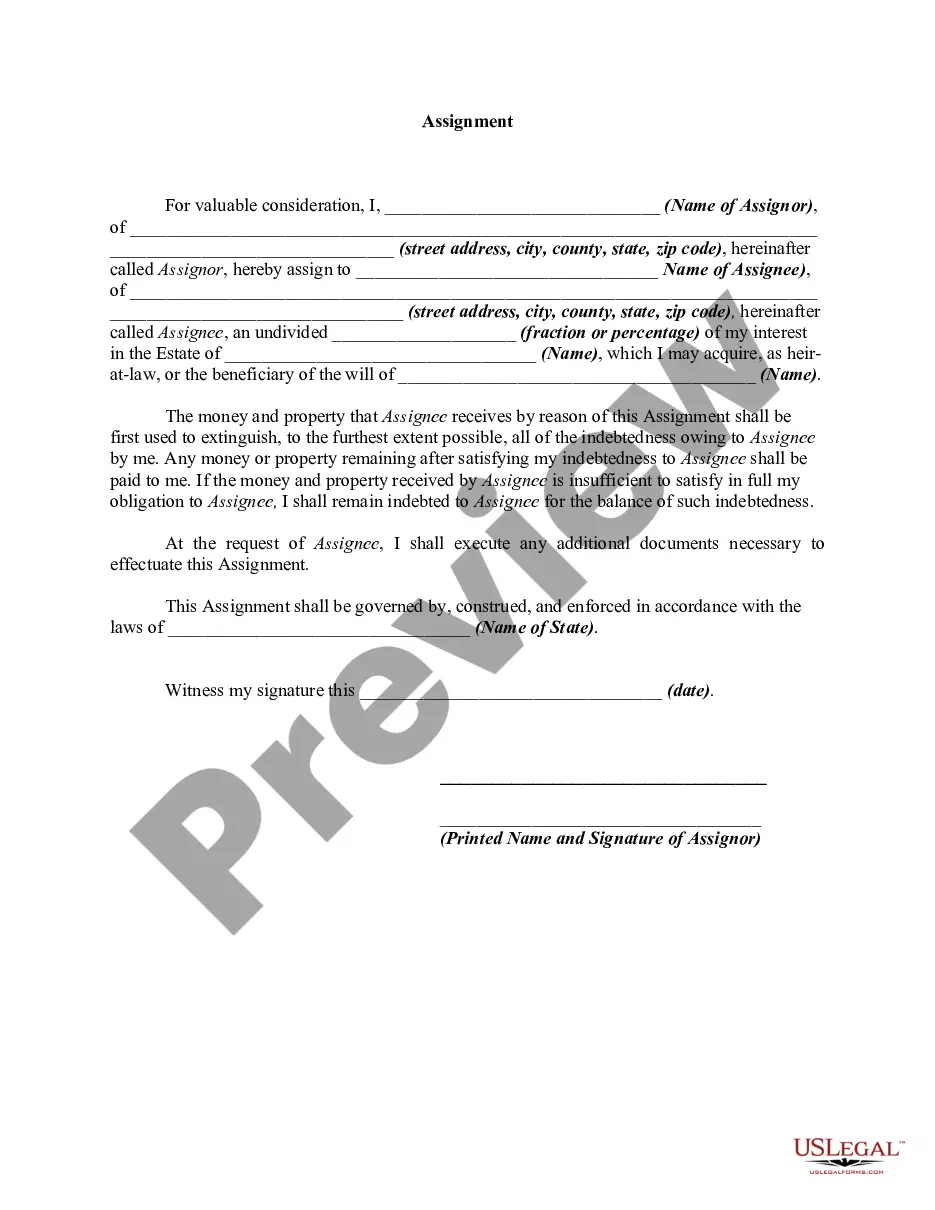
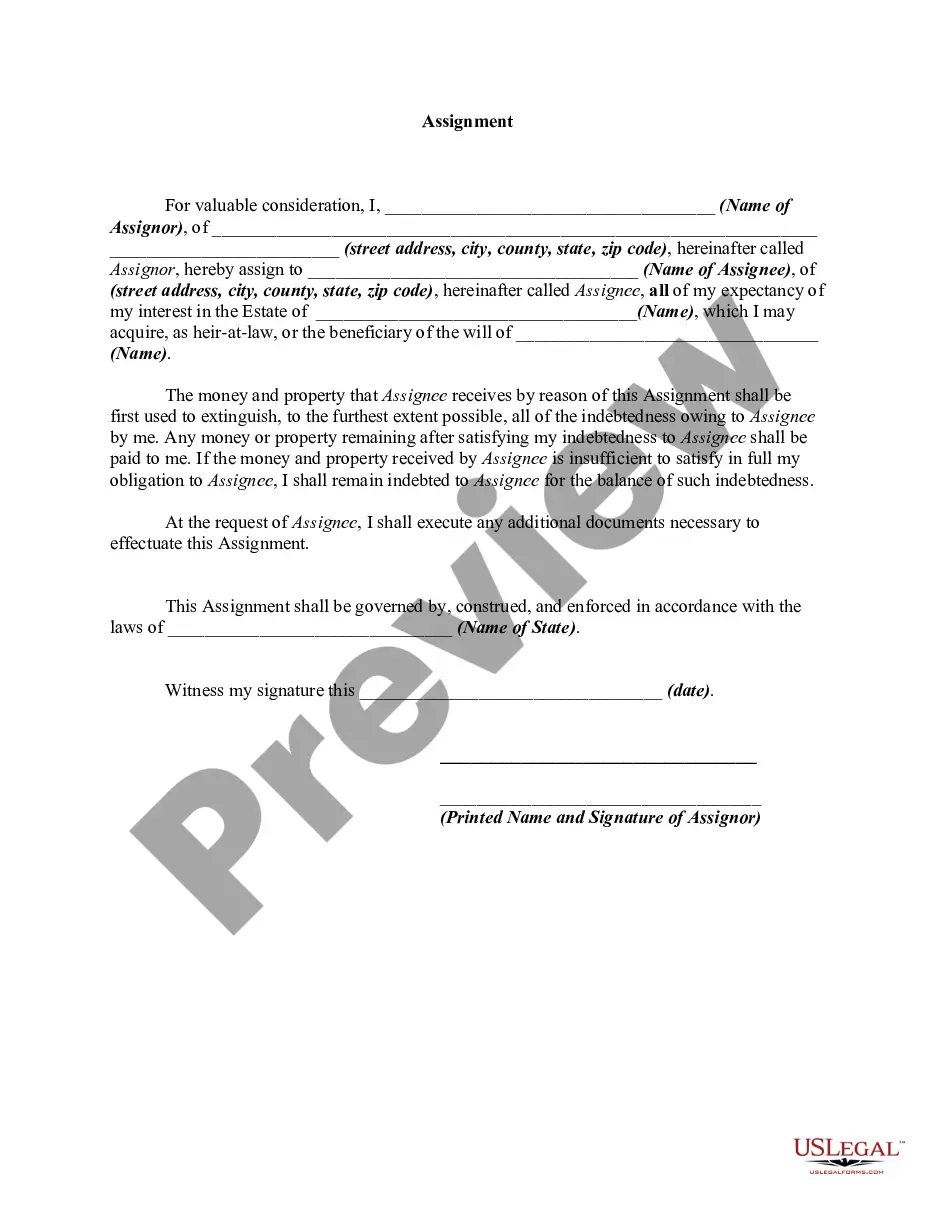
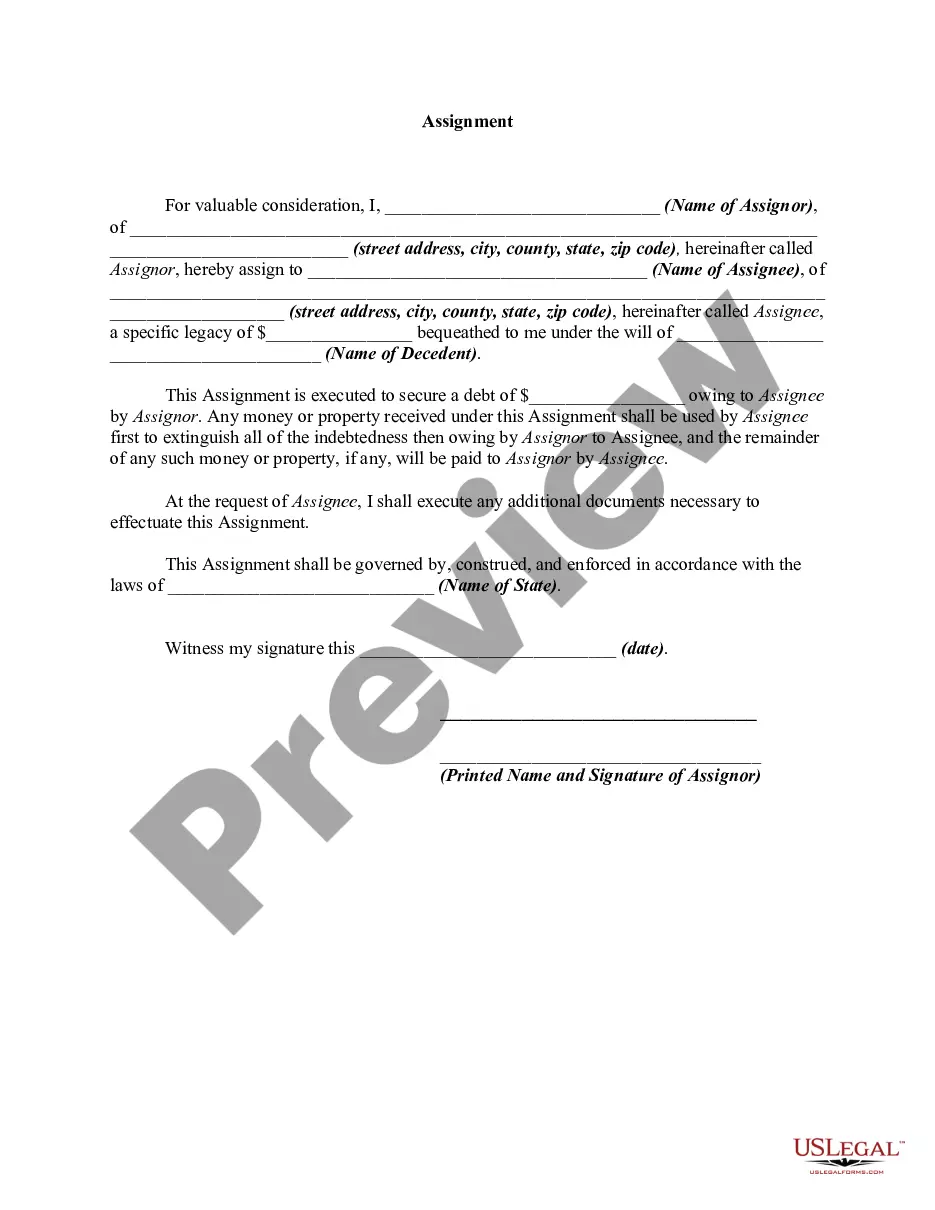
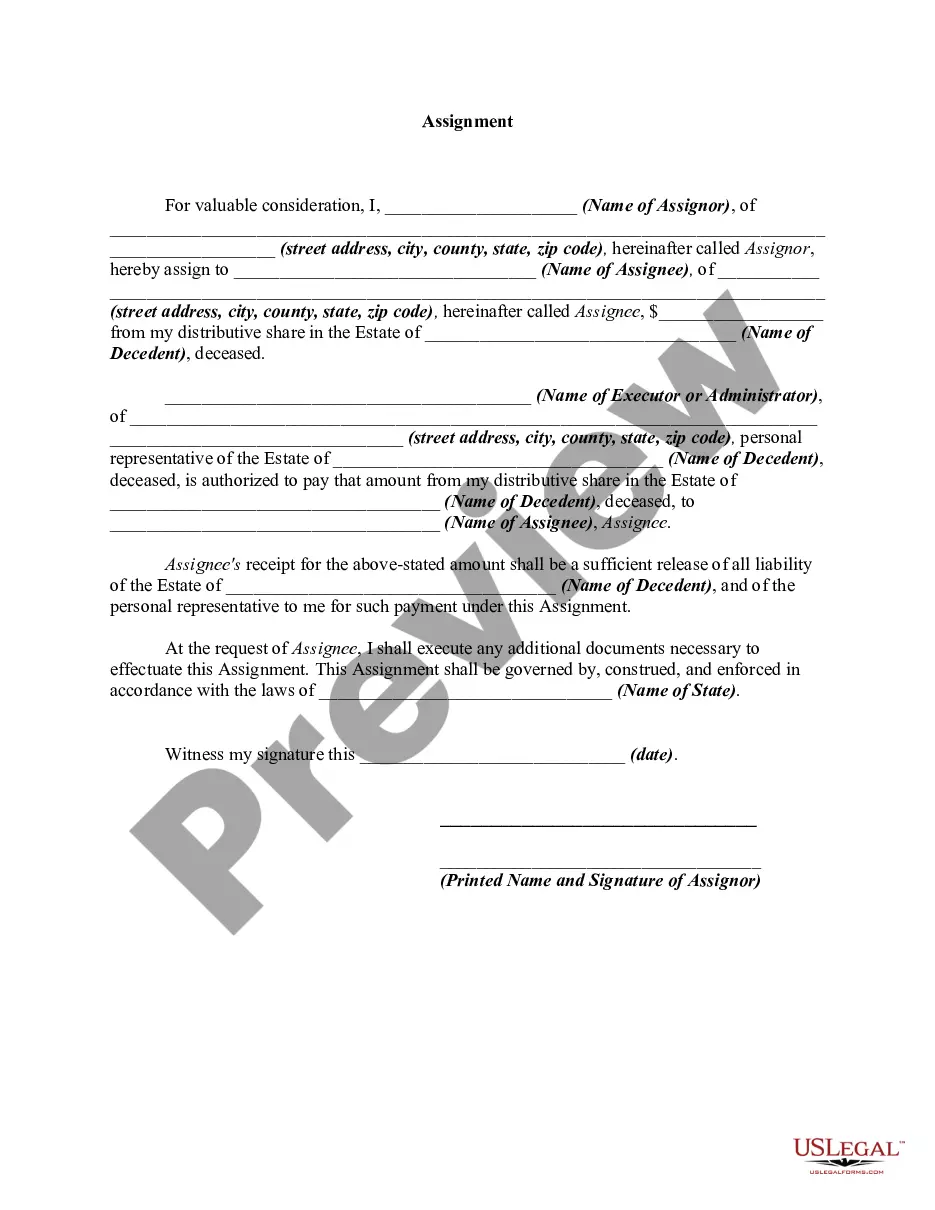
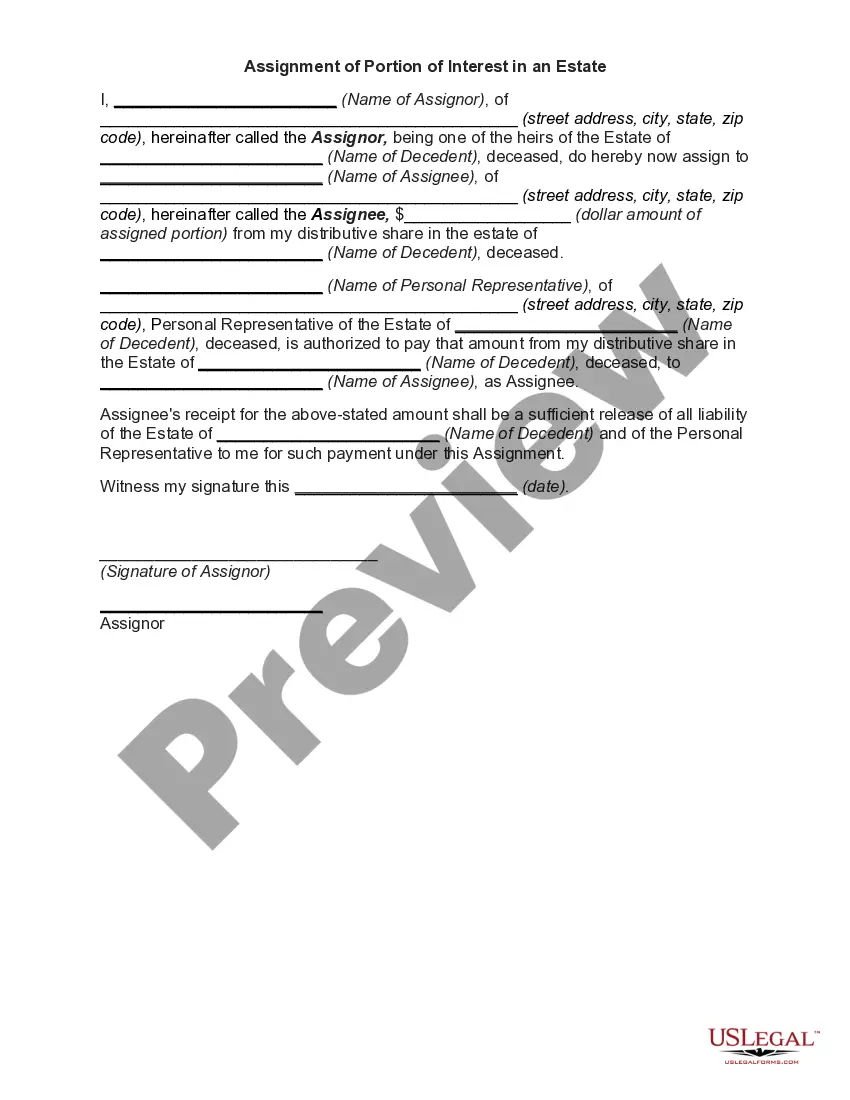
The Assignment of Portion of Expected Interest in Estate in Order to Pay Indebtedness is a legal document used to transfer a portion of your expected inheritance from an estate to another party for the purpose of settling debts. This form is specific to situations where an heir wishes to assign part of their potential interest in an estate as collateral for a loan. It differs from other generic assignment forms by focusing specifically on estate interests and the obligation to pay debts related to those interests.
Main sections of this form
- Name and contact details of the Assignor (the person assigning the interest).
- Name and contact details of the Assignee (the person receiving the interest).
- Specification of the undivided fraction or percentage of the expected interest in the estate.
- Conditions regarding the use of funds received from the assignment to pay indebtedness.
- Provisions regarding additional documents to be executed at the request of the Assignee.
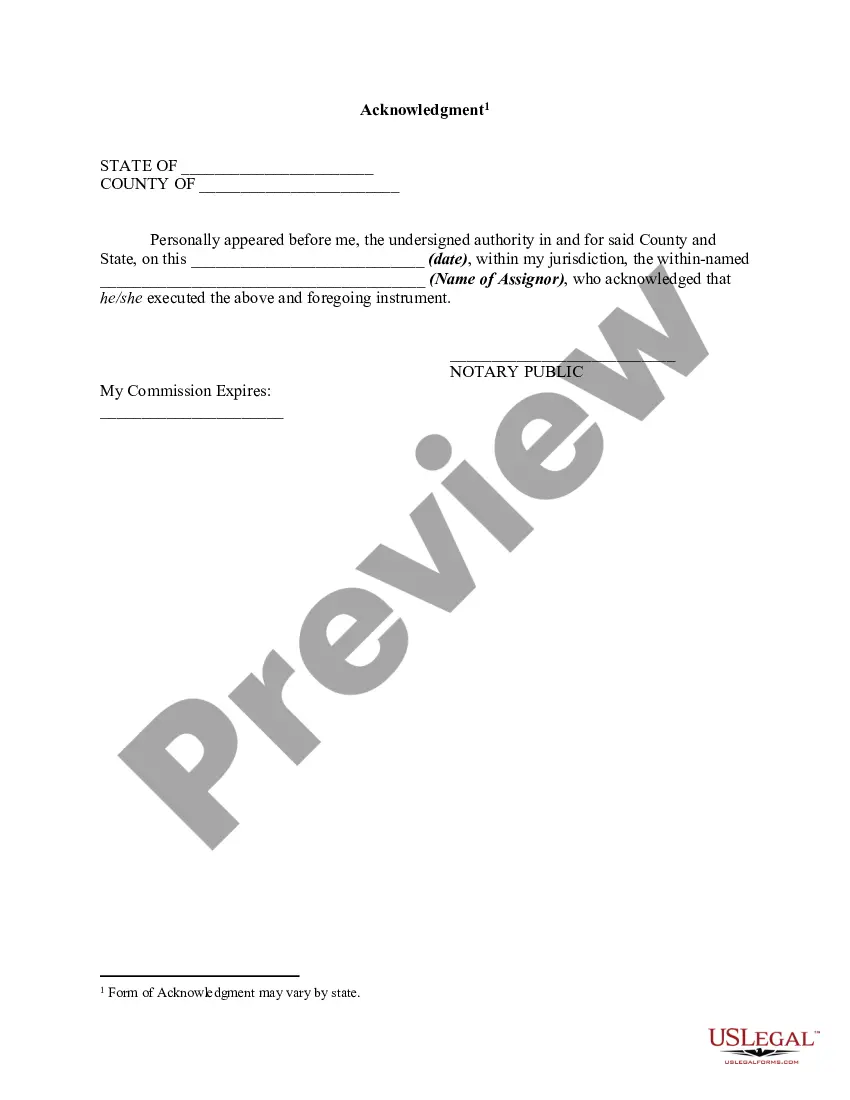
- A section for notarization and acknowledgment of the Assignor's signature.
Situations where this form applies
This form should be used when an heir anticipates receiving an interest in an estate but needs to assign a portion of that interest to someone else in order to pay off debts. It is applicable in cases where the heir wants to secure a loan or settle financial obligations that have arisen prior to receiving the inheritance.
Who needs this form
This form is suitable for:
- Heirs or beneficiaries who expect to inherit property or money from an estate.
- Individuals who are in debt and need immediate financial relief through the use of their expected inheritance.
- Assignees who are lending money or providing services expecting repayment from the heir's estate interest.
Completing this form step by step
- Identify and enter the name and address of the Assignor and Assignee.
- Specify the fraction or percentage of the estate interest being assigned.
- Clearly state the name of the deceased individual whose estate is involved.
- Review the details and terms regarding the use of assigned funds for debt payment.
- Have both parties sign and date the form in the designated areas.
- Ensure the form is notarized to verify the authenticity of the signatures if required.
Notarization guidance
This document requires notarization to meet legal standards. US Legal Forms provides secure online notarization powered by Notarize, allowing you to complete the process through a verified video call, available 24/7.
Get your form ready online
Our built-in tools help you complete, sign, share, and store your documents in one place.
Make edits, fill in missing information, and update formatting in US Legal Forms—just like you would in MS Word.
Download a copy, print it, send it by email, or mail it via USPS—whatever works best for your next step.
Sign and collect signatures with our SignNow integration. Send to multiple recipients, set reminders, and more. Go Premium to unlock E-Sign.
If this form requires notarization, complete it online through a secure video call—no need to meet a notary in person or wait for an appointment.
We protect your documents and personal data by following strict security and privacy standards.

Make edits, fill in missing information, and update formatting in US Legal Forms—just like you would in MS Word.

Download a copy, print it, send it by email, or mail it via USPS—whatever works best for your next step.

Sign and collect signatures with our SignNow integration. Send to multiple recipients, set reminders, and more. Go Premium to unlock E-Sign.

If this form requires notarization, complete it online through a secure video call—no need to meet a notary in person or wait for an appointment.

We protect your documents and personal data by following strict security and privacy standards.
Avoid these common issues
- Failing to accurately specify the fraction or percentage of the interest being assigned.
- Not providing complete contact information for both the Assignor and Assignee.
- Overlooking the need for notarization when required by local laws.
Why use this form online
- Convenient access to forms that can be downloaded and filled out at any time.
- Editability allows users to customize the document based on specific needs.
- Reliability of forms drafted by licensed attorneys ensures they meet legal standards.
Looking for another form?
Form popularity
FAQ
Usually, a trust prohibits beneficiaries from assigning their interest in the trust before distribution.
Married couples and civil partners are allowed to pass their estate to their spouse tax-free when they die. In other words, the surviving spouse can inherit the entire estate without having to pay Inheritance Tax (IHT). They can also pass on their unused tax-free allowance to their surviving spouse or civil partner.
Beneficiaries RightsBeneficiaries under a will have important rights including the right to receive what was left to them, to receive information about the estate, to request a different executor, and for the executor to act in their best interests.
In order to qualify as executor, simply take the decedent's original will and any additional codicils to the will to the probate office within the circuit court of the county or city of decedent's last place of residence.
In regard to the question posed, the short answer is: No, all of the beneficiaries do not have to agree to the terms of the contract for a real estate contract to be legally binding.
Married couples and civil partners are allowed to pass their estate to their spouse tax-free when they die. In other words, the surviving spouse can inherit the entire estate without having to pay Inheritance Tax (IHT). They can also pass on their unused tax-free allowance to their surviving spouse or civil partner.
Using the Account You can use the money you deposit to pay debts, taxes, and expenses of administration, such as probate court filing fees, and lawyer or other professional fees.
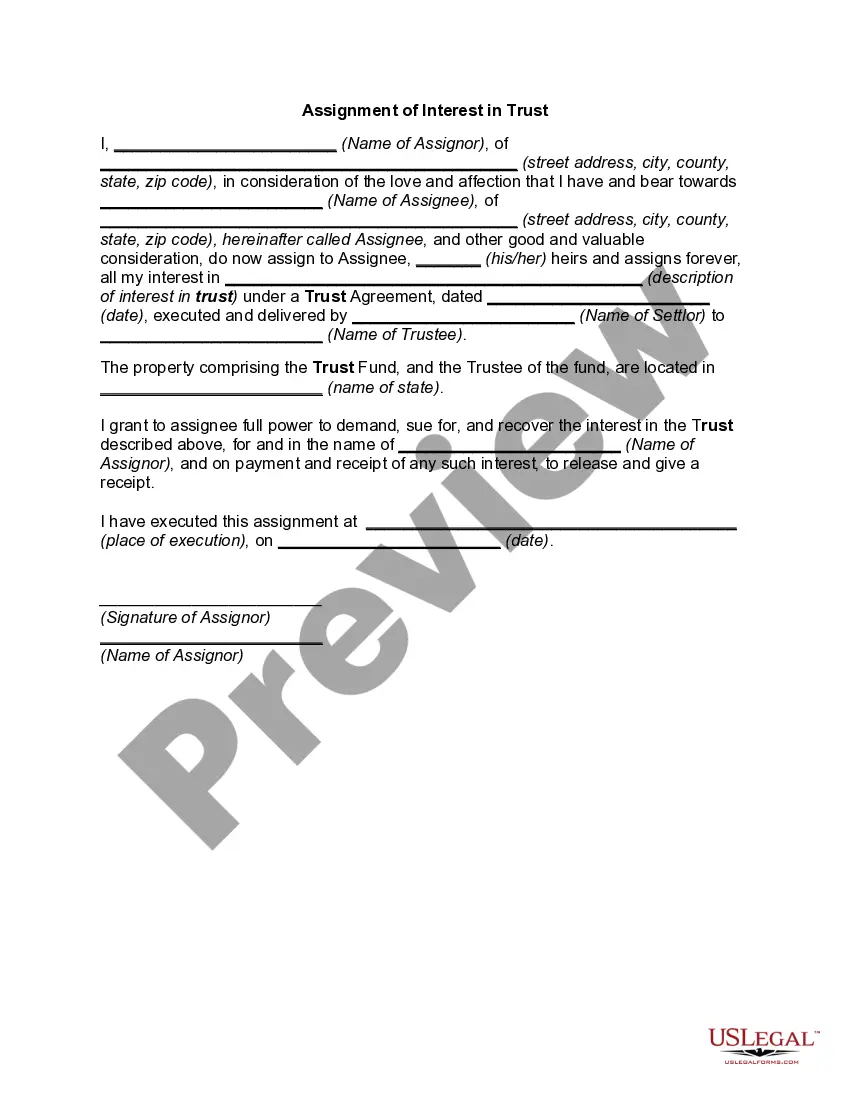
A beneficiary can also transfer his interest in the trust property and every person to whom a beneficiary transfers his interest acquires the rights and liabilities of the beneficiary at the date of the transfer.
The assignment has to be filed with the probate court before the distribution can be made to the assignee. Note that inheritances from a trust typically cannot be assigned to someone else. Most trusts prohibit assigning an undistributed trust inheritance.There are legal restrictions on disclaiming an inheritance.