Website Subscription User Agreement - Terms of Use for Website Offering Members Opportunity to Sell Products Online
Overview of this form
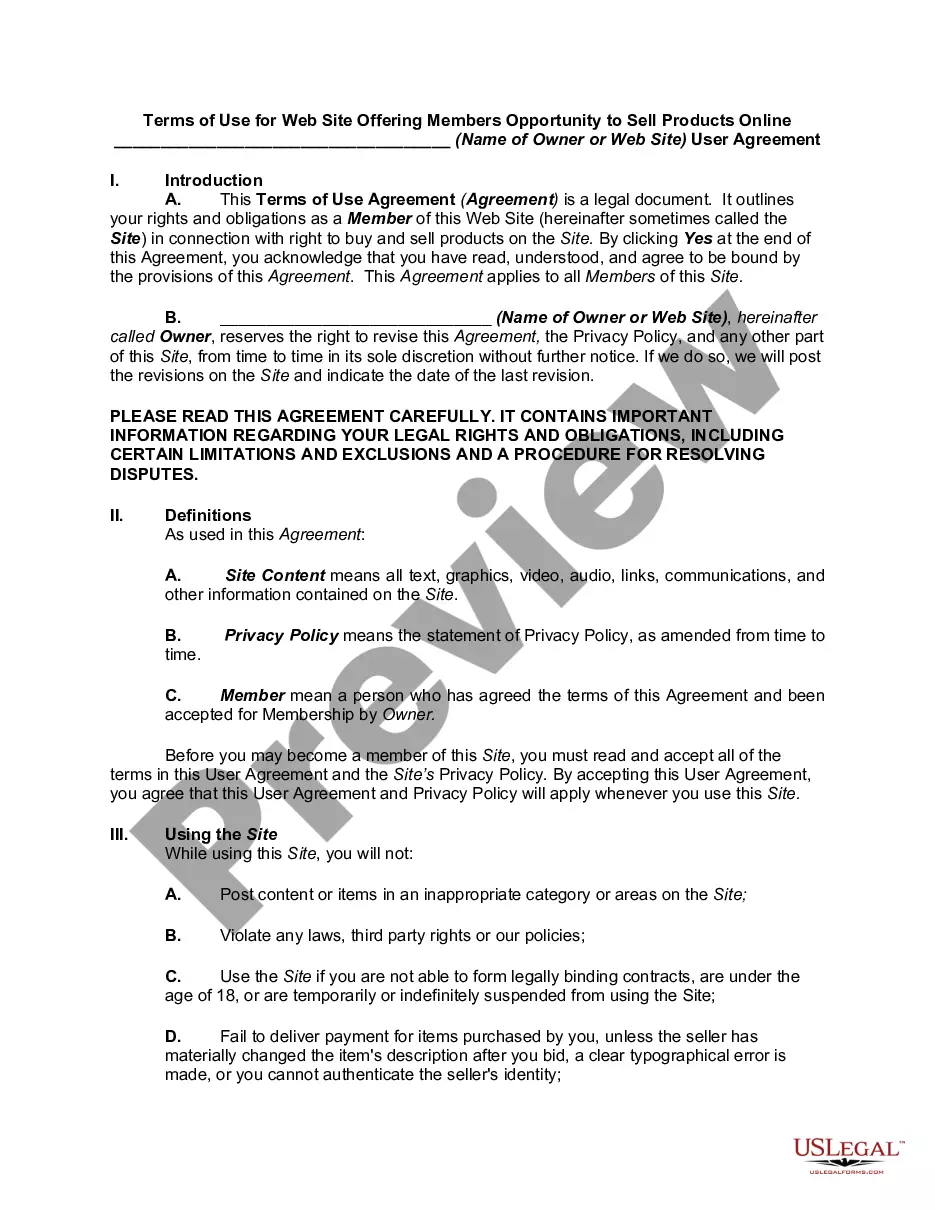
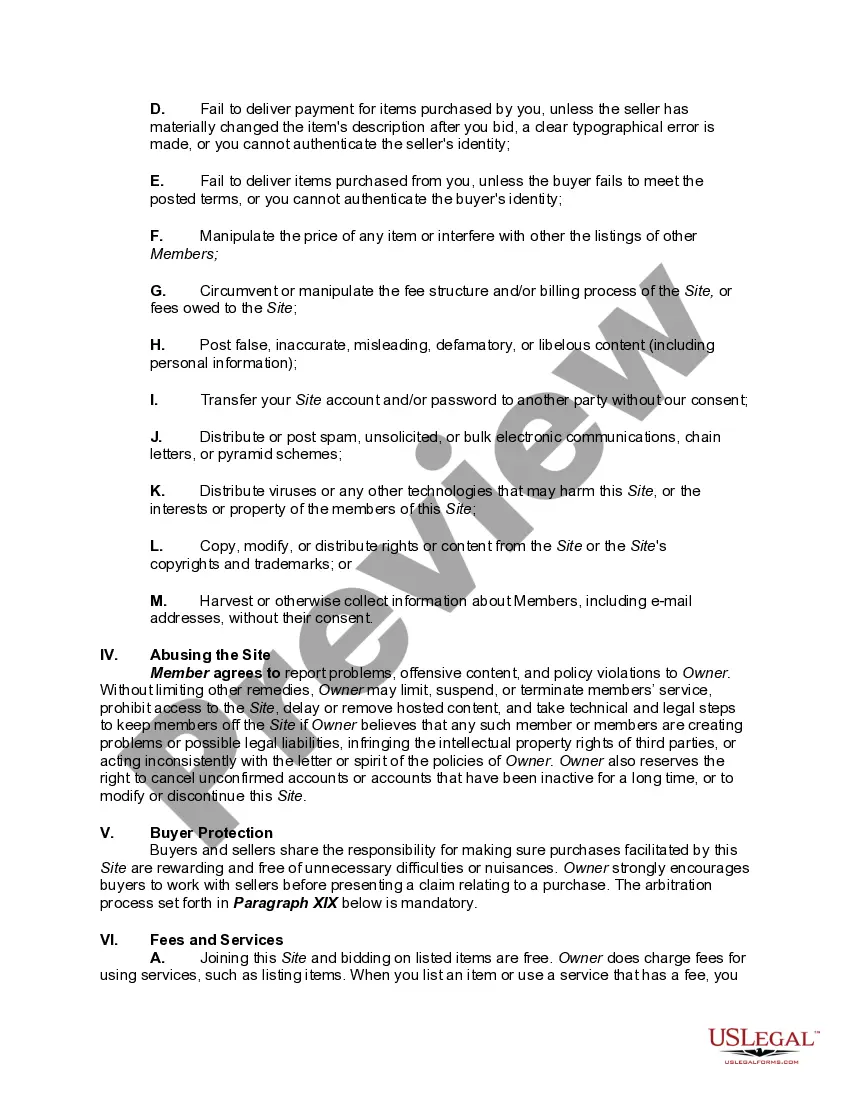
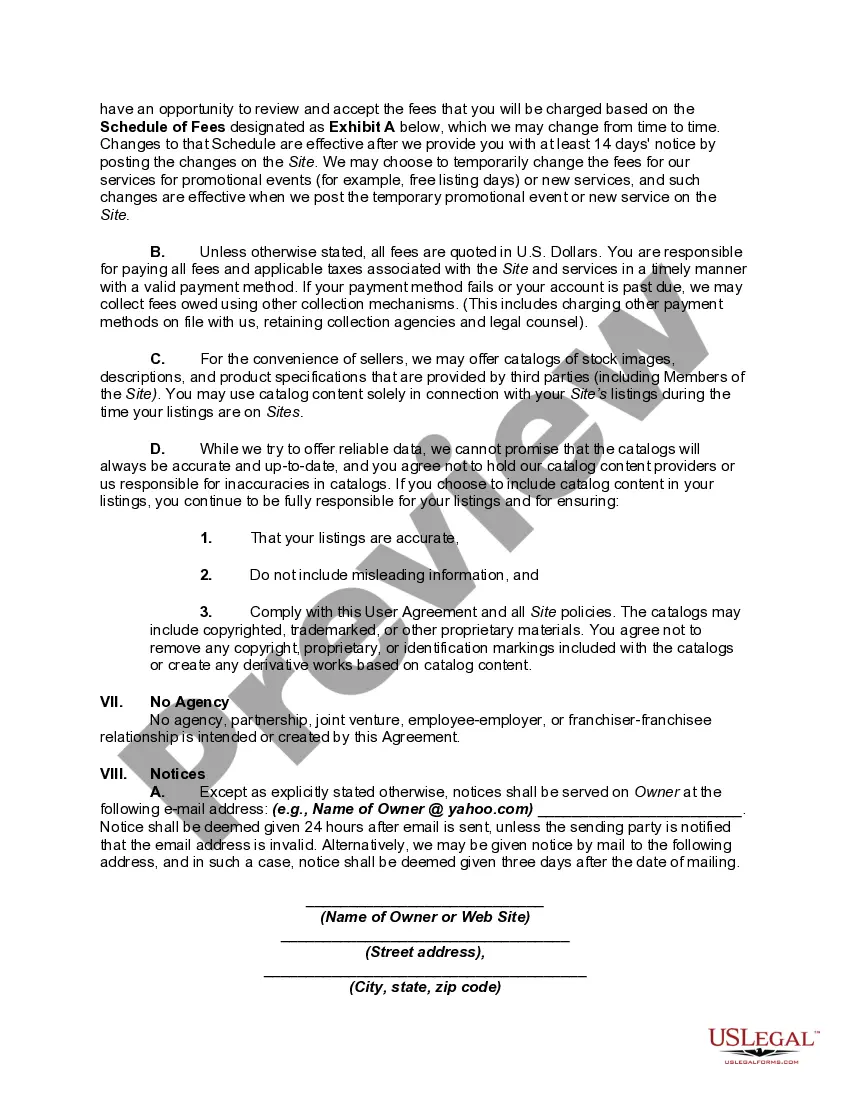
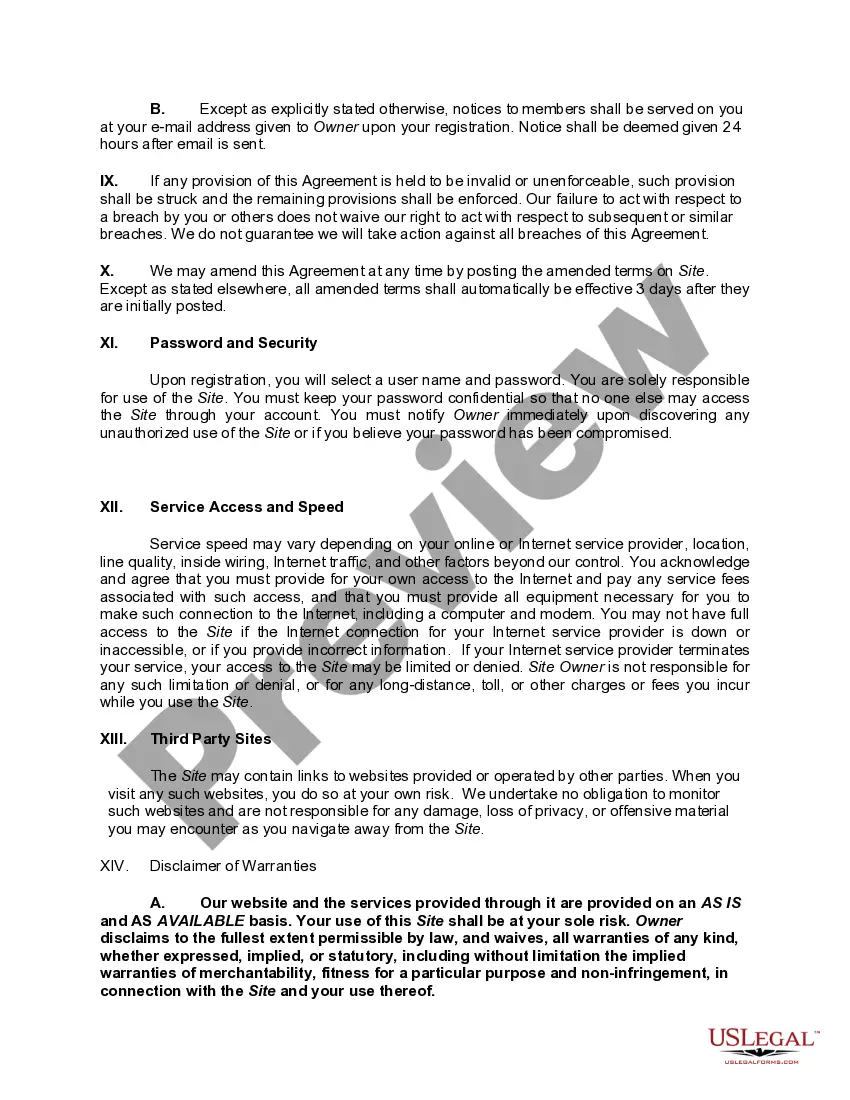
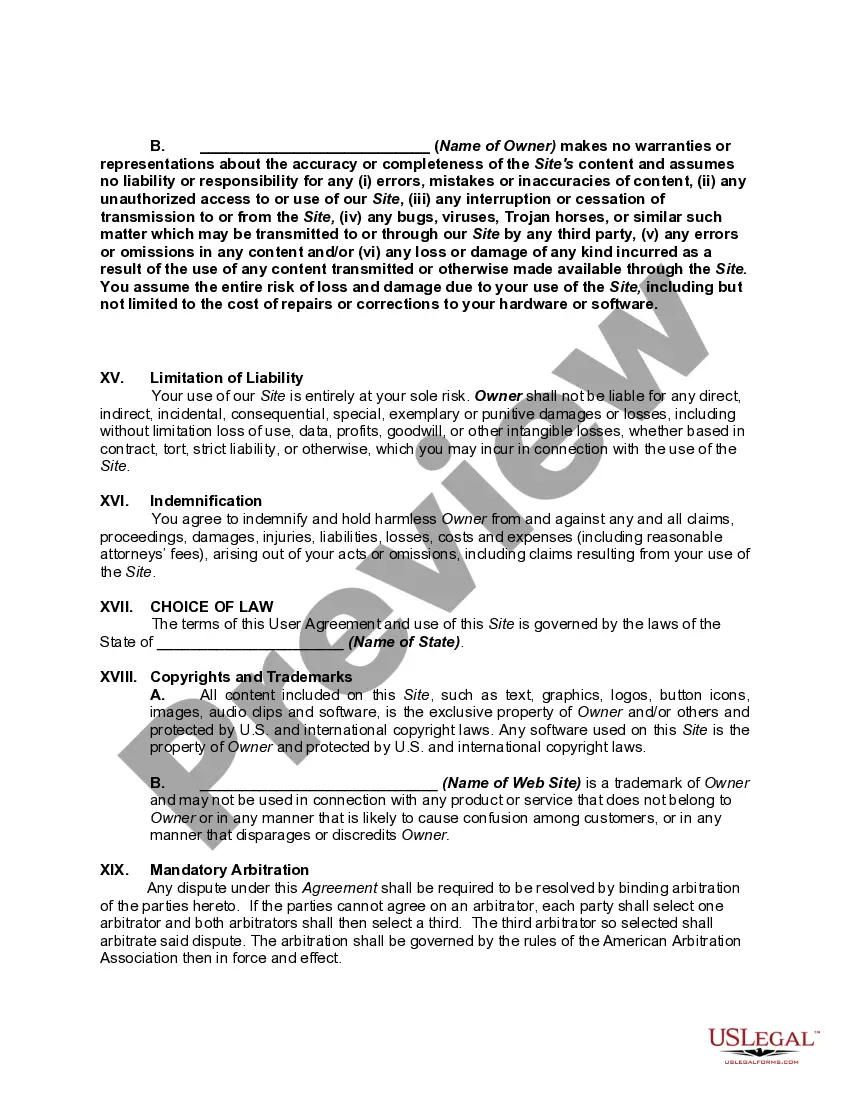
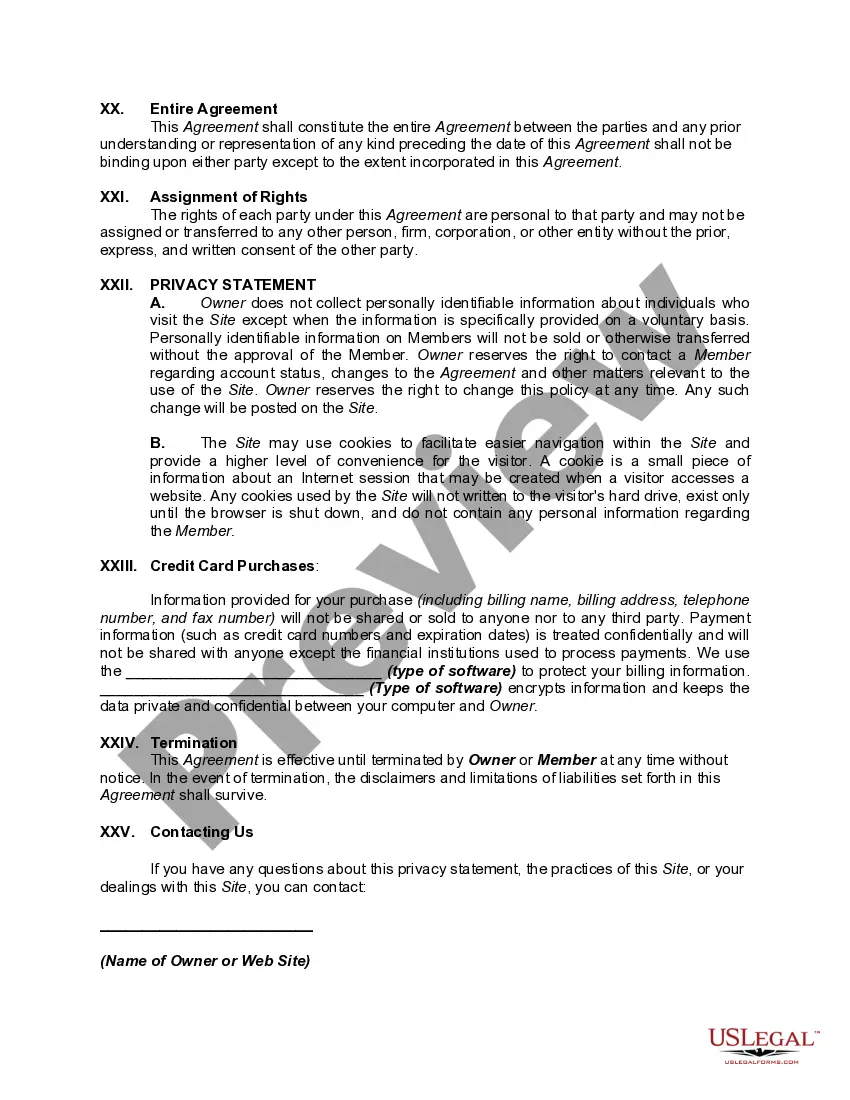
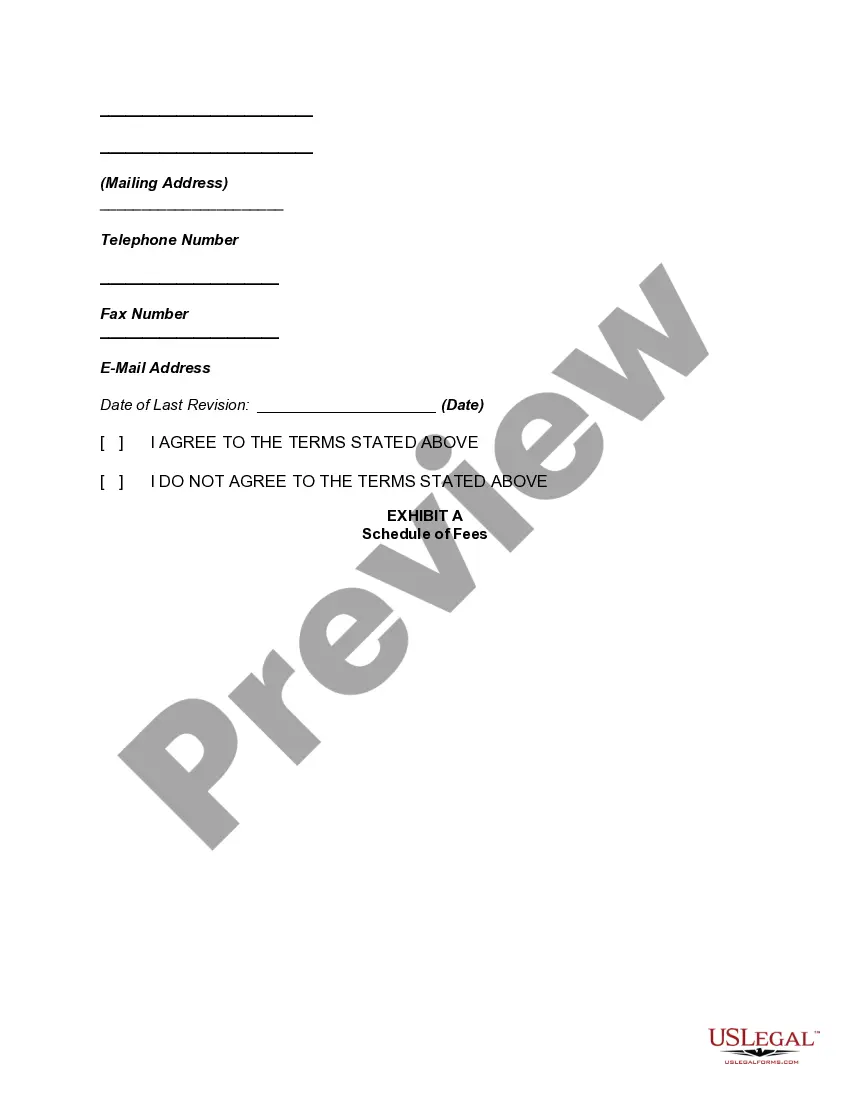
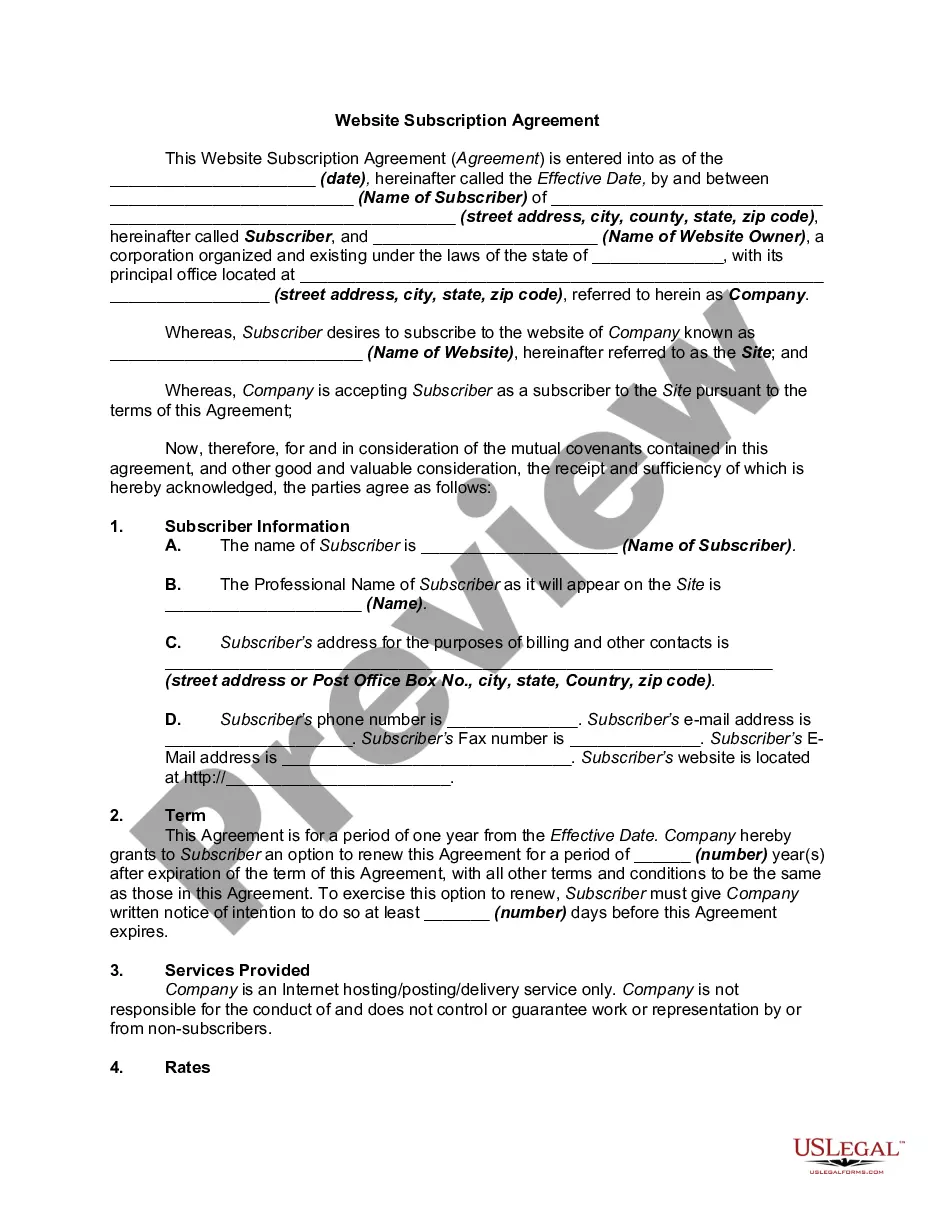
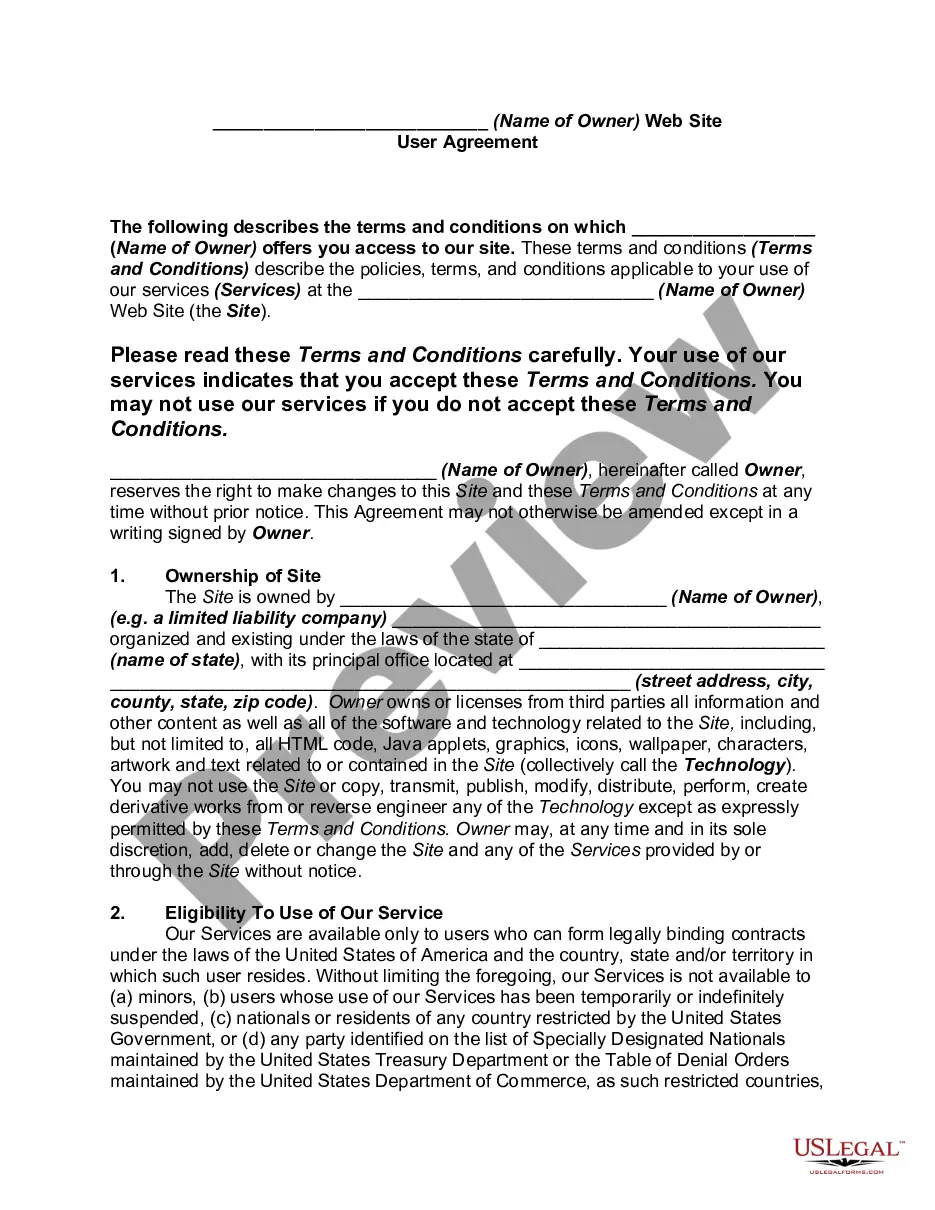
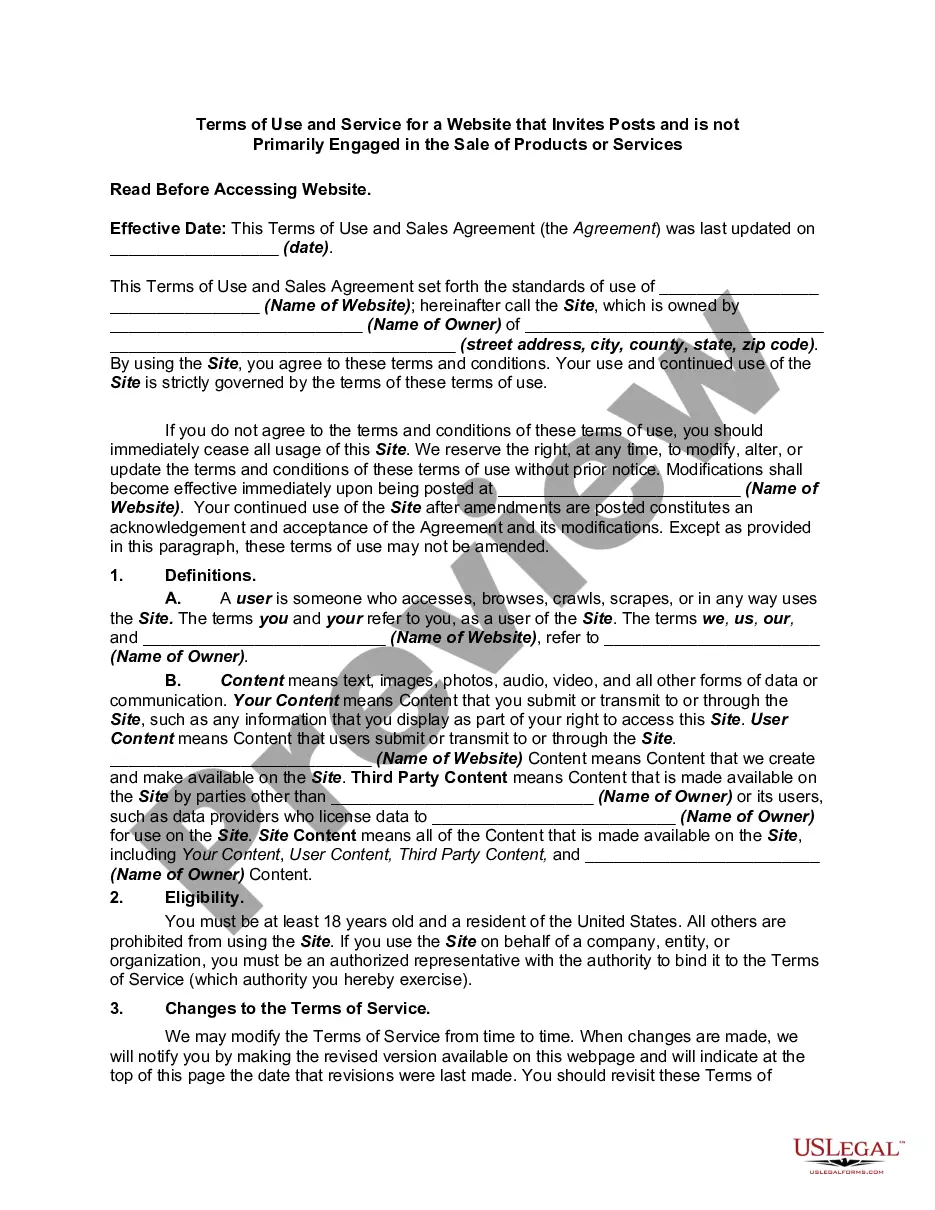
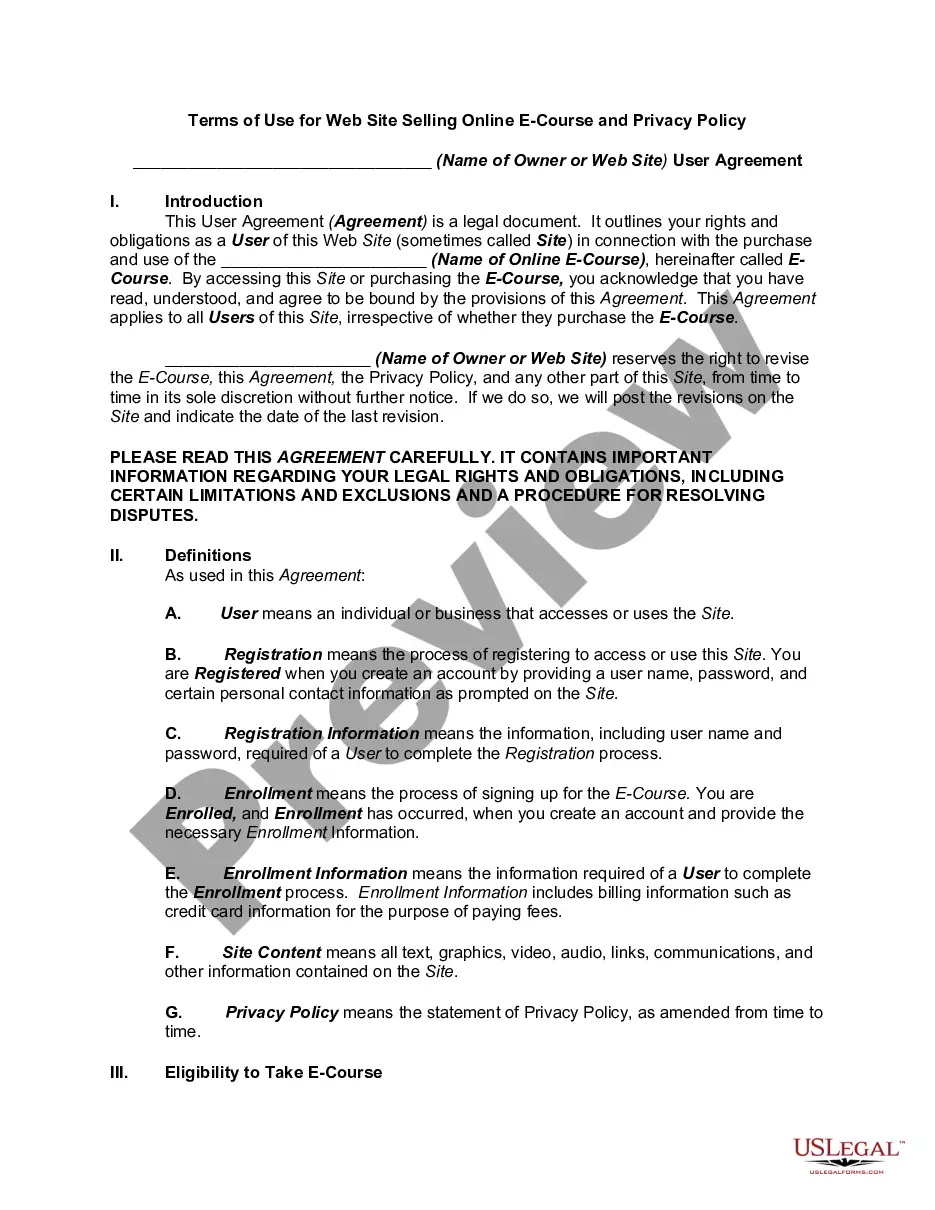
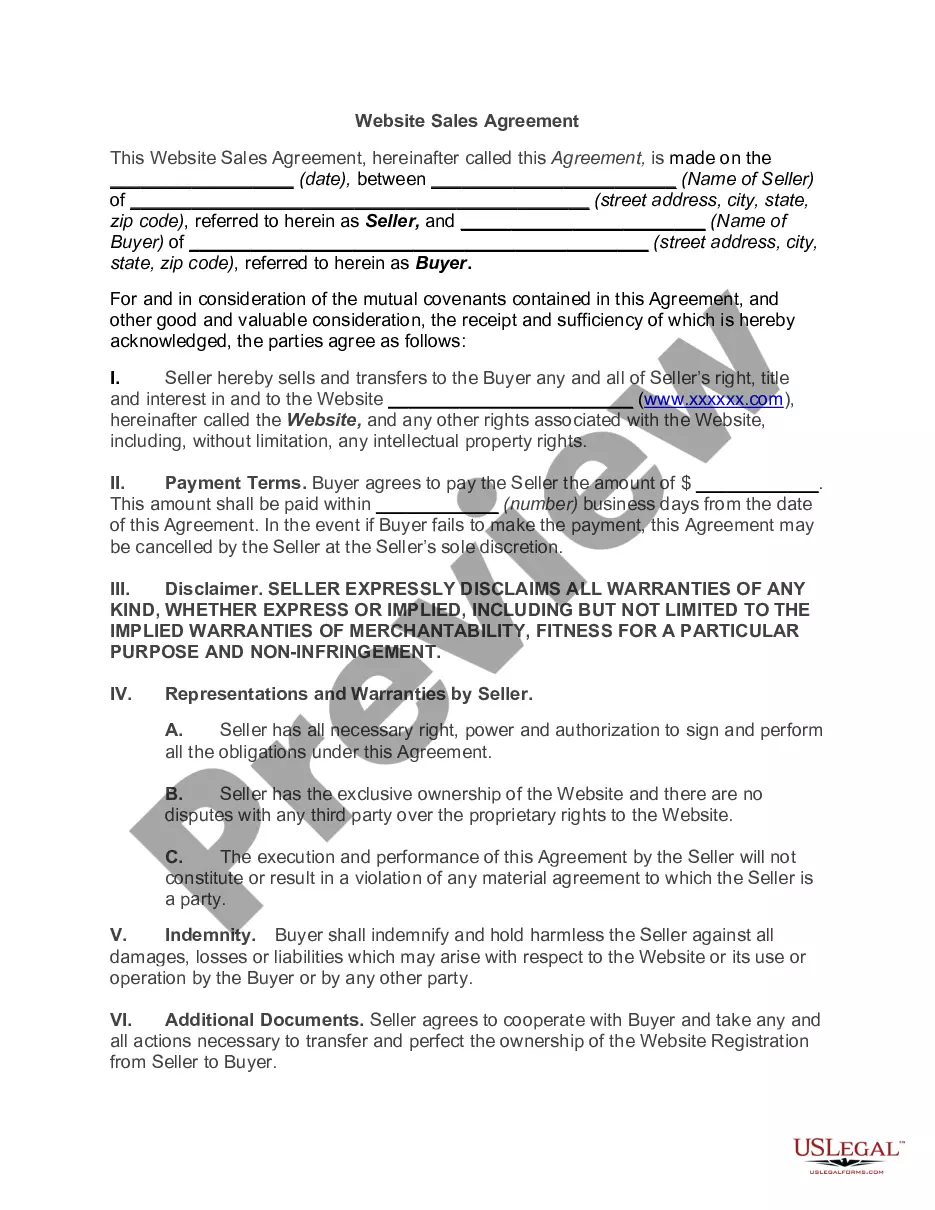
The Website Subscription User Agreement establishes the terms of use for members who wish to sell products online through a specific website. This agreement outlines the rights and responsibilities of users, including privacy protections and restrictions on site usage. Unlike generic terms of service, this tailored agreement emphasizes the specific conditions applicable to online selling, making it essential for maintaining legal compliance and user trust.
Main sections of this form
- Introduction: Overview of rights and obligations of members.
- Definitions: Clarification of key terms relevant to the agreement.
- Using the Site: Rules and responsibilities for proper site usage.
- Privacy Statement: Assurance of personal information protection.
- Fees and Services: Information about any charges associated with site usage.
- Termination: Conditions under which the agreement can be ended.
Situations where this form applies
This form should be used when individuals or businesses plan to join an online platform to sell products. It is crucial for defining user responsibilities, protecting personal information, and ensuring clarity regarding transaction protocols. Anyone accessing or operating on the site must agree to these terms to ensure compliance and protect themselves from potential disputes.
Who should use this form
- Individuals looking to sell products online.
- Businesses interested in utilizing an online marketplace for product sales.
- Anyone involved in online sales who needs a clear understanding of their rights and obligations.
- Members who require assurance regarding privacy and data security on the platform.
Completing this form step by step
- Read the entire agreement thoroughly to understand your rights and obligations.
- Fill in the required information, including any personal identification details.
- Indicate your acceptance of the terms by clicking "Yes" at the end of the agreement.
- Make sure to keep a copy of the agreement for your records after completion.
- Periodically review the terms, as they may be updated by the website owner.
Notarization guidance
This form does not typically require notarization unless specified by local law. It is vital to review the agreement and ensure compliance with any specific legal requirements in your jurisdiction.
Get your form ready online
Our built-in tools help you complete, sign, share, and store your documents in one place.
Make edits, fill in missing information, and update formatting in US Legal Forms—just like you would in MS Word.
Download a copy, print it, send it by email, or mail it via USPS—whatever works best for your next step.
Sign and collect signatures with our SignNow integration. Send to multiple recipients, set reminders, and more. Go Premium to unlock E-Sign.
If this form requires notarization, complete it online through a secure video call—no need to meet a notary in person or wait for an appointment.
We protect your documents and personal data by following strict security and privacy standards.

Make edits, fill in missing information, and update formatting in US Legal Forms—just like you would in MS Word.

Download a copy, print it, send it by email, or mail it via USPS—whatever works best for your next step.

Sign and collect signatures with our SignNow integration. Send to multiple recipients, set reminders, and more. Go Premium to unlock E-Sign.

If this form requires notarization, complete it online through a secure video call—no need to meet a notary in person or wait for an appointment.

We protect your documents and personal data by following strict security and privacy standards.
Common mistakes
- Failing to read and understand the terms of use before agreeing.
- Overlooking updates or changes made to the user agreement.
- Failure to ensure that personal information provided is accurate.
- Not keeping a copy of the agreement once completed.
Why complete this form online
- Easy access to legal terms that clarify user rights.
- Convenience of reviewing and accepting the agreement online.
- Ensures legal protections regarding personal information and online transactions.
- Ability to print or download the agreement for personal records.
- This agreement is legal and binding, provided all parties consent to the terms.
- Users should ensure they are of legal age and capacity to enter into this agreement.
- Respecting the terms is essential to maintain membership and avoid legal issues.
Summary of main points
- Understanding the terms is crucial for both buyers and sellers.
- Proper completion of the form ensures mutual protection and clarity.
- Awareness of fees and privacy policies adds an additional layer of security for users.
Looking for another form?
Form popularity
FAQ
Read terms and conditions on other websites like yours. Set out the ground rules of your website. Tailor the terms and conditions to fit your website. Personalize your language. Don't make it more complicated than it needs to be. Create a new page for your terms and services, and upload it to your website.
Use clear and concise language. Try and use language that is friendly and positive and explain the rational for provisions that might otherwise appear too strong. Make sure the information is set out in a well-structured and logical way.
When you hire a lawyer in the Priori network, drafting terms and conditions typically costs anywhere from $300 to $5,000. Drafting a privacy policy may cost anywhere from $275 for simple policies to $5,000 for more complex documents.
Review Competitor Sites. Agreement to be Bound. Prohibited Uses. Service Interruptions and Updates. Term, Termination, and Survival. Subscriber Data and Legal Compliance. Confidential Information. Indemnification and Limitation of Liability.
Limitations of liability. Intellectual property/trademark protection. Pricing and payment terms, including shipping, returns, exchanges and cancellations. Product information. Dispute resolution.
There is no general law requiring all websites to publish terms and conditions of business. However, there are specific legislative frameworks which mean that it is incumbent for businesses to display certain information on their websites.
Introduction. Right to make changes to the agreement. User guidelines (rules, restrictions, requirements) Copyright and intellectual property. Governing law. Warranty disclaimer. Limitation of liability.
Ownership and copyright of the website's content. acceptable and unacceptable use of the website and content. registration, password and security procedures. availability of the website. use of cookies. links to other websites.
Introduction. Right to make changes to the agreement. User guidelines (rules, restrictions, requirements) Copyright and intellectual property. Governing law. Warranty disclaimer. Limitation of liability.