Agreement between College or University and Athletic Director
About this form
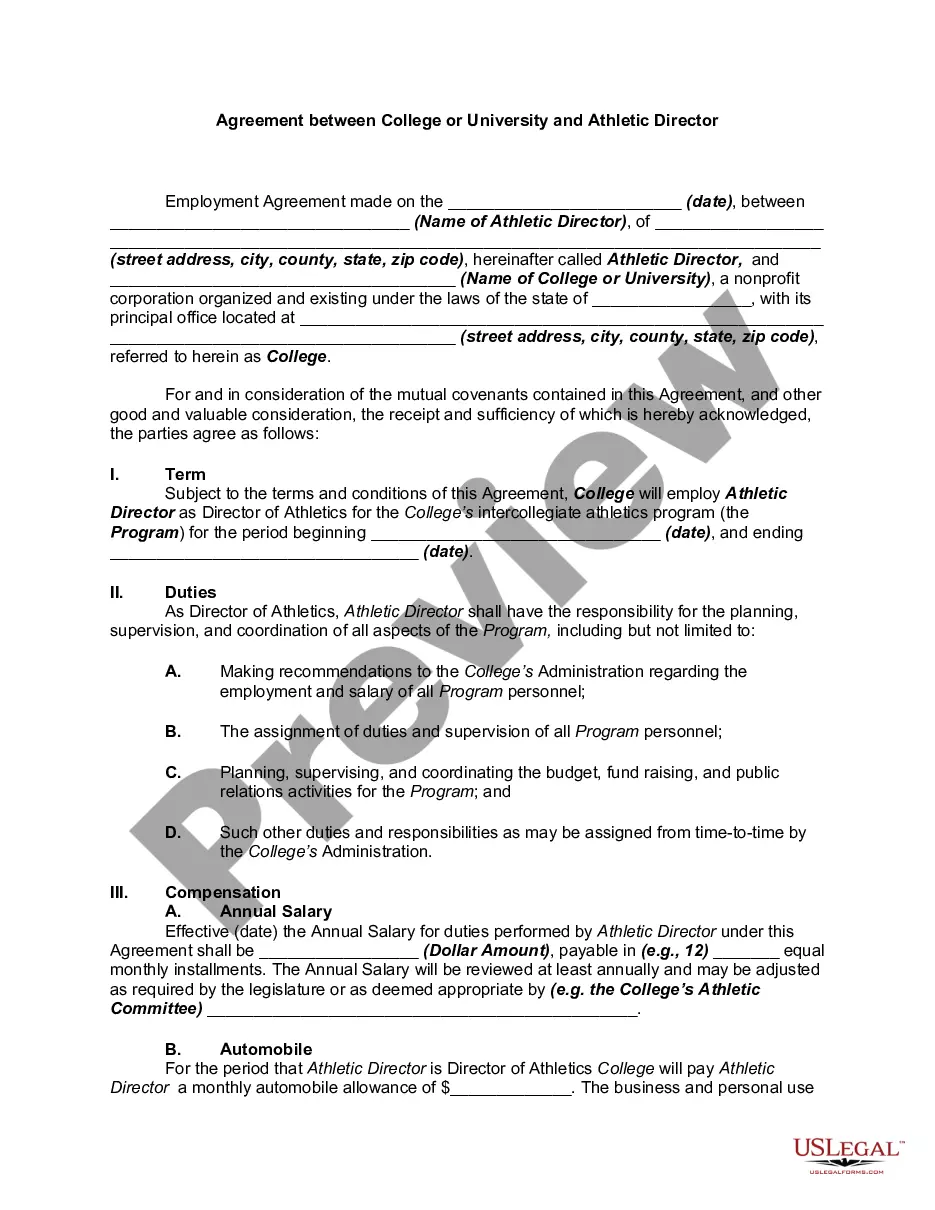
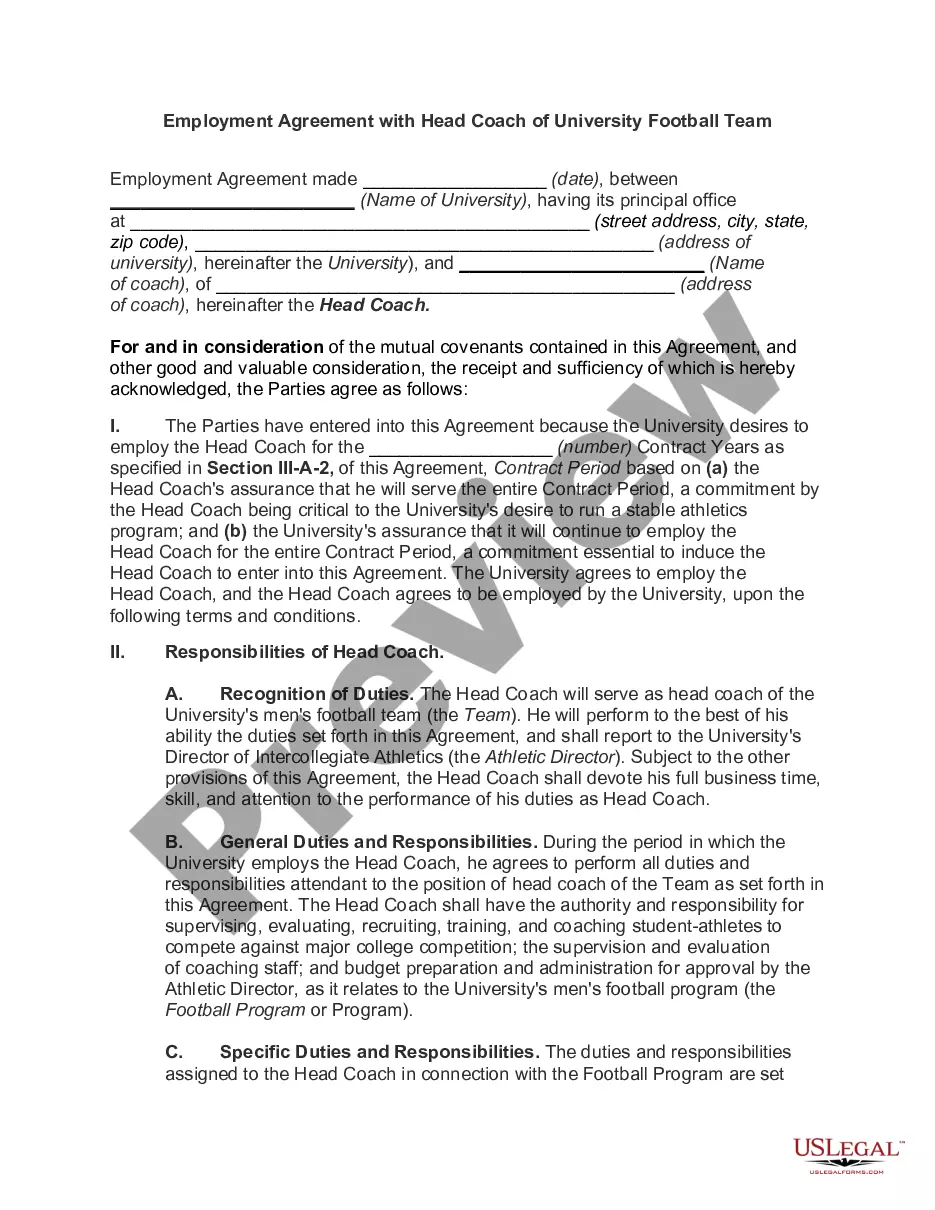
The Agreement between College or University and Athletic Director is a contract that formalizes the relationship between a college and its athletic director. This agreement outlines the director's responsibilities, compensation, and terms of employment, ensuring clarity for both parties. Unlike other employment contracts, this specific agreement focuses on the unique demands and expectations of managing intercollegiate athletic programs.
Main sections of this form
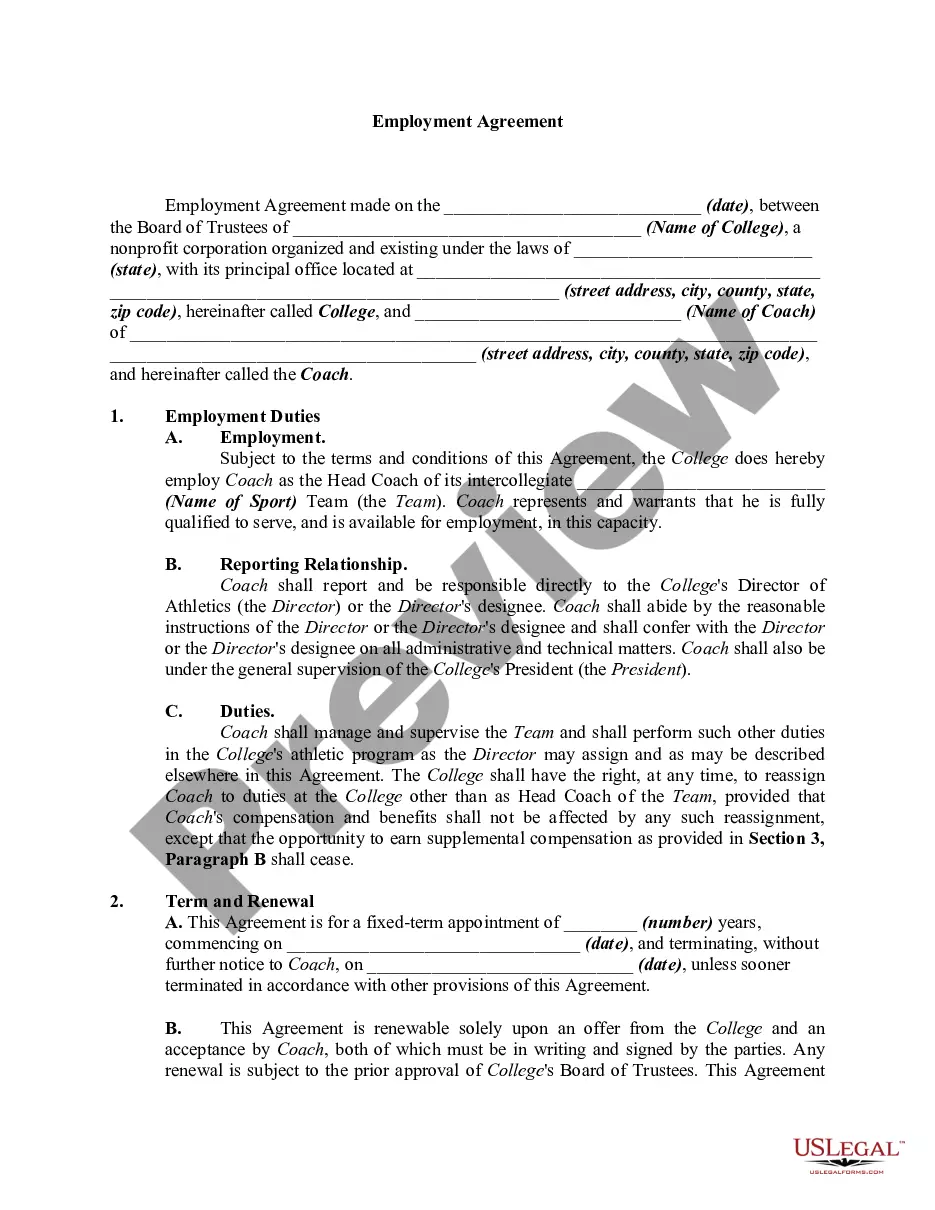
- Employment Duties: Details the specific responsibilities of the athletic director.
- Term and Renewal: Specifies the duration of the contract and conditions for renewal.
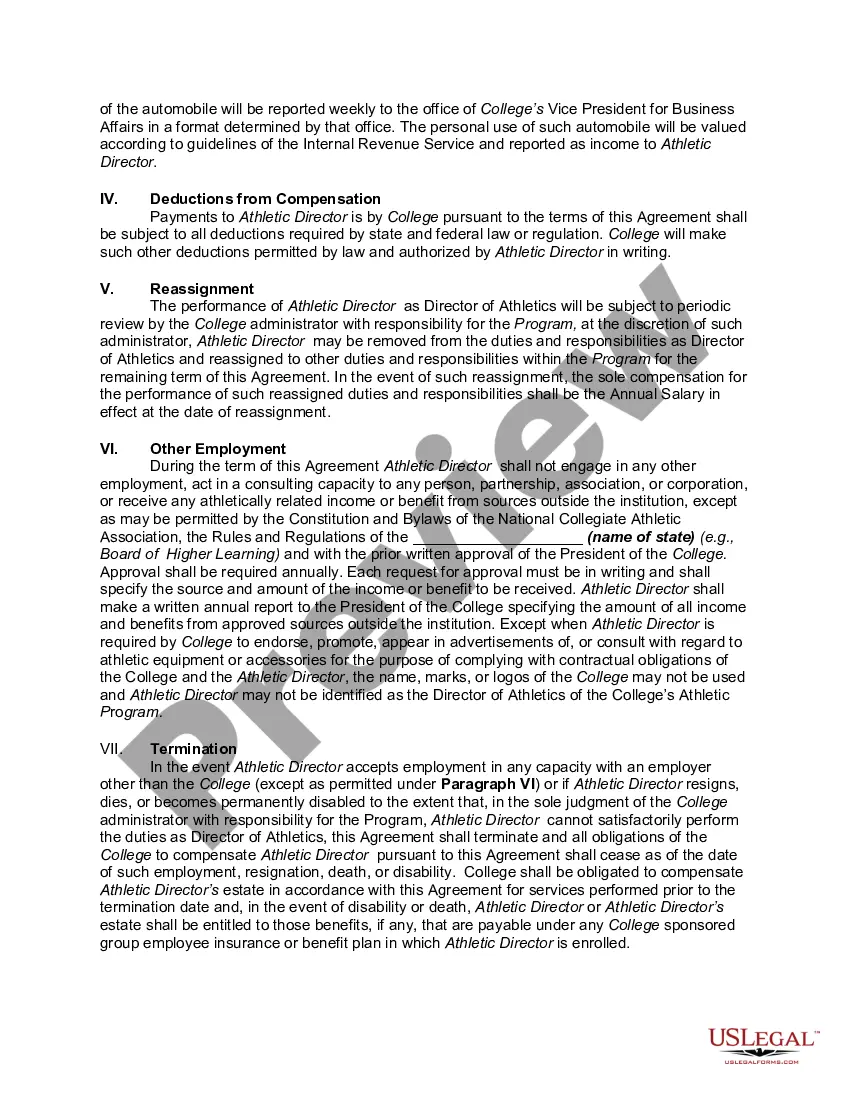
- Compensation: Outlines the base salary, allowances, and conditions for adjustments.
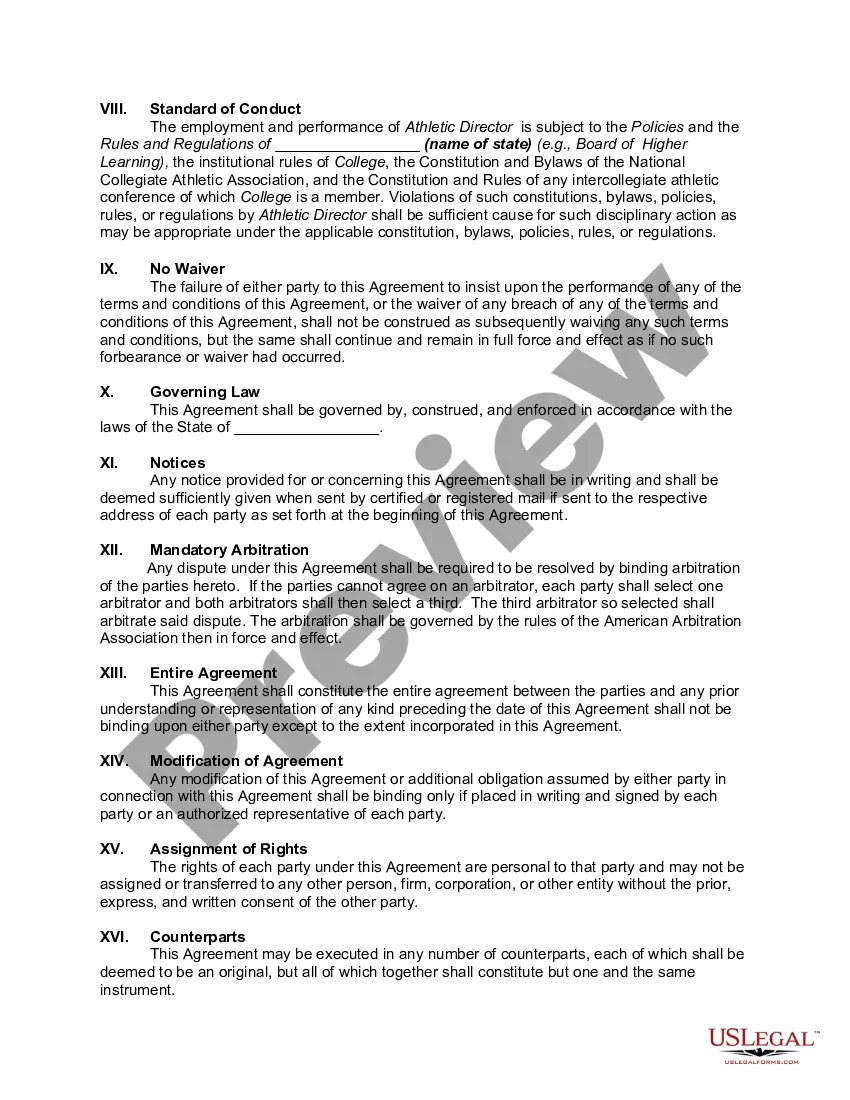
- Termination Grounds: Defines conditions under which the agreement can be terminated and the consequences thereof.
- Standard of Conduct: Addresses adherence to institutional policies and regulations.
Situations where this form applies
This agreement is used when a college or university is hiring an athletic director for its intercollegiate sports teams. It is essential in establishing clear expectations between the institution and the director regarding their roles, duties, and compensation. Use this form when negotiating employment terms to ensure that both parties have a mutual understanding of their obligations.
Who this form is for
- Colleges and universities looking to hire an athletic director.
- Athletic directors who need a formal understanding of their employment terms.
- Administrative personnel involved in the hiring process for athletic positions.
Instructions for completing this form
- Identify the Parties: Fill in the names and addresses of both the athletic director and the college or university.
- Specify the Term: Enter the start date and end date of the employment term.
- Outline Duties: Clearly define the responsibilities expected of the athletic director.
- Detail Compensation: Enter the annual salary and any additional allowances or benefits.
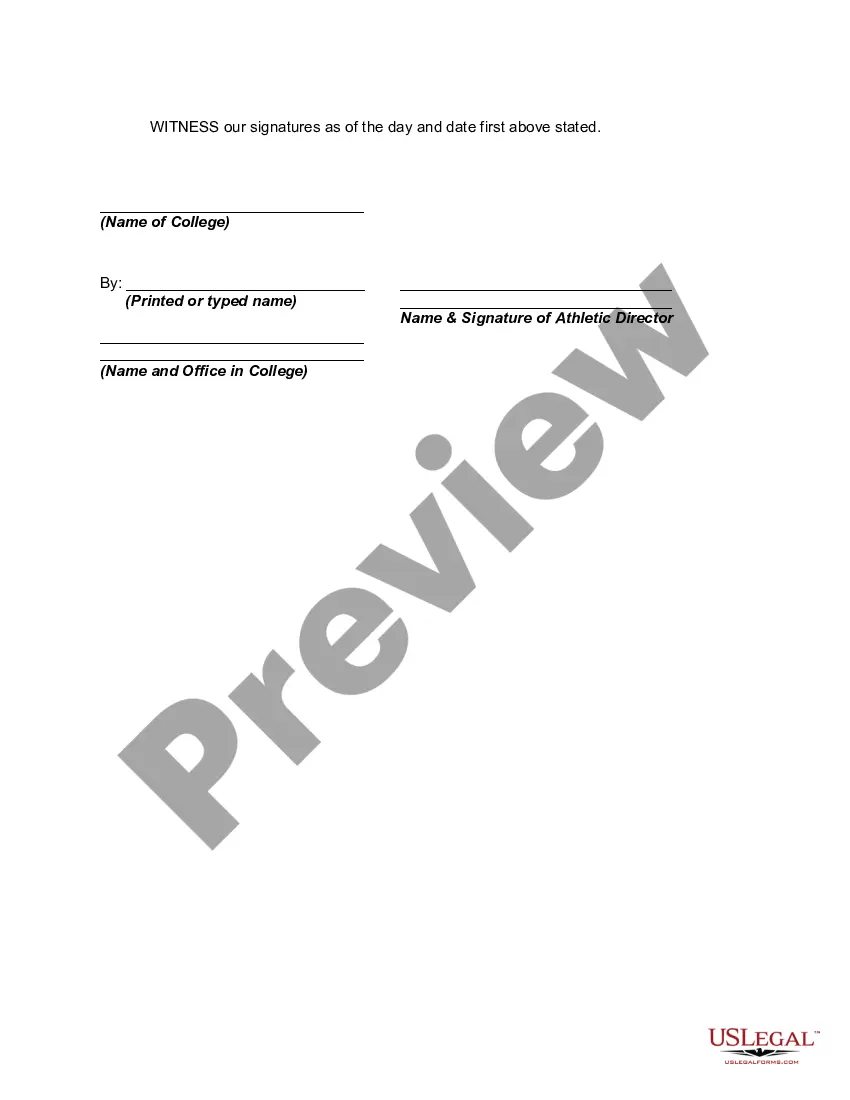
- Enter Signatures: Have both parties sign and date the agreement to make it legally binding.
Does this document require notarization?
This form does not typically require notarization unless specified by local law. It is advisable to check with your stateâs regulations or consult a legal professional to confirm.
Get your form ready online
Our built-in tools help you complete, sign, share, and store your documents in one place.
Make edits, fill in missing information, and update formatting in US Legal Forms—just like you would in MS Word.
Download a copy, print it, send it by email, or mail it via USPS—whatever works best for your next step.
Sign and collect signatures with our SignNow integration. Send to multiple recipients, set reminders, and more. Go Premium to unlock E-Sign.
If this form requires notarization, complete it online through a secure video call—no need to meet a notary in person or wait for an appointment.
We protect your documents and personal data by following strict security and privacy standards.

Make edits, fill in missing information, and update formatting in US Legal Forms—just like you would in MS Word.

Download a copy, print it, send it by email, or mail it via USPS—whatever works best for your next step.

Sign and collect signatures with our SignNow integration. Send to multiple recipients, set reminders, and more. Go Premium to unlock E-Sign.

If this form requires notarization, complete it online through a secure video call—no need to meet a notary in person or wait for an appointment.

We protect your documents and personal data by following strict security and privacy standards.
Avoid these common issues
- Failing to specify the term of employment clearly.
- Omitting important duties and responsibilities of the athletic director.
- Not addressing grounds for termination adequately.
- Forgetting to include compensation details or allowances.
- Not having both parties sign and date the form properly.
Benefits of completing this form online
- Convenient access: Download and print the form at your convenience.
- Editability: Customize the form to fit specific needs and requirements of the institution.
- Reliability: Ensure the form is drafted by licensed attorneys, providing legal assurance.
Legal use & context
- This agreement is legally binding once signed by both parties.
- It ensures clarity in the employment relationship, which can reduce disputes.
- Compliance with NCAA rules and state laws is essential for enforceability.
Quick recap
- The agreement formalizes the employment relationship between a college and its athletic director.
- It includes crucial components like duties, compensation, and termination clauses.
- Clear, effective completion of this form is essential for both partiesâ understanding.
Looking for another form?
Form popularity
FAQ
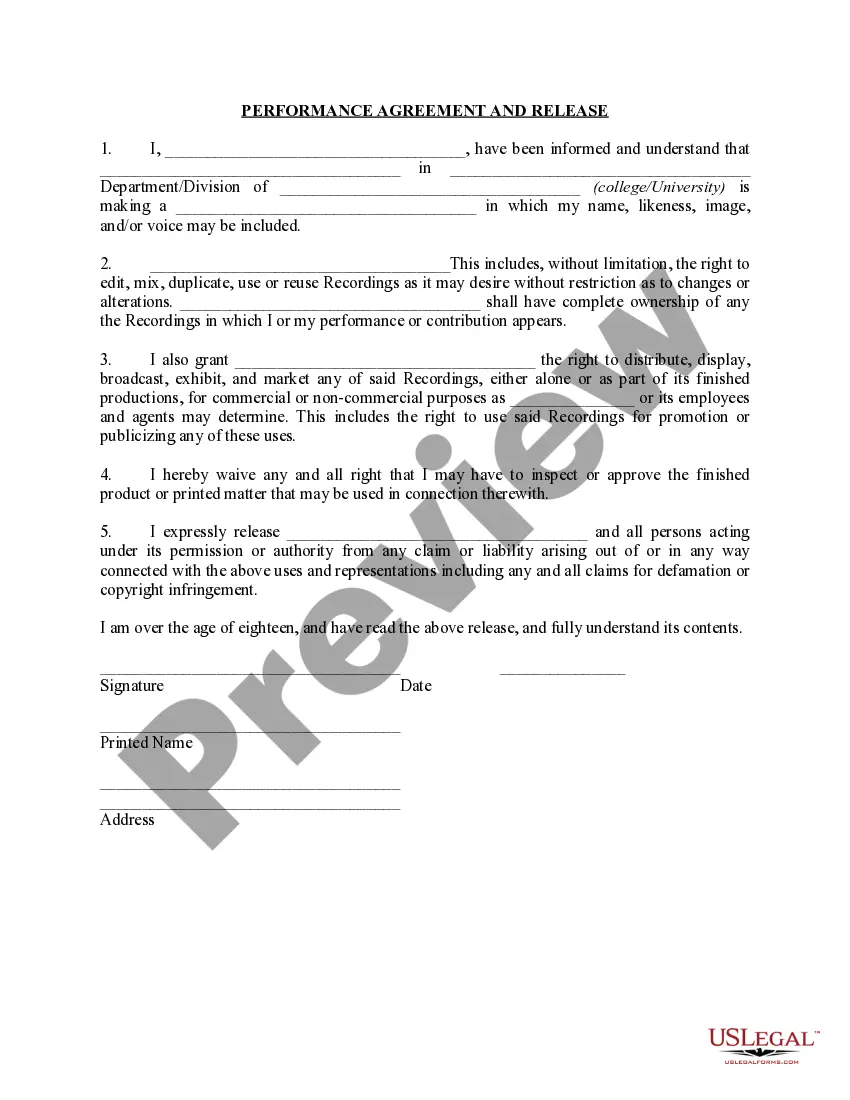
Generally, a large proportion of a coach's total compensation will be in exchange for duties that satisfy the university's media, sponsorship, and apparel contracts, including a grant of the coach's name, likeness and image (collectively, referred to as supplemental compensation).
Athletic directors (ADs) generally oversee all aspects of an athletic program, including hiring coaches, scheduling, budget preparation, promotion, compliance, and facility management.
The highest-paid coach in college football in 2020 is Alabama's Nick Saban, who $9.3 million, nearly $9 million more than the lowest-paid FCS head coach in Coastal Carolina's Jamey Chadwell ($318,966).
In 2008, the Bureau of Labor Statistics cited the base salary for an assistant football coach in Division III at a median range of $39,550. Salaries tend to vary based on the assistant coach's education, his experience, and the financial status of the school.
According to a USA Today report that was released on Wednesday morning, University of Alabama coach Nick Saban is once again college football's highest-paid coach with a salary of $9.3 million. Saban made $8.7 million in compensation in 2019.
According to USA Today, athletic directors at Division 1 universities whose football teams play in the Football Bowl Subdivision made about $515,000 on average in 2013, the most recent information available at the time of publication.
The NCAA currently prohibits student-athletes from selling autographs, accepting money as "gifts" and having contact with an agent without losing their "amateur" status and becoming ineligible to continue playing in NCAA games.
The buyout clause allows the school to remove its coach without paying the full value remaining on the contract. For example, instead of paying Friedgen more than $2 million, the University of Maryland could pay him a percentage of his salary for each of the years remaining. The buyout also works for the coach.
They sign an agreement with the college or university in the form of a letter of intent, which is a binding agreement between the athlete and an institution.However, no financial compensation may be awarded to athletes in exchange for their athletic talents in that particular sport.