Complaint for Conversion of Personal Property by Co-Owner and Request for Partition
What is this form?
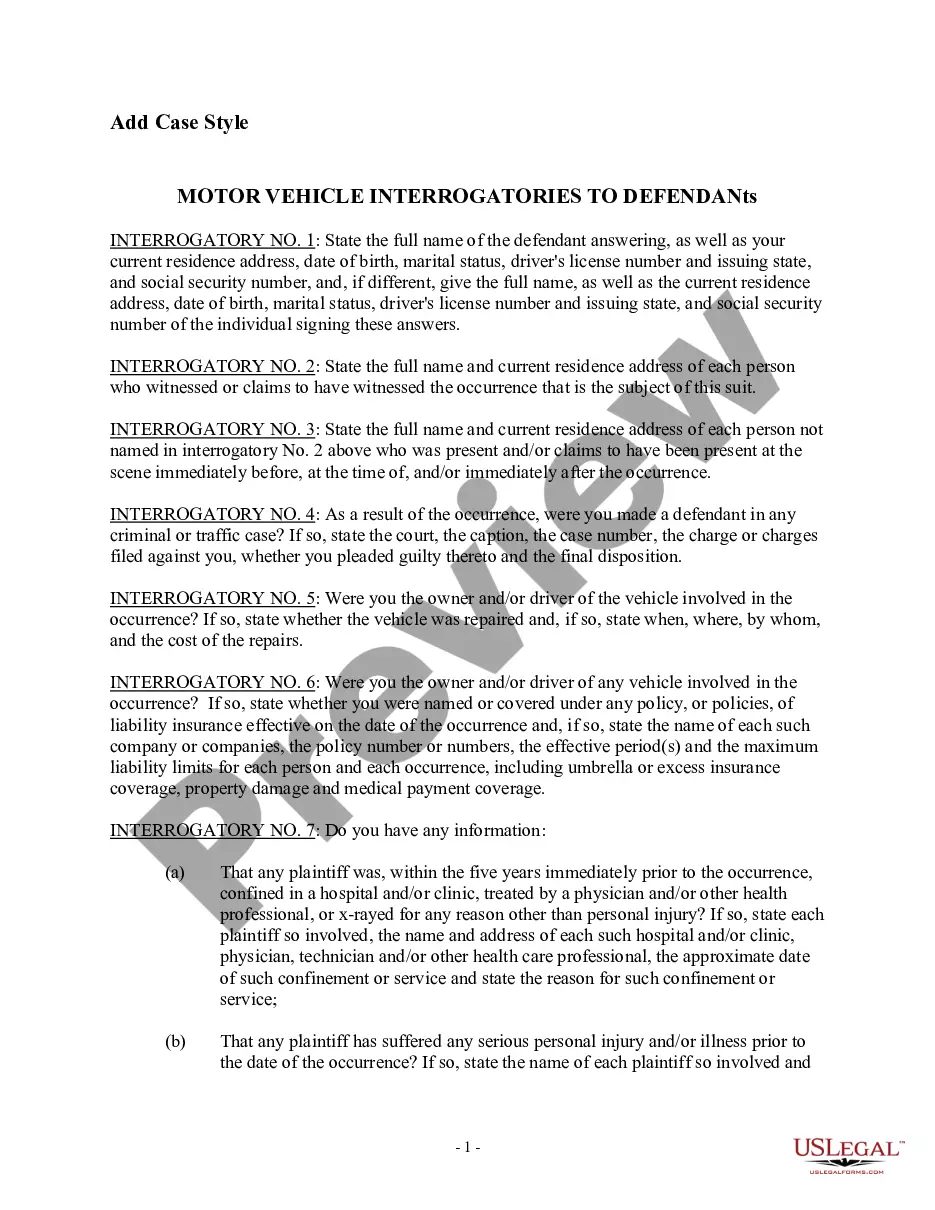
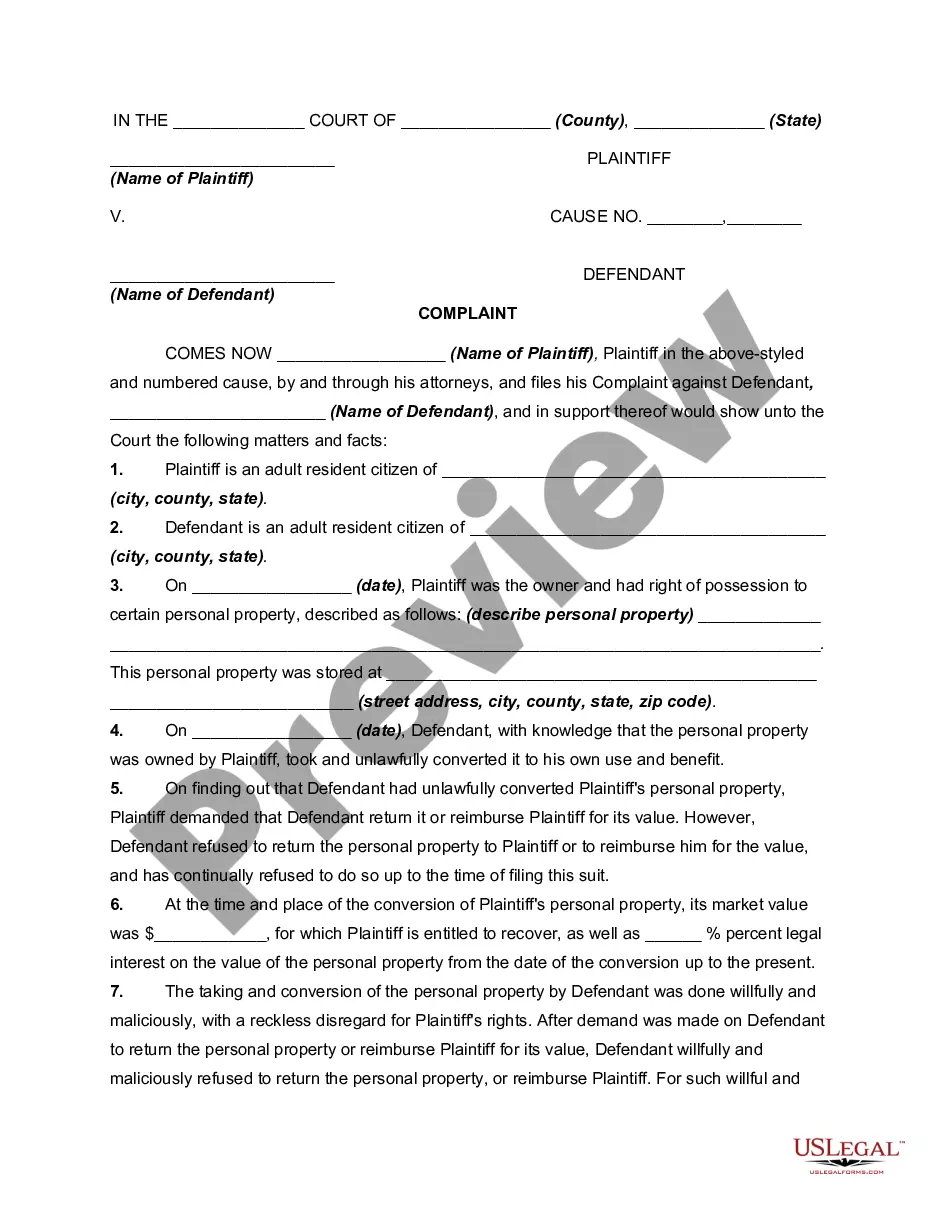
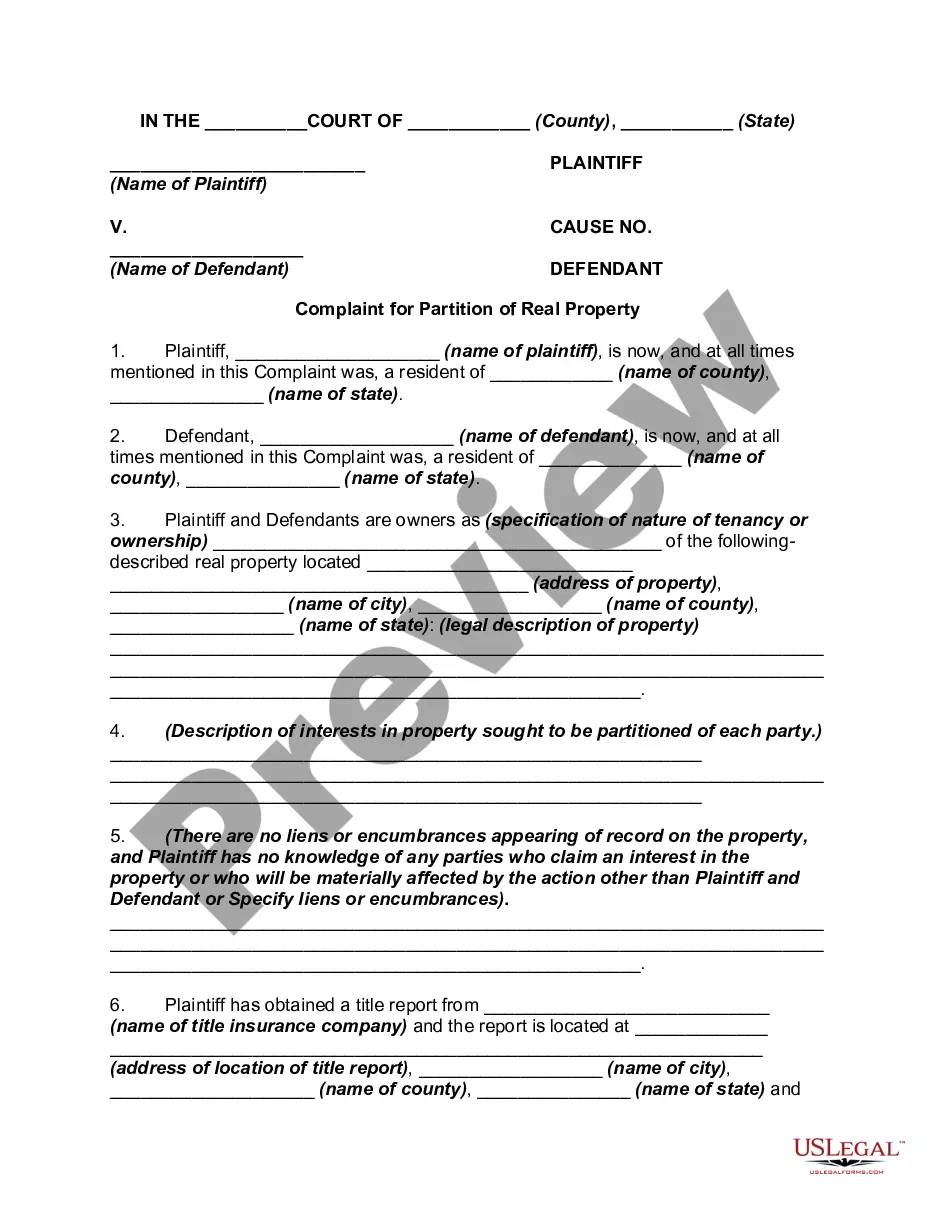
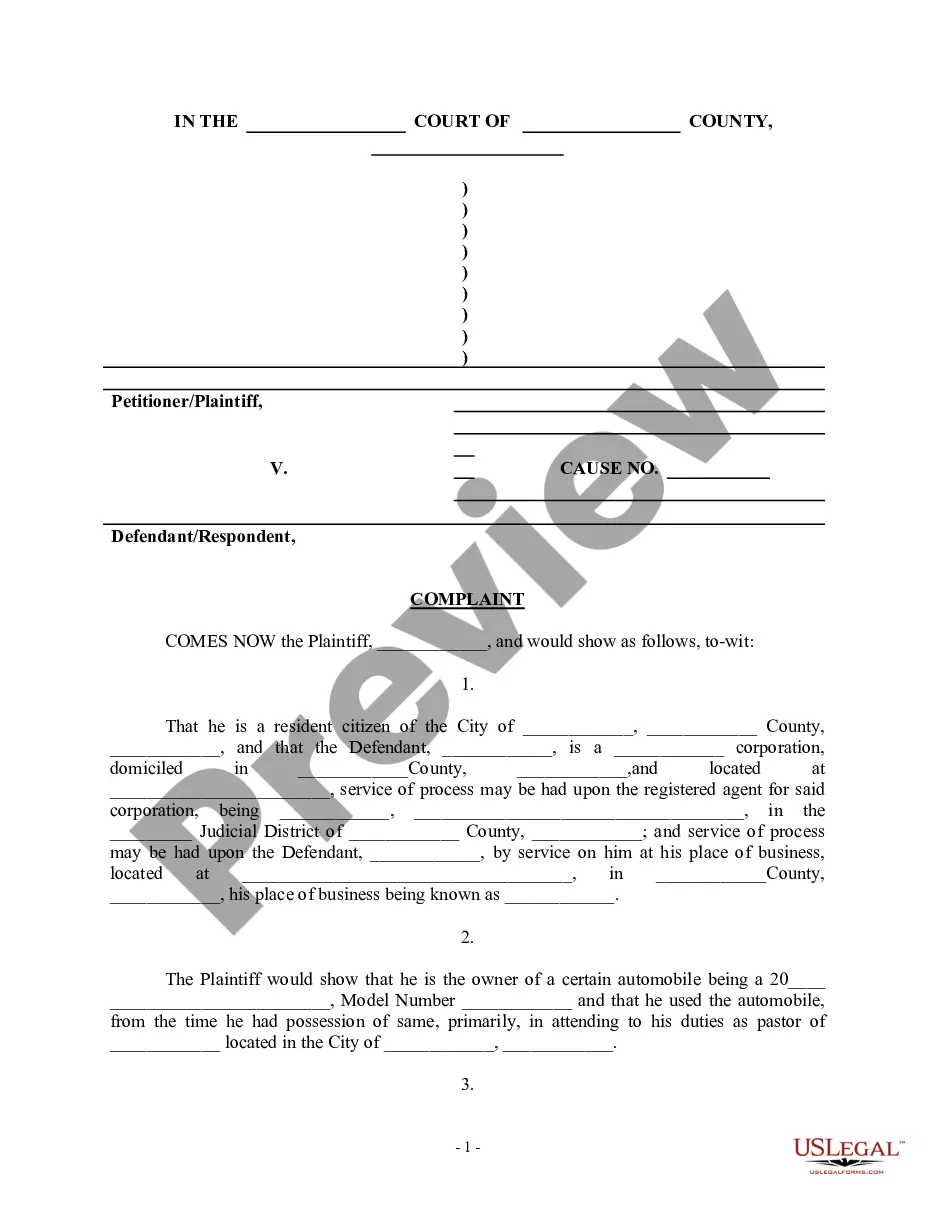
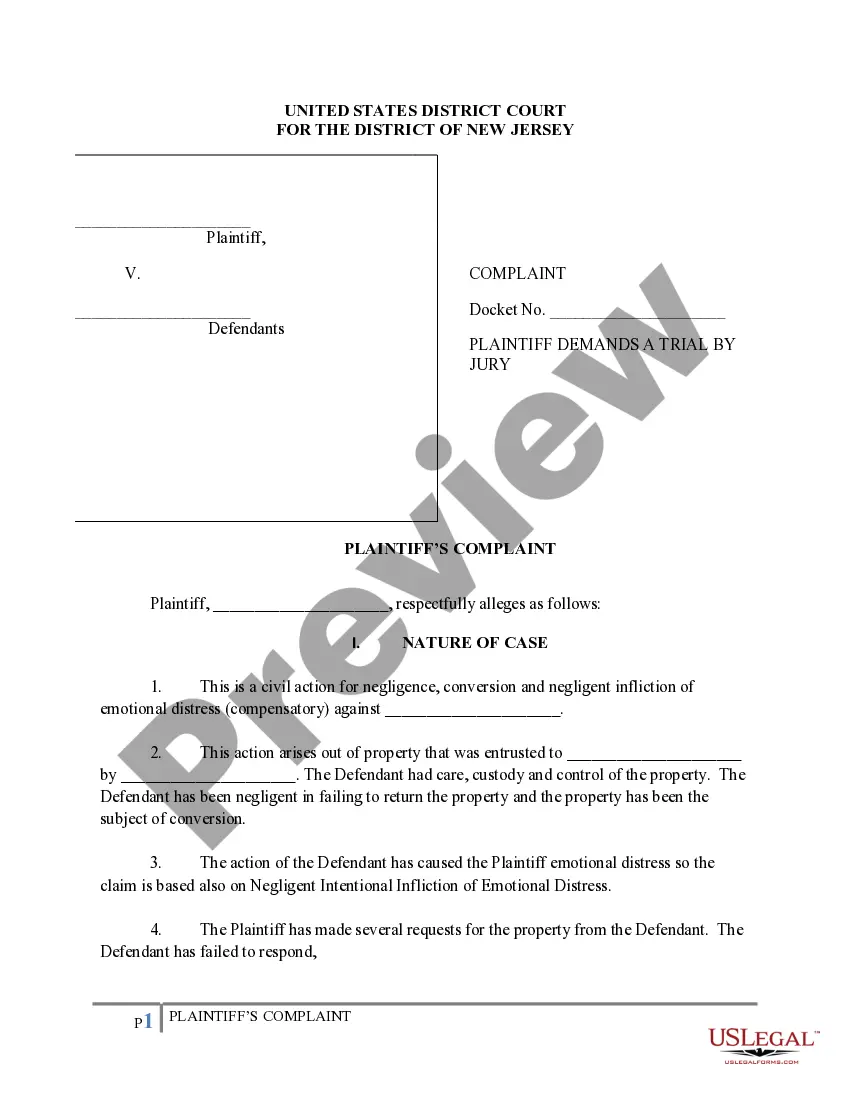
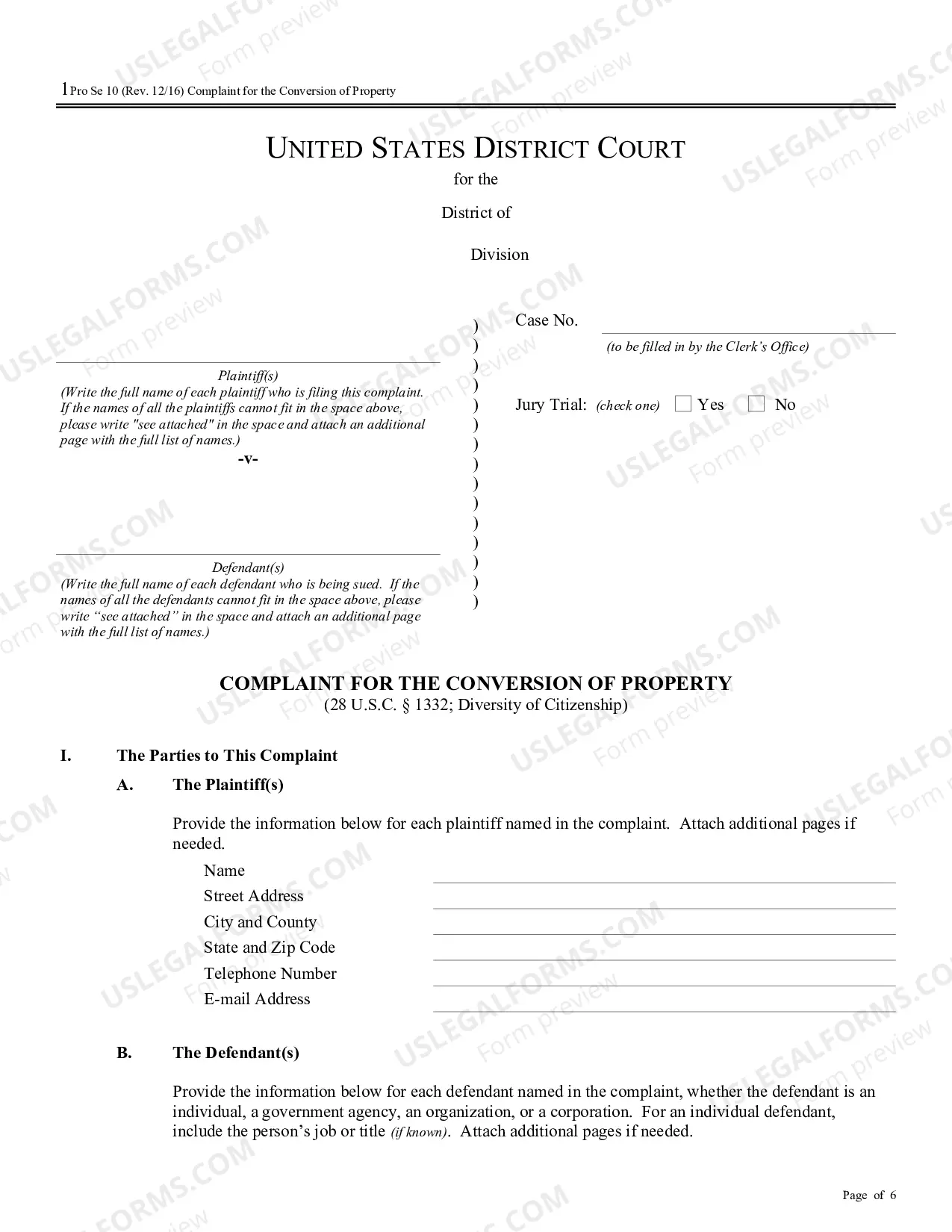
The Complaint for Conversion of Personal Property by Co-Owner and Request for Partition is a legal form used when one co-owner of personal property claims that another co-owner has wrongfully taken or altered their shared property. This form allows the aggrieved co-owner to seek legal remedy and potentially partition the property or sell it if an agreement cannot be reached. Unlike other legal forms related to property disputes, this complaint combines elements of conversion claims with a request for partition, allowing for a comprehensive approach to resolving disputes between co-owners.
Key parts of this document
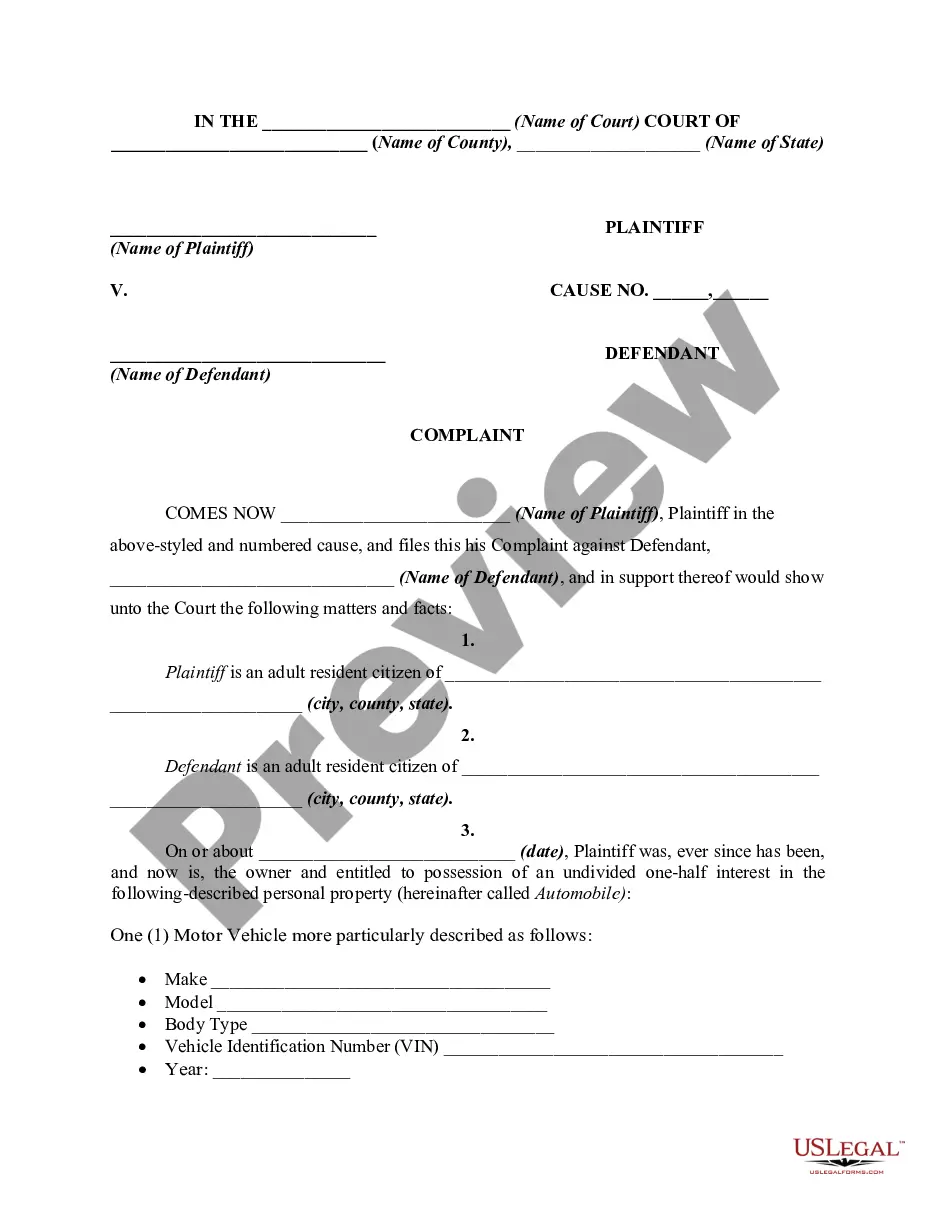
- Plaintiff and defendant identification: Names and addresses of involved parties.
- Description of the property: Detailed information about the property in dispute, including make, model, and Vehicle Identification Number.
- Details of the conversion: Explanation of how the property was wrongfully taken or altered.
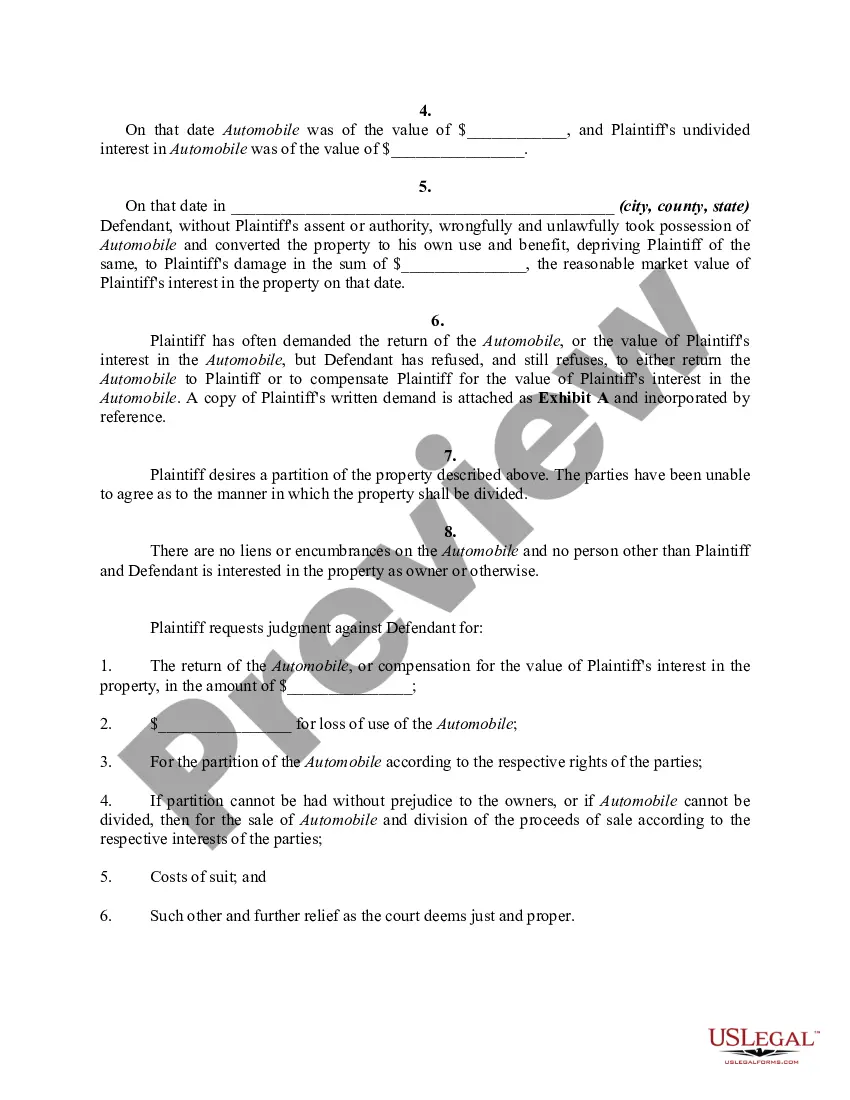
- Value of interest: Estimation of the property's value and the plaintiff's interest in it.
- Demands for relief: Specific remedies sought, including return of property or compensation, loss of use, and partition of property.
Common use cases
This form should be used when a co-owner of personal property, such as a vehicle, believes that another co-owner has wrongfully taken possession of the property and refuses to return it. It is applicable in situations where there is a disagreement about how to divide or sell the property, and a legal resolution is necessary to protect the rights of both parties. Using this form can effectively initiate legal proceedings to recover the plaintiff's interests.
Who should use this form
Intended audience:
- Individuals who co-own personal property, such as vehicles.
- Co-owners experiencing disputes regarding the use or possession of the common property.
- Parties seeking legal remedies to recover property or its value after wrongful possession by another co-owner.
Steps to complete this form
Steps to complete the form:
- Identify the parties involved: Fill in the names and addresses of the plaintiff and defendant.
- Specify the property: Provide a detailed description of the personal property in dispute.
- Detail the conversion: Clearly explain how the other co-owner wrongfully possessed or altered the property.
- Establish the value: Indicate the current value of the property and the value of your interest in it.
- State demands for relief: List what you are seeking from the court, such as return of property or financial compensation.
Does this document require notarization?
This form does not typically require notarization unless specified by local law. However, it is advisable to confirm any specific state requirements to ensure legal validity.
Get your form ready online
Our built-in tools help you complete, sign, share, and store your documents in one place.
Make edits, fill in missing information, and update formatting in US Legal Forms—just like you would in MS Word.
Download a copy, print it, send it by email, or mail it via USPS—whatever works best for your next step.
Sign and collect signatures with our SignNow integration. Send to multiple recipients, set reminders, and more. Go Premium to unlock E-Sign.
If this form requires notarization, complete it online through a secure video call—no need to meet a notary in person or wait for an appointment.
We protect your documents and personal data by following strict security and privacy standards.

Make edits, fill in missing information, and update formatting in US Legal Forms—just like you would in MS Word.

Download a copy, print it, send it by email, or mail it via USPS—whatever works best for your next step.

Sign and collect signatures with our SignNow integration. Send to multiple recipients, set reminders, and more. Go Premium to unlock E-Sign.

If this form requires notarization, complete it online through a secure video call—no need to meet a notary in person or wait for an appointment.

We protect your documents and personal data by following strict security and privacy standards.
Common mistakes
- Failing to provide detailed descriptions of the property, which can weaken the case.
- Not clearly stating the value of the property or the plaintiffâs interest in it.
- Neglecting to attach any written demands for the return of the property, which are essential for the claim.
Benefits of completing this form online
- Convenience: The form can be easily downloaded and completed at your own pace.
- Editability: Users can modify the document as needed to reflect their specific situation.
- Reliability: Forms are drafted by licensed attorneys to ensure adherence to legal standards.
Looking for another form?







Form popularity
FAQ
And when the co-owner has no exclusive rights then he or she cannot sell or transfer the property without the consent of other co-owners of the property or share. It is illegal to transfer the property without the consent of other co-owners when they hold the property in the name of all co-owners.
Verb (used with object) to own jointly with another: a building I co-owned with my brother.
Generally, joint owners have the right to possess and use the property. Most states do not require a joint owner to pay rent to the other joint owner(s) while exercising this right.Your rights as a joint owner also include: Money owed from renting the property to tenants.
Ownership of Tenant in Common PropertiesJoint owners have rights that are defined by the type of ownership method chosen. The term "co-owner" implies that more than one person has an ownership percentage of the property. Joint ownership, in its three common forms, refines and defines the rights of the co-owners.
Co-owners have equal rights to possession of the property, and equal rights and responsibilities. If one co-owner excludes the other from the property, the excluded co-owner can recover the property's rental value from the excluding co-owner.
Partnership and co-ownership are two different things. For example, if two brothers purchase a property, that is co-ownership. Both brothers must agree if the property is to be sold, and the two would share the proceeds from the sale.With co-ownership, there is no such agency relationship.
Often, co-owners of a business use titles that indicate their role in the business, such as "director of finance" or "director of marketing." You may also choose a simple title like "co-owner" to show you are on equal footing with the company's other owners.