Rejection of Goods
What this document covers
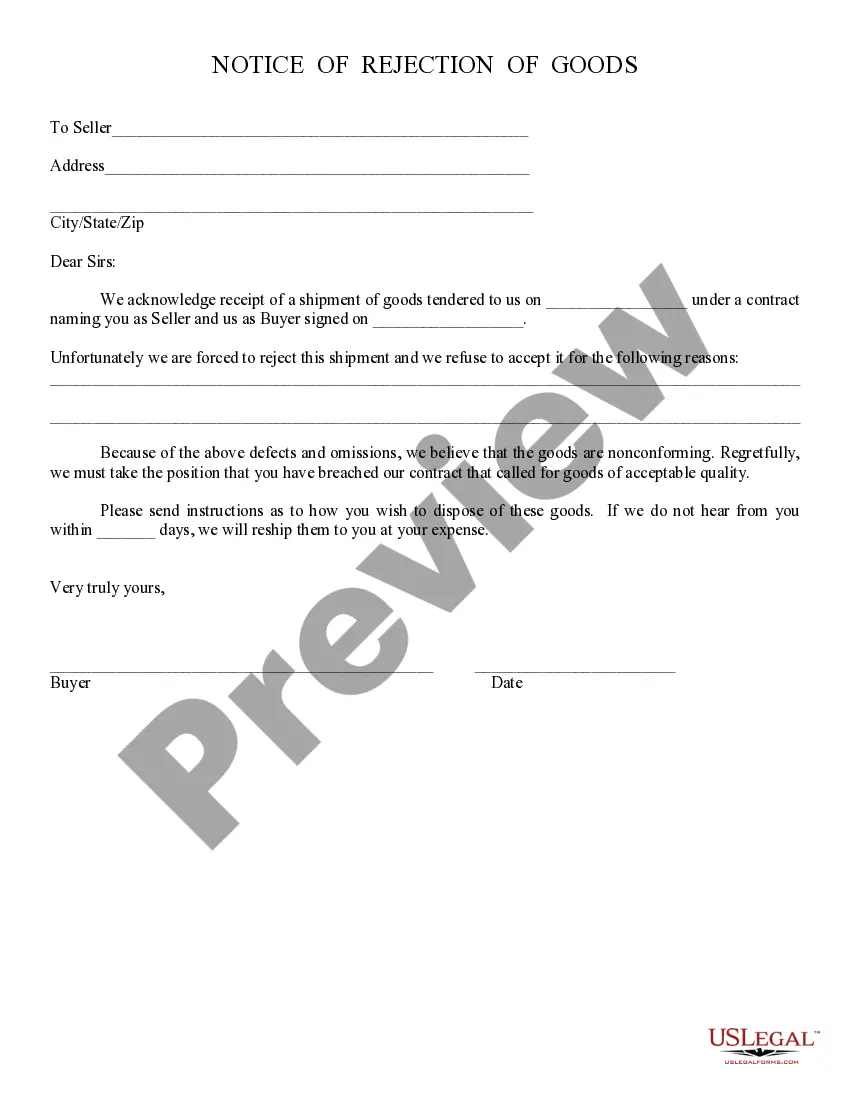
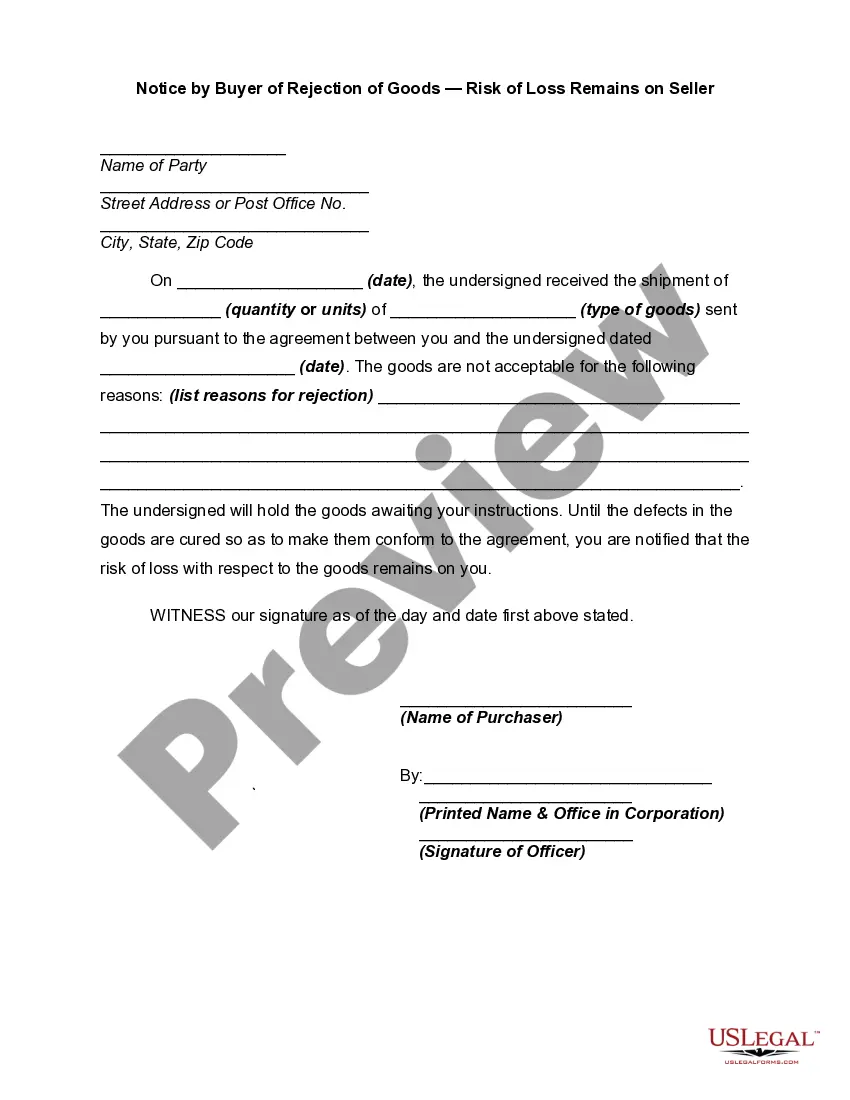
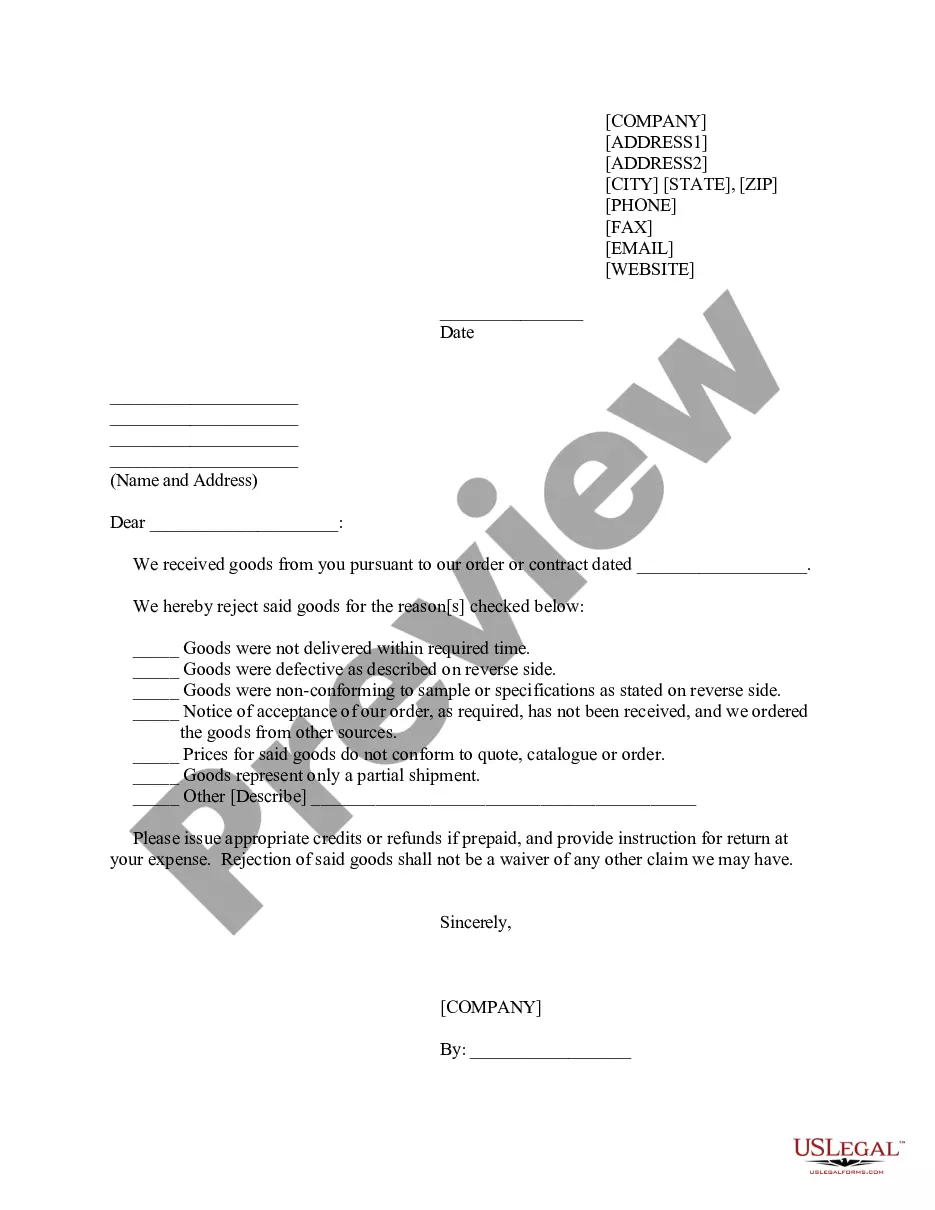
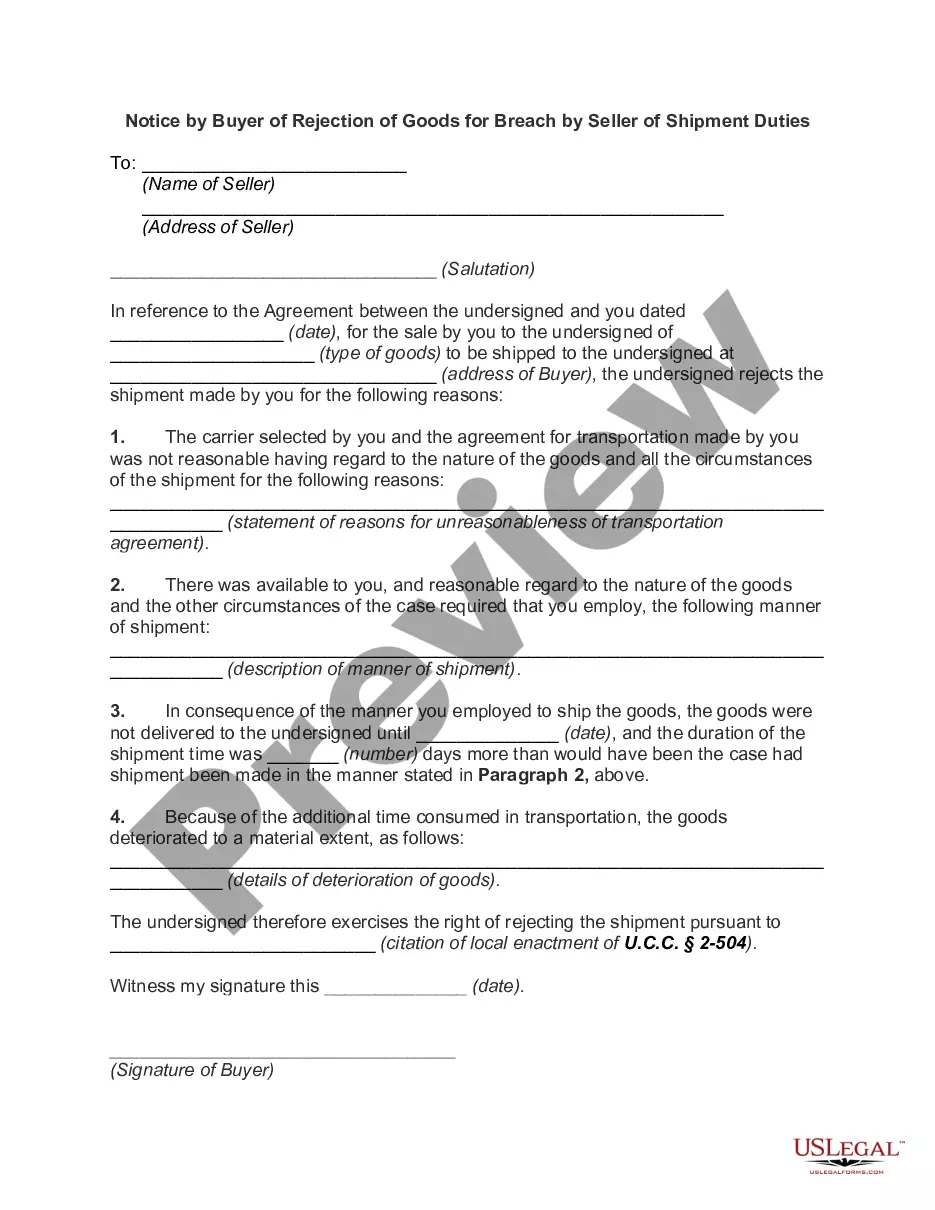
The Rejection of Goods form is a legal document that allows a buyer to formally reject nonconforming goods provided by a seller. This form is necessary when the delivered goods do not meet the agreed-upon specifications, allowing the buyer to demand replacements or adjustments. This form is specifically designed to ensure that both parties acknowledge the rejection and the reasons for it, differentiating it from informal rejection notices or general communications regarding the shipment.
Key parts of this document
- Seller's information, including name and address
- Details of the delivery date and contract date
- A clear statement of rejection and reasons for nonconformance
- Instructions for the seller on how to dispose of the rejected goods
- Signature and date of the buyer
When to use this form
This form should be used when a buyer receives goods that do not conform to the specifications outlined in the purchase agreement. Common scenarios include defects in quality, incorrect items, or other discrepancies that make the goods unacceptable. By using this form, the buyer formally communicates their decision to reject the goods, ensuring a clear record of the issue and initiating the process for resolution.
Who this form is for
This form is intended for:
- Businesses purchasing goods from suppliers or wholesalers
- Individual consumers who receive faulty or incorrect items
- Managers or procurement personnel who handle contract compliance and quality control
Completing this form step by step
- Identify the seller by filling in their name and address at the top of the form.
- Enter the date of the shipment along with the contract date for clarity.
- Clearly state your reasons for rejecting the goods in the designated section.
- Provide instructions for how you want the seller to handle the rejected goods.
- Sign and date the document to validate the rejection.
Notarization guidance
This form does not typically require notarization unless specified by local law. It is essential to understand your specific jurisdictionâs requirements to ensure the validity of the rejection.
Get your form ready online
Our built-in tools help you complete, sign, share, and store your documents in one place.
Make edits, fill in missing information, and update formatting in US Legal Forms—just like you would in MS Word.
Download a copy, print it, send it by email, or mail it via USPS—whatever works best for your next step.
Sign and collect signatures with our SignNow integration. Send to multiple recipients, set reminders, and more. Go Premium to unlock E-Sign.
If this form requires notarization, complete it online through a secure video call—no need to meet a notary in person or wait for an appointment.
We protect your documents and personal data by following strict security and privacy standards.

Make edits, fill in missing information, and update formatting in US Legal Forms—just like you would in MS Word.

Download a copy, print it, send it by email, or mail it via USPS—whatever works best for your next step.

Sign and collect signatures with our SignNow integration. Send to multiple recipients, set reminders, and more. Go Premium to unlock E-Sign.

If this form requires notarization, complete it online through a secure video call—no need to meet a notary in person or wait for an appointment.

We protect your documents and personal data by following strict security and privacy standards.
Typical mistakes to avoid
- Failing to provide specific reasons for the rejection.
- Not notifying the seller promptly after rejecting the goods.
- Neglecting to include dates associated with the delivery and contract.
Benefits of completing this form online
- Convenience of filling out the form at your own pace from any device.
- Ability to customize the form to fit specific circumstances quickly.
- Access to templates drafted by licensed attorneys for added assurance.
Main things to remember
- The Rejection of Goods form is essential for buyers wishing to reject nonconforming goods properly.
- Clear and specific reasons for rejection help avoid potential disputes with the seller.
- Using this form ensures the buyer's rights are acknowledged and protected as per the contract.
Looking for another form?
Form popularity
FAQ
Nonconforming goods are goods delivered that don't satisfy the specifications (quantities and qualities) of the requested goods defined in a purchase contract.
UCC § 2-608 provides that after a buyer has accepted goods, the acceptance may be revoked under the following circumstances: "(1) The buyer may revoke his acceptance of a lot or commercial unit whose non-conformity substantially impairs its value to him if he has accepted it (a) on the reasonable assumption that its
Quick Reference. The refusal of an offer by the offeree. Once an offer has been rejected, it cannot subsequently be accepted by the offeree. A counter-offer ranks as a rejection, but a mere inquiry as to the possibility of varying some term does not. See also lapse of offer; revocation of offer.
If the buyer is a merchant, then the buyer has a special duty to follow reasonable instructions from the seller for disposing of the rejected goods; if no instructions are forthcoming and the goods are perishable, then he must try to sell the goods for the seller's account and is entitled to a commission for his
(6) Recover Damages: If the seller repudiates a contract or wrongfully refuses to deliver conforming goods, the buyer can sue to recover the difference between the contract price and the fair market price of the goods (at the time that the buyer learned of the breach), plus incidental and consequential damages, less
Under the UCC, a seller's primary obligation is "tender of delivery." In other words, delivering the goods to the buyer.In other cases, it may mean that the seller holds the goods where the buyer can take possession of them. Often the manner in which the goods are to be tendered is specified in the sales contract.
Second, an offeree can reject an offer by making a counteroffer. Counteroffers mean that you are rejecting the original offer and then making a new offer. Essentially, making a counteroffer results in a role reversal, with the original offeror now becoming the offeree.
Under the UCC, a seller can accept a buyer's offer to purchase goods for prompt or current shipment in 1 of 3 ways.shipping nonconforming goods - seller can also accept the buyer's offer by shipping nonconforming goods.
A seller is bound to deliver the good requested, to the buyer on an agreed consideration. Goods are called non conforming goods when the delivered goods are not the goods specified in the purchase contract.Rejection of non conforming goods should be made by a buyer in a reasonable time after the goods are delivered.