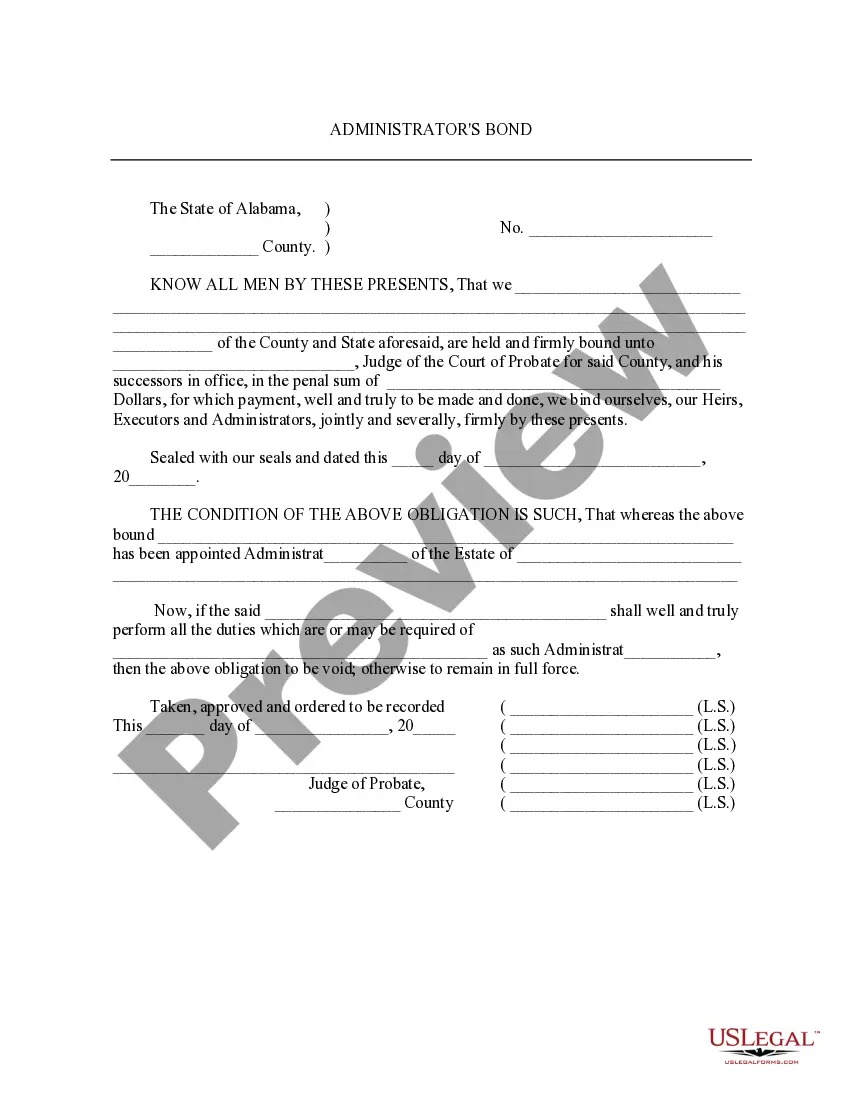
Motion of Defendant to Discharge or Quash Writ of Garnishment and Notice of Motion - Funds Exempt by Law from Garnishment
Understanding this form
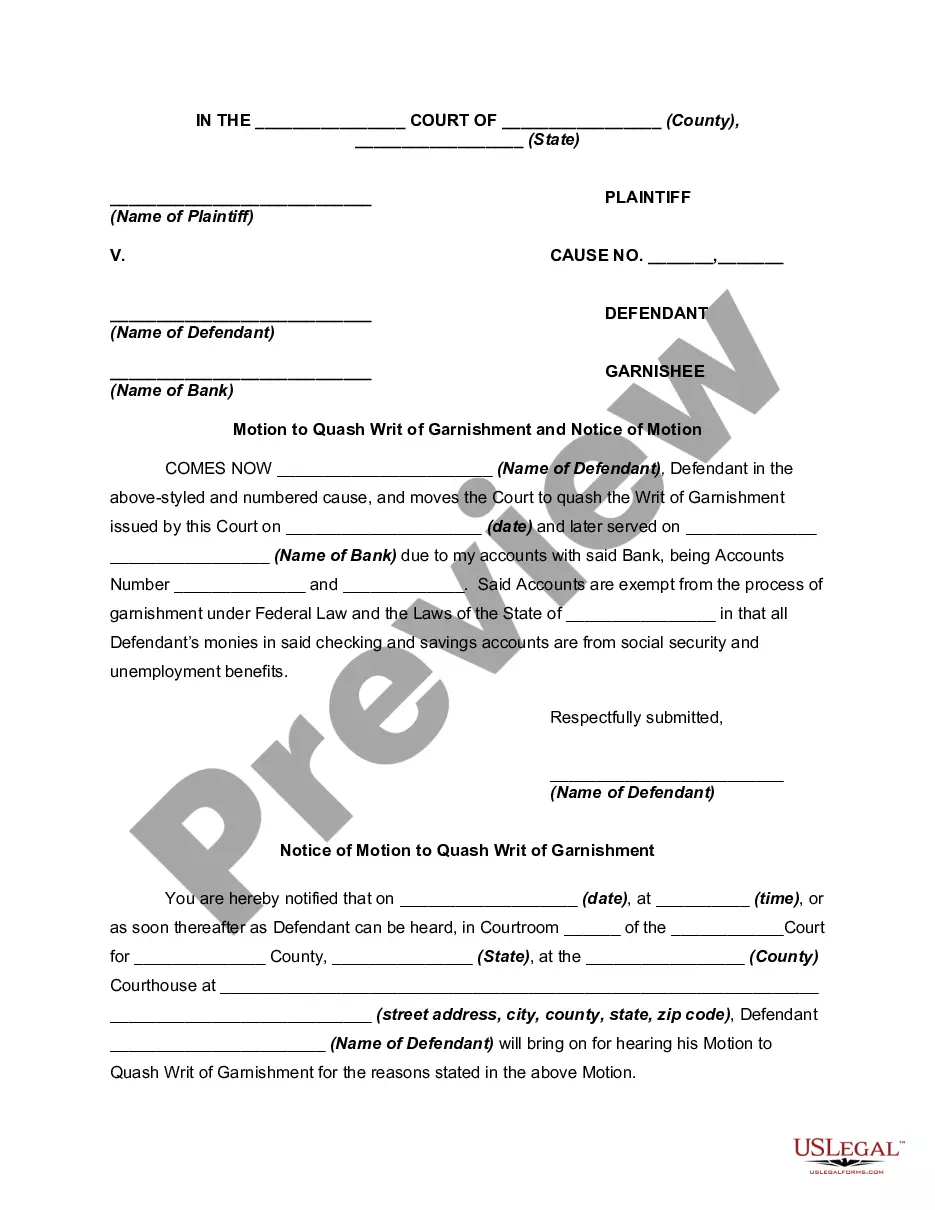
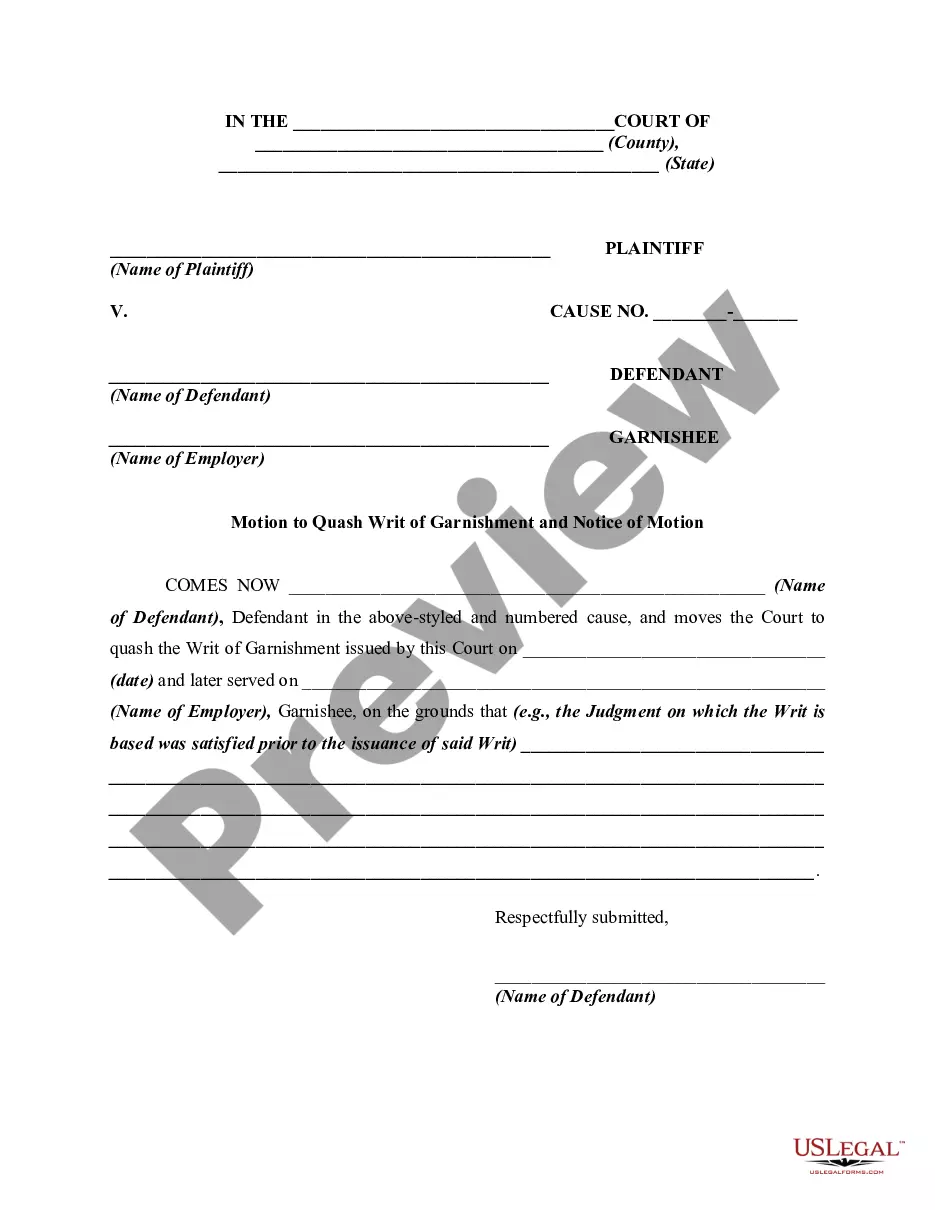
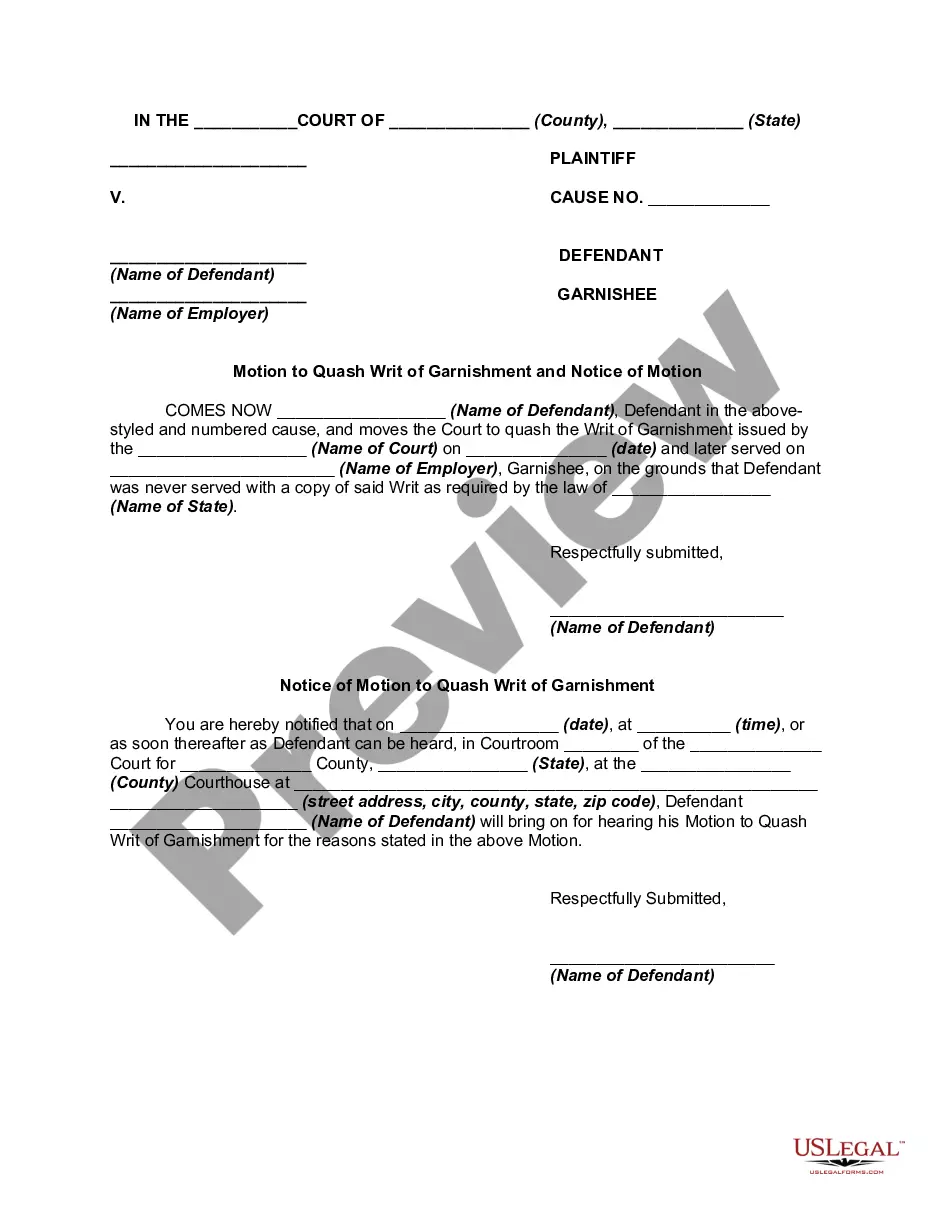
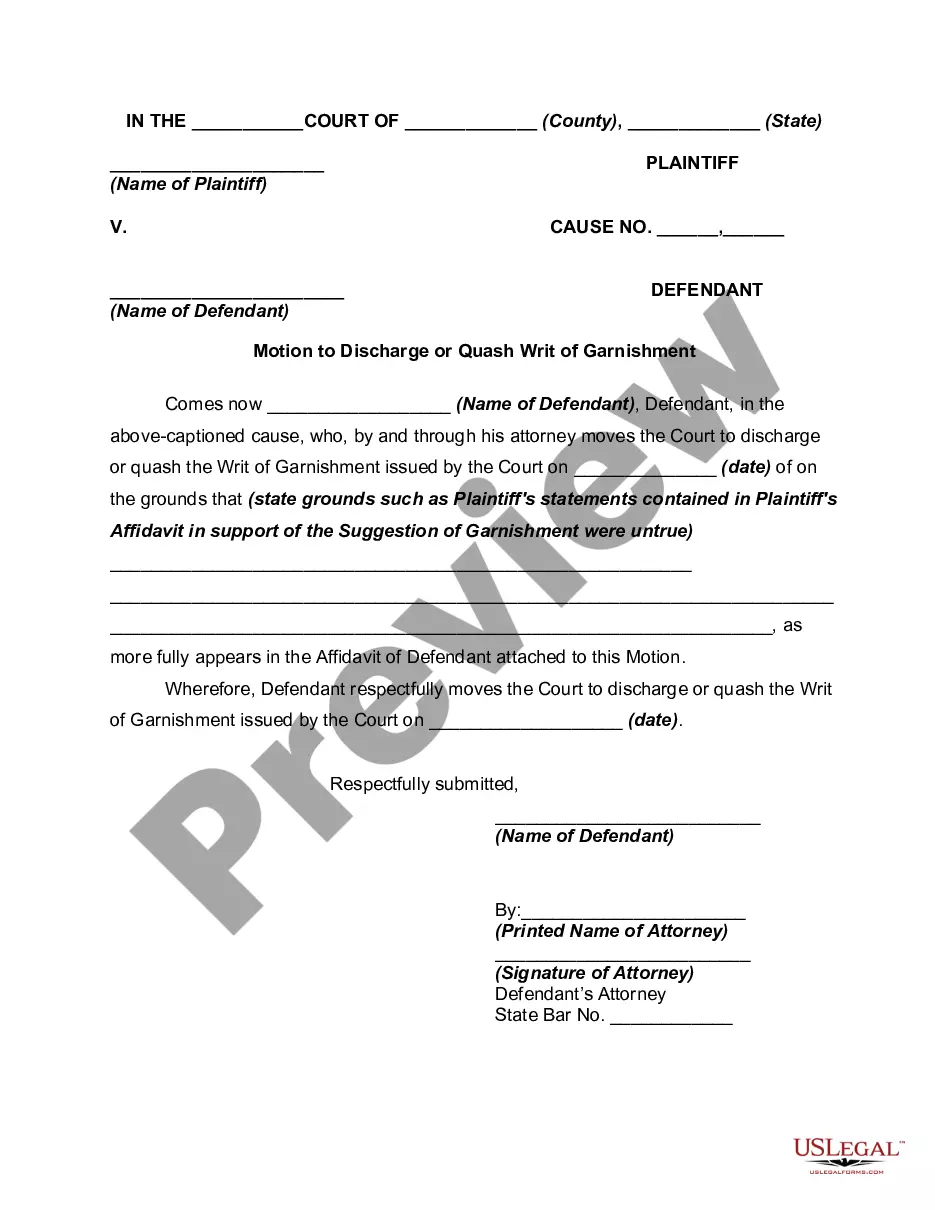
The Motion of Defendant to Discharge or Quash Writ of Garnishment and Notice of Motion is a legal document used by defendants to contest a writ of garnishment. This form specifically addresses funds that are legally exempt from garnishment, ensuring that the funds necessary for the defendant's living expenses are protected. Unlike standard motions or responses, this form emphasizes the specific federal and state exemptions applicable to certain benefits and accounts.
Key components of this form
- Details about the parties involved: Plaintiff, Defendant, and Garnishee (bank).
- The motion statement requesting the court to quash the writ of garnishment.
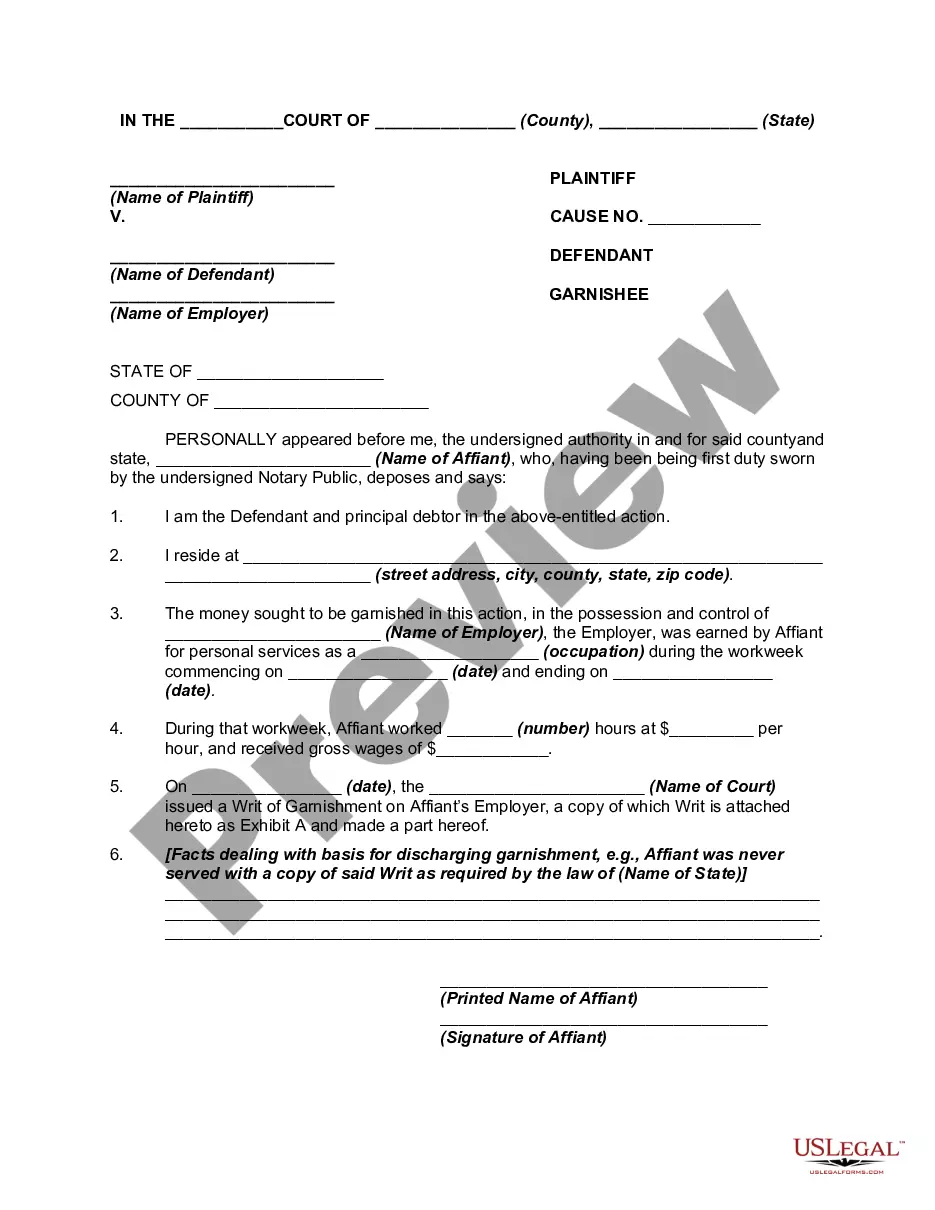
- Identification of accounts and the basis for exemption from garnishment.
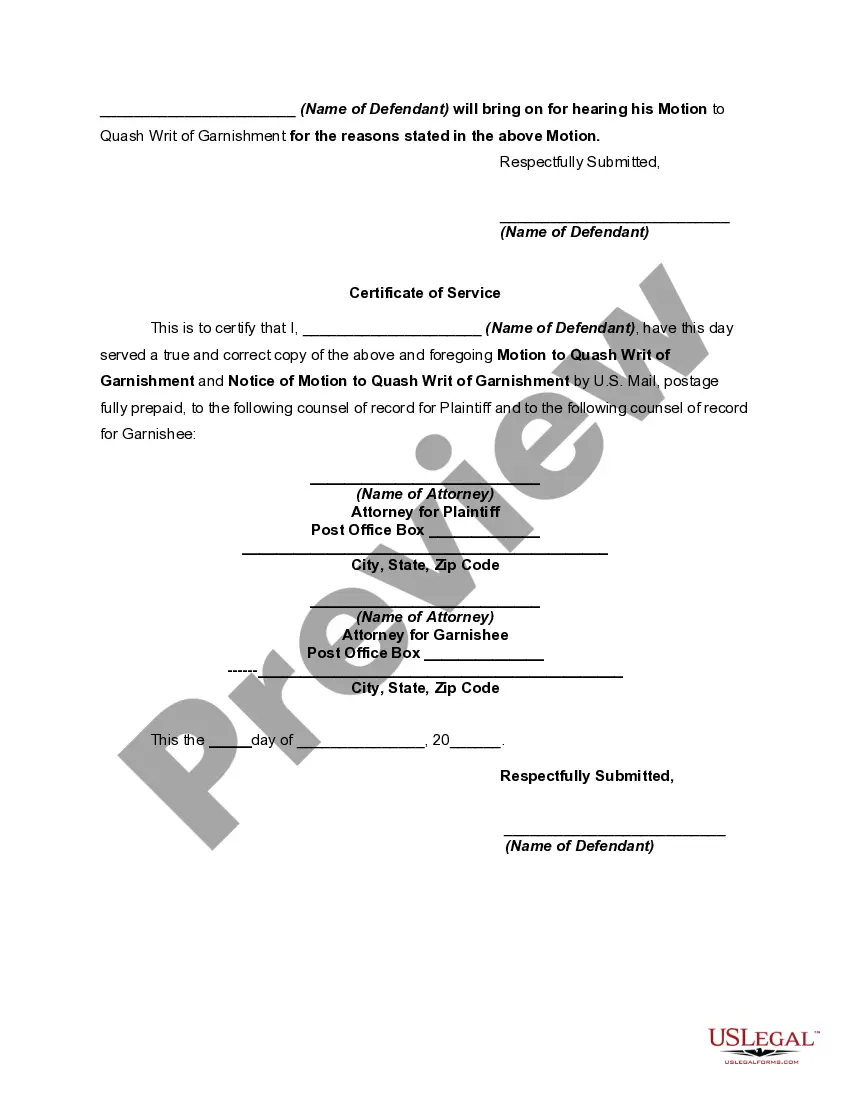
- Notice of motion details, including date, time, and location of the hearing.
- Certificate of service to confirm notice has been sent to relevant parties.
When to use this form
This form is needed when a defendant is facing a court-ordered garnishment of their bank accounts and believes that the funds in those accounts are exempt under federal or state law. Common situations include defendants whose income comes from social security, unemployment benefits, or other exempt sources, and who wish to protect these funds from being seized for debt collection.
Intended users of this form
- Defendants involved in a garnishment case.
- Individuals whose income consists partially or wholly of federal benefits that are exempt from garnishment.
- Any party needing to protect their exempt funds from creditors.
How to complete this form
- Identify and enter the names of the plaintiff, defendant, and garnishee (bank) at the top of the form.
- Specify the accounts involved, including account numbers, and state the reason for exemption.
- Fill out the date of hearing and the courtroom details where the motion will be presented.
- Sign and date the motion to validate it.
- Complete the certificate of service section to prove that all relevant parties have been notified.
Does this document require notarization?
In most cases, this form does not require notarization. However, some jurisdictions or signing circumstances might. US Legal Forms offers online notarization powered by Notarize, accessible 24/7 for a quick, remote process.
Get your form ready online
Our built-in tools help you complete, sign, share, and store your documents in one place.
Make edits, fill in missing information, and update formatting in US Legal Forms—just like you would in MS Word.
Download a copy, print it, send it by email, or mail it via USPS—whatever works best for your next step.
Sign and collect signatures with our SignNow integration. Send to multiple recipients, set reminders, and more. Go Premium to unlock E-Sign.
If this form requires notarization, complete it online through a secure video call—no need to meet a notary in person or wait for an appointment.
We protect your documents and personal data by following strict security and privacy standards.

Make edits, fill in missing information, and update formatting in US Legal Forms—just like you would in MS Word.

Download a copy, print it, send it by email, or mail it via USPS—whatever works best for your next step.

Sign and collect signatures with our SignNow integration. Send to multiple recipients, set reminders, and more. Go Premium to unlock E-Sign.

If this form requires notarization, complete it online through a secure video call—no need to meet a notary in person or wait for an appointment.

We protect your documents and personal data by following strict security and privacy standards.
Common mistakes
- Failing to properly identify exempt funds in the motion.
- Omitting the correct names or details of the parties involved.
- Not providing sufficient information about the accounts being contested.
- Missing the signature or date on the motion or certificate of service.
Why use this form online
- Convenient access to legal forms that can be downloaded instantly.
- Editable templates allow for easy customization of the document to suit individual needs.
- Forms are drafted by licensed attorneys, ensuring legal accuracy.
- Quick and secure electronic submission options may be available in some jurisdictions.
Looking for another form?

Form popularity
FAQ
The case number and case caption (ex: XYZ Bank vs. John Doe) the date of your objection. your name and current contact information. the reasons (or grounds) for your objection, and. your signature.
In some instances you can negotiate a payment plan with your creditor to stop wage garnishment.Most creditors are willing to work out a payment plan with you rather than file the expensive forms and go through the legal process of garnishing your wages.
1filing a claim of exemption.2filing for bankruptcy, or.3vacating the underlying money judgment.
Respond to the Creditor's Demand Letter. Seek State-Specific Remedies. Get Debt Counseling. Object to the Garnishment. Attend the Objection Hearing (and Negotiate if Necessary) Challenge the Underlying Judgment. Continue Negotiating.
Respond to the Creditor's Demand Letter. Seek State-Specific Remedies. Get Debt Counseling. Object to the Garnishment. Attend the Objection Hearing (and Negotiate if Necessary) Challenge the Underlying Judgment. Continue Negotiating.
What you can do about wage garnishment.You have to be legally notified of the garnishment. You can file a dispute if the notice has inaccurate information or you believe you don't owe the debt. Some forms of income, such as Social Security and veterans benefits, are exempt from garnishment as income.
You can stop a garnishment by paying the debt in full. You can stop a wage garnishment by asking the court to order installment payments in your case. Read Getting an Installment Payment Plan to learn more. Objecting to a garnishment will stop it until the objection is decided.
If it's already started, you can try to challenge the judgment or negotiate with the creditor. But, they're in the driver's seat, and if they don't allow you to stop a garnishment by agreeing to make voluntary payments, you can't really force them to. You can, however, stop the garnishment by filing a bankruptcy case.